


Help support our mission, donate today and be the change. Every contribution goes directly toward driving real impact for the cause we believe in.
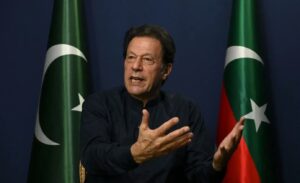
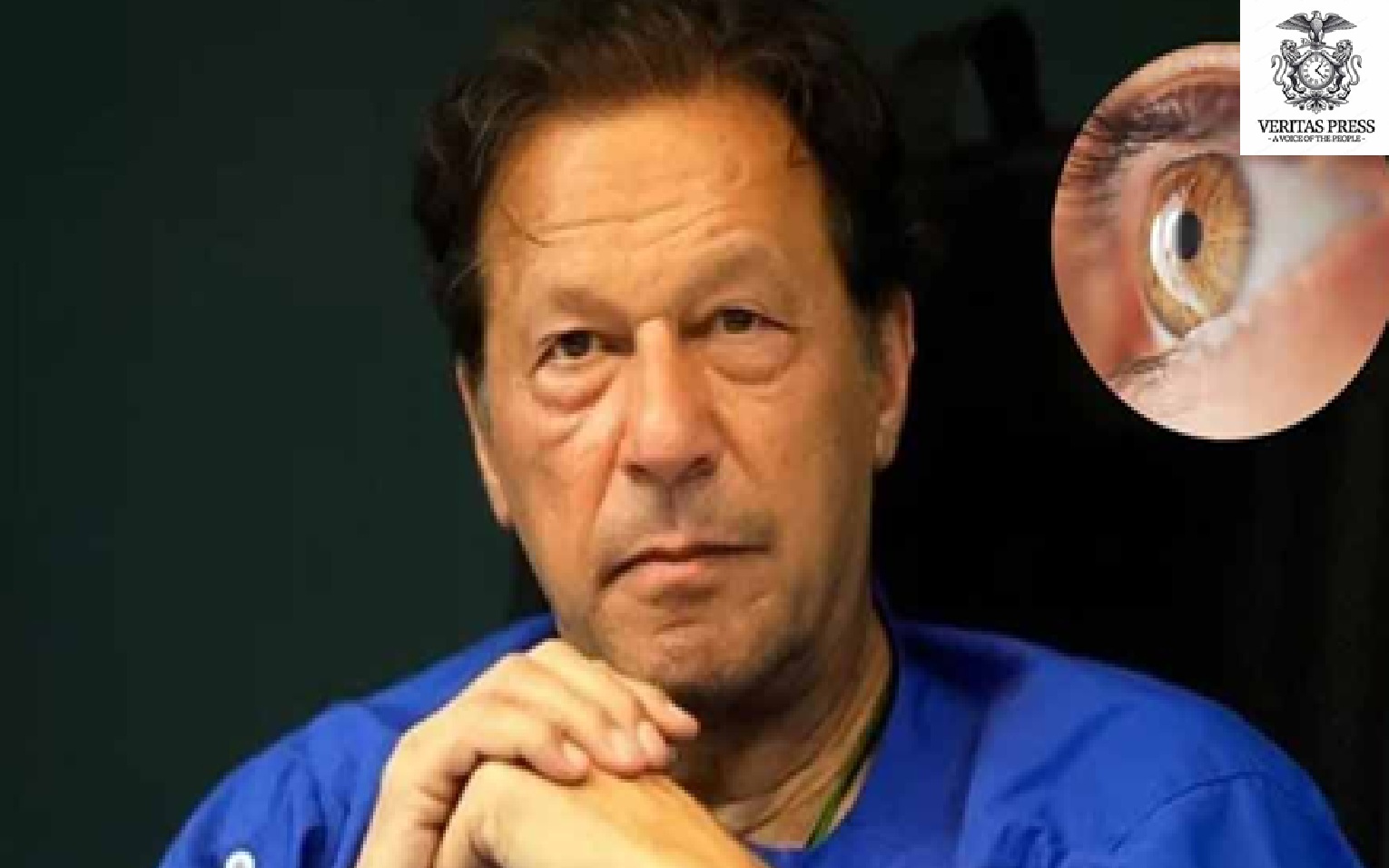
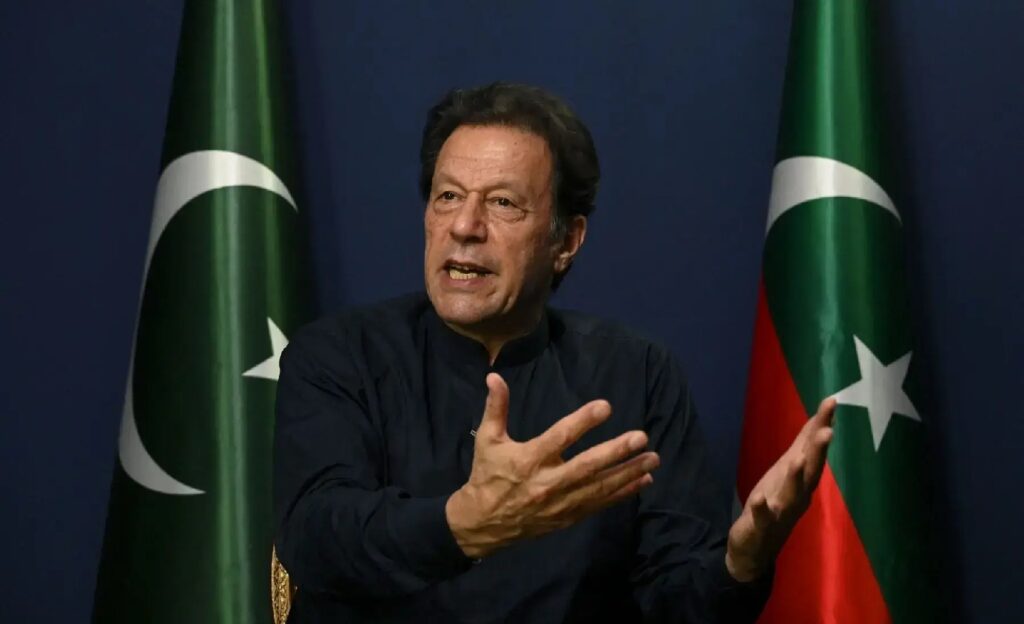
ISLAMABAD — In a dramatic escalation of an already volatile political crisis, Pakistan Tehreek-e-Insaf (PTI) Secretary General Salman Akram Raja declared outside the Supreme Court on Wednesday that jailed former prime minister Imran Khan has “lost vision in one eye” as a result of alleged torture inside Rawalpindi’s Adiala Jail. The statement, delivered with the gravity of a man who claims all legal doors have been slammed shut, marks the most serious health alarm yet raised by the party leadership since Khan’s incarceration began in August 2023. But behind the headline lies a tangled web of contested medical reports, restricted access, judicial paralysis, and a government narrative that flatly denies any mistreatment, leaving the public and history to sift through a fog of warring truths.
A Grim Announcement Outside The Court:
Standing before a throng of reporters and party supporters, Raja’s words were calibrated for maximum impact. “Today, all doors of justice appear closed,” he said, alleging that the PTI founder had been imprisoned for 1,000 days and was being denied basic constitutional rights. His central allegation, that Khan had gone blind in one eye due to custodial torture, was layered with a litany of grievances: meetings with Khan and his wife Bushra Bibi were being blocked, signatures on vakalatnamas (legal authorisation documents) obstructed, and even the former prime minister’s sisters were barred from seeing him despite what Raja described as a “serious health condition.”
“There were no such restrictions even during the British era,” Raja charged, in a rhetorical flourish that sought to place the current government’s conduct beyond the pale of colonial repression. He added that the party had exhausted all legal avenues and would now take its case “to the people of Pakistan”, a barely veiled call for street mobilisation in a country where protest is met with overwhelming force.
Senior lawyer Hamid Khan, standing alongside Raja, pointed to a pending Supreme Court petition seeking visitation rights and prison facilities for the couple, noting that an appeal had remained pending for a year before being dismissed by the Islamabad High Court. “How can legal documents be signed if lawyers are denied access to their clients?” Khan asked, exposing the Kafkaesque procedural trap in which the defence finds itself.
Medical Timeline: From ‘15% Vision’ To Claims Of Blindness.
The claim of lost vision does not emerge from a vacuum. A detailed medical history, pieced together from court filings, hospital statements, and PTI disclosures, reveals a condition that has been worsening, or, depending on which authority one believes, improving, in a high-stakes narrative of official reassurances contradicted by sporadic bursts of panic.
Imran Khan’s eye troubles first entered the public domain in February 2026, when a report prepared by Barrister Salman Safdar, acting as the Supreme Court’s amicus curiae, revealed that Khan had informed jail authorities his right eye was functioning at only 15% capacity. The report diagnosed him with central retinal vein occlusion (CRVO), a serious condition in which the main vein draining blood from the retina becomes blocked. Left untreated or poorly managed, CRVO can lead to macular oedema, retinal ischemia, and permanent vision loss. The condition is strongly associated with cardiovascular risk factors such as hypertension, high cholesterol, diabetes, and heart disease, conditions that Khan, 73, has publicly acknowledged.
The Supreme Court, in response to Safdar’s filing, ordered that Khan be granted access to his personal physicians inside Adiala Jail. A medical board from the Pakistan Institute of Medical Sciences (PIMS) was constituted. In late January, Khan was taken to PIMS for what Information Minister Attaullah Tarar described five days later as a “minor medical procedure” lasting around 20 minutes, performed after obtaining written consent. PIMS confirmed that an anti-VEGF intravitreal injection was administered to treat right central retinal vein occlusion. Such injections, which inhibit abnormal blood vessel growth and leakage, are the standard of care for macular oedema secondary to CRVO.
In March, after a second examination at Adiala, PIMS issued an upbeat assessment: Khan had shown “significant improvement” in his vision following the second dose. The third dose was administered on March 23, and the fourth on April 28. Yet Raja’s statement on Wednesday, that Khan has now lost vision in one eye entirely, flatly contradicts the official medical trajectory of gradual improvement.
To add to the confusion, Bushra Bibi’s own ocular health has deteriorated in custody. After complaining of pain, blurred vision, black spots, and flashes in her right eye, she was examined in March by Dr Muhammad Arif Khan, head of ophthalmology at PIMS. Diagnosed with posterior vitreous detachment (PVD), myopia, and astigmatism, she was prescribed eye drops, medication, and glasses, with a follow-up recommended after four weeks. On April 16, she underwent eye surgery. The convergence of serious eye conditions in both spouses has fuelled PTI’s broader narrative of deliberate medical neglect.
Allegations Of Torture And A Pattern Of Denial:
Raja’s claim of torture marks a sharp intensification in the party’s rhetoric. While PTI leaders have previously alleged psychological pressure, solitary confinement, and denial of amenities, the assertion that physical torture has resulted in the permanent loss of an organ pushes the discourse into territory that demands independent investigation. To date, no such investigation has been permitted. Prison authorities have consistently denied all mistreatment allegations, and the government has dismissed them as political propaganda.
In this vacuum, the narrative has been shaped entirely by the PTI. Raja spoke of “false cases” against Bushra Bibi, including the Toshakhana-II reference, which he claimed was built on statements of government witnesses. The couple was sentenced on December 20, 2025, to 17 years in prison for unlawfully retaining a Bulgari jewellery set gifted by the Saudi crown prince, a case the PTI insists is a fabrication designed to break Khan politically. Khan is also serving a sentence in a £190 million corruption case and faces pending trials under the Anti-Terrorism Act in connection with the May 9, 2023, protests, when his supporters allegedly attacked military installations.
The cumulative effect of these prosecutions, combined with the reported health emergencies, has led PTI officials to warn of a “slow assassination” of the former prime minister. “Every prisoner is entitled to constitutional rights, but meetings and the signing of legal documents are being restricted despite court orders,” Raja said Wednesday. The claim that court orders are being brazenly ignored, and that the Supreme Court itself has become unresponsive, signals a complete breakdown of the social contract in the eyes of the opposition.
Official Rebuttals And The Missing Medical Bulletin:
Hours after Raja’s press conference, government officials had not issued a point-by-point rebuttal, but previous statements offer a template. Information Minister Attaullah Tarar has repeatedly insisted that Khan is receiving the best possible medical care and that any suggestion of torture is baseless. The PIMS reports of improvement serve as the government’s Exhibit A.
Yet the absence of an independent, publicly released medical bulletin following the fourth injection on April 28 is conspicuous. Medical ethicists and human rights organisations have long argued that when a high-profile prisoner’s health becomes a matter of national controversy, transparent and frequent updates from a neutral medical panel are essential. The current opacity fuels suspicion.
Dr. Sarah Qureshi, a Lahore-based ophthalmologist not involved in Khan’s care, told this correspondent that CRVO “can lead to sudden vision loss if a secondary blockage or haemorrhage occurs, but such an event would require emergency intervention and would be documented in the patient’s records.” She noted that anti-VEGF injections can stabilise and even improve vision over months, but the outcome is never guaranteed, especially in patients with systemic vascular disease. “Without access to the actual retinal scans and visual acuity charts, it is impossible to verify whether the claimed vision loss is complete, partial, or a deterioration from a previous baseline,” she said. “That is why independent monitoring is crucial.”
A Judiciary On Trial:
Implicit in Raja’s remarks is a damning indictment of the superior judiciary. By stating that “all doors of justice appear closed,” he placed the Supreme Court, the ultimate arbiter of fundamental rights, in the dock. His allegation that judges are being transferred to other provinces as punishment echoes a broader concern about the manipulation of judicial postings to secure favourable benches. The failure to hear PTI’s petitions, the delay in deciding on visitation rights, and the dismissal of appeals have convinced the party that the courts are no longer a neutral forum.
This perception is not limited to PTI loyalists. In recent months, bar associations in multiple cities have passed resolutions decrying the “capture” of the judiciary and the erosion of judicial independence. Yet, with the media under intense pressure and journalists routinely harassed, the full extent of the judiciary’s internal dynamics remains opaque.
The Landscape Beyond The Courtroom:
Raja’s statement also painted a grim portrait of Pakistan’s overall stability. “The country needed stability,” he said, alleging the economy had been destroyed and Khyber Pakhtunkhwa was “drenched in blood.” Indeed, the province, governed by PTI, has witnessed a surge in militant violence, with dozens of security personnel and civilians killed in recent months. The law-and-order crisis has provided the government with a pretext to further curtail political activity, framing PTI protests as threats to national security.
Economically, Pakistan is once again in negotiations with the International Monetary Fund, grappling with double-digit inflation, crippling debt, and an energy crisis that has sparked sporadic riots. The political turmoil has deterred foreign investment and placed the state’s fiscal survival in perpetual doubt. In this context, the health of a jailed former leader becomes a national metaphor: a body politic blinded in one eye, unable to see a way out.
Weaponising Health In A Political Battle:
The PTI’s health claims carry undeniable political utility. By focusing on Khan’s physical suffering, the party mobilises sympathy, keeps its leader at the centre of the national conversation, and paints the government as cruel and illegitimate. The narrative of a once-athletic leader now physically broken by incarceration resonates deeply in a society where the image of the wounded hero carries cultural weight.
Yet the government has its own narrative to protect. Conceding that a former prime minister has been tortured in state custody would carry immense legal and diplomatic repercussions, potentially inviting international sanctions and investigations under the UN Convention Against Torture. It would also erode the moral authority of the military establishment, which holds enormous sway over the domestic security apparatus and jail administration.
This standoff leaves the truth in a perilous limbo. Independent human rights bodies, including Amnesty International and the Human Rights Commission of Pakistan, have repeatedly called for unimpeded access to political prisoners and transparent medical care. In a statement last month, HRCP Chairperson Asad Iqbal Butt noted, “The state’s refusal to permit independent medical evaluation of high-profile detainees is a violation of their rights and a recipe for conspiracy theories.” But such calls have gone unheeded.
What Comes Next?
With Raja declaring all legal options exhausted and the party threatening to return to the streets, the stage is set for a potentially bloody summer. The PTI’s ability to mobilise mass protests has been severely curtailed by a crackdown that has seen thousands of party workers arrested and convicted in military courts. But desperation breeds defiance. Should Khan’s health genuinely deteriorate further, or should independent verification of the vision loss emerge, the public reaction could be explosive.
For now, the world is left to parse two irreconcilable narratives: one of a state that is methodically breaking a political opponent, blinding him literally and figuratively; the other of a responsible government providing medical care to a convicted prisoner who, along with his party, is exploiting health scares for political advantage. Only an immediate, independent medical assessment conducted with full transparency can resolve the contradiction. Until that happens, the claim that Imran Khan has lost his vision will remain both a chilling possibility and the most potent weapon in Pakistan’s information war.
Source: Multiple News Agencies
Submissions:
For The Secure Submission Of Documentation, Testimonies, Or Exclusive Investigative Reports From Any Global Location, Please Utilise The Following Contact Details For Our Investigations Desk: enquiries@veritaspress.co.uk or editor@veritaspress.co.uk
Help Support Our Work:
Popular Information is powered by readers who believe that truth still matters. When just a few more people step up to support this work, it means more lies exposed, more corruption uncovered, and more accountability where it’s long overdue.
Help Protect Independent Journalism, Which Is Currently Under Attack.
If you believe journalism should serve the public, not the powerful, and you’re in a position to help, becoming a DONATOR or a PAID SUBSCRIBER truly makes a difference.
DONATION APPEAL: If You Found This Reporting Valuable, Please Consider Supporting Independent Journalism.
Help Support Our Work – We Know, We Know, We Know …
Seeing these messages is annoying. We know that. (Imagine what it’s like writing them … )
Your support fuels our fearless, truth-driven journalism. In unity, we endeavour to amplify marginalised voices and champion justice, irrespective of geographical location.
But it’s also extremely important. One of Veritas Press’s greatest assets is its reader-funded model.
1. Reader funding means we can cover what we like. We’re not beholden to the political whims of a billionaire owner. We are a small, independent and impartial organisation. No one can tell us what not to say or what not to report.
2. Reader funding means we don’t have to chase clicks and traffic. We’re not desperately seeking your attention for its own sake: we pursue the stories that our editorial team deems important and believe are worthy of your time.
3. Reader Funding: enables us to keep our website and other social media channels open, allowing as many people as possible to access quality journalism from around the world, particularly those in places where the free press is under threat.
We know not everyone can afford to pay for news, but if you’ve been meaning to support us, now’s the time.
Your donation goes a long way. It helps us:
- Keep the lights on and sustain our day-to-day operations
- Hire new, talented independent reporters
- Launch real-time live debates, community-focused shows, and on-the-ground reporting
- Cover the issues that matter most to our communities, in real time, with depth and integrity
We have plans to expand our work, but we can’t do it without your support. Every contribution, no matter the size, helps us stay independent and build a truly people-powered media platform.
If you believe in journalism that informs, empowers, and reflects the communities we serve, please donate today.
Donate Today.
GENEVA — A United Nations fact-finding mission has concluded there are “reasonable grounds to believe”
Iran’s GDP is projected to contract by 5.4 to 6.1% in 2026, its worst performance
The Trump administration is preparing a $2.8 billion weapons package for Israel containing 40,000 2,000-pound
Film alleges mass civilian deaths are routinely built into military decisions amid Israel’s genocidal war
The Israeli rights group says violence, displacement, economic strangulation, and settlement expansion form part of

Houthi forces have captured the historic Red Sea port of Mocha and are advancing on
London’s historic sanctions against Israeli settlements mark a watershed moment in UK foreign policy, but
With 95% of Gaza’s population now wholly dependent on aid and more than 90% stripped
India calls for Kashmir and Ladakh to appear only on its official map after a
ISLAMABAD – In the high-stakes political theatre of Pakistan, the battleground has shifted from the