CUBA: Special Report: ‘If We Need To Die, We’ll Die’ — On The Brink Of An American Invasion, Cuba Braces For Its Most Perilous Hour Since The Missile Crisis.
CUBA: Special Report: ‘If We Need To Die, We’ll Die’ — On The Brink Of An American Invasion, Cuba Braces For Its Most Perilous Hour Since The Missile Crisis.
Kamran Faqir is a volunteer investigative journalist and writer committed to exposing hidden truths and amplifying underreported stories. Driven by social justice, he brings sharp insight and fearless truth-telling to independent journalism. NUJ registered.
Original Article Date Published:
Article Date Modified:
19 minutes
Views:382
Listen to this article
Help support our mission, donate today and be the change. Every contribution goes directly toward driving real impact for the cause we believe in.
HAVANA, CUBA – The rhetoric coming from Washington has acquired a chilling, almost casual brutality. “We may stop by Cuba after we’re finished with this,” President Donald Trump told reporters outside the Oval Office earlier this week, gesturing vaguely toward the ongoing U.S.-Israeli war against Iran. It was the kind of throwaway line one might use for a weekend errand, not a sovereign nation of 11 million people whose fate has been contested for more than six decades. For Cubans, however, the threat was anything but casual. It was the latest and most explicit signal yet that their island, already suffocating under a draconian oil blockade and a crippled economy, may be the next battlefield in an expanding American campaign of regime change.
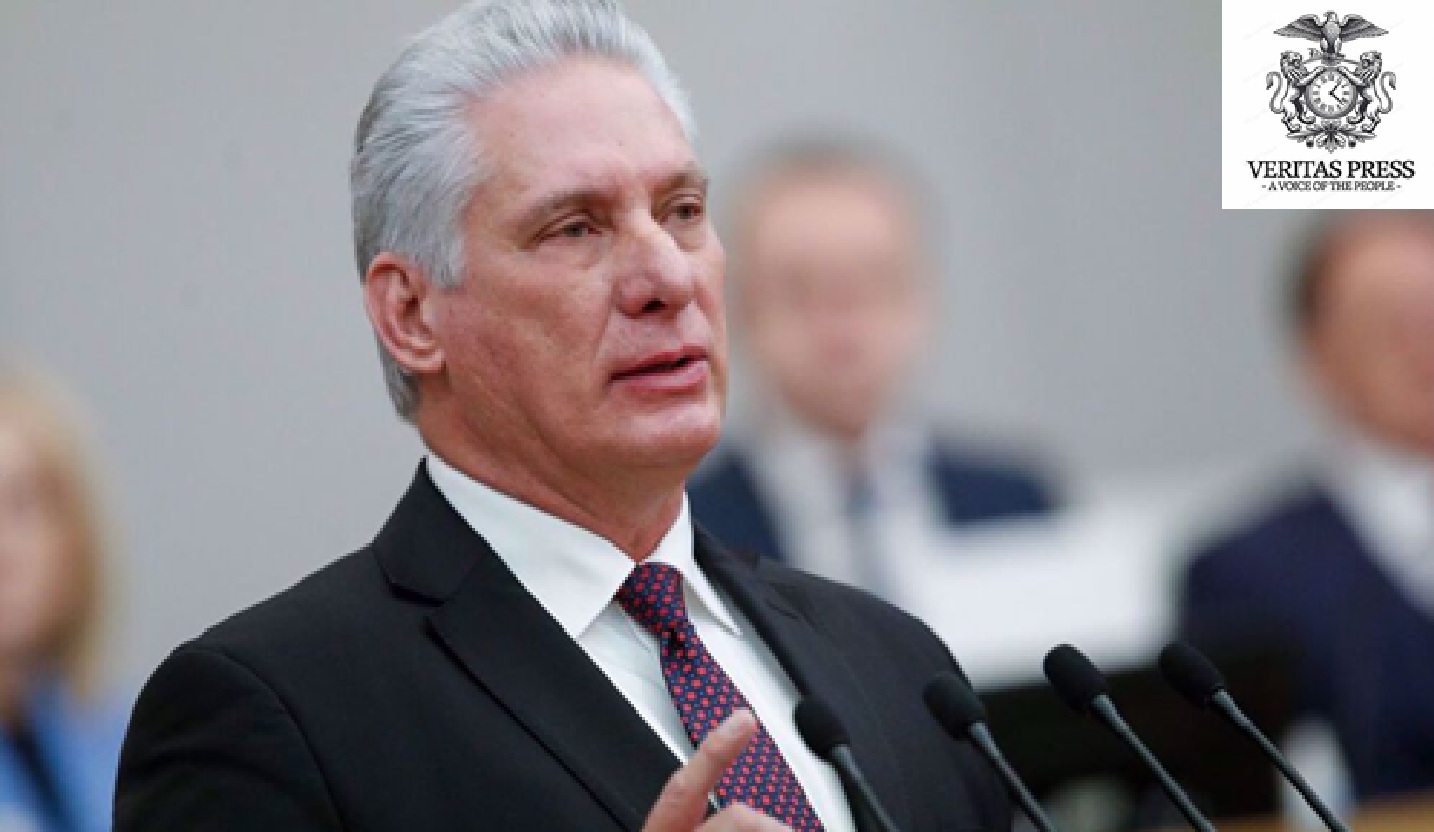
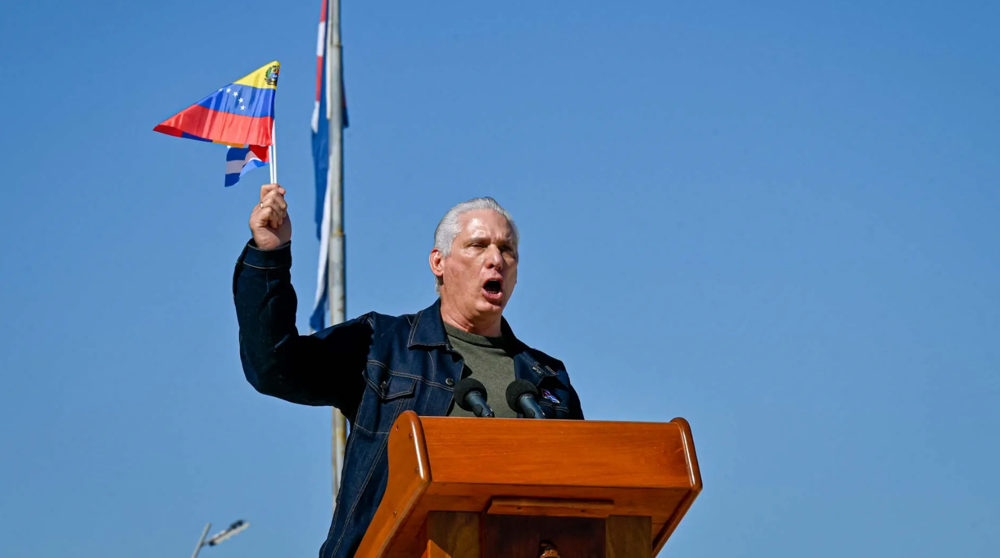
In response, Cuban President Miguel Díaz-Canel has abandoned the diplomatic circumlocutions that once characterised his government’s public posture. In a series of extraordinary interviews with NBC News, RT, and other outlets over the past week, and at a massive rally in Havana commemorating the 65th anniversary of the Bay of Pigs invasion, Díaz-Canel delivered a message of unequivocal defiance. “I have no fear. I am willing to give my life for the revolution,” he told NBC’s Meet the Press. He warned that if the United States attacks, the response will be total. “If that happens, there’ll be fighting, and there’ll be a struggle, and we’ll defend ourselves, and if we need to die, we’ll die. As our national anthem says, ‘dying for the homeland is to live.’”
This is not mere bluster. Since the U.S. military’s forcible extraction of Venezuelan President Nicolás Maduro on January 3, Cuba has been systematically preparing for war. The government has declared national defence a “top priority,” activated its doctrine of Guerra de Todo el Pueblo (All-People’s War), and begun training civilians in the grim arts of survival under invasion. On Saturdays, ordinary citizens practice ambush tactics, mine-laying, and defence against weapons of mass destruction. The defence council has approved plans for the transition to a wartime footing, and military exercises have become a regular feature of national life. As Díaz-Canel stated, “Cuba is not a country that is calling for war or promotes it, but we are also not afraid of war if we must wage it to defend our homeland.”
The Architecture Of Strangulation: An Oil Blockade As A Weapon Of War.
The current crisis did not emerge in a vacuum. It is the culmination of a six-decade policy of economic warfare, recently intensified to an unprecedented degree. In January, following the Maduro operation, Trump issued an executive order imposing a de facto oil blockade on Cuba, threatening punitive tariffs on any nation that dared to supply the island with fuel. “THERE WILL BE NO MORE OIL OR MONEY GOING TO CUBA, ZERO!” Trump declared in a social media post. The consequences have been immediate and devastating.
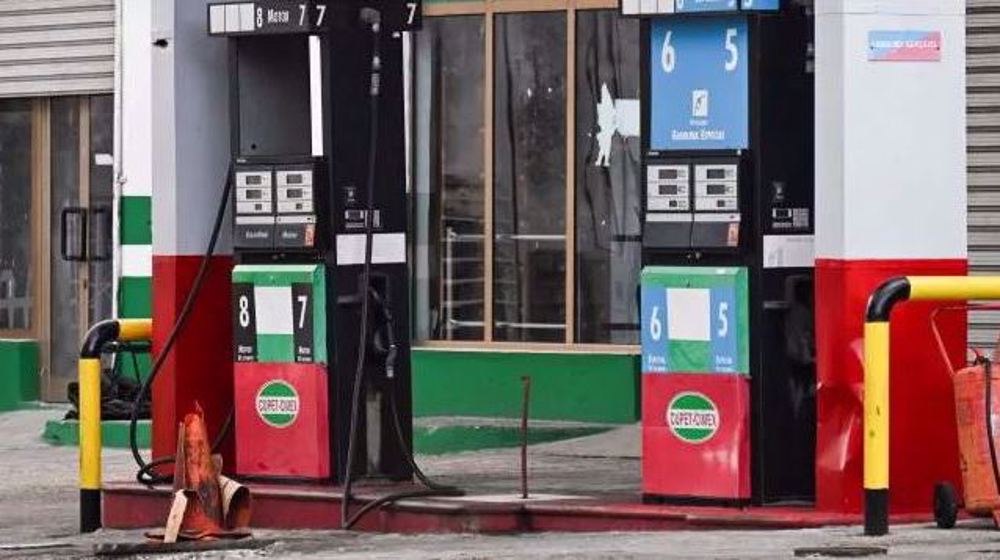
This image shows the empty pumps at a gas station in the Cuban capital city Havana as the government announces new measures to deal with fuel shortage across the island state on February 6, 2026. (Photo by AFP)
Cuba’s energy matrix is profoundly vulnerable. Domestic production covers only about 40% of the estimated daily requirement of 100,000 barrels, leaving the system highly exposed to external supply shocks. More than 80% of Cuba’s electricity is generated from oil. Prior to the blockade, Venezuela supplied 61% of Cuba’s oil, with Mexico providing another 25%. The capture of Maduro severed the Venezuelan lifeline overnight. Under pressure from Washington, Mexico then suspended its shipments, describing the move as a “sovereign decision” though few in Havana believe it was truly voluntary.
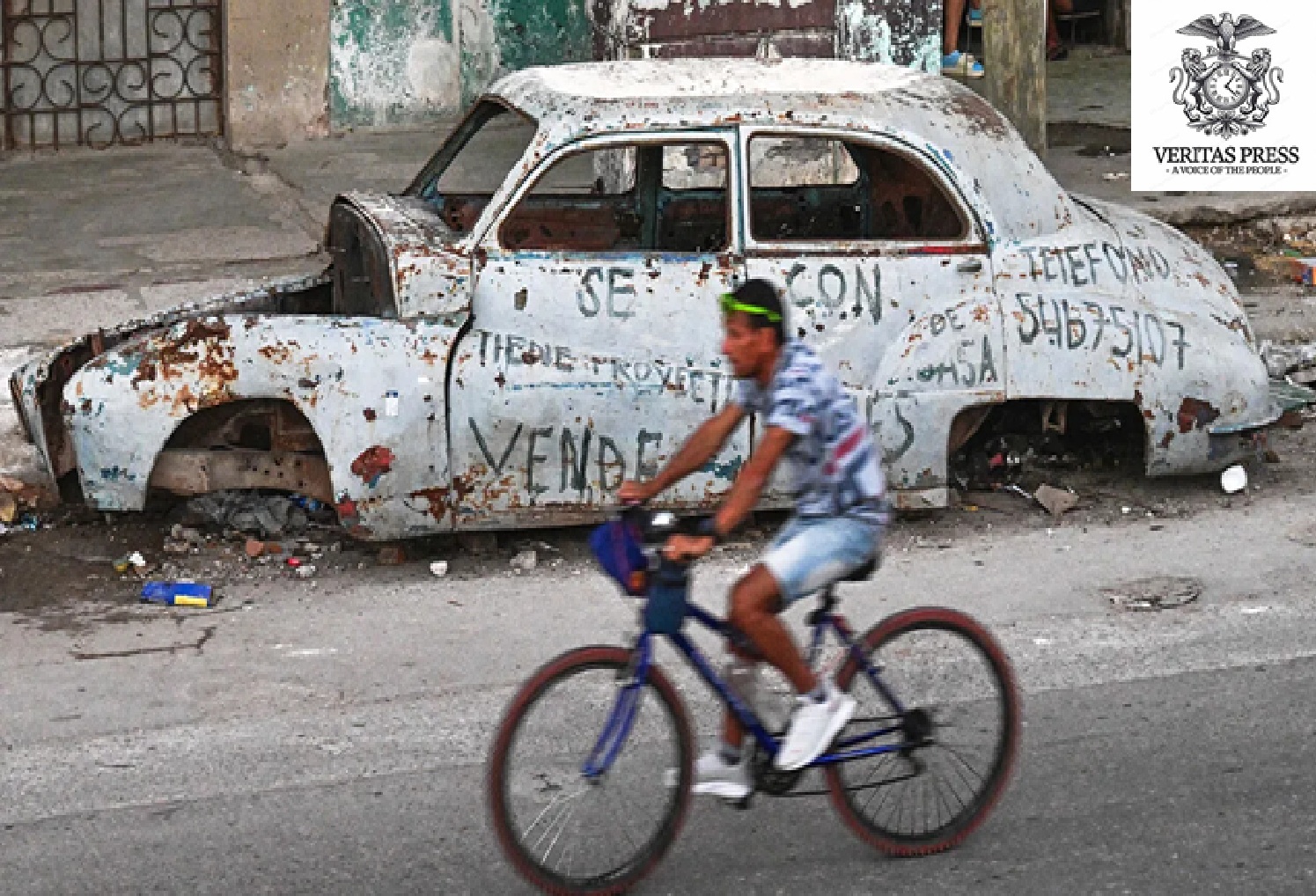
The result has been a humanitarian catastrophe that the United Nations describes as pushing the island toward “total collapse.” Since early January, an estimated nine million people have been affected. Fuel rationing has paralysed internal logistics: schools have been suspended, flights cancelled, and what remained of the productive economy shuttered. In March alone, the island suffered three nationwide blackouts, plunging millions into darkness for days at a time. Garbage piles up on Havana’s streets because fuel rations have grounded collection trucks. Hospitals, already strained, are struggling to maintain basic emergency care; routine procedures have been postponed indefinitely. The United Nations warns that five million people living with chronic illnesses, cancer patients requiring continuous oncology care, and more than 32,000 pregnant women are now at acute risk.
Nighttime light reflectance data from NASA satellites tells the story in stark, quantifiable terms: from February 2025 to February 2026, light emissions fell from 90,200 to 84,800 nanoWatts per cm² per steradian. In March 2026, they plummeted to 55,000, a 34.6% drop in a single month and a 38.5% decline year-on-year. The lights are literally going out across Cuba.
In a revealing contradiction, the Trump administration allowed a Russian oil tanker, the Anatoly Kolodkin, to deliver 100,000 tons of crude oil to the fuel-starved island in late March. The shipment was in direct violation of U.S. sanctions, but Washington chose not to enforce them. “Trump then publicly stated he didn’t care whether Russia delivered to Cuba. Having made that statement and having declined to interdict, or even harass, the first vessel, it becomes politically untenable to now move against a second,” sanctions expert Brett Erickson of Obsidian Risk Advisors told CNBC. The episode exposed the selective, politically opportunistic nature of the blockade: a tool to punish Cuba’s population while avoiding confrontation with a nuclear-armed rival like Russia.
The Rubio Factor: A Hardliner’s Gamble.
At the centre of the Trump administration’s Cuba policy stands Secretary of State Marco Rubio, the son of Cuban exiles whose family fled the island in the 1950s. Rubio’s disdain for the Castro regime is a core component of his political identity. He has called Cuba a “disaster” run by “incompetent, senile men.” Yet in recent months, a more complex Rubio has emerged, one who has been leading secret, high-level negotiations with Havana even as his government tightens the economic noose.
According to multiple reports, Rubio has been engaged in talks with Cuban officials, including Raúl Castro’s grandson, Raúl Rodríguez Castro, exploring a potential economic deal. Discussions have reportedly centred on economic reforms, port access, energy cooperation, and tourism, in exchange for lifting some sanctions. A back-channel letter from Rodríguez Castro to Trump, intercepted by U.S. Customs and Border Protection at Miami International Airport last week, outlined proposals for economic and investment cooperation while pleading for relief from sanctions and warning that Cuba was bracing for a possible U.S. incursion. The letter, which bore an official Cuban seal, was confiscated, and its courier, a Cuban businessman, was sent back to Havana, effectively ending the attempt at secret diplomacy.
This dual-track approach, maximum pressure combined with back-channel negotiations, reflects the Trump administration’s transactional foreign policy instincts. “None of these options seems particularly palpable or feasible,” Michael Bustamante of the University of Miami’s Cuban and Cuban-American Studies program told USA Today. “It’s a domestic political issue that seems to have very little upside for anyone involved.”
Indeed, the political calculus is treacherous. Launching a military strike could saddle the U.S. with an unpopular nation-building mission. Cutting a deal with Havana risks a revolt from the powerful Cuban-American exile community in Florida, a constituency that Trump has long courted. Doing nothing, however, would mean abandoning a pressure campaign that has already pushed Cuba to the brink of humanitarian collapse.
The Pentagon Prepares: Contingency Planning Or Imminent Action?
Behind the rhetorical threats, the Pentagon is quietly but unmistakably preparing for the possibility of military action. USA Today reported on April 15, citing two informed sources, that the Defence Department is “quietly ramping up” contingency planning for a potential operation in Cuba. In a statement to the newspaper, the Pentagon acknowledged that it “plans for a range of contingencies and remains prepared to execute the president’s orders as directed.”
When asked directly by reporters whether the Pentagon was preparing for military action in Cuba, Trump’s response was characteristically evasive. “Well, it depends on what your definition of military action is,” he said on April 18, echoing Bill Clinton’s infamous semantic parsing. Later, at a rally in Phoenix, he was more expansive: “Very soon this great strength” would bring about a “new dawn for Cuba, we’re going to help them out with Cuba. Now, watch what happens.”
Military analysts caution that a U.S. invasion of Cuba, while technologically lopsided, would not be the cakewalk some hawks imagine. The Cuban Revolutionary Armed Forces number approximately 50,000 active-duty personnel, with another 40,000 in reserve and a staggering 1.1 million in paramilitary formations, all organised under the “All-People’s War” doctrine. The equipment is outdated, Soviet-era tanks, armoured vehicles, and fighter jets with low operational rates, but the human element is formidable. “The Cuban armed forces are well-trained, but the military-technical component needs to be modernised,” Russian Ambassador to Havana Viktor Coronelli told Izvestia. “Havana will be able to withstand American pressure only with the support of its allies, including the BRICS countries.”
Moreover, the historical resonance of any U.S. attack would be profound. Díaz-Canel has explicitly invoked the memory of the 1961 Bay of Pigs invasion, when a CIA-backed force of Cuban exiles was decisively defeated by Castro’s revolutionary forces. Speaking at the April 16 rally commemorating the 65th anniversary of Fidel Castro’s declaration that the revolution was socialist in character, Díaz-Canel declared: “The moment is extremely challenging and calls upon us once again, as on April 16, 1961, to be ready to confront serious threats, including military aggression. We do not want it, but it is our duty to prepare to avoid it and, if it becomes inevitable, to defeat it.”
Cuba’s Counter-Narrative: “A Besieged State, Not A Failed State”.
Cuba’s President Miguel Diaz-Canel on Sunday rebuffed US President Donald Trump’s threat against his country.
Díaz-Canel and his government have mounted a vigorous counter-narrative to the Trump administration’s portrayal of Cuba as a “failing nation” whose collapse is both imminent and deserved. “Cuba is not a failed state. Cuba is a besieged state. Cuba is a state facing multidimensional aggression: economic warfare, an intensified blockade and an energy blockade,” Díaz-Canel said at the Havana rally.
The Cuban president has also directly challenged the moral authority of those demanding political change on the island. “Those who point fingers at Cuba have no morals whatsoever, in anything, and they are the ones who turned everything into a business, even human life.” He added that “the hysterical attack Cuba is facing today stems from the anger of some over the sovereign decision of these people to choose their political model.”
Significantly, Cuba has not closed the door to diplomacy. Díaz-Canel has confirmed that talks with the United States are ongoing, focused on issues such as migration, drug trafficking, and security, but only on the basis of “respect and equality.” The government has also announced a major push toward renewable energy, aiming to reduce dependence on imported oil and enhance energy self-sufficiency. Whether these initiatives can make a meaningful difference in the face of the current siege remains to be seen.
International Reactions: A Growing Chorus Of Concern.
The escalating crisis has drawn increasingly alarmed reactions from the international community. On April 18, the governments of Mexico, Spain, and Brazil, all led by left-wing administrations, issued a joint statement expressing “deep concern over the severe humanitarian crisis the Cuban people are suffering” and calling for “sincere and respectful dialogue” in accordance with international law. The statement pointedly avoided naming the United States directly, but its target was unmistakable.
Russia, meanwhile, has positioned itself as Cuba’s most reliable ally. Following the delivery of the Anatoly Kolodkin shipment, Moscow has pledged to continue supplying the island with vital oil, despite the threat of U.S. tariffs. The Russian government has also warned that aggressive U.S. actions in the Caribbean risk destabilising the entire region. China, for its part, has condemned the U.S. naval blockade of the Strait of Hormuz as “irresponsible and dangerous,” though its public statements on Cuba have been more measured, reflecting a careful balancing act between supporting traditional allies and avoiding direct confrontation with Washington.
The United Nations, too, has sounded the alarm. UN human rights experts condemned the fuel blockade in February as “a serious violation” of international law. Humanitarian agencies warn that without immediate relief, the country faces an acute food and medical emergency that could trigger a new wave of mass migration toward the United States, precisely the outcome that the Trump administration claims it seeks to prevent.
A Reckoning Foretold?
The fate of Cuba now hangs in a precarious balance, suspended between the threat of military invasion and the slow, grinding catastrophe of economic asphyxiation. The Trump administration has made clear that it views the current global preoccupation with the Middle East as a “strategic window” to force regime change in Havana. “Cuba’s gonna be next, yeah,” Trump said on March 29, a statement whose casual brutality captures the essence of his approach.
Yet for all the bluster, the path forward is fraught with uncertainty. A military invasion would be politically costly, militarily complex, and diplomatically isolating. A negotiated settlement would alienate key domestic constituencies and would require concessions that the Cuban government has so far refused to make. Continued economic warfare, meanwhile, risks a humanitarian disaster that could destabilise the entire Caribbean basin and send tens of thousands of desperate refugees toward Florida’s shores.
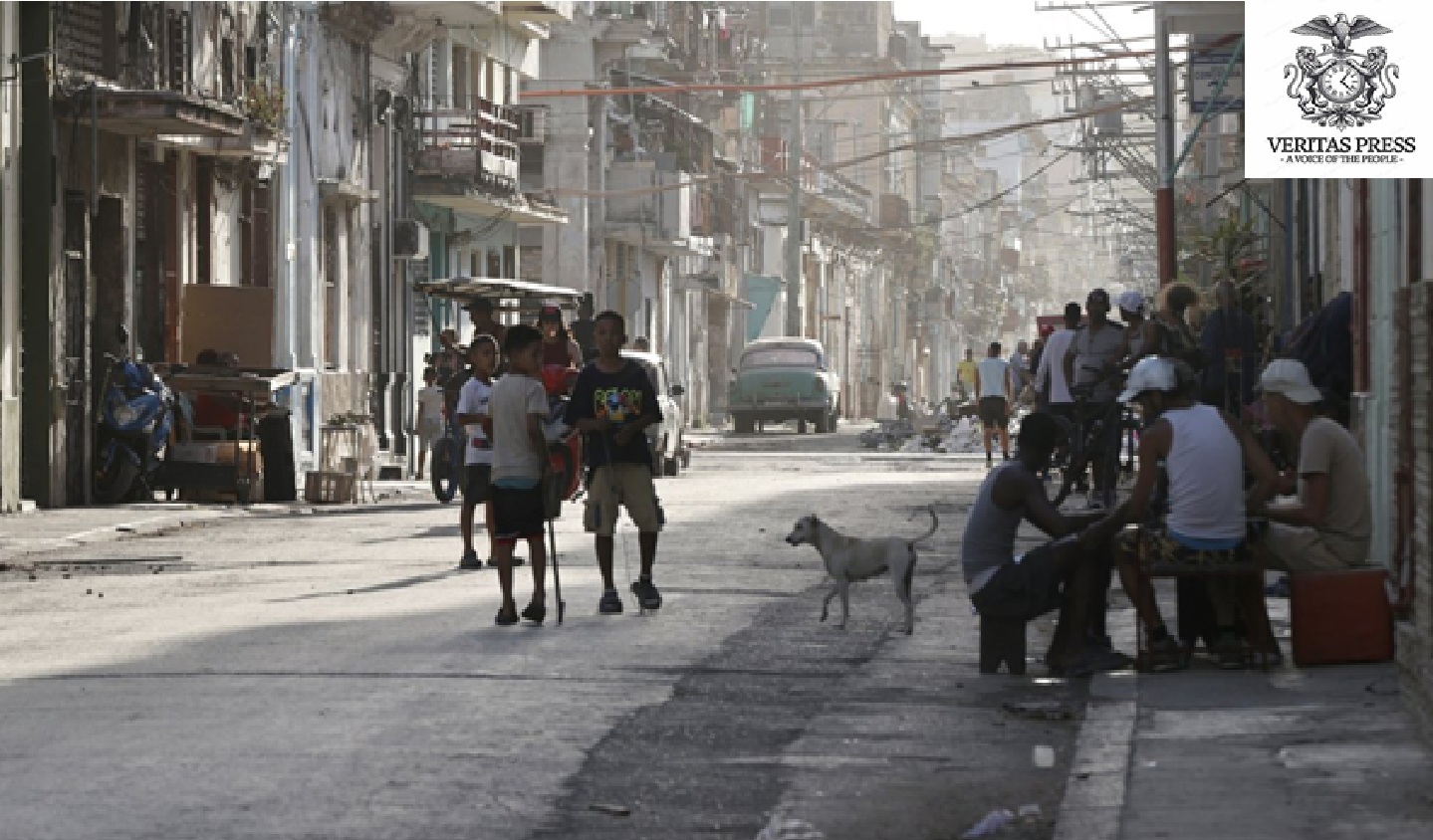
On the streets of Havana, the mood is a strange mixture of resignation, defiance, and exhaustion. Decades of U.S. sanctions have bred a certain stoicism, a belief that Cuba has survived worse and will survive this too. But the current crisis is different in both scale and intensity. “We are not afraid of war,” Díaz-Canel has said, but the question that now looms is whether war will come regardless of what Cubans feel or do. The answer lies not in Havana, but in Washington, where a president who has already launched military operations in Venezuela and Iran now contemplates adding a third nation to his list. The world watches and waits.
Conclusion: The Architecture Of Catastrophe, When “Freedom” Becomes A Euphemism For Suffocation.
The narrative being constructed in Washington is seductive in its simplicity: a failing socialist state, a people yearning for liberation, a righteous superpower poised to deliver salvation. But the reality on the ground in Havana, in Santiago, in the darkened hospitals and silent factories across this besieged island, tells a far more damning story, one of deliberate, calculated human suffering weaponized as policy, of a superpower exploiting a moment of global distraction to settle a six-decade vendetta against a small nation whose primary offense has been its refusal to kneel.
What is unfolding in Cuba is not a humanitarian intervention awaiting its cue. It is the logical, almost inevitable, endpoint of a policy architecture designed from the outset to produce precisely the conditions that Washington now cites as justification for its own intervention. The oil blockade has crippled hospitals, not because Cuba’s healthcare system is inherently broken, but because the United States has systematically denied it the fuel required to function. The blackouts have silenced factories, not because Cuban workers lack skill or will, but because Washington has made it economically suicidal for any nation to sell the island electricity-generating fuel. The garbage rotting in Havana’s streets is not evidence of socialist mismanagement; it is evidence of a blockade that has rendered municipal services impossible. This is not failure, it is sabotage, corporate greed, conducted in slow motion, with the full complicity of international financial institutions and the studied silence of many who should know better.
The investigation reveals a profound and disturbing disconnect between the administration’s public rhetoric and its private manoeuvring. Even as President Trump muses casually about “stopping by Cuba” as if the island were a drive-through on the road to Tehran, his own Secretary of State has been engaged in secret negotiations exploring economic deals and sanctions relief. The selective non-enforcement of sanctions against Russian oil shipments exposes the raw transactional calculus at play: confrontation with a nuclear-armed adversary is avoided, while the slow strangulation of a defenceless neighbour proceeds unimpeded. This is not foreign policy guided by principle; it is foreign policy as a weapon of domestic political theatre, calibrated to appease a powerful exile constituency in Florida while offering the spectacle of strength to a base that equates cruelty with resolve.
The Pentagon’s quiet contingency planning, acknowledged but never detailed, adds a chilling dimension to the crisis. The question is no longer whether the machinery of invasion can be activated, but under what pretext it will be. The administration has demonstrated in Venezuela and Iran that it is willing to deploy military force with minimal provocation, that it views international law as an obstacle to be circumvented rather than a framework to be respected, and that it will tolerate, indeed, actively cultivate, humanitarian crises as a prelude to “liberation.” The pattern is now unmistakable: destabilise, strangle, then offer salvation at the point of a gun.
Yet perhaps the most damning indictment of Washington’s posture is the response it has elicited from the Cuban people themselves. President Díaz-Canel’s declaration that he is “willing to give my life for the revolution” is not merely the rhetoric of a cornered leader. It is a reflection of a deeper national psychology forged in the crucible of the Bay of Pigs, the Cuban Missile Crisis, and sixty-six years of unrelenting economic warfare. Cubans have learned, through bitter experience, that surrender is not an option because the terms of surrender are never clearly stated and never honoured. The “regime change” Washington seeks is not a transition to democracy; it is a restoration of the pre-revolutionary order that millions of Cubans, whatever their grievances with the current government, have no desire to resurrect. The exile community’s dream of reclaiming lost properties and reasserting political control is not shared by the vast majority of those who remained, who built their lives, however imperfectly, in the revolution’s shadow.
There is a profound and dangerous arrogance in the assumption that eleven million Cubans are simply waiting to be rescued. It ignores the complex, often contradictory, but deeply felt sense of national identity that six decades of sovereignty, however constrained, have forged. It dismisses as propaganda the genuine fear that U.S. intervention would mean not freedom but occupation, not democracy but domination. And it overlooks the most fundamental question of all: What right does any nation have to impose its will on another through starvation, darkness, and the calculated destruction of civilian infrastructure?
The answer, from Washington, is silence punctuated by threats. The answer, from Havana, is “dying for the homeland is to live.” The world stands at a precipice, watching as the machinery of empire grinds toward a confrontation that will serve no one’s interests but will exact an immeasurable human cost. Cuba’s tragedy is not that it is a failing nation; it is that it is a nation being deliberately failed by a neighbour that claims to value freedom but has perfected the art of strangulation. The question that history will ask of this moment is not whether Cuba was ready to fight, but whether the United States was ever willing to let it live.
Source: Multiple News Agencies
Submissions:
For The Secure Submission Of Documentation, Testimonies, Or Exclusive Investigative Reports From Any Global Location, Please Utilise The Following Contact Details For Our Investigations Desk: enquiries@veritaspress.co.uk or editor@veritaspress.co.uk
Help Support Our Work:
Popular Information is powered by readers who believe that truth still matters. When just a few more people step up to support this work, it means more lies exposed, more corruption uncovered, and more accountability where it’s long overdue.
Help Protect Independent Journalism, Which Is Currently Under Attack.
If you believe journalism should serve the public, not the powerful, and you’re in a position to help, becoming a DONATOR or a PAID SUBSCRIBER truly makes a difference.
DONATION APPEAL: If You Found This Reporting Valuable, Please Consider Supporting Independent Journalism.
Help Support Our Work – We Know, We Know, We Know …
Seeing these messages is annoying. We know that. (Imagine what it’s like writing them … )
Your support fuels our fearless, truth-driven journalism. In unity, we endeavour to amplify marginalised voices and champion justice, irrespective of geographical location.
But it’s also extremely important. One of Veritas Press’s greatest assets is its reader-funded model.
1. Reader funding means we can cover what we like. We’re not beholden to the political whims of a billionaire owner. We are a small, independent and impartial organisation. No one can tell us what not to say or what not to report.
2. Reader funding means we don’t have to chase clicks and traffic. We’re not desperately seeking your attention for its own sake: we pursue the stories that our editorial team deems important and believe are worthy of your time.
3. Reader Funding: enables us to keep our website and other social media channels open, allowing as many people as possible to access quality journalism from around the world, particularly those in places where the free press is under threat.
We know not everyone can afford to pay for news, but if you’ve been meaning to support us, now’s the time.
Your donation goes a long way. It helps us:
Keep the lights on and sustain our day-to-day operations
Hire new, talented independent reporters
Launch real-time live debates, community-focused shows, and on-the-ground reporting
Cover the issues that matter most to our communities, in real time, with depth and integrity
We have plans to expand our work, but we can’t do it without your support. Every contribution, no matter the size, helps us stay independent and build a truly people-powered media platform.
If you believe in journalism that informs, empowers, and reflects the communities we serve, please donate today.
Kamran Faqir is a volunteer investigative journalist and writer committed to exposing hidden truths and amplifying underreported stories. Driven by social justice, he brings sharp insight and fearless truth-telling to independent journalism. NUJ registered.
SEATTLE, TEHRAN — The U.S. Department of Homeland Security (DHS) will allow Iran’s national football team to enter the country 48 hours before their critical World Cup match against Egypt on Friday, a modest concession in a tournament where Team Melli’s travel conditions have sparked claims of oppression and competitive disadvantage.