




Help support our mission, donate today and be the change. Every contribution goes directly toward driving real impact for the cause we believe in.
As Tens Of Thousands Massed For Parallel Nakba Day And Far-Right Rallies, The Met Mounted Its Largest Protest Policing Operation In Years. But Beneath The Cordons And The Drone Surveillance, Deeper Questions Of Free Speech, Equal Protection, And Political Legitimacy Are Being Tested.
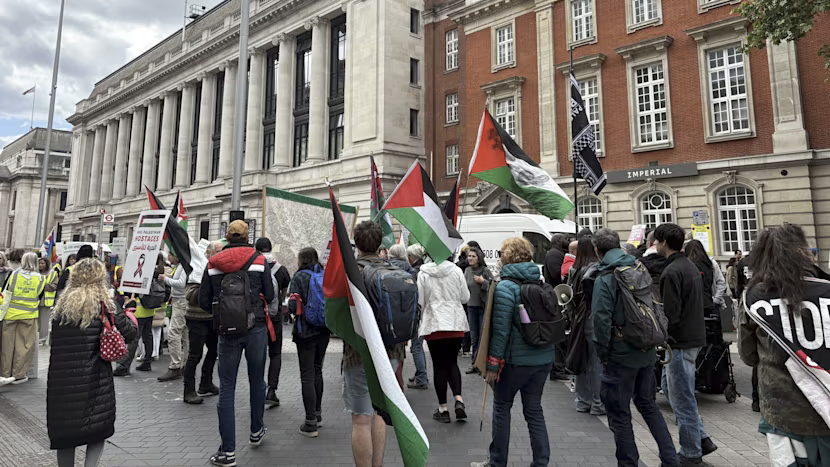
LONDON — A thick lattice of rolling police cordons, armoured vehicles, and hovering drones transformed central London into a city under operational lock on Saturday, as an estimated 80,000 demonstrators converged for two ideologically opposed mass rallies: a far-right “Unite the Kingdom” march led by activist Tommy Robinson, and a Nakba 78 commemoration organised by the Palestine Solidarity Campaign. With the FA Cup final simultaneously drawing 90,000 fans to Wembley, the Metropolitan Police deployed 4,000 officers, the largest single public-order mobilisation in over a decade, in an operation that the force itself described as “unprecedented”. The cost to the public purse: £4.5 million.
Yet the heavy presence of the state, the pre-emptive arrests, the novel legal instruments, and the political heat that radiated from a government battered by local election losses reveal a day that is about far more than rival chants and Union Jacks. Saturday 16 May 2026 has become a crucible for the evolving relationship between protest, policing, and power in Britain, with accusations of double standards, the weaponisation of counter-terrorism tools, and the targeted criminalisation of pro-Palestinian speech.
The Geography Of Separation:
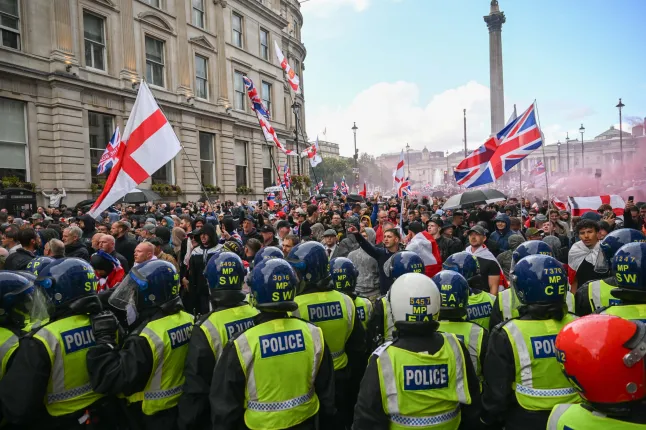
By mid-morning, two separate human rivers were forming on opposite sides of the capital. From Kingsway, a swelling column of Robinson supporters, many draped in Union flags, some in St George’s crosses, others holding placards reading “Free Speech is a Human Right”, began snaking towards Trafalgar Square and Parliament Square under a banner proclaiming a “people-led assembly focused on unity, awareness, and collective responsibility”. Robinson, whose real name is Stephen Yaxley-Lennon, posted on X before the march: “Today, we Unite The Kingdom and the West in the greatest patriotic display the world has ever seen.” His movement, which drew an estimated 150,000 to central London last September in an event marred by attacks on police and chants of “Allahu Akbar is a lie”, has become a vessel for diffuse anger over immigration, Islam, and alleged free-speech curbs, turbocharged by endorsements from figures like Elon Musk.
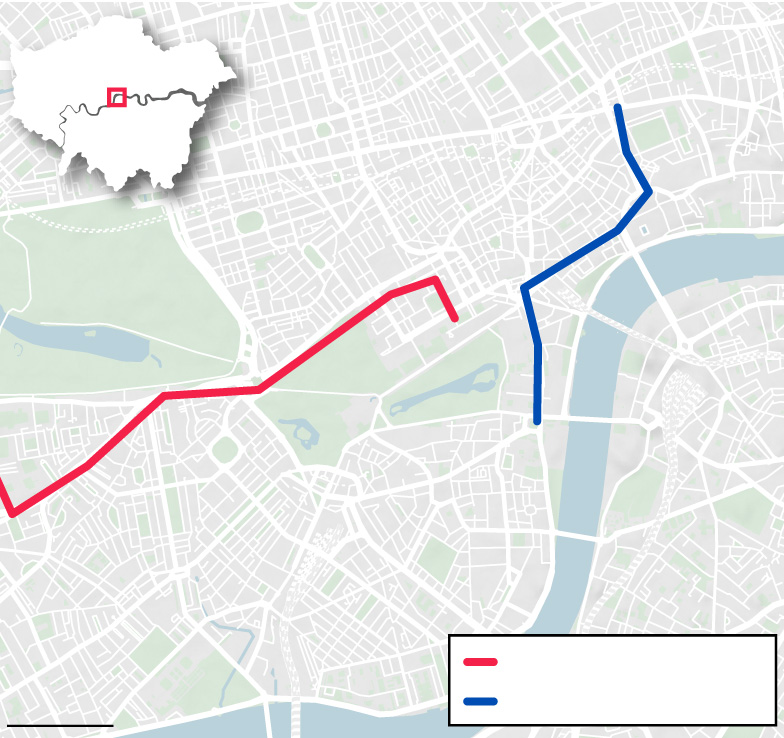
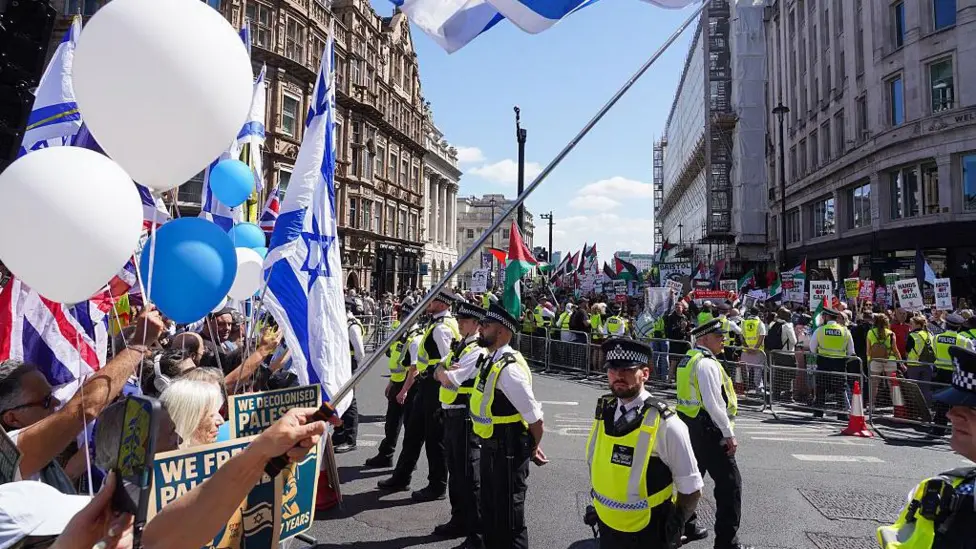
Simultaneously, in the leafy streets of South Kensington, a very different crowd assembled. Organisers from the Palestine Solidarity Campaign, the Stop the War Coalition, and Stand Up to Racism marshalled tens of thousands carrying Palestinian flags and signs reading “78 Years of Dispossession” and “Smash the Far Right”. The Nakba Day march, commemorating the mass expulsion and killing of Palestinians in 1948 that accompanied the creation of Israel, had been denied permission to end at Trafalgar Square, a traditional rallying point. Instead, police confined the procession to a route from Exhibition Road to Waterloo Place, employing an east–west “corridor” system designed to keep the two demonstrations physically apart.
On the ground, the separation felt less like protection than containment. “It is painful to feel that our fears are treated as secondary, or worse, that our peaceful commemoration is viewed only as a policing problem,” read a joint statement issued on the eve of the march, signed by over 50 prominent British Palestinians and Arabs, including academics, artists, and community leaders. The signatories demanded “equal protection” from hate crimes, noting a stark asymmetry in how the state frames the two events: one as a security threat, the other as a political spectacle to be tolerated.
Policing, Pre-Emption, And Novel Powers:
Saturday’s operation broke new ground in the arsenal of protest policing. For the first time, the Met deployed live facial recognition (LFR) cameras as part of a protest operation, not on the march routes themselves, but in a separate area of Camden “expected to be used by a lot of people attending” the Unite the Kingdom rally. The Biometrics and Surveillance Camera Commissioner, Professor William Webster, warned beforehand that the technology is not “foolproof” and that forces could find themselves taken to court over misidentifications. Civil liberties groups have long argued that LFR disproportionately misidentifies women and people of colour and creates a chilling effect on lawful assembly.
Additionally, Section 60 stop-and-search powers, allowing police to stop individuals without reasonable suspicion that an offence has been committed, were authorised across both protest zones. Deputy Assistant Commissioner James Harman justified the measures, stating that officers would take “a more assertive approach to chanting and the displaying of phrases on placards or banners that incite hatred or indicate support for terrorism or other forms of extremism.” He cited recent arrests for shouting “globalise the intifada” and “death to the IDF” as evidence that the line between political speech and criminal incitement was being actively enforced.
But the most consequential innovation is legal, not tactical. Under fresh guidance issued by the Crown Prosecution Service before the marches, organisers of the rallies now face prosecution, alongside any invited speakers, if the event becomes a platform for hate speech or extremism. The CPS also instructed prosecutors to consider the “wider context” of heightened international tensions when assessing whether slogans, symbols, or chants filmed and shared on social media might amount to stirring up hatred. Director of Public Prosecutions Stephen Parkinson insisted that “this is not about restricting free speech” but “about preventing hate crime and protecting the public, particularly at a time of heightened tensions.”
Critics see a ratchet. “Making organisers vicariously liable for the speech of platform speakers, and telling prosecutors to weigh the online amplification of slogans, fundamentally alters the risk calculus for any protest group,” said a human rights lawyer monitoring the legal landscape, who asked not to be named due to the sensitivity of ongoing cases. “It shifts the burden onto organisers to police thought and to pre-censor speech in ways that will almost certainly have a disparate impact on Palestine solidarity activism.”
That disparate impact is already being felt. On 30 April, Prime Minister Keir Starmer declared that chanting “globalise the intifada” amounted to “calling for terrorism against Jews” and urged its prosecution. His statement came after a triple stabbing in Golders Green, north London, in which two Jewish men and one Muslim man were wounded; the alleged assailant, now in custody, did not use that phrase. Palestinian groups condemned what they saw as the exploitation of a tragedy to stigmatise a legitimate political lexicon. The Nakba 78 march became the first major pro-Palestinian protest under the new, more hostile rhetorical framework.
The Far-Right Rally: ‘Peddling Hatred And Division’.
If the Nakba march was policed in an atmosphere of suspicion, the far-right demonstration was framed by the government as a menace to the social fabric, yet one that could not be banned outright. Starmer, who visited the Met’s command centre in Lambeth on Friday, said Robinson’s organisers were “peddling hatred and division, plain and simple.” Justice Secretary David Lammy posted on X on Saturday: “They do not reflect the Britain I’m proud of… But if the protest turns violent, we will act swiftly, with extra court capacity in place.” The government also blocked 11 foreign nationals described as “far-right agitators” from entering the UK, including Polish MP Dominik Tarczynski, Belgian politician Filip Dewinter, and Dutch activist Eva Vlaardingerbroek.
Robinson’s movement has long attempted to weaponise Jewish identity, presenting itself as a defender of Western civilisation against what it portrays as a threatening Muslim “other”. That posture has been firmly rejected by mainstream Jewish communal bodies. The Board of Deputies and the Jewish Leadership Council last year condemned Robinson’s attempts to align himself with the Jewish community, calling him a “thug”, while also criticising efforts by Prime Minister Benjamin Netanyahu’s government to legitimise such figures. Nevertheless, Robinson has succeeded in building a transnational, digitally savvy constituency that merges anti-immigrant populism with a crusader rhetoric of Christian and Western renewal. Last September’s rally, addressed remotely by Musk, shocked the political establishment not only with its size but with its raw, confrontational energy.
On Saturday, the Met Federation, representing rank-and-file officers, voiced a rarely heard complaint: “Many officers have had leave cancelled and rest days withdrawn to meet policing requirements. There are not enough of us.” The strain was compounded by the arrest of two men wanted on suspicion of grievous bodily harm after a man was run over in Birmingham. They were spotted arriving at Euston station en route to the Unite the Kingdom protest, and were detained in a pre-emptive swoop. The Met stated they were “wanted on suspicion of GBH following an incident in Birmingham where a man was run over,” linking far-right mobilisation directly to violent criminality before the march had even begun.
A City On Edge: Attacks, Terror Threats, And Political Crosswinds.
Saturday’s events unfolded against a backdrop of escalating communal fear. The UK’s terrorism threat level was raised to “severe”, the second-highest tier, meaning an attack is “highly likely”, just two weeks ago, following a spate of violent attacks on London’s Jewish community. Security officials cited “the broader Islamist and extreme right-wing terrorist threat” in explaining the decision. While many in the Jewish community have long expressed alarm at antisemitic chants and imagery at some pro-Palestinian marches since 7 October 2023, the government has increasingly framed the entire Palestine solidarity movement as an incubator of antisemitism, an accusation that organisers and participating left-wing Jewish groups fiercely dispute.
The political subtext is hard to miss. Starmer is under intense pressure within his own party after heavy Labour losses to hard-right Reform UK and nationalist parties in last week’s local elections. His decision to inject himself so directly into the policing narrative, including backing the CPS’s expanded hate-speech powers and visiting the control room, was widely interpreted as an attempt to project strength on law and order and on “values”, a terrain on which Reform and Robinson’s loose movement are competing for support. “The establishment has thrown everything in the way of us as we fight to Unite The Kingdom and the West,” Robinson declared earlier this week, positioning himself as the true anti-establishment voice, even as he marches under the protection of the largest police operation of the year.
The Human Dimension: Voices From The Ground.
Away from the politics of command centres, the day was lived in the bodies of demonstrators and local residents. In South Kensington, Fatima, a 34-year-old teacher of Palestinian heritage, held a placard bearing the name of her grandparents’ village, depopulated in 1948. “Every year we come to mourn, and every year the authorities treat us as a problem to be managed,” she said. “They tell us we cannot go to Trafalgar Square because the far right is there. But why is our space being sacrificed for people who want us gone?”
Across town, near Trafalgar Square, a retired builder named Dave from Essex, wearing an England shirt, offered a different calculus: “I’m not far-right, I’m just fed up. You can’t say anything anymore. Tommy’s got a point, the country’s broken. Look at the boats, look at the crime. They’re trying to silence us.” When asked about the violence at last September’s event, he shrugged: “That was a few idiots. Most of us are peaceful.”
Met Commander Clair Haynes told Starmer during his briefing that drones would be used to spot “potential clashes or flashes,” while officers at Wembley would monitor CCTV to identify football supporters heading towards the protest zones. “It’s the busiest day in years, and we are stretched to the absolute limit,” one officer, who spoke on condition of anonymity, said while patrolling the Strand. “You’re holding two ends of a burning rope and hoping your gloves don’t give out.”
The Legal Chill: Intifada, Hate Speech, And The Spectre Of Self-Censorship.
The CPS guidance and Starmer’s specific singling out of “globalise the intifada” have introduced a new precariousness into protest speech. Legal observers note that the term “intifada”, meaning “uprising” or “shaking off”, encompasses a range of historical meanings, including non-violent civil disobedience. Yet the Crown’s new posture effectively collapses the distinction between political advocacy and support for terrorism. The Met confirmed that “a number of cases are going through the courts” for such chanting, but critics argue that selective prosecution, combined with the organisers’ liability framework, will force movements to police their own members in a way that stifles legitimate political expression.
“You cannot celebrate the Nakba, an act of ethnic cleansing, without naming it, and you cannot name it without the state suspecting you of hatred. This is the trap,” said a spokesperson from a legal support group aligned with the protest, who was not authorised to speak publicly. “The government talks about protecting Jews while using the far right as a foil to pass powers that will be used against minorities and dissent.”
The far right itself, for all the government’s condemnations, benefits from a certain structural permissiveness. Despite the violence and anti-Muslim rhetoric in September, Robinson was not designated under terrorism legislation, and his event was allowed to proceed with conditions rather than proscription. Some community groups question whether a similarly-sized Muslim-led march that had resulted in 23 arrests for attacking police would receive the same latitude.
A Nation Watches:
As the sun moved over Parliament Square in the afternoon, the two protest corridors remained separate, but their symbolic convergence was inescapable. Britain, a country still digesting the fallout of the October 7 attacks, the relentless Gaza war, and an immigration debate increasingly framed in civilisational terms, found itself on Saturday policing not just bodies but ideologies. The £4.5 million operation, the live facial recognition, the legal novelties, and the exhausted officers all told a story of a state trying to hold the centre while the ground shifts beneath it.
“We’re marching today to show that we will not allow Tommy Robinson and the far right to divide our communities,” said Daniel Kebede, General Secretary of the National Education Union, at the Nakba rally. It was a statement of intent, but also a recognition that the battle for the narrative was being fought not only on the streets, but in the codes of what is sayable, what is prosecutable, and whose fear is deemed worthy of protection.
In the end, the day passed without the kind of violent flashpoints that many had feared, but the fissures it exposed will not be sealed by police cordons. They run through the law, through the political class, and through communities that no longer see their safety reflected in the other’s mirror. As one veteran human rights monitor, observing the parallel marches from the margins, put it: “Today, London wasn’t united or divided. It was two different countries walking past each other, each convinced that the other is the existential threat. And the state, for all its armour, doesn’t know how to speak to both.”
Source: Multiple News Agencies
Submissions:
For The Secure Submission Of Documentation, Testimonies, Or Exclusive Investigative Reports From Any Global Location, Please Utilise The Following Contact Details For Our Investigations Desk: enquiries@veritaspress.co.uk or editor@veritaspress.co.uk
Help Support Our Work:
Popular Information is powered by readers who believe that truth still matters. When just a few more people step up to support this work, it means more lies exposed, more corruption uncovered, and more accountability where it’s long overdue.
Help Protect Independent Journalism, Which Is Currently Under Attack.
If you believe journalism should serve the public, not the powerful, and you’re in a position to help, becoming a DONATOR or a PAID SUBSCRIBER truly makes a difference.
DONATION APPEAL: If You Found This Reporting Valuable, Please Consider Supporting Independent Journalism.
Help Support Our Work – We Know, We Know, We Know …
Seeing these messages is annoying. We know that. (Imagine what it’s like writing them … )
Your support fuels our fearless, truth-driven journalism. In unity, we endeavour to amplify marginalised voices and champion justice, irrespective of geographical location.
But it’s also extremely important. One of Veritas Press’s greatest assets is its reader-funded model.
1. Reader funding means we can cover what we like. We’re not beholden to the political whims of a billionaire owner. We are a small, independent and impartial organisation. No one can tell us what not to say or what not to report.
2. Reader funding means we don’t have to chase clicks and traffic. We’re not desperately seeking your attention for its own sake: we pursue the stories that our editorial team deems important and believe are worthy of your time.
3. Reader Funding: enables us to keep our website and other social media channels open, allowing as many people as possible to access quality journalism from around the world, particularly those in places where the free press is under threat.
We know not everyone can afford to pay for news, but if you’ve been meaning to support us, now’s the time.
Your donation goes a long way. It helps us:
- Keep the lights on and sustain our day-to-day operations
- Hire new, talented independent reporters
- Launch real-time live debates, community-focused shows, and on-the-ground reporting
- Cover the issues that matter most to our communities, in real time, with depth and integrity
We have plans to expand our work, but we can’t do it without your support. Every contribution, no matter the size, helps us stay independent and build a truly people-powered media platform.
If you believe in journalism that informs, empowers, and reflects the communities we serve, please donate today.
Donate Today:
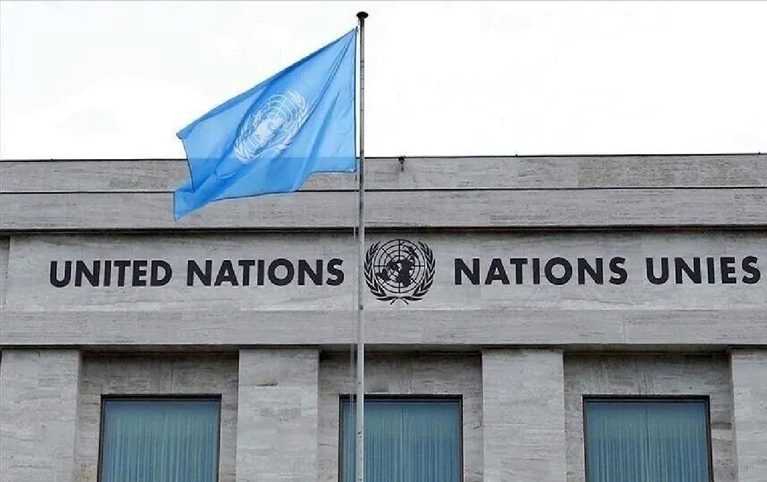
GENEVA — A United Nations fact-finding mission has concluded there are “reasonable grounds to believe”
Iran’s GDP is projected to contract by 5.4 to 6.1% in 2026, its worst performance
The Trump administration is preparing a $2.8 billion weapons package for Israel containing 40,000 2,000-pound
Film alleges mass civilian deaths are routinely built into military decisions amid Israel’s genocidal war
The Israeli rights group says violence, displacement, economic strangulation, and settlement expansion form part of

Houthi forces have captured the historic Red Sea port of Mocha and are advancing on
London’s historic sanctions against Israeli settlements mark a watershed moment in UK foreign policy, but
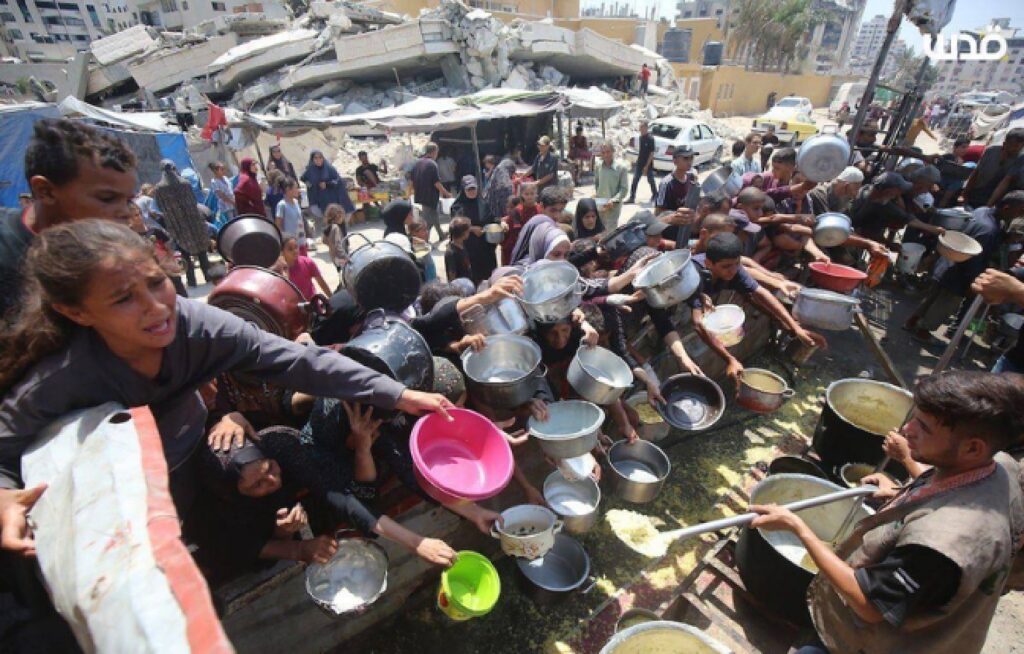
With 95% of Gaza’s population now wholly dependent on aid and more than 90% stripped
India calls for Kashmir and Ladakh to appear only on its official map after a
ISLAMABAD – In the high-stakes political theatre of Pakistan, the battleground has shifted from the


















The recent increase in the UK Terrorism Threat Level Raised to Severe highlights the importance of strengthening security measures for businesses, public venues, and critical infrastructure. Working with a professional security provider can help improve site protection through trained security guards, CCTV monitoring, access control, and rapid response services, ensuring greater safety during periods of heightened risk.