


Help support our mission, donate today and be the change. Every contribution goes directly toward driving real impact for the cause we believe in.
MUSCAT/TEHRAN — The Strait of Hormuz, a sliver of water just 21 nautical miles wide at its narrowest, has become the focal point of the most radical reordering of maritime law since the Suez Crisis. With the world’s oil markets still reeling from a months-long US-Israeli military campaign against Iran that killed Supreme Leader Ali Khamenei and shattered the nuclear status quo, Tehran is now moving with Omani complicity to codify a new transit regime. The plan: a state-run concierge service for ships that promise allegiance, fees for “specialised services,” and an explicit blacklist for vessels tied to the “Freedom Project,” Washington’s multinational naval escort operation. For the first time, a major international chokepoint would be governed not by the universal right of transit passage but by political screening, military coordination, and a tariff system invented in the fog of war.
This investigation draws on exclusive statements from Iranian and Omani officials, shipping data, legal experts, and on-the-ground voices in both countries to dissect a move that could permanently transform global energy security. Crucially, Iran’s leadership insists the strait is not blocked by Tehran but has fallen victim to a US-led chokehold blockade that began with the military offensive and has been sustained despite a Pakistan-brokered ceasefire.
“The Strait Is Open,” Tehran Says, Blaming A US Chokehold:
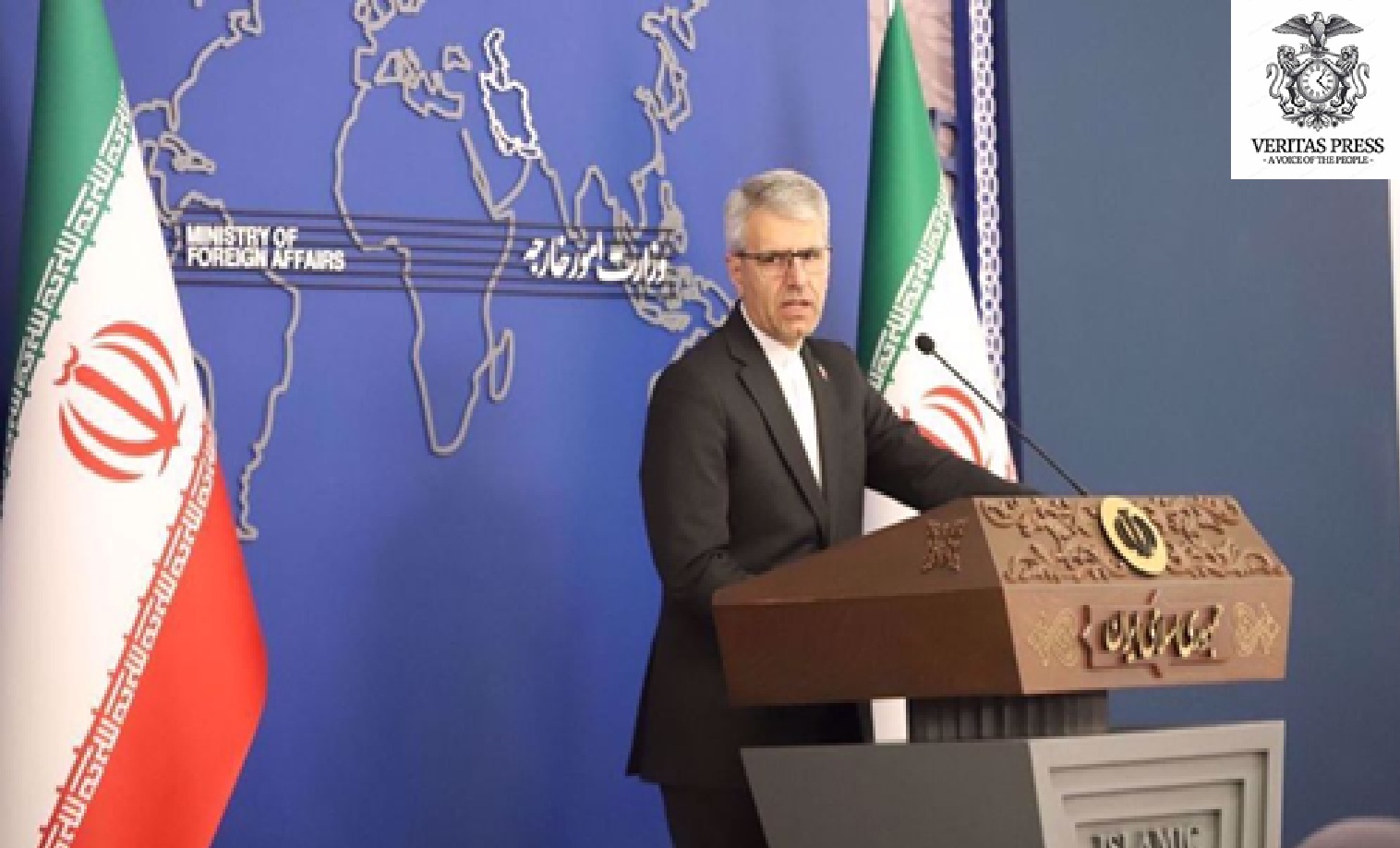
A central and often underreported element of the crisis is Iran’s repeated assertion that it has never sought to close the Strait of Hormuz; rather, it says, the disruption is a direct consequence of the United States’ “Freedom Project” naval blockade. Iranian Foreign Ministry spokesman Esmaeil Baghaei underscored this at his Monday press conference, framing Iran’s new mechanism as a defensive response to an existing closure imposed by Washington.
“The Islamic Republic of Iran has always made tremendous efforts to safeguard safe and secure transit through this route and continues to insist that passage through the Strait of Hormuz must take place in the best possible manner with complete safety,” Baghaei said. He argued that the strait’s importance “extends far beyond Iran, Oman, and the regional countries to the entire world” and that it was the “US-Israel war of aggression” that forced Tehran to take defensive action under international law.
Deputy Foreign Minister Kazem Gharibabadi was even more direct. “The Strait of Hormuz is open, and transit is proceeding smoothly,” he told IRNA, while immediately adding a crucial caveat: “When we face aggression, movement encounters serious disruptions. We are now in a state of war, and wartime conditions cannot be governed by peacetime rules.” For Iranian officials, the sequence is clear: first came the unprovoked US-Israeli attacks and the subsequent blockade targeting Iranian vessels and ports, and only then did Iran introduce enhanced controls as a matter of self-defence.
Foreign Minister Abbas Araghchi, during his visit to New Delhi, framed the policy succinctly: “All vessels can pass through the Strait of Hormuz except those at war with us, provided they coordinate with the Iranian navy.” He described the situation as “very complicated” not because of any Iranian closure, but because of stalled negotiations and the “contradictory messages” from Washington that have deepened distrust. Araghchi expressed hope that “with the advancement of negotiations, we will reach a good conclusion so that the Strait of Hormuz can be completely secured and we can expedite the normalisation of traffic.”
This narrative, that the strait is open from Iran’s perspective but choked by an aggressive US intervention, is more than diplomatic rhetoric. It underpins Tehran’s legal justification for its new mechanism and forms the basis of its appeal to Asian and European nations now quietly negotiating transit with the Islamic Revolutionary Guard Corps (IRGC) navy. Iran’s state television reported Saturday that European countries had begun such talks, following earlier coordination with China, Japan, and Pakistan. In this telling, the problem is not Iranian obstruction but a US-imposed stranglehold that only cooperating nations can bypass.
The Mechanics Of Control:
The outline of Tehran’s scheme was laid bare over three consecutive press engagements in the past ten days. Baghaei confirmed that Iran and Oman are “in constant contact … to devise a mechanism” for the strait, a process that included an expert meeting in Muscat last week.
Days earlier, Ebrahim Azizi, chairman of the Iranian parliament’s National Security and Foreign Policy Committee, took to X to declare that a “professional mechanism to manage traffic … along a designated route” would be unveiled soon, under which “only commercial vessels and parties cooperating with Iran will benefit.” “Necessary fees” would be charged for “specialised services.” Those linked to the “Freedom Project” – a term officials have not fully defined but which appears to refer to the US-led escort coalition – would be barred.
Gharibabadi completed the picture, telling IRNA that a bilateral “protocol for Iran and Oman to supervise transit” was being drafted. “These requirements do not mean restrictions, but rather aim to facilitate and ensure safe passage and provide better services,” he insisted. The parliamentary dimension is accelerating: Deputy Parliament Speaker Ali Nikzad revealed earlier this month that a new law would “reaffirm Iran’s rights over the waterway,” prohibit Israeli-linked vessels unconditionally, and deny access to “hostile countries – particularly the United States.”
A Wartime Legal Justification, Or A Protection Racket?
International law is unequivocal: the Strait of Hormuz, connecting one part of the high seas (the Persian Gulf) to another (the Gulf of Oman), qualifies as a strait used for international navigation. Under customary law and the 1982 UN Convention on the Law of the Sea (UNCLOS), all ships enjoy the right of “transit passage,” which cannot be suspended, impeded, or conditioned upon coastal state consent. Even belligerency does not automatically erase that right; the law of naval warfare permits belligerent control zones and visit-and-search only under narrow circumstances, and certainly not blanket discrimination based on flag or political alignment in an international strait.
Iran’s legal team frames its actions under a sweeping claim of self-defence against aggression. “The attack on the Islamic Republic of Iran … prompted Tehran to adopt a series of measures under international law to defend its national sovereignty, territorial integrity, and national security,” Baghaei said, citing both the UN Charter and domestic law. Gharibabadi added that targeting nuclear facilities under IAEA safeguards, he listed strikes near Bushehr, Ardakan, Khondab, Natanz, and Fordo, “violate international law, the UN Charter, and relevant resolutions,” and require Security Council action.
Yet even some sympathetic legal scholars are aghast at the toll-collecting proposal. “You are essentially creating a tiered access system where passage is sold to the highest political bidder,” said Dr. Niloofar Ansari, professor of international law at the University of Geneva, in an interview. “This is not a legitimate defensive measure; it is a revenue-generating, discriminatory regime that weaponises geography. If normalised, it would set a catastrophic precedent for the Malacca Strait, Bab el-Mandeb, and beyond.”
Maritime risk consultant Captain John Konrad was blunter. “What Iran is floating is a protection racket,” he told this desk. “Pay the fee, align politically, and we won’t board you, restrict your passage, or release your coordinates to our attack craft. The fact that Oman appears to be going along, perhaps to preserve a shred of stability or to avoid being completely sidelined, only gives it a thin veneer of bilateral respectability.” Yet Konrad acknowledged that the US Freedom Project blockade had “effectively severed normal shipping patterns first,” leaving Iran with a powerful argument that it was merely reacting to a prior strangulation of its own commerce.
Oman’s Impossible Balancing Act:
Muscat’s role is the diplomatic linchpin. The sultanate shares sovereignty over the strait’s southern lane and has historically been the region’s quiet mediator. Now it finds itself co-drafting what could amount to a joint-control framework that alienates its Western security partners.
A senior Omani maritime official, speaking on condition of anonymity, acknowledged the talks. “We are consulting intensively with the Iranian side. Our paramount interest is keeping the Strait open and preventing an environmental catastrophe. The protocol is intended to be a practical arrangement, a coordination of vessel traffic services to reduce collision risks and clarify responsibilities during hostilities. Whether it can stay within international legal boundaries is precisely what our legal teams are debating day and night.”
Independent Omani analyst Fatima al-Balushi noted the domestic pressure. “Omanis watch these supertankers from the Musandam cliffs daily. They understand that if this mechanism is perceived in Washington as a joint Iranian-Omani blockade, the economic retaliation could crush our tourism, logistics, and banking sectors. Yet if we publicly disavow Iran, we risk that Tehran simply ignores our territorial waters and enforces its rules unilaterally, sparking a direct confrontation in our backyard.”
Al-Balushi added that many in Muscat quietly accept Tehran’s argument that the US intervention is the original sin. “There’s a widespread sense that America lit the fuse and then blamed Iran for the explosion. That doesn’t make Iran’s response legal, but it shapes the Omani instinct to mediate rather than condemn.”
Ships In The Shadows: Covert Transits Resume.
Even as diplomats haggle, shipping is staging a nervous comeback. Bloomberg ship-tracking data showed at least ten large vessels carrying oil, LPG, and LNG crossed the strait since Sunday, including the India-bound LPG carriers Symi and NV Sunshine. Crucially, almost all temporarily switched off their Automatic Identification System (AIS) transponders while in the narrowest segment, reappearing in the Gulf of Oman, a technique known as “going dark” that makes collision avoidance nearly impossible and is often used in conflict zones to evade targeting.
An Indian shipping executive familiar with the NV Sunshine manifest, who requested anonymity, confirmed that “the charterers received verbal assurances via intermediaries that the vessel would not be harassed as long as it did not broadcast its location and was not associated with any Israeli or US military cargo. But those assurances are informal. One miscalculation and you have a burning LPG carrier in the world’s busiest chokepoint.”
The executive noted the irony: “We are going dark to slip through a strait that Iran keeps telling us is open. The real threat, from our perspective, is being caught between two navies, the IRGC and the US Fifth Fleet, that are both claiming the right to control our movement.”
The “Freedom Project” And The Blockade:
The genesis of Iran’s scheme lies in President Donald Trump’s announcement, shortly after the US-Israeli offensive began on 28 February, of a naval blockade targeting Iranian vessels and ports. Dubbed the “Freedom Project,” the operation deployed carrier strike groups and allied warships to intercept Iranian oil exports. Tehran responded by effectively shutting the strait to what Baghaei called “enemies and their allies,” enforcing much stricter controls than last month.
The toll is staggering. According to the Iranian health ministry, more than 1,340 people have been killed on the Iranian side, a figure that includes civilian casualties from strikes on nuclear infrastructure. Gharibabadi warned that attacks on IAEA-safeguarded sites “endanger international peace and security” and promised that if Iranian facilities are attacked from the territory of third countries, “similar facilities in those countries will also be subject to a proportionate response”, a barely veiled threat to the Gulf states that host US bases.
That threat has already materialised. Iran’s retaliatory drone and missile barrages have struck targets in Jordan, Iraq, and Gulf Cooperation Council states, including Saudi Arabia and the UAE, according to regional military sources. A UAE government statement in April condemned the “unacceptable violation of our sovereignty” without naming Iran, a diplomatic tightrope that reflects the Gulf’s precarious position.
Voices From The Shore:
In the Iranian port city of Bandar Abbas, the war and the Strait’s semi-closure have emptied markets. “Half the boats are idle. The fish price has tripled because nobody dares to go far out,” said Hassan, a 53-year-old fisherman who would give only his first name. “They tell us the new system will bring order. But for whom? For the big tankers, not for us. The Revolutionary Guards stop us even now if we drift too close to the tanker routes.”
Hassan expressed a view common on the Iranian waterfront: “The Americans started this blockade. Our navy is just responding. The Strait is our water, our life. Why should we let them choke us while their tankers pass freely?”
Across the water in Oman’s Musandam exclave, Salim al-Shehhi, a dhow captain who has plied these waters for thirty years, watched an LNG carrier slip past Khasab. “I’ve never seen so few ships at anchor,” he said. “They pass in the dark, like ghosts. We hear the IRGC Navy on the radio, sometimes in English, giving instructions. The Omani coast guard just listens. Everyone is afraid to make a mistake.”
Al-Shehhi added that local fishermen “blame the foreigners, both the Americans and the Iranians, for this mess,” but acknowledged that “if the US warships weren’t here, maybe the Iranians wouldn’t be so jumpy.”
Human rights organisations have focused on the civilian cost and the environmental peril. Lynn Maalouf, Amnesty International’s Middle East research director, called on all parties to “immediately cease attacks on or near populated areas and critical energy infrastructure.” She added: “The long-term radiological risk from strikes on Bushehr and other nuclear sites has not been independently assessed, yet millions of people around the Gulf are being treated as expendable.”
The International Atomic Energy Agency, in a rare public statement last week, confirmed “damage to ancillary buildings” at several sites but said it could not verify on-site conditions because of the conflict. Director General Rafael Grossi appealed for “maximum restraint around nuclear facilities,” describing the situation as “unprecedented since the inception of the NPT.”
The Ceasefire That Wasn’t:
A Pakistan-brokered ceasefire that took effect on April 8, forty days into the war, offered a glimmer of hope. A first round of talks was held in Islamabad, but both sides rejected each other’s proposals last week. Araghchi characterised the impasse bluntly: “We hope that, with the advancement of negotiations, we will reach a good conclusion so that the Strait of Hormuz can be completely secured and we can expedite normalisation of traffic. But we have no trust.”
A senior Pakistani diplomat involved in the shuttle confirmed that the Iranian proposal includes a demand to “dismantle the Freedom Project architecture and recognise Iran’s regulatory role in the strait as part of a permanent security framework.” The US, the diplomat said, “views that as extortion and a reward for aggression.” A State Department spokesperson, speaking not for attribution, called the Iranian plan “a flagrant violation of the right of transit passage, dressed up as a navigation service. If Oman signs on, we will have to reconsider the nature of our military and economic assistance to Muscat.”
Yet on the water, a distorted calm has returned. At least three Asian-flagged tankers, chartered by Chinese and Japanese refiners, have transited in the past 48 hours, coordinating with the IRGC navy via predetermined radio frequencies and paying what shipping sources describe as “facilitation fees” deposited into an Omani bank account whose ultimate beneficiary is unclear. The mechanism, still “draft,” is already operational.
What Comes Next?
Iran’s parliament is expected to debate the Hormuz legislation within the next fortnight. The protocol with Oman is still being negotiated, but Gharibabadi said contacts “continue without interruption.” Maritime law experts warn that once a bilateral protocol is formally adopted, even if it violates UNCLOS, reversing it will require either Security Council action, paralysed by great-power rivalry, or the credible threat of force, which would risk a wider regional war.
The deeper critique is that Iran is exploiting the fog of an asymmetrical war to extract permanent geopolitical rents. Yet Tehran’s narrative, that the strait remains open and it is the US Freedom Project that constitutes the true blockade, has gained traction in capitals across Asia and even among some European diplomats, who privately say that Washington’s aggressive posture left no good options. “They are turning a chokepoint into a toll booth, an instrument of foreign policy coercion,” said Konrad. “Every insurance syndicate in London is recalculating war-risk premiums. If this becomes the new normal, the days of free-flowing Gulf energy are over, and the world will be paying a Hormuz risk premium forever. But we also have to ask who threw the first punch. The Freedom Project was a blockade by any definition.”
Back in Muscat, Omani officials are acutely aware that they are being painted as co-authors of a regime that may be illegal, but they see no alternative. “If we walk away, the strait becomes a free-fire zone with no rules at all,” the senior maritime official said. “We are trying to carve out a space where international law can still breathe. And we cannot ignore that Iran’s position, that the strait is not closed by them but by the US intervention, contains a kernel of truth that the world is not yet ready to fully examine.”
For now, the Strait of Hormuz has entered a legal twilight zone. The tankers sail dark, the diplomats talk in circles, and two ancient maritime neighbours are writing rules that could reshape global order, or blow it apart. All the while, Tehran points to the American warships on the horizon and declares the waterway open, if only the world would let it breathe.
Source: Veritas Press C.I.C. | Multi News Agencies
Submissions:
For The Secure Submission Of Documentation, Testimonies, Or Exclusive Investigative Reports From Any Global Location, Please Utilise The Following Contact Details For Our Investigations Desk: enquiries@veritaspress.co.uk or editor@veritaspress.co.uk
Help Support Our Work:
Popular Information is powered by readers who believe that truth still matters. When just a few more people step up to support this work, it means more lies exposed, more corruption uncovered, and more accountability where it’s long overdue.
Help Protect Independent Journalism, Which Is Currently Under Attack.
If you believe journalism should serve the public, not the powerful, and you’re in a position to help, becoming a DONATOR or a PAID SUBSCRIBER truly makes a difference.
DONATION APPEAL: If You Found This Reporting Valuable, Please Consider Supporting Independent Journalism.
Help Support Our Work – We Know, We Know, We Know …
Seeing these messages is annoying. We know that. (Imagine what it’s like writing them … )
Your support fuels our fearless, truth-driven journalism. In unity, we endeavour to amplify marginalised voices and champion justice, irrespective of geographical location.
But it’s also extremely important. One of Veritas Press’s greatest assets is its reader-funded model.
1. Reader funding means we can cover what we like. We’re not beholden to the political whims of a billionaire owner. We are a small, independent and impartial organisation. No one can tell us what not to say or what not to report.
2. Reader funding means we don’t have to chase clicks and traffic. We’re not desperately seeking your attention for its own sake: we pursue the stories that our editorial team deems important and believe are worthy of your time.
3. Reader Funding: enables us to keep our website and other social media channels open, allowing as many people as possible to access quality journalism from around the world, particularly those in places where the free press is under threat.
We know not everyone can afford to pay for news, but if you’ve been meaning to support us, now’s the time.
Your donation goes a long way. It helps us:
- Keep the lights on and sustain our day-to-day operations
- Hire new, talented independent reporters
- Launch real-time live debates, community-focused shows, and on-the-ground reporting
- Cover the issues that matter most to our communities, in real time, with depth and integrity
We have plans to expand our work, but we can’t do it without your support. Every contribution, no matter the size, helps us stay independent and build a truly people-powered media platform.
If you believe in journalism that informs, empowers, and reflects the communities we serve, please donate today.
Donate Today:
GENEVA — A United Nations fact-finding mission has concluded there are “reasonable grounds to believe”
Iran’s GDP is projected to contract by 5.4 to 6.1% in 2026, its worst performance
The Trump administration is preparing a $2.8 billion weapons package for Israel containing 40,000 2,000-pound

Film alleges mass civilian deaths are routinely built into military decisions amid Israel’s genocidal war
The Israeli rights group says violence, displacement, economic strangulation, and settlement expansion form part of

Houthi forces have captured the historic Red Sea port of Mocha and are advancing on
London’s historic sanctions against Israeli settlements mark a watershed moment in UK foreign policy, but
With 95% of Gaza’s population now wholly dependent on aid and more than 90% stripped
India calls for Kashmir and Ladakh to appear only on its official map after a
ISLAMABAD – In the high-stakes political theatre of Pakistan, the battleground has shifted from the