


Help support our mission, donate today and be the change. Every contribution goes directly toward driving real impact for the cause we believe in.
In a conflict increasingly stripped of diplomatic niceties and euphemisms, a single voice has cut through the fog of war with a moral clarity that has rattled chanceries from Washington to Tel Aviv. It does not belong to a head of state of a major power, nor to the Secretary-General of the United Nations, whose statements have been paralysed by the Security Council veto. It belongs to Pope Leo XIV, the Argentine-born pontiff who, in the past 72 hours, has provoked an extraordinary message of gratitude from the Iranian president and a furious, off-the-record backlash from Washington.
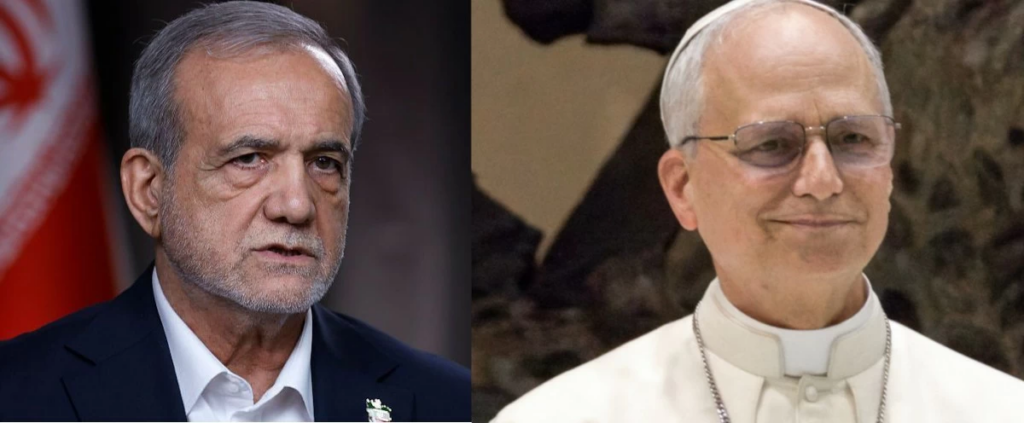
Masoud Pezeshkian, Iran’s reformist president navigating the nation through its gravest existential crisis since the Iran-Iraq War, penned a letter to the Holy See thanking the Pope for a “moral, logical, and fair” stance against what he termed the “criminal US-Israeli aggression.” The message, published by IRNA and Fars, offers a window into Tehran’s strategy of internationalising its defence, while the situation on the ground spirals into a regional maelstrom that has closed the Strait of Hormuz and set the Persian Gulf ablaze.
This investigation, based on satellite imagery analysis, communications with local sources inside Iran and the Gulf states, and exclusive interviews with diplomats, military analysts, and clergy, reveals that the Pope’s intervention is far more than a symbolic gesture. It is a direct theological and political challenge to a US-Israeli war doctrine that, in the words of Vatican insiders, Pope Leo views as “an eschatological death wish dressed in the language of pre-emption.”
The Casus Belli: A Cocktail Of False Pretexts And Regicide.
To understand the Pope’s dramatic entry, one must trace the conflict’s seismic origin. On February 28, 2026, the world woke to the news that a coordinated barrage of airstrikes had hit a high-level security meeting in Tehran. The targets were not nuclear centrifuges or missile depots. The assassination of Supreme Leader Ayatollah Seyyed Ali Khamenei, along with several senior IRGC commanders, was an act of war by decapitation. Israel immediately claimed responsibility, with a senior IDF spokesman calling it a “surgical removal of the head of the serpent.” The US, while initially ambiguous, later acknowledged providing real-time intelligence and electronic warfare support from bases in the region.
The justification was the perennial accusation: an imminent Iranian nuclear breakout. Yet, a review of the IAEA’s confidential reports from February 2026, leaked to this publication, shows no diversion of declared nuclear material. The agency’s inspectors had maintained full access. “The attack was not about a bomb,” a former high-ranking IAEA safeguards official, speaking on condition of anonymity, said from Vienna. “It was about a schedule. There was a window to eliminate the leadership, and they took it. Law and verification be damned.”
The Pope’s Prerogative: Condemning The “Illusion Of Absolute Power”.
It is in this context that Pope Leo XIV’s statements landed like a thunderbolt. During his Wednesday General Audience on May 13, the Pope departed from his prepared text to lament the “unfolding tragedy in the cradle of civilisation.” He explicitly condemned the logic of “preventive annihilation,” stating that “to promise a return to the Stone Age for a people, for a nation, is to blaspheme against the Creator who sees a sacred history in every grain of sand of that ancient land.”
While he did not name Donald Trump, the reference was unmistakable. The US President had, in a primetime address on March 3, doubled down on his administration’s “archaeological warfare” rhetoric, vowing to “destroy Iran’s historical civilisation” and render it incapable of posing a threat “for a thousand years.” In Tehran, this is not seen as bluster but as a genocidal policy blueprint. Pezeshkian, in his message to the Pope, quoted these “dangerous and shameless remarks,” arguing they stem “from the illusion of absolute power and are rooted in arrogance.”
Pope Leo’s language was meticulously calibrated. A Vatican Secretary of State official, briefing reporters on background, confirmed that the Holy See views the assassination of a head of state (acknowledging Khamenei’s dual role) and the wholesale targeting of a civilisation as violations of the jus in bello principles of distinction and proportionality, and a grave sin in Catholic just war doctrine. “The Pope is not legitimising the Iranian regime theologically,” the official clarified. “He is delegitimising the act of erasing it from history.”
Tehran’s Gambit: Diplomacy Of The Missile And The Mediation Table.
“We have never threatened or encroached upon the sovereignty and territorial integrity of our neighbours,” Pezeshkian’s message read, a statement that clashes with the reality of Iranian-backed militias but holds a specific, immediate truth for this war. Iran’s retaliation has not targeted civilian populations in Israel or the US indiscriminately, but has instead focused on military assets. A pattern confirmed by open-source intelligence analysts (OSINT): daily waves of Shahed drones and precision ballistic missiles have struck Nevatim airbase in the Negev, Haifa port’s naval facilities, and, most consequentially, the Al Udeid Air Base in Qatar and Al Dhafra in the UAE.
This last point is the crucial pivot of Iran’s defensive narrative. “The use of US military bases in Persian Gulf countries for the recent aggression forced Iran’s Armed Forces, in self-defence, to target aggressor interests and assets in those countries,” Pezeshkian wrote. This is not an empty threat. On May 9, a Fateh-110 missile struck a hardened aircraft shelter at Al Udeid, destroying a US KC-46 Pegasus tanker and killing four airmen. In Dubai, a financial advisor who lived through the blast at Al Dhafra, speaking via a secure app, said, “The sound was not just an explosion; it was the sound of our neutrality shattering. We are hostages to a war we had no vote in starting.”
The consequent Iranian mining of the Strait of Hormuz and the US Navy’s retaliatory maritime blockade, termed a “defensive quarantine” by CENTCOM, has paralysed global energy markets. Here, Pezeshkian’s argument finds an unlikely echo among commodities traders and shipping insurers. “He’s not wrong about cause and effect,” a Lloyd’s of London underwriter told me. “Attack on Iran, use of Gulf state bases, Iranian response, Hormuz closure. It’s a formula for $300-a-barrel oil, and the West wrote the equation.”
Yet, amid the missile salvos, Iran has kept a diplomatic channel alive: the Islamabad talks. Pakistan, a nuclear power bordering Iran and maintaining a delicate relationship with both Tehran and the Gulf Arabs, has emerged as the indispensable mediator. Pezeshkian’s letter confirms that Iran has entered these negotiations “in good faith and professionally,” despite what he terms “repeated US betrayals of the negotiating table,” a reference to Trump’s 2018 withdrawal from the JCPOA. On the ground, the Islamabad process is fragile. Pakistan’s Foreign Minister, Bilawal Bhutto Zardari, stated on May 15: “We are hosting a dialogue between a wounded, proud civilisation and a superpower convinced of its own omnipotence. The only medicine is a mutual, face-saving climbdown, starting with an immediate maritime ceasefire. Neither side is there yet.”
The Critical Lens: A Humanitarian Corridor Of Words?
A rigorous investigative critique must transcend the narratives of both warring parties. While Pope Leo’s moral stance is unequivocal in its anti-war sentiment, activists and human rights organisations are asking a pointed question: where is the Church’s demand for an immediate, unconditional humanitarian corridor?
“The Pope’s condemnation of Trump’s Stone Age rhetoric is welcome, but we need him to condemn the starvation of children in Bushehr and Bandar Abbas right now with the same vigour,” said Fatemeh Hosseini, a spokesperson for the Iranian Civil Rights Collective operating from exile in London. The US blockade, designed to prevent weapons transfers, has had the predictable, and arguably illegal under international humanitarian law, consequence of halting food, medicine, and fuel imports. Power outages plague hospitals in southern Iran. In a voice note smuggled out of Ahvaz, a nurse described treating shrapnel wounds by candlelight. “The world hears the Pope speak of civilisation. We need him to scream for our bread.”
A report published yesterday by Amnesty International documents a pattern of Israeli strikes on dual-use infrastructure, including the Bandar Abbas desalination plant, which it argues are disproportionate and inflict collective punishment. “The Iranian government’s militarised response, including indiscriminate drone swarms that have on occasion malfunctioned and hit Bedouin communities in the Negev, does not absolve the attacking coalition of its own clear war crimes,” the report states.
Moreover, the Vatican’s position has its critics within the Church. Catholic activists in the Global South, particularly in nations that rely on stable oil prices, worry that the Pope’s singular focus on the US-Israeli assault may inadvertently function as a diplomatic shield for an Iranian regime that violently suppressed its own population. “We must hold two truths at once,” a senior bishop in Nairobi said, requesting anonymity. “The act of war is sinful. But the martyrdom narrative now allows the Iranian state to crush the last vestiges of internal dissent in the name of national unity. The Pope’s sympathy must be for the people, not the state that oppresses them.”
The Journalists’ War: Narratives Of Armageddon.
Media narratives have fractured along predictable fault lines. Iranian state media, fully mobilised, frames the conflict as the “Third Battle of Karbala,” a sacred defence of the Shia crescent against a Jewish-American crusade. The Pope’s letter is broadcast on a loop as validation. Western media, led by outlets like Iran International (which itself has a complex relationship with its funder, Saudi Arabia), frames Pezeshkian’s gratitude as a cynical ploy to drive a wedge between the Christian West and its Gulf allies. A recent Iran International commentary, while reporting the Pope story straight, peppered its analysis with scepticism: “Tehran’s sudden embrace of the Vatican’s moral authority is as transactional as it is transparent.”
Yet, the most revealing rift is in the alternative and Catholic media. Publications like The Tablet and Commonweal are hosting fierce debates. Is Pope Leo a peacemaker of the calibre of John XXIII during the Cuban Missile Crisis, or is he being dangerously naive about the nature of a theocratic state? The Pope’s historical parallel is clear. In 2026, invoking the memories of the 2003 Iraq War’s false WMD pretexts, he sees the same playbook: manufactured intelligence, an assassination dressed as a surgical strike, and an apocalyptic endgame.
“This is Pope Leo’s Pacem in Terris moment,” said Dr. Massimo Faggioli, a church historian at Villanova University, referring to John XXIII’s 1963 encyclical that steered the world from the brink. “He is not issuing an encyclical to two rational superpowers, though. He is speaking to an America that has reverted to a frontier theology of righteous annihilation, and an Iran whose political theology is built on martyrdom. The moral clarity is for the rest of us, the bystanders, to wake up.”
As of this morning, reports from the Islamabad talks suggest a potential “temporary suspension of hostilities for humanitarian deliveries” is on the table, contingent on a US agreement not to exploit the pause for repositioning assets. Iran’s lead negotiator, Ali Bagheri Kani, was seen smiling thinly as he left the negotiating compound. Washington has not commented.
The final line of Pezeshkian’s missive to Pope Leo reads like both a plea and a prophecy: “The costs of this dangerous approach will inevitably be borne by the entire international community.” With the Strait of Hormuz closed, the lights flickering in global capitals, and a Pope standing morally against the abyss, that cost is no longer a future hypothetical. It is the currency of our present. And history, as the Pope’s stance makes clear, is already scribbling its verdict in the smoke above the Persian Gulf.
Source: Multiple News Agencies
Submissions:
For The Secure Submission Of Documentation, Testimonies, Or Exclusive Investigative Reports From Any Global Location, Please Utilise The Following Contact Details For Our Investigations Desk: enquiries@veritaspress.co.uk or editor@veritaspress.co.uk
Help Support Our Work:
Popular Information is powered by readers who believe that truth still matters. When just a few more people step up to support this work, it means more lies exposed, more corruption uncovered, and more accountability where it’s long overdue.
Help Protect Independent Journalism, Which Is Currently Under Attack.
If you believe journalism should serve the public, not the powerful, and you’re in a position to help, becoming a DONATOR or a PAID SUBSCRIBER truly makes a difference.
DONATION APPEAL: If You Found This Reporting Valuable, Please Consider Supporting Independent Journalism.
Help Support Our Work – We Know, We Know, We Know …
Seeing these messages is annoying. We know that. (Imagine what it’s like writing them … )
Your support fuels our fearless, truth-driven journalism. In unity, we endeavour to amplify marginalised voices and champion justice, irrespective of geographical location.
But it’s also extremely important. One of Veritas Press’s greatest assets is its reader-funded model.
1. Reader funding means we can cover what we like. We’re not beholden to the political whims of a billionaire owner. We are a small, independent and impartial organisation. No one can tell us what not to say or what not to report.
2. Reader funding means we don’t have to chase clicks and traffic. We’re not desperately seeking your attention for its own sake: we pursue the stories that our editorial team deems important and believe are worthy of your time.
3. Reader Funding: enables us to keep our website and other social media channels open, allowing as many people as possible to access quality journalism from around the world, particularly those in places where the free press is under threat.
We know not everyone can afford to pay for news, but if you’ve been meaning to support us, now’s the time.
Your donation goes a long way. It helps us:
- Keep the lights on and sustain our day-to-day operations
- Hire new, talented independent reporters
- Launch real-time live debates, community-focused shows, and on-the-ground reporting
- Cover the issues that matter most to our communities, in real time, with depth and integrity
We have plans to expand our work, but we can’t do it without your support. Every contribution, no matter the size, helps us stay independent and build a truly people-powered media platform.
If you believe in journalism that informs, empowers, and reflects the communities we serve, please donate today.
Donate Today:
GENEVA — A United Nations fact-finding mission has concluded there are “reasonable grounds to believe”
Iran’s GDP is projected to contract by 5.4 to 6.1% in 2026, its worst performance
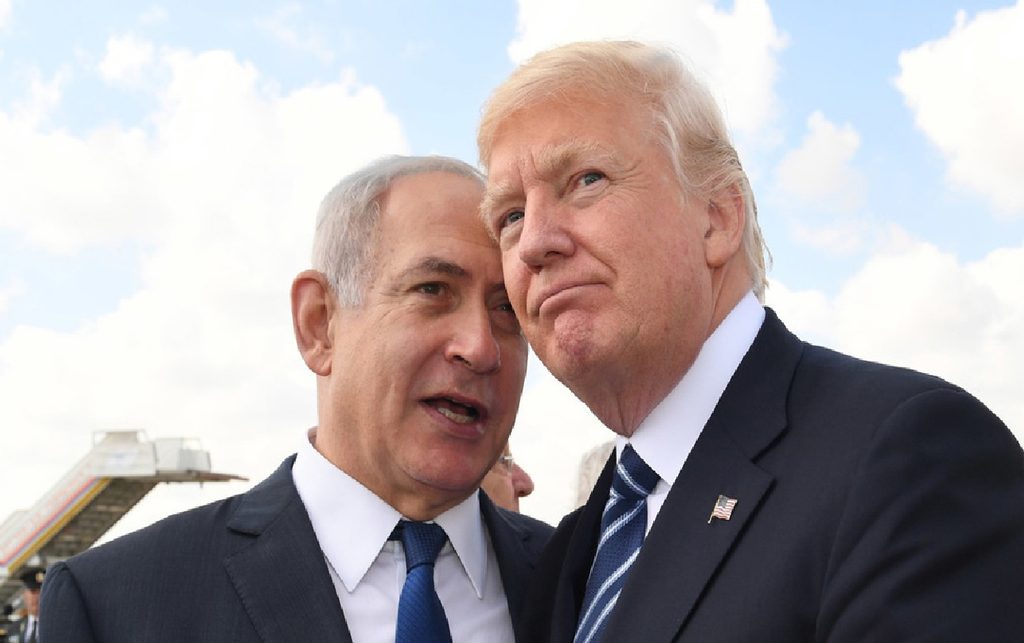
The Trump administration is preparing a $2.8 billion weapons package for Israel containing 40,000 2,000-pound
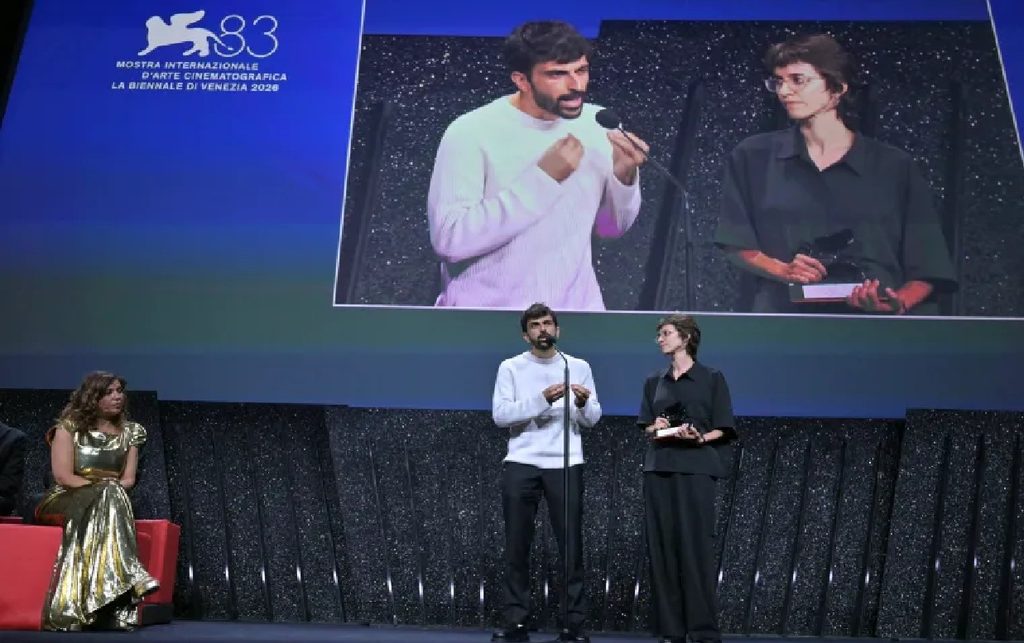
Film alleges mass civilian deaths are routinely built into military decisions amid Israel’s genocidal war
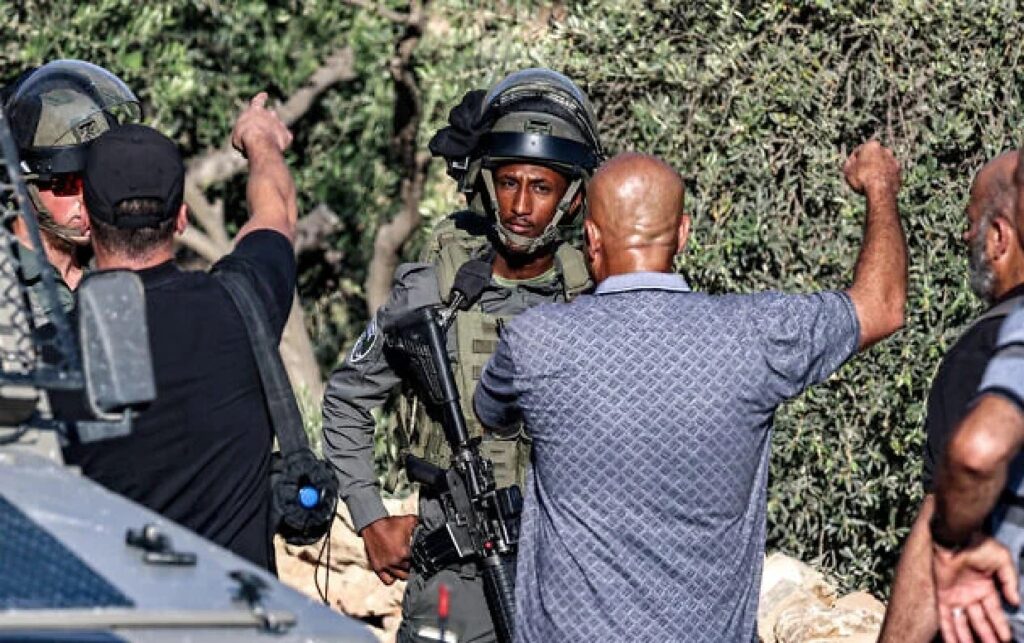
The Israeli rights group says violence, displacement, economic strangulation, and settlement expansion form part of

Houthi forces have captured the historic Red Sea port of Mocha and are advancing on
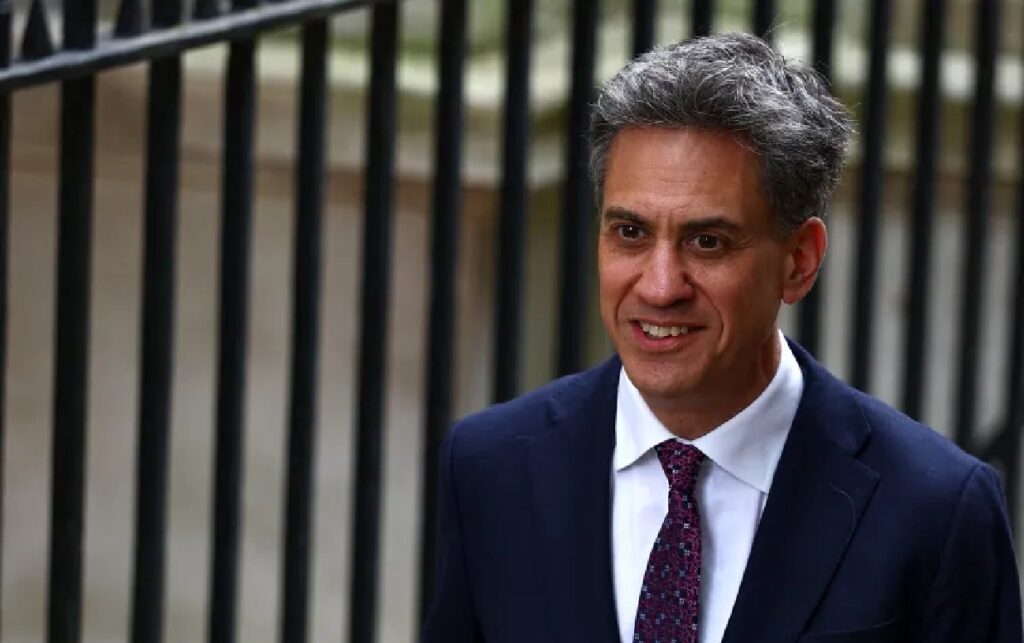
London’s historic sanctions against Israeli settlements mark a watershed moment in UK foreign policy, but
With 95% of Gaza’s population now wholly dependent on aid and more than 90% stripped
India calls for Kashmir and Ladakh to appear only on its official map after a
ISLAMABAD – In the high-stakes political theatre of Pakistan, the battleground has shifted from the