




Help support our mission, donate today and be the change. Every contribution goes directly toward driving real impact for the cause we believe in.
Investigation Reveals A Systemic Campaign Of Terror As Israeli Settlers Escalate “Price Tag” Attacks Across Multiple Villages, With State-Backed Impunity And Military Complicity Drawing Sharp International Rebuke.
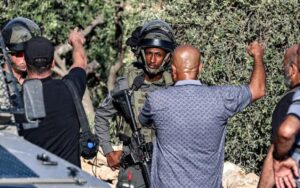
RAMALLAH, West Bank — May 16, 2026 In the pre-dawn darkness of Friday and Saturday, a coordinated wave of settler attacks ripped through Palestinian communities north of Ramallah and south of Nablus, leaving a mosque charred, vehicles incinerated, an agricultural building in ashes, and racist slogans scrawled across walls in Hebrew. The spree marks one of the most brazen single-day escalations in a year already bleeding with record settler violence, and underscores what human rights monitors now describe as a state-endorsed campaign of terror aimed at forcibly displacing Palestinians from Area C.
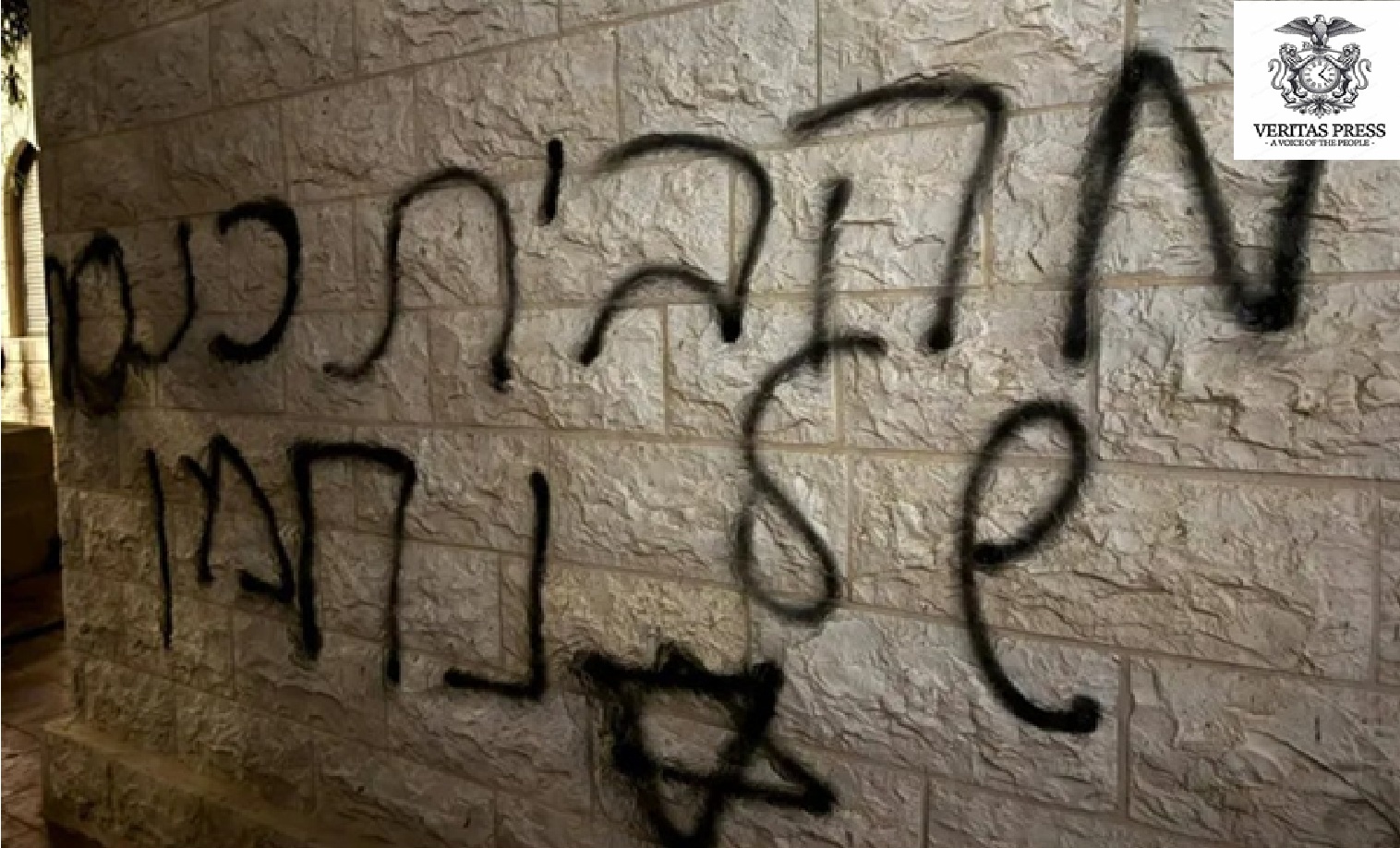
Witnesses in the village of Jibia, northwest of Ramallah, told the Palestinian news agency WAFA that settlers stormed the outskirts around 2:30 a.m. Friday, hurling Molotov cocktails into the village’s al-Huda mosque and setting at least four vehicles ablaze. The attackers spray-painted “Revenge” and “Death to Arabs” on the mosque’s exterior wall and on neighbouring homes. By the time Palestinian Authority civil defence teams arrived, the mosque’s prayer hall was gutted, its carpets and wooden minbar reduced to smouldering ruins.
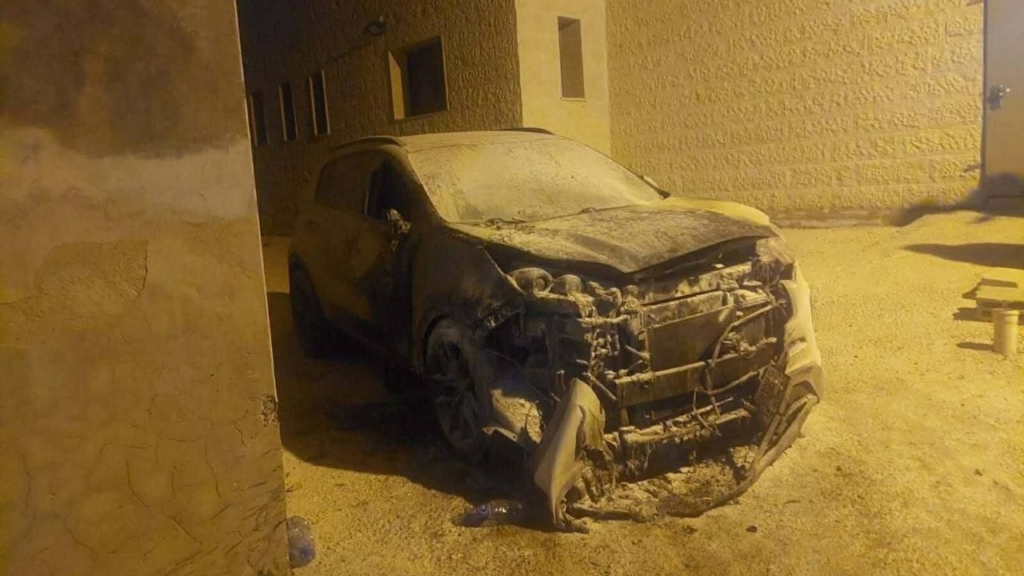
“I woke up to the smell of smoke and the screams of my children,” said Um Mohammed, 54, a resident whose car was turned into a burnt-out shell. “We saw the flames coming from the mosque. We tried to put out the fire with buckets of water, but the settlers were still there, on the hill, shouting and laughing. The army came later and told us to go back inside. They did nothing.”
Simultaneously, a separate group descended on the village of Lubban al-Sharqiya, south of Nablus, attacking at least three civilian homes, according to multiple local accounts and WAFA reports. Families barricaded themselves inside as settlers smashed windows and tried to break down doors. Racist slogans were daubed on the remains of a bulldozed Palestinian orchard nearby.
Less than 24 hours later, at dawn on Saturday, another raid hit the agricultural fringe of Turmus Ayya, northeast of Ramallah. Settlers set fire to a room belonging to farmer Fathi Khaled Shalabi and defaced the property with graffiti reading “The land of Israel for the people of Israel.” Shalabi, reached by phone, described the loss of his family’s winter feed stores and irrigation equipment. “This is not the first time,” he said, his voice hollow. “Every year, they come. But now they come with the army’s protection. They know no one will stop them.”
The attacks did not occur in a vacuum. A report issued this week by the Palestinian Wall and Settlement Resistance Commission documents a staggering 1,637 attacks in April 2026 alone, a monthly figure that, if annualised, would nearly double the total for the whole of 2023, the previous deadliest year on record. Of those April incidents, Israeli forces were responsible for 1,097, while settlers carried out 540. The governorates of Nablus (402 attacks), Hebron (340), Ramallah and al-Bireh (312), and Bethlehem (171) were the hardest hit.
“What we are witnessing is not sporadic ‘extremist’ violence. It is a strategic instrument of annexation,” said Dror Sadot, spokesperson for the Israeli human rights group B’Tselem. “The Israeli military regularly escorts these settler mobs, occasionally directly participates, and nearly always refrains from arresting perpetrators. The entire apparatus of occupation is weaponised to dispossess Palestinians.”
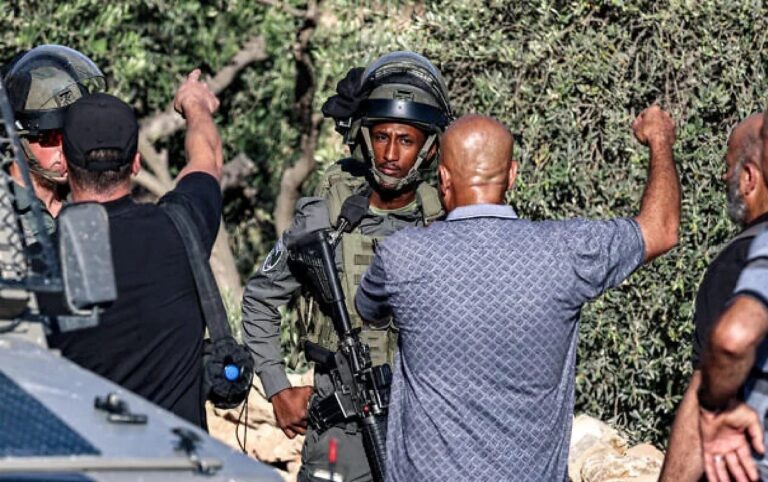
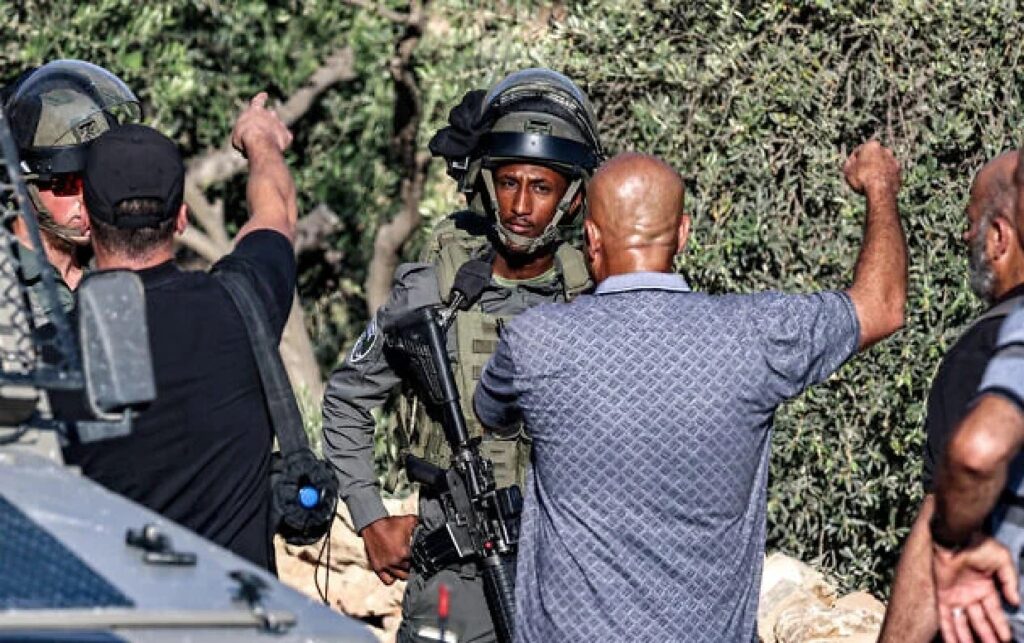
Indeed, multiple witnesses to the Jibia and Turmus Ayya attacks told this reporter that Israeli soldiers arrived during the raids but failed to intervene or pursue the assailants. “A military jeep was positioned at the entrance to the village while the settlers were still burning cars,” said Jamal Ayyad, a member of the Jibia village council. “When we shouted for help, one soldier said, ‘This is a closed military zone, go back.’ The message is clear: the settlers are untouchable.”
The “price tag” tactic, settler attacks nominally carried out as retaliation for Palestinian resistance or government decisions perceived as unfavourable to the settlement enterprise, has metastasised under Israel’s far-right coalition. Since the appointment of Finance Minister Bezalel Smotrich as governor of the Civil Administration and the expansion of National Security Minister Itamar Ben-Gvir’s influence over police, oversight mechanisms have been systematically dismantled. Smotrich has approved over 12,000 new housing units in settlements since 2024, while Ben-Gvir has openly distributed assault rifles to settler militias through civilian “security squads.”
Ali al-Ahmad, a field researcher with the Ramallah-based human rights organisation Al-Haq, noted that the racist graffiti itself carries weight. “The Hebrew slogans are not random. They function as psychological warfare, a warning to the community that they are surrounded, that their place here is temporary. This is ethnic intimidation in its rawest form, and it has resulted in families abandoning villages in Duma, Wadi al-Seeq, and Masafer Yatta.”
International bodies have sounded increasingly urgent alarms. The United Nations Office for the Coordination of Humanitarian Affairs (OCHA) reported that 2025 recorded a 38% spike in settler-related violence over the prior year, with at least 70 incidents per month involving firearms. The figure for April 2026 alone, when examining both military and settler attacks, signals a qualitative shift toward full-blown joint operations. “When you see over 1,000 attacks by Israeli forces and 540 by settlers in a single month, the distinction between ‘civilian’ settler and state actor collapses,” said Lynn Hastings, UN Resident and Humanitarian Coordinator in the occupied Palestinian territory, in a recent briefing. “These are not isolated crimes; they are part of a pervasive environment of coercion designed to force transfer.”
The diplomatic response, however, has been largely rhetorical. The Biden administration’s 2024 Executive Order on settler violence resulted in sanctions on a handful of individuals and two outposts, but the current US administration has thus far declined to expand the list. The European Union’s consideration of listing the “Lehava” and “Hilltop Youth” organisations as terrorist entities remains stalled amid internal dissent. Meanwhile, the Israeli government has dismissed international criticism as antisemitic, with Prime Minister Netanyahu’s office issuing a statement Friday insisting that “Israel condemns any vigilante action and will bring perpetrators to justice”, words belied by the near-total absence of indictments.
Yinon Magal, an Israeli journalist and former Knesset member close to the settler movement, articulated a contradictory view on social media, posting: “The attacks in Judea and Samaria are the natural response to Arab terror. The left’s outrage is hypocritical. The hilltop youth are heroes reclaiming our land.” Such sentiments, mainstream in the current governing coalition, feed a climate of impunity.
On the ground in Jibia and Turmus Ayya, the physical scars are matched by a deepening psychological despair. The al-Huda mosque has stood for 120 years; its congregation now prays in a concrete yard under a temporary tarp. Fathi Shalabi’s agricultural room, a modest structure of stone and zinc, lies in blackened rubble. In Lubban al-Sharqiya, children are kept home from school, parents terrified of another night raid.
“This is our land, and we will not leave,” said Khalida al-Rimawi, a community activist in Turmus Ayya. “But the world needs to see what is happening here. It’s not a conflict between two sides. It’s an occupation that uses settler violence as a tool of war. Every torch, every slur, is a notice of eviction with a government stamp.”
The April data from the Wall and Settlement Resistance Commission lends statistical gravity to her words: attacks have become so routine that they form a relentless drumbeat of expulsion, one village at a time. As the international community dithers, the charred walls of al-Huda mosque and the racist graffiti on Shalabi’s property are not merely crimes; they are signposts on the roadmap to de jure annexation.
Source: Multiple News Agencies
Submissions:
For The Secure Submission Of Documentation, Testimonies, Or Exclusive Investigative Reports From Any Global Location, Please Utilise The Following Contact Details For Our Investigations Desk: enquiries@veritaspress.co.uk or editor@veritaspress.co.uk
Help Support Our Work:
Popular Information is powered by readers who believe that truth still matters. When just a few more people step up to support this work, it means more lies exposed, more corruption uncovered, and more accountability where it’s long overdue.
Help Protect Independent Journalism, Which Is Currently Under Attack.
If you believe journalism should serve the public, not the powerful, and you’re in a position to help, becoming a DONATOR or a PAID SUBSCRIBER truly makes a difference.
DONATION APPEAL: If You Found This Reporting Valuable, Please Consider Supporting Independent Journalism.
Help Support Our Work – We Know, We Know, We Know …
Seeing these messages is annoying. We know that. (Imagine what it’s like writing them … )
Your support fuels our fearless, truth-driven journalism. In unity, we endeavour to amplify marginalised voices and champion justice, irrespective of geographical location.
But it’s also extremely important. One of Veritas Press’s greatest assets is its reader-funded model.
1. Reader funding means we can cover what we like. We’re not beholden to the political whims of a billionaire owner. We are a small, independent and impartial organisation. No one can tell us what not to say or what not to report.
2. Reader funding means we don’t have to chase clicks and traffic. We’re not desperately seeking your attention for its own sake: we pursue the stories that our editorial team deems important and believe are worthy of your time.
3. Reader Funding: enables us to keep our website and other social media channels open, allowing as many people as possible to access quality journalism from around the world, particularly those in places where the free press is under threat.
We know not everyone can afford to pay for news, but if you’ve been meaning to support us, now’s the time.
Your donation goes a long way. It helps us:
- Keep the lights on and sustain our day-to-day operations
- Hire new, talented independent reporters
- Launch real-time live debates, community-focused shows, and on-the-ground reporting
- Cover the issues that matter most to our communities, in real time, with depth and integrity
We have plans to expand our work, but we can’t do it without your support. Every contribution, no matter the size, helps us stay independent and build a truly people-powered media platform.
If you believe in journalism that informs, empowers, and reflects the communities we serve, please donate today.
Donate Today:
GENEVA — A United Nations fact-finding mission has concluded there are “reasonable grounds to believe”
Iran’s GDP is projected to contract by 5.4 to 6.1% in 2026, its worst performance
The Trump administration is preparing a $2.8 billion weapons package for Israel containing 40,000 2,000-pound
Film alleges mass civilian deaths are routinely built into military decisions amid Israel’s genocidal war
The Israeli rights group says violence, displacement, economic strangulation, and settlement expansion form part of

Houthi forces have captured the historic Red Sea port of Mocha and are advancing on
London’s historic sanctions against Israeli settlements mark a watershed moment in UK foreign policy, but
With 95% of Gaza’s population now wholly dependent on aid and more than 90% stripped
India calls for Kashmir and Ladakh to appear only on its official map after a
ISLAMABAD – In the high-stakes political theatre of Pakistan, the battleground has shifted from the