




Help support our mission, donate today and be the change. Every contribution goes directly toward driving real impact for the cause we believe in.
TEHRAN/WASHINGTON – The fragile diplomatic track between Iran and the United States appears increasingly close to collapse, with Iranian Foreign Minister Abbas Araghchi declaring that negotiations over uranium enrichment have “almost reached a stalemate” amid deepening mistrust, contradictory American messaging, and unresolved disputes over sanctions, maritime security, and the future of Iran’s nuclear infrastructure.
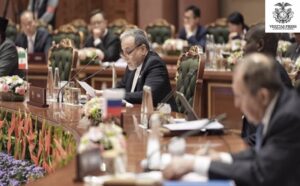
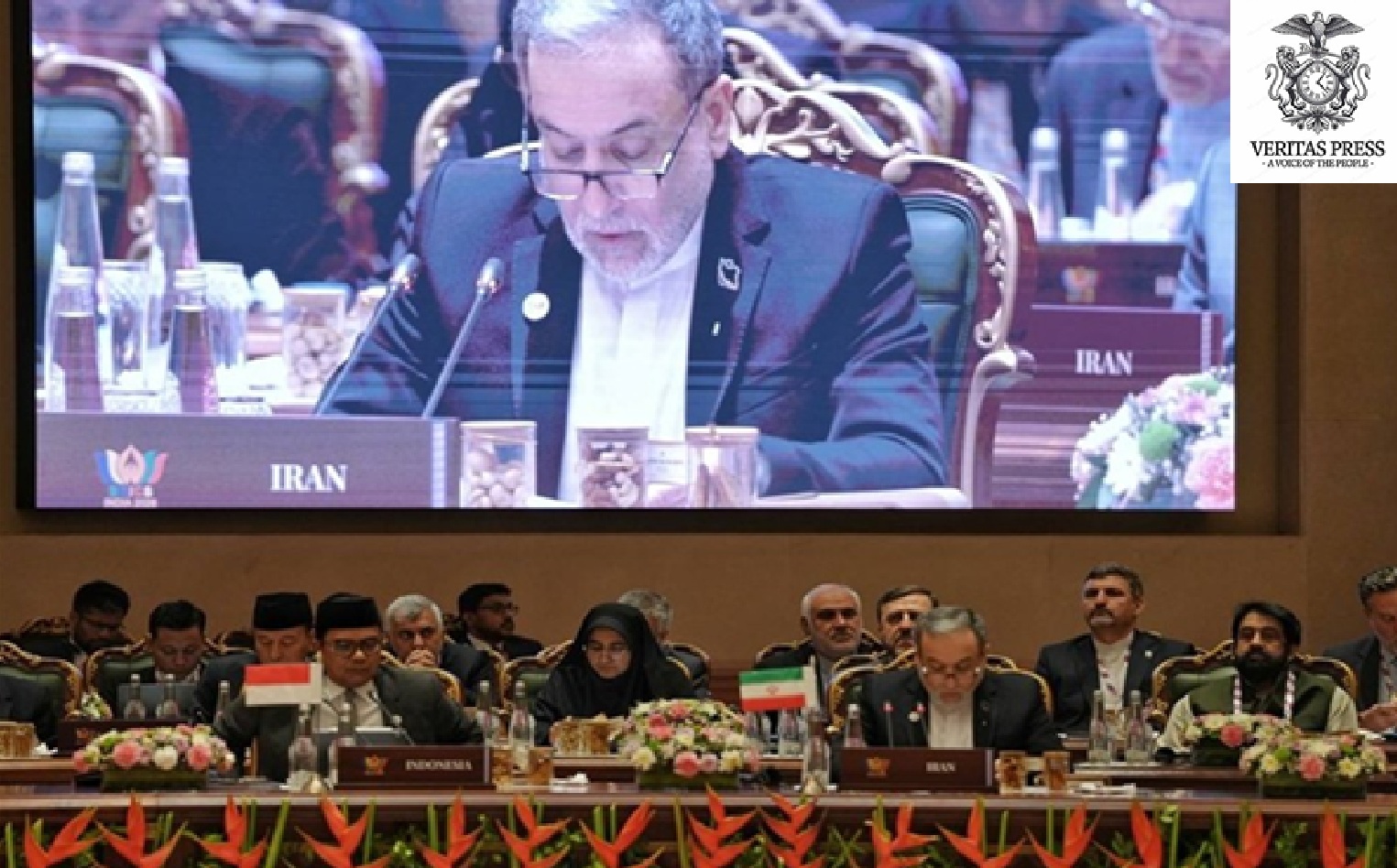
Speaking on the sidelines of the BRICS foreign ministers’ meeting in New Delhi, Araghchi said Tehran would not discuss transferring its enriched uranium stockpile “for the time being,” despite previous Russian proposals to take custody of the material as part of a future agreement.
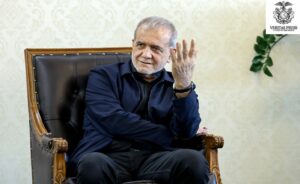
“We cannot trust the Americans at all,” Araghchi told reporters, describing Washington’s signals as “contradictory” and warning that diplomacy itself was being undermined by what he called “warmongers” seeking another regional war.
His remarks underscored the widening gulf between Tehran and Washington after weeks of indirect Pakistan-mediated talks failed to produce a durable settlement following the devastating US-Israeli military campaign launched against Iran on February 28.
A War Without Resolution:
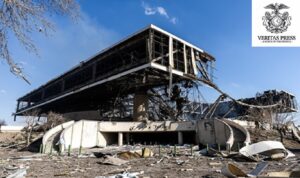
Although a temporary ceasefire brokered through Pakistani mediation took effect on April 8, the broader conflict remains unresolved. The war, which Iranian officials describe as an act of “criminal aggression” and a game of optics by the United States and Israel, transformed the geopolitical landscape of West Asia, triggered major energy disruptions, and pushed the region dangerously close to a wider confrontation.
Iranian officials insist Tehran was responding to coordinated US-Israeli strikes that targeted military commanders, nuclear facilities, ports, and strategic infrastructure. Tehran retaliated through missile and drone attacks against Israeli targets and US military assets across the region while simultaneously weaponising its control over the Strait of Hormuz, the world’s most critical maritime energy chokepoint.
The consequences were immediate. Global oil prices surged, shipping insurance costs soared, and maritime traffic through the Gulf collapsed. Several shipping incidents, including the seizure of vessels and attacks near the Strait, intensified fears of a broader economic shock. Reuters reported that India, heavily dependent on Gulf energy supplies, has become increasingly alarmed by the disruption.
Araghchi said Iran currently allows passage through the Strait of Hormuz only to countries not participating in hostilities against Tehran.
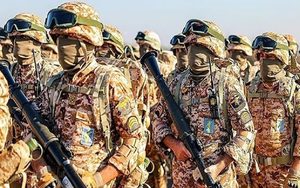
“The Strait of Hormuz is open, and all ships can pass through if they cooperate with Iran’s Armed Forces,” he said, adding that restrictions remain in place for states “currently at war” with Iran.
Iran has also maintained its refusal to fully normalise traffic through the strategic waterway unless Washington lifts what Tehran calls an “illegal blockade” on Iranian ports and vessels.
Trump’s Shifting Position:
The diplomatic impasse has been further complicated by increasingly inconsistent statements from US President Donald Trump.
After previously insisting Iran must permanently end all uranium enrichment, Trump appeared this week to soften his position, suggesting he could accept a 20-year suspension if Tehran offered what he called a “real guarantee.”
“No, 20 years is enough,” Trump told reporters aboard Air Force One following meetings with Chinese President Xi Jinping. “But the level of guarantee from them… it’s gotta be real.”
The apparent shift marks a notable retreat from Trump’s earlier maximalist rhetoric demanding the permanent dismantlement of Iran’s nuclear program. Only months ago, Trump declared that the United States would permit “no enrichment of uranium” under any future agreement.
The contradiction has fueled Iranian accusations that Washington lacks a coherent strategy.
“What was said publicly by Trump was different from the messages we later received privately,” Araghchi said in New Delhi. “That has made us doubtful about their seriousness.”
Iranian negotiators reportedly rejected the proposed 20-year moratorium, insisting that enrichment remains a sovereign right protected under international law.
Enrichment Remains The Core Battlefield:
At the centre of the standoff lies Iran’s insistence that its nuclear program is peaceful and non-negotiable.
Araghchi repeated Tehran’s long-standing position that Iran does not seek nuclear weapons, arguing such weapons are incompatible with the country’s declared doctrine and strategic policy.
“We have a peaceful nuclear program, and we have always been ready to ensure that this program remains peaceful,” he said.
Yet Washington and its allies remain deeply sceptical, citing Iran’s enrichment levels, ballistic missile development, and repeated disputes with international inspectors.
Western officials have repeatedly highlighted Tehran’s stockpile of highly enriched uranium, estimated by US officials at around 440 kilograms, as evidence that Iran retains latent weapons capability even if it publicly denies seeking a bomb.
Trump claimed Friday that Iran had initially agreed to remove the material before reversing course, while also alleging Tehran lacked the technical means to dismantle the radioactive stockpile without Chinese or American assistance.
The dispute over enrichment has become politically existential for Tehran. Iranian officials increasingly frame the issue not merely as a technical nuclear matter, but as a broader struggle against Western domination and coercion.
During the BRICS summit, Araghchi urged member states to resist what he called US “bullying” and “hegemonic coercion.”
“Iran’s resistance against US bullying is not an unfamiliar battle,” Araghchi wrote on X. “Many of us encounter slight variations of the same repugnant coercion.”
BRICS Divisions Exposed:
The conflict has simultaneously exposed serious fractures within the expanded BRICS bloc itself.
For the first time in recent years, BRICS foreign ministers failed to issue a unified joint statement at the conclusion of their New Delhi meeting because of disagreements over the Iran war and broader Middle East tensions.
The divisions were especially sharp between Iran and the United Arab Emirates, which Tehran has accused of supporting military operations against it during the conflict.
Indian officials acknowledged that member states expressed “different perspectives” regarding maritime security, sovereignty, and the Gaza conflict.
The failure to produce a consensus highlighted the growing difficulty of transforming BRICS into a unified geopolitical counterweight to Western alliances. While Iran sought strong condemnation of the United States and Israel, other member states, particularly Gulf-aligned governments, resisted adopting Tehran’s confrontational language.
Analysts say the divisions reveal the limits of anti-Western solidarity within BRICS, whose members possess sharply divergent economic interests, security partnerships, and regional rivalries.
China And Russia Positioned As Alternative Mediators:
Amid growing distrust toward Washington, Tehran appears increasingly interested in relying on Beijing and Moscow as diplomatic buffers.
Araghchi said Iran welcomed “anything China can do to help diplomacy,” citing Beijing’s earlier role in restoring relations between Iran and Saudi Arabia.
Russia has meanwhile renewed offers to assist in managing Iran’s enriched uranium stockpile should negotiations eventually resume.
According to Iranian and Russian officials, Araghchi and Russian Foreign Minister Sergey Lavrov discussed the nuclear issue, regional security, and post-war arrangements during meetings in New Delhi.
However, Tehran has so far resisted surrendering any enriched uranium while sanctions and military pressure remain in place.
Energy Warfare And The Strait Of Hormuz:
The war’s most immediate global impact has centred on energy markets.
Before the conflict, roughly one-fifth of the world’s seaborne oil passed through the Strait of Hormuz. Iran’s restrictions and military posture around the waterway triggered renewed fears of a global supply crisis.
India, China, and other energy-dependent economies have increasingly pressured both Tehran and Washington to de-escalate. Indian Foreign Minister Subrahmanyam Jaishankar warned this week that uninterrupted maritime access remains “vital for global economic well-being.”
The economic consequences have already rippled far beyond the region. Shipping firms have rerouted cargo, insurers have raised premiums dramatically, and oil-importing countries across Asia have faced mounting inflationary pressure.
Trump reportedly discussed both Hormuz and Iranian oil sanctions with Xi Jinping during their summit in Beijing, including the possibility of easing sanctions on Chinese refiners purchasing Iranian crude.
Critics Warn Of Strategic Miscalculation:
Outside observers increasingly warn that Washington may be underestimating Tehran’s resilience and overestimating the effectiveness of military and economic coercion.
Chicago Tribune foreign affairs columnist Daniel DePetris argued that Iran now believes it is winning the broader strategic confrontation because it survived sustained US-Israeli attacks, preserved leverage over the Strait of Hormuz, and forced Washington back into negotiations despite months of military escalation.
“This war is a disaster in more ways than one,” DePetris wrote, warning that additional American pressure is unlikely to fundamentally alter Tehran’s negotiating posture.
The war has also intensified broader fears of regional fragmentation. Israel continues military operations in Lebanon and Syria while tensions involving Iran-backed groups across Iraq, Yemen, and the Gulf remain unresolved.
Meanwhile, humanitarian concerns continue to mount. Lebanese health authorities reported dozens wounded in recent Israeli strikes near Tyre, while maritime attacks in the Gulf have endangered civilian crews and commercial shipping.
Diplomacy Hanging By A Thread:
Despite the escalating rhetoric, neither Washington nor Tehran appears prepared for a full collapse of diplomacy.
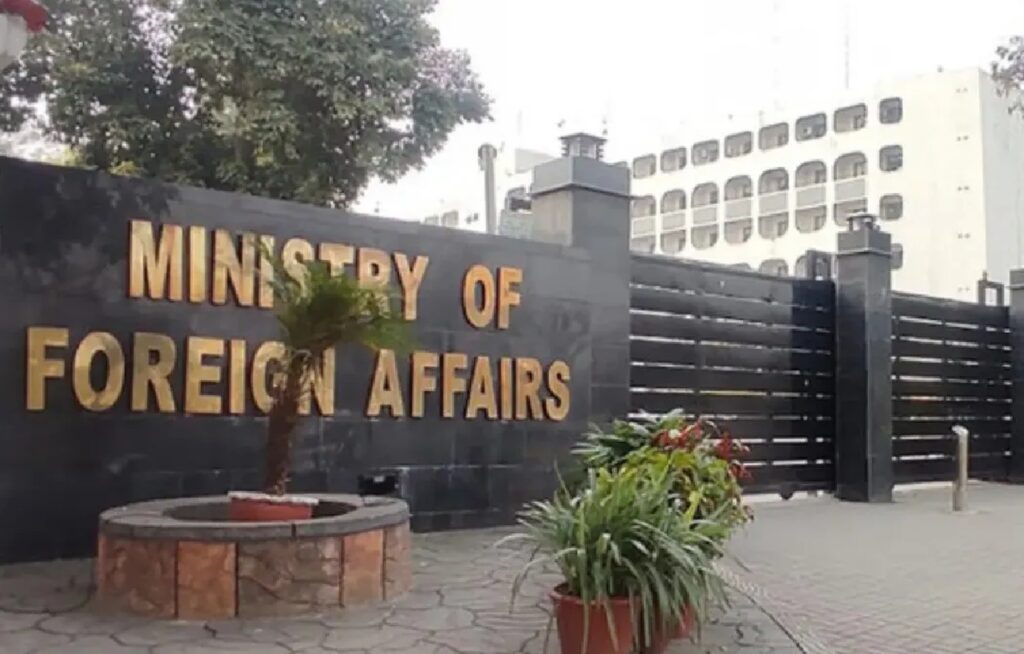
Pakistan, which has played a central mediating role, insists negotiations remain alive.
“The clock on diplomacy has not stopped,” Pakistani foreign ministry spokesman Tahir Andrabi said this week. “The peace process is working.”
Yet beneath the official optimism lies a grim reality: the central disputes, uranium enrichment, sanctions relief, regional military posture, and control of maritime trade routes, remain fundamentally unresolved.
For now, the uneasy ceasefire survives largely because all sides recognise the catastrophic consequences of renewed war. But with mutual trust virtually nonexistent, regional tensions escalating, and competing geopolitical blocs hardening their positions, the prospect of a durable settlement appears increasingly distant.
Conclusion:
The contradictions at the heart of the current diplomatic process have become impossible to ignore. Even as indirect negotiations continue through mediators, senior American and Israeli officials, allied lawmakers, media commentators, and hardline security figures have repeatedly invoked the language of “regime change,” “obliteration,” and military “decapitation” against Iran, rhetoric that Tehran argues fundamentally destroys any remaining basis for trust.
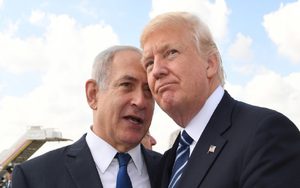
For Iranian officials, the problem is no longer limited to sanctions or uranium enrichment. It is the broader atmosphere surrounding the talks themselves. While Washington publicly claims to seek diplomacy, powerful voices within the US-Israeli alliance continue openly discussing the collapse of the Iranian state as a strategic objective. Israeli Prime Minister Benjamin Netanyahu and members of his far-right coalition have repeatedly framed the war not merely as a campaign against Iran’s nuclear infrastructure, but as an opportunity to permanently weaken or destabilise the Islamic Republic altogether. American hawks and pro-war commentators have similarly portrayed the conflict as a historic chance to reshape the Middle East through force.
That rhetoric has had profound consequences inside Iran. Analysts note that every public threat of “obliteration” or calls for regime collapse strengthen hardline factions within Tehran who argue that Washington was never genuinely interested in diplomacy. Iranian state media has increasingly used such statements to portray negotiations as a trap designed to disarm Iran before imposing political submission from outside.
The contradiction is stark: while negotiators discuss confidence-building measures behind closed doors, public discourse in Washington and Tel Aviv continues to be saturated with threats of destruction, military escalation, and fantasies of engineering political collapse in Tehran. Iranian officials argue that no sovereign state would negotiate away its strategic deterrence capabilities while simultaneously being threatened with annihilation.
The war itself has also exposed how deeply regime-change thinking continues to shape sections of US and Israeli strategic doctrine despite the catastrophic legacy of Iraq, Libya, Syria, and Afghanistan. Critics across the region warn that the same ideological currents that justified earlier interventions, promises of liberation, democratic transformation, and “security through force”, are once again resurfacing around Iran, despite decades of regional instability produced by foreign military campaigns.
Human rights advocates and anti-war groups have warned that such rhetoric normalises collective punishment against civilian populations and fuels dangerous forms of dehumanisation. Iranian civilians, already enduring sanctions, inflation, shortages, cyberattacks, and wartime insecurity, increasingly find themselves spoken about in geopolitical terms as collateral to a larger strategic struggle. Activists argue that chants of “obliteration” erase the human cost of war while feeding nationalist escalation on all sides.
The inflammatory discourse has also intensified fears across the wider region. Gulf states, energy markets, and neighbouring countries understand that any attempt to forcibly collapse the Iranian state could unleash consequences far beyond Iran’s borders, including refugee crises, sectarian conflict, maritime disruption, militia warfare, and a region-wide economic shock. Former diplomats and regional observers have repeatedly cautioned that the collapse of a state as large and strategically central as Iran would likely trigger uncontrollable fragmentation across the Middle East.
Even some Western analysts increasingly acknowledge that the maximalist language emerging from parts of the US-Israeli political establishment may be undermining the very negotiations Washington claims to support. Calls for “regime change” while simultaneously demanding concessions at the negotiating table reinforce Iranian perceptions that the ultimate goal is not non-proliferation, but political subjugation.
As a result, the diplomatic process now operates under a shadow of existential mistrust. Tehran sees itself negotiating with adversaries who continue openly debating its destruction, while Washington and Israel accuse Iran of using diplomacy to buy time and preserve strategic leverage. In this climate, every missile strike, every threat, every naval confrontation, and every televised call for “obliteration” pushes the region further away from de-escalation and closer toward a prolonged and potentially catastrophic conflict whose consequences would extend far beyond the Middle East itself.
Source: Multiple News Agencies
Submissions:
For The Secure Submission Of Documentation, Testimonies, Or Exclusive Investigative Reports From Any Global Location, Please Utilise The Following Contact Details For Our Investigations Desk: enquiries@veritaspress.co.uk or editor@veritaspress.co.uk
Help Support Our Work:
Popular Information is powered by readers who believe that truth still matters. When just a few more people step up to support this work, it means more lies exposed, more corruption uncovered, and more accountability where it’s long overdue.
Help Protect Independent Journalism, Which Is Currently Under Attack.
If you believe journalism should serve the public, not the powerful, and you’re in a position to help, becoming a DONATOR or a PAID SUBSCRIBER truly makes a difference.
DONATION APPEAL: If You Found This Reporting Valuable, Please Consider Supporting Independent Journalism.
Help Support Our Work – We Know, We Know, We Know …
Seeing these messages is annoying. We know that. (Imagine what it’s like writing them … )
Your support fuels our fearless, truth-driven journalism. In unity, we endeavour to amplify marginalised voices and champion justice, irrespective of geographical location.
But it’s also extremely important. One of Veritas Press’s greatest assets is its reader-funded model.
1. Reader funding means we can cover what we like. We’re not beholden to the political whims of a billionaire owner. We are a small, independent and impartial organisation. No one can tell us what not to say or what not to report.
2. Reader funding means we don’t have to chase clicks and traffic. We’re not desperately seeking your attention for its own sake: we pursue the stories that our editorial team deems important and believe are worthy of your time.
3. Reader Funding: enables us to keep our website and other social media channels open, allowing as many people as possible to access quality journalism from around the world, particularly those in places where the free press is under threat.
We know not everyone can afford to pay for news, but if you’ve been meaning to support us, now’s the time.
Your donation goes a long way. It helps us:
- Keep the lights on and sustain our day-to-day operations
- Hire new, talented independent reporters
- Launch real-time live debates, community-focused shows, and on-the-ground reporting
- Cover the issues that matter most to our communities, in real time, with depth and integrity
We have plans to expand our work, but we can’t do it without your support. Every contribution, no matter the size, helps us stay independent and build a truly people-powered media platform.
If you believe in journalism that informs, empowers, and reflects the communities we serve, please donate today.
Donate Today:
GENEVA — A United Nations fact-finding mission has concluded there are “reasonable grounds to believe”
Iran’s GDP is projected to contract by 5.4 to 6.1% in 2026, its worst performance
The Trump administration is preparing a $2.8 billion weapons package for Israel containing 40,000 2,000-pound

Film alleges mass civilian deaths are routinely built into military decisions amid Israel’s genocidal war
The Israeli rights group says violence, displacement, economic strangulation, and settlement expansion form part of

Houthi forces have captured the historic Red Sea port of Mocha and are advancing on
London’s historic sanctions against Israeli settlements mark a watershed moment in UK foreign policy, but
With 95% of Gaza’s population now wholly dependent on aid and more than 90% stripped
India calls for Kashmir and Ladakh to appear only on its official map after a
ISLAMABAD – In the high-stakes political theatre of Pakistan, the battleground has shifted from the