Kamran Faqir is a volunteer investigative journalist and writer committed to exposing hidden truths and amplifying underreported stories. Driven by social justice, he brings sharp insight and fearless truth-telling to independent journalism. NUJ registered.
Original Article Date Published:
Article Date Modified:
32 minutes
Views:388
Listen to this article
Help support our mission, donate today and be the change. Every contribution goes directly toward driving real impact for the cause we believe in.
The Longest Day:
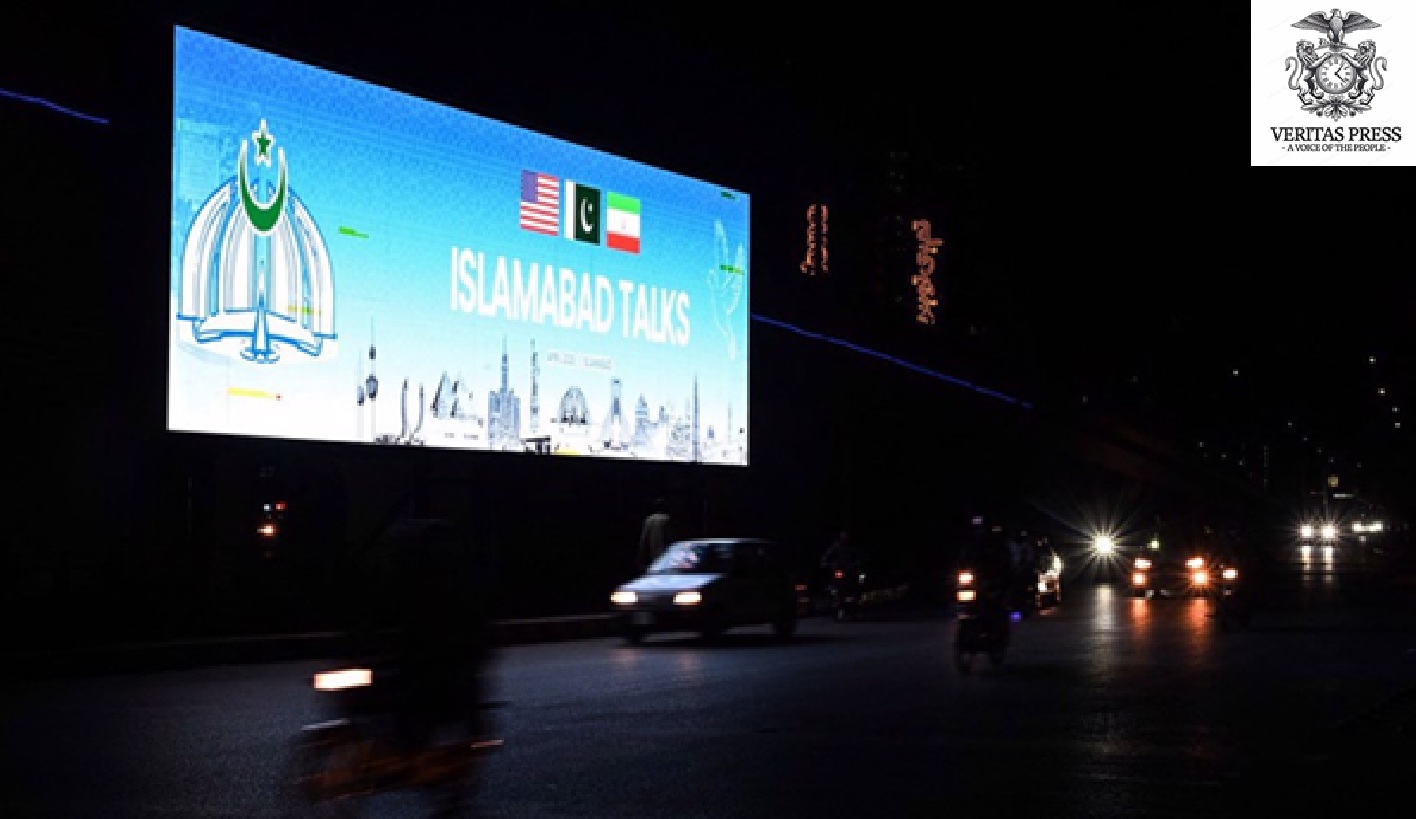
ISLAMABAD, TEHRAN, WASHINGTON – For 21 hours, the world watched Islamabad. Delegations from Washington and Tehran, led respectively by Vice President JD Vance and Iranian Parliament Speaker Mohammad Bagher Ghalibaf, huddled inside the Serena Hotel, separated at times, face-to-face at others, under the careful mediation of Pakistani Prime Minister Shehbaz Sharif. Messages were shuttled, drafts exchanged, and technical experts consulted. At times, the talks pushed past midnight and threatened to stretch into a second day. By dawn on Sunday, April 12, 2026, it was over. No deal. Just recriminations and a hastily dismantled media centre.
This was supposed to be the breakthrough: the first direct US-Iran negotiations in over a decade, the highest-level contact since the 1979 Islamic Revolution, aimed at ending a six-week war that had killed thousands, including Iran’s Supreme Leader Ali Khamenei, and sent global oil markets into a tailspin. Instead, it collapsed under the weight of history, mutual suspicion, and what both sides called the other’s “unreasonable demands.” The failure leaves the fragile April 7 ceasefire teetering, the Strait of Hormuz still effectively closed to global energy traffic, and the spectre of renewed conflict looming larger than ever.
This investigation pieces together what actually happened inside those 21 hours, why the talks failed, and what the aftermath portends for the Middle East and the global economy.
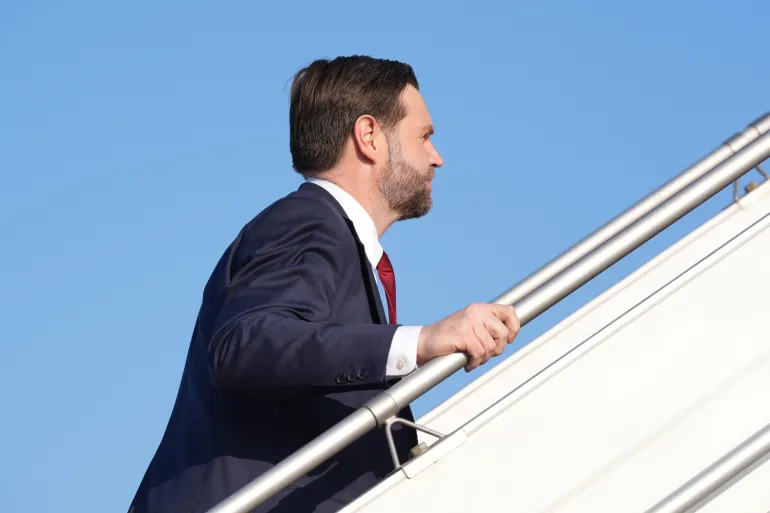
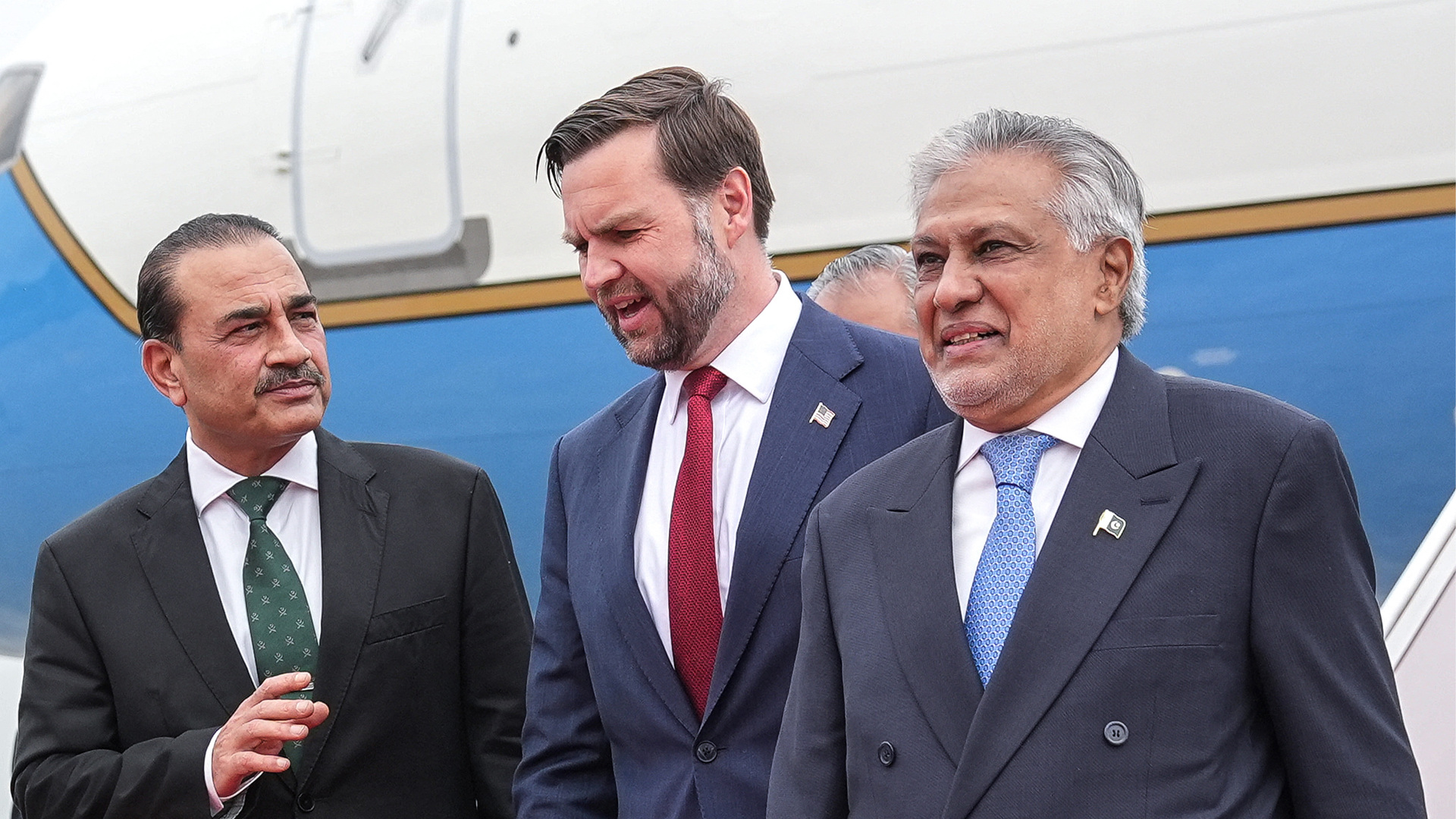
US Vice President JD Vance in Pakistan US Vice President JD Vance boards Air Force Two following a meeting with representatives from Pakistan and Iran on April 12, 2026, in Islamabad, Pakistan [Jacquelyn Martin/Pool via Getty Images]
The Road To Islamabad: A War Without Victory
The war began with a thunderclap on February 28, 2026. In a coordinated assault codenamed Operation Epic Fury (US) and Operation Rising Lion (Israel), American and Israeli forces launched devastating airstrikes across Iran, targeting nuclear facilities, military bases, and leadership compounds. The first wave killed Supreme Leader Ali Khamenei, along with senior military and security officials, including IRGC Chief Mohammad Pakpour, Defence Minister Aziz Nasirzadeh, and Armed Forces Chief of Staff Abdolrahim Mousavi.
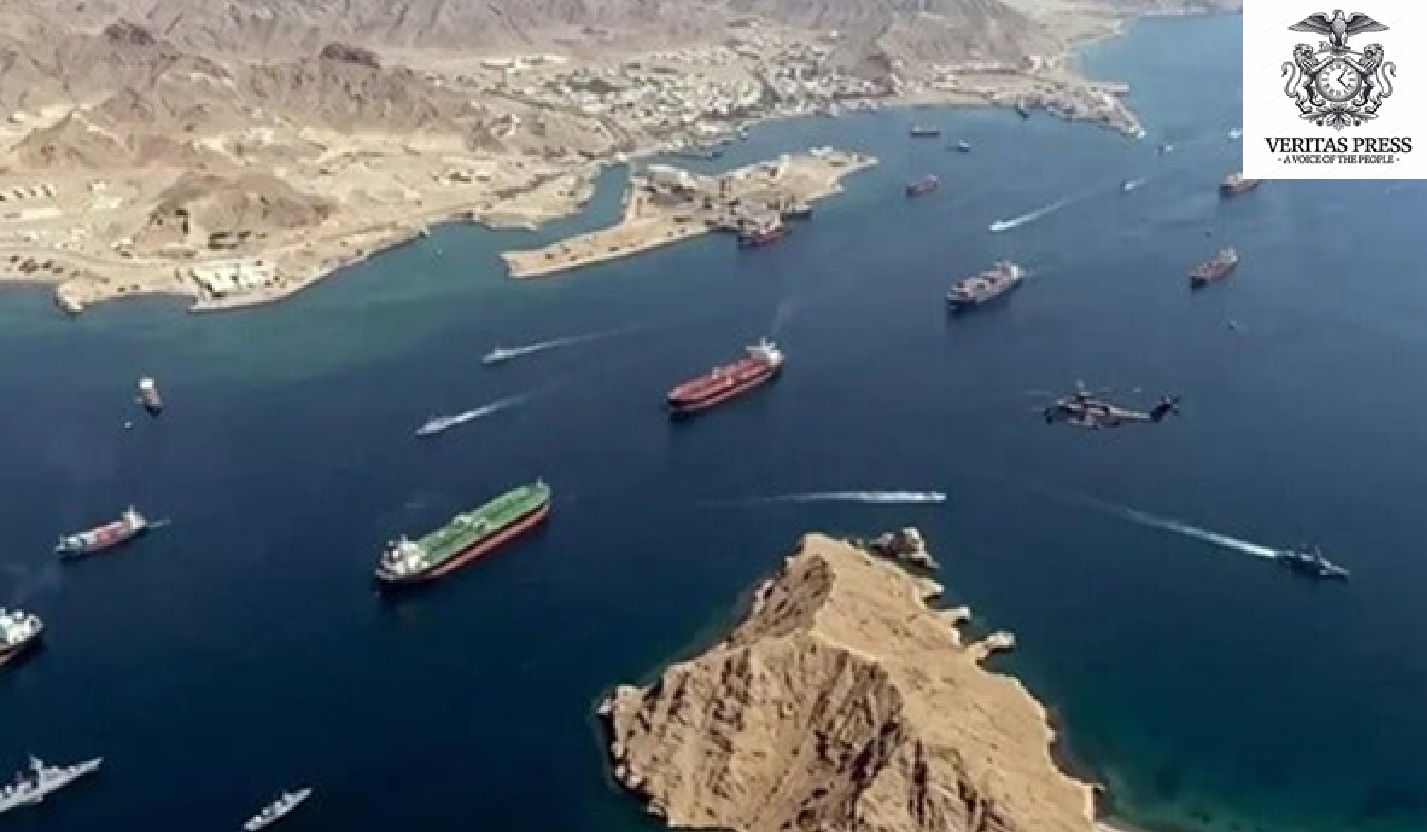
What followed was 40 days of unrelenting warfare. Iran retaliated with “Operation True Promise-4,” firing waves of missiles and drones at US bases across the Middle East and Israeli cities. Hezbollah joined the fray from Lebanon. The IRGC mined the Strait of Hormuz, effectively shutting down the conduit through which one-fifth of the world’s crude oil normally flows. Global oil prices soared; inflation spiked; the world economy buckled.
By early April, both sides were battered. Iran’s refining capacity had been severely degraded. Officials projected a 70-80% restoration within one to two months, but the damage was extensive. The US, meanwhile, had surged its largest military force to the region since 2003, yet found itself unable to force a decisive outcome. President Donald Trump, who had once threatened that Iran’s “whole civilisation will die,” began signalling openness to talks.
On April 7, after intense Pakistani mediation, the two sides agreed to a conditional two-week ceasefire. Iran would allow limited commercial shipping through the Strait of Hormuz; the US would suspend bombing. Crucially, the US formally accepted Iran’s 10-point proposal as the basis for negotiations toward a permanent ceasefire. The stage was set for Islamabad.
Anatomy Of A Collapse: The Three Unbridgeable Divides
The talks that began Saturday afternoon and bled into Sunday morning were, by all accounts, gruelling. A Pakistani source told reporters there were “mood swings from the two sides and the temperature went up and down”. Turkish media reported that tensions over the Strait of Hormuz grew so heated that Iranian Foreign Minister Abbas Araghchi and US Special Envoy Steve Witkoff nearly came to blows, a claim neither side has confirmed but which underscores the raw emotion in the room.
At the core of the impasse were three issues on which neither side would budge.
1. The Strait Of Hormuz: Sovereignty Vs. Freedom Of Navigation
The Strait is Iran’s most potent strategic lever, and it knows it. Iranian negotiators entered the talks demanding full sovereign control over the waterway, including the right to regulate transit and levy fees on passing vessels. US officials countered with a proposal for “joint management,” which Tehran flatly rejected as a violation of its territorial integrity.
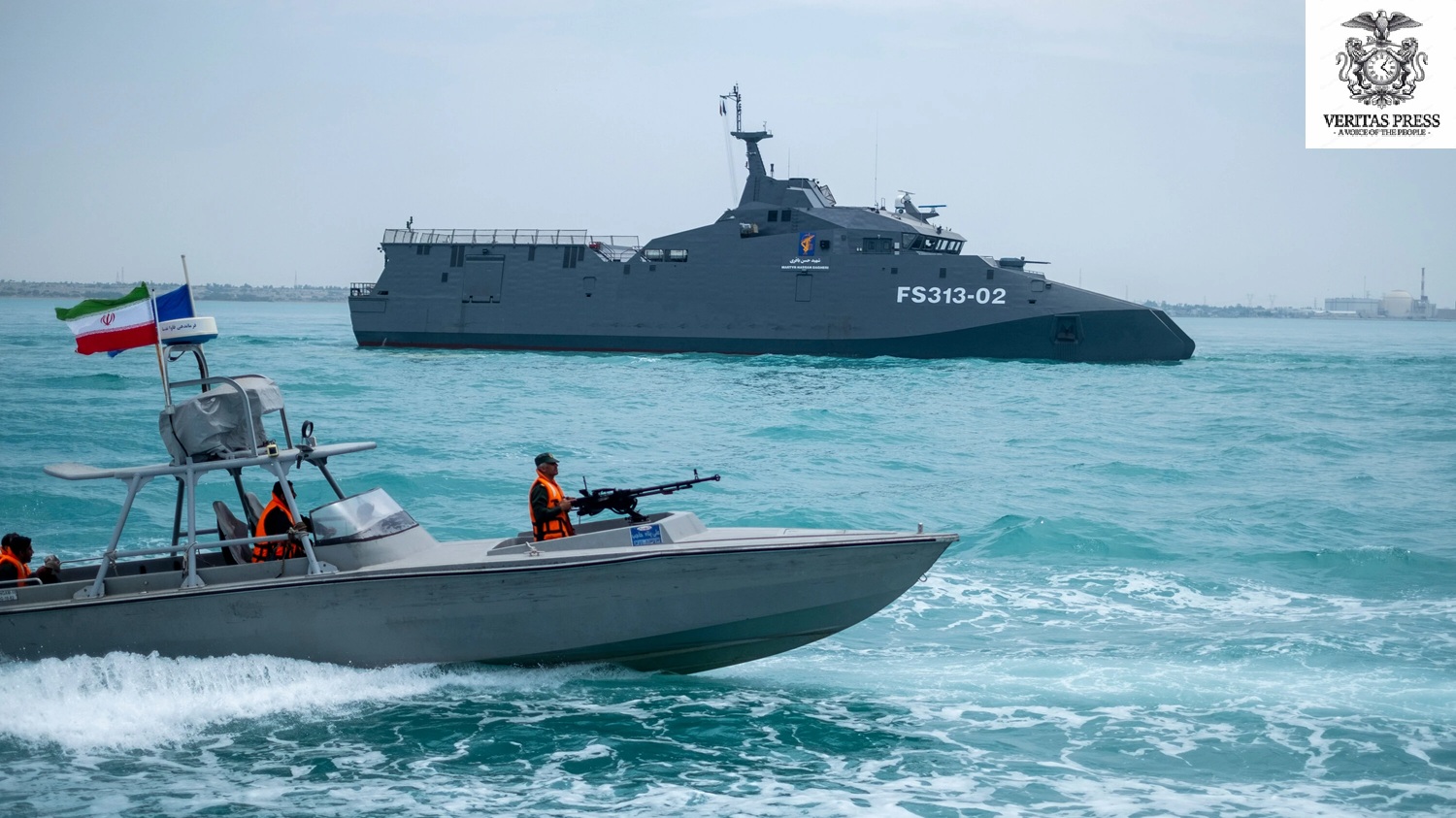
“We have full operational control,” Iranian military officials reiterated on Sunday, warning that “any attempt by military vessels to pass through the Strait of Hormuz will be dealt with severely.” The IRGC’s Navy Command declared that passage would only be “granted to civilian vessels under specific conditions.”
The US, for its part, insists the strait constitutes international waters. President Trump, in a Truth Social post on Saturday, announced that the US had begun “clearing out the Strait of Hormuz as a favour to Countries all over the World,” including China, Japan, South Korea, France, and Germany. The US Central Command claimed two Navy destroyers had transited the strait to begin mine-clearing operations, a claim Iran’s military and IRGC both denied.
The standoff is both practical and symbolic. For Iran, control of the strait is a matter of national sovereignty and a critical bargaining chip. For the US, unrestricted navigation is a non-negotiable principle of international order. As one Iranian source put it, “They went through negotiation for everything they couldn’t obtain during the war.”
2. The Nuclear Question: “Affirmative Commitment” Vs. Sovereign Right
If the Strait was the tactical flashpoint, the nuclear file was the existential one. Vice President Vance, emerging from the talks at sunrise on Sunday, was blunt: “The simple fact is that we need to see an affirmative commitment that they will not seek a nuclear weapon, and they will not seek the tools that would enable them to quickly achieve a nuclear weapon.”
He added: “That is the core goal of the president of the United States. And that’s what we’ve tried to achieve through these negotiations.”
The US demand, as outlined by Vance, went beyond the standard non-proliferation pledges of past agreements. Washington sought a long-term, verifiable commitment that Iran would neither pursue nuclear weapons nor develop the capability to rapidly produce them, what Vance called “not just for now, not just for two years, but for a very long period of time.”
Iran’s position was equally absolute. Days before the talks, Atomic Energy Organisation of Iran chief Mohammad Eslami declared that “no law enforcement or person would be able to stop Iran’s nuclear enrichment program” and that US-Israeli demands for restrictions “will not come true.” Tehran maintains its enrichment activities are for peaceful civilian purposes, a claim met with deep scepticism in Western capitals, especially given that Iran is now enriching uranium to 60% purity, far above the 3.67% cap under the 2015 nuclear deal.
Iran’s 10-point proposal included a pledge that “Iran fully commits to not seeking possession of any nuclear weapons.” But the US wanted more, concrete, verifiable dismantlement of enrichment infrastructure, not just promises. For Iran, whose nuclear program has become a symbol of national resilience and technological achievement, abandoning enrichment entirely is a red line no government could survive crossing.
3. War Reparations, Frozen Assets, And The Lebanon Question
The third cluster of disputes involved money, frozen assets, and the broader regional conflict, particularly Lebanon.
Iranian sources indicated that Washington had signalled willingness to unfreeze approximately $6 billion in Iranian assets held in Qatar and other foreign banks. US officials, however, swiftly denied that any such agreement had been reached. The conflicting narratives underscore the fundamental lack of trust that permeated every aspect of the negotiations.
More contentious still was Iran’s demand for war reparations and a complete end to hostilities across the region, including Israeli operations against Hezbollah in Lebanon. Iran’s 10-point plan explicitly called for “the complete cessation of war in Iran, Iraq, Lebanon and Yemen” and “full payment of compensation for reconstruction costs.”
Israel, however, has shown no inclination to halt its Lebanon campaign. Prime Minister Benjamin Netanyahu stated unequivocally that the disarmament of Hezbollah is a prerequisite for any ceasefire, and Israeli forces have continued operations in southern Lebanon even during the US-Iran truce. Lebanese health officials report that Israeli strikes since the escalation began have killed 2,020 people and wounded 6,436 others.
For Iran, which views Hezbollah as a critical strategic asset and buffer against Israeli power, abandoning its Lebanese ally is unthinkable. For the US, which has long supported Israel’s right to self-defence, forcing a halt to Israeli operations would require political capital Washington seems unwilling to spend.
The View From Tehran: “We Will Negotiate With Our Finger On The Trigger”
In the hours after the talks collapsed, Iranian officials struck a defiant but not entirely dismissive tone. Foreign Ministry spokesman Esmaeil Baqaei, posting on X, described the negotiations as “intensive” and “wide-ranging,” covering “the Strait of Hormuz, the nuclear issue, war reparations, lifting of sanctions, and the complete end to the war against Iran and in the region.”
“The success of this diplomatic process depends on the seriousness and good faith of the opposing side, refraining from excessive demands and unlawful requests, and the acceptance of Iran’s legitimate rights and interests,” Baqaei wrote. He added a poignant note: “The heavy grief of our elders, loved ones, and fellow countrymen has strengthened our resolve to pursue the interests and rights of the Iranian nation more than ever.”
The Iranian delegation arrived in Islamabad dressed in black, in mourning for Khamenei and the thousands killed in the war. They carried shoes and bags belonging to students killed in a US bombing of a school adjacent to a military compound, a deliberate, visceral reminder of the human cost of the conflict.
President Masoud Pezeshkian, in a phone call with French President Emmanuel Macron during the talks, condemned “the US’s history of violating commitments in past negotiations” and emphasised that “Iran will not hesitate in defending its legitimate rights and territorial integrity.” Pezeshkian also denounced the “inaction of international bodies, including the United Nations and the European Union,” regarding what he called “unlawful attacks on Iran and the region.”
Iran’s Fars news agency, citing a source close to the delegation, was more blunt: “The United States sought through negotiation everything they couldn’t obtain during war.” The Iranian embassy in Ghana posted on X: “The US flew their Vice President halfway across the world to Islamabad. 21 hours of talks. They demanded everything they couldn’t achieve through war. Iran said a BIG NO. The talks are over. The Strait is still closed. And the VP is flying home empty-handed.”
Yet behind the bravado, there were hints of diplomatic pragmatism. Baqaei noted that “contacts will continue between Tehran, Islamabad, and other friends in the region.” Tasnim news agency reported that “the ball is in America’s court” and that “Iran is in no hurry” to negotiate, a formulation that leaves the door open for future rounds while placing the onus on Washington to show flexibility.
The View From Washington: “This Is Our Final And Best Offer”
If Tehran’s messaging was carefully calibrated, Washington’s was a study in mixed signals. Vice President Vance, addressing reporters before boarding Air Force Two, was firm: “We leave here with a very simple proposal, a method of understanding that is our final and best offer. We will see if the Iranians accept it.”
Vance acknowledged that “we’ve had a number of substantive discussions with the Iranians. That’s the good news.” But he framed the failure as Iran’s loss: “The bad news is that we have not reached an agreement, and I think that’s bad news for Iran much more than it’s bad news for the United States of America.”
President Trump, characteristically, offered a more ambivalent take. Speaking to reporters on Saturday, he said it “makes no difference to me” whether a deal is reached. “Whether we make a deal or not makes no difference to me. The reason is that we’ve won,” Trump insisted, claiming the US had already “defeated them militarily.” He added: “We’ve defeated their military. They have no navy. 158 ships are underwater. Undersea. All of their minesweepers.”
This claim, that Iran’s navy has been effectively destroyed, is at odds with on-the-ground realities. While US and Israeli strikes have undoubtedly inflicted severe damage on Iran’s military infrastructure, Iranian forces have demonstrated continued capacity to strike US and Israeli targets and to maintain the Hormuz blockade. The assertion that “158 ships are underwater” could not be independently verified and was met with derision in Tehran.
Trump’s social media activity following the talks’ collapse added a more ominous dimension. The president shared an article from the conservative outlet Just the News suggesting he could “out-blockade Iran’s hold over the Strait of Hormuz,” repurposing a strategy used against Venezuela. The article claimed, “It would be very easy for the US Navy to exert complete control over what does and does not go up and down the Strait now.”
This floated naval blockade, targeting Iran’s oil exports by controlling maritime traffic, would represent a major escalation. It also underscores how diplomacy, still unresolved, now unfolds under the shadow of force.
Pakistan’s Mediation: A Delicate Balancing Act
Pakistan’s role as host and mediator was both crucial and precarious. Prime Minister Shehbaz Sharif met separately with both delegations before the direct talks began, relaying messages and attempting to bridge gaps. Chief of Army Staff Asim Munir reportedly attended the trilateral meeting, a signal of the seriousness with which Islamabad approached its role.
After the talks collapsed, Foreign Minister Ishaq Dar issued a measured statement: “It is imperative that the parties continue to uphold their commitment to the ceasefire.” He added that Pakistan “will continue to play a constructive role in facilitating engagement and dialogue between Iran and the United States in the days ahead.”
Pakistan’s motivations are complex. As a neighbour to Iran with a large Shia minority and deep economic ties to Gulf Arab states, Islamabad has a vested interest in regional stability. The war has already disrupted energy supplies and threatened to spill over into Pakistan’s own restive Balochistan province. Yet Pakistan also maintains close security ties with the United States and depends on American military and economic assistance.
By positioning itself as an honest broker, Pakistan aims to enhance its diplomatic standing while avoiding being seen as taking sides. The challenge, as the collapsed talks demonstrate, is that the gap between US and Iranian positions may be too wide for any mediator, however skilled, to bridge.
The Regional Equation: Israel, Lebanon, And The Broader War
The Islamabad talks cannot be understood in isolation from the wider regional conflagration. Israel, which joined the US in the February 28 attacks, has its own agenda, one that may not align perfectly with Washington’s diplomatic efforts.
Prime Minister Netanyahu has been explicit: “This is not the end of the war,” he said, “but a stop on the way to achieving all the goals.” Those goals include, in Netanyahu’s formulation, the complete dismantlement of Iran’s nuclear infrastructure, the disarmament of Hezbollah, and what Israeli officials describe as the creation of a “security buffer zone” in southern Lebanon.
Israeli strikes in Lebanon have continued even during the US-Iran ceasefire. The health ministry in Beirut reports systematic targeting of medical personnel, a potential war crime, according to international legal experts, and a fifth of Lebanon’s population remains displaced. Israeli officials have also indicated that further actions against Iran remain under consideration.
This parallel war complicates US diplomacy in two ways. First, it undermines Iran’s demand for a comprehensive regional ceasefire. Tehran has made clear that it cannot accept a deal that leaves Hezbollah exposed and Israeli forces operating freely in Lebanon. Second, it creates friction between US and Israeli objectives. While Washington seeks a negotiated settlement that secures the Strait of Hormuz and contains Iran’s nuclear program, Israel appears determined to press its military advantage regardless of diplomatic outcomes.
The US-Israel relationship, always complex, is being tested in real time. Israeli officials have expressed scepticism about the Islamabad process, and Netanyahu’s government has shown no sign of moderating its military campaign in deference to American diplomacy.
The Human Toll: A War’s Uncounted Costs
Behind the geopolitical manoeuvring and diplomatic posturing lies a human catastrophe that the world’s attention has only fitfully acknowledged. The February 28 attacks killed Iran’s supreme leader and senior military command, but they also claimed thousands of civilian lives. Iranian officials speak of “the heavy grief of our elders, loved ones, and fellow countrymen”, a grief made tangible when negotiators carried the belongings of dead schoolchildren into the Islamabad conference room.
In Lebanon, the toll is equally devastating. More than 2,000 killed, over 6,400 wounded. Entire communities were displaced. Medical workers targeted. The health ministry’s allegations of systematic attacks on healthcare infrastructure, if substantiated, would constitute grave breaches of international humanitarian law.
The war has also inflicted deep economic wounds. Global oil prices remain elevated as the Hormuz disruption persists. The World Bank has warned of potential recession in energy-importing developing countries. The “biggest ever disruption to the Strait of Hormuz has fed inflation and slowed the global economy, with an impact expected to last for months even if negotiators succeed in reopening the strait.”
For ordinary Iranians, the war has compounded years of economic hardship under sanctions. The destruction of refining capacity means fuel shortages and blackouts. The collapse of the rial continues. The regime’s promise of “resistance economy” rings hollow to families struggling to afford basic goods.
Analysis: Why Diplomacy Failed, And What Comes Next.
The Islamabad talks failed for reasons that go beyond the specific sticking points of Hormuz, nuclear enrichment, and Lebanon. They failed because the two sides came to the table with fundamentally incompatible understandings of what negotiation means.
For the United States, negotiation is a mechanism for translating military advantage into political outcomes. The Trump administration entered the talks believing it had “won” the war, that Iran’s military was crippled, its leadership decapitated, its economy in ruins. From this perspective, Iran should have been prepared to accept US terms as the price of survival.
For Iran, negotiation is a continuation of resistance by other means. The regime views the war not as a defeat but as a test of national resolve, one it believes it passed. Having absorbed devastating strikes and retaliated with hundreds of missiles, having maintained the Hormuz blockade despite US naval pressure, Iran’s leaders believe they have demonstrated that the Islamic Republic cannot be brought to its knees by force. From this perspective, the US should have come to Islamabad prepared to accept Iran’s legitimate rights.
These incompatible worldviews produced the impasse. Vance said the US was “quite flexible” and offered its “final and best offer.” Iran said the US made “excessive demands” and “unlawful requests.” Both can be true simultaneously: the US may have genuinely believed it was offering reasonable terms; Iran may have genuinely believed those terms amounted to capitulation.
Scenarios For What Comes Next:
Scenario 1: Diplomatic Limbo and Ceasefire Collapse The most immediate risk is that the April 7 ceasefire unravels entirely. Without a diplomatic framework to extend it, both sides may revert to military action. Trump has already floated a naval blockade; Iran has threatened to “deal severely” with any military vessels entering the strait. A miscalculation, a US warship attempting transit, an Iranian mine striking a commercial vessel, could trigger renewed hostilities within days.
Scenario 2: Coercive Diplomacy The US may attempt to use economic and military pressure to force Iranian concessions. Trump’s “out-blockade” suggestion points in this direction. By tightening the economic noose intercepting Iranian oil exports, expanding sanctions, and maintaining military readiness, Washington might hope to bring Tehran back to the table on more favourable terms. The risk is that such pressure could harden Iranian resolve rather than break it. The Islamic Republic has survived decades of sanctions and isolation; its leadership may calculate that enduring more of the same is preferable to what it views as surrender.
Scenario 3: Backchannel Progress Despite the public breakdown, diplomatic channels remain open. Pakistan has pledged to continue its mediation. Oman, Qatar, and other Gulf states have offered to facilitate dialogue. Iran’s Foreign Ministry has emphasised that “diplomacy never ends” and that “contacts will continue.” The question is whether the two sides can find a formula that addresses core concerns without triggering domestic political backlashes. A phased agreement beginning with confidence-building measures like asset releases and limited Hormuz access, then moving to more substantive issues, might offer a path forward.
Scenario 4: Escalation and Wider War The most dangerous scenario is one in which the conflict expands. Israel’s continued operations in Lebanon could draw Iran into a more direct confrontation. The US naval buildup in the Gulf increases the risk of an accidental clash. Regional proxies, Hezbollah, the Houthis in Yemen, and Shia militias in Iraq, could intensify attacks on US and Israeli interests. A spiral of retaliation could transform what began as a targeted campaign against Iran’s nuclear and military infrastructure into a generational conflagration across the Middle East.
The Diplomacy Of Distrust:
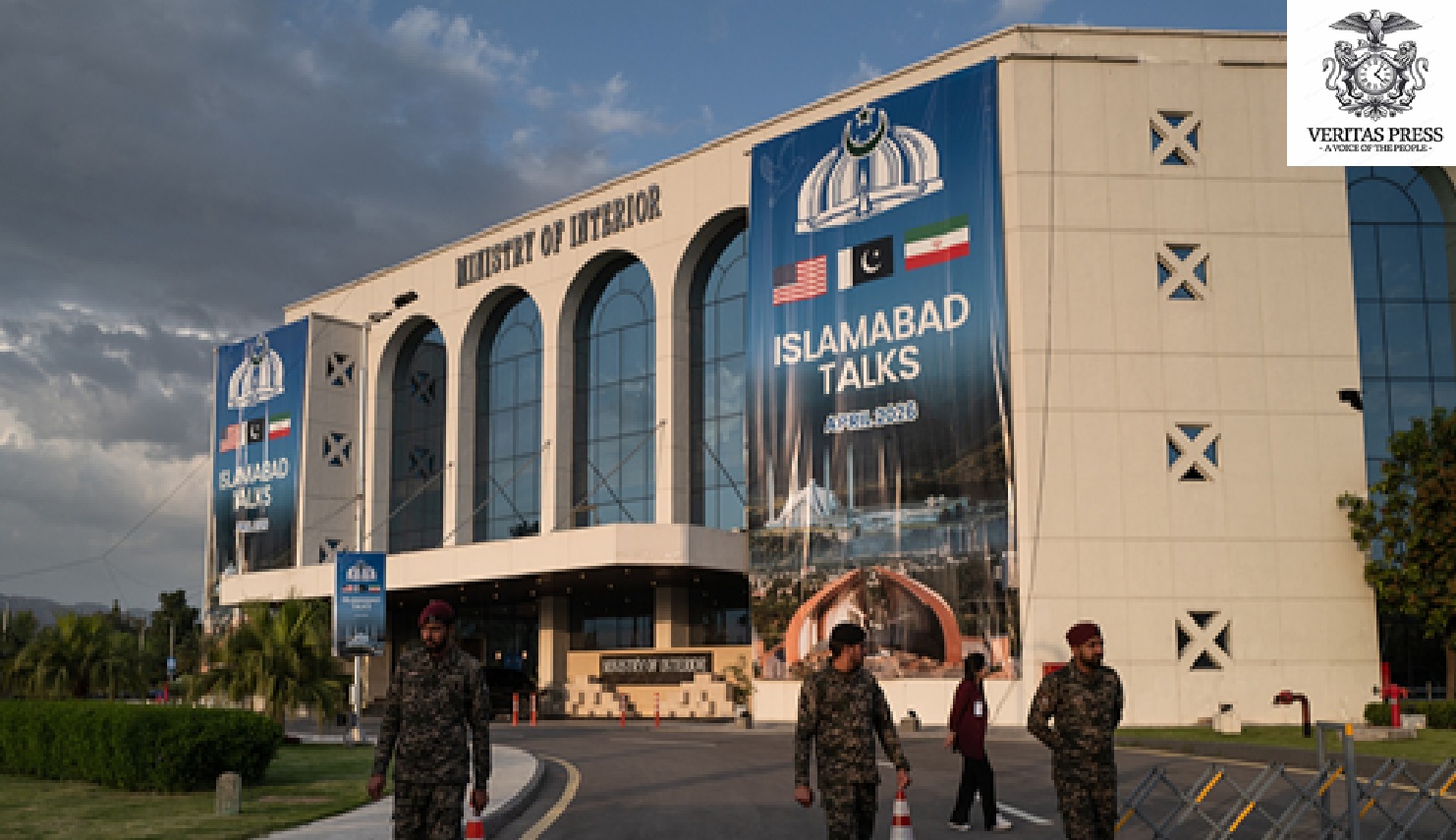
As Air Force Two lifted off from Islamabad at 7:08 a.m. local time, carrying Vice President Vance and his delegation back to Washington, the banners marking the “historic US-Iran peace talks” were already being dismantled. The moment, pregnant with possibility, just 24 hours earlier, had passed.
Iranian Foreign Ministry spokesman Esmaeil Baqaei captured the enduring reality in a single phrase: the talks were conducted “in an atmosphere of distrust and suspicion.” This is not merely a diplomatic observation; it is the distilled essence of four decades of enmity: the hostage crisis, the Tanker War, the nuclear standoffs, the assassination of Qassem Soleimani, and now the killing of Ali Khamenei.
In such an atmosphere, negotiation becomes not a search for common ground but a continuation of conflict by other means. Each side enters the room convinced the other is negotiating in bad faith. Each concession is viewed as a sign of weakness to be exploited. Each demand is interpreted as a trap designed to humiliate.
The failure in Islamabad is thus not an aberration but an expression of the deeper pathology that defines US-Iran relations. Until that underlying mistrust is addressed, through sustained, patient diplomacy backed by credible guarantees and mutual respect, any agreement will be fragile, any ceasefire temporary, any peace an illusion.
The world can only hope that the next round of talks, whenever and wherever they occur, begins with a recognition of this fundamental truth. Otherwise, the diplomats will keep talking while the bombs keep falling, and the people of Iran, Israel, Lebanon, and the wider Middle East will continue to pay the price.
Conclusion: The Islamabad Charade, How Diplomacy Became A Weapon Of War.
The collapse of the Islamabad talks after 21 gruelling hours was not a diplomatic failure. It was a diplomatic success for those who never wanted a deal in the first place.
This is the inescapable, damning conclusion that emerges from a forensic examination of the negotiations, the timing of military manoeuvres, and the public statements of key actors before, during, and after the talks. The evidence points not to a good-faith effort that fell short, but to a carefully orchestrated performance designed to achieve three interrelated objectives: provide political cover for continued US-Israeli military escalation, shift blame for the conflict’s continuation onto Iran, and create a pretext for the next, more devastating phase of the war.
The Anatomy Of A Preordained Failure:
Consider the sequence of events with the cold eye of an investigator rather than the credulous gaze of a diplomatic correspondent.
First: The Timing. The talks were scheduled just days after the April 7 ceasefire began, with a two-week window. Yet the US delegation arrived with what Vice President Vance explicitly called a “final and best offer”, a non-negotiable ultimatum presented at the very outset of what was supposed to be an extended negotiation process. In any genuine diplomatic endeavour, “final offers” come at the end of talks, not the beginning. Presenting one on day one is the diplomatic equivalent of loading a gun, pointing it at the other side’s head, and calling it a conversation.
Second: The Demands. The US insisted on what it knew Iran could never accept: complete, verifiable abandonment of uranium enrichment, a program that has survived decades of sanctions, sabotage, and assassinations, and the surrender of sovereign control over the Strait of Hormuz. These were not negotiating positions; they were poison pills. As one veteran European diplomat with decades of Iran experience told this reporter on condition of anonymity: “You don’t ask the other side to commit political suicide in the first round unless you want the talks to collapse.”
Third: The Parallel Military Operations. Even as Vance and Witkoff sat across from Ghalibaf and Araghchi, US Navy destroyers were attempting transit of the Strait of Hormuz, a provocation timed with exquisite precision to coincide with the negotiations. CENTCOM announced mine-clearing operations. President Trump posted on Truth Social that the US was “clearing out the Strait of Hormuz.” These were not actions of a party genuinely seeking peace; they were the actions of a party demonstrating that it could, and would, continue military operations regardless of what happened at the negotiating table.
Fourth: The Presidential Indifference. Donald Trump’s repeated assertion that it “makes no difference to me” whether a deal was reached is perhaps the most revealing statement of all. A president genuinely committed to ending a war that has killed thousands and destabilised the global economy does not express ambivalence about the outcome of peace talks. He does so only if he believes he benefits more from their failure than their success.
The Netanyahu Connection: A War That Was Never Meant To End.
To understand why Washington might have designed these talks to fail, one must look to Jerusalem. Israeli Prime Minister Benjamin Netanyahu has been explicit from the war’s first hours: “This is not the end of the war, but a stop on the way to achieving all the goals.”
Those goals, as articulated by Israeli officials in background briefings and public statements, extend far beyond the immediate war aims of degrading Iran’s nuclear capabilities. They include the complete destruction of Iran’s nuclear infrastructure, the disarmament of Hezbollah, the creation of a security buffer zone in southern Lebanon, and, according to some Israeli hawks, the eventual collapse of the Islamic Republic itself.
For Netanyahu, a ceasefire that left Iran’s regime intact and its nuclear knowledge preserved would represent not a victory but a catastrophic strategic failure. The Islamad talks, from this perspective, served a different purpose: they were a necessary political interlude, a demonstration to the international community and domestic American audiences that “diplomacy had been tried” before the next, more intense phase of military operations commenced.
The pattern is familiar to any student of recent Middle Eastern conflicts. Before the 2003 invasion of Iraq, the Bush administration pursued a UN inspections process that it had already decided would fail. Before Israel’s 2006 Lebanon war, diplomatic efforts were pursued with full knowledge that neither side would accept the terms on offer. In both cases, the diplomatic theatre served to legitimise the military action that followed.
“We’ve seen this movie before,” said Trita Parsi, executive vice president of the Quincy Institute for Responsible Statecraft and a longtime Iran analyst. “The administration goes through the motions of diplomacy, presents maximalist demands it knows the other side cannot accept, then points to the failure as justification for war. The Islamabad talks fit this pattern with alarming precision.”
The Evidence Of Bad Faith:
The claim that the talks were designed to fail is not mere speculation. It is supported by a constellation of facts that, viewed together, form a damning portrait of diplomatic bad faith.
The “Final Offer” Ultimatum. Multiple participants in the talks, speaking on background to avoid jeopardising future contacts, confirmed that the US delegation arrived with a document that was presented as non-negotiable. “They said, ‘This is what we need. Take it or leave it,'” one source close to the Iranian delegation said. “That’s not negotiation. That’s capitulation.”
The Absence of Sequencing. In any complex negotiation, particularly one involving issues as fraught as nuclear enrichment and territorial sovereignty, progress requires sequencing: confidence-building measures first, then gradual movement toward harder issues. The US proposal offered no such sequencing. It demanded everything upfront, in a single take-it-or-leave-it package.
The Vance Press Conference. The Vice President’s post-talks remarks were notable not for what they said about Iran’s position but for what they revealed about American expectations. “We need to see an affirmative commitment that they will not seek a nuclear weapon,” Vance said. But Iran’s 10-point proposal, which the US had already accepted as the basis for talks, explicitly included such a commitment. The US demand, however, went far beyond that pledge to include the dismantlement of enrichment infrastructure. Vance knew, or should have known, that this was a red line Tehran could not cross.
The Media Messaging. Within hours of the talks’ collapse, Trump was sharing articles advocating a naval blockade of Iran. Administration surrogates were on cable news describing Iran as having “walked away” from peace. The rapidity and coordination of this messaging campaign suggest it was prepared in advance, a contingency plan that became operational the moment the talks ended.
What Comes Next: The Post-Diplomacy Phase Of War
If the Islamabad talks were indeed a charade designed to fail, then the logical next step is the intensification of military operations that diplomacy was meant to forestall.
The US Navy is already moving additional assets toward the Persian Gulf. The aircraft carrier USS Gerald R. Ford has been ordered to remain on station rather than return to home port. B-2 stealth bombers have been deployed to Diego Garcia, within striking range of Iran’s most heavily fortified nuclear sites. Israeli officials speak openly of a “window of opportunity” created by the collapse of talks.
The naval blockade floated by Trump would, if implemented, represent a dramatic escalation. Targeting Iran’s oil exports, the regime’s primary source of revenue, would be an act of economic warfare that Iran’s leadership has repeatedly warned would be met with a “crushing response.” The IRGC has already demonstrated its capacity to disrupt global energy supplies; a US blockade would likely trigger Iranian attacks on tankers, Gulf energy infrastructure, and potentially US naval vessels.
The nuclear dimension is even more alarming. Iran has accumulated enough 60% enriched uranium that, with further processing, could fuel several nuclear weapons. The collapse of diplomacy removes the last constraint on Iran’s leaders, who are now operating without Khamenei’s moderating influence, to dash toward a nuclear breakout. The very outcome the US claims to be preventing may be accelerated by the failure of the talks it designed to fail.
The Regional Tinderbox:
The consequences of this manufactured diplomatic failure will not be confined to the US-Iran dyad. The entire Middle East now stands at a precipice.
In Lebanon, Israeli operations continue unabated. Hezbollah, battered but not broken, has shown no sign of accepting disarmament. The Lebanese health ministry’s reports of systematic targeting of medical personnel, if confirmed by international investigations, would constitute war crimes, crimes that are now being committed under the permissive shadow of a failed peace process.
In Yemen, the Houthis have threatened to expand their attacks on Red Sea shipping in solidarity with Iran. In Iraq, Shia militias with close ties to Tehran have resumed rocket attacks on US bases. The Gulf states, caught between their security dependence on Washington and their geographic and economic exposure to Iran, watch with growing alarm as the region slides toward a war that none of them wanted.
The Verdict Of History:
The Islamabad talks will be remembered not as a missed opportunity but as a manufactured pretext, a diplomatic Potemkin village constructed to conceal the reality that powerful actors in Washington and Jerusalem had already decided that war, not peace, served their interests.
Vice President Vance boarded Air Force Two at 7:08 a.m. and flew home “empty-handed,” as the Iranian embassy in Ghana mockingly put it. But the emptiness of his hands was the point. He was never meant to return with an agreement. He was meant to return with a story: that America had tried diplomacy, that Iran had refused, that the only path forward was the one the Pentagon had been preparing for all along.
The war that began on February 28 was never supposed to end in Islamabad. It was only supposed to pause there, long enough for the world to see America extend its hand, and for Iran to be seen slapping it away. The cameras have now been packed up. The negotiators have gone home. And the bombers are being fueled.
For the people of Iran, Israel, Lebanon, and the wider Middle East, the true cost of this diplomatic deception will be measured not in hours of failed talks but in the lives that will be lost in the days, weeks and months to come. History will record that the United States and Iran came within inches of peace in Islamabad. The deeper truth, the one that demands investigative rigour and moral clarity, is that they were never allowed to get that close.
POSTSCRIPT: A Pattern of Pretext
This is not the first time the United States has used the appearance of diplomacy to justify military action. The 2003 invasion of Iraq was preceded by UN inspections that the Bush administration had already decided were irrelevant. The 2011 NATO intervention in Libya followed a “ceasefire” that was never observed. The pattern repeats because it works: it provides political cover, divides international opposition, and frames the conflict in terms favourable to the intervening power.
The Islamabad talks represent the latest iteration of this cynical playbook. The difference, this time, is the stakes. Iran is not Iraq in 2003 or Libya in 2011. It is a nation of 85 million people with a sophisticated military, deep strategic depth, and a demonstrated willingness to absorb punishment and strike back. A war designed to finish what diplomacy was never meant to achieve will not be a short, decisive campaign. It will be a generational conflagration that reshapes the Middle East, and perhaps the global order, in ways that no war planner can predict and no diplomat can control.
The failure in Islamabad was not a failure of negotiation. It was a success of deception. And the bill for that deception is about to come due.
Source: Multiple News Agencies
Submissions:
For The Secure Submission Of Documentation, Testimonies, Or Exclusive Investigative Reports From Any Global Location, Please Utilise The Following Contact Details For Our Investigations Desk: enquiries@veritaspress.co.uk or editor@veritaspress.co.uk
Help Support Our Work:
Popular Information is powered by readers who believe that truth still matters. When just a few more people step up to support this work, it means more lies exposed, more corruption uncovered, and more accountability where it’s long overdue.
Help Protect Independent Journalism, Which Is Currently Under Attack.
If you believe journalism should serve the public, not the powerful, and you’re in a position to help, becoming a DONATOR or a PAID SUBSCRIBER truly makes a difference.
DONATION APPEAL: If You Found This Reporting Valuable, Please Consider Supporting Independent Journalism.
Help Support Our Work – We Know, We Know, We Know …
Seeing these messages is annoying. We know that. (Imagine what it’s like writing them … )
Your support fuels our fearless, truth-driven journalism. In unity, we endeavour to amplify marginalised voices and champion justice, irrespective of geographical location.
But it’s also extremely important. One of Veritas Press’s greatest assets is its reader-funded model.
1. Reader funding means we can cover what we like. We’re not beholden to the political whims of a billionaire owner. We are a small, independent and impartial organisation. No one can tell us what not to say or what not to report.
2. Reader funding means we don’t have to chase clicks and traffic. We’re not desperately seeking your attention for its own sake: we pursue the stories that our editorial team deems important and believe are worthy of your time.
3. Reader Funding: enables us to keep our website and other social media channels open, allowing as many people as possible to access quality journalism from around the world, particularly those in places where the free press is under threat.
We know not everyone can afford to pay for news, but if you’ve been meaning to support us, now’s the time.
Your donation goes a long way. It helps us:
Keep the lights on and sustain our day-to-day operations
Hire new, talented independent reporters
Launch real-time live debates, community-focused shows, and on-the-ground reporting
Cover the issues that matter most to our communities, in real time, with depth and integrity
We have plans to expand our work, but we can’t do it without your support. Every contribution, no matter the size, helps us stay independent and build a truly people-powered media platform.
If you believe in journalism that informs, empowers, and reflects the communities we serve, please donate today.
Kamran Faqir is a volunteer investigative journalist and writer committed to exposing hidden truths and amplifying underreported stories. Driven by social justice, he brings sharp insight and fearless truth-telling to independent journalism. NUJ registered.
SEATTLE, TEHRAN — The U.S. Department of Homeland Security (DHS) will allow Iran’s national football team to enter the country 48 hours before their critical World Cup match against Egypt on Friday, a modest concession in a tournament where Team Melli’s travel conditions have sparked claims of oppression and competitive disadvantage.