Kamran Faqir is a volunteer investigative journalist and writer committed to exposing hidden truths and amplifying underreported stories. Driven by social justice, he brings sharp insight and fearless truth-telling to independent journalism. NUJ registered.
Original Article Date Published:
Article Date Modified:
13 minutes
Views:311
Listen to this article
Help support our mission, donate today and be the change. Every contribution goes directly toward driving real impact for the cause we believe in.
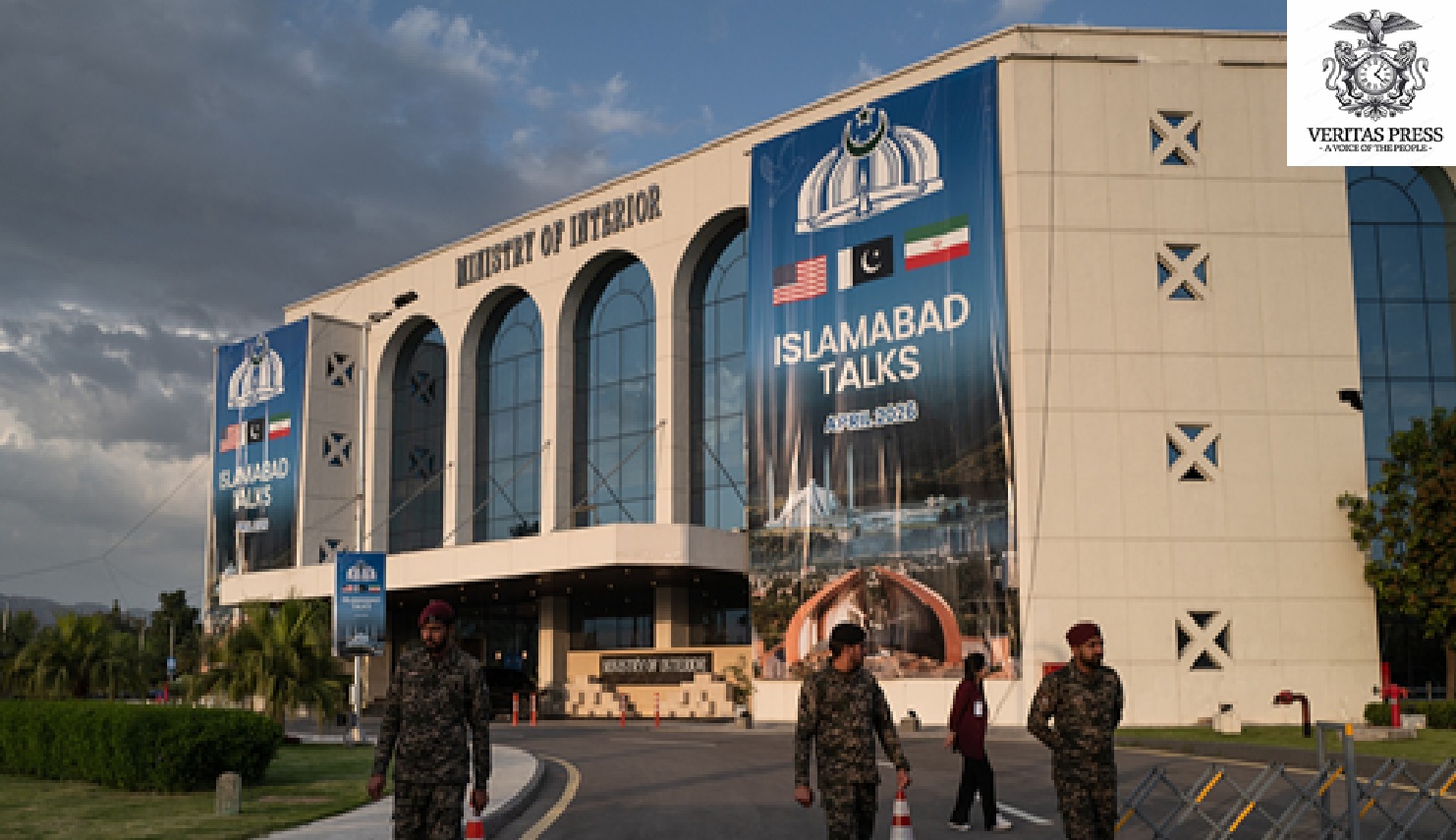
ISLAMABAD / BEIRUT — As dawn breaks over a locked-down Islamabad on Friday, the world’s attention is fixed on a single question: will a historic, high-stakes negotiation between the United States and Iran even happen? The answer, for now, hangs in the fate of a shattered neighbourhood in Beirut.
New details have emerged that reveal a startling sequence of events that unfolded in the 48 hours preceding the planned talks. According to a high-ranking Iranian security source, it was not international diplomatic pressure alone, but a direct and credible threat from Tehran to abandon the entire peace process that forced the United States to compel Israel to halt its devastating airstrikes on the Lebanese capital.
This revelation offers a critical window into the fragile dynamics at play, exposing a chaotic diplomatic landscape where contradictory statements from Washington, Tehran, and Tel Aviv have pushed the region to the brink of renewed all-out war, even as a ceasefire technically remains in effect.
Vance Arrives In A City Under Siege:
U.S. Vice President JD Vance landed in Pakistan on Friday, leading a delegation that includes special envoy Steve Witkoff and presidential son-in-law Jared Kushner, underscoring the immense political capital the Trump administration has placed on these negotiations. Before departing, Vance set a stark tone, warning Tehran not to “try to play us.” He stated, “If the Iranians are willing to negotiate in good faith, we’re certainly willing to extend the open hand. If they’re going to try to play us, then they’re going to find the negotiating team is not that receptive.”
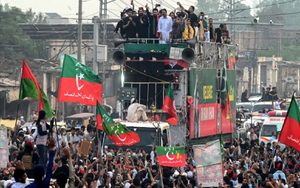
The venue, the luxurious Serena Hotel, has been sealed off and cleared of all guests. The surrounding city is a ghost town; a public holiday has been declared, and the “Red Zone” administrative enclave is on complete lockdown with entry restricted only to authorised individuals. This unprecedented security posture is a testament to both the historic nature of the talks and the extreme volatility that has surrounded them since their inception.
The Central Fault Line: The “Lebanon Question”
At the heart of the crisis is a fundamental and, it appears, deliberate miscommunication: the status of Lebanon. When Pakistani Prime Minister Shehbaz Sharif triumphantly announced the U.S.-Iran ceasefire on Tuesday, he explicitly stated it applied “everywhere, including Lebanon and elsewhere.”
Both Tehran and Islamabad have maintained this position. Iran’s Parliament Speaker Mohammad Bagher Ghalibaf declared unequivocally that “Lebanon and the entire Resistance Axis, as Iran’s allies, form an inseparable part of the ceasefire.” He further warned that “Ceasefire violations carry explicit costs and STRONG responses.”
However, this interpretation was immediately and forcefully rejected by both Israel and the United States. Israeli Prime Minister Benjamin Netanyahu, addressing his nation, was unambiguous: “I want to tell you there is no ceasefire in Lebanon. We are continuing to strike Hezbollah with force, and we will not stop until we restore your security.” Vice President Vance, during a stop in Hungary, dismissed Iran’s stance as a “legitimate misunderstanding,” stating, “I think the Iranians thought that the ceasefire included Lebanon, and it just didn’t. We never made that promise.”
This chasm of interpretation set the stage for a catastrophic breach of the fragile truce.
‘Black Wednesday’: A Truce Shattered In Hours
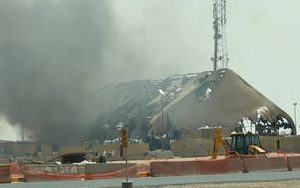
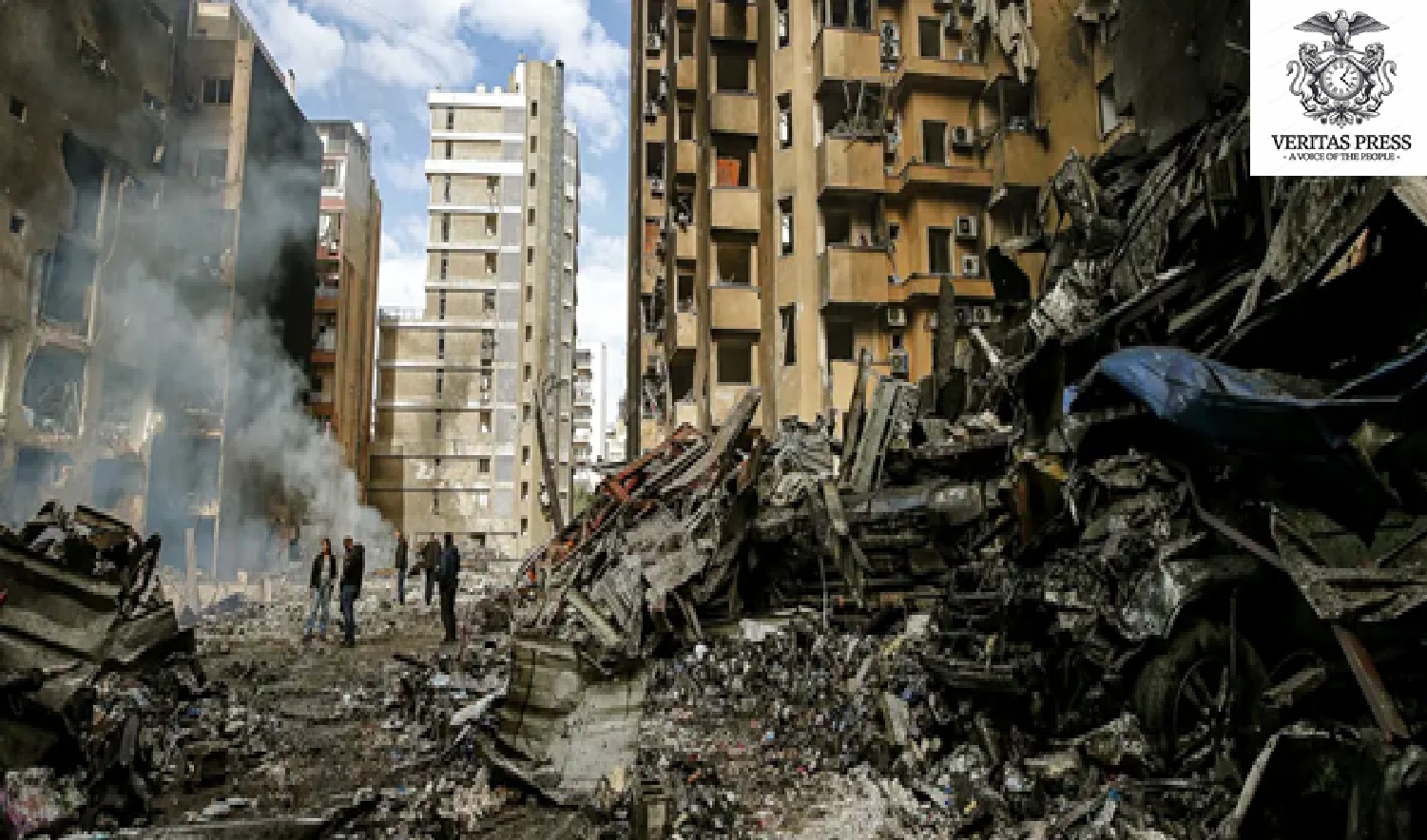
With the ink barely dry on the Pakistan-brokered agreement, Israel launched what its military described as its “largest coordinated strike” of the conflict, targeting approximately 100 sites across Lebanon in a matter of minutes. The operation, which Israel claimed targeted Hezbollah operatives and infrastructure, resulted in the deadliest day since the war’s escalation.
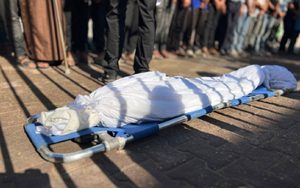
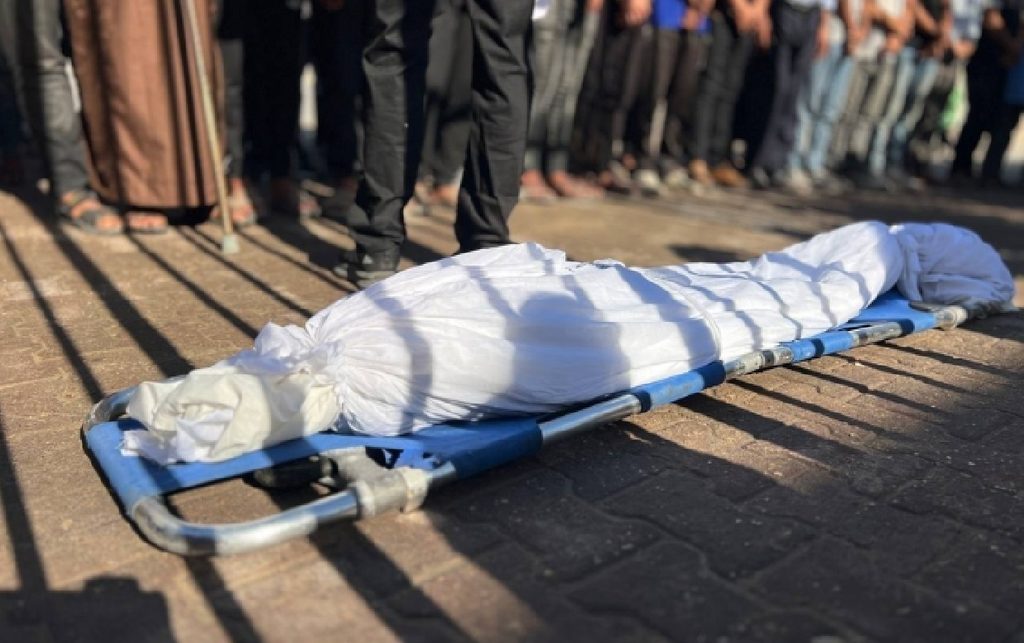
The human toll was staggering. According to Lebanese health authorities, the strikes killed at least 303 people and wounded over 1,150. Among the chaos, the World Health Organization (WHO) issued an urgent appeal to Israel to cancel evacuation warnings for the Jnah district of Beirut, where two major hospitals, housing 450 patients, including 40 in intensive care, were located. The WHO warned that relocating these patients was “operationally unfeasible.”
The IRGC Steps In: Iran’s Diplomatic Coercion
It was in the immediate aftermath of this bloodshed that the diplomatic game fundamentally changed. According to a high-ranking security source speaking to Iran’s Press TV, Tehran moved from public condemnation to a private ultimatum. Faced with what it saw as a direct and violent repudiation of the ceasefire terms, Iran informed the United States that its participation in the Islamabad talks was now conditional.
“The unity of the resistance front was non-negotiable for Iran,” the source stated, adding that the Iranian delegation’s travel was repeatedly delayed due to the Israeli aggression.
This was not a bluff. Iran’s Fars News Agency reported that the negotiating team had not arrived in Islamabad and had “no plans to attend peace talks with the US until Israel stops bombing Lebanon.” The message to Washington was clear: halt the strikes on Beirut and its southern suburb of Dahieh, or the negotiations would be voided entirely.
According to the source, this “persistent insistence and a credible threat to walk out of the talks” forced the United States to intervene directly with Israel. “The Americans were forced to make the Zionist regime halt its assaults on Beirut,” the source claimed. The source added that this pause is strictly conditional: “Should the brutal regime violate this understanding and resume bombing Beirut, the negotiations will be terminated immediately.”
A Multilateral Squeeze On Netanyahu:
While Iran’s ultimatum appears to have been the decisive factor, it was not operating in a vacuum. It came amid intense, multi-front diplomatic pressure on Israel to show restraint. A Western diplomat, speaking to AFP on condition of anonymity, confirmed that “European and Arab states have pressured Israel to stop targeting Beirut,” with coordinated efforts from “European states, Gulf states and Egypt.”
Crucially, this pressure was also applied from the White House. According to a senior official cited by NBC News, U.S. President Donald Trump personally called Prime Minister Netanyahu to “scale back attacks on Lebanon to prevent the collapse of the ceasefire.” This confluence of international pressure and a credible threat to the nascent peace process appears to have created a temporary, and likely fragile, detente over Beirut.
The Axis Of Resistance And The Shadow Of The 10-Point Plan:
The centrality of Lebanon to Iran’s negotiating position is not merely about protecting a proxy; it is a matter of strategic doctrine. Iran views Hezbollah as the linchpin of its “Axis of Resistance,” a network of allied militias that provides Tehran with strategic depth against both Israel and the United States.
This is codified in the very document that underpins the ceasefire: Iran’s 10-point peace plan. Point 10 of the plan, which Iran’s Supreme National Security Council says the U.S. has “in principle” accepted as a framework for talks, explicitly calls for the “cessation of hostilities on all fronts, including Lebanon.”
Iran’s position is that Israeli strikes on Hezbollah constitute a material breach of this agreed framework, rendering the entire negotiation “meaningless.” Iranian President Masoud Pezeshkian wrote on X that the strikes “signal deception and non-compliance” with the ceasefire, adding, “Our hands remain on the trigger.”
The Pakistani Pivot: A New Mediator Emerges
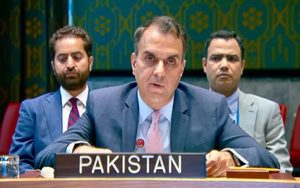
Caught in the middle is Pakistan, a nation that has seized this moment to assert itself as a crucial diplomatic player on the world stage. Its role has evolved from a quiet message conduit to the high-profile host and guarantor of the peace process. Pakistan’s leverage stems from its unique, if sometimes tense, relationships with both Washington and Tehran, as well as its own vital security and economic interests in a stable region.
Analysts suggest Islamabad has been instrumental in de-escalating flashpoints behind the scenes. Iran’s Deputy Foreign Minister Saeed Khatibzadeh claimed that “Pakistan has intervened to stop Iran retaliating against the strikes on Lebanon.” This quiet diplomacy, combined with the public spectacle of the Islamabad talks, has elevated Pakistan’s international standing, even as the situation it is attempting to manage remains perilously close to collapse.
A Tale Of Two Peace Plans:
The negotiations in Islamabad will not just be about silencing the guns; they will be a direct collision of two vastly different visions for the Middle East’s future.
Iran’s 10-point plan is maximalist. In addition to a region-wide ceasefire, it demands a formal U.S. commitment of non-aggression, continued Iranian control over the Strait of Hormuz (with the possibility of a £1.1 million toll per ship), recognition of its uranium enrichment rights, the lifting of all U.S. and UN sanctions, the withdrawal of U.S. combat forces from the region, and the payment of war reparations.
The U.S., meanwhile, has reportedly tabled a 15-point counterproposal. Its core demands centre on a verifiable end to any Iranian nuclear weapons ambitions, the full and unconditional reopening of the strategic Strait of Hormuz, and a rollback of Iran’s ballistic missile program. The gulf between these two positions is immense.
Conclusion: A Ceasefire On Borrowed Time
As of Friday, an uneasy quiet has fallen over Beirut, but the situation remains on a hair trigger. Iran’s delegation, according to multiple sources, is waiting for a “tangible guarantee” that the halt in strikes is durable before committing to the Islamabad talks. Vice President Vance and his team are on the ground, but the partners they expected to meet are not yet there. Meanwhile, Israeli and Lebanese officials are scheduled for separate, U.S.-hosted talks in Washington next week, a parallel track that could either complement or further complicate the main event in Islamabad.
The last 48 hours have laid bare the core instability of the current moment. A ceasefire that means one thing in Tehran, another in Washington, and nothing at all in Tel Aviv is not a ceasefire; it is a state of armed confusion. The immediate future of the region now rests on two critical questions: Can the fragile understanding that silenced Beirut be made permanent? And if it cannot, will the world’s last, best chance for peace be shattered by the next sound of an air raid siren over Dahieh?
The world watches and waits. The answer will come first not from a grand conference hall in Islamabad, but from the skies over Lebanon.
The dramatic lockdown of Islamabad’s Red Zone, with its snipers on rooftops and armoured convoys idling outside the Serena Hotel, serves as a grim visual metaphor for the true nature of these negotiations. While the world’s cameras focus on the choreographed optics of Vice President Vance’s arrival, the reality on the ground tells a far more coercive story. These talks, convened not in Geneva or Vienna but on Pakistani soil, are designed to hold a diplomatic gun to the head of the Islamic Republic of Iran. As Israeli warplanes continue to pound southern Lebanon, and as the Netanyahu government accelerates settlement expansion and de facto annexation in the West Bank under the cover of the Gaza distraction, Washington’s demand for Iran’s capitulation on its nuclear and regional posture rings hollow. The “security measures” cloaking Islamabad are not merely about protecting delegates; they are about insulating the United States from the political fallout of a process that demands unilateral disarmament from Tehran while granting Tel Aviv an open-ended license for territorial revisionism. Iran’s negotiators are being asked to trust a ceasefire that Israel never recognised, to accept guarantees from an administration that cannot control its own ally, and to dismantle its deterrence architecture while watching the Zionist expansionist project advance unimpeded on three separate fronts. The entire Islamabad summit, dressed up in the language of peace and security, is in reality a high-stakes ultimatum delivered under the watchful eye of a city placed under de facto martial law. The question is not whether Iran will sign, but whether it can afford to refuse a negotiation whose only tangible outcome thus far has been to pause the bombing of Beirut long enough for the diplomats to take their seats.
Source: Multiple News Agencies
Submissions:
For The Secure Submission Of Documentation, Testimonies, Or Exclusive Investigative Reports From Any Global Location, Please Utilise The Following Contact Details For Our Investigations Desk: enquiries@veritaspress.co.uk or editor@veritaspress.co.uk
Help Support Our Work:
Popular Information is powered by readers who believe that truth still matters. When just a few more people step up to support this work, it means more lies exposed, more corruption uncovered, and more accountability where it’s long overdue.
Help Protect Independent Journalism, Which Is Currently Under Attack.
If you believe journalism should serve the public, not the powerful, and you’re in a position to help, becoming a DONATOR or a PAID SUBSCRIBER truly makes a difference.
DONATION APPEAL: If You Found This Reporting Valuable, Please Consider Supporting Independent Journalism.
Help Support Our Work – We Know, We Know, We Know …
Seeing these messages is annoying. We know that. (Imagine what it’s like writing them … )
Your support fuels our fearless, truth-driven journalism. In unity, we endeavour to amplify marginalised voices and champion justice, irrespective of geographical location.
But it’s also extremely important. One of Veritas Press’s greatest assets is its reader-funded model.
1. Reader funding means we can cover what we like. We’re not beholden to the political whims of a billionaire owner. We are a small, independent and impartial organisation. No one can tell us what not to say or what not to report.
2. Reader funding means we don’t have to chase clicks and traffic. We’re not desperately seeking your attention for its own sake: we pursue the stories that our editorial team deems important and believe are worthy of your time.
3. Reader Funding: enables us to keep our website and other social media channels open, allowing as many people as possible to access quality journalism from around the world, particularly those in places where the free press is under threat.
We know not everyone can afford to pay for news, but if you’ve been meaning to support us, now’s the time.
Your donation goes a long way. It helps us:
Keep the lights on and sustain our day-to-day operations
Hire new, talented independent reporters
Launch real-time live debates, community-focused shows, and on-the-ground reporting
Cover the issues that matter most to our communities, in real time, with depth and integrity
We have plans to expand our work, but we can’t do it without your support. Every contribution, no matter the size, helps us stay independent and build a truly people-powered media platform.
If you believe in journalism that informs, empowers, and reflects the communities we serve, please donate today.
Kamran Faqir is a volunteer investigative journalist and writer committed to exposing hidden truths and amplifying underreported stories. Driven by social justice, he brings sharp insight and fearless truth-telling to independent journalism. NUJ registered.
SEATTLE, TEHRAN — The U.S. Department of Homeland Security (DHS) will allow Iran’s national football team to enter the country 48 hours before their critical World Cup match against Egypt on Friday, a modest concession in a tournament where Team Melli’s travel conditions have sparked claims of oppression and competitive disadvantage.