Kamran Faqir is a volunteer investigative journalist and writer committed to exposing hidden truths and amplifying underreported stories. Driven by social justice, he brings sharp insight and fearless truth-telling to independent journalism. NUJ registered.
Original Article Date Published:
Article Date Modified:
10 minutes
Views:327
Listen to this article
Help support our mission, donate today and be the change. Every contribution goes directly toward driving real impact for the cause we believe in.
Britain is heading into a prolonged economic squeeze, where rising household bills, stagnant wages, and mounting personal debt are converging into what economists and campaigners warn could become a multi-year social and financial crisis.
While ministers point to a fragile Middle East ceasefire as a potential stabilising factor, the reality on the ground is starkly different:
For millions of households, the crisis is already embedded and worsening.
From Energy Shock To Household Crisis:
The surge in global oil and gas prices, triggered by instability in the Middle East and threats to the Strait of Hormuz, has fed directly into UK household costs.
Petrol prices have surged sharply.
Energy bills are forecast to rise again under Ofgem’s cap.
Food prices are set to increase as fertiliser and transport costs climb.
But this is no longer just an energy story. It has become a full-spectrum cost-of-living emergency.
Labour MP Graeme Downie warned the economic effects could persist until 2027–28, stressing:
“This isn’t going to be a short-lived problem… the impacts will run through the entire system.”
Debt Explosion: Households Forced To Borrow To Survive.
As costs rise faster than incomes, millions of Britons are increasingly relying on credit just to cover essentials.
Recent financial data and banking sector reports show:
Credit card usage is rising sharply for everyday spending
Households borrowing to pay for food, fuel, and utilities
Savings rates are declining as people exhaust financial buffers
Debt charities and consumer groups warn that this is not discretionary borrowing, it is distress borrowing.
A senior adviser at a UK debt charity described the situation bluntly:
“People aren’t using credit for luxuries anymore. They’re using it to survive, groceries, energy bills, basic living.”
The long-term consequence is a debt overhang that could outlast the energy crisis itself, locking households into years of repayments, interest, and financial insecurity.
Wages Stagnate As Inflation Bites.
At the heart of the crisis lies a widening gap:
Costs are rising rapidly
Wages are not keeping pace
Despite nominal wage growth in some sectors, real wages adjusted for inflation remain under pressure, particularly for:
Public sector workers
Low- and middle-income households
Renters facing rising housing costs
Economists warn that energy-driven inflation acts like a regressive tax, disproportionately hitting those with the least flexibility in their budgets.
Unemployment Risks Rise As Businesses Buckle Under Costs:
The energy shock is now feeding into the labour market.
Businesses, especially in energy-intensive sectors such as:
Manufacturing
Retail
Hospitality
are facing:
Higher operating costs
Reduced consumer demand
Shrinking profit margins
This combination is already leading to:
Hiring freezes
Reduced hours
Early signs of job losses
Analysts warn that if high energy prices persist, the UK could see a slow-burning rise in unemployment, particularly among small and medium-sized enterprises.
One industry body representative noted:
“For many businesses, energy costs have gone from a manageable expense to a defining threat.”
Tax Pressure And “Inflation Drag” Deepen The Squeeze:
At the same time, households are being hit by stealth taxation.
Through so-called “fiscal drag”:
Tax thresholds remain frozen
Inflation pushes workers into higher tax brackets
Real disposable income shrinks further
Combined with rising costs, this creates a double squeeze:
Households pay more for essentials
While simultaneously paying more in tax
Critics argue this amounts to taxation by inflation, quietly intensifying the burden on working households.
A Perfect Storm: Energy, Debt, Wages, And Policy Failure.
What is emerging is not a single crisis, but a convergence of pressures:
1. Energy costs
Driven by global conflict and domestic market structures
2. Debt dependency
Households are increasingly reliant on credit to survive
3. Wage stagnation
Real incomes failing to keep pace with inflation
4. Rising unemployment risk
Businesses cutting back under cost pressures
5. Tax burden creep
Inflation is pushing households into higher tax bands
Together, these forces are creating what some economists describe as a “structural squeeze economy.”
Public anger is increasingly directed not just at global events, but at domestic economic structures.
Critics point to:
The UK’s privatised energy system, where profits can rise during crises
The marginal pricing model, linking electricity costs to expensive gas
A lack of transparency over how price increases translate into corporate margins
Campaigners are calling for:
Windfall taxes on excess profits
Reform of electricity pricing mechanisms
In some cases, the renationalisation of key utilities
One recurring demand is greater scrutiny:
What proportion of rising bills reflects genuine costs, and how much is profit?
Brexit, Supply Chains, And Inflation Vulnerability:
Structural vulnerabilities linked to Brexit are also under renewed scrutiny.
Since leaving the EU Single Market:
Supply chains have become more complex and costly
Trade frictions have increased import costs
The UK has experienced persistently higher inflation than many G7 peers
In times of global disruption, these factors amplify economic shocks, making Britain more exposed to volatility in energy and commodity markets.
Social Consequences: Instability On The Horizon.
The cumulative impact is now raising concerns about social cohesion and political stability.
Polling already shows:
Overwhelming concern about energy and fuel costs
Rising anxiety about access to essential goods
As debt rises and living standards fall, analysts warn of:
Increased financial distress
Greater inequality
Potential for widespread public discontent
One economic commentator warned:
“You cannot have years of falling living standards without political consequences.”
Conclusion: A Manufactured Crisis In A Fragile State.
What is unfolding in Britain can no longer be dismissed as the temporary fallout of war. The Middle East conflict may have lit the spark, but the scale, depth, and persistence of the crisis at home reveal something far more entrenched: an economic model structurally designed to absorb shocks by passing their cost onto ordinary households.
For years, successive crises, Brexit disruption, pandemic aftershocks, and now energy volatility, have exposed the same systemic weaknesses. Yet rather than being resolved, they have deepened. Britain now finds itself in a position where:
Households absorb volatility through higher bills and rising debt levels
Wages consistently lag behind inflation, eroding living standards
Privatised essential services operate with limited public accountability
Government interventions remain short-term, reactive, and ultimately insufficient
A reduction in the financial assistance provided by the government to its citizens could have a significant impact on many lives.
This is not simply economic misfortune. It is the outcome of political and structural choices.
Even if geopolitical tensions ease, the UK faces a difficult and unavoidable reality:
Higher bills are here to stay, for years, not months
Household debt is rising to fill the gap left by stagnant wages
Economic pressures are spreading from energy into every corner of daily life
This is no longer just a crisis of prices. It is a crisis of structure, policy, and resilience.
At the heart of the problem lies a series of contradictions that define modern Britain’s economy. The UK has invested heavily in renewable energy, yet consumers remain tied to fossil-fuel-driven pricing through the marginal pricing system. It has liberalised and privatised its utilities, yet risk is socialised while profits remain private. It has pursued global trade flexibility post-Brexit, yet now faces longer, more fragile supply chains that amplify external shocks.
The result is a system that does not cushion crises, but transmits and intensifies them.
This transmission is now visible in everyday life:
Families are turning to credit cards to pay for groceries
Workers are paying more tax in real terms while earning less in real value
Businesses cutting back under energy pressure, raising risks to jobs and wages
A growing sense that economic stability is no longer attainable
Without significant reform of energy markets, taxation, wages, and social protections, Britain risks becoming locked into a dangerous cycle:
where every global shock becomes a domestic emergency, And every emergency leaves households poorer, more indebted, and less secure than before.
The warning signs are no longer abstract. They are material, measurable, and accelerating: rising debt, falling real incomes, mounting public anger, and increasing strain across the economy.
History suggests that when these pressures converge, the consequences extend far beyond economics. They begin to erode trust in markets, in institutions, and in government itself.
The question now is not whether this crisis will pass.
It is whether the system that produced it can survive it.
Source: Multiple News Agencies
Submissions:
For The Secure Submission Of Documentation, Testimonies, Or Exclusive Investigative Reports From Any Global Location, Please Utilise The Following Contact Details For Our Investigations Desk: enquiries@veritaspress.co.uk or editor@veritaspress.co.uk
Help Support Our Work:
Popular Information is powered by readers who believe that truth still matters. When just a few more people step up to support this work, it means more lies exposed, more corruption uncovered, and more accountability where it’s long overdue.
Help Protect Independent Journalism, Which Is Currently Under Attack.
If you believe journalism should serve the public, not the powerful, and you’re in a position to help, becoming a DONATOR or a PAID SUBSCRIBER truly makes a difference.
DONATION APPEAL: If You Found This Reporting Valuable, Please Consider Supporting Independent Journalism.
Help Support Our Work – We Know, We Know, We Know …
Seeing these messages is annoying. We know that. (Imagine what it’s like writing them … )
Your support fuels our fearless, truth-driven journalism. In unity, we endeavour to amplify marginalised voices and champion justice, irrespective of geographical location.
But it’s also extremely important. One of Veritas Press’s greatest assets is its reader-funded model.
1. Reader funding means we can cover what we like. We’re not beholden to the political whims of a billionaire owner. We are a small, independent and impartial organisation. No one can tell us what not to say or what not to report.
2. Reader funding means we don’t have to chase clicks and traffic. We’re not desperately seeking your attention for its own sake: we pursue the stories that our editorial team deems important and believe are worthy of your time.
3. Reader Funding: enables us to keep our website and other social media channels open, allowing as many people as possible to access quality journalism from around the world, particularly those in places where the free press is under threat.
We know not everyone can afford to pay for news, but if you’ve been meaning to support us, now’s the time.
Your donation goes a long way. It helps us:
Keep the lights on and sustain our day-to-day operations
Hire new, talented independent reporters
Launch real-time live debates, community-focused shows, and on-the-ground reporting
Cover the issues that matter most to our communities, in real time, with depth and integrity
We have plans to expand our work, but we can’t do it without your support. Every contribution, no matter the size, helps us stay independent and build a truly people-powered media platform.
If you believe in journalism that informs, empowers, and reflects the communities we serve, please donate today.
Kamran Faqir is a volunteer investigative journalist and writer committed to exposing hidden truths and amplifying underreported stories. Driven by social justice, he brings sharp insight and fearless truth-telling to independent journalism. NUJ registered.
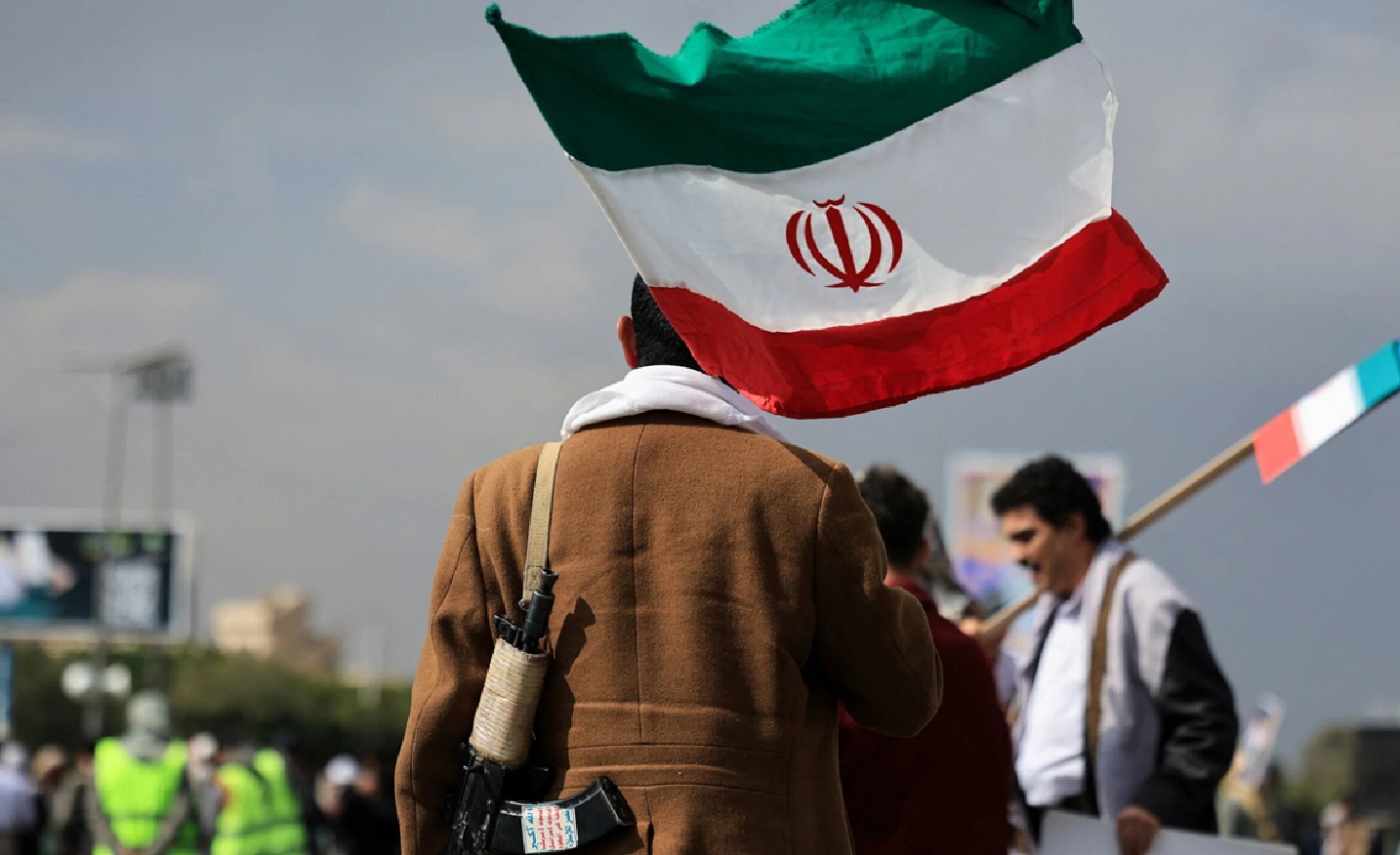
SEATTLE, TEHRAN — The U.S. Department of Homeland Security (DHS) will allow Iran’s national football team to enter the country 48 hours before their critical World Cup match against Egypt on Friday, a modest concession in a tournament where Team Melli’s travel conditions have sparked claims of oppression and competitive disadvantage.