Kamran Faqir is a volunteer investigative journalist and writer committed to exposing hidden truths and amplifying underreported stories. Driven by social justice, he brings sharp insight and fearless truth-telling to independent journalism. NUJ registered.
Original Article Date Published:
Article Date Modified:
7 minutes
Views:432
Listen to this article
Help support our mission, donate today and be the change. Every contribution goes directly toward driving real impact for the cause we believe in.
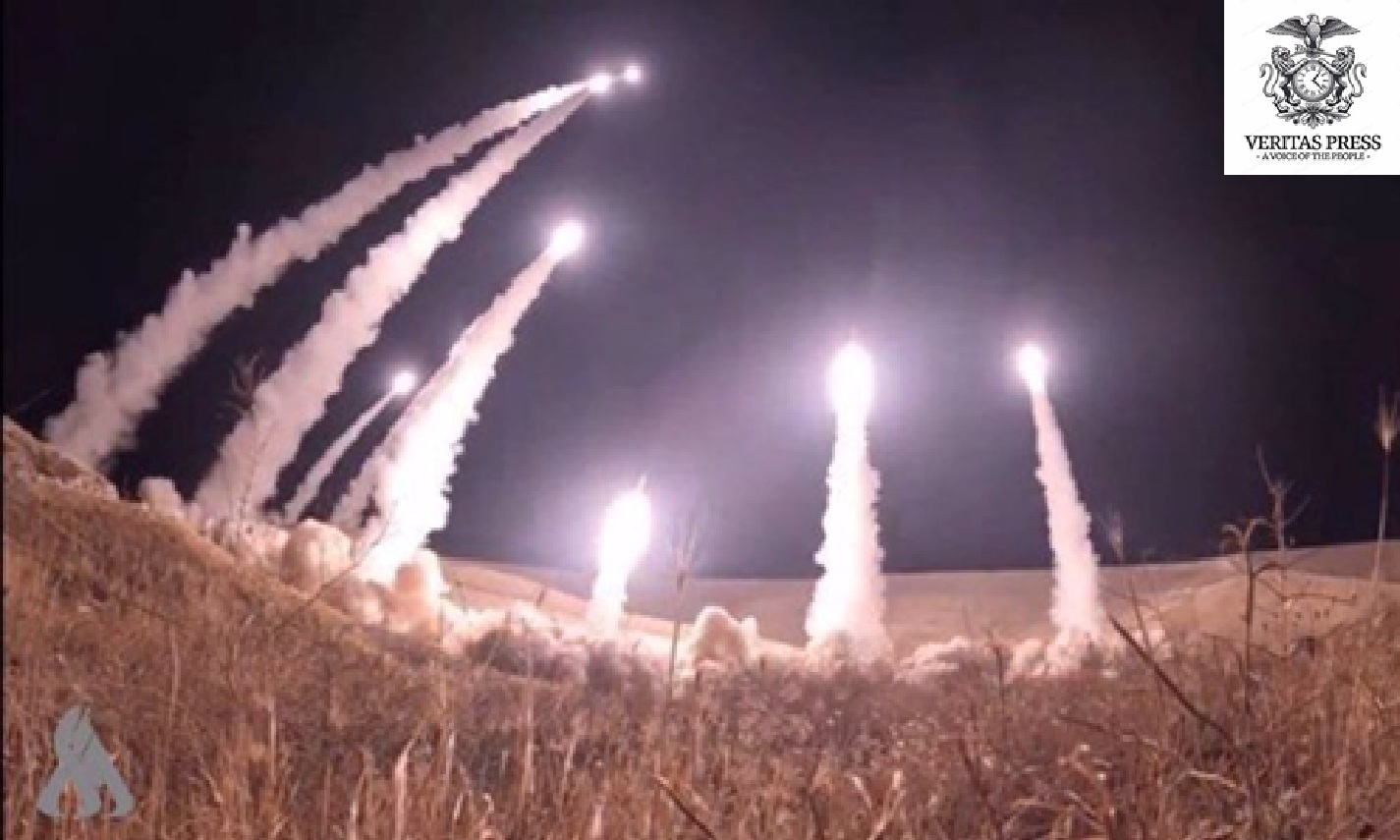
TEHRAN, IRAN – For the past two weeks, the Middle East has been engulfed in its most significant and sustained military confrontation in decades. What began on February 28 as what the US and Israel described as a strike on Iran has spiralled into a multifront war of attrition. At the heart of this conflict is Iran’s retaliatory campaign, Operation True Promise 4, a multi-wave missile and drone offensive that has fundamentally challenged the military and technological supremacy long held by the US and Israel in the region.
On March 12, the Islamic Revolutionary Guards Corps (IRGC) announced the launch of the 41st wave of this operation, codenamed “To Jerusalem”. While official statements from Tehran frame this as a measured response to “US-Israeli aggression,” a deeper investigation into the operation’s scale, targeting, and timing reveals a sophisticated strategy aimed at inflicting psychological and economic pain, testing the limits of enemy air defences, and altering the regional balance of power.
The 41st Wave: A Statement Of Enduring Capability.
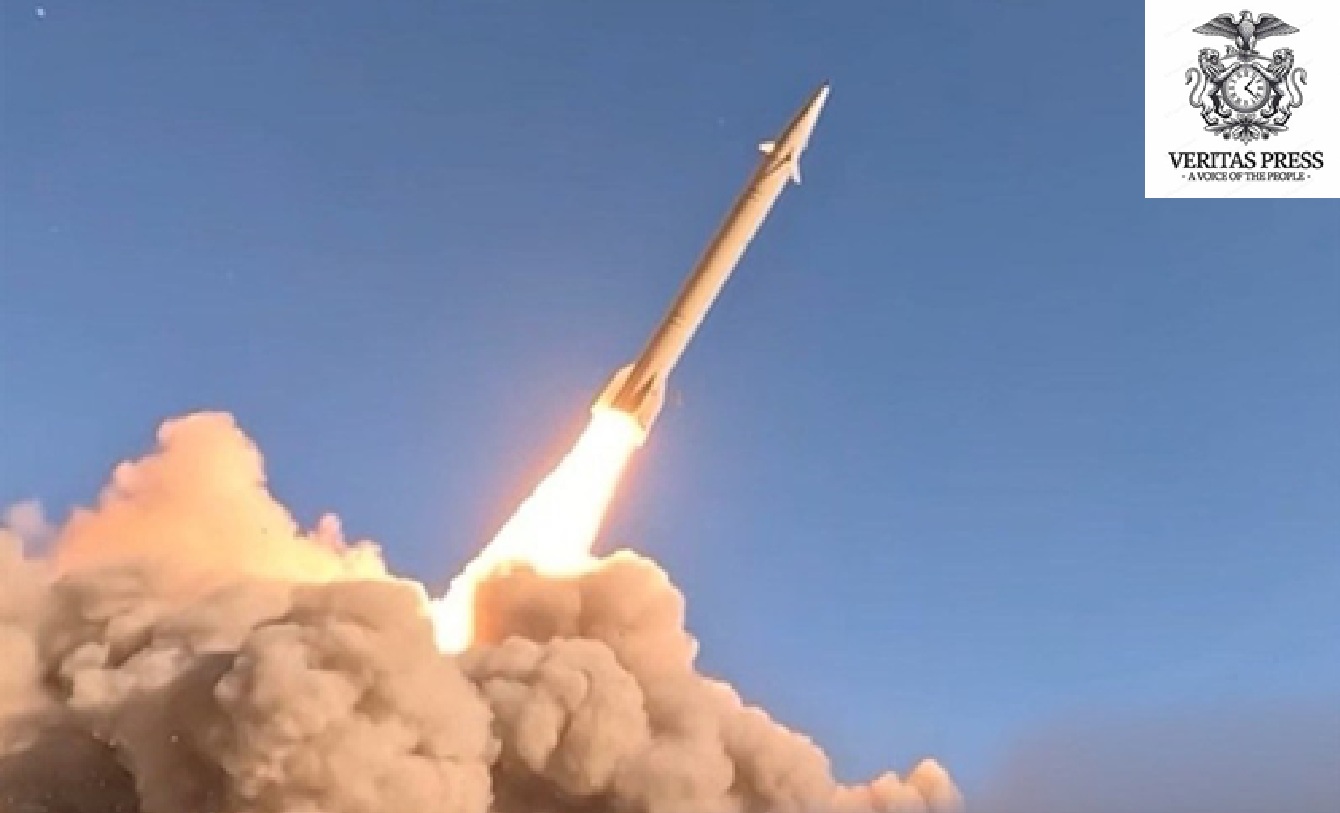
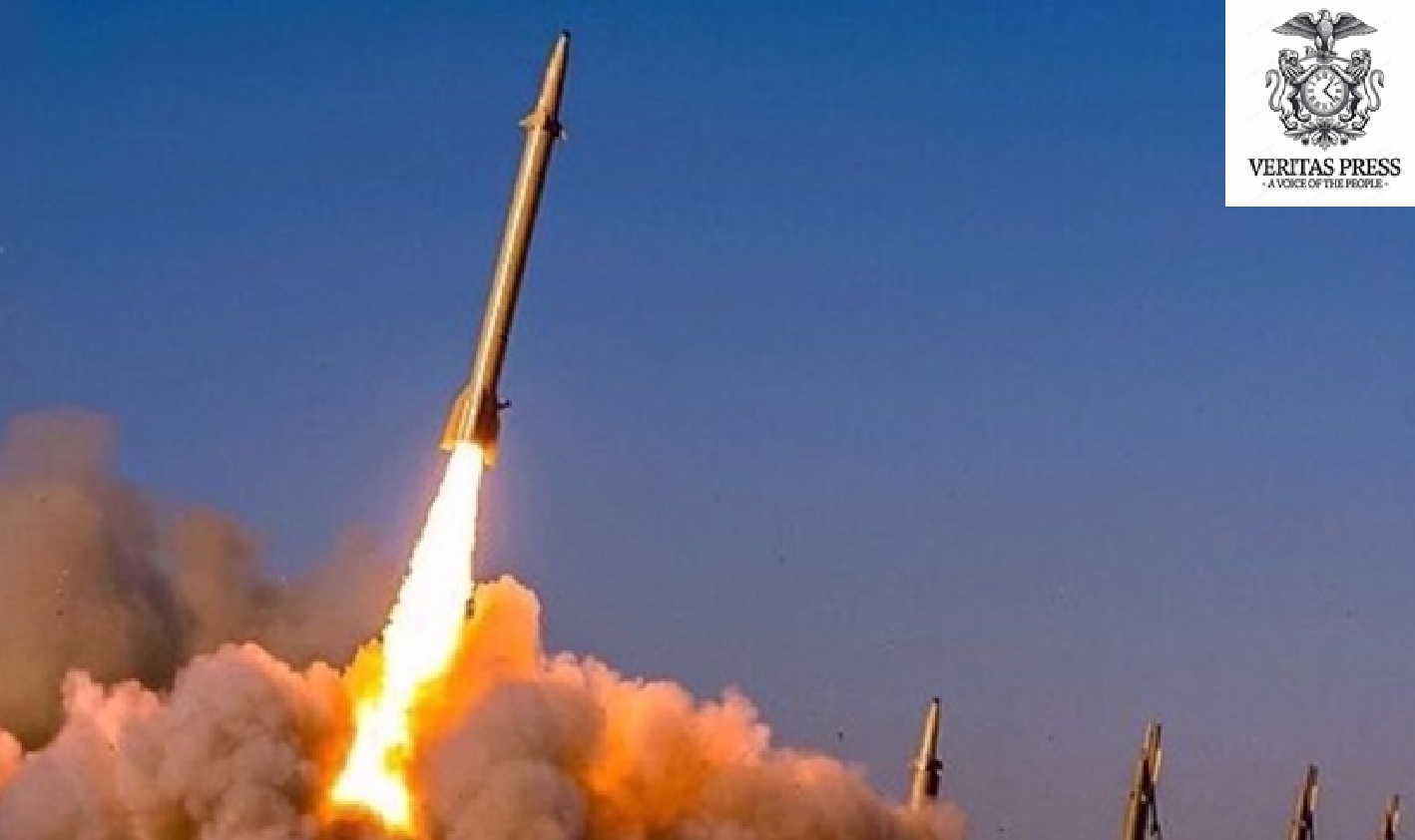
The IRGC’s statement regarding the 41st wave is notable not just for its continuation but for its composition. According to reports, this phase involved the firing of more than ten heavy missiles, including the multiple-warhead Khorramshahr and Qadr (referred to in some sources as Ghadir), the Kheibar Shekan with a one-ton warhead, and critically, the hypersonic Fattah missile, also carrying a one-ton warhead.
This specific mix is a message in itself. By deploying the Fattah alongside older, heavier rockets, Iran demonstrates an ability to sustain a high-tempo operation while preserving its most advanced assets. The timing, on the eve of International Quds Day, is a deliberate nod to its regional proxies and domestic audience, reinforcing the narrative of Palestinian liberation.
However, a crucial detail omitted from celebratory headlines is the full scope of the 41st wave’s targets. While the IRGC claimed it struck “American-Zionist targets in Tel Aviv and occupied al-Quds,” later statements also mentioned strikes on a gathering point of American forces on Sheikh Zayed Road in Dubai (UAE) and Ahmed al-Jaber Air Base in Kuwait. These claims, if verified, would represent a dramatic escalation, directly striking the sovereign territory of Gulf Cooperation Council (GCC) states that host US forces.
Investigative Critique: Separating Lore From Fact.
1. The Hypersonic Enigma
The repeated mention of the Fattah hypersonic missile is a key part of Iran’s psychological warfare. Western military analysts have long debated its true capabilities. A recent analysis by Military Watch Magazine cited by DID Press suggests that intercepting the advanced Fattah-2 is “nearly impossible” due to its Mach 13-15 speed and unpredictable atmospheric trajectory. However, claims of consistent, pinpoint accuracy should be viewed with scepticism.
Independent verification of strikes is nearly impossible due to Israel’s strict military censorship, which bans the publication of footage showing missiles hitting their targets or the full extent of damage. While the Jerusalem Post has reported over 9,115 damage cases from the campaign, including 4,609 in Tel Aviv, it is difficult to ascertain how many of these were caused specifically by the hypersonic missiles versus older, less accurate rockets. What is undeniable is the stress on Israeli defence systems. As one resident of Tel Aviv, who wished to remain anonymous due to censorship laws, told our team via a secure messaging app, “The sirens don’t stop. You hear the booms, but you never know if it was an interception or a hit. The government shows us nothing. We just know that parts of the city look like a ghost town.”
2. The “Economy” of War
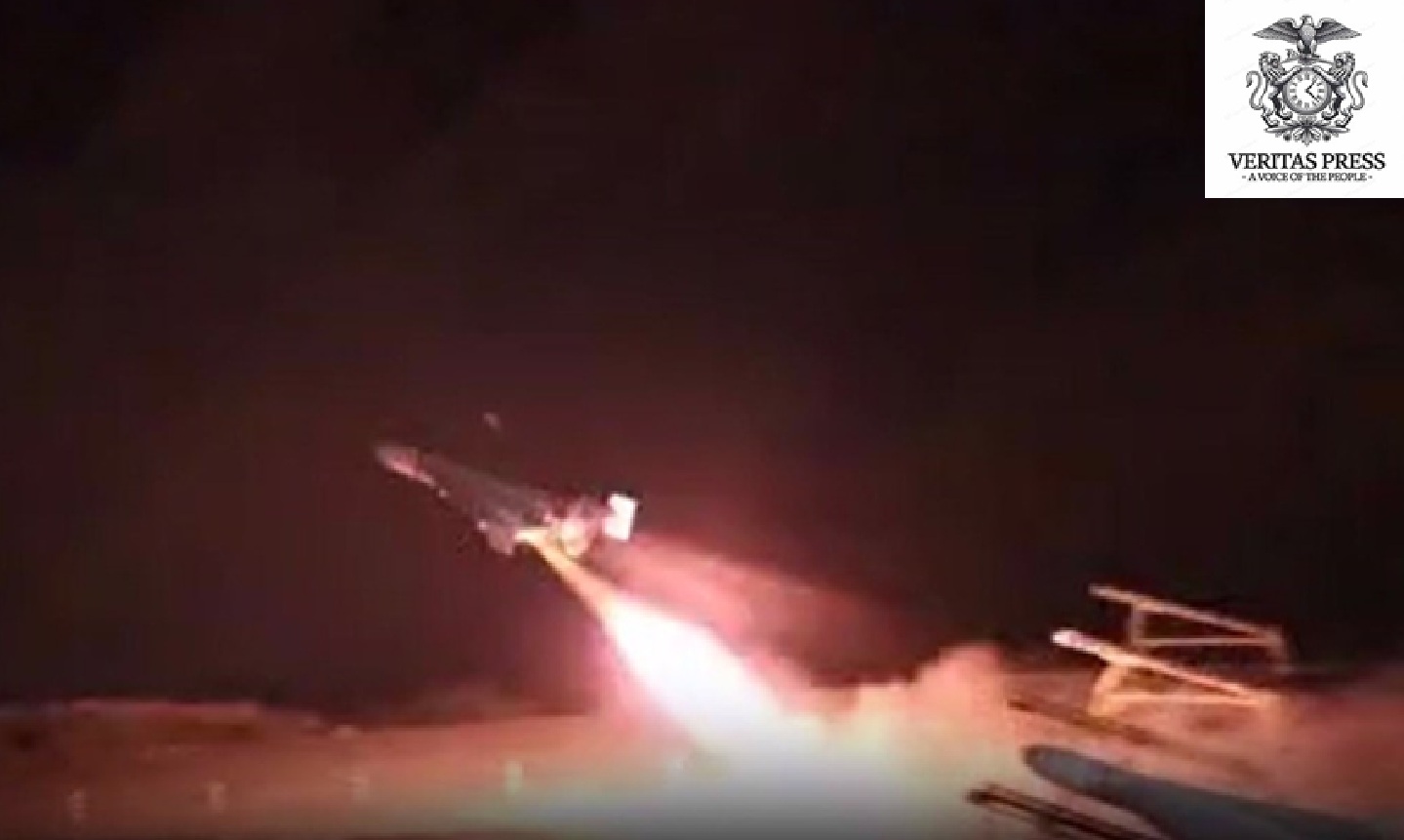
A deeper critique must analyse the economic calculus of this conflict. Iran is leveraging a cost-imposition strategy. The Shahed drones and even the more advanced missiles cost a fraction of the interceptor missiles used by Israel and the US. The Chosun Ilbo notes that a $20,000 Iranian drone forces the US to expend a $4 million Patriot interceptor. Bloomberg has reported that at the current rate of engagement, Qatar’s Patriot missile stockpiles would last only four days.
An IRGC official, speaking on condition of anonymity to a regional news agency, boasted of this strategy, stating, “We continue our strikes purposefully and powerfully, and think only of the complete surrender of the enemy. Our field of action is wider than that of the hostile enemy”. This is not just about inflicting physical damage; it is about bankrupting the enemy’s will and wallet over time.
The Human Toll And The Israeli Home Front:
The human cost is becoming a critical variable. The Israeli Health Ministry has officially reported that 2,745 people have been injured since the war began, with 85 currently hospitalised, including 11 in serious condition. More significantly, the Institute for National Security Studies at Tel Aviv University has confirmed 14 fatalities from Iranian attacks during this period.
These numbers, while lower than initial estimates of a full-scale war, have had a catastrophic effect on civilian morale. Social media posts depict Tel Aviv’s shops shuttered and streets deserted. The “exodus” from central Israel is no longer hyperbole. A chaotic scene unfolded at Ben Gurion Airport, where desperate citizens attempted to flee. “My country has become a missile testing ground,” one Israeli citizen posted on social media, a sentiment widely shared among the populace who feel the government’s censorship is hiding the true extent of the crisis.
This domestic pressure is translating into political friction. While the US and Israel present a united military front, there are whispers of discontent. US Senator Chris Murphy, after a classified briefing, described the campaign as “unplanned and disorganised,” questioning the feasibility of destroying Iran’s nuclear program through air power alone.
Regional Fallout And International Reaction:
Iran’s decision to expand the theatre of operations has backfired diplomatically in the Arab world, even as it may succeed militarily. By striking at US bases in Kuwait, UAE, Qatar, and Jordan, Iran has united its Gulf neighbours in condemnation. Saudi Arabia condemned in the “strongest terms” the violation of the sovereignty of these states, and Qatar reserved its right to respond.
However, the military reality on the ground is shifting. Reports indicate that the US Navy has refrained from escorting commercial vessels through the Strait of Hormuz, citing the high threat level, a de facto admission of lost control in a key waterway. Furthermore, Iran’s claims of hitting the US Fifth Fleet in Bahrain and the Abraham Lincoln carrier group in the Indian Ocean, while unverified, contribute to a perception of US vulnerability.
Conclusion: The New Rules Of Engagement.
As the 41st wave recedes and the world braces for the 42nd, it is clear that Operation True Promise 4 has established a “new reality on the ground,” as the IRGC claims. The era of “unwinnable” wars for non-state actors may be over; Iran has demonstrated that a state actor can absorb a massive initial blow (losing key leaders and facilities) and sustain a punishing retaliatory campaign for weeks.
The withholding of Iran’s most advanced hypersonic missiles suggests that the worst is yet to come. For the US and Israel, the challenge is no longer just about winning a battle, but about finding an “exit strategy” from a war of attrition they are ill-prepared to fight indefinitely. As the sun sets over the occupied territories, the only certainty is that the missiles will fly again, and the definition of victory has never been murkier.
Kamran Faqir is a volunteer investigative journalist and writer committed to exposing hidden truths and amplifying underreported stories. Driven by social justice, he brings sharp insight and fearless truth-telling to independent journalism. NUJ registered.
SEATTLE, TEHRAN — The U.S. Department of Homeland Security (DHS) will allow Iran’s national football team to enter the country 48 hours before their critical World Cup match against Egypt on Friday, a modest concession in a tournament where Team Melli’s travel conditions have sparked claims of oppression and competitive disadvantage.