


Help support our mission, donate today and be the change. Every contribution goes directly toward driving real impact for the cause we believe in.
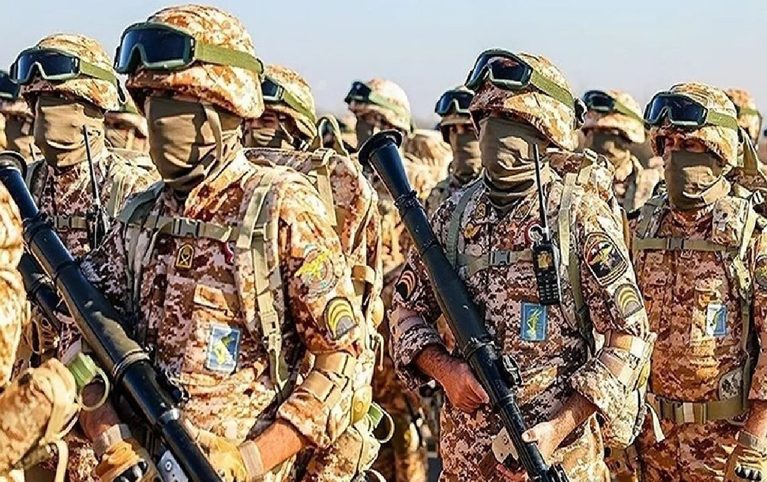
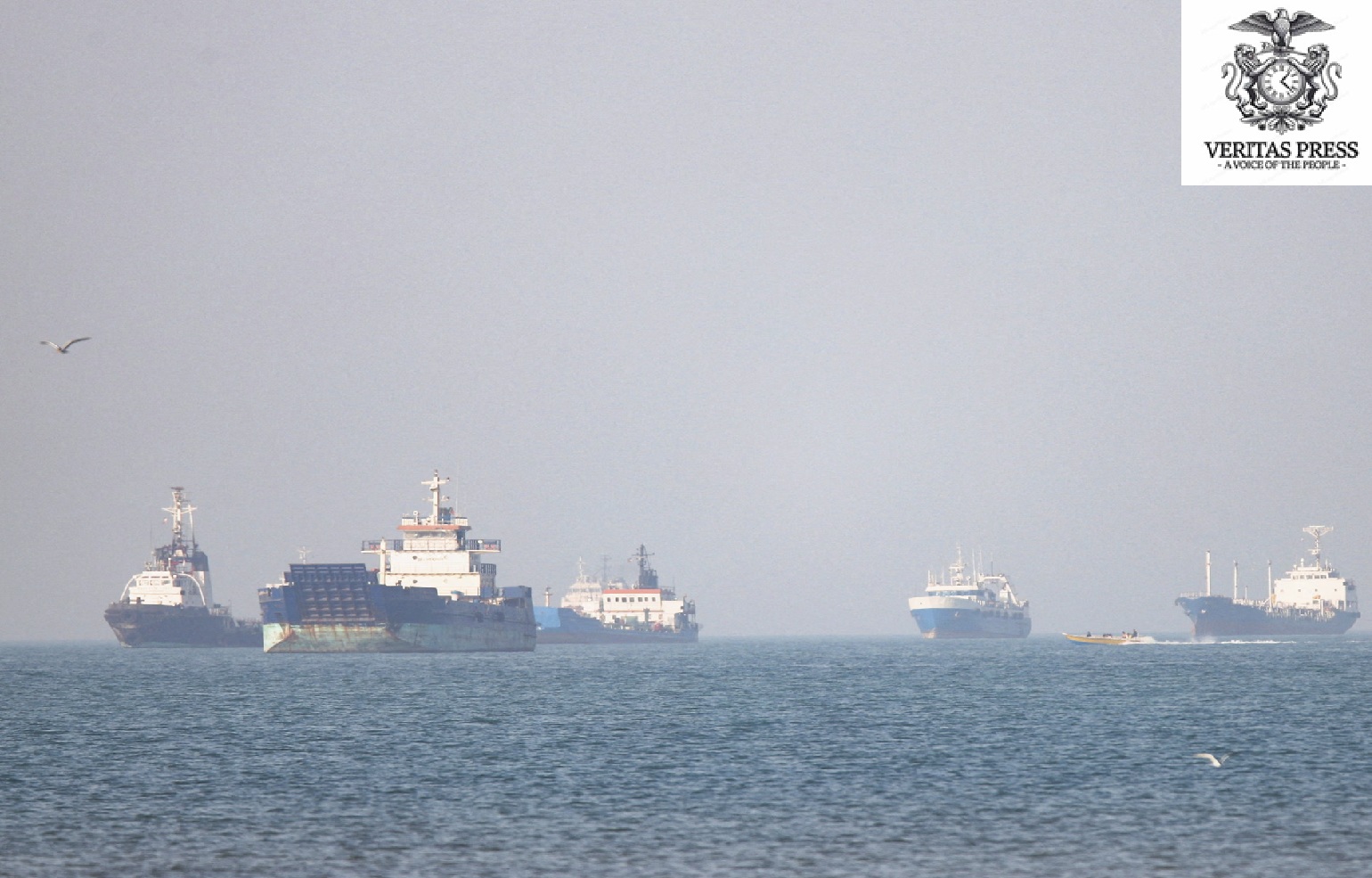
TEHRAN – The predawn quiet of the Northern Arabian Sea was shattered again on Friday. At roughly 3:40 a.m. local time, an Iranian fast-attack craft of the Islamic Revolutionary Guard Corps Navy (IRGCN) intercepted a U.S. guided-missile destroyer escorting a Liberian-flagged tanker toward the Strait of Hormuz. Warning shots were fired into the water, not for the first time since an ostensibly binding ceasefire took hold on April 8. The encounter, confirmed by two maritime security firms and a local fisherman, ended without casualties but sent oil prices spiking above $140 a barrel in early Asian trading. It also encapsulated a grim new reality: the world’s most vital energy chokepoint has become a laboratory for a novel Iranian strategic doctrine that Tehran is openly calling “deterrence through punishing the aggressor.”
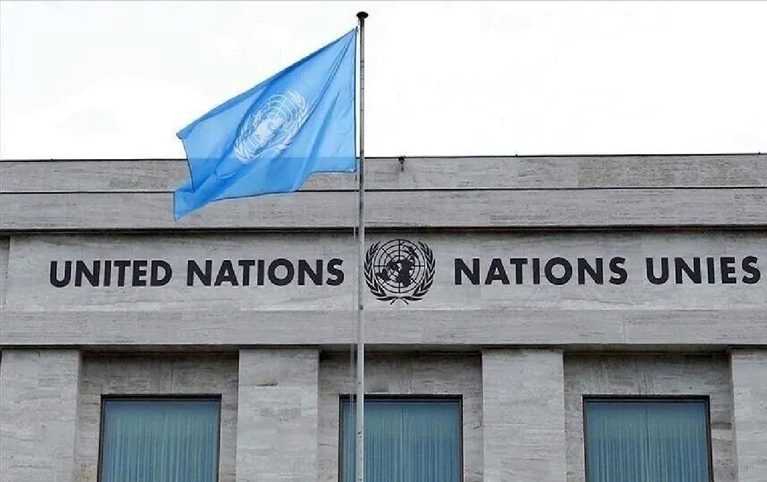
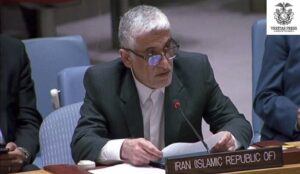
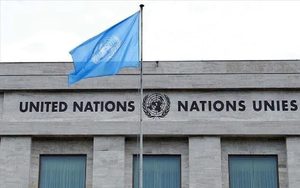
Within hours of the standoff, Iran’s ambassador to the United Nations, Amir-Saeid Iravani, submitted a sharply worded letter to Secretary-General António Guterres and the rotating Security Council president. In it, Tehran asserted its “inherent right to self-defence” against what it labelled a continuing campaign of American “piracy,” a “clear violation” of the April 8 ceasefire, and a “blatant breach of Article 2(4) of the Charter of the United Nations.” His missive landed as a hastily convened emergency Council session descended, predictably, into deadlock, Western powers accusing Iran of obstruction, Russia and China pointing at the original U.S. blockade, and the Global South warning of an economic firestorm.
To make sense of this escalation, one must unpack not only the military chess moves but the rich tapestry of Iranian media narratives, official statements, local testimony, and the emerging diplomatic record. Together, they reveal a Tehran that is more unified, more confident in its coercive leverage, and more dismissive of Washington’s diplomatic seriousness than at any moment since the 2026 war began.
A Ceasefire That Never Was:
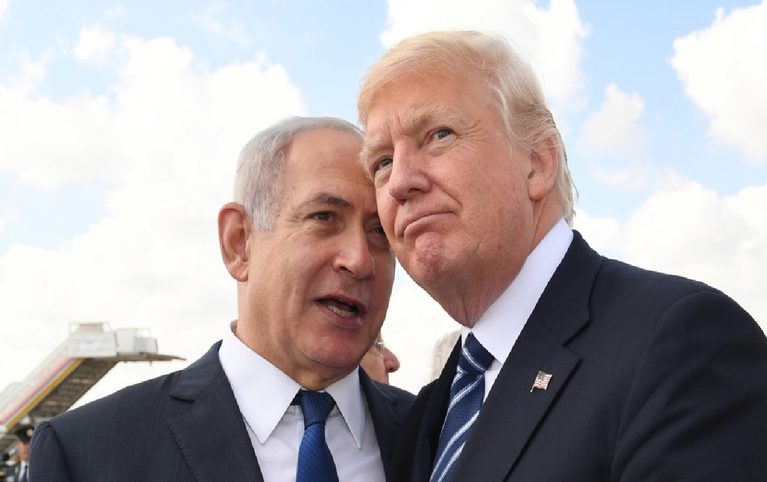
The “Ramadan War”, 40 days of intense U.S.-Israeli aerial and naval bombardment of Iran starting in late February 2026, was meant to degrade the Islamic Republic’s missile and nuclear infrastructure. By the time President Donald Trump announced a ceasefire on April 8, claiming a “historic victory for peace,” the military reality on the ground was far murkier. Almost immediately, Tehran accused Washington of violating the truce’s terms by maintaining an illegal naval blockade on Iranian ports and continuing attacks on commercial shipping.
Iravani’s Friday letter was granular. It cited “aggressive military actions carried out recently by American troops against two Iranian oil tankers near the port of Jask and the Strait of Hormuz, as well as attacks against several locations in Iran’s coastal areas overlooking the waterway.” The envoy noted that Trump had “openly acknowledged” the operations, a reference to a presidential remark that U.S. forces would “keep squeezing them from the sea”, and argued these acts amount to “piracy” and a violation of the UN Charter.
The human dimension of those strikes is still emerging. Ahmad, a 43-year-old fisherman from the Jask area, told this correspondent via satellite phone that one of the tankers “burned for hours, thick black smoke visible from the shore. We saw a helicopter hoisting people from the water, but nobody told us who was dead or alive.” The International Transport Workers’ Federation (ITF) confirmed on May 8 that at least 34 Iranian merchant seafarers are being held aboard U.S. auxiliary vessels, in what Iravani called “hostage-taking” and what the ITF’s regional coordinator James Findlay termed “a flagrant violation of international humanitarian law.”
The Diplomatic Track: “Underneath The Table, A Knife”.
The military harassment is paralleled by a diplomatic process that Iran’s top diplomat, Foreign Minister Abbas Araqchi, now says is being systematically undermined by the very party claiming to pursue it. In a phone call on Friday with Turkish Foreign Minister Hakan Fidan, one of the few remaining intermediaries with access to both Tehran and Washington, Araqchi delivered an unusually blunt assessment.
“Recent provocative U.S. moves in the Persian Gulf and offensive and insulting rhetoric by senior American officials have deepened doubts about the U.S. side’s intentions and commitment to diplomacy,” Araqchi said, according to a readout published by Tasnim. He described the American approach as “destructive” and warned that it is “deepening the Iranian nation’s mistrust toward Washington’s intentions.” Crucially, Araqchi conditioned any progress on “halting illegal acts of aggression and abandoning excessive and unreasonable approaches by the opposing side.”
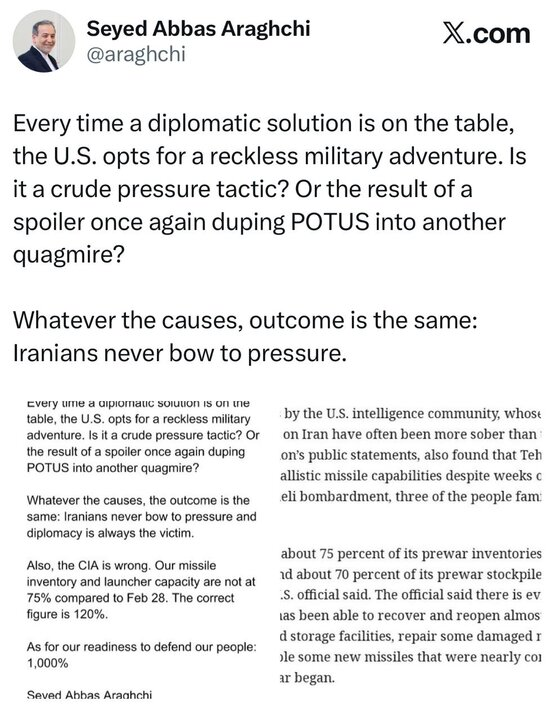
Hours later, Araqchi took to his X account with a message that ricocheted through intelligence communities globally. “Every time a diplomatic solution is on the table, the U.S. opts for a reckless military adventure. Is it a crude pressure tactic? Or the result of a spoiler once again duping POTUS into another quagmire? … Whatever the causes, the outcome is the same: Iranians never bow to pressure.”
The tweet was more than rhetoric. It directly challenged a leaked U.S. intelligence assessment claiming Iran retained about 75% of its pre-war mobile launcher inventory and 70% of its missile stockpiles. Araqchi fired back: “The CIA is wrong. Our missile inventory and launcher capacity are not at 75% compared to Feb 28. The correct figure is 120%. As for our readiness to defend our people: 1,000%.” While the numbers are performative, Western defence attachés quietly concede the underlying truth: Iran’s production and reconstitution capability has outpaced the attrition that the U.S.-Israeli air campaign could inflict.
Inside The Iranian Media Ecosystem: A Unified Doctrine Emerges.
What makes the current crisis radically different from past U.S.-Iran maritime confrontations is the density and coherence of the narrative being broadcast inside Iran itself. An extensive review of Tehran’s flagship dailies on May 8 and 9 reveals a regime and a public sphere that have fused around a hardened strategic vocabulary.
The mass-circulation Hamshahri provided the analytical skeleton. It quoted regional affairs expert Hossein Ajorlou, who argued: “After the 40-day war between Iran and the Zionist regime and the United States, the Strait of Hormuz became an advantage in Iran’s hands, and the Islamic Republic is trying to pursue the concept of ‘deterrence through punishing the aggressor’ using this strait.” Ajorlou explained the twin goals: neutralizing the U.S. naval blockade by enforcing the principle that no vessel passes without Iranian coordination, and extending Iran’s punitive reach to “control the UAE”, whose ports have become alternative hubs for global shipping attempting to bypass Hormuz.
The hardline Kayhan was triumphant, writing that Iran has shown “disregard for Trump’s plan” and that after its Ramadan War operations, “not only is the Strait of Hormuz under the management of our armed forces, but the closure of the Bab al-Mandeb Strait, considered the lifeline of the Zionist regime and the West, is also hanging by a thread, or more accurately, dependent on a single signal.” This was a clear nod to the Iran-backed Ansarullah movement in Yemen, which has demonstrated its capacity to paralyse Red Sea commerce.
The reformist-leaning Shargh struck a more cautionary tone, labelling the situation a “war trap.” Its Friday editorial warned: “Washington’s emphasis on escorting ships, although presented as a measure to reduce tensions, can in practice be interpreted as a form of active military presence, intensifying Iran’s security concerns. … Even a single miscalculation could trigger a chain of reactions with consequences extending far beyond the region.”
Siasat-e-Rooz went for the jugular, caricaturing Trump as a “thief who pretends to be humanitarian.” The editorial dredged up Trump’s own remarks from a 2025 press conference in which he acknowledged the U.S. had gained “significant benefits” from seizing ships, statements Iran now recycles to frame “Project Freedom” (the American moniker for its escort operations) as a cover for organised piracy. “The humanitarian vocabulary and talk of service are merely a deception aimed at public opinion and a justification for military movements,” the paper thundered.
Farhikhtegan, meanwhile, advanced the story of backchannel diplomacy, revealing that via Pakistani intermediaries, Iran has delivered an ultimatum: “As long as the war against Iran continues, there will be no negotiations on the nuclear issue.” The paper asserted that Trump’s portrayal of the U.S. holding the upper hand is “not even slightly close to reality” and that Iran has entered the talks from a stronger position, unwilling to return to pre-war conditions. This reporting aligns with Araqchi’s insistence that “halting illegal acts of aggression” is a prerequisite, not a topic of negotiation.
Taken together, the Iranian media messaging is not merely propaganda; it is a sophisticated, multi-pronged effort to consolidate domestic legitimacy, signal red lines to adversaries, and frame any future escalation as a morally justified response to American lawlessness.
Voices From The Littoral: The Human And Environmental Toll.
Behind the strategic abstractions, fear is tangible on both sides of the Gulf.
“We haven’t left the harbour in six days,” said Reza, a fisherman from Bandar Abbas, speaking via a secure messaging app. “The Pasdaran patrols tell us to stay put. On the radio, the Americans warn everyone to keep 12 nautical miles from their convoys. Where exactly are we supposed to fish? Our families rely on what we catch. The government gave us some rice, but that will run out soon.” His frustration mirrors sentiment across Iran’s coastal provinces, where the war’s economic strangulation compounds the pain of years of sanctions.
Environmental activists, too, are sounding alarms. The Green Waves Collective, a discreet Iranian grassroots group, released a statement on May 8 warning that “the Strait of Hormuz is not a poker chip for great-power games. Any oil spill from the repeated attacks on tankers will devastate the marine ecosystem on which millions of Iranians, Iraqis, Kuwaitis, and others depend.” Satellite imagery analysed by SkyTruth and shown to this reporter indicates surface oil sheen stretching approximately 20 km from the site of one of the tanker fires near Jask.
In the diplomatic trenches, a Western ambassador who asked not to be named conveyed the Security Council’s frustration: “Iran’s letter is factually compelling in parts. Yes, the ceasefire has been violated by both sides, but the blockade was clearly the first major breach. The problem is, Iran is now asserting a right to interdict any escorted vessel, which under international law is highly problematic. We’re in a legal grey zone, and no one wants to blink.”
The U.S. State Department issued a brief retort late on May 8, calling Iravani’s letter “a work of fiction” and asserting that U.S. forces “are operating fully within international law to defend freedom of navigation.” But notably, the statement did not address the specific charge of holding 34 Iranian sailors, nor did it deny the tanker attacks. This omission further fuels Tehran’s narrative that Washington’s commitment to maritime rules is situational.
Strategic Analysis: “Punishing The Aggressor” As A New Normal.
The concept of “deterrence through punishing the aggressor” articulated by Ajorlou and echoed in Kayhan’s editorial represents an evolution in Iranian strategic thought. For decades, Iran’s threat to close the Strait of Hormuz was a binary, apocalyptic button, one it was reluctant to push fully for fear of global retaliation. After the 2026 war, Tehran is attempting something more subtle: a gradated control over the waterway that imposes costs on the U.S. and its allies incrementally, without triggering a full-scale naval battle.
This is achieved through several means: (1) enforcing a “prior notification” regime that forces neutral shipping companies to accept de facto IRGCN jurisdiction, thereby eroding U.S.-led freedom of navigation; (2) mirroring the U.S. blockade with its own inspections and potential interdictions of ships bound for UAE ports, extending the punitive geography; and (3) holding the Bab el-Mandeb card in Yemen as a second front to multiply the pressure on Israel and global trade simultaneously.
The revelation that Iran’s missile capacity has not only survived but grown relative to the start of the war, a fact that Araqchi hyperbolically pegged at 120%, fundamentally alters the military calculus. A U.S. Navy planner, speaking on background to a defence publication, admitted: “We underestimated the depth of their hardening and the speed of their repair. If accurate, these numbers mean they have a sustained salvo capability that could overwhelm our Aegis assets in a saturated attack scenario.” It is precisely this fear that keeps the Pentagon from testing the Strait blockade too aggressively.
Moreover, the nuclear file is now fully decoupled from crisis management. Iran’s position, no nuclear talks while any kinetic action continues, effectively means that the very tool the U.S. once used to put pressure on Tehran (the nuclear dossier) is now a hostage to the maritime showdown. This inversion has not been sufficiently digested in Western capitals.
The Latest Developments: May 9 And The Dangerous Days Ahead.
As of noon GMT on May 9, the situation remains exceptionally fluid. The IRGCN has reportedly moved additional coastal-defense cruise missile batteries to the Qeshm Island area, while U.S. Central Command announced that the USS Harry S. Truman carrier strike group is conducting “joint interoperability exercises” with the French and British navies in the Arabian Sea, a move that France’s defense ministry described as “defensive and de-escalatory,” but which Tehran’s state television called “a provocation.”
In a significant but under-reported development, the Iranian ambassador to Pakistan confirmed that a new set of informal talks will begin in Islamabad on May 11, with Turkey and Qatar facilitating. However, Araqchi’s preconditions, a halt to the blockade and attacks, remain unmet, making the meeting’s prospects dim. A senior Pakistani diplomat told this reporter: “The Americans want a photo op. The Iranians want a signed guarantee. The gap is not closing.”
The Green Waves Collective and human rights groups are planning a joint virtual press conference for tomorrow, demanding the release of the detained Iranian sailors and an independent investigation into the Jask tanker attacks. “This is not about taking sides,” said activist Maryam Nouri in a voice message from an undisclosed location inside Iran. “This is about saving lives and preventing an environmental catastrophe that will not recognise borders.”
Conclusion: A Game Of Chicken In The World’s Throat.
Iran’s ambassador has told the United Nations that the consequences of continued U.S. aggression could be “catastrophic,” and that Washington “will bear full responsibility.” The U.S. retort is that Iranian interference with lawful transit is the true threat to international peace. Both are correct in the sense that the stage is set for a multi-dimensional conflagration: a naval clash in the Strait, a humanitarian and ecological disaster from burning tankers, and an economic shock that would tip a fragile world economy into recession.
What the Iranian media narratives reveal, and what the official statements reinforce, is that Tehran believes it has seized the moral high ground and the coercive initiative. It is the United States, in this framing, that broke the ceasefire, that commits piracy, that pretends humanitarianism while strangling a nation. And in the court of global public opinion, the silence of key allies and the paralysis of the Security Council are doing more to validate Tehran’s narrative than any Iranian editorial could.
The greatest risk now is miscalculation born of mirror-imaging: each side convinced the other is bluffing, each believing its own red lines are inviolable. As Shargh soberly concluded, “even a single miscalculation could trigger a chain of reactions.” The question on May 9, 2026, is not whether the Strait of Hormuz will become a battlefield, but whether the diplomats can pull the two navies back from a war neither claims to want, before the first real salvo writes a new chapter of history in fire across the water.
Source: Multiple News Agencies
Submissions:
For The Secure Submission Of Documentation, Testimonies, Or Exclusive Investigative Reports From Any Global Location, Please Utilise The Following Contact Details For Our Investigations Desk: enquiries@veritaspress.co.uk or editor@veritaspress.co.uk
Help Support Our Work:
Popular Information is powered by readers who believe that truth still matters. When just a few more people step up to support this work, it means more lies exposed, more corruption uncovered, and more accountability where it’s long overdue.
Help Protect Independent Journalism, Which Is Currently Under Attack.
If you believe journalism should serve the public, not the powerful, and you’re in a position to help, becoming a DONATOR or a PAID SUBSCRIBER truly makes a difference.
DONATION APPEAL: If You Found This Reporting Valuable, Please Consider Supporting Independent Journalism.
Help Support Our Work – We Know, We Know, We Know …
Seeing these messages is annoying. We know that. (Imagine what it’s like writing them … )
Your support fuels our fearless, truth-driven journalism. In unity, we endeavour to amplify marginalised voices and champion justice, irrespective of geographical location.
But it’s also extremely important. One of Veritas Press’s greatest assets is its reader-funded model.
1. Reader funding means we can cover what we like. We’re not beholden to the political whims of a billionaire owner. We are a small, independent and impartial organisation. No one can tell us what not to say or what not to report.
2. Reader funding means we don’t have to chase clicks and traffic. We’re not desperately seeking your attention for its own sake: we pursue the stories that our editorial team deems important and believe are worthy of your time.
3. Reader Funding: enables us to keep our website and other social media channels open, allowing as many people as possible to access quality journalism from around the world, particularly those in places where the free press is under threat.
We know not everyone can afford to pay for news, but if you’ve been meaning to support us, now’s the time.
Your donation goes a long way. It helps us:
- Keep the lights on and sustain our day-to-day operations
- Hire new, talented independent reporters
- Launch real-time live debates, community-focused shows, and on-the-ground reporting
- Cover the issues that matter most to our communities, in real time, with depth and integrity
We have plans to expand our work, but we can’t do it without your support. Every contribution, no matter the size, helps us stay independent and build a truly people-powered media platform.
If you believe in journalism that informs, empowers, and reflects the communities we serve, please donate today.
Donate Today.
GENEVA — A United Nations fact-finding mission has concluded there are “reasonable grounds to believe”
Iran’s GDP is projected to contract by 5.4 to 6.1% in 2026, its worst performance
The Trump administration is preparing a $2.8 billion weapons package for Israel containing 40,000 2,000-pound

Film alleges mass civilian deaths are routinely built into military decisions amid Israel’s genocidal war
The Israeli rights group says violence, displacement, economic strangulation, and settlement expansion form part of

Houthi forces have captured the historic Red Sea port of Mocha and are advancing on
London’s historic sanctions against Israeli settlements mark a watershed moment in UK foreign policy, but
With 95% of Gaza’s population now wholly dependent on aid and more than 90% stripped
India calls for Kashmir and Ladakh to appear only on its official map after a
ISLAMABAD – In the high-stakes political theatre of Pakistan, the battleground has shifted from the