

Help support our mission, donate today and be the change. Every contribution goes directly toward driving real impact for the cause we believe in.
TEHRAN/WASHINGTON, 7 MAY 2026 — The Persian Gulf this spring is a powder keg wrapped in a narrative war. In the month since a shaky two-week ceasefire between the United States and Iran collapsed, both sides have fought with missiles, drones, oil tankers and an increasingly potent weapon: the leak. Now, as the Islamic Republic tightens its grip on the Strait of Hormuz and the White House insists its “Project Freedom” is merely paused, a familiar brand of anonymous-source journalism has resurfaced, and Tehran’s wartime leadership is calling it by a new name.
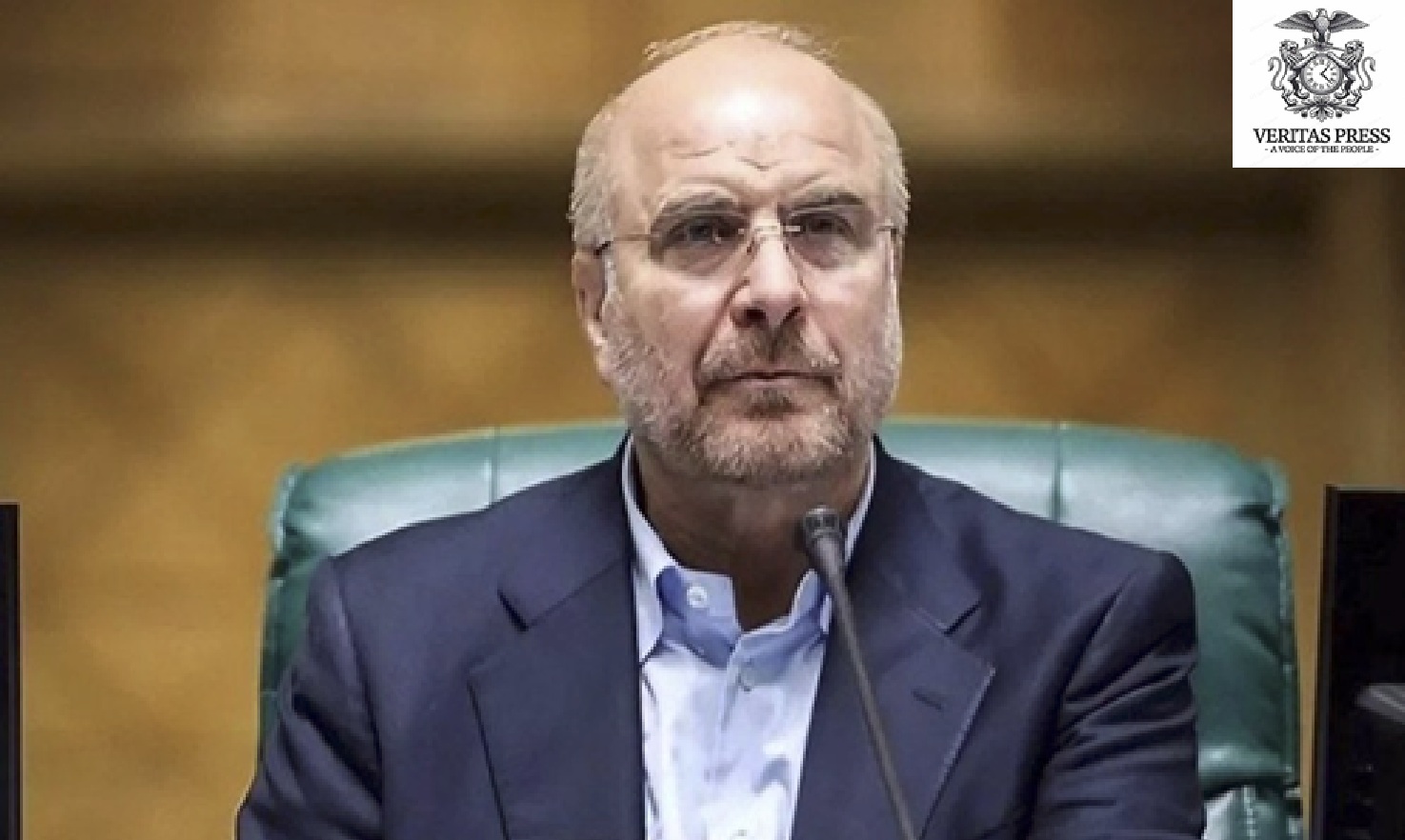
“Operation Fauxios,” Iran’s parliament speaker Mohammad-Baqer Qalibaf posted on X last Thursday, after the US outlet Axios published a detailed report claiming a breakthrough arrangement between Washington and Tehran was imminent. “The same recycled script, the same unnamed sources, the same impending ‘deal’ that never materialises. This psychological operation arrived right after ‘Operation Trust Me Bro’ failed.”
The quip, blending faux and Axios, distilled a deeper accusation: that much of the West’s reporting on the Iran crisis amounts to an information campaign orchestrated to demoralise the Iranian public, depress oil prices and manufacture consent for escalation. As the tense spring of 2026 grinds on, with the Strait of Hormuz still effectively closed to enemy and allied shipping alike, the theatre of leaks is becoming as consequential as the movement of fleets.
The Blitz And The Strait:
The current chapter of hostilities ignited on 28 February 2026, when the United States and Israel launched what Qalibaf later called “the latest round of unprovoked aggression.” Over the following five weeks, Iran weathered a sustained bombing campaign while firing back with what Tehran says were “at least 100 waves of decisive and successful retaliatory strikes.” Western military sources acknowledged that the sheer volume and accuracy of the counterstrikes surprised Pentagon planners; Republican Guard aerospace chief Brigadier General Amirali Hajizadeh later told state television that “the new generation of hypersonic glide vehicles turned the occupied territories into a laboratory of fear.”
The real earthquake, however, came at sea. On 29 March, after Washington expanded an illegal naval blockade on Iranian ports, a blockade that international legal scholars, including Professor Dapo Akande of Oxford’s Blavatnik School, have called “a prima facie violation of the UN Charter’s prohibition on the threat or use of force”, Iran made a decision that sent shockwaves through global energy markets. It shut the Strait of Hormuz to “enemies and their allies” and deployed far stricter controls over the waterway than during any previous crisis. Within 72 hours, Brent crude blasted past $190 a barrel, and the International Energy Agency activated its fifth emergency collective action in history.
“We watched the American ships squatting off Bandar Abbas,” said Mehdi, a fisherman from Qeshm Island whose family has worked the Gulf for five generations. “First they blockaded us. Then they were shocked when we closed our waters to their friends. What did they expect? That we would simply starve and smile?”
The Ceasefire That Wasn’t:
On 7 April, in a move that caught his own hawks off-guard, President Donald Trump announced a unilateral two‑week ceasefire. The announcement came less than two hours before a deadline Trump had repeatedly extended for Iran to reopen the Strait of Hormuz and accept a deal or face “the destruction of an entire civilisation.” The Islamic Republic, having just proved its retaliatory capability, judged the moment right for a pause. Trump, flanked by senior adviser Jared Kushner and special envoy Steve Witkoff, told reporters that Iran had presented a “workable” 10‑point proposal for negotiations.
The architecture was novel: Pakistan’s Prime Minister had stepped in as mediator, and a first round of talks was hastily arranged for 11 April in Islamabad. Yet even before the delegations sat down, Qalibaf, who had emerged during the crisis as a central node in Iran’s opaque wartime command, was already cataloguing violations.
On Wednesday, 9 April, he posted a surgical dissection on X: “Three clauses of this proposal have been violated so far,” he wrote. He listed them one by one, and his office later circulated a detailed briefing to the diplomatic corps in Tehran.
Violation One: The Lebanon Truce. The 10‑point proposal, according to Tehran’s account, contained a provision that the US and its allies would enforce “an immediate ceasefire everywhere, including Lebanon and other regions, effective immediately.” Pakistan’s prime minister had publicly referenced this plank. Yet on 10 April, the day after Qalibaf’s post, and on the eve of the Islamabad talks, Israeli jets struck a building in the Lebanese town of Qana, killing a senior Hezbollah logistics officer and four civilians. UNIFIL confirmed the strike and reported that Israeli liaison officers claimed it was “a targeted elimination, not a resumption of hostilities.” To Iran, the distinction was sophistry.
“The very ink of the proposal was still wet when our friends in Lebanon were murdered under the cover of the temporary lull,” said a senior adviser to Foreign Minister Abbas Araghchi, speaking on condition of anonymity. “How can anyone negotiate with a party that weaponises the pause?”
Violation Two: The Drone Over Lar. At dawn on 8 April, Iran’s integrated air defence network engaged an unidentified unmanned aircraft over Lar, in Fars province. The drone, which Iranian officials later described as a stealth‑configuration intelligence collection platform “consistent with US force structure,” was destroyed. The US Central Command said the drone was “a routine surveillance asset operating in international airspace,” but Iran pointed to the 10‑point proposal’s clause “prohibiting any further violation of Iran airspace” during the truce. Qalibaf called the incursion “a clear violation” and noted that the wreckage had been recovered from inside Iranian territory.
Violation Three: Denial of Enrichment. The sixth clause of the Iranian framework, multiple diplomatic sources told this reporter, recognised Iran’s “indisputable right under the Nuclear Non‑Proliferation Treaty to uranium enrichment for peaceful purposes.” But between the public announcement and the Islamabad talks, US officials briefed journalists that Washington would never accept Iranian enrichment. Vice President JD Vance, who led the first-round American delegation, repeatedly insisted that “zero enrichment” was the starting point. For Tehran, this was the most consequential betrayal, an attempt to hollow out the framework before a single substantive exchange.
Qalibaf was blunt on 9 April: “The very ‘workable basis on which to negotiate’ has been openly and clearly violated, even before the negotiations began.” His conclusion: “In such a situation, a bilateral ceasefire or negotiations is unreasonable.”
The Islamabad Poker Game And The Table Of Surrender:
Still, on 11 April, the delegations met in the Pakistani capital. For 21 hours, Vance and his team, minus Kushner, who participated via video link, sat across from Iranian negotiators led by Deputy Foreign Minister Ali Bagheri Kani. The room, according to a Pakistani diplomat with knowledge of the proceedings, was “frigid in both temperature and mood.” No agreement emerged.
The ceasefire was due to expire on 22 April. Trump announced on Sunday, 13 April, that a second round would take place later that week and that both Witkoff and Kushner would travel to Islamabad. Vance would not participate, Trump explained, “because of security concerns”, an astonishing admission for a supposed diplomatic process. Tehran signalled it would not send a delegation, citing “excessive US demands” and the unabated naval blockade, which it branded a violation of the ceasefire itself.
On Tuesday, 15 April, Qalibaf dropped his heaviest political anchor yet. “We do not accept negotiations under the shadow of threats,” he posted on X. He said Trump was trying to “turn this negotiating table… into a table of surrender, or the basis on which to justify renewed warmongering.” He also served notice that if the ceasefire expired and the US resumed attacks, Iran was “prepared to reveal new cards on the battlefield.”
Three days later, in a rally in Florida, Trump repeated his threat to “knock out every single power plant, and every single bridge in Iran” if Tehran refused a deal. The US Navy’s Fifth Fleet, meanwhile, continued to shadow but not physically intercept tankers waiting in the Gulf of Oman, a de facto blockade that the UN special rapporteur on unilateral coercive measures, Alena Douhan, called “a siege by another name, causing acute shortages of essential medicines and medical equipment.”
The Ceasefire Collapses:
On 23 April, hours after the ceasefire clock ran out, US B‑21 Raiders, flying out of Diego Garcia with Israeli refuelling support, struck the Natanz enrichment complex and the Shahid Rajaee port facility in Bandar Abbas. Secondary explosions lit up the coastline. In retaliation, Iran launched simultaneous salvoes of Qadr‑H and Fattah‑2 hypersonic missiles against US bases in Qatar, the UAE and Bahrain, and directly struck power stations in Haifa and Tel Aviv. The scrambled reports from the ground spoke of a night unlike any since the Iran‑Iraq war.
By 25 April, the Strait of Hormuz was fully closed to all traffic flagged to nations supporting the coalition. Iran’s Revolutionary Guard Navy started implementing a shipping‑permit system, granting passage only to vessels from China, Russia, India and a handful of non‑aligned states. Global crude shot to $230 a barrel. The world’s central banks convened an emergency liquidity call. In London, the mayor announced petrol rationing.
Operation Fauxios 2.0:
On 5 May, Axios published another exclusive. “Behind the scenes,” the piece began, “US and Iranian officials are closing in on a breakthrough arrangement that would reopen the Strait of Hormuz and lift key sanctions, according to three US and Israeli officials familiar with the sensitive negotiations.” The report cited a secret channel in Muscat and hinted at a meeting “in the coming days.”
The effect on oil markets was immediate: Brent futures momentarily retreated below $200. Then Qalibaf’s retort landed like a hammer.
“Operation Fauxios 2.0,” he posted at 7:32 a.m. Tehran time, “The same tired script. No deal while the blockade kills our children. The unnamed sources are the real weapon of mass deception. When will Western audiences demand evidence?”
A senior Iranian diplomat, reached by phone, was even blunter. “There are no secret Omani talks. There is no backchannel. This is a psy‑op designed to create a temporary dip in oil prices and to feed the US domestic audience a fiction while the administration escalates. We’ve seen this movie before.”
In Washington, international media scholars took note. “Unnamed‑source stories on Iran have become a reliable precursor to kinetic action,” said Dr Lina Khatib, director of the SOAS Middle East Institute. “From the 2019 Abqaiq‑Khurais attacks to the 2020 Soleimani strike, a pattern emerges: plant a narrative about imminent diplomacy, then use the alleged ‘rejection’ as a casus belli. Qalibaf’s ‘Operation Fauxios’ framing is crude but resonant. It weaponises the public’s memory of Iraq’s WMD.”
Street‑Level Realities:
On the ground, the psychological distance between the Axios newsroom and a working‑class neighbourhood in south Tehran is measured in light‑years.
“I don’t need to read American websites to know when a bomb is coming,” said Hossein, a taxi driver inching his way through a queue for subsidised petrol. “The Americans have lied to us for forty years. The difference now is that we don’t believe a single word, even the word ‘ceasefire’.”
In Bandar Abbas, where container cranes stand idle and military patrol boats buzz the harbour, a young fisherman named Reza showed this reporter a photograph of his cousin, killed when a US drone struck a radar station on Qeshm in late April. “They call it ‘Project Freedom’,” he said bitterly. “Freedom for whom? We are blockaded, bombed, then told we are the ones refusing peace.”
Humanitarian organisations are sounding alarms. The Iranian Red Crescent Society reports that chemotherapy drugs and insulin are running critically low, as international banks refuse to process payments even for exempted goods, fearing secondary US sanctions. Médecins Sans Frontières, which operates a clinic in Zahedan, said it has been forced to halve its diabetes care programme. “The blockade is a collective punishment of the Iranian people,” MSF’s Iran mission head, Dr Sara Pantuliano, said in a statement. “We urge all parties to abide by international humanitarian law and permit unimpeded medical access.”
Meanwhile, activists outside Iran warn that the regime is leveraging the crisis to consolidate power. “Qalibaf’s wartime rhetoric, his talk of ‘new cards on the battlefield,’ is also a domestic tool to silence dissent,” said human‑rights lawyer Nasrin Sotoudeh, exiled in Paris. “When the nation is under siege, the Revolutionary Guard can crush any voice that calls for compromise. The narrative war cuts both ways.”
New Cards On The Table:
On 3 May, Iran’s state television broadcast footage of what it claimed was a successful test of a “Souroush‑3” supersonic cruise missile, capable of skimming terrain at 2.8 Mach to evade terminal defences. Brigadier General Amirali Hajizadeh told reporters: “These are the new cards Speaker Qalibaf spoke of. If the enemy wants to test us, they will find that our reach is longer and our hurt deeper than any of their scenarios imagine.”
Western intelligence sources, speaking on background, confirmed that the launch was real, though they downplayed its operational significance. One Pentagon analyst, however, cautioned that Iran’s ability to mass‑produce and deploy such systems could threaten US carriers and bases in the region to a degree not seen before.
The Long Arc Of The Fauxios Doctrine:
As the crisis enters its third month, it is increasingly clear that the conflict’s information dimension is not a sideshow but a primary theatre. Qalibaf’s neologism captures a phenomenon that extends beyond a single media outlet. Leaked “diplomacy” appears whenever the kinetic tempo subsides, only to dissolve when escalation is required. Journalists and editors at major Western publications have been reluctant to interrogate the sourcing behind such stories, relying on the familiar fig leaf of “US and Israeli officials familiar with the thinking”, the very phrasing that Axios used in its May 5 report.
“Unnamed sourcing isn’t inherently wrong, but when it becomes the exclusive window onto high‑stakes diplomacy and repeatedly proves false, it’s journalistic negligence,” said New York University journalism professor Jay Rosen. “News organisations should be transparent about the track‑record of these ‘anonymous officials’. Otherwise, they risk being conduits for government propaganda, just as Qalibaf alleges.”
Yet within the broader American media ecosystem, the imperative to break news often overrides that caution. By the time a “deal” is denied, the intended psychological effect, a moment of hope, a temporary market stabilisation, a division within the adversary’s polity, has already been achieved. Iran’s leadership appears to understand this well. Qalibaf’s “Operation Fauxios” branding, amplified by state‑owned Press TV and shared widely on Persian‑language social media, is an attempt to vaccinate the population against false peace.
No Off‑Ramp In Sight:
As of 7 May 2026, the Strait of Hormuz remains severed. Two oil tankers attempting to run the Iranian inspection regime were seized last week; their Indian and Greek crews are being held in Chabahar. The US Navy has reinforced its presence with a second carrier strike group, while the IRGC Navy has deployed swarms of explosive‑laden speedboats and recommissioned a network of coastal missile batteries. Off‑the‑record, NATO commanders speak of a “persistent miscalculation risk” akin to the 1914 July Crisis.
In Tehran, Mohammad‑Baqer Qalibaf posted an English‑language tweet overnight: “History will note that the same voices who lied you into the Iraq war are now selling a phantom peace while starving a nation. The path to a lasting agreement is clear: lift the blockade, respect Iranian sovereignty, and stop turning US journalism into a false‑flag operation.”
Whether anyone in Washington is listening, or whether the next leak about an imminent “framework” is already being drafted, remains the most dangerous unanswered question of this long, hot spring.
Source: Multiple News Agencies
Submissions:
For The Secure Submission Of Documentation, Testimonies, Or Exclusive Investigative Reports From Any Global Location, Please Utilise The Following Contact Details For Our Investigations Desk: enquiries@veritaspress.co.uk or editor@veritaspress.co.uk
Help Support Our Work:
Popular Information is powered by readers who believe that truth still matters. When just a few more people step up to support this work, it means more lies exposed, more corruption uncovered, and more accountability where it’s long overdue.
Help Protect Independent Journalism, Which Is Currently Under Attack.
If you believe journalism should serve the public, not the powerful, and you’re in a position to help, becoming a DONATOR or a PAID SUBSCRIBER truly makes a difference.
DONATION APPEAL: If You Found This Reporting Valuable, Please Consider Supporting Independent Journalism.
Help Support Our Work – We Know, We Know, We Know …
Seeing these messages is annoying. We know that. (Imagine what it’s like writing them … )
Your support fuels our fearless, truth-driven journalism. In unity, we endeavour to amplify marginalised voices and champion justice, irrespective of geographical location.
But it’s also extremely important. One of Veritas Press’s greatest assets is its reader-funded model.
1. Reader funding means we can cover what we like. We’re not beholden to the political whims of a billionaire owner. We are a small, independent and impartial organisation. No one can tell us what not to say or what not to report.
2. Reader funding means we don’t have to chase clicks and traffic. We’re not desperately seeking your attention for its own sake: we pursue the stories that our editorial team deems important and believe are worthy of your time.
3. Reader Funding: enables us to keep our website and other social media channels open, allowing as many people as possible to access quality journalism from around the world, particularly those in places where the free press is under threat.
We know not everyone can afford to pay for news, but if you’ve been meaning to support us, now’s the time.
Your donation goes a long way. It helps us:
- Keep the lights on and sustain our day-to-day operations
- Hire new, talented independent reporters
- Launch real-time live debates, community-focused shows, and on-the-ground reporting
- Cover the issues that matter most to our communities, in real time, with depth and integrity
We have plans to expand our work, but we can’t do it without your support. Every contribution, no matter the size, helps us stay independent and build a truly people-powered media platform.
If you believe in journalism that informs, empowers, and reflects the communities we serve, please donate today.
GENEVA — A United Nations fact-finding mission has concluded there are “reasonable grounds to believe”
Iran’s GDP is projected to contract by 5.4 to 6.1% in 2026, its worst performance
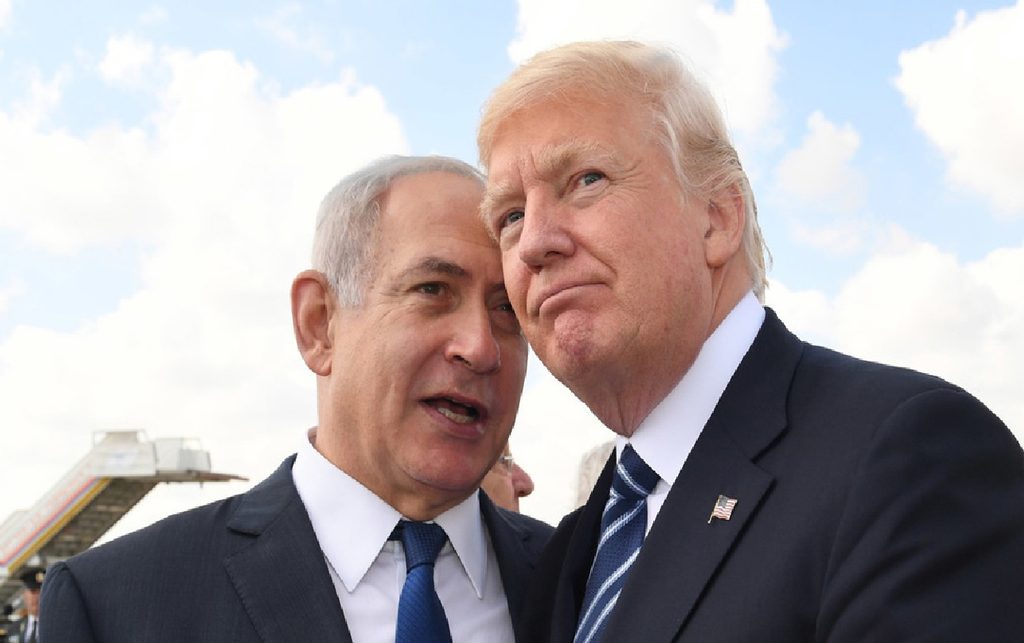
The Trump administration is preparing a $2.8 billion weapons package for Israel containing 40,000 2,000-pound
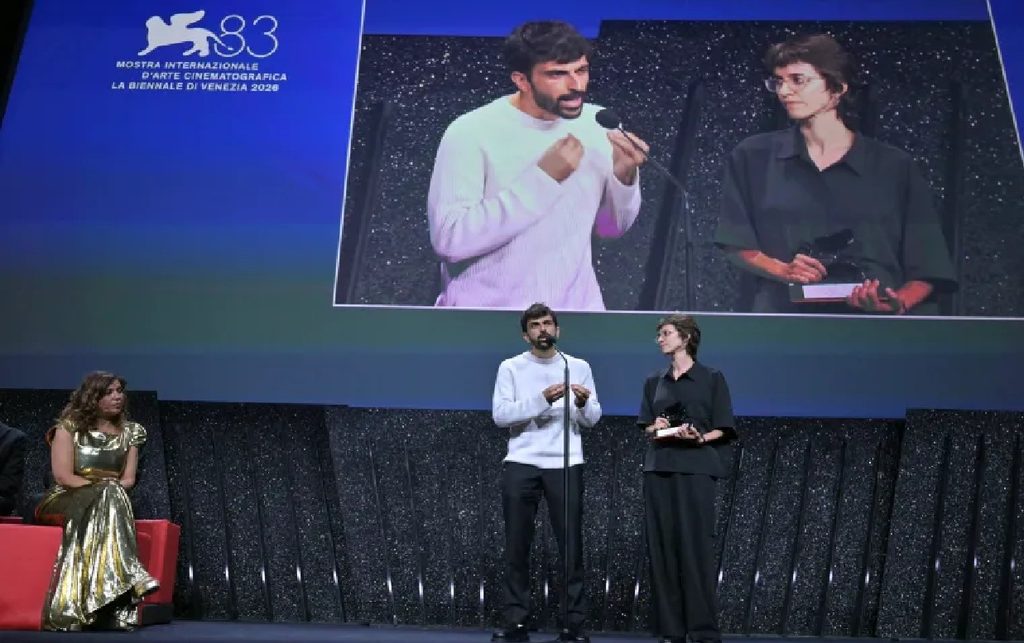
Film alleges mass civilian deaths are routinely built into military decisions amid Israel’s genocidal war
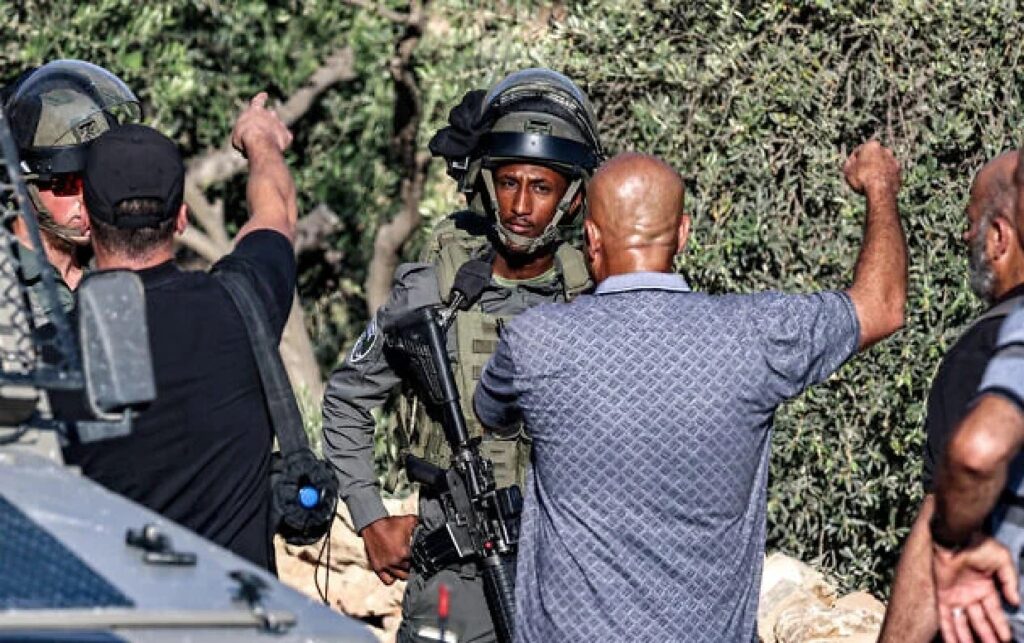
The Israeli rights group says violence, displacement, economic strangulation, and settlement expansion form part of

Houthi forces have captured the historic Red Sea port of Mocha and are advancing on
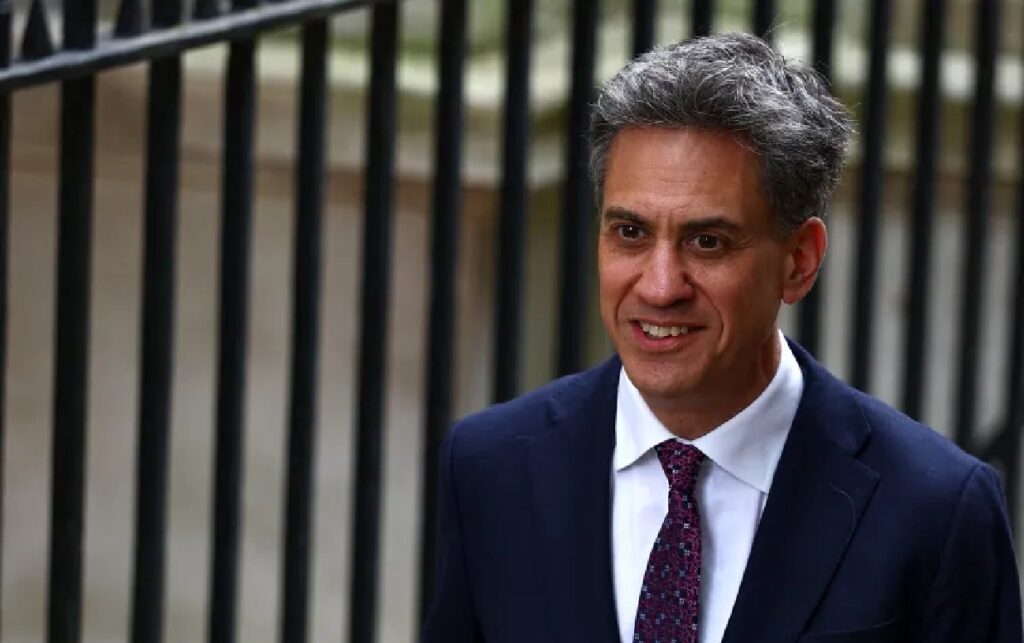
London’s historic sanctions against Israeli settlements mark a watershed moment in UK foreign policy, but
With 95% of Gaza’s population now wholly dependent on aid and more than 90% stripped
India calls for Kashmir and Ladakh to appear only on its official map after a
ISLAMABAD – In the high-stakes political theatre of Pakistan, the battleground has shifted from the