Kamran Faqir is a volunteer investigative journalist and writer committed to exposing hidden truths and amplifying underreported stories. Driven by social justice, he brings sharp insight and fearless truth-telling to independent journalism. NUJ registered.
Article Date Published:
Article Date Modified:
19 minutes
Views:385
Listen to this article
Help support our mission, donate today and be the change. Every contribution goes directly toward driving real impact for the cause we believe in.
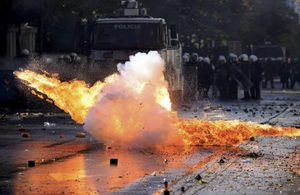
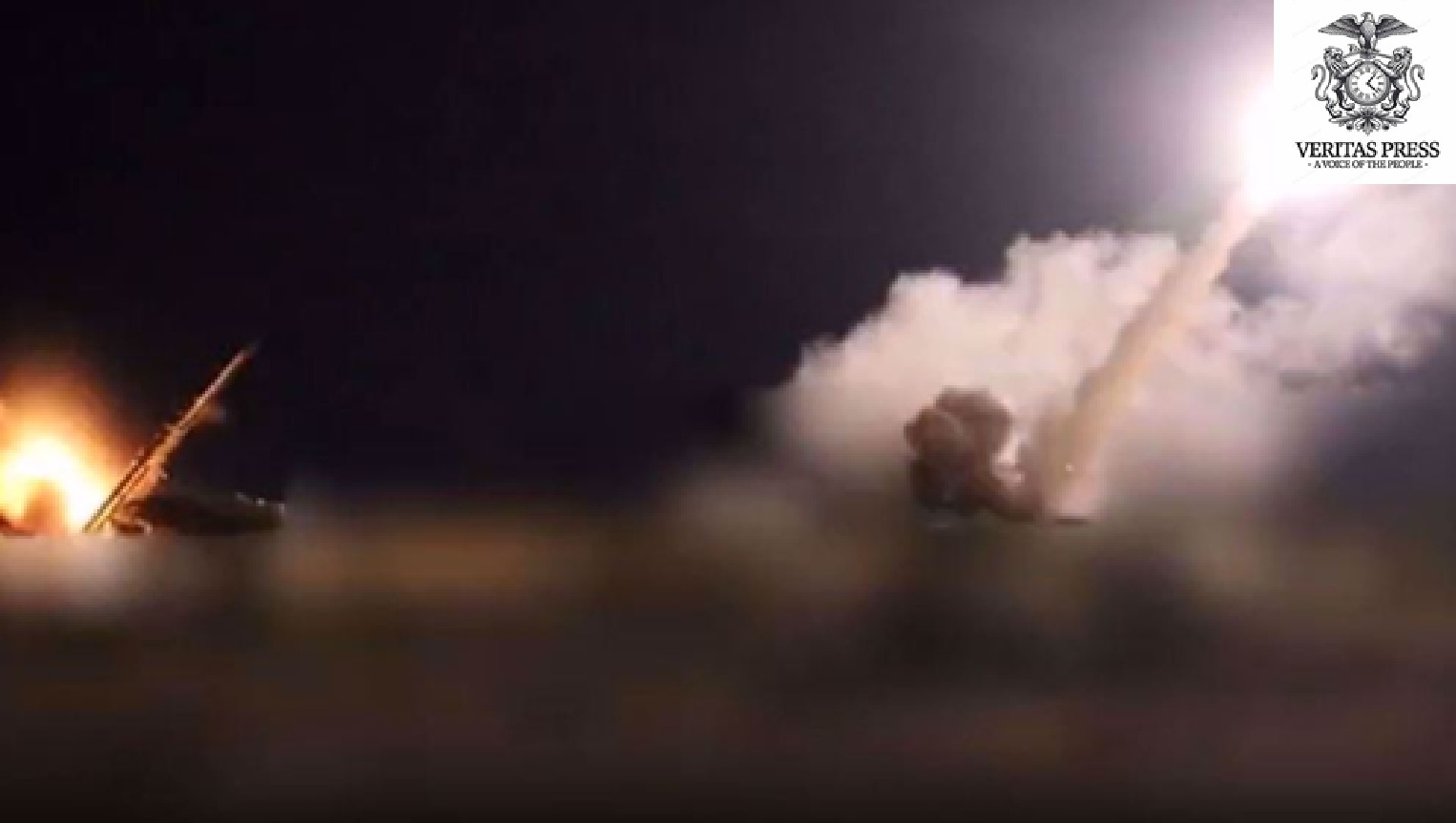
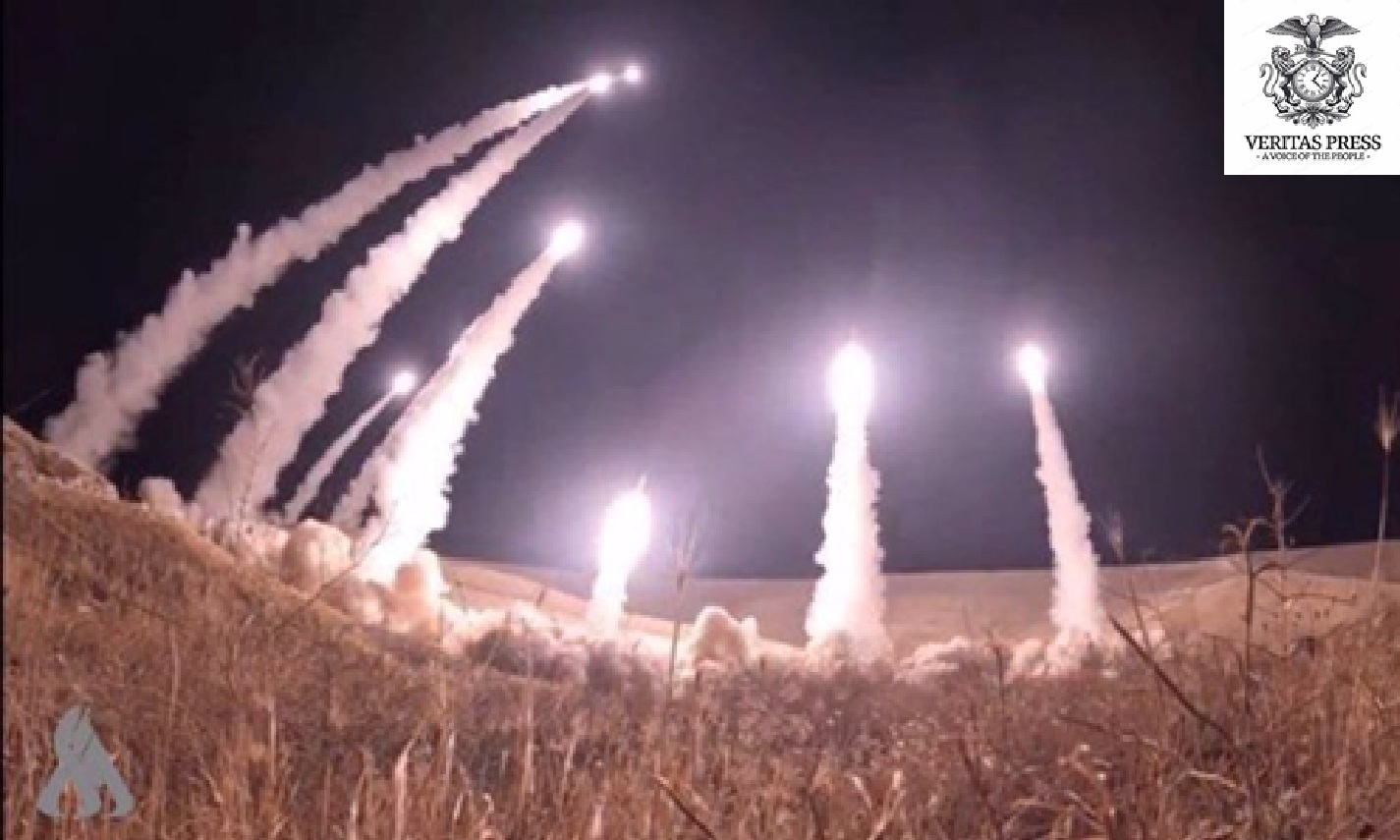
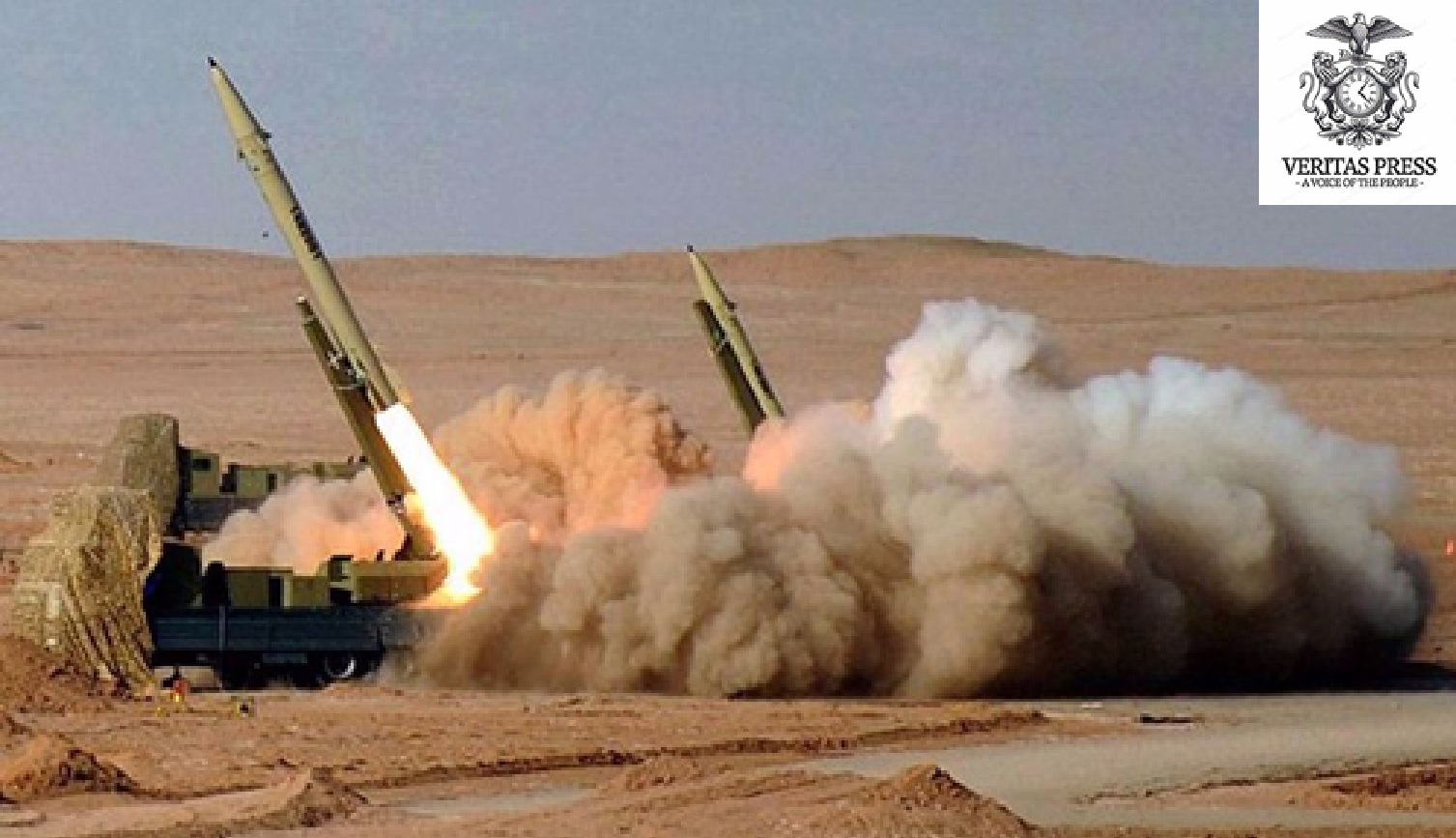
MANAMA, BAHRAIN / TEHRAN – The Islamic Revolutionary Guard Corps announced in the early hours of Wednesday that its Aerospace and Navy forces had launched coordinated missile and drone strikes against the headquarters of the US Fifth Fleet in Bahrain, an American air and helicopter base in Kuwait, and a vessel it identified as the “American-Zionist enemy ship Panaya.” The IRGC described the barrage as “retaliatory operations” following what it called two separate US acts of aggression: an aerial strike on an Iranian oil tanker near the Strait of Hormuz, and a projectile attack against an IRGC communications tower on Qeshm Island. By dawn, warning sirens had echoed across Bahrain, Kuwait and the United Arab Emirates, commercial flights were grounded, and the world’s most strategic energy chokepoint had again become the theatre for a direct, albeit carefully choreographed, military confrontation between Iran and the United States.
The sequence of events, as narrated by the belligerents, is contested at almost every point. Yet the episode has laid bare a singular, troubling fact: the nominal ceasefire unilaterally declared by President Donald Trump on 7 April has failed to constrain either side, and a low-intensity conflict of ambiguous rules is now playing out under the veneer of a truce that few ever believed was real.
I. The Irgc’s Narrative: A “Lesson” Delivered.
In a rare public communiqué released at 02:47 Tehran time, the IRGC Public Relations Office laid out its version of the night’s events with language that mixed Quranic invocation and battlefield reportage.
“Late last night, the aggressive US military struck an Iranian oil tanker with an aerial projectile in the vicinity of the Strait of Hormuz, causing damage to the vessel’s engine room. … In response to this aggression and violation of the regulations governing the Strait of Hormuz, an American-Zionist enemy vessel named Panaya was targeted by missiles launched by the IRGC Navy.”
The statement then identified a second US action: “In a renewed act of aggression, the American enemy targeted an IRGC communications tower in the southern part of Qeshm Island with aerial projectiles.” That, the IRGC said, was the trigger for its Aerospace Force to strike “their air and helicopter base stationed in one of the countries of the region, as well as the headquarters of the US Fifth Fleet.”
The language was calibrated to project proportionality. “We had previously warned that any act of aggression would be met with a different and heavier response, and we acted accordingly. These responses should serve as a lesson. … Disrupting the security of the Strait of Hormuz will carry a heavy price for the aggressive US military.”
II. What Actually Happened On The Ground (And In The Air):
Reconstructing the night relies on patching together partial accounts from independent witnesses, official denials and acknowledgements, flight-tracking data, and maritime records. The picture is murky by design.
Qeshm Island: Explosions Heard, Smoke Seen
Local residents on Qeshm Island, Iran’s largest in the Persian Gulf, reported hearing multiple explosions shortly before midnight on Tuesday. “I counted three distinct booms, maybe around 11:40 pm, then a fourth weaker one,” Fatima, a shopkeeper in the coastal town of Suza, told this reporter by telephone. “We saw smoke rising from the direction of Masan village. My brother said it looked like a fire on the ridge where the old watchtower used to be.”
Tasnim News Agency, which is close to the IRGC, cited local accounts and a preliminary investigation by the state broadcaster IRIB, stating that “a projectile may have struck an area of coastline between the city of Suza and the village of Masan.” No independent visual evidence of the strike on the communications tower has emerged, but the IRGC later confirmed that the site belonged to its southern command network.
The Qeshm strike appears to have been the immediate US riposte after the tanker incident, although US Central Command (CENTCOM) has not explicitly claimed it. Instead, a brief CENTCOM statement issued at 01:15 Bahrain time confirmed that American forces had “intercepted an Iranian tanker transiting toward an Iranian port in violation of ongoing maritime restrictions” and that “a disabling strike was conducted on the vessel’s propulsion system.” The statement omitted any mention of Qeshm.
The Tanker Question: Which Ship, Which Flag?
The identity of the Iranian tanker hit near the Strait of Hormuz remains the subject of intense speculation. The IRGC offered no name. CENTCOM’s language, “intercepted an Iranian tanker”, hinted at a vessel attempting to run the naval blockade that Trump had announced on 13 April, weeks after the ceasefire, when he declared an extension of restrictions on Iranian ports and shipping. Tehran has consistently deemed that blockade illegal and, in response, introduced the Persian Gulf Strait Authority (PGSA), a new body to enforce what it calls the “regulation and oversight of vessel traffic through the chokepoint.”
Maritime intelligence firm Ambrey Analytics told the Desk that its satellite imagery showed a distressed Suezmax tanker, likely Iranian-flagged, drifting 22 nautical miles east of Jask at 01:00 local time. “The engine room appeared to have sustained a hit consistent with a kinetic strike,” said a senior analyst on condition of anonymity, “but we cannot confirm whether it was an airstrike or a drone.”
This ambiguity is central to the information war. If a US helicopter or aircraft fired a missile into the engine room of a tanker in international waters without a UN Security Council mandate, “it could constitute a prima facie act of aggression under the UN Charter,” said Dr. Reza Nasri, a Tehran-based international law scholar who has advised the Iranian Foreign Ministry on legal disputes. “The US would argue it is enforcing sanctions, but sanctions enforcement does not grant the right to use lethal military force against commercial vessels in international waters.”
The Panaya: Civilian Ship Or Legitimate Target?
Iran’s retaliatory strike against the Panaya is equally opaque. The IRGC described the vessel as belonging to the “American-Zionist enemy,” a term typically reserved for Israeli-linked assets. Public shipping databases list a motor tanker named Panaya as a 2012-built Aframax, flagged to Liberia, owned by a shell company in the Marshall Islands, and managed by a Greek firm. However, investigations by United Against Nuclear Iran (UANI) had previously flagged the vessel for a 2023 voyage carrying Iranian crude to Syria, and its ultimate beneficial ownership is thought to involve a New York-based holding company with ties to Israeli shipping magnate Eyal Ofer.
The IRGC’s claim that “missiles of the IRGC Navy” hit the vessel was not accompanied by imagery. A US defence official, speaking on background, said the Panaya“reported damage and requested assistance” but refused to confirm the nature of the strike. The International Maritime Organisation (IMO) issued a terse statement: “We are aware of reports of an incident involving a commercial vessel in the Strait of Hormuz. Attacks on merchant shipping are a grave threat to global trade and violate international maritime law. We call on all parties to exercise maximum restraint.”
If the Panaya was indeed carrying Iranian oil or was suspected of doing so, its targeting raises awkward questions about the boundaries of military retaliation. “The IRGC is trying to frame this as a ship-for-ship equation,” said Dr. Salman Al-Ansari, a Gulf security researcher at the University of Bahrain. “But we have no independent verification that the Panaya was a military target. If it were a commercial vessel, then Iran has committed the same violation it accuses the US of.”
The Fifth Fleet HQ In Bahrain And The Kuwait Air Base:
Iran’s boldest claim is that missile and drone attacks hit the headquarters of the US Fifth Fleet in Manama, Bahrain, and a US air and helicopter base in Kuwait, widely identified as Ali Al Salem Air Base. CENTCOM has denied any impact on US facilities. “United States and Bahraini air defence systems intercepted three ballistic missiles aimed at the Fifth Fleet headquarters,” a CENTCOM spokesperson said in a video statement. “Two additional missiles launched toward Kuwait were engaged; one fell short and impacted an uninhabited area. No US personnel or assets were struck.”
Bahrain’s Ministry of Interior activated civil defence sirens in Manama and the Northern Governorate. Social media videos verified by the Desk showed luminous objects streaking across the night sky and what appeared to be a Patriot interceptor detonating. “We received a text alert to shelter in place,” said Ahmed, a Bahraini civil engineer who lives near the Juffair naval base. “My children were terrified. We heard explosions, but I cannot tell you whether they were hits or interceptions.”
In Kuwait, the scenario was similarly confused. Ali Al Salem Air Base hosts US Army aviation units and is a key logistics hub. FlightRadar24 data showed an abrupt halt to all departures from Kuwait International Airport at 01:22 local time, with incoming flights diverted to Doha and Riyadh. Kuwait’s Directorate General of Civil Aviation later confirmed a three-hour suspension “due to heightened security conditions.” Footage posted to local WhatsApp groups showed fragments of a missile casing near the Fahaheel district, south of Kuwait City. The US Embassy in Kuwait issued a “shelter-in-place” notice at 01:37, lifted at 04:15.
The UAE also activated air defence systems at Al Dhafra and Al Minhad bases, but no strikes were reported there. Airspace closures over Dubai briefly disrupted Emirates and flydubai operations. “The entire Gulf woke up to a war footing,” said Leyla Al-Attar, a Doha-based correspondent for Al Jazeera English. “And the surreal part was that by 6 am, airports reopened and the morning commute resumed, as if nothing had happened.”
III. The Ceasefire As A Useful Fiction:
The 7 April ceasefire, announced by Trump on his Truth Social platform, was always more of a unilateral pause than a negotiated agreement. It followed an extraordinary IRGC barrage, “at least 100 waves of retaliatory strikes”, launched on 28 February in response to what Iran described as unprovoked US and Israeli attacks. That February crisis had escalated to the point where Iran briefly shut the Strait of Hormuz to enemy and allied shipping. Trump’s announcement of a ceasefire came after the IRGC’s strikes had hit sensitive targets across the region, and it was promptly undermined on 13 April when Washington renewed what it called “enhanced maritime interdiction measures,” effectively a naval blockade of Iranian ports.
Tehran branded the blockade a violation of the ceasefire and, in a move of institutional brinksmanship, proclaimed the Persian Gulf Strait Authority (PGSA) on 20 April. The PGSA now claims the right to inspect and, if necessary, deny passage to any vessel that Tehran deems a threat to its security. “The PGSA is the new normal,” said a senior Iranian political editor in Tehran who did not wish to be named. “Whether the world recognises it or not, it exists, and the IRGC will enforce it.”
The Foreign Ministry statement circulated by Fars News Agency on Wednesday sharpened the warning: “Any country that permits aggressor parties to use its territorial, maritime, or airspace, or the facilities and bases located within its territory to carry out or support military aggression against Iran is in clear violation of the fundamental rules of international law and the principle of good neighbourliness. … The responsibility for the consequences of this situation lies with the American-Zionist aggressors.”
That statement was widely read as a direct threat to Bahrain, Kuwait, and the UAE, all of which host US military assets that Iran says were used to stage the attacks on its tanker and Qeshm.
A former Bahraini diplomat, speaking on condition of anonymity because of the sensitivity of the subject, told the Desk: “We are trapped. We host the US Fifth Fleet because our security architecture has been built around that presence. But when Iran retaliates, it is our cities that are threatened. The ceasefire is meaningless for us — we are the battlefield.”
IV. The Wider Regional Fallout: Kurdistan Region-The Komala Strike.
Almost simultaneously, Iran’s IRGC fired two missiles into the Alana Valley northeast of Erbil, in Iraq’s Kurdistan Region, striking the headquarters of the Iranian-Kurdish Komala party. Komala confirmed the attack in a statement, noting that the missiles hit at 23:00 local time. Iraq’s central government has yet to comment. The strike, though disconnected from the Gulf theatre, reinforces a pattern: Iran is using the cover of a “retaliatory window” to settle accounts with multiple foes, from US assets to Kurdish opposition groups it has long labelled as terrorist proxies of Israel.
Civilian Fears And The “New Normal”
In Manama’s Bab Al Bahrain souk, life resumed by midday Wednesday, but anxiety lingered. “Every time we hear of a ceasefire, something worse happens,” said Um Ali, a 54-year-old tailor. “We hear the jets day and night. Now we hear missiles. We are not soldiers, but we suffer.”
Bahrain’s civil society has become increasingly vocal. The Bahrain Centre for Human Rights issued a statement condemning “the use of Bahraini territory as a launchpad for military operations that put civilian lives at risk.” Its president, Sayed Ahmed Alwadaei, told the Desk: “The presence of the Fifth Fleet has turned Bahrain into a legitimate target in Iran’s eyes. The government’s silence is complicity in endangering its own citizens.”
In Kuwait, parliamentary opposition figure Bader Al-Dahoum tweeted: “Kuwait must not be dragged into a conflict that is not ours. The government must demand guarantees from the US that no offensive operations are launched from our soil.” The Kuwaiti Foreign Ministry later issued a bland statement calling for “restraint and respect for international law” without explicitly condemning either side.
V. The Fog Of Information War
One of the most striking features of the 2–3 June crisis is the near-total absence of independently verifiable evidence for the key claims. No imagery of a damaged Fifth Fleet headquarters. No wreckage of an Iranian missile inside Bahrain. No visual confirmation of the Panaya strike. Both sides have seized on the data vacuum to advance narratives that serve their domestic and strategic purposes.
“This is a classic post-ceasefire shadow war,” said Dr. Aniseh Bassiri Tabrizi, a senior analyst at the International Institute for Strategic Studies. “Both Washington and Tehran want to signal resolve without provoking an all-out war. They calibrate their strikes and then manage the perception through carefully worded statements and controlled leaks. The problem is that miscalculation is inherent in this model. One missile landing on a school or a barracks could unravel the entire fragile architecture.”
CENTCOM’s claim that no Iranian strike hit a US target is designed to deny Tehran the propaganda victory of a “successful” retaliation, but it also reveals a desire to de-escalate the interpretive battle. Yet if Iran’s missiles were truly all intercepted, it raises questions about the effectiveness of the IRGC’s Aerospace Force against layered Gulf missile defence systems. Conversely, if the headquarters were indeed hit, CENTCOM is lying, and the US narrative collapses.
A senior US intelligence source, who spoke on the condition of deep anonymity, provided a nuanced account: “There was damage. Not catastrophic, but damage. A drone got through and hit a perimeter building. No casualties. The decision was made to contain the story rather than give Tehran a trophy. But the guys on the ground know what happened.”
VI. What Happens Next: The Slippery Slope.
The sequence of escalation has followed a discernible logic: US strike on an Iranian tanker → IRGC retaliation on a US-linked vessel → US strike on a command site on Qeshm → IRGC retaliation on US basing infrastructure in Bahrain and Kuwait. Each side’s “red line” appears to be calibrated one step behind the other’s last action, in a grim dance of tit-for-tat that leaves little room for diplomacy.
Trump’s national security team has so far responded with muted language. White House Press Secretary Karoline Leavitt said in a briefing: “The President has been clear that Iran will not be allowed to menace international shipping or threaten American forces. We reserve the right to defend ourselves at a time and place of our choosing. We continue to believe a broader diplomatic settlement is possible if Iran’s behaviour changes.”
Tehran’s tone is harder. The IRGC statement’s final line, “disrupting the security of the Strait of Hormuz will carry a heavy price for the aggressive US military”, is a threat of closure. And the PGSA gives Iran an institutional vehicle to translate that threat into practice.
Iranian political commentator Mohammad Marandi, who is close to the government, told the Desk: “The Americans started this round. If they continue, they will lose their bases in the Gulf. The region is no longer their playground. Iran has demonstrated that.”
Yet, amid the rhetorical fire, there are whispers of back-channel communications. A source in Oman, which has historically mediated between the two adversaries, said that messages were being passed via Muscat as late as Tuesday evening. “Both sides want to avoid a full-scale confrontation, but they are prisoners of their own red lines. The danger is that one side miscalculates the other’s tolerance.”
VII. Investigative Threads And Unanswered Questions.
This investigation reveals several unanswered questions that deserve urgent scrutiny:
The tanker strike’s legality. Did the US obtain any UN mandate or self-defence justification for firing on an Iranian tanker in international waters? If not, does it constitute an act of war?
The identity of the Panaya. Was it a civilian vessel, and if so, did Iran commit a war crime by targeting it? What was its true ownership and cargo?
The Qeshm attack. What kind of projectile was used, and why was an IRGC communications tower struck? Was it a deliberate escalation or a signal?
The accuracy of damage claims. Can independent observers or the UN verify the extent of damage to the Fifth Fleet HQ and the Kuwait air base? The current information lockdown serves no one but the propagandists.
The role of the PGSA. Is it a real regulatory body or a casus belli in waiting? How will it interact with the US Navy in contested waters?
We put these questions to the US State Department, the IRGC’s public affairs office, the Bahraini Ministry of Foreign Affairs, the Kuwaiti Embassy in London, and the IMO. Only the IMO responded, reiterating its call for restraint and offering technical assistance to ensure maritime safety. The silence from the other parties is, in itself, an answer.
Epilogue: The Civilians’ Ceasefire.
In the fishing villages of Hormozgan province and the apartment blocks of Juffair, the word “ceasefire” has lost all meaning. People have learned to read the sky. “We see the orange glow of afterburners at night and wait for the sound of detonations,” said Hossein, a fisherman from Bandar Abbas. “No one has told us what we should do. There are no shelters. If the Strait is closed, we lose our livelihood. If it stays open, we might lose our lives.”
The IRGC’s statement ends with the word “lesson.” But the only lesson that seems to have been learned is that no one is in control, and the Gulf’s 3 June standoff is unlikely to be the last. The region is on the brink of something far more dangerous than a broken ceasefire: a system of perpetual retaliation in which the difference between peace and war is measured in the debris that falls to the ground at dawn.
Source:Veritas Press C.I.C. | Multi News Agencies
Submissions:
For The Secure Submission Of Documentation, Testimonies, Or Exclusive Investigative Reports From Any Global Location, Please Utilise The Following Contact Details For Our Investigations Desk: enquiries@veritaspress.co.uk or editor@veritaspress.co.uk
Help Support Our Work:
Popular Information is powered by readers who believe that truth still matters. When just a few more people step up to support this work, it means more lies exposed, more corruption uncovered, and more accountability where it’s long overdue.
Help Protect Independent Journalism, Which Is Currently Under Attack.
If you believe journalism should serve the public, not the powerful, and you’re in a position to help, becoming a DONATOR or a PAID SUBSCRIBER truly makes a difference.
DONATION APPEAL: If You Found This Reporting Valuable, Please Consider Supporting Independent Journalism.
Help Support Our Work – We Know, We Know, We Know …
Seeing these messages is annoying. We know that. (Imagine what it’s like writing them … )
Your support fuels our fearless, truth-driven journalism. In unity, we endeavour to amplify marginalised voices and champion justice, irrespective of geographical location.
But it’s also extremely important. One of Veritas Press’s greatest assets is its reader-funded model.
1. Reader funding means we can cover what we like. We’re not beholden to the political whims of a billionaire owner. We are a small, independent and impartial organisation. No one can tell us what not to say or what not to report.
2. Reader funding means we don’t have to chase clicks and traffic. We’re not desperately seeking your attention for its own sake: we pursue the stories that our editorial team deems important and believe are worthy of your time.
3. Reader Funding: enables us to keep our website and other social media channels open, allowing as many people as possible to access quality journalism from around the world, particularly those in places where the free press is under threat.
We know not everyone can afford to pay for news, but if you’ve been meaning to support us, now’s the time.
Your donation goes a long way. It helps us:
Keep the lights on and sustain our day-to-day operations
Hire new, talented independent reporters
Launch real-time live debates, community-focused shows, and on-the-ground reporting
Cover the issues that matter most to our communities, in real time, with depth and integrity
We have plans to expand our work, but we can’t do it without your support. Every contribution, no matter the size, helps us stay independent and build a truly people-powered media platform.
If you believe in journalism that informs, empowers, and reflects the communities we serve, please donate today.
Kamran Faqir is a volunteer investigative journalist and writer committed to exposing hidden truths and amplifying underreported stories. Driven by social justice, he brings sharp insight and fearless truth-telling to independent journalism. NUJ registered.
SEATTLE, TEHRAN — The U.S. Department of Homeland Security (DHS) will allow Iran’s national football team to enter the country 48 hours before their critical World Cup match against Egypt on Friday, a modest concession in a tournament where Team Melli’s travel conditions have sparked claims of oppression and competitive disadvantage.