Kamran Faqir is a volunteer investigative journalist and writer committed to exposing hidden truths and amplifying underreported stories. Driven by social justice, he brings sharp insight and fearless truth-telling to independent journalism. NUJ registered.
Listen to this article
Help support our mission, donate today and be the change. Every contribution goes directly toward driving real impact for the cause we believe in.
Article Date Published:
Article Date Modified:
25 minutes
Views:656
Three tankers explode on an “unauthorised” route as Iran tightens its grip, and Tehran now alleges Washington is routing traffic through oil-smuggling lanes. The truth may be as murky as the Gulf itself.
STRAIT OF HORMUZ — The blackened hulls of three oil tankers now sit abandoned off the southern coast of the Strait of Hormuz, their crews fled and their cargoes smouldering, the latest casualties in an escalating shadow war over the world’s most critical energy chokepoint. Iran’s Islamic Revolutionary Guard Corps says the vessels struck mines on an “unauthorised” route near the Omani coast. Iranian officials and IRGC-linked media are now going further, alleging that the United States is routing commercial traffic through known oil-smuggling corridors, rather than designated transit lanes, in an effort to protect the waterway on Washington’s terms and widen the conflict. U.S. officials reject the charge. But as with nearly everything emanating from this 21-mile-wide corridor of geopolitical tension, the official accounts diverge sharply from independent verification, leaving mariners, insurers, and diplomats to navigate a perilous landscape of claim and counterclaim.
Iran’s Islamic Revolutionary Guard Corps (IRGC) announced Thursday that three “violating” oil tankers struck naval mines and exploded after attempting to transit an “unauthorised route” south of the strait, near the Omani coast. The IRGC Navy’s public relations office claimed the vessels had “switched off all their radar and navigation systems” and ignored warnings before hitting the mines.
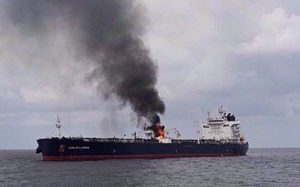
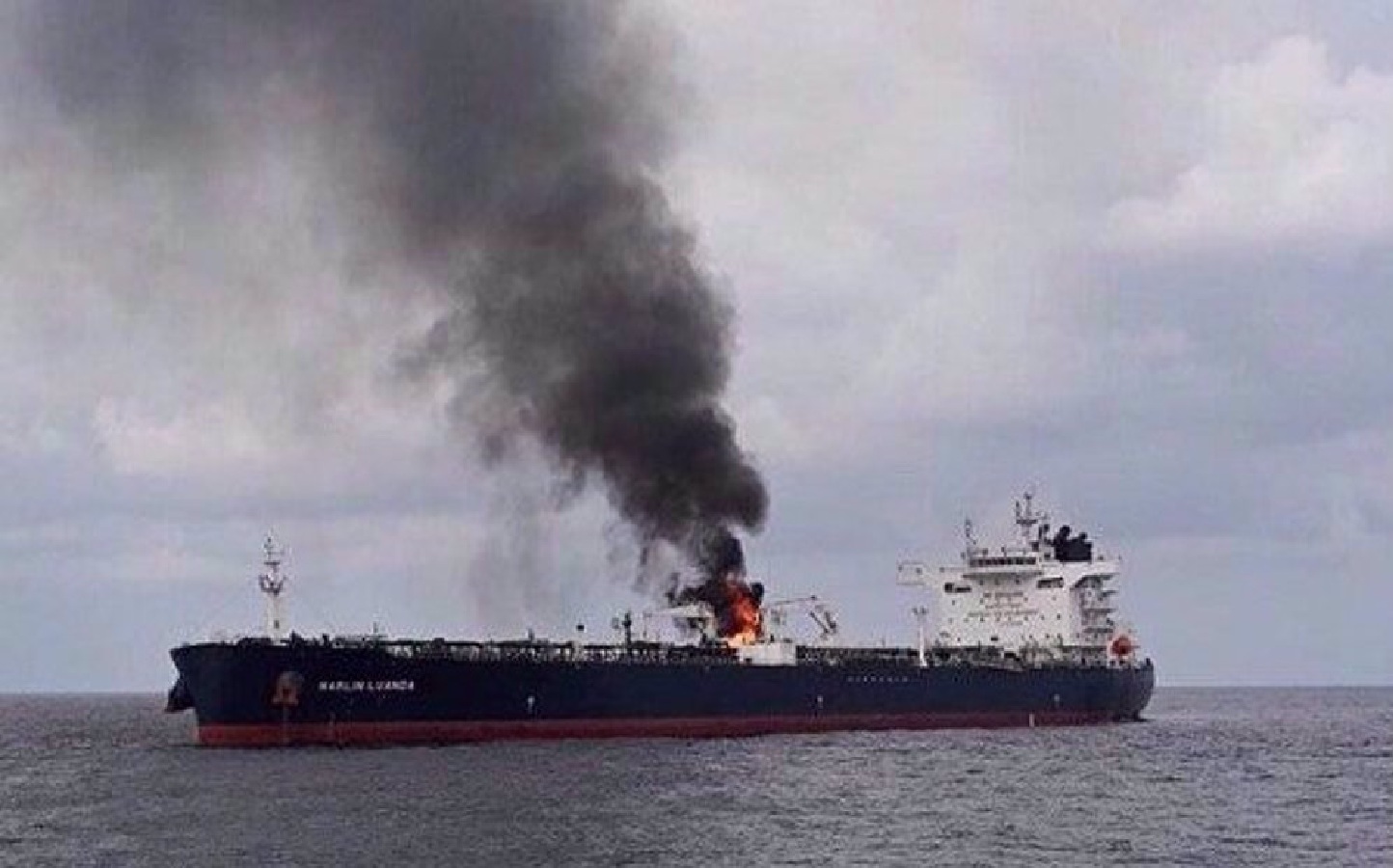
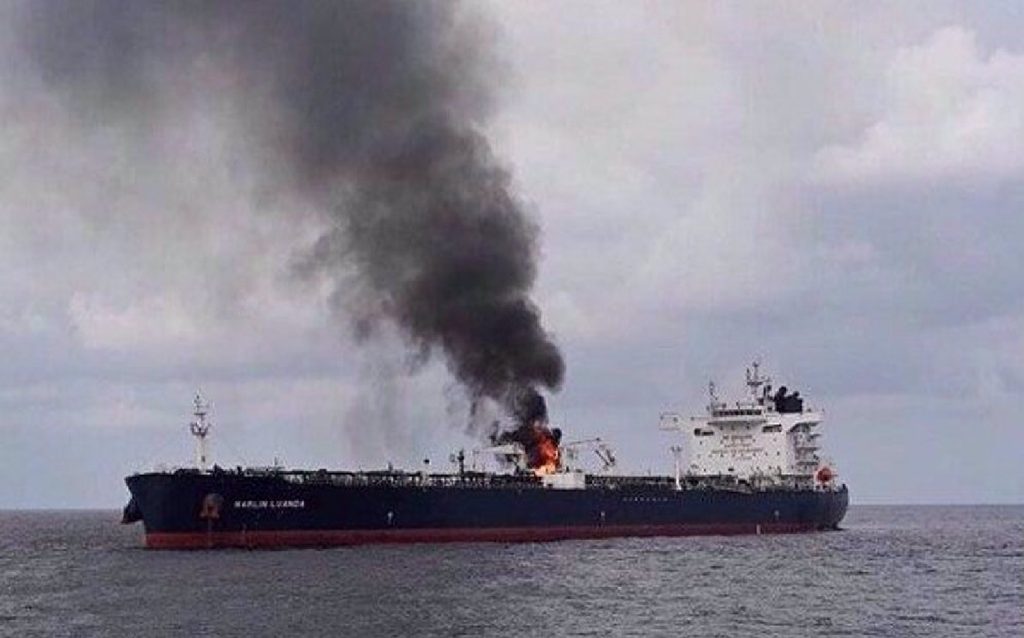
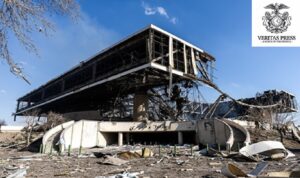
The image shows a supertanker that exploded in the Strait of Hormuz. (File photo)
“The unauthorised route through the Strait of Hormuz is mined, and vessel owners and crews are responsible for transiting these routes and should not pay attention to CENTCOM’s delusions on social media,” the IRGC statement read, referring to U.S. Central Command.
The British maritime security agency UKMTO confirmed receiving a report of a ship on fire nine nautical miles north of Oman’s Khasab, but offered no details on cause, casualties, or whether the burning vessel was among those the IRGC described. The discrepancy underscores a fundamental problem: in the current information environment, even basic facts about incidents in the strait cannot be independently verified.
A War Without Clear Battle Lines
The context for Thursday’s explosions is a conflict that officially began February 28, when the United States and Israel launched attacks on Iran that killed the country’s supreme leader and senior military commanders. The 40-day war ended in early April with a Pakistan-brokered Memorandum of Understanding signed June 17. Article 5 of that agreement placed responsibility for reopening and managing the Strait “squarely in Iran’s hands.”
But Washington, according to Tehran, almost immediately violated the deal by imposing a naval blockade on Iranian ports, a charge the U.S. frames as a “counter-blockade” responding to Iran’s own restrictions on the waterway.
Since the war’s outbreak, Iran has severely restricted traffic through the strait, which normally carries approximately one-fifth of global oil and gas consumption. The U.S. has responded with its own blockade on Iranian ports and ships, and has been actively escorting vessels through what it calls a legitimate southern corridor near the Omani coast.
Iran considers that corridor unauthorised, and now, apparently, mined.
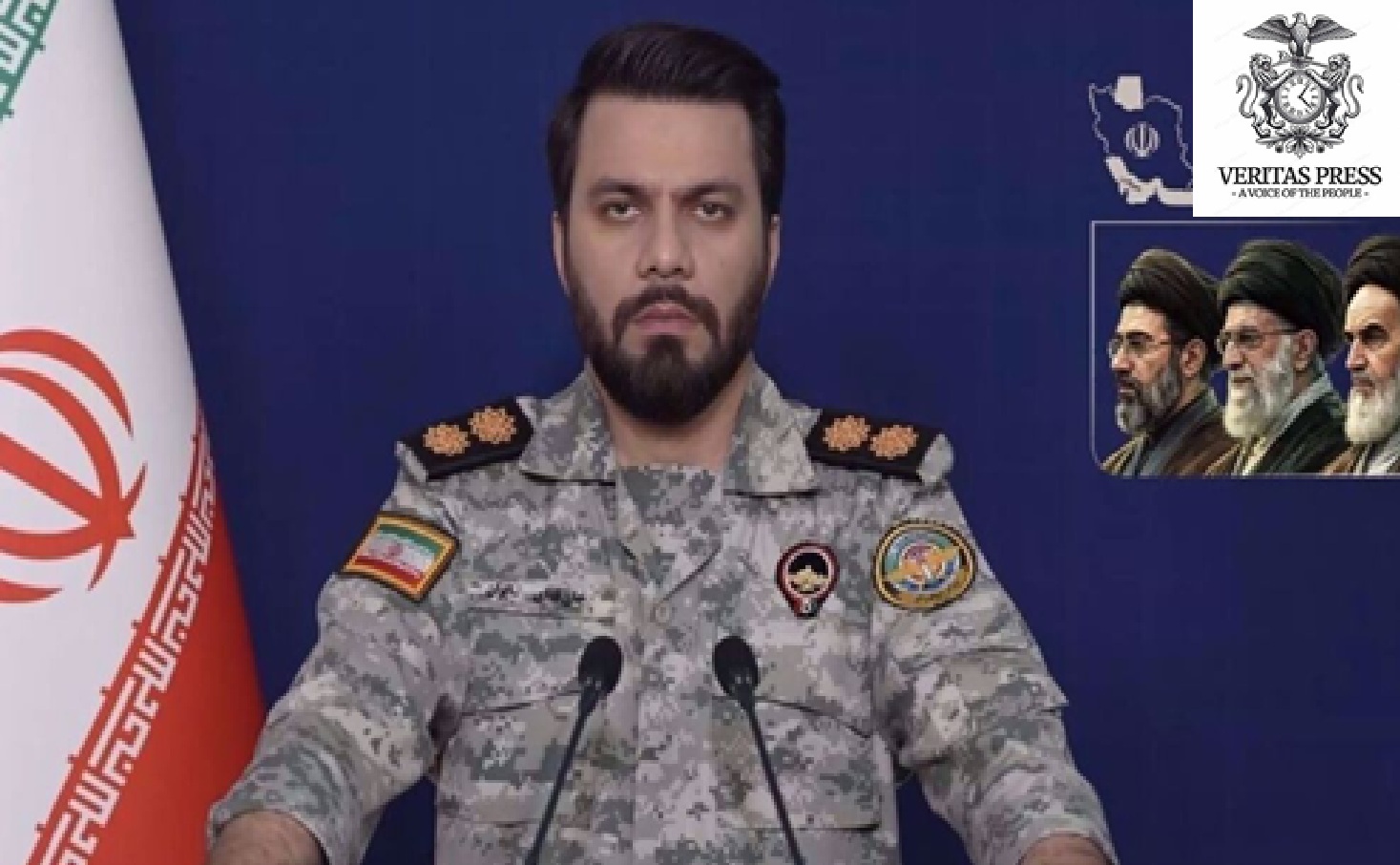
“The Strait of Hormuz is today under the strategic control of Iran’s armed forces and will never be opened until the full realisation of the Islamic Republic’s conditions,” Iranian Army spokesman Brigadier General Mohammad Akraminia declared Thursday, according to state media. He accused the enemy of first targeting Iran’s nuclear and missile capabilities, then seeking to topple the government, and finally openly declaring aims to partition Iran—alleging the hidden goal of U.S. actions was realising a “Greater Israel” plan.
While officials in Tehran and Washington trade accusations, those who actually work the waters of the Gulf describe a situation of terrifying uncertainty.
“There is no safe route anymore,” said Hassan al-Balushi, a 47-year-old Omani fisherman from Khasab who has fished these waters for three decades. “We see warships from many countries. We hear explosions at night, and we are told different things by different navies. The Iranians say go north. The Americans say go south. We just want to fish and feed our families.”
Al-Balushi said he witnessed a vessel burning on the horizon Thursday morning. “It was very far, but the smoke was black and thick. We did not approach. We are fishermen, not fighters.”
A ship broker in Dubai, speaking on condition of anonymity because he was not authorised to discuss client matters, told this correspondent that the situation has become untenable for commercial shipping.
“Our clients are receiving contradictory instructions from CENTCOM and from Iranian authorities,” he said. “The Americans say the southern route is safe and escorted. The Iranians say it is mined and forbidden. We have ships worth $80 million and cargoes worth more. Who do we believe? And more importantly, who compensates us when we are wrong?”
The IRGC’s warning that vessel owners and crews “are responsible for transiting these routes” represents a significant escalation in the legal framing of the conflict, effectively criminalising maritime traffic that follows U.S. guidance.
CENTCOM’s “Delusions” And The Information War
The IRGC statement’s reference to CENTCOM’s “delusions on social media” points to a parallel battle being waged in the information domain. CENTCOM has been actively posting on social media about the Strait of Hormuz, providing guidance to commercial vessels and highlighting what it describes as Iranian aggression.
“The IRGC Navy states that… vessel owners and crews… should not pay attention to CENTCOM’s delusions on social media,” the Iranian statement said, in an unusual direct reference to American military communications.
A CENTCOM spokesperson, reached by email, declined to comment specifically on the IRGC’s claims but referred to previous statements that U.S. forces remain committed to “freedom of navigation and the free flow of commerce” in the strait.
“The IRGC’s claims about mining ‘unauthorised routes’ are baseless and dangerous,” the spokesperson said on condition of anonymity, citing Pentagon policy. “Coalition forces are actively escorting commercial vessels through designated corridors. Any suggestion that these routes are unsafe is disinformation designed to justify Iran’s illegal blockade.”
Iranian state media, meanwhile, has been running wall-to-wall coverage of what it describes as U.S. violations of the June 17 MoU.
“The Americans signed an agreement and then immediately broke it,” said Mohammad Reza Faraji, a political analyst on Iranian state television, in a broadcast Thursday. “They imposed a blockade on our ports, they encouraged ships to violate our sovereignty, and now they are surprised when their proxies hit mines. The Islamic Republic has been patient, but patience has limits.”
Smuggling Routes, Not Safe Corridors: Tehran’s New Charge
Iranian officials and media outlets aligned with the Islamic Revolutionary Guard Corps are now alleging that the United States is deliberately directing commercial vessels through established oil-smuggling routes south of the Strait of Hormuz, rather than through designated or agreed transit corridors, as part of a broader effort to assert control over the waterway and expand the conflict.
The charge does not appear in the IRGC’s original Thursday statement, which said only that three “violating” tankers had “switched off all their radar and navigation systems” and hit mines on an “unauthorised route.” But in follow-up commentary on state television and IRGC-linked outlets, including Sepah News, Iranian officials and analysts have described the southern corridor near Oman as a sanctions-evasion track that Washington is now repurposing for military-escorted traffic.
“The Americans are not using the designated routes,” said one IRGC-linked commentator on Iranian state TV Thursday evening, in a broadcast monitored by this correspondent. “They are pushing ships through the smuggling lanes, the same lanes used to evade sanctions, and then telling the world that Iran is attacking legitimate shipping. This is how they expand the conflict, by turning every smuggler’s path into an American-protected corridor.”
The commentator did not provide evidence for the claim, and the IRGC’s public statements have not identified the three tankers, their flags, their owners, or their cargoes. The IRGC did say one of the vessels was “carrying over two million barrels of crude oil” and had “deactivated all of its radar and navigation systems”—details that are consistent with smuggling behaviour but do not prove U.S. involvement in routing the vessels.
The allegation matters because it reframes the legal and political stakes of the Hormuz crisis. If Washington is indeed using smuggling corridors rather than designated lanes, it would blur the distinction between sanctions evasion and protected navigation, give Tehran a pretext to treat all southern traffic as illegitimate, and potentially widen the conflict to vessels and crews that had no role in the original dispute. If the allegation is false, as U.S. officials insist, it is nonetheless a potent piece of information warfare designed to discredit American escort operations and deter shipowners from following CENTCOM guidance.
“The IRGC Navy states that the unauthorised route through the Strait of Hormuz is mined, and that vessel owners and crews are responsible for transiting these routes and should not pay attention to CENTCOM’s delusions on social media,” the IRGC statement said. “The facts on the ground will determine the outcome. Any provocative action, supported by the terrorist and invading US military’s act of mischief, that disregards the regulations governing the Strait will be met with a resolute response.”
CENTCOM has previously rejected Iranian claims about the southern corridor as “baseless” and says it is escorting commercial vessels through designated routes consistent with freedom of navigation. A CENTCOM spokesperson, speaking on condition of anonymity under Pentagon policy, said Thursday that “any suggestion that U.S. forces are directing commercial traffic through smuggling lanes is false and dangerous.” The spokesperson declined to provide details on specific escort routes, citing operational security.
The UKMTO advisory Thursday confirmed only that a ship was on fire approximately nine nautical miles north of Oman’s Khasab, after a report from the master of another vessel. It did not confirm the number of ships involved, their identities, whether mines were the cause, or whether any vessel was using a designated or smuggling route. “The cause of the fire is unknown at this time,” UKMTO said. “Vessels transiting the area are advised to exercise caution.”
That gap in independent verification is central to the story. Journalists cannot freely access the water, and both Iranian and U.S. authorities restrict information about the conflict. “We are relying almost entirely on official statements and maritime agency advisories,” said an editor at a major international wire service, speaking on condition of anonymity because he was not authorised to discuss editorial decisions. “We cannot independently confirm the number of vessels, their identities, their cargoes, or what actually happened. We can only report what the IRGC says and what UKMTO says and note the discrepancies.”
Shipping and insurance sources say the smuggling-route allegation, whether true or not, is already affecting commercial decision-making. “Our clients are receiving contradictory instructions from CENTCOM and from Iranian authorities,” a Dubai-based ship broker, speaking on condition of anonymity, told this correspondent. “The Americans say the southern route is safe and escorted. The Iranians say it is mined and forbidden, and now they say it is a smuggling route. We have ships worth $80 million and cargoes worth more. Who do we believe? And more importantly, who compensates us when we are wrong?”
The IRGC’s broader messaging has increasingly focused on the cost-imposing dimension of the conflict. On Tuesday, Ali Abdollahi, chief of staff of Iran’s armed forces, said the country is using cheap weapons to attack expensive U.S. equipment. “Should the enemy commit any further errors, we will neutralise the impact of their expensive, advanced equipment using a wide array of low-cost yet effective equipment,” he said, according to Iranian media. The IRGC also claimed in a separate statement to have captured a U.S. reconnaissance drone during an operation in the Strait of Hormuz, a claim that, if true, would represent another escalation in the asymmetric campaign.
Analysts caution that the smuggling-route narrative serves multiple Iranian purposes: it delegitimises U.S. escort operations, reinforces Tehran’s claim that the southern corridor is unlawful, and provides a justification for mining or attacking vessels that follow American guidance. “This is a war of narratives as much as it is a war of ships and mines,” said Dr. Sanam Vakil, deputy director of the Middle East and North Africa Programme at Chatham House. “The Iranians understand that they cannot match American naval power ship-for-ship. So they are playing to their strengths: mines, asymmetric tactics, and the ability to impose costs on global shipping without directly confronting the U.S. Navy. The smuggling-route allegation is part of that toolkit.”
But Vakil also warned that the strategy carries enormous risks. “Mines do not discriminate,” she said. “They can hit Iranian ships, neutral ships, ships from countries that have no dog in this fight. The more mines Iran lays, and the more it conflates smuggling routes with protected corridors, the more pressure there will be for a forceful international response.”
For the fishermen of Musandam, the legal and informational battle is secondary to the immediate danger. “There is no safe route anymore,” said Hassan al-Balushi, a 47-year-old Omani fisherman from Khasab. “We see warships from many countries, we hear explosions at night, and we are told different things by different navies. The Iranians say go north, the Americans say go south. We just want to fish and feed our families.”
The UKMTO Report: Independent Verification Or Echo Chamber?
The UKMTO’s brief statement Thursday, confirming only that a ship was on fire and that the report came from the master of another vessel, illustrates the challenges of independent verification in this conflict zone.
“UKMTO received a report from the master of a vessel of a ship on fire, approximately 9 nautical miles north of Khasab, Oman,” the agency said in an advisory. “The cause of the fire is unknown at this time. Vessels transiting the area are advised to exercise caution.”
The agency did not confirm the number of vessels involved, their identities, or whether mines were the cause, a notable silence given the IRGC’s specific claims.
A spokesperson for UKMTO, which operates under the British Royal Navy, said the agency “does not comment on the attribution of incidents” and only “reports what is confirmed by masters on the scene.”
“We are aware of reports from Iranian authorities about multiple vessels,” the spokesperson said. “We are still gathering information. The safety of mariners remains our priority, and we advise extreme caution in all transits of the Strait of Hormuz.”
The Strategic Calculus: Cheap Weapons, Expensive Targets
In a separate development Tuesday, Ali Abdollahi, chief of staff of Iran’s armed forces, articulated what appears to be a deliberate asymmetric strategy.
“Should the enemy commit any further errors, we will neutralise the impact of their expensive, advanced equipment using a wide array of low-cost yet effective equipment,” Abdollahi said, according to Iranian media.
Naval mines, which can cost as little as a few thousand dollars, are precisely the kind of “low-cost yet effective” weapon that can threaten billion-dollar warships and $80 million tankers. The IRGC’s apparent willingness to mine routes it considers “unauthorised” represents a significant escalation in the use of such tactics.
The IRGC also claimed in a separate statement to have captured a U.S. reconnaissance drone during an operation in the Strait of Hormuz, a claim that, if true, would represent another humiliation for American forces in the region.
“This is a war of narratives as much as it is a war of ships and mines,” said Dr. Sanam Vakil, deputy director of the Middle East and North Africa Programme at Chatham House, in an interview. “The Iranians understand that they cannot match American naval power ship-for-ship. So they are playing to their strengths: mines, asymmetric tactics, and the ability to impose costs on global shipping without directly confronting the U.S. Navy.”
Vakil continued: “But this strategy carries enormous risks. Mines do not discriminate. They can hit Iranian ships, neutral ships, ships from countries that have no dog in this fight. The more mines Iran lays, the more pressure there will be for a forceful international response.”
The Economic Shockwave
Global oil markets have been responding to the escalating tensions. Benchmark Brent crude has risen approximately 15% since the war began, and analysts warn that any full-scale closure of the Strait could send prices soaring to $200 per barrel or higher.
“Shipping companies are already diverting vessels around the Cape of Good Hope to avoid the strait entirely, adding two weeks to journeys from the Gulf to Europe,” said James Finucane, a senior energy analyst at the Economist Intelligence Unit. “This is adding billions of dollars in costs to global trade, costs that ultimately flow through to consumers.”
Lloyd’s of London and other major insurers have reportedly raised premiums for vessels transiting the Gulf to unprecedented levels, with some underwriters refusing to cover ships that do not comply with specific routing instructions.
“The insurance market is in chaos,” a London-based maritime insurance broker told this correspondent on condition of anonymity. “We are being asked to cover vessels against a risk of mines that we cannot quantify, in a corridor where the instructions from different authorities contradict each other. This is not a sustainable situation.”
The Regional Perspective: Oman Caught In The Middle
The IRGC’s claim that the explosions occurred “off the southern shores of the Strait” places the incidents close to Omani territorial waters. The Sultanate of Oman, which maintains a carefully cultivated neutrality, has largely avoided comment on the conflict but finds itself increasingly caught between its powerful northern neighbour and its security partnership with the United States and Britain.
“The Omanis are in an impossible position,” said Dr. Abdullah al-Saadi, a political scientist at Sultan Qaboos University in Muscat. “Their territory, the Musandam Peninsula, overlooks the Strait. Their waters are adjacent to the routes being contested. They have hosted British and American military personnel for decades, but they also maintain good relations with Iran. They do not want to be drawn into this conflict.”
Al-Saadi continued: “The reports of ships burning near Khasab are deeply troubling for Oman. This is our neighborhood. If these incidents escalate, the consequences will be borne first by us, not by Washington or Tehran.”
The Omani government has not issued a formal statement on Thursday’s incidents.
Activist Perspectives: Environmental And Human Rights Concerns
Environmental groups have raised alarms about the potential for a catastrophic oil spill in the strait, which would devastate marine ecosystems already stressed by climate change and overfishing.
“Three tankers with potentially millions of barrels of crude oil on fire or damaged in one of the most environmentally sensitive marine corridors in the world is a disaster waiting to happen,” said Fatima Al-Harthy, regional director of the Gulf Environmental Network, a Muscat-based advocacy group. “The region’s coral reefs, mangrove forests, and sea turtle nesting sites are already under immense pressure. A major spill here would be an ecological catastrophe.”
Human rights organisations have also condemned the risks to civilian mariners.
“The crews of these tankers, Filipinos, Indians, Bangladeshis, and others, are civilians just doing their jobs,” said Sarah Leah Whitson, executive director of the Middle East and North Africa division at Human Rights Watch, in a statement. “They are not combatants. The deliberate mining of shipping routes, the obstruction of navigation systems, the use of civilians as pawns in geopolitical games, these are violations of international humanitarian law.”
Journalists On The Frontline
For journalists attempting to cover the conflict, the Strait of Hormuz presents extraordinary challenges. Access to the Iranian coast is tightly controlled, and independent reporting from the water is nearly impossible without embedding with military forces.
“We are relying almost entirely on official statements and maritime agency advisories,” said an editor at a major international wire service, speaking on condition of anonymity because he was not authorised to discuss editorial decisions. “We cannot independently confirm the number of vessels, their identities, their cargoes, or what actually happened. We can only report what the IRGC says and what UKMTO says and note the discrepancies.”
The Committee to Protect Journalists has documented increasing restrictions on press freedom in the region, with both Iranian and U.S. authorities limiting access to information about the conflict.
“The Strait of Hormuz has become a black hole for information,” said Sherif Mansour, Middle East and North Africa program coordinator at CPJ. “Journalists cannot access the water, cannot verify claims, and are increasingly reliant on state media from all sides. This is a recipe for misinformation and propaganda.”
The Legal Quagmire
The legal status of the Strait of Hormuz, and the competing claims of authority over it, remains deeply contested.
Under the United Nations Convention on the Law of the Sea (UNCLOS), the Strait is considered an international waterway through which vessels enjoy the right of transit passage. Iran, however, is not a party to UNCLOS and has historically asserted a broader claim to control over the Strait, particularly its territorial waters.
“The June 17 MoU appears to have given Iran a role in ‘managing’ the Strait that is inconsistent with international law,” said Dr. Robin Churchill, professor emeritus of international law at the University of Dundee, in an interview. “But the U.S. is also not a party to UNCLOS, and its ‘counter-blockade’ of Iranian ports raises its own legal questions. Both sides are operating in a legal grey zone.”
Churchill continued: “The mining of a shipping route, even one that Iran considers unauthorised, would constitute a serious violation of international law if it endangers neutral shipping. The IRGC’s warning that vessel owners are ‘responsible’ for transiting mined routes is legally nonsensical. You cannot absolve yourself of responsibility for laying mines by warning people about them.”
The View From Washington: Silence And Confusion
The U.S. government has been notably reticent about Thursday’s incidents. The State Department declined to comment, referring questions to the Pentagon. The Pentagon referred questions to CENTCOM. CENTCOM did not respond to multiple requests for comment about the specific incidents described by the IRGC.
President Donald Trump, who has been focused on domestic issues in recent weeks, has not publicly addressed the escalating situation in the Gulf. His administration has been divided between hawks who advocate a forceful response to Iranian actions and officials who fear being drawn into another Middle East war.
“The administration’s policy is incoherent,” said a former senior U.S. official who served in the region and spoke on condition of anonymity. “On one hand, we are escorting ships and telling the world that the southern route is safe. On the other hand, we are not providing the level of protection that would actually make it safe. We are setting up commercial shipping for disaster.”
The official continued: “The Iranians are testing us. They are seeing how far they can go before we respond. And so far, the answer appears to be: quite far.”
The View From Tehran: Defiance And Consolidation
In Tehran, the official narrative is one of victimhood and resistance. State media has framed the incidents as evidence of American perfidy and Iranian resolve.
“The Americans thought they could impose a new order on the Gulf,” said Hossein Shariatmadari, editor-in-chief of the hardline Kayhan newspaper, in an editorial Thursday. “They thought they could violate the MoU, blockade our ports, and send their ships through our waters without consequence. They were wrong. The Islamic Republic has shown that it will defend its sovereignty.”
Reformist voices, meanwhile, have been largely silenced in the current environment. The few who have spoken out have been cautious.
“The current path is not sustainable,” said a former Iranian diplomat who requested anonymity because of security concerns. “We cannot fight the entire world. We need to find a way out of this crisis that preserves our dignity but avoids a catastrophic war. But the hardliners are in control, and they believe that only strength will be respected.”
The Road Ahead: Escalation Or Diplomacy?
As of Thursday evening, the situation in the Strait of Hormuz remained tense but not yet catastrophic. The three tankers were burning or abandoned, but no deaths had been reported. The IRGC had made its point, that it controls the Strait and is willing to use deadly force to enforce its claims, without triggering a direct military confrontation with the United States. But the new allegation that Washington is using oil-smuggling routes rather than designated corridors has added another layer of uncertainty to an already opaque conflict.
“The risk of miscalculation is enormous,” said Vakil of Chatham House. “A mine could hit a ship from a country that decides to respond militarily. A U.S. warship could be damaged. An Iranian vessel could be sunk. Any of these scenarios could trigger a spiral of escalation that neither side wants but neither side can control.”
She continued: “The international community needs to step in. The Europeans, the Chinese, the Indians, all have a stake in keeping the Strait open. They need to use their influence with both Washington and Tehran to find a way back to the negotiating table. The alternative is a war that would devastate the global economy and the region.”
In the waters off Khasab, where the burned tankers still smoulder, the fishermen of Musandam continue to go about their work, navigating a waterway that has become a frontline in a conflict they did not choose, and a testing ground for competing claims about which routes are safe, which are smuggled, and which are mined.
“We have lived with tension here for generations,” said al-Balushi. “But this is different. This is not about fishing rights or borders. This is about the whole world. And we are caught in the middle.”
Veritas Press Investigative Analysis Independent journalism examining global affairs, power, diplomacy, and accountability.
Source:Veritas Press C.I.C. | Multi-News Agencies
Help Support Our Work
Readers who believe that truth still matters have power over popular information. When just a few more people step up to support this work, it means more lies exposed, more corruption uncovered, and more accountability where it’s long overdue.
Help Protect Independent Journalism, Which Is Currently Under Attack.
If you believe journalism should serve the public, not the powerful, and you’re able to help, becoming a regular DONOR or a PAID SUBSCRIBER truly makes a difference.
DONATION APPEAL: If you found this reporting valuable, please consider supporting independent journalism.
Your support fuels our fearless, truth-driven journalism. In unity, we endeavour to amplify marginalised voices and champion justice, irrespective of geographical location. We operate independently, with no financial backing from billionaires; our readers support us.
But it’s also extremely important. One of Veritas Press’s greatest assets is its reader-funded model.
1. Reader funding means we can cover what we like. We’re not beholden to the political whims of a billionaire owner. We are a small, independent and impartial organisation. No one can tell us what not to say or what not to report.
2. Reader funding means we don’t have to chase clicks and traffic. We’re not desperately seeking your attention for its own sake; we pursue the stories that our editorial team deems important and believes are worthy of your time.
3. Reader Funding: enables us to keep our website and other social media channels open, allowing as many people as possible to access quality journalism from around the world, particularly those in places where the free press is under threat.
We know not everyone can afford to pay for news, but if you’ve been meaning to support us, now’s the time.
Your donation goes a long way. It helps us:
Keep the lights on and sustain our day-to-day operations
Hire new, talented, independent reporters
Launch real-time live debates, community-focused shows, and on-the-ground reporting
Cover the issues that matter most to our communities, in real time, with depth and integrity
Without your support, independent voices like ours will be silenced.
Furthermore, we have plans to expand our work, but we can’t do it without your support. Every contribution, no matter the size, helps us stay independent and build a truly people-powered media platform.
If you believe in journalism that informs, empowers, and reflects the communities we serve, please donate today.
Submissions
For the safe submission of documentation, testimonies, or exclusive investigative reports from anywhere in the world, please use the following contact details for our Investigations Desk: mailto:enquiries@veritaspress.co.uk or mailto:editor@veritaspress.co.uk.
SEATTLE, TEHRAN — The U.S. Department of Homeland Security (DHS) will allow Iran’s national football team to enter the country 48 hours before their critical World Cup match against Egypt on Friday, a modest concession in a tournament where Team Melli’s travel conditions have sparked claims of oppression and competitive disadvantage.