Pakistan’s Preventive-Detention Test: LHC Summons Punjab Home Secretary, Kot Lakhpat Jail Chief Over Imran Khan Sisters’ Continued Custody
Pakistan’s Preventive-Detention Test: LHC Summons Punjab Home Secretary, Kot Lakhpat Jail Chief Over Imran Khan Sisters’ Continued Custody
Author:
Kamran Faqir
Byline: Investigative Desk
Kamran Faqir is a volunteer investigative journalist and writer committed to exposing hidden truths and amplifying underreported stories. Driven by social justice, he brings sharp insight and fearless truth-telling to independent journalism. NUJ registered.
Listen to this article
Help support our mission, donate today and be the change. Every contribution goes directly toward driving real impact for the cause we believe in.
LAHORE — The Lahore High Court has summoned the Punjab home secretary and the superintendent of Kot Lakhpat jail to appear in person on October 28, as it examines a petition seeking the release of former prime minister Imran Khan’s three sisters, Aleema Khan, Noreen Niazi and Dr Uzma Khan, who remain in custody despite the expiry of their 30-day detention orders, according to the supplied reports.
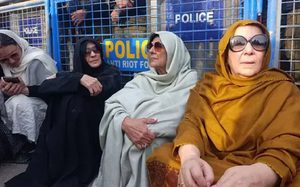
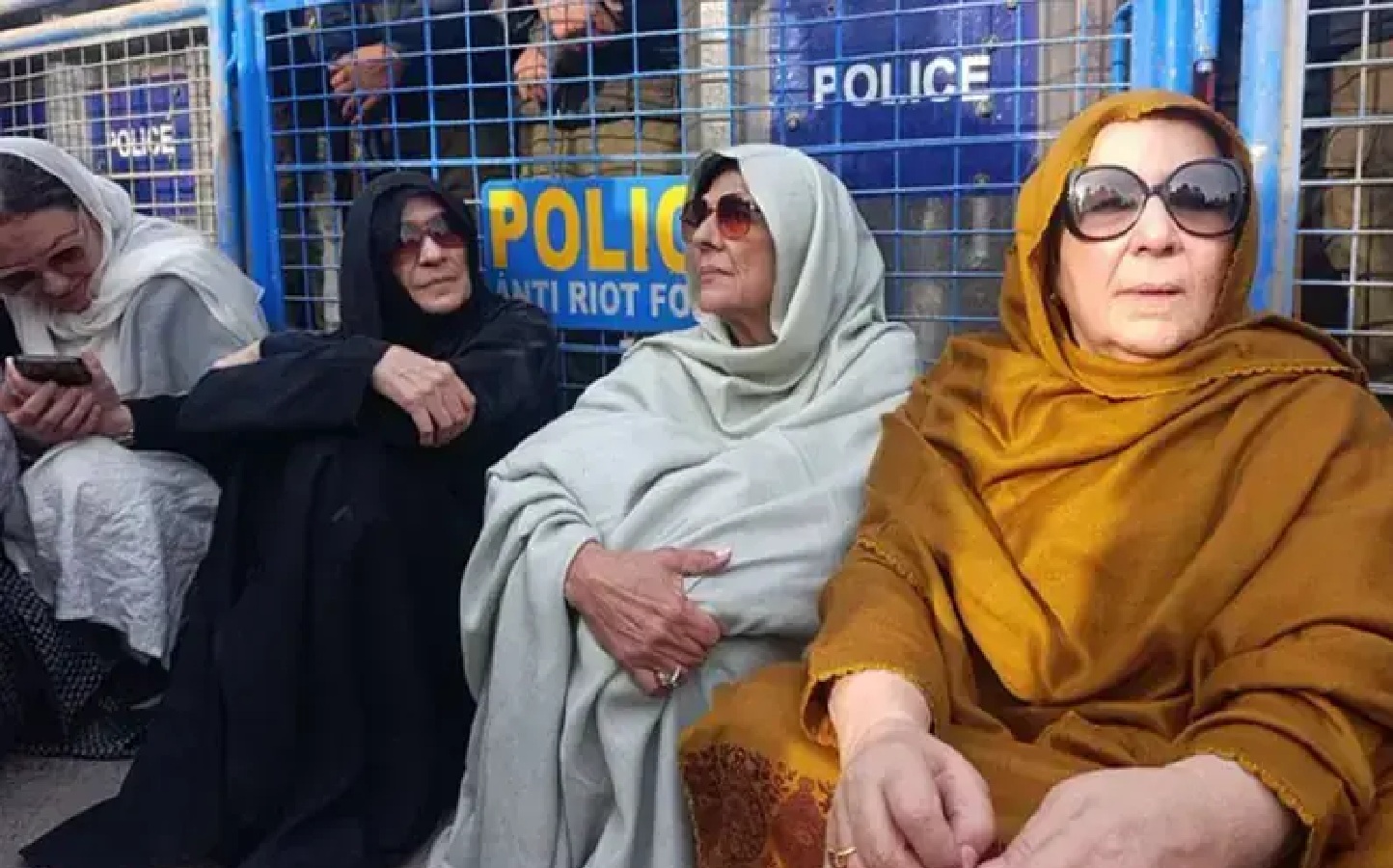
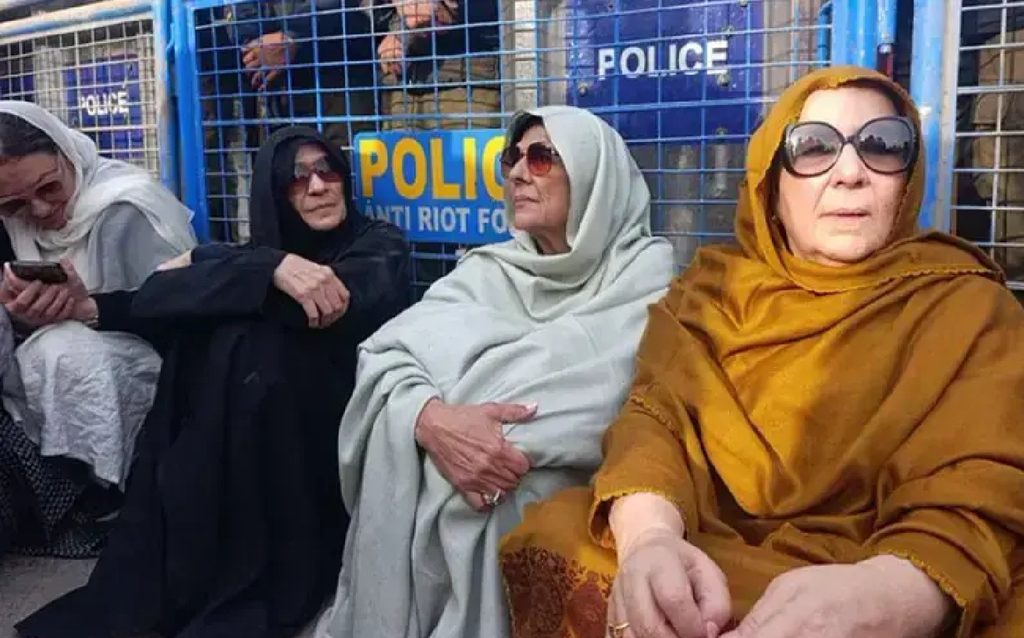
Aleema Khan (C), sister of PTI founder Imran Khan, sits in front of a police barricade in Rawalpindi on December 9, 2025. — X/@PTIofficial/File
The case has become a sharp test of whether preventive detention in Pakistan ends when the legal clock runs out, or whether administrative custody can continue in a grey zone after the paperwork has expired. It also raises broader questions about the use of the Punjab Maintenance of Public Order Ordinance, 1960, against the family of an imprisoned opposition leader, and about the courts’ ability to hold executive officials to account when detention orders lapse.
Update in the supplied record: The latest developments contained in the coverage are that Justice Abher Gul Khan of the LHC has fixed October 28 for the personal appearance of the Punjab home secretary and the Kot Lakhpat jail superintendent, with reports; that the court questioned why the Lahore deputy commissioner was not made a respondent; and that a separate report says the LHC sought a report on Aleema Khan’s detention under Section 3 of the MPO and was told that medicines and clothes were not being allowed into the jail for her. This draft cannot independently verify developments after those reports; the court order, jail status and any fresh detention notifications should be checked before publication.
The Legal Clock
The core factual dispute is narrow. Aleema Khan was detained on September 20; Noreen Niazi and Dr Uzma Khan were detained on September 21. Their 30-day detention orders expired on October 19 and 20. Yet, according to the petition filed by Aleema’s son, Shahrez Khan, the three women remained at Kot Lakhpat jail.
At the hearing, the petitioner’s counsel, Advocate Rana Mudassar Umar, told the court that the detention orders had expired, but the women had not been released. Justice Abher Gul Khan asked why the Lahore deputy commissioner had not been made a respondent. The counsel replied that the deputy commissioner had not been impleaded because the detention notification issued by that official had expired. Uzma Khan’s husband, Ahad Khan, asked the court to summon the deputy commissioner as well; the judge observed that the official could not be summoned because he had not been made a party to the petition. The court adjourned the hearing until October 28 and directed the home secretary and jail superintendent to appear in person with reports.
The petition argues that the detention period had expired, but the sisters remained in custody; that their detention was a consequence of their efforts for their brother’s release; that preventive detention “could not replace ordinary criminal law”; and that the order violated Article 10 of the Constitution as well as the safeguards of Section 3 of the MPO. It asks the court to direct the jail superintendent to produce the detainees and “set them at liberty, in the interest of justice, equity and fair play,” and to declare the detention orders void.
That is the central legal question: if the 30-day orders expired on October 19 and 20, what is the lawful basis for continued custody after those dates? A preventive-detention order is not a criminal conviction. Once it lapses, the executive must either release the detainee or produce a fresh lawful order. The court’s summons to the home secretary and jail superintendent is significant because it shifts the burden onto the executive to explain the continued custody, not merely to assert it.
The Accountability Gap
But the hearing also exposed a procedural gap. The Lahore deputy commissioner, the official whose detention notification reportedly expired, was not a party to the petition. The judge declined to summon him at the request of Uzma Khan’s husband because he had not been made a respondent. That is technically correct, but it illustrates how preventive-detention cases can become entangled in procedural traps: the official whose order expired escapes direct scrutiny unless the petition is amended or a fresh application is filed.
The petitioner’s counsel said the deputy commissioner was not impleaded precisely because the notification had expired. That reasoning may be understandable, but it leaves a question unanswered: who authorised the continued custody after October 19 and 20? If the answer is “no one,” then the detention is arbitrary. If the answer is “a fresh order,” that order should be produced. If the answer is “administrative delay,” that is not a lawful basis for detention. The October 28 hearing should force those answers onto the record.
This is where the case moves from a family petition to an accountability test. The LHC has summoned the Home Secretary and jail superintendent in person. That is a stronger step than merely seeking a report. It puts senior officials on notice that the court wants a human explanation, not a file movement. But the court’s ability to reach the deputy commissioner may depend on the petitioner’s pleadings. The family may need to amend the petition or file a separate application to bring the district administration directly before the court.
Political Context
The detentions came as the Pakistan Tehreek-e-Insaf prepared for a planned protest march towards Islamabad. Noreen Niazi and Dr Uzma Khan were detained on September 21, ahead of the PTI’s planned September 27 protest, which was later rescheduled for October 4. Aleema Khan was detained a day earlier, on September 20. The timing is central to the political analysis: these were not ordinary criminal arrests; they were preventive detentions under the MPO in the run-up to a political mobilisation.
The family’s petition says the detention was linked to the sisters’ efforts to secure their brother’s release. Imran Khan remains incarcerated, and the PTI has faced a broader crackdown. The use of MPO against the sisters of an opposition leader raises a chilling-effect question: is preventive detention being used to pressure family members, or to prevent them from mobilising support? The government has not provided a direct statement in the supplied reports explaining why the sisters remained in custody after the orders expired. The Punjab Home Department and the jail administration should be asked precisely that.
This is also a media story about what is not being said. The supplied coverage, from Dawn, Dunya News and other outlets, is consistent on the core facts: the detention dates, the expiry dates, the petition, the hearing, the summons, and the October 28 date. But the reports do not include a direct comment from the Punjab home secretary, the Kot Lakhpat jail superintendent or the Lahore deputy commissioner on the continued custody. They also do not include statements from independent rights organisations such as the Human Rights Commission of Pakistan or Amnesty International. Those voices should be sought before publication. The absence of official explanation is itself part of the story.
Jail Conditions And Family Access
A separate report adds another dimension: the LHC sought a report from authorities on a petition against Aleema Khan’s detention, and her lawyer argued that the detention order was “unlawful and contrary to the facts.” The lawyer also said that “medicines and clothes were not being allowed into the jail for Aleema” and asked the court to order that they be provided. The court said the matter should be taken up through a separate miscellaneous application. A petition was later filed seeking medicines, clothes, and access for family and lawyers.
This matters because even lawful detention must meet constitutional and prison-rule safeguards. Article 10 of the Constitution protects against detention without lawful authority and requires that a detainee be informed of the grounds of detention. If a detainee is denied medicine, clothing or access to family and counsel, the legal question is no longer only about the expiry of the MPO order; it is about the conditions of custody and the right to a fair process. The court’s decision to require a separate application may be procedurally sound, but it also fragments the remedy: the release petition and the conditions petition may proceed on different tracks, even though both concern the same detainees.
Voices In The Record
The most direct voices in the supplied record are legal rather than political. The petition asks the court to “set them at liberty in the interest of justice, equity and fair play.” It argues that preventive detention “could not replace ordinary criminal law.” The petitioner’s counsel told the court that the detention orders had expired. Uzma Khan’s husband asked the court to summon the deputy commissioner. The judge observed that the official could not be summoned because he had not been made a party. The jail authorities have not given their account in the supplied reports.
Those statements should be tested against official records: the detention notifications, the jail admission register, any fresh orders, medical records and the court’s cause list. The October 28 hearing is the next formal checkpoint. The key questions are straightforward: Will the home secretary and jail superintendent produce a fresh lawful order? If not, will the court order the release? Will the deputy commissioner be brought into the case? Will the court address the medicines and access allegations? And will the Punjab government offer a public explanation, or continue to rely on administrative silence?
Why It Matters
The case is not only about three women. It concerns the legal boundaries of preventive detention amid a politically tense atmosphere and the infringement on human rights. If detention can continue after the order expires, the 30-day limit under the MPO becomes meaningless. If officials can avoid scrutiny because they were not named as parties, accountability depends on procedural luck. If family members of an opposition leader can be held in preventive custody during protest mobilisation, the chilling effect extends beyond the individual detainees.
The LHC’s summons is a necessary step, but it is not a final answer. The court has put the executive on notice. The executive must now explain the custody. The family must decide whether to amend the petition to bring the deputy commissioner before the court. The media must keep asking who authorised the continued detention and on what legal basis. And the public record should include the voices of the detainees themselves, their lawyers, jail officials, the Punjab Home Department and independent rights organisations.
For now, the legal clock has expired. The political clock has not. The October 28 hearing will show whether the court treats the expiry of the detention orders as the end of lawful custody, or whether administrative detention can continue in the gap between an expired order and an unanswered question.
Veritas Press Investigative Analysis Independent journalism examining global affairs, power, diplomacy, and accountability.
Source:Veritas Press C.I.C. | Multi-News Agencies
Help Support Our Work
Readers who believe that truth still matters have power over popular information. When just a few more people step up to support this work, it means more lies exposed, more corruption uncovered, and more accountability where it’s long overdue.
Help Protect Independent Journalism, Which Is Currently Under Attack.
If you believe journalism should serve the public, not the powerful, and you’re able to help, becoming a regular DONOR or a PAID SUBSCRIBER truly makes a difference.
DONATION APPEAL: If you found this reporting valuable, please consider supporting independent journalism.
Your support fuels our fearless, truth-driven journalism. In unity, we endeavour to amplify marginalised voices and champion justice, irrespective of geographical location. We operate independently, with no financial backing from billionaires; our readers support us.
But it’s also extremely important. One of Veritas Press’s greatest assets is its reader-funded model.
1. Reader funding means we can cover what we like. We’re not beholden to the political whims of a billionaire owner. We are a small, independent and impartial organisation. No one can tell us what not to say or what not to report.
2. Reader funding means we don’t have to chase clicks and traffic. We’re not desperately seeking your attention for its own sake; we pursue the stories that our editorial team deems important and believes are worthy of your time.
3. Reader Funding: enables us to keep our website and other social media channels open, allowing as many people as possible to access quality journalism from around the world, particularly those in places where the free press is under threat.
We know not everyone can afford to pay for news, but if you’ve been meaning to support us, now’s the time.
Your donation goes a long way. It helps us:
Keep the lights on and sustain our day-to-day operations
Hire new, talented, independent reporters
Launch real-time live debates, community-focused shows, and on-the-ground reporting
Cover the issues that matter most to our communities, in real time, with depth and integrity
Without your support, independent voices like ours will be silenced.
Furthermore, we have plans to expand our work, but we can’t do it without your support. Every contribution, no matter the size, helps us stay independent and build a truly people-powered media platform.
If you believe in journalism that informs, empowers, and reflects the communities we serve, please donate today.
Submissions
For the safe submission of documentation, testimonies, or exclusive investigative reports from anywhere in the world, please use the following contact details for our Investigations Desk: mailto:enquiries@veritaspress.co.uk or mailto:editor@veritaspress.co.uk.
SEATTLE, TEHRAN — The U.S. Department of Homeland Security (DHS) will allow Iran’s national football team to enter the country 48 hours before their critical World Cup match against Egypt on Friday, a modest concession in a tournament where Team Melli’s travel conditions have sparked claims of oppression and competitive disadvantage.