‘Absolutely Urgent’: Francesca Albanese, UN Rapporteur, Demands International Protection Presence In Palestine As Settler Violence Hits Record And Security Council Remains Paralysed.
‘Absolutely Urgent’: Francesca Albanese, UN Rapporteur, Demands International Protection Presence In Palestine As Settler Violence Hits Record And Security Council Remains Paralysed.
Kamran Faqir is a volunteer investigative journalist and writer committed to exposing hidden truths and amplifying underreported stories. Driven by social justice, he brings sharp insight and fearless truth-telling to independent journalism. NUJ registered.
Article Date Published:
Article Date Modified:
10 minutes
Post Views:490
Listen to this article
Help support our mission, donate today and be the change. Every contribution goes directly toward driving real impact for the cause we believe in.
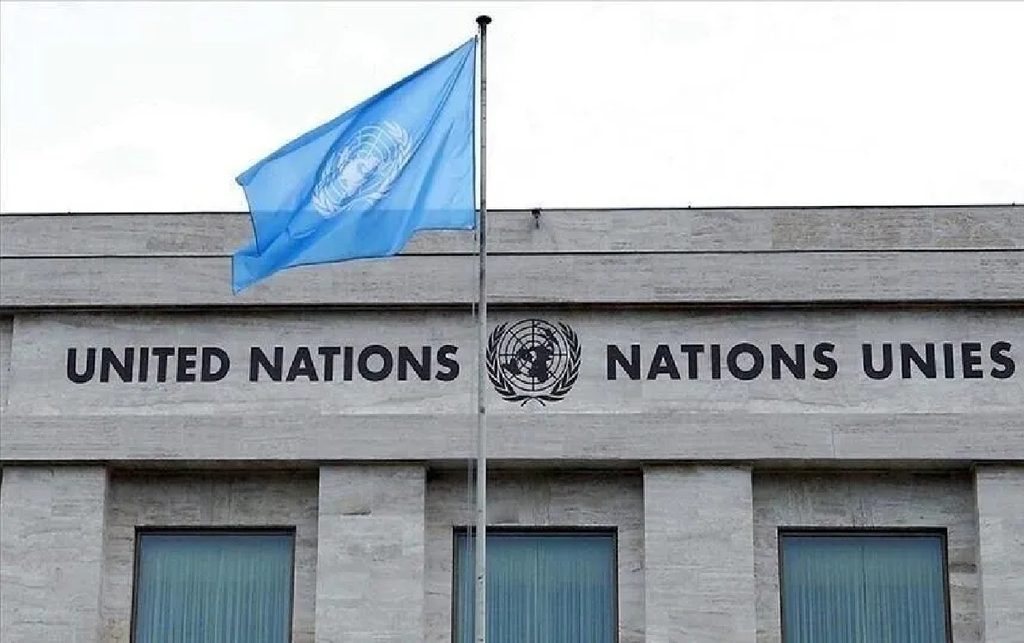
Francesca Albanese says third states have an ICJ-mandated obligation to end Israel’s occupation. But with US vetoes blocking the Security Council, Europe, Asia and the Middle East issuing condemnations without action, Palestinians are left without protection amid record settler violence and a Gaza shelter crisis.
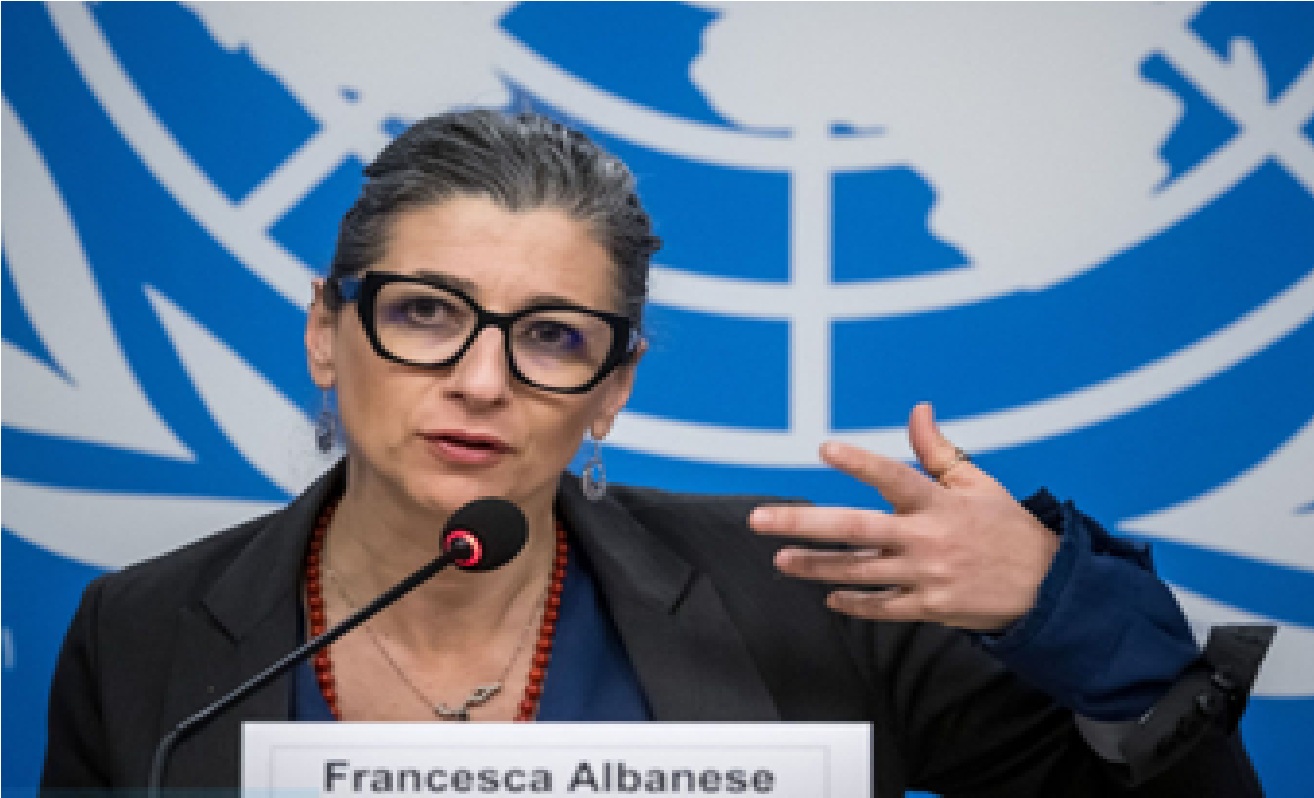
UN Special Rapporteur on Palestine, Francesca Albanese. (Photo: via United Nations)
RAMALLAH/GENEVA — The UN special rapporteur on the occupied Palestinian territory has called for the urgent establishment of an international protection presence across the West Bank, East Jerusalem and Gaza, explicitly linking the demand to the legal obligations of all states after the International Court of Justice’s landmark 2024 ruling.
“An International Protection Presence in West Bank/east Jerusalem and Gaza is absolutely URGENT,” Francesca Albanese wrote on X late Sunday.
“Third states have an obligation, per the ICJ, to act to end Israel’s unlawful occupation,” she added, referring to the July 2024 advisory opinion in which the ICJ found Israel’s continued presence in the occupied Palestinian territory unlawful and said it must end “as rapidly as possible.”
The court also said states must not recognise as legal the situation created by Israel’s unlawful presence or render aid or assistance in maintaining it.
Albanese, an independent expert whose statements do not necessarily reflect UN policy, did not specify the form such a protection presence should take or which countries should contribute. Instead, she posed the central question now facing the international system: “Will #UNSG’s good offices and #UNGA (#Uniting4Peace) help overcome the #UNSC paralysis?”
The reference is to Resolution 377(V), the 1950 “Uniting for Peace” mechanism, which permits the General Assembly to consider collective measures when the Security Council fails to act because of disagreement among its permanent members. The council has repeatedly been unable to take decisive action on Gaza and the West Bank because of United States vetoes.
Record Settler Violence And The Weaponisation Of Water
Albanese’s intervention came as Palestinian officials released figures showing that settler violence has reached its deadliest recorded level.
According to the Palestinian Wall and Settlement Resistance Commission, 25 Palestinians have been killed in settler attacks since the beginning of 2026. That figure, recorded in the first eight months of the year, already exceeds the total for all of 2025 by about 79% and is the highest annual toll since the commission began collecting data in 2019.
Overall, it said, 87 Palestinians were killed in settler attacks between the beginning of 2019 and 21 August 2026.
The commission’s figures are not a one-off spike. UN data cited by The Guardian indicated around 190 settler attacks per month in the first months of 2026, alongside repeated attacks on homes, farmland, livestock and property.
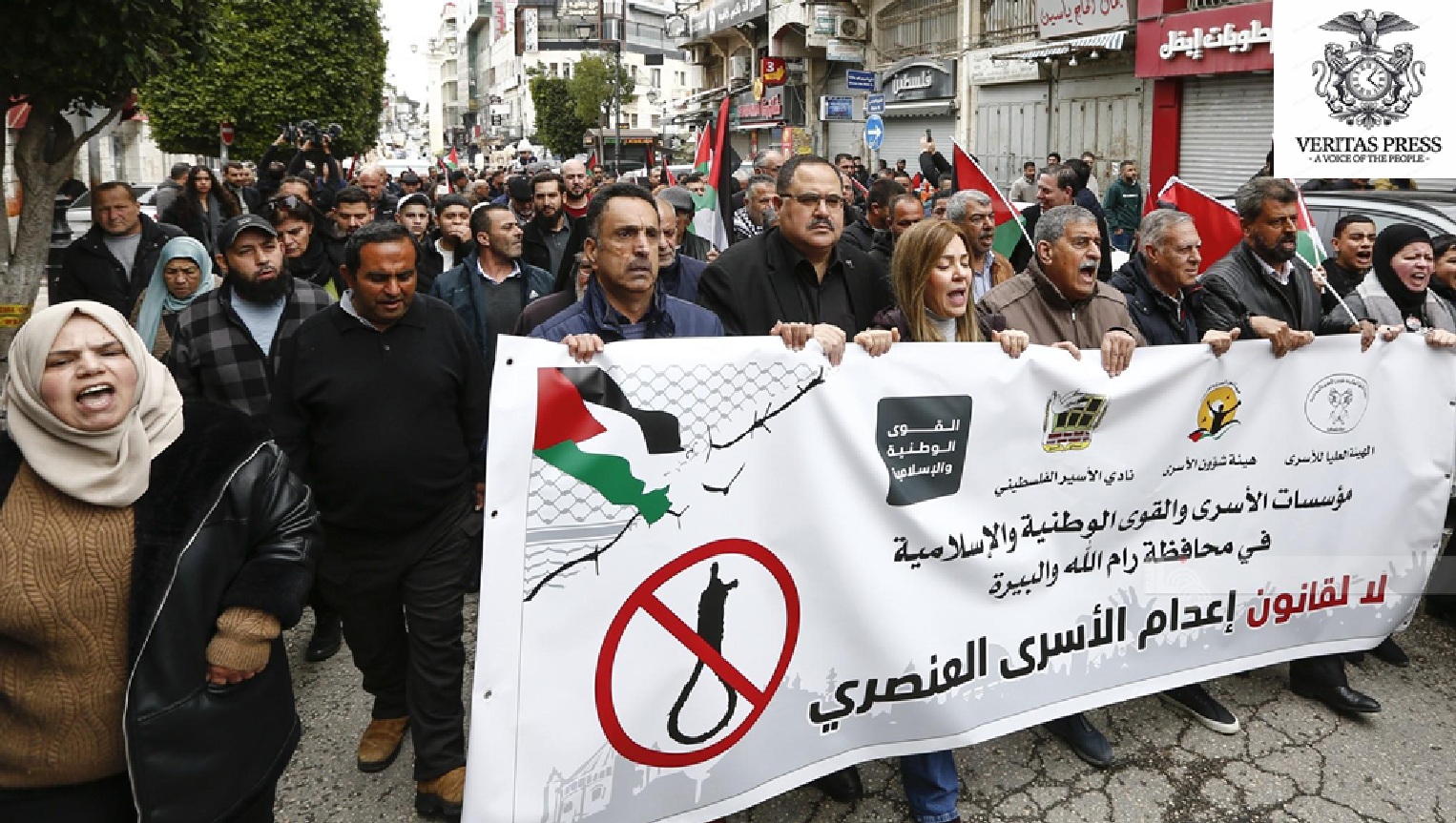
On Friday, a 17-year-old Palestinian was killed and another wounded by gunfire during an altercation with settlers, according to Palestinian officials. In Qusra, south of Nablus, residents described soldiers and armed settlers cutting water pipes and blockading roads while the town was under siege.
“They cut the water, then they come with dogs and rifles,” one resident said by phone, asking not to be named for safety. “We are alone.”
The official Palestinian news agency WAFA reported that Israeli soldiers and colonists had cut water pipes in several areas of the West Bank, coinciding with the ongoing siege of Qusra. Albanese said such actions were part of a continuous pattern of violations affecting movement, water and basic services.
E1 And Europe’s Warning
The escalation in settler violence has been accompanied by accelerated settlement expansion.
On Sunday, EU foreign policy chief Kaja Kallas condemned an Israeli plan to build more than 1,200 housing units under the E1 settlement project, warning it would “divide the West Bank in two, isolating East Al-Quds, and further eroding the viability of a two-state solution.”
E1 is one of the most sensitive projects in the occupied West Bank. If fully developed, it would sever the northern and southern West Bank and cut East Jerusalem off from the territory, making a contiguous Palestinian state almost impossible. The UN and most of the international community consider Israeli settlements in the West Bank illegal under international law.
Far-right Israeli Finance Minister Bezalel Smotrich has hailed the broader settlement expansion as “a revolution,” and more outposts have been approved since October 2023. Israeli authorities reject the ICJ ruling and describe West Bank operations as counter-terrorism measures, but critics argue the distinction between state-backed settler attacks and military operations has collapsed on the ground.
Gaza: Ceasefire, But No Safety
While settler attacks convulse the West Bank, the humanitarian situation in Gaza remains catastrophic.
Albanese said Gaza was still witnessing “widespread destruction,” with casualties continuing despite a ceasefire.
UN figures show 94% of the enclave’s estimated 2.1 million residents need shelter. More than four in five families are living in critical or catastrophic conditions. Nearly two-thirds are in tents or makeshift shelters, and with winter approaching, more than 70% of families experienced flooding last year.
“These constraints affect people’s ability to sleep, their ability to cook, their ability to wash, their ability to store food and water, maintain adequate lighting, and cope with heat and cold,” UN spokesperson Stéphane Dujarric said.
He added: “We continue to face obstacles in bringing the level of more structured shelter into Gaza. Ahead of the cold and rainy season, our humanitarian partners are working to ensure adequate shelter for families.”
Humanitarian agencies estimate that $562 million is needed to improve living conditions, but restrictions on construction materials, heavy machinery, spare parts, lubricants and access to vast areas continue to block rubble removal and the recovery of bodies.
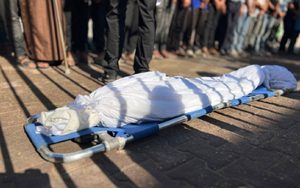
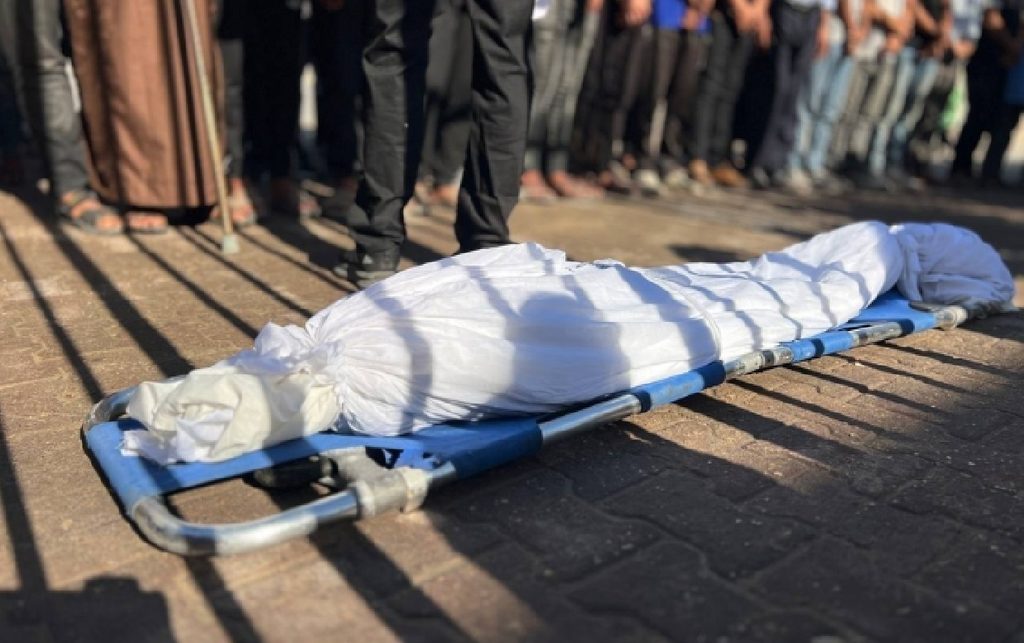
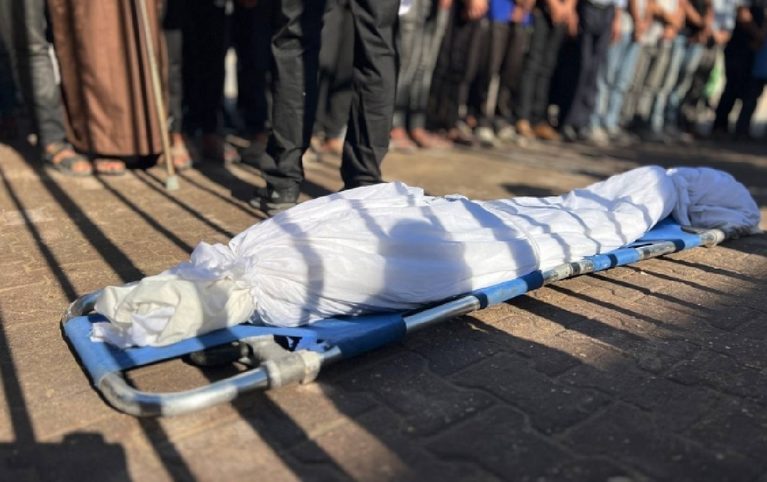
On Thursday, Palestinians buried the remains of 50 people, including 19 children, whom a demolition crew had killed more than two years earlier and whose bodies a building collapse had hidden until their recent recovery.
“Civilians should never be targeted or used for military purposes,” Dujarric said.
UNDP pest-control operations have reached more than 3,250 high-risk locations since May, while the World Food Programme is assisting about 1.5 million people with food parcels, flour, bread, hot meals and cash. UNRWA is preparing temporary learning spaces, and UNICEF is supporting vulnerable families. But these are mitigation measures, not protection.
The Enforcement Gap
Palestinians celebrated the ICJ’s 2024 advisory opinion, and many states saw it as a legal breakthrough. But it contained no enforcement mechanism. The court clarified obligations; it did not create a police force.
That gap is now the central issue. US vetoes has paralysed the Security Council, which has the legal authority to impose binding measures. The General Assembly can recommend collective action under Uniting for Peace, but it cannot compel a non-consenting state to accept troops or observers. Previous General Assembly peacekeeping operations, such as UNEF in 1956, required host-state consent.
Israel has shown no sign of consenting to any international protection presence, and its government has rejected the ICJ opinion. The United States has blocked Security Council action. European states issue condemnations, Kallas’s statement on E1 is among the strongest in months, but they have not announced sanctions, arms embargoes, or any concrete move to force Israel to reverse settlement expansion or halt settler attacks.
Albanese’s invocation of the Secretary-General’s good offices and Uniting for Peace is therefore not merely procedural. It is an implicit admission that the existing architecture has failed to protect civilians, and a challenge to states to explain why they are not fulfilling the obligations the ICJ says they have.
An Enforcement Crisis, Not A Legal Ambiguity
The call for an international protection presence is not new. Palestinian officials and human rights groups have sought such a mechanism for years. But Albanese has reframed it: not as a humanitarian gesture, but as a legal duty.
The data underscores the cost of inaction. In the West Bank, 2026 has already become the deadliest year on record for settler violence. In Gaza, the unretrieved dead, the mass displacement, and the coming winter are a continuing protection failure. At the UN, the paralysis is not accidental; it is the product of vetoes and political choices.
The question raised by Albanese is whether the international system will move from legal condemnation to physical protection. For now, the gap between the two is being filled by funerals.
Veritas Press Investigative Analysis Independent journalism examining global affairs, power, diplomacy, and accountability.
Source:Veritas Press C.I.C. | Multi-News Agencies
APPEAL: Help Support Our Work By Donating
Readers who believe that truth still matters have power over popular information. When just a few more people step up to support this work, it means more lies exposed, more corruption uncovered, and more accountability where it’s long overdue.
Help Protect Independent Journalism, Which Is Currently Under Attack.
If you believe journalism should serve the public, not the powerful, and you’re able to help, becoming a regular DONOR or a PAID SUBSCRIBER truly makes a difference.
DONATION APPEAL: If you found this reporting valuable, please consider supporting independent journalism.
Your support fuels our fearless, truth-driven journalism. In unity, we endeavour to amplify marginalised voices and champion justice, irrespective of geographical location. We operate independently, with no financial backing from billionaires; our readers support us.
But it’s also extremely important. One of Veritas Press’s greatest assets is its reader-funded model.
1. Reader funding means we can cover what we like. We’re not beholden to the political whims of a billionaire owner. We are a small, independent and impartial organisation. No one can tell us what not to say or what not to report.
2. Reader funding means we don’t have to chase clicks and traffic. We’re not desperately seeking your attention for its own sake; we pursue the stories that our editorial team deems important and believes are worthy of your time.
3. Reader Funding: enables us to keep our website and other social media channels open, allowing as many people as possible to access quality journalism from around the world, particularly those in places where the free press is under threat.
We know not everyone can afford to pay for news, but if you’ve been meaning to support us, now’s the time.
Your donation goes a long way. It helps us:
Keep the lights on and sustain our day-to-day operations
Hire new, talented, independent reporters
Launch real-time live debates, community-focused shows, and on-the-ground reporting
Cover the issues that matter most to our communities, in real time, with depth and integrity
Without your support, independent voices like ours will be silenced.
Furthermore, we have plans to expand our work, but we can’t do it without your support. Every contribution, no matter the size, helps us stay independent and build a truly people-powered media platform.
If you believe in journalism that informs, empowers, and reflects the communities we serve, please donate today.
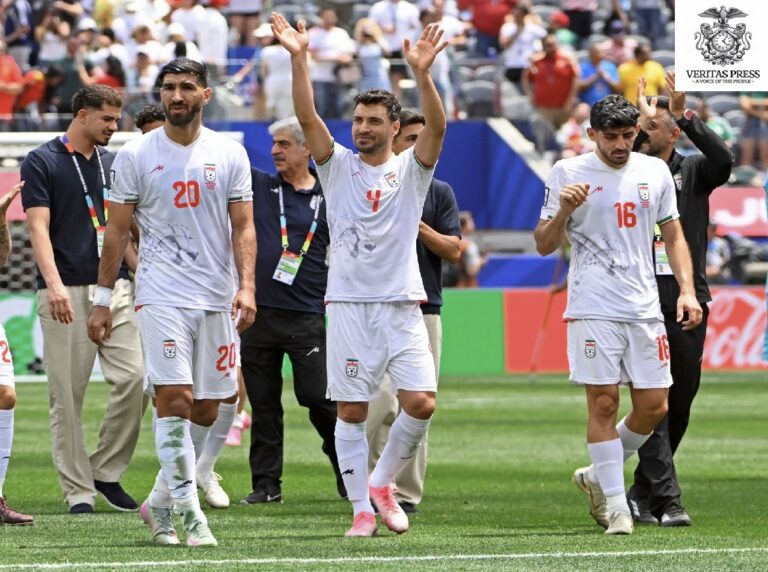
SEATTLE, TEHRAN — The U.S. Department of Homeland Security (DHS) will allow Iran’s national football team to enter the country 48 hours before their critical World Cup match against Egypt on Friday, a modest concession in a tournament where Team Melli’s travel conditions have sparked claims of oppression and competitive disadvantage.