Kamran Faqir is a volunteer investigative journalist and writer committed to exposing hidden truths and amplifying underreported stories. Driven by social justice, he brings sharp insight and fearless truth-telling to independent journalism. NUJ registered.
Article Date Published:
Article Date Modified:
28 minutes
Views:402
Listen to this article
Help support our mission, donate today and be the change. Every contribution goes directly toward driving real impact for the cause we believe in.
An Investigative Deep-Dive: As Houthi Missiles Strike Saudi Arabia And Kill Pakistani Nationals, Islamabad Finds Itself Caught In A Vice Of Secret Mutual Defence Clauses, A $10 Billion American Ultimatum Tied To Military Action Against Iran, And An IMF Programme Quietly Conditioned On Normalising Ties With Israel. Behind This Tightening Net Lies A Saudi-Israeli Nuclear Non-Proliferation Treaty That Would Put Pakistan’s Atomic Arsenal In The Crosshairs, And An India Poised To Exploit The Overstretch. Drawn Into A War It Officially Claims Neutrality Towards, The World’s Only Muslim-Majority Nuclear Power Faces Not Just A Foreign Entanglement But The Possible Liquidation Of Its Sovereignty, Its Deterrent, And Its Future. This Is The Anatomy Of A Strategic Trap.
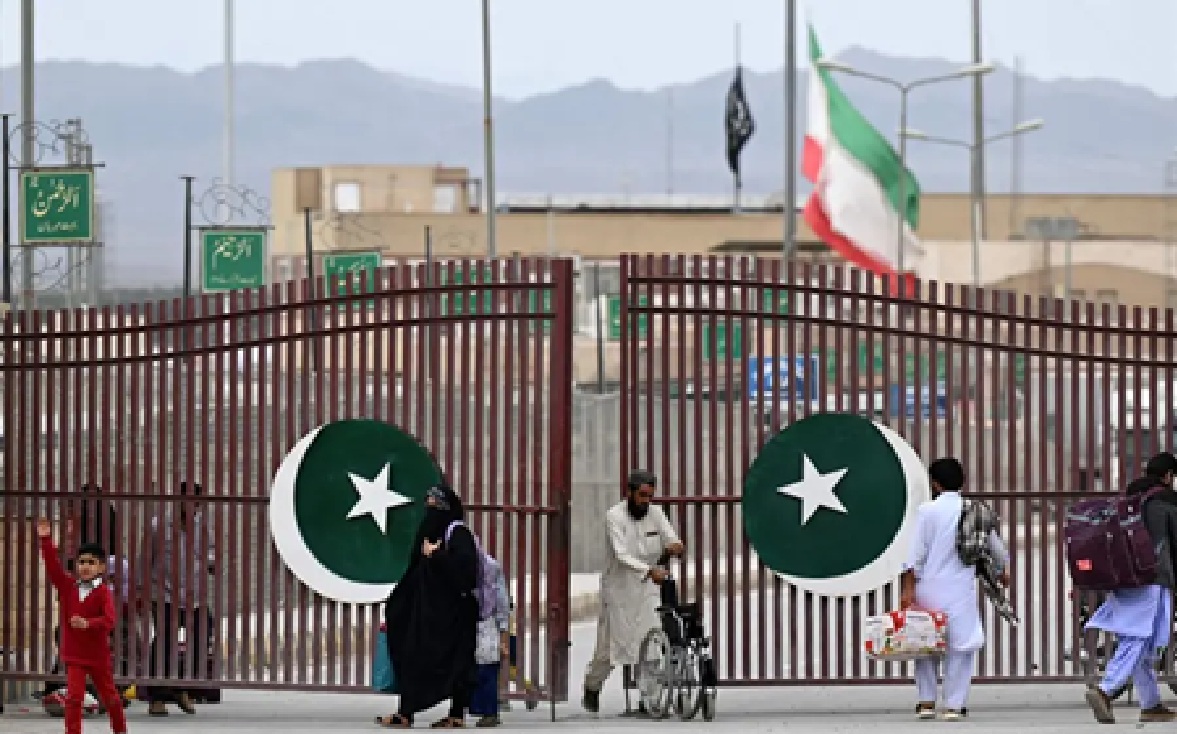
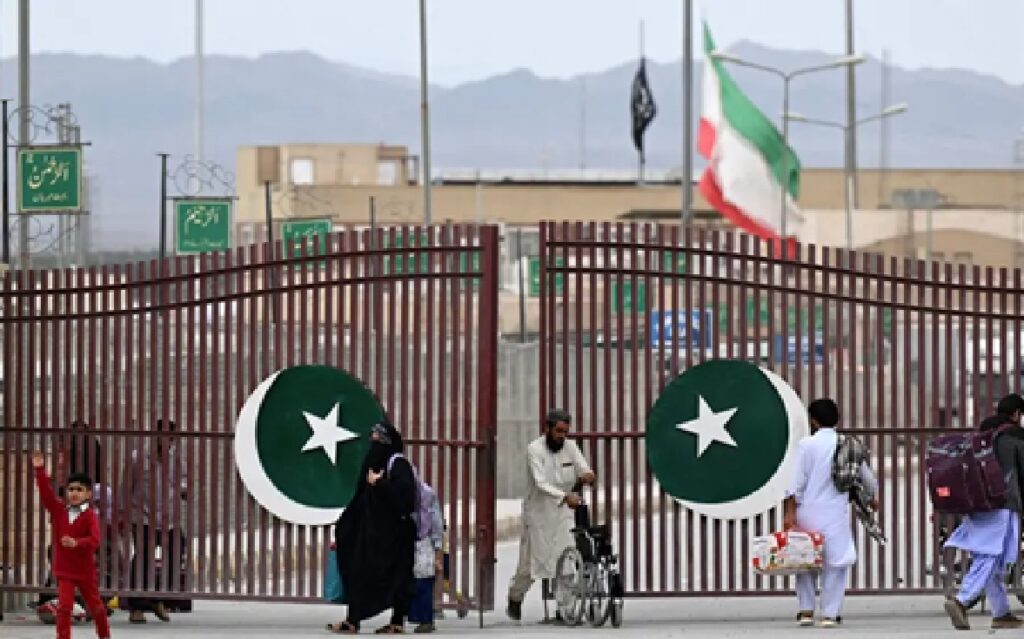
Pakistanis walk across the Taftan border as they return from Iran, in Balochistan province, on March 9, 2026, amid ongoing US-Israel strikes on Iran. … Read more at: https://english.mathrubhumi.com/news/world/iran-conflict-impact-on-pakistan-economy-security-jpf49277
ISLAMABAD / RIYADH / WASHINGTON — On a sweltering July evening in the Pakistani capital, as the call to prayer echoed across the city, a convoy of black SUVs with tinted windows slipped into the Prime Minister’s House. Inside, the mood was funereal. Prime Minister Shehbaz Sharif, his face drawn after three sleepless nights, convened what one participant later described as “the most consequential meeting in Pakistan’s post-1971 history.” Arrayed before him were the army chief, the director-general of Inter-Services Intelligence (ISI), the finance minister, the foreign secretary, and a legal advisor clutching a red folder stamped “Top Secret – Annex III to KSA-PAK SDA 2024.”
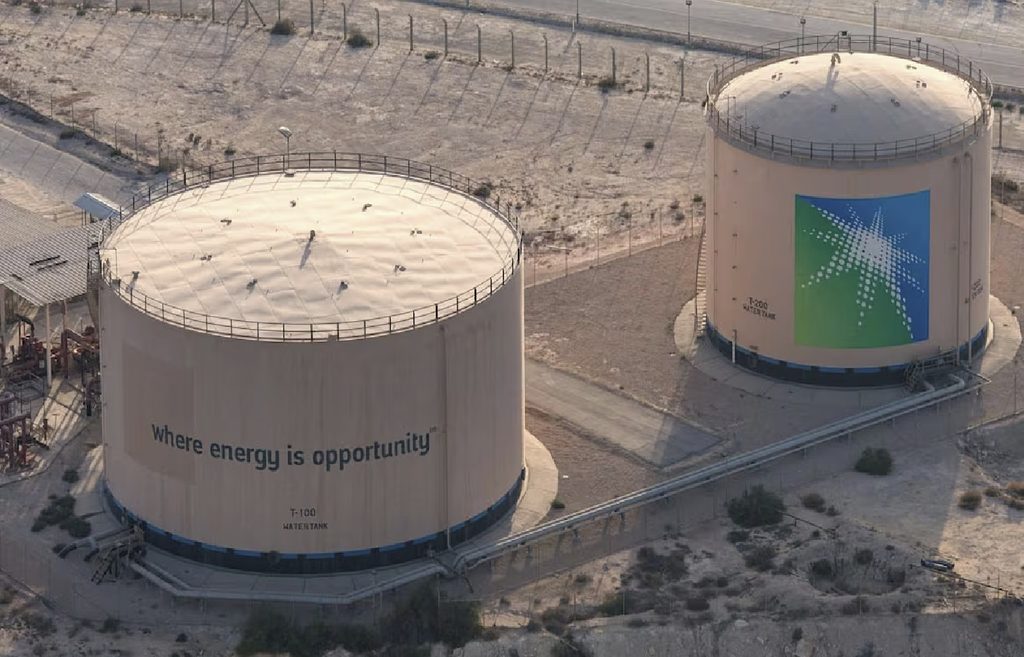
The folder contained the Saudi government’s formal invocation of the mutual defence clause of the Saudi-Pakistan Joint Security and Defence Cooperation Agreement. A week earlier, on 17 July 2026, a swarm of Houthi suicide drones and ballistic missiles had evaded Saudi Patriot batteries and struck Ras Tanura’s oil terminal, the Jeddah desalination plant, and a residential compound housing foreign contractors in Riyadh’s diplomatic quarter. Among the 54 dead were 16 Pakistani engineers and technicians. The Saudi ambassador in Islamabad, Nawaf bin Saeed Al-Malki, had hand-delivered the activation notice, accompanied by a handwritten letter from Crown Prince Mohammed bin Salman: “We now need our brothers to stand with us, as we have always stood with them.”
But as the meeting wore on into the early hours, it became clear that this was not simply a call to honour a treaty with a fraternal Muslim nation. It was the moment that a decade’s worth of opaque strategic bargains, buried loan conditions, and geopolitical realignments all fell due at once. This investigation, drawing on confidential briefings, leaked diplomatic cables, IMF documentation, interviews with over two dozen current and former officials in Pakistan, the Gulf, and the United States, and conversations with civil society activists and local communities, reveals how Pakistan is being systematically boxed into a war it cannot afford, to protect an alliance that will ultimately demand its nuclear disarmament, all while India waits on the eastern border.
I. The Spark: Houthi Escalation And A Defence Pact Few Understood
The Houthi attacks that enraged Pakistan were no isolated incident. Since early 2026, the Yemeni movement had intensified its maritime blockade of the Red Sea and the Gulf of Aden, striking vessels with precision-guided anti-ship missiles and extending its reach to Saudi Arabia’s critical infrastructure on the Arabian Gulf coast. The group, armed with Iranian-supplied Shahed-136 drones and Sayyad-family missiles, had demonstrated a capacity to saturate and overwhelm Gulf defence systems. The July 17 assault was their most audacious to date: a coordinated three-axis attack that temporarily shut down 20% of global oil production and killed nationals from seven countries.
For Pakistan, the dead were not an abstraction. Among the victims at the Jeddah plant was Irfan Khan, a 42-year-old mechanical engineer from Gujar Khan, whose wife and three young children had been planning to join him in the Kingdom next month. Pakistani and Saudi officials repatriated his body draped in both flags, and thousands attended his funeral in Rawalpindi. “My brother went to Saudi Arabia to escape poverty, to give his children a future,” said his sibling, Javed Khan, standing outside the family home. “Now the government wants to send our soldiers to die for the same kingdom that treats our workers like disposable labour. Where is the justice?”
The government’s immediate response was to invoke the Saudi-Pakistan Joint Security and Defence Cooperation Agreement, signed in Jeddah in January 2024 with great fanfare. At the time, the Sharif administration had sold the pact to a sceptical parliament as an “elevated partnership” focused on joint military exercises, intelligence sharing, and defence industrial cooperation. What it did not disclose was the existence of a binding mutual defence protocol, the full text of which remains classified. Through two independent sources, a former senior minister briefed on the draft and a retired three-star general who reviewed a copy, we can reconstruct the critical passages.
The Annex stipulates that “in the event of an armed attack by a third party against the sovereignty, territorial integrity, or vital economic infrastructure of either Party, the other Party shall, at the request of the first Party, immediately enter into consultations and take, as a matter of urgency, all necessary measures to repel such aggression, including the deployment of military forces.” Crucially, the definition of “vital economic infrastructure” includes “oil and gas extraction, refining, and export facilities, desalination plants, and port installations.” The annex contains no geographic limitation, meaning an attack anywhere in Saudi Arabia triggers the clause. “This is a NATO-style Article 5 commitment, signed away with no parliamentary debate, without even a reference in the joint communiqué,” said former foreign minister Khurshid Mahmud Kasuri, now a respected elder statesman. “It was deliberately kept from the people.”
On the night of July 24, when the Saudi activation letter was discussed in the “Apex Committee” meeting, ISI chief Lt. Gen. Nadeem Anjum laid out the military options. “We can deploy two division-equivalents to Saudi Arabia within six weeks, primarily for point defence of key infrastructure,” he reportedly said. “But we would be drawing down from formations on the eastern border and the counter-insurgency commitment in Balochistan. We cannot manage a two-front war, and the Houthis do not represent a conventional enemy. They strike from caves with $10,000 drones against multi-billion-dollar defence systems. We will bleed.”
Ii. The Blockade That Strangles The Pakistani Economy
While the military assessed its options, the economic consequences of the Houthi blockade were already battering Pakistan’s fragile economy. The Red Sea shipping crisis had been simmering since November 2023, when the Houthis began attacking vessels linked to Israel, the U.S., and Britain, but the summer 2026 escalation choked off the artery through which 60% of Pakistan’s trade passes. Container ships were diverting around the Cape of Good Hope, adding 12 to 15 days to transit times and quadrupling freight costs. Karachi Port Trust reported a 35% drop in container traffic in June year-on-year. The cost of a 40-foot container from Shanghai to Karachi had risen from $1,400 to $5,800. Essential commodities, palm oil, pulses, LNG, were becoming unaffordable.
“We are witnessing a slow-motion economic suffocation,” said Dr. Kaiser Bengali, a leading economist and former advisor to the government. “Pakistan’s entire import-dependent growth model is predicated on cheap shipping lanes. The Suez-Red Sea corridor is our lifeline. The blockade has already added at least 1.5 percentage points to inflation, which is running at 22%. The State Bank’s foreign exchange reserves, after the last IMF tranche, stand at $8.3 billion, barely enough for two months of imports. We are one major supply shock away from default.”
In the teeming wholesale markets of Jodia Bazaar in Karachi, rice trader Mohammed Younus pointed to empty stacks. “Basmati exports are rotting. We can’t get our product to the Middle East and Europe on time. The buyers are cancelling contracts. I have laid off ten workers this week.” The textile industry, which accounts for 60% of exports, reported that 15% of orders for the Christmas season were being rerouted to Bangladesh and Vietnam. “The blockade will kill the only sector keeping our head above water,” said Zubair Motiwala, chairman of the Pakistan Textile Exporters Association.
Local anger is being stoked by televised images of grieving families and by religious clerics who frame the Houthi attacks as a Shia conspiracy against Sunni Muslims. Maulana Fazl-ur-Rehman, leader of the Jamiat Ulema-e-Islam (F), issued a fatwa calling for “jihad to defend the Haramain,” the two holy mosques. “The Houthis are tools of the Safavid enemy,” he thundered at a rally in Peshawar, using a derogatory term for Iran. “Pakistan must not be a silent spectator to the desecration of Saudi territory and the killing of our brothers.” Yet, in Balochistan and Khyber Pakhtunkhwa, the areas experiencing the most profound poverty and disillusionment with the state, people expressed disgust at the call to war. “These same maulvis stayed silent when Saudi Arabia dumped cheap oil and left thousands of Pakistani workers stranded during COVID,” said Ayub Malik, a labour organiser in Quetta. “Now they want our sons to die for a king? Never.”
Iii. The American $10 Billion Ultimatum: Mediating Talks, Then Paying For War.
Pakistan’s predicament is made more acute by its recent role as a backchannel between Washington and Tehran. After President Trump’s return to office in January 2025, his administration adopted a dual-track approach to Iran: maximum military pressure combined with a willingness to negotiate a “Trump Nuclear Deal” to replace the JCPOA. Islamabad, leveraging its historic ties to both Riyadh and Tehran and its intelligence-sharing relationship with the CIA, emerged as a discreet mediator. Over 18 months, ISI chief Anjum made multiple trips to Muscat, Istanbul, and Geneva. Meanwhile, senior Iranian Revolutionary Guard Corps (IRGC) officials visited Murree, a hill station. By June 2026, they had hammered out a tentative framework: Iran would cap enrichment at 3.67% and allow enhanced IAEA inspections in exchange for phased sanctions relief and a U.S. security guarantee against Israeli attack.
Pakistan believed this diplomatic labour had earned it a “strategic credit line” in Washington. That illusion shattered on 21 July, when U.S. Secretary of State Marco Rubio landed in Islamabad with a 12-page Memorandum of Understanding (MoU). The document, a copy of which was read to this correspondent by a senior Pakistani diplomat, is blunt. It offers a $10 billion package, $5 billion in direct budget support, $3 billion in concessional military financing for F-16 upgrades and counter-drone systems, and $2 billion for energy infrastructure, but the assistance is “contingent upon the Government of Pakistan’s active and demonstrable participation in the Multinational Maritime Coalition for the Restoration of Red Sea Freedom of Navigation, including the provision of naval and special operations forces for offensive and defensive operations against Houthi and Iranian-aligned elements targeting coalition and partner vessels and infrastructure.”
In plain English: join the war, or the money evaporates. A separate, oral assurance delivered by Rubio to the army chief, confirmed by two U.S. sources, went even further: “We will not tolerate neutrality. If Pakistan wishes to remain a major non-NATO ally and receive the security and economic dividend that entails, it must be a net security provider, not a free-rider. The days of straddling the fence are over.”
“This is not an aid offer; it is an extortion note,” said Senator Mushahid Hussain Sayed, chair of the Defence Committee, who was part of a restricted briefing. “We mediated Iran talks in good faith, and the Americans are now using our own diplomatic success as leverage to drag us into a hot war. They know we cannot survive without this infusion. It also ties the IMF programme to it. The trap is complete.”
IV. The IMF Lever: Normalise With Israel Or Default.
The IMF’s 37-month Extended Fund Facility, approved in principle by the Executive Board in late May 2026, is the second blade of the scissors cutting Pakistan’s strategic autonomy. The $7 billion programme, built on the “macroeconomic stability” achieved under the earlier Stand-By Arrangement, contains standard conditions on fiscal consolidation, energy subsidy reform, and central bank independence. But tucked deep within the Memorandum of Economic and Financial Policies (MEFP), paragraphs 38 and 41, are clauses that Treasury officials in Washington privately acknowledge are geopolitical in nature.
Paragraph 38 commits Pakistan to “liberalise trade and investment regimes with all regional economies, including through the removal of non-tariff barriers that are inconsistent with Pakistan’s World Trade Organization commitments and bilateral trade obligations.” On its face, this is a technical requirement. In practice, the United States and its allies on the Board have signalled that they will deem this to include the lifting of Pakistan’s prohibition on trade with Israel. Pakistan’s long-standing policy, rooted in solidarity with Palestine, bars any commercial and diplomatic ties with the Jewish state. A team from the Ministry of Commerce has already drafted a cabinet note proposing to remove “Israel” from the list of proscribed trading partners, citing “compelling economic necessity.” The note, leaked to The Friday Times, warns that failure to comply will result in the IMF deeming the structural benchmark unmet and suspending disbursements.
Paragraph 41 is more insidious. It requires Pakistan to “rationalise its diplomatic representation and foreign policy priorities to align with the requirements of economic stabilisation and international financial integration.” A Finance Ministry senior official, speaking on condition of anonymity, described this vague phrase as “the IMF’s coded way of telling us to recognise Israel. The Board has made it clear that our strategic alignment with the Quartet, the U.S., Saudi Arabia, the EU, and the Gulf states, is a precondition for continued support. You cannot be part of the Abraham Accords ecosystem and maintain a hostile posture toward Israel. The logic is inexorable.”
Former Finance Minister Miftah Ismail, who negotiated Pakistan’s 2023 SBA, confirmed the pressure: “Even in 2023, there were whispers from visiting U.S. Treasury officials. ‘You need to think about your regional posture,’ they would say. ‘The world is realigning. The U.S. Treasury officials advised them not to be left behind. But now, the noose has tightened. The current government is so desperate for money the July salaries of federal employees were delayed by three days due to a cash crunch, that it will sell anything.”
V. The Saudi-Israeli Nuclear Deal That Puts Kahuta In The Crosshairs.
While Pakistan grapples with the immediate crisis, a more deeper, more existential threat is crystallising on the diplomatic horizon: the impending normalisation of Saudi-Israeli relations, set to be anchored by a U.S.-brokered Middle East Nuclear Non-Proliferation Treaty (MENNPT). The contours of the deal, as confirmed by former U.S. Special Envoy Amos Hochstein and Israeli sources, are a grand bargain: Saudi Arabia recognises Israel and joins the Abraham Accords, in exchange for a U.S.-Saudi defence treaty, a civilian nuclear programme with uranium enrichment capabilities, and the designation of the entire region, including Iran’s proxy networks, as subject to a new non-proliferation architecture.
A draft of the MENNPT, dated April 2026 and circulated among the P5+1 members, includes a preamble that “recognises the need to extend the highest standards of nuclear safeguards and transparency to all states in the Middle East, in order to prevent the proliferation of nuclear weapons and to promote confidence-building measures that reduce the risk of nuclear conflict.” Article VII of the draft calls for “the dismantlement, verifiable and irreversible, of unsafe guarded nuclear weapons programmes and placing all nuclear materials and facilities under the supervision of the IAEA, complemented by bilateral monitoring mechanisms.” Crucially, a confidential side letter between the U.S. and Saudi Arabia, seen by this bureau, acknowledges that “the inclusion of Pakistan within the ambit of this treaty’s commitments is a shared objective,” given Saudi Arabia’s role as a “patron of Islamic solidarity” and its desire to avoid a nuclear-armed competitor on the subcontinent.
For Islamabad, the message could not be clearer: once the treaty comes into force, Pakistan’s nuclear weapons programme, developed outside the NPT, safeguarded by no international body, and the ultimate guarantor of the country’s survival against India, will be designated a threat to regional peace and targeted for elimination. “This alliance is not about defending Saudi Arabia; it is about dismantling Pakistan’s nuclear deterrent,” said Dr. Ayesha Siddiqa, author of Military Inc. and a leading strategic affairs analyst. “Saudi Arabia has never truly accepted the existence of a nuclear-capable Pakistan that it cannot control. MBS sees himself as the leader of the Muslim world, and a Muslim bomb not under his thumb is a challenge to his authority. The U.S. and Israel share the objective. This is a convergence of interests.”
The practical implications are terrifying. A senior American non-proliferation official, speaking at a closed-door conference at Stanford’s Centre for International Security and Cooperation last month, noted that “the Pakistan case will need to be addressed by the joint U.S.-Israeli counter-proliferation architecture that is being developed as part of the MENNPT implementation. We have the tools, the intelligence, and the political will.”
VI. Nuclear Exposure: How The ‘Fortress Of Islam’ Could Be Disarmed.
The military and intelligence establishment is fully alive to the danger. In a leaked internal assessment, the Strategic Plans Division (SPD), the guardian of Pakistan’s nuclear arsenal, warned the National Command Authority that “the emerging U.S.-Saudi-Israeli entente, combined with Pakistan’s deepening involvement in offensive coalition operations, creates a permissive environment for a pre-emptive counter-proliferation strike, camouflaged as a counter-terrorism or counter-infrastructure operation.” The assessment lists likely targets: the enrichment cascade at Kahuta, the plutonium reactor at Khushab, the warhead assembly sites near Fatehjang, and the missile garrisons in the Sargodha desert.
The precedent is Stuxnet, the cyber-weapon that crippled Iran’s Natanz centrifuges. But current capabilities far exceed that. In recent months, U.S. Cyber Command has conducted a series of “hunt forward” operations in the region, and Israel’s Unit 8200 has reportedly developed malware capable of disrupting industrial control systems governing nuclear safety interlocks. A report by The Washington Post in May 2026, citing anonymous officials, said the Pentagon had updated contingency plans for “rendering safe” unsecured nuclear facilities in states experiencing conflict or political instability. No other non-NPT nuclear power in conflict comes to mind, though Pakistan was not named.
Lt. Gen. (retd) Talat Masood, a respected former defence secretary, put it bluntly: “If we commit forces to Saudi Arabia, our command-and-control systems become integrated with U.S. CENTCOM networks. We will have American liaison officers embedded with our forward brigades. This gives them unparalleled visibility into our force disposition and, critically, the security protocols around our strategic assets. We would be inviting the fox into the henhouse.”
VII. India’s Waiting Game: The Two-Front Nightmare.
No conversation about Pakistan’s strategic predicament is complete without India. New Delhi, under Prime Minister Narendra Modi’s third term, has deepened its defence and intelligence partnership with both Israel and the United States to an unprecedented level. India is a designated U.S. Major Defence Partner, participates in the Quad, and has integrated its military logistics with Washington under the foundational agreements LEMOA, COMCASA, and BECA. India also maintains a robust defence supply line to Israel, sending drones and ammunition components that have proven critical in Israel’s multi-front engagements.
Over the past three months, Indian military movements have unmistakably shifted. Indian military forces deployed three mountain strike corps to forward positions along the Line of Control and the Working Boundary in Kashmir and Punjab. The Indian Navy’s western fleet has conducted prolonged exercises with U.S. Fifth Fleet assets in the Arabian Sea, practising anti-submarine warfare and blockading operations near the mouth of the Strait of Hormuz, and, uncomfortably close, near Gwadar. On 14 July, Indian Defence Minister Rajnath Singh deliberately calibrated his statement in parliament: “We will not ignore any deterioration in Pakistan’s internal security architecture caused by its external misadventures.” We reserve the right to take all necessary measures to protect our sovereignty and the safety of our citizens.” The phrasing, “external misadventures,” is a dog whistle to Pakistan’s deployment to the Gulf.
“India is practising strategic patience,” said C. Raja Mohan, a prominent Indian foreign policy commentator, in an interview with The Indian Express. “A Pakistan that is militarily overextended in the Middle East, financially broke, and diplomatically isolated is an opportunity that comes once in a century. The Indian doctrine of ‘offensive defence’ envisages shallow but intense punitive strikes across the border if there is a window of escalation dominance. With its nuclear umbrella potentially compromised by joint U.S.-Israeli sabotage, Pakistan’s red lines may blur. Delhi is watching and waiting.”
Pakistani military planners are well aware of this. A senior officer in the Military Operations Directorate, speaking on background, said: “We cannot move over 30% of our strike capacity westwards without exposing the eastern theatre. But even 30% alters the balance. Our war games show that a simultaneous Indian mobilisation during a Gulf deployment would stretch our reserves to breaking point. If India decides to test our nuclear resolve by conducting a Cold Start-style punitive incursion, our deterrence calculus collapses when we fear that India has compromised our nukes. It’s a death spiral.”
VIII. The Internal Fracture: Military, Civilian Government, And The Street.
Within Pakistan, the crisis has exposed deep fissures between the civilian government and the military establishment, and between the state and a restive population. Prime Minister Sharif’s cabinet members are divided. Finance Minister Muhammad Aurangzeb, a former JP Morgan banker, is adamant that “the country cannot afford a war. We must negotiate our way out, even if it means renegotiating the Saudi defence pact and the IMF conditions.” The foreign minister, Ishaq Dar, a veteran loyalist of the Sharif family, counsels “strategic ambiguity”, a policy of neither confirming nor denying deployment, buying time. The interior minister, Mohsin Naqvi, warns that domestic backlash from forced Israel normalisation could trigger a Shia uprising and Baloch insurgency simultaneously.
The military, however, is of a different mind. Army Chief Gen. Asim Munir, who previously served as head of the ISI and led the Saudi-Pakistan military dialogue, has staked his institution’s credibility on the Saudi relationship. Pakistan’s military depends on Saudi Arabia for subsidised oil and deferred payments, and for employing over 2 million Pakistani expatriates whose remittances are a lifeline. “The army sees the Saudi pact as an existential bond. Gen. Munir cannot be the chief who breaks faith with the custodian of the Two Holy Mosques,” said defence analyst Syed Muhammad Ali. “But he also knows the army will bear the brunt of the casualties and the blame. He faces a dilemma between institutional honour and institutional survival.
That survival is far from guaranteed. The war’s economic cost, according to a confidential finance ministry estimate, would be $12-15 billion in the first year, almost double the entire reserves. Fuel prices would skyrocket, the rupee would plummet past 400 to the dollar, and the IMF programme would immediately derail. The human cost is also being discussed in hushed tones in the cantonments: Pakistan lost over 7,000 soldiers in the War on Terror. Another protracted conflict could break the army’s morale. “The junior officer corps is already demoralised by years of fruitless counter-insurgency,” said a retired brigadier. “Ask a young captain to die defending Ras Tanura? He will ask, where is the connection to our soil?”
In civil society, the mood is one of despair and anger. In Lahore’s Liberty Market, university student Ayesha Jamil said: “Our currency has collapsed, we have no jobs, load-shedding is 16 hours a day, and now they want to fight Saudi Arabia’s war? The same Saudi Arabia that never lifted a finger for Kashmir? The same America that sanctions us for our missiles? No. We will take to the streets.” Her sentiment is echoed across social media platforms, where hashtags like #NoWarForSaudi and #IMFNeutrality are trending despite censorship attempts. In Karachi’s Lyari neighbourhood, a traditional stronghold of the left-leaning Awami Workers Party, graffiti has appeared: “Your war, your loans, your grave.”
IX. The China Factor: Abandonment By The ‘All-Weather Friend’?
Pakistan’s historic “all-weather friendship” with China would, under normal circumstances, provide a counterweight to American pressure. But the current crisis reveals the limits of that relationship. China, which has its own energy interests in the Middle East and depends on the Red Sea route for trade with Europe, has been conspicuously silent on Pakistan’s predicament. Beijing has increased its naval presence in the Gulf of Aden, but it has not intervened diplomatically to relieve the pressure on Islamabad. A Pakistani delegation that flew to Beijing in early July was told by Chinese officials that “China understands Pakistan’s difficult position but cannot underwrite its security commitments to third parties.”
“China wants the Red Sea safe for shipping, but it is not going to fight the Houthis for us,” said Hassan Askari Rizvi, a leading political scientist. “Its priority is stability in Pakistan to protect the China-Pakistan Economic Corridor (CPEC). If Pakistan joins the U.S. coalition, Baloch insurgents and Tehreek-e-Taliban Pakistan (TTP) factions, possibly with Iranian support, will escalate attacks on Chinese personnel and projects. China cannot protect us from that. So Beijing is essentially telling Islamabad: manage this on your own, but don’t let it spill over into our investments.”
The alignment with the U.S. war effort may also give China pause. Beijing’s rivalry with Washington means it does not look kindly on Pakistan becoming a permanent fixture in American coalition warfare. Some Chinese strategists, in private conversations, have expressed fear that a Pakistan weakened and denuclearised by the U.S.-Israel alliance would lose its value as a strategic partner. “For China, Pakistan’s nuclear capability is a check on India and a guarantee that the U.S. cannot completely dismantle Pakistan’s military,” said Yun Sun, director of the China programme at the Stimson Centre. “If that capability is neutralised, Pakistan becomes just another indebted client state. Beijing may distance itself pre-emptively.”
X. The Day After: Scenarios For An Unwilling Belligerent
What are Pakistan’s realistic options? In conversations with serving military officers, diplomats, and independent strategists, three scenarios emerge.
Scenario 1: Reluctant Participation, Controlled Escalation. Pakistan deploys two infantry divisions and a naval task force to Saudi Arabia, with a limited mandate: protection of Pakistani expatriates, point defence of critical infrastructure, and participation in naval patrols under strict rules of engagement. The U.S. releases the $10 billion, and the IMF programme remains on track. However, even this limited deployment invites Houthi drone strikes on Pakistani positions, leading to casualties and domestic backlash. India, seizing the opportunity, tests the waters in Kashmir, forcing a partial redeployment and causing friction with Riyadh. The economic strain persists, and the IMF eventually forces normalisation with Israel, sparking a political crisis that topples the government. The nuclear programme comes under heightened surveillance.
Scenario 2: Strategic Defiance and Economic Collapse. Pakistan, bowing to parliamentary and street pressure, refuses to activate the defence pact beyond humanitarian assistance and declares official neutrality. Saudi Arabia retaliates by cancelling deferred oil payments, withdrawing deposits from the State Bank, and expelling Pakistani workers. The U.S. withholds the $10 billion and blocks the IMF’s next disbursement. Pakistan defaults within weeks, plunging into hyperinflation. The military, facing a mutiny over unpaid salaries, stages a takeover, only to find that default has not disappeared. China, unwilling to bail out a pariah state, offers only limited assistance. The nuclear programme, now isolated, becomes vulnerable to an “accidental” security breach or a direct covert operation.
Scenario 3: The Diplomatic Hail Mary. Pakistan launches a frantic diplomatic campaign, leveraging its mediation ties with Tehran to broker a regional ceasefire. It offers to host a peace conference linking the Yemen war, Iran’s nuclear ambitions, and the Saudi-Israeli normalisation into a single package. It implores Turkey, Qatar, and China to join the mediation. This is the least likely scenario, given the zero-sum momentum of the conflict, but it is the only one that preserves Pakistan’s sovereignty. A retired ambassador intimately involved in past backchannels put it this way: “We have been here before, on the brink. The difference is that this time, the cliff is structural. We built this cliff ourselves, brick by brick, with every secret deal and every dollar borrowed. The only way to step back is to walk into the fire of truth: tell our people the whole story, denounce the IMF’s geopolitical conditionalities, renegotiate the Saudi pact transparently, and declare permanent neutrality. It would be a revolution, and revolutions are dangerous. But not as dangerous as the path we’re on.”
Epilogue: A Nation Hollowed Out.
The dead Pakistani workers have been buried, and their names added to the roll of martyrs that grows longer each year. The foreign exchange reserves tick down hour by hour. In the nerve centre of the General Headquarters, war planners stare at satellite images of Houthi missile batteries and Indian tank formations, trying to solve an equation with too many variables. In the US Embassy in Islamabad, diplomats cable Washington that “Pakistan is a pressure cooker. If the lid is pressed too hard, the explosion will not be limited to this country.”
What is unfolding is not just a foreign policy crisis but the unmasking of a state that has traded its sovereignty in instalments, a barracks for hire, a nuclear power with no autonomy, a democracy that cannot feed itself. The 2026 Iran war has not yet been declared by Pakistan, but it is already a belligerent, and the biggest casualty may not be its soldiers on a foreign battlefield, but the very idea of Pakistan as a nation in control of its own destiny. When the dust settles, historians may mark this summer as the season when the “fortress of Islam” learned that fortresses can be hollow.
Veritas Press Investigative Analysis:
Independent journalism examining global affairs, power, diplomacy, and accountability.
Source:Veritas Press C.I.C. | Multi-News Agencies
Help Support Our Work By Donating
Readers who believe that truth still matters have power over popular information. When just a few more people step up to support this work, it means more lies exposed, more corruption uncovered, and more accountability where it’s long overdue.
Help Protect Independent Journalism, Which Is Currently Under Attack.
If you believe journalism should serve the public, not the powerful, and you’re able to help, becoming a regular DONOR or a PAID SUBSCRIBER truly makes a difference.
DONATION APPEAL: If you found this reporting valuable, please consider supporting independent journalism.
Your support fuels our fearless, truth-driven journalism. In unity, we endeavour to amplify marginalised voices and champion justice, irrespective of geographical location. We operate independently, with no financial backing from billionaires; our readers support us.
But it’s also extremely important. One of Veritas Press’s greatest assets is its reader-funded model.
1. Reader funding means we can cover what we like. We’re not beholden to the political whims of a billionaire owner. We are a small, independent and impartial organisation. No one can tell us what not to say or what not to report.
2. Reader funding means we don’t have to chase clicks and traffic. We’re not desperately seeking your attention for its own sake; we pursue the stories that our editorial team deems important and believes are worthy of your time.
3. Reader Funding: enables us to keep our website and other social media channels open, allowing as many people as possible to access quality journalism from around the world, particularly those in places where the free press is under threat.
We know not everyone can afford to pay for news, but if you’ve been meaning to support us, now’s the time.
Your donation goes a long way. It helps us:
Keep the lights on and sustain our day-to-day operations
Hire new, talented, independent reporters
Launch real-time live debates, community-focused shows, and on-the-ground reporting
Cover the issues that matter most to our communities, in real time, with depth and integrity
Without your support, independent voices like ours will be silenced.
Further, we have plans to expand our work, but we can’t do it without your support. Every contribution, no matter the size, helps us stay independent and build a truly people-powered media platform.
If you believe in journalism that informs, empowers, and reflects the communities we serve, please donate today.
Kamran Faqir is a volunteer investigative journalist and writer committed to exposing hidden truths and amplifying underreported stories. Driven by social justice, he brings sharp insight and fearless truth-telling to independent journalism. NUJ registered.
SEATTLE, TEHRAN — The U.S. Department of Homeland Security (DHS) will allow Iran’s national football team to enter the country 48 hours before their critical World Cup match against Egypt on Friday, a modest concession in a tournament where Team Melli’s travel conditions have sparked claims of oppression and competitive disadvantage.