









Author:
Help support our mission, donate today and be the change. Every contribution goes directly toward driving real impact for the cause we believe in.
Families Face A £221 Hike From Today, Fuel Poverty Soars Past 13.5 Million, And A Government In Limbo After The Prime Minister’s Resignation Offers No Immediate Relief. As Analysts Warn Of A Winter Payment Shock And Record Household Energy Debt Hits £4.79 Billion, Campaigners, Unions And Even Consumer Champion Martin Lewis Are Demanding Action Now, Not In Six Months.
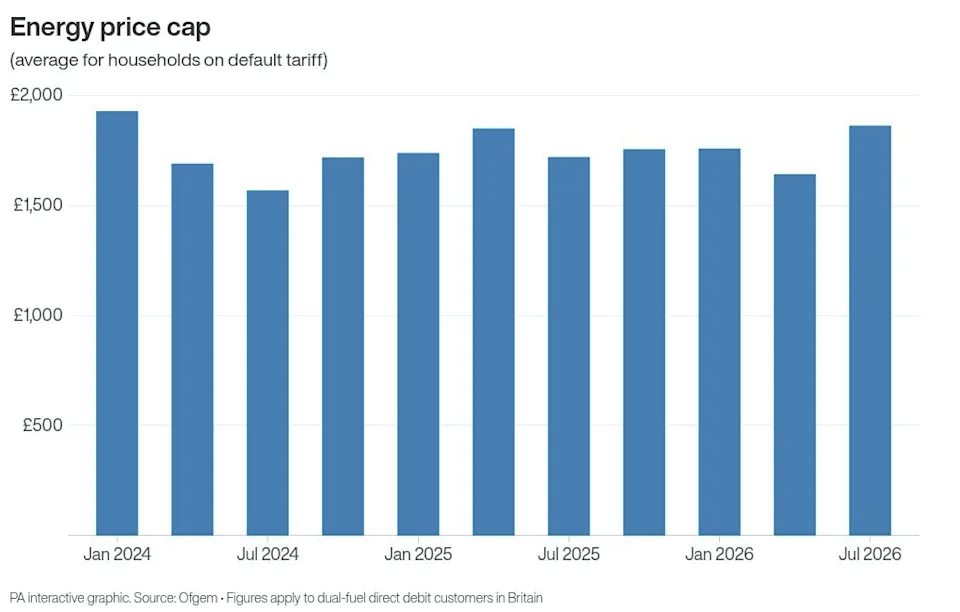
LONDON – On the day the energy price cap rose by its sharpest summer margin in four years, the gap between Westminster’s promises and the reality facing British households has never been starker. At midnight on Tuesday, the cap lifted by 13%, an average of £221 a year for 27 million homes, driven by a spring oil shock triggered by United States airstrikes on Iranian nuclear facilities. The attacks, ordered by President Donald Trump in March, provoked Tehran to seize control of the Strait of Hormuz, the narrow chokepoint through which one-fifth of the world’s oil and liquefied natural gas transits. Crude prices rocketed from $59 a barrel in January to $112 in April before easing to $68 as a fragile 60-day US-Iran ceasefire took hold. Yet for households switching on the kettle or charging their car today, that temporary market relief is invisible.
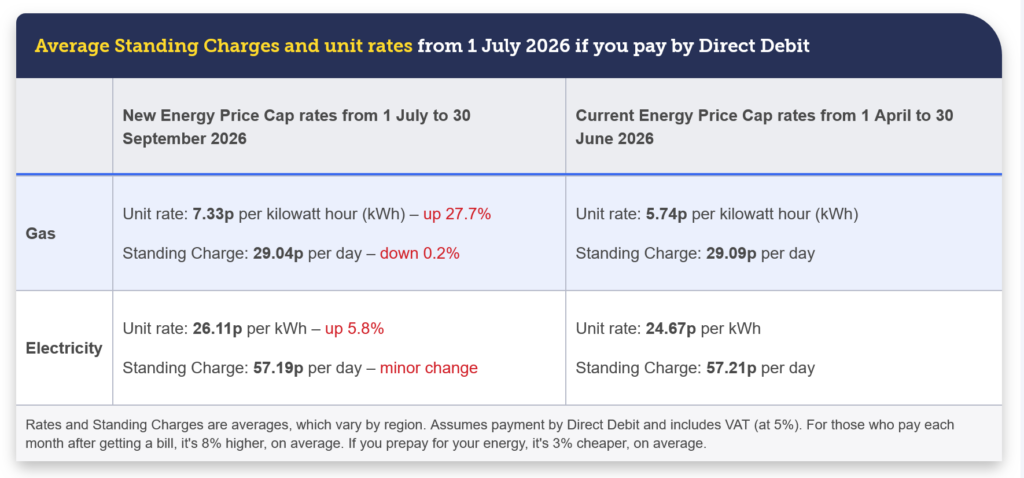
The price cap, set by the regulator Ofgem five weeks before it comes into effect, still bakes in April’s panic. Electricity unit rates leap from 24.67p per kilowatt hour to 26.11p, and gas from 5.74p to 7.33p. Using the old, arguably more realistic, typical consumption figures, the benchmark dual-fuel bill now stands at £1,862. Under new, lower usage assumptions, the headline is £1,663, but as Martin Lewis, founder of MoneySavingExpert.com, bluntly told the public: “Don’t be fooled, prices are still rising significantly. For most people, July’s 13% price cap rise is voluntary; it can, and should, be avoided by fixing now. But the bigger issue is what happens when winter comes.”
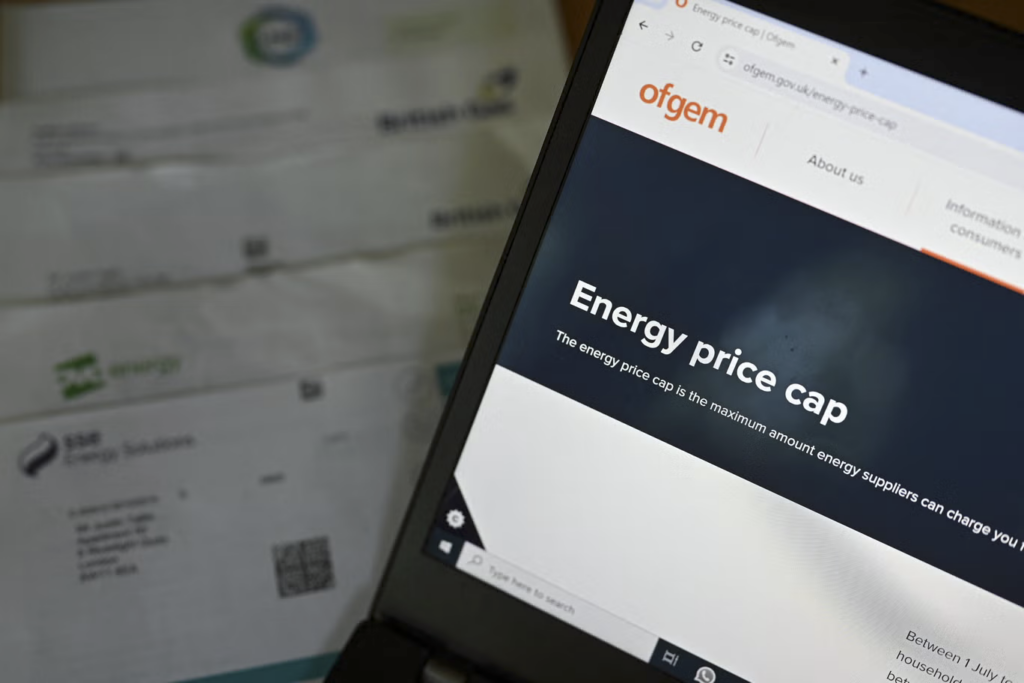
Winter is very much on the mind of Cornwall Insight, the energy analysts whose forecasts feed Treasury models. In a briefing released to coincide with the cap change, they projected that the October-December price caps will fall by a negligible 0.5%, leaving a typical household facing £1,849 under old measures or £1,654 under new ones, almost identical to today. “Conflicting reports on the reopening of the Strait of Hormuz, the patchy progress of peace talks and uncertain timelines for repairing key regional infrastructure mean prices remain high, if less volatile than in the spring,” the consultancy warned. That stabilisation offers no comfort: a high plateau is still a cliff-edge for millions.
Fuel Poverty Surges To 13.5 Million Households:
Behind the decimal points lies a humanitarian emergency playing out in slow motion. The End Fuel Poverty Coalition, using modelling by the University of York, calculates that the number of households spending more than a tenth of their income on energy will jump from 11.3 million in April to 13.5 million from this week. Even more alarmingly, those in severe fuel poverty, spending over 20% of their income, will rise from 4.3 million to 5.5 million. “These figures show the reality behind the headline price cap figure: a growing number of households are spending an unsustainable share of their income just to heat their homes in winter and keep them cool in summer,” said Simon Francis, the coalition’s coordinator. “With energy costs rising over the summer, any chance households had to reduce energy debts or build up reserves before the winter heating season will be wiped out.”
That debt is already at an all-time high. Ofgem data published earlier this week revealed that households owed energy suppliers a staggering £4.79 billion in the first quarter of 2026, up 15% year-on-year. The burden is not spread evenly: debt is concentrated among those on prepayment meters and standard variable tariffs, exactly the households the cap was designed to protect. But the cap, a blunt instrument that only limits unit rates, not total bills, has become a trap. With the typical bill now £900 higher than it was in 2020/21, even those who “pay their way” are being dragged under.
“We cannot afford to wait until the autumn,” Conor O’Shea, coordinator of the Cost of Living Action campaign, told me. “Today’s price cap increase is another blow for households who simply cannot afford to pay more for the essentials. While the government is right to prioritise targeted support with energy bills, many families need that help now.” O’Shea’s group, a coalition of anti-poverty charities and grassroots organisers, has been staging walk-ins at MPs’ constituency offices across the Midlands and North West. Their demand goes beyond emergency payments: “The government must address the underlying causes of this crisis, nationalise elements of the distribution grid and introduce an essential energy guarantee that ensures every household can always afford their basic costs.”
A Chancellor’s Promise, A Government In Limbo:
In April, Chancellor Rachel Reeves acknowledged the gathering storm. Appearing before the Treasury Select Committee, she said the government was working on “targeted, means-tested support” for energy bills that would be delivered “in the autumn, if required.” It was a careful formulation, conditional, non-committal, and it came alongside a Budget measure that removed two energy efficiency schemes from household bills, cutting costs by an average of £117. The combined effect of that £117 giveaway and the current £221 rise is that households are only about £104 worse off than they would have been without any intervention. Yet framing this as a partial mitigation misses the point: bills are still far higher than anyone budgeted for, and the removal of those efficiency schemes, the Warm Home Discount expansion notwithstanding, means a slower path to long-term demand reduction.
More critically, there is now serious doubt whether Reeves will be the one delivering any autumn package at all. Sir Keir Starmer’s resignation as Prime Minister three weeks ago, following an internal party revolt over his handling of the Iran crisis and the deployment of British naval assets to the Gulf, has triggered a leadership contest widely expected to be won by Greater Manchester Mayor Andy Burnham. Burnham used his first major campaign speech on Monday to sketch a vision of a “rewired Britain,” with greater public control over essential services, including energy. “If it is to be Andy Burnham as the next PM,” Simon Francis responded, “then new ministers must also rewire how energy bills are set. Plans to devolve control of energy will count for nothing unless they are accompanied by a permanent social tariff, an end to energy debt, reduction of electricity costs and a credible plan to break the link between gas and electricity prices.”
That last point, breaking the link, is the structural reform that campaigners, academics and even some energy industry figures have been urging since the crisis first erupted in 2021. Because Britain’s wholesale electricity price is set by the most expensive source needed to meet demand, usually gas-fired generation, cheap renewables are not translating into cheap bills. Martin Lewis has repeatedly called for a “decoupling” that would allow consumers to feel the benefit of the UK’s world-leading offshore wind capacity. But successive governments, including the one just fallen, have baulked at the complexity and at the lobbying might of the legacy energy giants.
The TUC’s Social Tariff: A £5.9bn Lifeline With A Windfall Tax On Banks.
Into this vacuum, the Trades Union Congress has stepped with its most detailed policy intervention yet. On Tuesday morning, as the price cap rose, the TUC released a blueprint for a social tariff that would cut bills for 8.7 million households, roughly two-thirds of the country, on a means-tested basis. The proposal, costing between £3.4 billion and £5.9 billion a year, would be funded by a windfall tax on bank profits, a sector that has enjoyed a bumper period of net interest margin growth as the Bank of England has kept rates elevated. The most vulnerable would see their bills cut by up to £559 annually. A minority of “extremely wealthy households with huge estates” would pay a surcharge above the price cap to cross-subsidise the scheme.
Paul Nowak, the TUC general secretary, did not mince his words. “Today’s change in the energy price cap is a clear example of how Trump’s warmongering is hitting British families. From today, households will start to feel the pain of rising bills. And bills were already far higher than they were five years ago.” He added: “A social tariff isn’t just a sticking plaster. It’s a permanent structural reform that says energy is an essential service, not a luxury commodity to be gambled on global markets.”
The TUC’s proposal lands at a moment when public appetite for nationalisation, or at least a non-profit public energy provider, is higher than at any point since the privatisations of the 1980s. Unite, the union that is Labour’s largest donor, has announced a series of protests outside energy supplier headquarters in London, Birmingham and Glasgow, calling for “an immediate and deep cut” to energy costs and the renationalisation of the retail arms of the Big Six. Sharon Graham, Unite’s general secretary, described the cap rise as “another kick in the teeth for workers and families who were already struggling with ever-rising bills and the cost of living crisis. The UK has among the highest energy bills in Europe; they should be going down, not up.”
A Rush To Fix And The Meter Reading Scramble.
For all the structural critique, the most immediate consumer advice has come, as it so often does, from Martin Lewis. His MoneySavingExpert site noted that while the cap is rising, a small number of fixed tariffs are still available below the current April cap. These deals offer a double benefit: a tiny immediate saving and, crucially, protection against the 13% hike that has just materialised and any further rises through next winter. “If you’re on the price cap and risk-averse, it’s worth considering a fix now,” Lewis said. “Don’t just grab any fix; ideally, you want one priced at or just under the current cap.” He highlighted Ecotricity’s EcoFixed 1 Year May 26 v2, which is 3.8% below the April cap including cashback, and E.on Next Fixed 12m Exclusive v1, 2% under the cap, as examples available across Britain. “Your cheapest depends on your region and usage; do a comparison.”
Simultaneously, an estimated 5.3 million households without smart meters were urged to submit manual readings before or within 14 days of the cap change to avoid paying the new, higher rates for energy used before midnight on 30 June. Ben Gallizzi, energy spokesman at Uswitch, framed it as a two-step survival guide: “There are two crucial things you should add to your to-do list for the coming days: submit a meter reading and get a cheap fixed energy deal. Millions of households should take a moment to read their meter at the end of the month to avoid being overcharged.”
The meter-reading ritual has become a quarterly reminder of the energy market’s dysfunction: in a truly smart, digital-first system, such manual interventions would be unnecessary. But the smart meter rollout, now years behind schedule, remains patchy, with millions of devices operating in “dumb” mode after customers switch suppliers. The government’s own infrastructure is not ready for the crisis it faces.
The Lag Effect: Why Falling Oil Prices Aren’t In Your Bill.
One of the most glaring failures of the current regulatory framework is the “lag effect,” which Ofgem has long acknowledged but done little to address. The price cap is set using a reference period for wholesale costs that typically ends five to six weeks before the cap comes into force. This means the July cap still captures the stratospheric oil and gas prices from March and April, when the Strait of Hormuz was effectively closed, and global markets panicked. Since then, crude has fallen back from its peak, and the 60-day ceasefire, however fragile, has allowed some tanker traffic to resume. But those lower forward prices will not reach consumers until the October cap, and even then, only partially. The system effectively forces households to pay crisis prices long after the acute phase has eased, while energy suppliers and traders pocket the differential.
This structural flaw was supposed to be reviewed in Ofgem’s 2025 consultation on market reform, but the regulator deferred a decision until “after the next general election.” Now, with the political landscape reshaped and a new government expected within weeks, the review could be buried entirely. Energy Minister Martin McCluskey, one of the few ministers still in post during the interregnum, offered a statement that was part reassurance, part holding pattern: “We know families are deeply concerned about rising energy bills because of a war we did not choose, and we are determined to fight their corner to tackle energy affordability. The action we took at the Budget, which has taken an average £150 of cost off energy bills, is now factored into bills for the years to come. We have also expanded the Warm Home Discount scheme, which benefited around six million households last winter and will remain in place for the rest of the decade. We will continue to monitor the situation ahead of the winter and plan for all contingencies, while doubling down on our mission for clean power to bring down bills for good.”
Yet “monitoring” and “planning for all contingencies” ring hollow in the ears of those who saw their energy debt spiral last winter. The Warm Home Discount, which provides a £150 rebate to eligible low-income households, has been widened but remains a drop in the ocean when the average bill has increased by more than £220. For the 5.5 million households in severe fuel poverty, that discount covers less than three weeks of winter gas heating.
The Strait Of Hormuz: A Geopolitical Tinderbox At The Heart Of Your Boiler.
The proximate cause of this crisis is 3,000 miles from Westminster. On 12 March, US B-2 bombers struck the Fordow enrichment facility deep inside Iran, a mission that President Trump described as “a decisive blow against the regime’s nuclear ambitions.” Within 48 hours, Iranian Revolutionary Guard Corps Navy forces had mined the Strait of Hormuz and boarded several oil tankers, effectively halting traffic. The global oil price spiked by 40% in a week, and LNG cargoes destined for European terminals were rerouted around the Cape of Good Hope, adding weeks to delivery times and tens of millions to costs. The UK, which relies on gas-fired power for around 35% of its electricity and imports significant quantities of LNG from Qatar via the Strait, was hit harder than most European neighbours because of its limited storage capacity and its wholesale market’s high exposure to spot prices.
The 60-day ceasefire brokered by Oman in late April has allowed some shipping to resume, but the Strait is still not operating at pre-crisis capacity. Insurance premiums for tankers remain prohibitive, and Iran has conditioned full reopening on the withdrawal of US naval assets from the Gulf, a demand Washington has so far rejected. “Conflicting reports on the reopening of the Strait of Hormuz” is the diplomatic language Cornwall Insight uses, but the reality, intelligence sources say, is that the IRGC retains the capacity to close the waterway again within hours if talks break down. With the ceasefire set to expire in late June and no substantial progress on a permanent agreement, the threat of a second oil shock this autumn is very real.
This exposes a fundamental vulnerability in Britain’s energy security architecture. Successive governments have prioritised market liberalisation and import dependency over storage and demand reduction. The Rough gas storage facility in the North Sea, once capable of holding nine days’ supply, was closed in 2017 and partially reopened only in 2023 with a fraction of its original capacity. Meanwhile, the slow pace of home insulation and heat pump installation means that every price spike feeds through directly and immediately into household misery.
What Does “Targeted Support” Mean? A Question No One Will Answer.
Reeves’s April commitment to “targeted, means-tested support” in the autumn was deliberately vague. Treasury insiders suggest the work is being led by a cross-departmental taskforce looking at three options: an expansion of the Warm Home Discount with an extra winter payment; a new “energy credit” paid to households on Universal Credit and Pension Credit; or a temporary reduction in standing charges for those on the lowest incomes. But the taskforce has not met since Starmer’s resignation, and its future depends on the new Prime Minister’s priorities.
Burnham has said he would seek to implement the TUC’s social tariff “in full” within his first 100 days, but he would need to call a general election quickly to secure a mandate, and the parliamentary arithmetic is uncertain. Even if a Burnham-led Labour Party wins, the legislative and administrative machinery to deliver a means-tested energy tariff to 8.7 million households cannot be built overnight. Means testing requires data-sharing between HMRC, DWP, energy suppliers and local authorities that is years away from being fit for purpose, as the botched rollout of the Household Support Fund demonstrated.
Meanwhile, campaigners fear that the “targeted” approach will leave millions of just-about-managing families, the so-called “squeezed middle”, facing impossible choices. “We need universal support for the winter,” said O’Shea. “An essential energy guarantee, a block of free or heavily discounted energy for every household, would be the quickest, fairest way to protect people. Means testing always leaves people behind and takes months to administer. By the time any autumn package is delivered, families will have already racked up unpayable debt.”
Voices From The Frontline: Debt, Despair And Distrust.
In Leeds, a city where fuel poverty already affected one in five households before this latest rise, the mood is grim. Citizens Advice Leeds reports that inquiries about energy debt and disconnection have risen 40% year-on-year in the first quarter of 2026. “We’re seeing people who’ve never been in debt before, working families on full-time incomes, who simply cannot square the circle,” said branch manager Ruth Elliot. “They’re cutting back on food, cancelling insurance, avoiding putting the heating on even in cold snaps. The mental health toll is enormous.”
In Glasgow, where Unite’s protests will target Scottish Power’s headquarters, the union’s regional secretary added: “This is not just about numbers on a spreadsheet. It’s about pensioners sitting in one room of a freezing house, parents not eating so their kids can, shift workers driving less because they can’t afford petrol and electric. The government talks about ‘monitoring’, we need immediate action. A windfall tax on the banks, who’ve made billions while people suffer, would pay for a substantial price cut tomorrow.”
The Road To October: A Winter Of Discontent Looms.
The price cap announcement for October–December will land on or before 26 August. If Cornwall Insight is right and prices remain near £1,850 (old typical), a household using a normal amount of gas for heating will face a monthly bill spike from around £60 in summer to over £160 in January, before any standing charges. For those already in debt, this is a cliff edge. Ofgem’s own figures show that 1.4 million customers are on supplier repayment plans, with average arrears of £1,200. New rules prohibiting forced installation of prepayment meters for vulnerable customers mean suppliers have fewer collection tools, which is leading them to offer aggressive repayment schedules that are often unaffordable.
“This is a slow-motion car crash,” said Francis. “We have record debt, prices locked at historically high levels, a government in transition, and no long-term plan to fix the underlying market. The social tariff is a good idea, but it won’t be in place by winter. What happens to the 5.5 million people in severe fuel poverty between now and then? Someone needs to answer that question now.”
Analysis: A Crisis Made In Westminster As Much As Tehran.
It would be easy to lay the blame entirely at Trump’s door, and the Iranian regime’s response, and indeed, the immediate trigger is geopolitical. But the deeper investigation reveals a story of domestic policy failure stretching back over a decade. Britain’s energy market was designed for an era of abundant, cheap gas and predictable geopolitics. Regulators, ministers and successive Prime Ministers failed to build resilience into the system. They allowed storage to atrophy, left millions of homes uninsulated, linked electricity prices to volatile gas markets long after it was necessary, and presided over a social security system whose basic allowances are so eroded that a £221 energy hike can tip a family from coping to crisis.
The current political vacuum compounds the harm. A departing prime minister, a chancellor who may not keep her job, and a frontrunner for Number 10 whose energy policy is still a set of aspirations rather than a legislative programme-this is a leadership void that translates directly into human suffering. The price cap rise is not a natural disaster; it is a regulatory and political choice to socialise the costs of global turmoil while delaying the investments that would insulate citizens from it.
As Martin Lewis put it, July’s price cap rise can be avoided by the savvy few who can fix now. But for the millions who cannot, because of poor credit, low financial literacy, or simply the daily battle to put food on the table, the cap is not voluntary. It is a sentence. And as the temperature drops and the political season turns, the country will discover whether its new leaders are capable of rewriting it before the reckoning arrives.
Source: Veritas Press C.I.C. | Multi News Agencies
Help Support Our Work By Donating
Popular Information is powered by readers who believe that truth still matters. When just a few more people step up to support this work, it means more lies exposed, more corruption uncovered, and more accountability where it’s long overdue.
Help Protect Independent Journalism, Which Is Currently Under Attack.
If you believe journalism should serve the public, not the powerful, and you’re in a position to help, becoming a DONATOR or a PAID SUBSCRIBER truly makes a difference.
DONATION APPEAL: If You Found This Reporting Valuable, Please Consider Supporting Independent Journalism.
Your support fuels our fearless, truth-driven journalism. In unity, we endeavour to amplify marginalised voices and champion justice, irrespective of geographical location. We operate independently, without any financial backing from billionaires.
But it’s also extremely important. One of Veritas Press’s greatest assets is its reader-funded model.
1. Reader funding means we can cover what we like. We’re not beholden to the political whims of a billionaire owner. We are a small, independent and impartial organisation. No one can tell us what not to say or what not to report.
2. Reader funding means we don’t have to chase clicks and traffic. We’re not desperately seeking your attention for its own sake: we pursue the stories that our editorial team deems important and believe are worthy of your time.
3. Reader Funding: enables us to keep our website and other social media channels open, allowing as many people as possible to access quality journalism from around the world, particularly those in places where the free press is under threat.
We know not everyone can afford to pay for news, but if you’ve been meaning to support us, now’s the time.
Your donation goes a long way. It helps us:
- Keep the lights on and sustain our day-to-day operations
- Hire new, talented independent reporters
- Launch real-time live debates, community-focused shows, and on-the-ground reporting
- Cover the issues that matter most to our communities, in real time, with depth and integrity
We have plans to expand our work, but we can’t do it without your support. Every contribution, no matter the size, helps us stay independent and build a truly people-powered media platform.
If you believe in journalism that informs, empowers, and reflects the communities we serve, please donate today.
Help By Donating Today
Submissions:
For The Secure Submission Of Documentation, Testimonies, Or Exclusive Investigative Reports From Any Global Location, Please Utilise The Following Contact Details For Our Investigations Desk: enquiries@veritaspress.co.uk or editor@veritaspress.co.uk
GENEVA — A United Nations fact-finding mission has concluded there are “reasonable grounds to believe”

Iran’s GDP is projected to contract by 5.4 to 6.1% in 2026, its worst performance

The Trump administration is preparing a $2.8 billion weapons package for Israel containing 40,000 2,000-pound

Film alleges mass civilian deaths are routinely built into military decisions amid Israel’s genocidal war

The Israeli rights group says violence, displacement, economic strangulation, and settlement expansion form part of

Houthi forces have captured the historic Red Sea port of Mocha and are advancing on
London’s historic sanctions against Israeli settlements mark a watershed moment in UK foreign policy, but
With 95% of Gaza’s population now wholly dependent on aid and more than 90% stripped
India calls for Kashmir and Ladakh to appear only on its official map after a
ISLAMABAD – In the high-stakes political theatre of Pakistan, the battleground has shifted from the