






Author:
Help support our mission, donate today and be the change. Every contribution goes directly toward driving real impact for the cause we believe in.
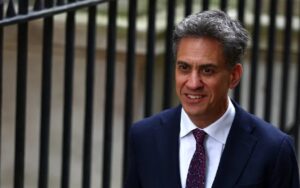
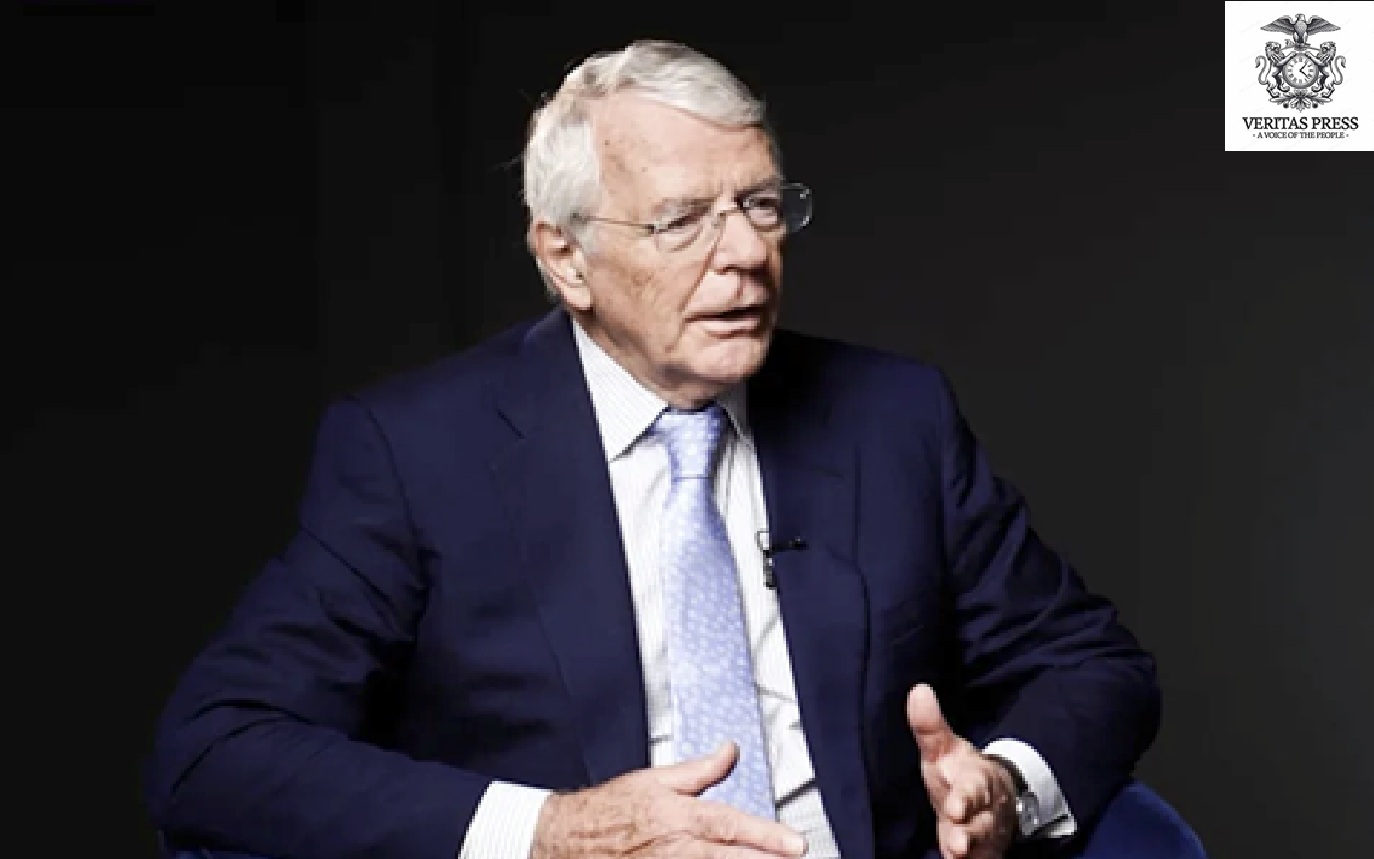
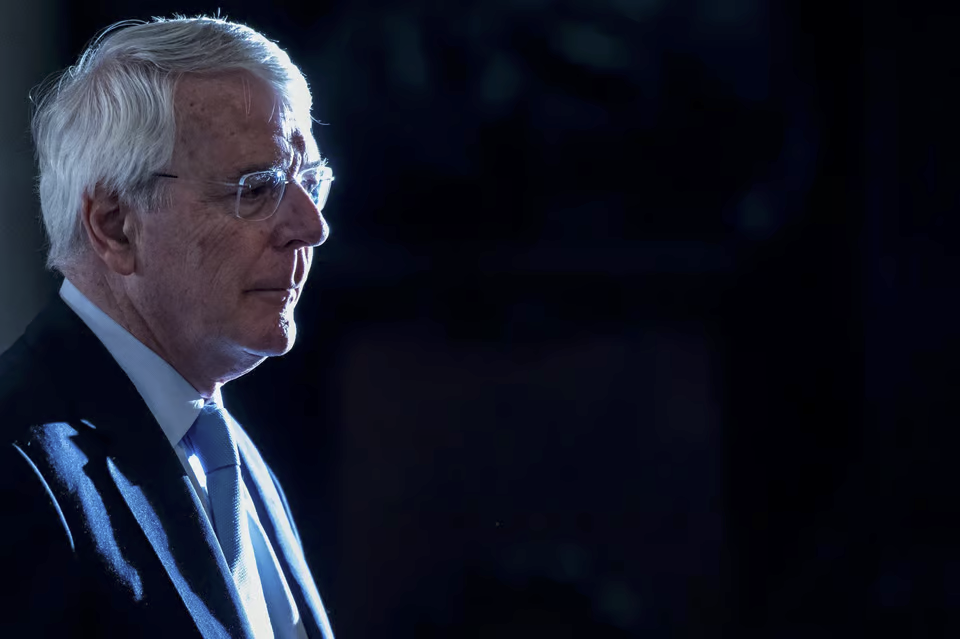
LONDON — In a devastating intervention that tears apart the economic and moral legacy of the 2016 referendum, former Prime Minister Sir John Major has called for Britain to re-enter the European Union single market within five years, branding Brexit a “colossal misjudgement” that has systematically impoverished every household in the country. Speaking exclusively to The Independent as part of its Europe: The Way Back campaign, the former Conservative leader delivered a forensic and withering critique of the Vote Leave architects, the economic carnage they unleashed, and the political cowardice that has prevented any honest reckoning with the disaster.
Sir John’s demand that a future prime minister must make single market membership the central mission of their premiership arrives as the United Kingdom marks a decade since the fateful vote. It is a moment of grim stocktaking. The economic data, no longer speculative, is brutal. And for Britain’s trading partners across Africa, Asia, and the Commonwealth, the contraction of a once-reliable economic giant has reshaped supply chains, trade agreements, and investment flows in ways that are now irreversible without a fundamental course correction.
PA Wire/PA Images
The Economic Autopsy: £100 Billion In Lost Trade Every Year.
Sir John, Prime Minister from 1990 to 1997 and a man who fought his own bitter battles with the Eurosceptic right of his party, pulled no punches. He pointed to the Bank of England’s latest comprehensive analysis, updated in March 2026, which now estimates that the UK economy is between 7 and 9% smaller than it would have been inside the EU. “Even if you take the lower figure,” Sir John said, “we have lost about £100 billion worth of trade each year. That £100 billion would have yielded about £40 billion worth of tax to the Exchequer. If we’d had that £40 billion annually over the last few years, many of the difficult and unpopular decisions that have been taken would not have been necessary.”
The consequences of that missing revenue are etched into every hollowed-out high street and NHS waiting list. In an exclusive new report seen by The Independent, the Office for Budget Responsibility (OBR) concluded last week that the structural hit to UK productivity, directly attributable to post-Brexit non-tariff barriers, has permanently reduced trend growth by 1.8 percentage points. The cumulative loss in GDP since 2021 now exceeds £350 billion in today’s prices. For the average household, that translates into an annual income loss of approximately £2,300, according to the Resolution Foundation, a figure that has barely registered in a political debate still paralysed by the mythologies of “sovereignty”.
Sir John’s attack was intensely personal towards the men who sold the dream. “Michael Gove said after we leave, we will hold all the cards. Well, the only card they held was P45S for people who lost their jobs.” He derided “take back control” as “an empty slogan” and a promise of a “land of milk and honey” that has instead delivered a bitter harvest. “We know who the losers are. It is every wallet, every purse and every balance sheet in the country. They are the losers.”
The View From The Global South: How Brexit Bruised Commonwealth Trade.
For nations that have long viewed the UK as a stable market and a gateway to Europe, the damage has been tangible. Take Kenya, one of Britain’s most important trading partners in East Africa. The country exports over £380 million (approximately KES 60 billion) in cut flowers, tea, and fresh vegetables to the UK annually. A contracting British economy, sapped of £40 billion in yearly tax receipts, means diminished household spending power and downward pressure on wholesale orders. At the Oserian flower farm on the shores of Lake Naivasha, production manager David Mwangi told The Independent: “We used to count on consistent UK supermarket demand. Since 2021, the orders have become erratic, and the price negotiations brutal. The British consumer is feeling the squeeze, and that squeeze travels all the way here.”
Even the post-Brexit Economic Partnership Agreement (EPA) that Kenya signed with London, hailed at the time as a triumph of independent trade policy, has proven a bureaucratic nightmare. Exporters must now navigate both UK Conformity Assessed (UKCA) and EU CE marking requirements to serve both markets, a duplication of cost and paperwork that has eroded the competitiveness of East African producers. A single market return, with its unified regulatory framework, would instantly eliminate that friction. Mombasa-based logistics firm Freight Forwarders Kenya estimates that simplified certification alone could cut export overheads by 12-15% and revive the volumes lost since 2020.
The Price of Re-entry: Sovereignty vs. Survival.
Sir John was unambiguous about the political and legal costs of his five-year roadmap. Rejoining the single market, he acknowledged, means accepting the full quartet of obligations that the Leave campaign so successfully demonised: the restoration of free movement, the automatic adoption of EU regulations without a vote, significant financial contributions to the EU budget, and the supremacy of the European Court of Justice in matters of trade and standards.
“We are going to have to be absolutely honest with the British people,” he said. “If we go back into the single market, we say ‘here are the gains we proposed and here is the price that we will have to pay for it.’” That price, he argued, is no longer an abstract debate about sovereignty but a pragmatic calculation about national solvency. “There’s only one country in the world that is completely sovereign, and that is North Korea,” he said, a remark likely to reverberate across a political landscape still scarred by nationalist rhetoric.
The intervention is a calculated attempt to reshape the Overton window of British politics. It comes as the Labour Party, under the new leadership of Andy Burnham, widely seen as a prime minister in waiting, grapples with its own European dilemma. Burnham, who once served as Shadow Home Secretary and has long advocated for a closer relationship with the EU, has so far stopped short of endorsing single market membership, fearing a backlash in the so-called “Red Wall” seats. Yet Major’s statement, from the heart of the Conservative establishment, gives cover to pro-European forces across the political spectrum.
The Generation That Will Never Forgive:
The former Prime Minister’s fury has deep roots. In a prescient lecture delivered at the Foreign Office in 2019, Sir John warned that Brexiteers “will never be forgotten nor forgiven” once the promises were exposed as fantasy. Seven years later, he says that judgment has arrived. “If you’re seeking to make Brexit succeed after ten years, you are admitting tacitly that it has failed thus far. It has failed thus far, and I think it will continue to do so,” he told The Independent.
Polling data support a seismic generational shift. A major YouGov survey published on 23 June 2026, the referendum’s tenth anniversary, found that 68 per cent of Britons now believe leaving the EU was a mistake, while only 32% stand by the decision. Among voters under 40, the figure is an overwhelming 81%. “There is a change coming… the next generation,” Sir John observed. “The vast vote to leave largely came from people who were elderly. So I think we will get back into Europe.”
For young people like 24-year-old Glasgow-based software developer and pro-EU campaigner Aisha Khan, that change cannot come quickly enough. “My entire professional network was robbed of Erasmus, of the right to live and work in 27 countries overnight,” she told The Independent. “John Major is naming the crime that politicians have been too afraid to name. We will not forgive the people who did this to us, and we will not stop until we are back where we belong.”
Reform UK And The Poison Of Dark Money:
If Sir John’s assessment of Brexit’s economic failure was devastating, his dissection of Nigel Farage and Reform UK was surgical. The party, which now polls around 11% on a platform that has morphed from Euroscepticism to a broader anti-migrant, anti-institution rage, stands accused of being “the fully fledged subsidiary of overseas billionaire money.” Sir John demanded that Farage disclose the full nature of a £5 million donation from British cryptocurrency tycoon Christopher Harborne, who resides in Thailand.
“It was an extraordinary sum of money,” Sir John said. “He [Farage] said, ‘It’s for my security.’ Then on another occasion, he said, ‘It’s for me getting Brexit through.’ And then on another occasion, he said, ‘It’s for me to spend exactly as I like on cars.’ He is a public figure aiming for the highest position in our land, and we need to know what obligations he may have and to whom.”
Reform UK did not respond to a detailed request for comment on Sir John’s allegations. However, the Electoral Commission confirmed last month that it has opened a preliminary investigation into whether the donation, routed through a series of offshore entities, complied with new transparency rules introduced after the 2024 election. For anti-corruption activists, the saga encapsulates the unaccountable networks that bankrolled the original Brexit campaign and now seek to entrench permanent division. “The same dark money that lied to the British people a decade ago is still trying to own our politics,” said Naomi Hossain, director of the Democracy and Integrity Project. “John Major is right to demand answers.”
The Long Road Back: What Happens Next.
Sir John was careful to state that there is no “imminent” prospect of full EU membership. But the architecture of a return is already being drafted in quiet corners of Whitehall and Brussels. Diplomatic sources indicate that informal talks between UK and EU officials have explored a “Norway-plus” model, full single market participation with a customs arrangement that preserves the invisible Irish border and reduces trade friction. Any such deal would require a prime minister with the political capital to confront the inevitable backlash from the rump of true believers and the right-wing press.
Sir John’s verdict on the current crop of leaders was measured but pointed. He praised Conservative leader Kemi Badenoch for unifying her fractious party but suggested her Euroscepticism was increasingly out of step with the public. He laid the blame for Sir Keir Starmer’s downfall as Labour leader squarely at the door of Starmer’s failure to articulate a coherent post-Brexit vision, a vacuum now being filled by Burnham’s quiet pragmatism.
For the people of Britain, the decade since the referendum has been a slow-motion lesson in the difference between slogans and reality. The blue passports have arrived, but so have the medicine shortages, the agricultural labour crises, and the spiralling food prices. “I voted Leave because I was angry and wanted to kick the establishment,” said 67-year-old retired steelworker Terry Bates from Port Talbot, South Wales. “Now my son can’t get a job in Germany, my grandkids won’t know what it is to be European, and I see what we’ve lost. Major is right. We were sold a lie. It’s time to fix it.”
Fixing it will require a level of political courage that has been absent for ten years. Sir John Major, the quiet man of British politics who once negotiated the Maastricht Treaty against a backdrop of Tory civil war, has now laid down the gauntlet. Whether any current frontbencher is brave enough to pick it up will determine if the next decade is one of recovery or continued decline. For Britain’s partners in Africa, the Commonwealth, and across the globe, that decision will shape supply chains, investment, and the very credibility of the United Kingdom as a reliable trading nation. As Sir John himself put it with the understated steel that defined his premiership: “I think we will get back into Europe.” After ten years of hurt, that journey may finally be beginning.
Source: Veritas Press C.I.C. | Multi News Agencies
Help Support Our Work By Donating
Popular Information is powered by readers who believe that truth still matters. When just a few more people step up to support this work, it means more lies exposed, more corruption uncovered, and more accountability where it’s long overdue.
Help Protect Independent Journalism, Which Is Currently Under Attack.
If you believe journalism should serve the public, not the powerful, and you’re in a position to help, becoming a DONATOR or a PAID SUBSCRIBER truly makes a difference.
DONATION APPEAL: If You Found This Reporting Valuable, Please Consider Supporting Independent Journalism.
Your support fuels our fearless, truth-driven journalism. In unity, we endeavour to amplify marginalised voices and champion justice, irrespective of geographical location. We operate independently, without any financial backing from billionaires.
But it’s also extremely important. One of Veritas Press’s greatest assets is its reader-funded model.
1. Reader funding means we can cover what we like. We’re not beholden to the political whims of a billionaire owner. We are a small, independent and impartial organisation. No one can tell us what not to say or what not to report.
2. Reader funding means we don’t have to chase clicks and traffic. We’re not desperately seeking your attention for its own sake: we pursue the stories that our editorial team deems important and believe are worthy of your time.
3. Reader Funding: enables us to keep our website and other social media channels open, allowing as many people as possible to access quality journalism from around the world, particularly those in places where the free press is under threat.
We know not everyone can afford to pay for news, but if you’ve been meaning to support us, now’s the time.
Your donation goes a long way. It helps us:
- Keep the lights on and sustain our day-to-day operations
- Hire new, talented independent reporters
- Launch real-time live debates, community-focused shows, and on-the-ground reporting
- Cover the issues that matter most to our communities, in real time, with depth and integrity
We have plans to expand our work, but we can’t do it without your support. Every contribution, no matter the size, helps us stay independent and build a truly people-powered media platform.
If you believe in journalism that informs, empowers, and reflects the communities we serve, please donate today.
Help By Donating Today
Submissions:
For The Secure Submission Of Documentation, Testimonies, Or Exclusive Investigative Reports From Any Global Location, Please Utilise The Following Contact Details For Our Investigations Desk: enquiries@veritaspress.co.uk or editor@veritaspress.co.uk
GENEVA — A United Nations fact-finding mission has concluded there are “reasonable grounds to believe”
Iran’s GDP is projected to contract by 5.4 to 6.1% in 2026, its worst performance
The Trump administration is preparing a $2.8 billion weapons package for Israel containing 40,000 2,000-pound

Film alleges mass civilian deaths are routinely built into military decisions amid Israel’s genocidal war

The Israeli rights group says violence, displacement, economic strangulation, and settlement expansion form part of

Houthi forces have captured the historic Red Sea port of Mocha and are advancing on
London’s historic sanctions against Israeli settlements mark a watershed moment in UK foreign policy, but
With 95% of Gaza’s population now wholly dependent on aid and more than 90% stripped
India calls for Kashmir and Ladakh to appear only on its official map after a
ISLAMABAD – In the high-stakes political theatre of Pakistan, the battleground has shifted from the