


Author:
Help support our mission, donate today and be the change. Every contribution goes directly toward driving real impact for the cause we believe in.
CAMBRIDGE – In the quiet streets around Cambridge station, the memory of Mohammed Algasim lingers not as a statistic but as a cautionary tale of what can happen when the pollution of hateful rhetoric is allowed to seep unchecked into the public square. Almost a year after the 20-year-old Saudi student’s life was ripped away in a single, devastating knife thrust, his father has broken a family’s dignified silence to issue a stark warning: Britain’s reputation as a safe, welcoming destination for international students and tourists is being shredded by a surge in racism and Islamophobia that he believes claimed his son’s life.
Speaking exclusively to Independent Arabia following the sentencing of his son’s killer, Yousef Algasim refused to view the murder as merely a random, isolated act. Instead, he indicted a wider climate. “The growing spread of racist and hateful rhetoric in recent years” is what killed Mohammed, he said, rhetoric that is “rejected and condemned by all peoples and cannot be justified under any circumstances”. His words, raw and uncompromising, have forced a reckoning far beyond the Cambridgeshire courtroom.
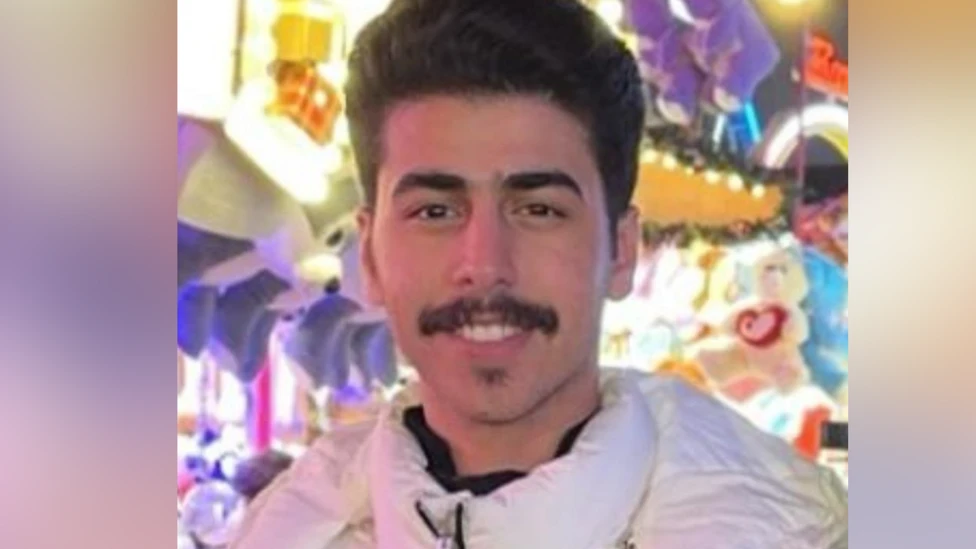
On Thursday, 4 June 2026, Cambridge Crown Court sentenced 22-year-old construction worker Chaz Corrigan to a minimum term of 22 years and six months for murder. The facts of the case, laid out during a harrowing trial, were captured in unforgiving CCTV detail. On the night of 1 August 2025, Mohammed had been sitting with friends on a low wall on Mill Park Road, near student accommodation, after an evening at his language school. He was studying English at EF International Language School, his dream of becoming a doctor burning bright. Corrigan, fuelled by cocaine, cannabis and six pints of Guinness, approached the group carrying a 13cm kitchen knife he had taken with him to the pub earlier that evening. What began as an apparently trivial encounter ended with Corrigan plunging the blade into Mohammed’s neck. The wound, 11.5cm deep, severed his jugular vein. Mohammed sprinted for his life before collapsing. Corrigan, in his own words, “ran in the other direction”.
But the father’s detailed testimony, delivered through a family member in court and expanded upon with Independent Arabia, has reframed the killing not as a drunken brawl gone wrong but as a fatal consequence of a hostile environment that Britain’s own civic watchdogs and human rights bodies have been warning about for years.
“I prepared him for life, not for death”
In a victim impact statement that caused hardened court reporters to pause, Yousef Algasim wrote: “Instead of witnessing his achievements, I was confronted with the unbearable reality of receiving his lifeless body. The pain of sending a son abroad to study, full of hope for his future, only for him to return as a victim of senseless violence, despite having caused no problem to anyone, is beyond what words can express.”
Mohammed, the only son and brother to four sisters, was described as his father’s right hand, a young man devoted to voluntary work and known for his calm nature. The family had spent “hundreds of thousands of riyals in Britain on tourism, shopping and our children’s education”. Britain, to them, was not an abstract enemy but a land of “kind and friendly” people. That image has now curdled.
“A tourist or student who does not feel safe will see no reason to stay,” Yousef Algasim said. “Tourists now worry about their personal belongings or about walking in some areas after dark. Security comes before everything else.”
His grief, while deeply personal, has become a political litmus test. And when read against the backdrop of official hate crime statistics, diaspora community fears and the unabashed mainstreaming of anti-Muslim bigotry by parts of the political right, his words sound less like a father’s lament and more like the charge sheet of a society losing its moral compass.
The Data Behind The Rhetoric: Islamophobia’s Relentless Climb.
Algasim’s claim that his son’s murder was incited by a “growing spread of racist and hateful rhetoric” finds grim support in the numbers. According to Home Office data released in late 2025, religiously motivated hate crimes against Muslims in England and Wales rose by 43% in the year to March 2025, with knife-related offences within that category spiking by 18%. Tell MAMA, the national monitoring project that tracks anti-Muslim hate, recorded its highest ever annual tally of verified incidents in 2025, including a doubling of violent assaults in the East of England region, which encompasses Cambridge.
Iman Atta, Director of Tell MAMA, told this reporter: “What we are seeing is a direct translation of dehumanising language into physical violence. When politicians, media platforms and online influencers depict Muslims as a threat, an invading ‘other’, they are laying the ideological groundwork for someone like Chaz Corrigan to walk down a street and see a young Saudi student not as a person, but as a target.” Atta highlighted how spikes in reported incidents after the August 2024 far-right riots were sustained well into 2025, creating a persistently febrile atmosphere. “The climate did not reset. It became the new normal.”
In Cambridge, a city that polishes its liberal, cosmopolitan image, the reality is more complex. Lateefah Ahmed, a Muslim postgraduate student at Anglia Ruskin University who lives a short walk from the murder site, said the killing had “shattered the illusion” of safety. “After Mohammed died, many of us started changing our routes home, removing our headphones, texting each other when we arrived somewhere. You feel that you are permanently under suspicion or in someone’s crosshairs, even here.” Another Saudi student, requesting anonymity for fear of reprisal, confirmed that several families from the Gulf had cancelled study-abroad plans for 2026, citing security fears. “Mohammed’s story spread everywhere back home. People think the UK is now full of violent racists, and it’s hard to argue with them when you read the news.”
The Far Right’s Weapon: From Rhetoric To The Courtroom.
To understand how a drunken young construction worker with a history of carrying a knife could morph into a killer, the trial looked at his immediate state of intoxication. What the legal process did not, and perhaps could not, probe was the cultural software that might have dehumanised his victim in his eyes. Corrigan was not a card-carrying member of a far-right group, and the prosecution did not pursue a racially or religiously aggravated charge, a decision that frustrated some community advocates. But the father’s wider argument is not about formal membership; it is about a societal permission structure that has been carefully erected over two decades.
In June 2025, just weeks before Mohammed’s murder, the United Nations Special Rapporteur on contemporary forms of racism, Ashwini K.P., concluded a fact-finding visit to the UK by issuing a stark warning: “I am deeply concerned about the persistence of racist hate speech and the normalisation of xenophobic and Islamophobic narratives in parts of the British media and by some political figures.” The statement, largely ignored by the tabloid press, specifically cited the weaponisation of “anti-immigrant and anti-Muslim sentiments” for electoral gain.
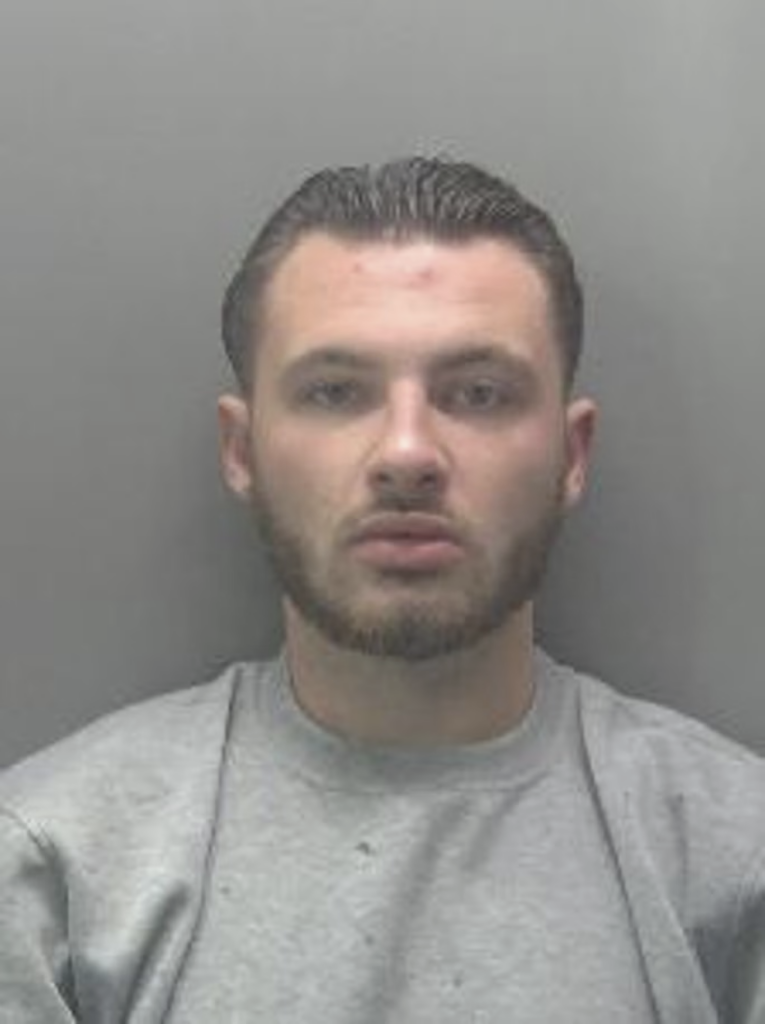
Cambridgeshire Police
Reform UK, which surged to win multiple seats in the 2024 general election, has been repeatedly accused by anti-racism organisations of mainstreaming the “great replacement” conspiracy theory. Its former leader, Nigel Farage, faced widespread condemnation after suggesting Muslims were a “fifth column” during the summer 2024 unrest. Tommy Robinson, a far-right agitator with a global following, was reinstated on a major social media platform in early 2025 and has since used his channel to broadcast a daily diet of anti-Muslim content to millions.
Dr Shazia Khan, a Cambridge-based sociologist and author of Hostile Environments: Islamophobia and the Limits of British Liberalism, draws a direct line from these platforms to the pavements where blood is spilt. “When the Home Secretary and opposition politicians spend years framing asylum seekers and Muslims as a ‘threat to British values’, they provide a moral cover. Corrigan might not have cited a politician by name, but the dehumanisation of the ‘Arab’, the ‘Muslim’, is ambient. It’s in the air he breathes. The father is right to call it out. It is a cultural crime scene.”
A Community Silenced: Living In Fear Of Voicing Their Views.
One of the more insidious consequences identified by activists and academics is the retreat of British Muslims and visible minorities from public life. The Islamic Human Rights Commission, in a report published in March 2026 entitled Censored by Fear, surveyed over 2,000 Muslims across the UK and found that 61% felt they could no longer express their views openly on issues such as Gaza, immigration or even their own religious practices without fear of repercussions, ranging from online abuse to physical attack.
Cambridge’s multicultural demographic has not been spared this chilling effect. A female Muslim city councillor, who spoke on condition of anonymity due to the volume of threats she receives, said: “Every time I speak in council about Islamophobia, I get a torrent of hate mail. You start to self-censor. And that’s what they want, for us to make ourselves invisible. Mohammed’s death is what happens when that invisibility isn’t enough. Even just existing in public space gets you killed.”
Cambridge City Council’s Safer Communities team has held several closed-door meetings with international student associations since Mohammed’s murder. In a statement issued to this newspaper, a council spokesperson confirmed that “anecdotal evidence suggests a heightened perception of vulnerability among students from the Gulf and wider Middle East”, and that additional reassurance patrols around educational institutions have been extended through the 2026 academic year. However, community leaders argue that policing alone is a band-aid. “You can’t arrest a culture,” said Faisal al-Mahmoud, chair of the Cambridge Mosque Trust. “What we need is a national reckoning with the language that has been allowed to become mainstream. The father’s call to ‘stand up to the right-wing parties’ is not about stifling free speech; it’s about recognising that words have consequences. His son is a consequence.”
Muslims And Islam: A Continuous Target In The Crosshairs.
Mohammed Algasim’s murder is not an anomaly; it is the latest and most internationally resonant marker on a timeline of pain that stretches back decades and has accelerated sharply in recent years. From the Finsbury Park terror attack in 2017 to the stabbing of an elderly Muslim man outside an East London mosque in 2025, the narrative remains stubbornly the same: a person is attacked for being identifiably Muslim, by clothing, by language, by skin colour, and the authorities, after a period of hand-wringing, speak of an “isolated incident” while the cumulative trauma metastasises.
The independent reviewer of the government’s new counter-extremism strategy, tasked with examining the line between hate speech and incitement, told the Home Affairs Select Committee in April 2026 that anti-Muslim hatred was now so “aggressively networked” online that it posed a “clear and present danger to community cohesion”. Yet government action has been slow. A long-awaited official definition of Islamophobia, recommended by the All-Party Parliamentary Group on British Muslims, remains unimplemented, with ministers arguing it could undermine free speech. For grieving families, this semantic hesitation is not an abstract policy debate. It is a betrayal.
Yousef Algasim’s statement to Independent Arabia expressed gratitude for the police and Crown Prosecution Service, who he said “worked tirelessly from the very beginning to gather evidence and establish the truth”. Detectives from the Cambridgeshire Constabulary’s Major Crime Unit had to piece together crucial evidence, including finding the murder weapon in a brambled area on Vinter Terrace, after Corrigan’s own father, Peter Corrigan, was convicted of assisting an offender by moving and disposing of his son’s bloodied clothing. Peter Corrigan was sentenced to two years in prison after admitting he had not known the crime was murder, a distinction that gave little comfort to the Algasim family.
Yet even the most diligent policing cannot answer the moral question at the heart of the case. As Judge Dexter Dias noted during sentencing, Corrigan was carrying a kitchen knife with the intention to use it, fuelled by “alcohol-induced anger”. What the judge could not say, but what the father is now shouting from the rooftops, is that such anger does not exist in a vacuum. It is fed by a political ecosystem that has taught a generation that Muslims are invaders, that international students are a drain, that an Arab man sitting on a wall at nightfall is a provocation rather than a neighbour.
The Journalist’s Lens: How The Story Almost Vanished.
Media scholars have noted that the initial coverage of Mohammed Algasim’s killing was remarkably muted compared with the national soul-searching that followed the murder of other international students, such as the high-profile case of Sarah Everard or the Nottingham attacks. While Mohammed’s death became a major public issue in Saudi Arabia, trending on social media and attracting official Saudi government attention, the British press initially framed it largely as a random knife-crime story, skirting the uncomfortable racial and religious dimensions.
Nadine White, race correspondent at The Independent, who has documented the hierarchy of media grief, said in a recent podcast: “When the victim is a brown Muslim man, we see a pattern of under-reporting and decontextualising. The structural forces are erased, and it becomes a tragic one-off. The father’s intervention has forced the media to confront what it neglected, the climate of Islamophobia that makes Britain a dangerous place for visibly Muslim or Middle Eastern visitors.” The shift in coverage, she argues, is a direct result of the Algasim family’s decision to speak up, allied with growing international scrutiny.
The Saudi embassy in London quietly monitored the trial, with diplomats pressing the Foreign Office for assurances over the safety of Saudi nationals. A Foreign, Commonwealth and Development Office spokesperson said: “The UK remains an open and tolerant country, and we are committed to ensuring all visitors and students are safe from violence and hatred.” But the gap between official reassurance and pavement reality has become a chasm.
A Father’s Final Plea:
Yousef Algasim knows the verdict will not bring his son back. “Every human life deserves respect, regardless of a person’s colour, ethnicity or religion,” he said. The solidarity shown by Saudis and by sections of the British public had eased the burden, but his central message is a challenge aimed squarely at the British people he still believes are fundamentally decent: “Stand up to the right-wing parties whose presence has grown significantly in recent years.”
The Cambridge community, too, has been stirred. A memorial bench near the railway station, funded by a local interfaith charity, will be installed next month. A candlelit vigil organised by the Cambridge University Islamic Society in the days after sentencing drew over 500 people, including the local MP, who called Mohammed’s death “a stain on our city”. Yet the deeper structural response, a legislative crackdown on hate speech, a media standards review, a political disavowal of the dog-whistle tactics that have become electoral currency, remains absent.
On the eve of the summer tourist season, the father’s cautionary note hangs over the dreaming spires: Britain, for so long a magnet for the world’s best and brightest, is now a place where a student’s hope is punctured by a blade, where “security comes before everything else”. Unless the hateful rhetoric is confronted, in the press, in parliament, in the pubs and on the platforms, the Algasim family’s loss will not be the last time a family somewhere in the Gulf receives a phone call that shatters their world, and with it, their trust in a country that once promised a better future.
Source: Veritas Press C.I.C. | Multi News Agencies
Help Support Our Work By Donating
Popular Information is powered by readers who believe that truth still matters. When just a few more people step up to support this work, it means more lies exposed, more corruption uncovered, and more accountability where it’s long overdue.
Help Protect Independent Journalism, Which Is Currently Under Attack.
If you believe journalism should serve the public, not the powerful, and you’re in a position to help, becoming a DONATOR or a PAID SUBSCRIBER truly makes a difference.
DONATION APPEAL: If You Found This Reporting Valuable, Please Consider Supporting Independent Journalism.
Your support fuels our fearless, truth-driven journalism. In unity, we endeavour to amplify marginalised voices and champion justice, irrespective of geographical location. We operate independently, without any financial backing from billionaires.
But it’s also extremely important. One of Veritas Press’s greatest assets is its reader-funded model.
1. Reader funding means we can cover what we like. We’re not beholden to the political whims of a billionaire owner. We are a small, independent and impartial organisation. No one can tell us what not to say or what not to report.
2. Reader funding means we don’t have to chase clicks and traffic. We’re not desperately seeking your attention for its own sake: we pursue the stories that our editorial team deems important and believe are worthy of your time.
3. Reader Funding: enables us to keep our website and other social media channels open, allowing as many people as possible to access quality journalism from around the world, particularly those in places where the free press is under threat.
We know not everyone can afford to pay for news, but if you’ve been meaning to support us, now’s the time.
Your donation goes a long way. It helps us:
- Keep the lights on and sustain our day-to-day operations
- Hire new, talented independent reporters
- Launch real-time live debates, community-focused shows, and on-the-ground reporting
- Cover the issues that matter most to our communities, in real time, with depth and integrity
We have plans to expand our work, but we can’t do it without your support. Every contribution, no matter the size, helps us stay independent and build a truly people-powered media platform.
If you believe in journalism that informs, empowers, and reflects the communities we serve, please donate today.
Help By Donating Today
Submissions:
For The Secure Submission Of Documentation, Testimonies, Or Exclusive Investigative Reports From Any Global Location, Please Utilise The Following Contact Details For Our Investigations Desk: enquiries@veritaspress.co.uk or editor@veritaspress.co.uk
GENEVA — A United Nations fact-finding mission has concluded there are “reasonable grounds to believe”
Iran’s GDP is projected to contract by 5.4 to 6.1% in 2026, its worst performance
The Trump administration is preparing a $2.8 billion weapons package for Israel containing 40,000 2,000-pound
Film alleges mass civilian deaths are routinely built into military decisions amid Israel’s genocidal war
The Israeli rights group says violence, displacement, economic strangulation, and settlement expansion form part of

Houthi forces have captured the historic Red Sea port of Mocha and are advancing on
London’s historic sanctions against Israeli settlements mark a watershed moment in UK foreign policy, but
With 95% of Gaza’s population now wholly dependent on aid and more than 90% stripped
India calls for Kashmir and Ladakh to appear only on its official map after a
ISLAMABAD – In the high-stakes political theatre of Pakistan, the battleground has shifted from the