



Author:
Help support our mission, donate today and be the change. Every contribution goes directly toward driving real impact for the cause we believe in.
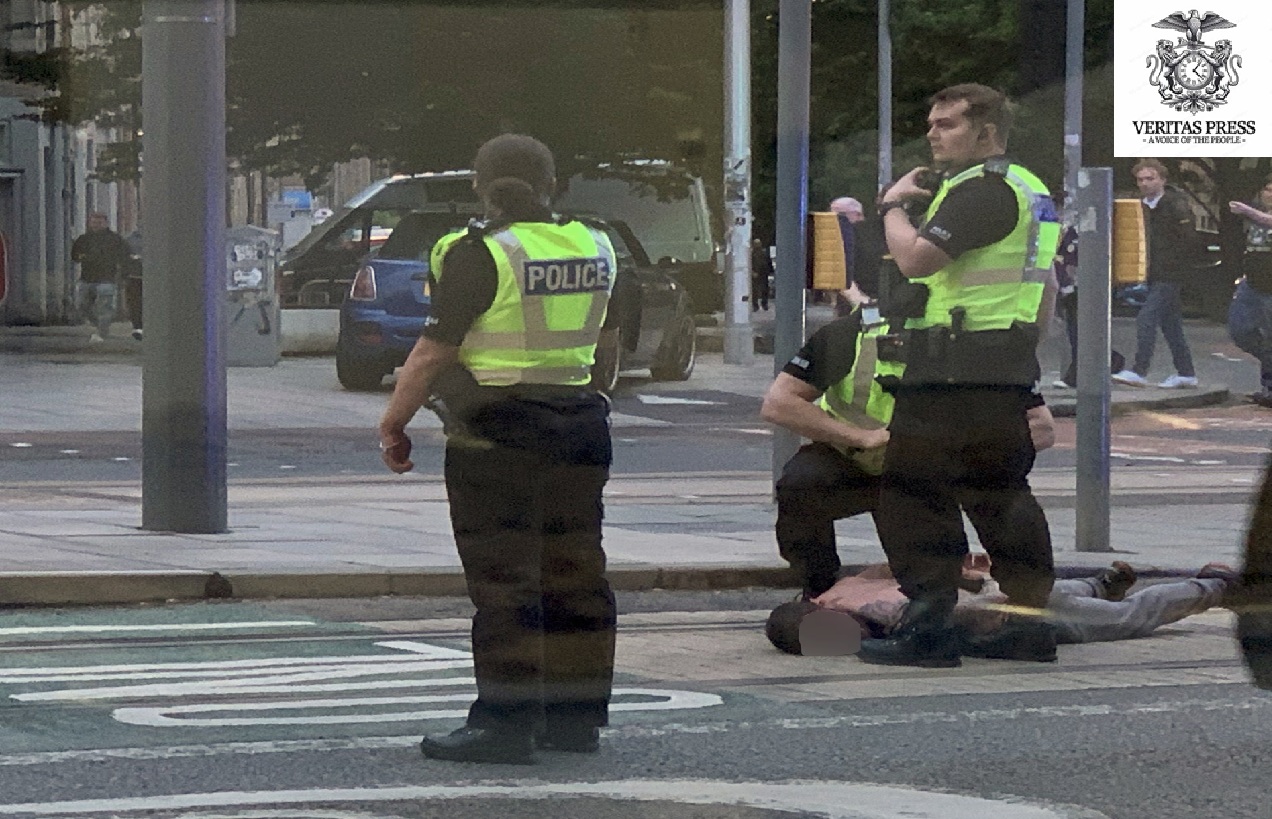
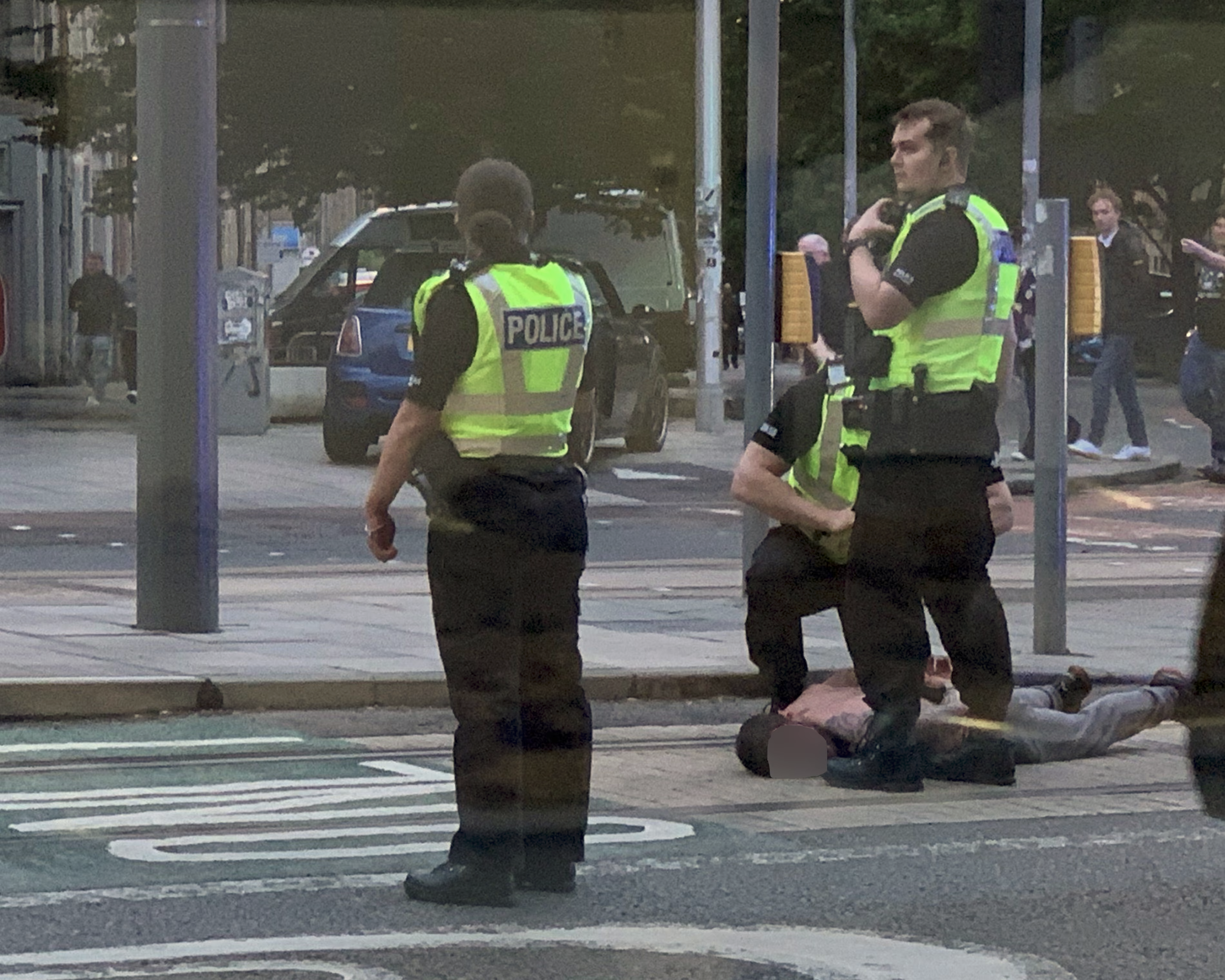
EDINBURGH/LONDON — On Friday evening, as worshippers left the Broomhouse mosque in Edinburgh’s Sighthill district, a shirtless white man brandishing a blade allegedly set upon them in a park. In videos later circulated on social media, he can be heard screaming that he was “protecting the country from these fucking Muslim bastards.” By the time Police Scotland officers wrestled him to the ground, five men aged between 22 and 39 had been injured. Three required hospital treatment. Counter-terrorism detectives have now taken charge of the investigation, treating the spree as suspected Islamophobic terror.
Twenty-four hours earlier, and four hundred miles south in Westminster, the Reform UK MP Rupert Lowe had been celebrating the publication of a document he calls The Rape Gang Report. The inquiry, which he chaired, purports to deliver definitive proof of “an undeniable link between religion and the rape gangs, Islam.” Lowe’s report has since been cited approvingly on far-right forums and shared thousands of times across platforms where anti-Muslim content thrives.
These two events, a poorly evidenced political report and an alleged anti-Muslim knife attack, are not isolated incidents. History has repeatedly shown how inflammatory narratives, moral panics, and the scapegoating of minority communities can spill beyond political discourse and into acts of real-world violence. From anti-immigrant rhetoric preceding racist attacks to conspiracy theories that have fuelled hate crimes, the consequences of demonising entire communities are well documented.
For weeks, Muslim organisations, monitoring groups, anti-racism campaigners, and survivors of sexual exploitation themselves warned that the report’s central thesis, its methodological weaknesses, and the increasingly incendiary language surrounding it risked stigmatising Muslims as a whole. They cautioned that presenting complex crimes through a religious lens would not protect victims but instead inflame prejudice.

Those warnings now appear painfully prescient. Critics argue that the consequences are no longer confined to political debate but are being measured in fear, intimidation, and violence. In public discourse, the crimes in question have increasingly been conflated with Islam itself, despite the fact that Islamic teachings neither condone nor permit such acts. Sexual abuse, exploitation, and violence are explicitly prohibited in Islam, which emphasises the protection of human dignity, justice, and the safeguarding of the vulnerable. To attribute such crimes to the religion itself, community leaders argue, is not only factually inaccurate but risks collectively blaming millions of Muslims for acts that Islam unequivocally condemns.
This is the story of how a deeply flawed inquiry, funded by donors who explicitly demanded a predetermined conclusion, has not only failed victims of child sexual exploitation but may have contributed to a climate in which Muslims are attacked on Britain’s streets.
A Report With A Mission, And A Donor Mandate.
Rupert Lowe’s Rape Gang Report, published on 18 June 2026, arrived with maximalist claims. “Our inquiry report proves that without doubt there’s an undeniable link between religion and the rape gangs, Islam,” Lowe declared. His supporters, among them high-profile commentators who have built careers alleging a Muslim cover-up, hailed it as the definitive exposé the establishment had supposedly suppressed.
Yet an examination of the report reveals a document that scores just 18 out of 100 on standard media trustworthiness metrics, according to an independent analysis by media monitoring organisations. It cites zero independent academic experts in criminology, sociology, Islamic studies, or child protection. It lacks a transparent methodology, offers no clear terms of reference, and deploys statistical claims that its own text admits are unsupported. It dismisses victims who are not white, and it relies extensively on anonymous testimony that cannot be independently verified.
Perhaps most tellingly, the inquiry was reportedly funded by what Lowe described as “20,000 British patriots” who contributed with a specific purpose: to establish a connection between Pakistani Muslims and grooming gangs. This is not a neutral starting point. Whether explicitly or implicitly, such funding arrangements create an environment in which there is pressure to produce conclusions that align with donor expectations. Critics argue that the report delivers precisely what was paid for.
“From the outset, this was not an inquiry in any meaningful sense,” said Donna Rachel, a survivor advocate who has worked with victims of child sexual exploitation for over a decade. “A genuine inquiry starts with questions and follows the evidence wherever it leads. This document started with its conclusion and worked backwards. That isn’t an investigation, it’s propaganda.”
Survivors Say They Were Excluded:
Among the most troubling allegations is that certain survivors who attempted to contribute to the inquiry were marginalised or excluded altogether.
Fai Muhammad and a survivor known as Corinne, a brown Christian woman, have both publicly stated they were not meaningfully included despite wishing to give evidence. Corinne has been particularly outspoken, alleging that the inquiry’s treatment of non-white victims revealed a hierarchy of concern.
“I see how the white girls get supported better than us brown ones,” she said. “Like we deserved it because we’re brown. No, we matter too. We were children.”
She later escalated her criticism: “I slandered the inquiry because of how I and over 10 of the other survivors were treated, and I still slander it. What they did to me and the others is out of effing order.”
These are not peripheral complaints. If an inquiry presents itself as a voice for “previously unheard victims,” the sidelining of survivors of colour raises fundamental questions about whose suffering is deemed politically useful and whose is discarded. A pattern emerges from the report’s pages: the victim narratives that receive prominence are overwhelmingly those that fit the inquiry’s pre-cooked framing, white girls abused by men of Pakistani Muslim heritage. Brown victims, Muslim victims, and male victims are largely absent or consigned to footnotes.
“This was not a search for truth,” Corinne alleged. “This was a search for a story that would sell.”
The 250,000 Figure: Fabricated And Weaponised.
Perhaps the single most widely circulated claim to emerge from the report is that 250,000 girls have been affected by grooming gangs. Across social media, the figure is repeated as an established fact. It has been cited in parliamentary interventions, broadcast debates, and furious op-eds.
The report itself, however, tells a different story. The number originates from a speculative statement made years ago in the House of Lords by Lord Pearson, who extrapolated from a limited number of local cases and suggested there may have been “upwards of 250,000” victims nationally. The Rape Gang Report repeats this figure but then concedes in a passage few readers will reach:
“The 250,000 figure is not a precise count.” It goes further: “No such count exists.”
To present an acknowledged guess as though it were a verified statistic is grossly misleading. Fact-checking organisations, including Full Fact, have repeatedly debunked the number. Yet once unleashed, such figures acquire a rhetorical life of their own. They shape public debate, fuel outrage, and are deployed to justify policies and attitudes that have no basis in evidence.
The number matters because it is not merely wrong; it is weaponised. It is used to insist that a crime problem of staggering proportions exists, that it is overwhelmingly attributable to one religious group, and that only the most drastic measures can address it. When politicians and campaigners repeat the figure knowing it is unsupported, they are not informing the public. They are inflaming it.
Islam Or Sociology? The Central Claim Unravels:
The report’s core thesis is that Islam itself, its theology, its doctrines, and its culture are significant explanatory factors behind grooming gang offending. If true, this would have profound implications. It would suggest that the problem is not localised to certain communities in certain post-industrial towns but is inherent to a global faith of nearly two billion people.
Yet the report inadvertently undermines its own argument. It notes that convictions involving Indian-origin Muslim men are comparatively rare when contrasted with those involving offenders of Pakistani heritage. If Islam were the determinative driver, one would expect similar patterns across Muslim populations with comparable religious beliefs. After all, Indian Muslims and Pakistani Muslims share the same Qur’an, the same core doctrines, the same fundamental tenets. The disparity, then, cannot be explained by theology.
What explains it? The evidence, gathered over decades by criminologists, sociologists, and statutory inquiries, points towards social, cultural, economic, and localised factors. Patterns of offending are shaped by neighbourhood dynamics, labour market exclusion, the breakdown of traditional community structures, and the specific subcultures that emerge in particular places at particular times. These are not glamorous explanations, and they do not lend themselves to slogans about civilisational clash. But they have the advantage of being true.
“If you insist that religion is the cause, you will design solutions that target religion,” said Dr. Sadiya Ahmed, a criminologist at the University of Birmingham who has studied group-based child sexual exploitation. “You will direct resources toward monitoring mosques and surveilling Muslim communities rather than addressing the social conditions that actually produce offending. You will make everyone less safe, including the children you claim to protect.”
The distinction is not academic. It is the difference between evidence-based policy and scapegoating.
Methodology On The Fly:
Concerns about expertise have dogged the report since its release. Several contributors lacked qualifications in safeguarding, statistical analysis, research methodology, child sexual exploitation investigation, or legal procedure. One participant reportedly remarked that the first draft had been finalised the night before publication, a timeline that would preclude the kind of rigorous peer review, cross-checking, and sense-checking expected of a document making claims of such gravity.
The report relies heavily on anonymous testimony. Whistleblowers and alleged victims are cited at length, but their accounts are presented without independent corroboration. Large sections are redacted. There is no clear explanation of how evidence was gathered, how witnesses were selected, or what standards were applied to assess credibility. Claims are made about police cover-ups and institutional conspiracies without the documentary evidence that such allegations demand.
If a university student submitted a dissertation built on these foundations, it would fail. Yet this document is being treated by some politicians and media outlets as a landmark intervention, cited in policy debates and shared with the public as authoritative.
The Selective Highlighting Of Religion:
An uncomfortable feature of the public conversation about grooming gangs deserves scrutiny. Grooming appears to be one of the few crimes where the religion of perpetrators is insistently foregrounded. When discussing Jeffrey Epstein, his Jewish background is not presented as a defining explanatory factor. Jimmy Savile’s Catholic upbringing is never offered as the key to understanding his decades of abuse. The church-related abuse scandals that have rocked multiple denominations, Anglican, Catholic, and others, have not been framed as products of Christianity itself, even when perpetrators were priests and bishops.
Yet in discussions of grooming gangs involving men of Pakistani heritage, Islam is placed relentlessly at the centre of the narrative. The report exemplifies this selective gaze. In several sections, individuals are classified as Muslim largely because their names are perceived to be Muslim in character, a methodology so unreliable it would be laughed out of any serious research seminar. A name like Mohammed or Hussain reveals nothing about whether its bearer prays, believes, or has any meaningful relationship with the faith.
At the same time, the report does not consistently apply similar standards when discussing offenders from Christian-majority or other backgrounds. If religion is to be treated as an explanatory factor, the same analytical framework must be applied universally rather than directed at a single faith community.
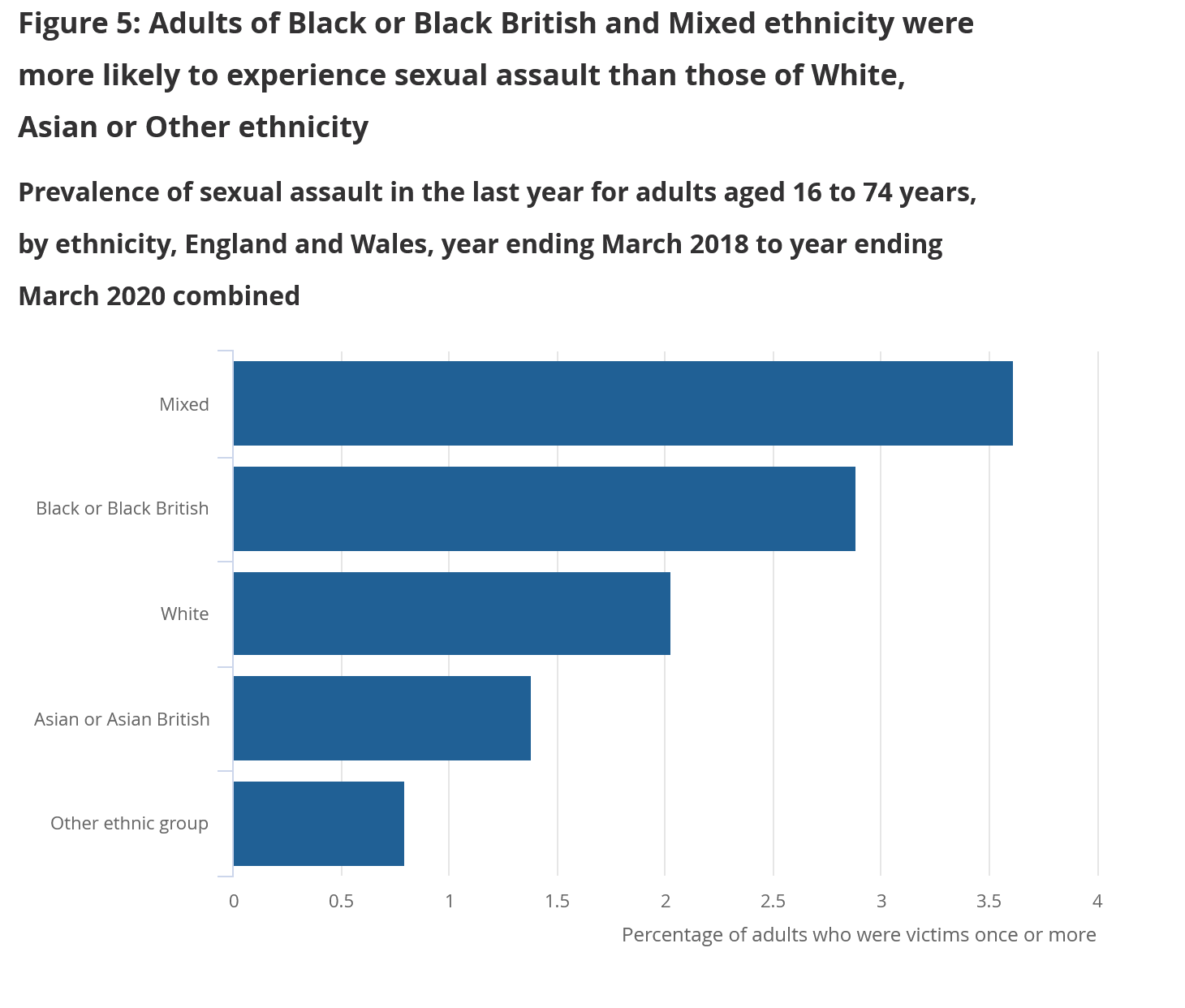
Official data underscores the selectivity. According to the most recent government statistics for England and Wales, 79% of identified suspects for sexual offences, including rape, are from the White ethnic group. The remaining suspects include 8% Asian, 7% Black, 4% Mixed, and 2% Other ethnic groups. These proportions are broadly in line with overall population demographics. None of this is to diminish the reality of grooming gang offences involving Asian offenders. Those crimes are real, and victims have endured unimaginable suffering. But the data simply does not support the narrative that sexual offending is a Muslim phenomenon.
The Climate Of Hate And The Edinburgh Attacks:
For months, Muslim organisations have warned that the cumulative effect of rhetoric like that contained in Lowe’s report, amplified by sections of the media and political figures, is creating an environment in which Muslims increasingly fear for their safety.
On Friday, those fears materialised on the streets of Edinburgh.
Police Scotland confirmed that a 36-year-old white Scottish man was arrested following a series of violent incidents across the city. Officers received reports of assaults, threats, robbery, and vandalism. Two worshippers leaving the Broomhouse mosque were allegedly attacked in a nearby park. Three other men were assaulted on Telford Road and Leith Walk. All five victims, aged between 22 and 39, sustained injuries. Three required hospital treatment.
Footage that spread rapidly online showed a shirtless man wielding a long-bladed weapon, smashing a restaurant door, and shouting nationalist slogans. In one clip, pinned to the ground by an officer, he can be heard yelling about “protecting the country from these fucking Muslim bastards.”
Counter-terrorism police were called in. Assistant Chief Constable Catriona Paton described the incidents as “shocking” and confirmed that specialist investigators were working under the direction of prosecutors. “I want to send a clear message of support to all our communities that there is no place for racism or faith-based hate in a Scotland which is at its best when we stand together,” she said.
Prime Minister Keir Starmer posted on X: “Absolutely appalling. No one should face violence on our streets. The suspect appears to be motivated by anti-Muslim hatred. I will not tolerate this; he will face the full force of the law. My thoughts are with those who are injured, and I thank the police and the emergency services for their response.”
Scotland’s First Minister John Swinney said he was “deeply concerned,” adding: “There is no place for violence, racism or intolerance in our country.”
But for Muslim community organisations, the attack did not emerge from nowhere. Muslim Engagement and Development (MEND) urged police to “treat this as what the evidence indicates: Islamophobic, far-right terror.” The group argued that inflammatory rhetoric from politicians and sections of the media had contributed to an atmosphere in which such violence becomes thinkable.
“These latest attacks are deeply disturbing,” said Omar Afzal, director of public affairs for the Scottish Association of Mosques. “However, they do not exist in a vacuum. For years, Muslim communities have warned about the consequences of anti-Muslim hatred becoming normalised in public discourse. When prejudice is left unchallenged, it creates an environment in which some individuals feel emboldened to act on that hatred.”
The Muslim Council of Britain echoed the warning, stating that communities are “rightly nervous and worried” and that such attacks are “fuelled by rhetoric that demonises Muslims and migrants.”
Justice Requires Honesty, Not Weaponisation:
None of these criticisms diminishes the reality of grooming gang offences. Such crimes are real. Victims have endured horrors that mark them for life. Many statutory inquiries, from Rotherham to Telford to Greater Manchester, have documented catastrophic failures by social services, police forces, and local authorities that were tasked with protecting vulnerable children. Those failures must be confronted honestly and without flinching, regardless of the identities of perpetrators or the officials who looked away.
Where offenders are Pakistani, that fact should not be concealed. Where they are Muslim, that should not be hidden either. But ethnicity and religion must not become substitutes for rigorous analysis. Justice requires evidence, not assumption; precision, not slogans; and an unwavering commitment to all victims, not only those whose suffering serves a political purpose.
The tragedy of child sexual exploitation is too grave to be reduced to donor-funded pamphlets that rely on fabricated statistics, exclude survivors of colour, and advance a thesis their own data contradicts. The public deserves investigations that are methodologically sound, intellectually honest, and wholly focused on uncovering the truth, whatever that truth may be.
Anything less is not merely a disservice to those who have already suffered enough. It is, as the events in Edinburgh suggest, a potentially deadly contribution to a climate of hate that puts real people in real danger. The blood on the pavement in Sighthill demands that we reckon with where that climate comes from, and who bears responsibility for fuelling it.
Source: Veritas Press C.I.C. | Multi News Agencies
Help Support Our Work By Donating
Popular Information is powered by readers who believe that truth still matters. When just a few more people step up to support this work, it means more lies exposed, more corruption uncovered, and more accountability where it’s long overdue.
Help Protect Independent Journalism, Which Is Currently Under Attack.
If you believe journalism should serve the public, not the powerful, and you’re in a position to help, becoming a DONATOR or a PAID SUBSCRIBER truly makes a difference.
DONATION APPEAL: If You Found This Reporting Valuable, Please Consider Supporting Independent Journalism.
Your support fuels our fearless, truth-driven journalism. In unity, we endeavour to amplify marginalised voices and champion justice, irrespective of geographical location. We operate independently, without any financial backing from billionaires.
But it’s also extremely important. One of Veritas Press’s greatest assets is its reader-funded model.
1. Reader funding means we can cover what we like. We’re not beholden to the political whims of a billionaire owner. We are a small, independent and impartial organisation. No one can tell us what not to say or what not to report.
2. Reader funding means we don’t have to chase clicks and traffic. We’re not desperately seeking your attention for its own sake: we pursue the stories that our editorial team deems important and believe are worthy of your time.
3. Reader Funding: enables us to keep our website and other social media channels open, allowing as many people as possible to access quality journalism from around the world, particularly those in places where the free press is under threat.
We know not everyone can afford to pay for news, but if you’ve been meaning to support us, now’s the time.
Your donation goes a long way. It helps us:
- Keep the lights on and sustain our day-to-day operations
- Hire new, talented independent reporters
- Launch real-time live debates, community-focused shows, and on-the-ground reporting
- Cover the issues that matter most to our communities, in real time, with depth and integrity
We have plans to expand our work, but we can’t do it without your support. Every contribution, no matter the size, helps us stay independent and build a truly people-powered media platform.
If you believe in journalism that informs, empowers, and reflects the communities we serve, please donate today.
Help By Donating Today:
Submissions:
For The Secure Submission Of Documentation, Testimonies, Or Exclusive Investigative Reports From Any Global Location, Please Utilise The Following Contact Details For Our Investigations Desk: enquiries@veritaspress.co.uk or editor@veritaspress.co.uk
GENEVA — A United Nations fact-finding mission has concluded there are “reasonable grounds to believe”
Iran’s GDP is projected to contract by 5.4 to 6.1% in 2026, its worst performance
The Trump administration is preparing a $2.8 billion weapons package for Israel containing 40,000 2,000-pound
Film alleges mass civilian deaths are routinely built into military decisions amid Israel’s genocidal war
The Israeli rights group says violence, displacement, economic strangulation, and settlement expansion form part of

Houthi forces have captured the historic Red Sea port of Mocha and are advancing on
London’s historic sanctions against Israeli settlements mark a watershed moment in UK foreign policy, but
With 95% of Gaza’s population now wholly dependent on aid and more than 90% stripped
India calls for Kashmir and Ladakh to appear only on its official map after a
ISLAMABAD – In the high-stakes political theatre of Pakistan, the battleground has shifted from the
















i56o6p
tlzr21
gccann