




Author:
Help support our mission, donate today and be the change. Every contribution goes directly toward driving real impact for the cause we believe in.
From Blockade To Breakthrough, Or Merely A Pause Before The Next Crisis?
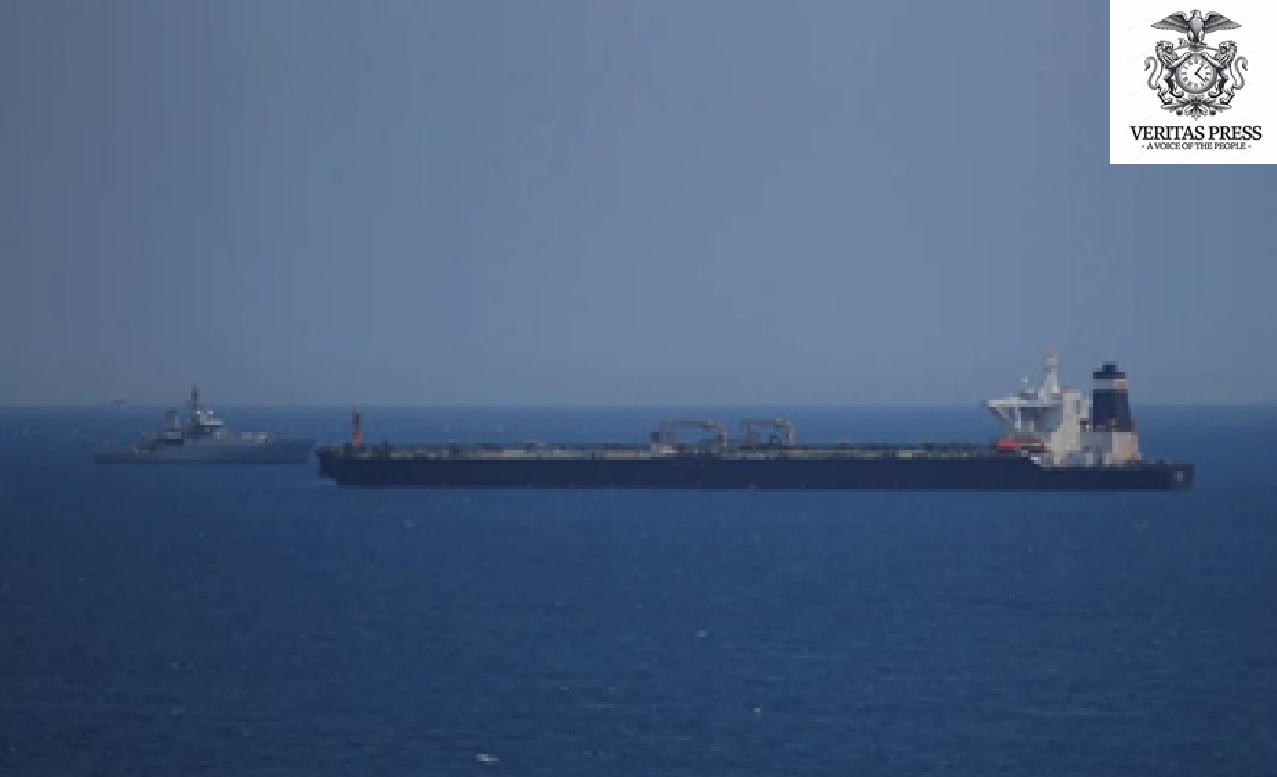
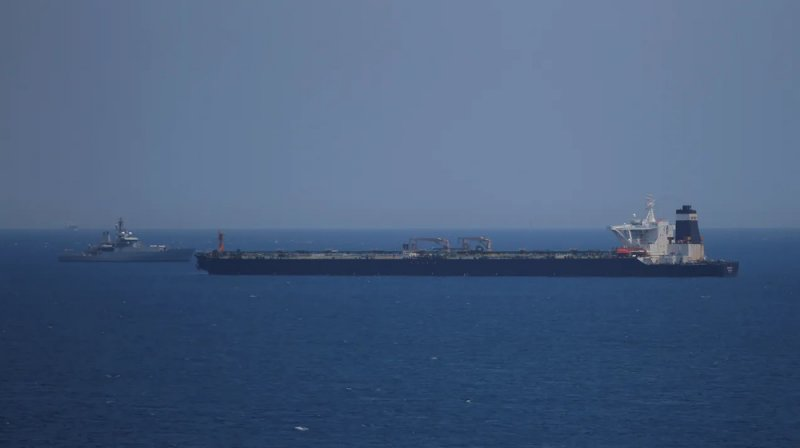
TEHRAN, WASHINGTON – In the grey light of a Gulf dawn, eleven Iranian vessels, oil tankers laden with crude and cargo ships carrying food, medicine, and industrial supplies, cut through waters that only days earlier had been patrolled by American warships enforcing one of the most consequential naval blockades in recent Middle Eastern history.
Their unhindered passage has become the first visible test of a hastily negotiated memorandum of understanding (MoU) between Iran and the United States, an agreement that, on paper, ends four months of war, permanently lifts the blockade, reopens the Strait of Hormuz, and launches a 60-day diplomatic process aimed at preventing another regional conflagration.
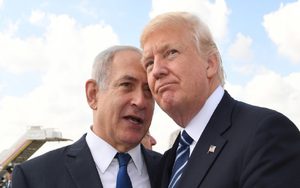
Yet the symbolism of those vessels sailing freely through the Gulf was immediately overshadowed by a warning from US President Donald Trump, who, moments after signing the agreement, threatened renewed military action if Tehran failed to comply.
“We’re going to bomb the hell out of them if they violate the agreement,” Trump told reporters at the G7 summit.
The contradiction captured the fragile reality of the accord itself: a ceasefire born not from reconciliation but from exhaustion, mutual deterrence, and economic necessity.
The memorandum, finalised on the night of June 15 following months of secret negotiations mediated by Pakistan and Qatar, was originally scheduled to be signed in Geneva on June 19. Instead, amid mounting political pressure, soaring energy prices, and growing international concern over the disruption of global shipping, the signing was accelerated. Trump and Iranian President Masoud Pezeshkian affixed their digital signatures on June 17, releasing the full fourteen-point text and bringing the agreement into immediate effect.
The deal establishes what both sides describe as an “immediate and permanent” ceasefire, halts military operations across all fronts, including Lebanon, and commits Tehran and Washington to a 60-day negotiation process intended to transform a fragile cessation of hostilities into a comprehensive settlement.
Yet an examination of the agreement and its implementation reveals a framework filled with ambiguities, competing interpretations, and unresolved disputes that could determine whether the region moves toward lasting stability or slides back into war.
Eleven Vessels And The Battle Of Narratives:
The maritime drama began before the agreement was officially signed.
According to Iranian state media, eleven Iranian vessels successfully traversed what Tehran described as a US naval blockade. Eight ships departed Iranian territorial waters into international sea lanes, while three others entered Iranian waters following the suspension of US restrictions.
Earlier reports detailed at least three Iranian oil tankers and two cargo vessels carrying essential goods sailing unimpeded through waters that had previously witnessed months of military confrontation.
Iranian officials immediately framed the development as proof that resistance had defeated coercion.
The secretariat of Iran’s Supreme National Security Council (SNSC) announced that the blockade had been terminated “immediately and completely” under the terms of the agreement.
For Tehran, the imagery was politically invaluable.
After the assassination of Supreme Leader Ayatollah Seyyed Ali Khamenei and numerous senior military commanders during the opening phase of the conflict, followed by months of retaliatory strikes against US and Israeli targets, Iranian authorities have sought to portray the outcome as evidence that pressure campaigns failed to break the Islamic Republic.
“Our crude continued to flow despite blatant maritime banditry and piracy,” an Iranian oil-sector source said, echoing language frequently used by state media throughout the crisis.
Yet Western naval analysts offer a different interpretation.
“There was no ‘breaking through’ in a tactical sense,” said retired Vice Admiral Mark Stephenson, a former deputy commander of the US Fifth Fleet. “Once the MoU was finalised, naval commanders would have received instructions to facilitate approved transits as part of confidence-building measures. The optics benefited both governments.”
Whether the eleven vessels represent a strategic victory for Tehran or a carefully managed de-escalation mechanism depends largely on which narrative one accepts.
What is indisputable is that the ships became the first tangible demonstration that the agreement was altering realities on the ground.
The Deal: Ceasefire First, Peace Later.
At its core, the memorandum is less a peace treaty than a temporary bargain between adversaries exhausted by war.
The United States commits to ending military operations against Iran, lifting the naval blockade, and participating alongside regional and international partners in developing a reconstruction and economic recovery framework reportedly worth at least $300 billion.
Iran, meanwhile, pledges not to pursue nuclear weapons, agrees to discussions regarding its enriched uranium stockpile under International Atomic Energy Agency supervision, and guarantees toll-free commercial passage through the Strait of Hormuz during the 60-day negotiation period.
“Based on the approval of the Supreme National Security Council, the text of the memorandum of understanding regarding the end-of-war negotiations between Iran and the United States was finalised on the evening of June 15,” the SNSC stated.
“The war and military operations on all fronts, including Lebanon, have ended immediately and permanently. Furthermore, the naval blockade against Iran is terminated immediately and completely.”
Iran’s lead negotiator, Mohammad Bagher Ghalibaf, portrayed the agreement as a vindication of diplomacy.
“Everything we sought to achieve through military action, we obtained several times over through negotiation; it was not even comparable,” he told state television.
Yet the most difficult issues have not been resolved.
The future of Iran’s ballistic missile program, the scope of sanctions relief, the status of regional armed groups aligned with Tehran, and the long-term security architecture of the Gulf remain largely deferred to future negotiations.
Wang Jin, assistant director of the Institute of Middle East Studies at Northwest University in China, described the agreement as “both a confirmation of the ceasefire and a roadmap for future negotiations.”
However, he warned that the memorandum “freezes the conflict rather than resolving it.”
“Israel could become the biggest source of uncertainty,” he added.
The Strait Of Hormuz And The Economics Of De-Escalation:
Behind the diplomatic language lies a more practical reality.
The Strait of Hormuz remains one of the world’s most important energy chokepoints, carrying a significant share of globally traded oil and liquefied natural gas.
The conflict’s disruption of maritime traffic triggered sharp increases in shipping costs, insurance premiums, and global energy prices.
The reopening of the waterway, therefore, represents not merely a diplomatic breakthrough but an economic necessity.
The decision to accelerate the signing of the agreement appears to have been driven partly by pressure to restore shipping flows as quickly as possible.
Oil markets initially reacted positively.
Brent crude prices fell as traders anticipated the return of more stable shipping conditions and reduced risks to global supply chains.
Yet those gains proved fragile.
Markets partially reversed course after Trump’s threat to resume military action if Iran violated the agreement.
Analysts noted that while the ceasefire reduced immediate risks, uncertainty surrounding implementation continued to support a significant geopolitical risk premium.
Lebanon: The Forgotten Front.
One of the most consequential yet least understood aspects of the agreement concerns Lebanon.
The memorandum repeatedly references an end to hostilities across all fronts, including Lebanon, where months of fighting have devastated communities, displaced more than a million people, and left thousands dead.
Yet the agreement provides few details regarding enforcement mechanisms.
Israel, which did not participate in the negotiations, continues to maintain military forces in southern Lebanon and has insisted that it reserves the right to act militarily if it perceives threats to its security.
The absence of a clear withdrawal timetable has raised concerns among Lebanese civil society groups.
In Beirut’s southern suburbs, resident Umm Hassan expressed scepticism toward the diplomatic breakthrough.
“We hear people talk about peace,” she said. “But our homes remain destroyed, and the drones are still overhead. No document signed abroad can rebuild what we have lost.”
For many Lebanese civilians, the ceasefire remains largely theoretical until conditions on the ground begin to change.
Humanitarian Consequences Beyond The Headlines:
For residents along Iran’s southern coast, the blockade was never merely a geopolitical contest.
It disrupted trade, raised food prices, restricted fishing activity, and complicated access to essential medicines.
On the docks of Bandar Abbas, fisherman Abbas Heidari watched vessels departing after months of uncertainty.
“For four months, we couldn’t leave the harbour without fear,” he said. “Now people are hopeful again. But everyone knows this peace could disappear overnight.”
The consequences have been equally visible within Iran’s healthcare system.
At Golestan Hospital in Ahvaz, Dr Fatemeh Karami described the challenges of obtaining critical medications during the blockade.
“We have been struggling to secure basic supplies,” she said. “If this agreement allows medicine to enter the country again, it will save lives. But people are worried because everything still feels temporary.”
Humanitarian organisations have welcomed the ceasefire while warning that deeper political solutions remain necessary.
Médecins Sans Frontières described renewed access for medical shipments as an important development but stressed that humanitarian relief alone cannot address the broader consequences of the conflict.
Human Rights Watch has meanwhile called for investigations into alleged violations committed by all parties during the war and urged the release of detainees arrested amid the conflict.
The Nuclear Question Still Looms;
Perhaps the most delicate issue remains Iran’s nuclear program.
The memorandum states that both sides will work toward a mutually agreed solution concerning Iran’s enriched uranium stockpile under International Atomic Energy Agency supervision.
Yet the text offers few details.
A senior diplomatic source familiar with international nuclear monitoring efforts described the current arrangement as little more than a framework.
“There is political intent,” the source said. “But intent and implementation are very different things.”
Within Iran, hardline factions have already voiced concerns about potential concessions.
Critics argue that Washington cannot be trusted and warn against trading strategic leverage for promises that could later be reversed.
Similar scepticism exists within sections of the American political establishment, where critics contend that the agreement leaves Iran’s missile capabilities and regional alliances largely intact.
Who Really Won?
Both governments have presented the agreement as a victory.
Washington can argue that it secured renewed nuclear commitments, reopened a vital maritime corridor, and prevented a wider regional war.
Tehran can claim that it survived military pressure, preserved key strategic capabilities, ended the blockade, and compelled direct negotiations on terms it considers favourable.
The reality is more complex.
The United States gains a pathway out of an increasingly costly conflict and relief from energy market turmoil.
Iran emerges battered but intact, having suffered enormous losses while preserving much of its regional influence.
The promised $300 billion reconstruction package generates impressive headlines, yet diplomats acknowledge that actual implementation could prove far more limited and conditional.
Meanwhile, the deeper issues that fueled the war remain unresolved.
A Bridge Built On Ice:
The eleven vessels that crossed the Gulf this week may ultimately become one of the defining images of the agreement.
To supporters, they symbolise diplomacy succeeding where military force failed.
To sceptics, they represent a carefully staged moment masking unresolved conflicts beneath the surface.
The memorandum has reopened sea lanes, lowered immediate tensions, and created a framework for future negotiations. Yet it leaves unanswered the questions that drove the region to the brink of catastrophe: Iran’s nuclear future, the role of regional armed groups, Israel’s conflict with Hezbollah, sanctions relief, and the broader balance of power across the Middle East.
As one diplomat involved in the mediation effort observed privately, “We have built a bridge out of ice. It can carry traffic for now, but summer is coming.”
For now, tankers once again navigate the Strait of Hormuz, and diplomats prepare for the next round of talks. But with Trump openly threatening renewed military action, Israeli officials expressing reservations, and hardliners on both sides questioning the accord, the real test lies ahead.
The blockade may be ending. The war may be paused.
Whether the peace survives is another question entirely.
Source: Veritas Press C.I.C. | Multi News Agencies
Help Support Our Work By Donating
Popular Information is powered by readers who believe that truth still matters. When just a few more people step up to support this work, it means more lies exposed, more corruption uncovered, and more accountability where it’s long overdue.
Help Protect Independent Journalism, Which Is Currently Under Attack.
If you believe journalism should serve the public, not the powerful, and you’re in a position to help, becoming a DONATOR or a PAID SUBSCRIBER truly makes a difference.
DONATION APPEAL: If You Found This Reporting Valuable, Please Consider Supporting Independent Journalism.
Your support fuels our fearless, truth-driven journalism. In unity, we endeavour to amplify marginalised voices and champion justice, irrespective of geographical location. We operate independently, without any financial backing from billionaires.
But it’s also extremely important. One of Veritas Press’s greatest assets is its reader-funded model.
1. Reader funding means we can cover what we like. We’re not beholden to the political whims of a billionaire owner. We are a small, independent and impartial organisation. No one can tell us what not to say or what not to report.
2. Reader funding means we don’t have to chase clicks and traffic. We’re not desperately seeking your attention for its own sake: we pursue the stories that our editorial team deems important and believe are worthy of your time.
3. Reader Funding: enables us to keep our website and other social media channels open, allowing as many people as possible to access quality journalism from around the world, particularly those in places where the free press is under threat.
We know not everyone can afford to pay for news, but if you’ve been meaning to support us, now’s the time.
Your donation goes a long way. It helps us:
- Keep the lights on and sustain our day-to-day operations
- Hire new, talented independent reporters
- Launch real-time live debates, community-focused shows, and on-the-ground reporting
- Cover the issues that matter most to our communities, in real time, with depth and integrity
We have plans to expand our work, but we can’t do it without your support. Every contribution, no matter the size, helps us stay independent and build a truly people-powered media platform.
If you believe in journalism that informs, empowers, and reflects the communities we serve, please donate today.
Help By Donating Today
Submissions:
For The Secure Submission Of Documentation, Testimonies, Or Exclusive Investigative Reports From Any Global Location, Please Utilise The Following Contact Details For Our Investigations Desk: enquiries@veritaspress.co.uk or editor@veritaspress.co.uk
The Trump administration is preparing a $2.8 billion weapons package for Israel containing 40,000 2,000-pound

Film alleges mass civilian deaths are routinely built into military decisions amid Israel’s genocidal war
The Israeli rights group says violence, displacement, economic strangulation, and settlement expansion form part of

Houthi forces have captured the historic Red Sea port of Mocha and are advancing on
London’s historic sanctions against Israeli settlements mark a watershed moment in UK foreign policy, but
With 95% of Gaza’s population now wholly dependent on aid and more than 90% stripped
India calls for Kashmir and Ladakh to appear only on its official map after a
ISLAMABAD – In the high-stakes political theatre of Pakistan, the battleground has shifted from the
Francesca Albanese says third states have an ICJ-mandated obligation to end Israel’s occupation. But with
As Israeli jets bomb a Syrian air base over alleged Turkish deployment plans, Ankara, Washington
















49oayo