Kamran Faqir is a volunteer investigative journalist and writer committed to exposing hidden truths and amplifying underreported stories. Driven by social justice, he brings sharp insight and fearless truth-telling to independent journalism. NUJ registered.
Article Date Published:
Article Date Modified:
16 minutes
Views:263
Listen to this article
Help support our mission, donate today and be the change. Every contribution goes directly toward driving real impact for the cause we believe in.
As Israeli Ground Forces Push Deeper North Of The Litani River, Hezbollah Answers With One Of The Most Intense Barrages In Months, Catching The Military Establishment Off Guard And Forcing A Political Reckoning In Tel Aviv.
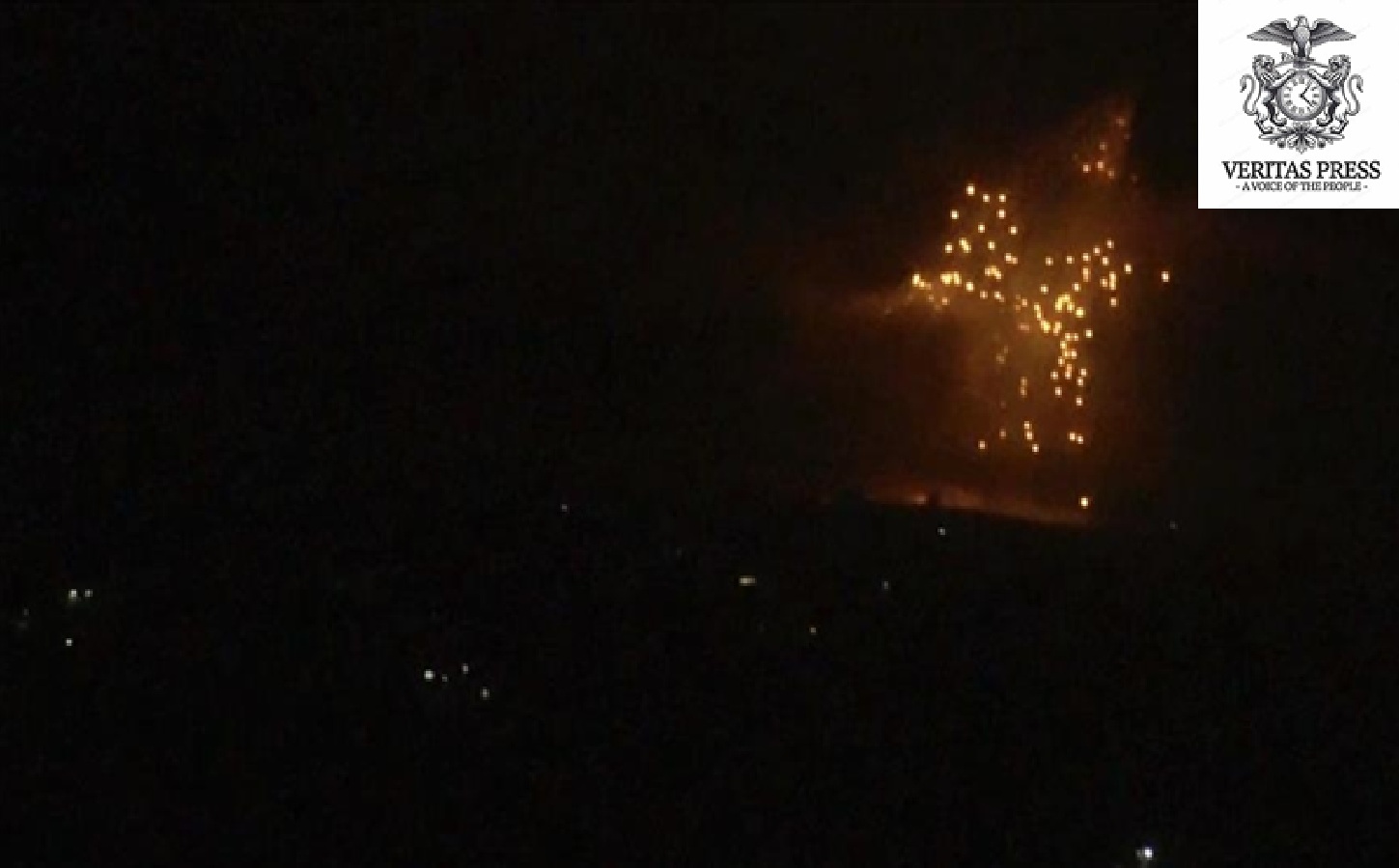
BEIRUT / TEL AVIV — In the pre‑dawn hours of Saturday, the wail of air‑raid sirens shattered months of uneasy quiet across northern Israel. From Haifa’s portside neighbourhoods to the hilltop city of Safed, residents who had slowly returned to a cautious routine after the March ceasefire found themselves sprinting back to shelters. By Sunday evening, the Israeli military had confirmed that more than 25 projectiles were fired from Lebanon in a single day, but local authorities and media tallies suggested the real number was far higher. For the first time since the ceasefire took effect, the rockets and suicide drones came in waves, overwhelming interception systems and setting off explosions inside Israeli territory.
The immediate catalyst, according to Hebrew Channel 13, was an Israeli decision to significantly expand ground operations north of the Litani River. The channel reported that the military was “surprised both by the intensity of the attacks and by Hezbollah’s decision to alter its response strategy.” That assessment was echoed in security consultations convened by Prime Minister Benjamin Netanyahu as sirens continued to ring out over the Upper Galilee. “We thought we had degraded their launch capabilities and command‑and‑control structure enough to prevent this kind of salvo,” a senior military officer told the channel, speaking on condition of anonymity. “The weekend showed we were wrong.”
Residents of northern settlements, many of whom had spent months oscillating between official reassurances and sudden violence, described a sense of betrayal. “They told us the ground operation would push the threat away, but now it’s worse than before the ceasefire,” said Yossi Malka, a 47‑year‑old teacher from Kiryat Shmona, who spent most of Saturday in a communal bomb shelter with his two children. “Every time we heard an interception, the building shook. The children were crying. This is not life.”
“A different kind of response”
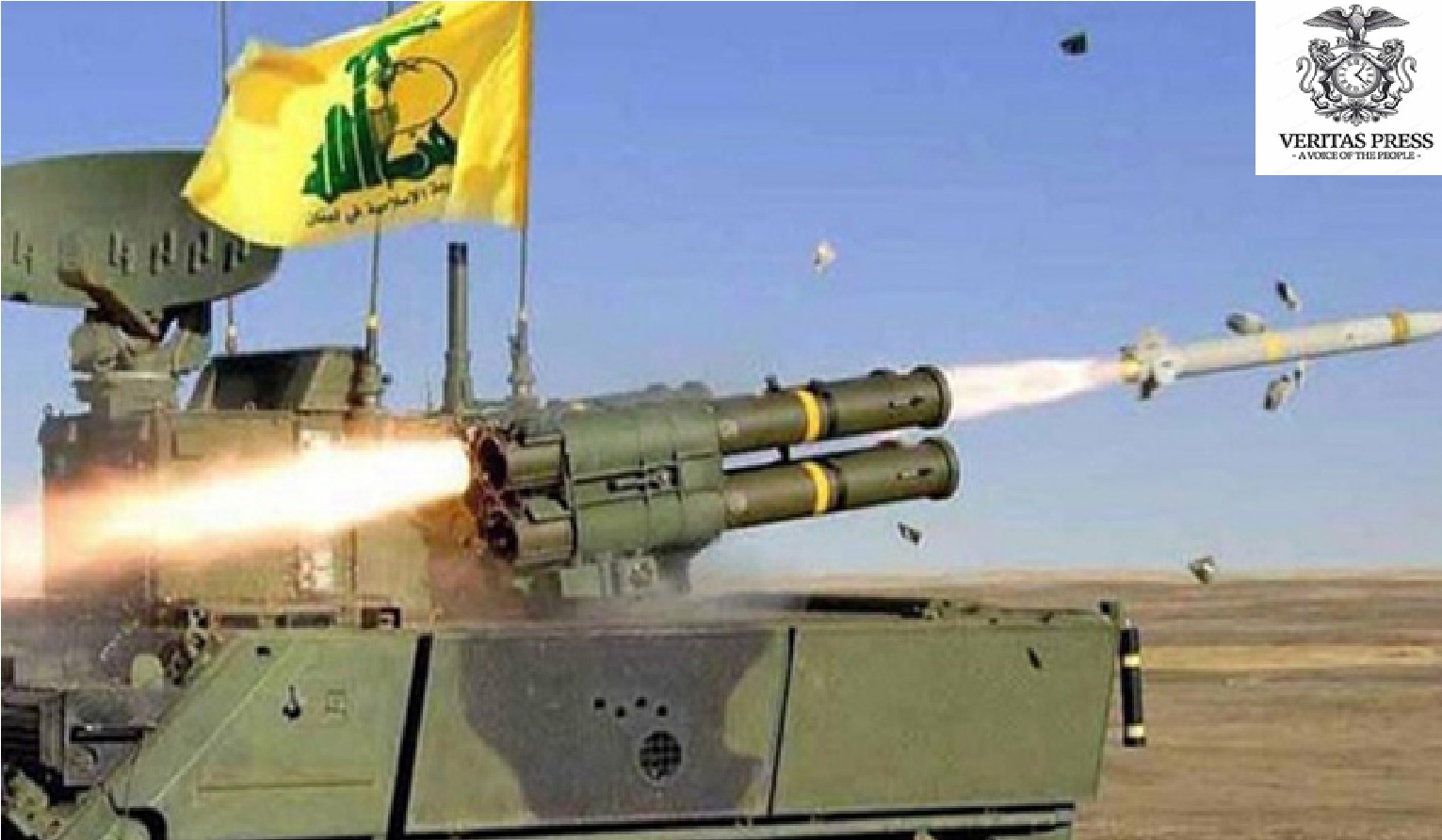
Hezbollah’s military media wing announced a flurry of operations over the weekend, claiming a rocket barrage that struck a newly established Israeli artillery position in the border town of Adaysah and a separate artillery attack on Israeli soldiers gathered at the Metula site. The statements, released on the movement’s Telegram channel, were accompanied by footage showing the launch of multiple rocket systems and what appeared to be a direct hit on a military vehicle. Al‑Mayadeen television, which maintains strong ties to the resistance axis, reported additional Israeli airstrikes on the town of Siddiqin, a drone strike targeting the Jal al‑Bahr area in the coastal city of Tyre, and fresh raids on Nabatieh and Majdal Zoun. Lebanese civil defence teams said at least eight civilians were killed and 20 wounded on Sunday alone, several of them in residential buildings hit without prior warning.
For analysts monitoring the front, the shift in Hezbollah’s tactics was unmistakable. “Before this latest Israeli expansion, Hezbollah had largely confined itself to tit‑for‑tat border harassment, aiming to tie down Israeli troops without triggering all‑out war,” explained Emile Hokayem, director of regional security at the International Institute for Strategic Studies. “But the push north of the Litani, especially the advance toward Beaufort Castle in Nabatieh province, crossed a psychological and political red line. What we saw at the weekend was Hezbollah demonstrating that it can escalate vertically at a time and place of its choosing, regardless of the pounding it has taken.” The movement itself echoed this logic. In a rare written statement delivered to journalists in Beirut, a Hezbollah official described the operations as “a legitimate act of resistance to defend Lebanon’s sovereignty and territorial integrity against ongoing Israeli aggression and military incursions.”
The Litani Gambit:
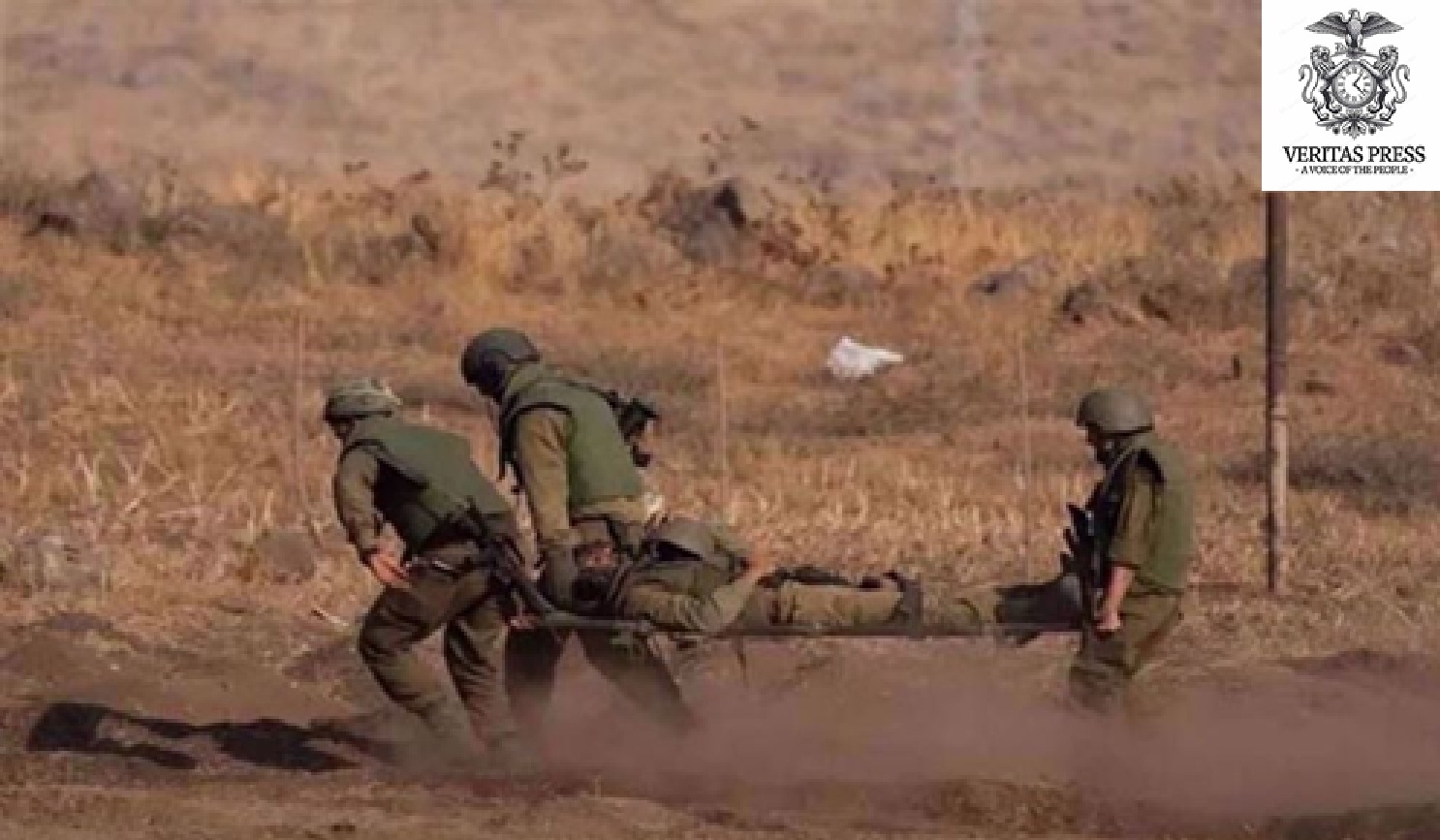
Israeli forces began pushing beyond the Litani River in early May, arguing that the March ceasefire had failed to prevent Hezbollah from rebuilding forward positions and smuggling precision‑guided munitions. New orders issued by the military on Friday instructed civilians in a dozen southern Lebanese villages to evacuate immediately, while the Home Front Command tightened restrictions on gatherings and work activities in parts of the Upper Galilee and ordered schools to close. Israeli troops, backed by heavy artillery and air cover, advanced into the hills surrounding the 12th‑century Beaufort Castle, a strategic high point that offers commanding views of the southern valleys.
“We are acting to remove the threat posed by Hezbollah’s Radwan forces and to ensure that our northern communities can live in security,” an Israeli army spokesperson said in a video statement, repeating a mantra that has been in circulation for months. But the weekend’s events have cast serious doubt on the viability of that mission. Haaretz, in a front‑page analysis on Sunday, was blunt: “Rocket and drone attacks from Lebanon continue on a large scale despite months of Israeli military operations. The Lebanese front remains active, and the army’s stated objectives appear as distant as ever.”
The newspaper cited internal military assessments showing that Hezbollah’s rocket‑launching capacity, though diminished in the initial phase of the war, had been partially reconstituted through dispersed, mobile launchers and an elaborate tunnel network that Israeli engineers have struggled to map and destroy. “We are hunting ghosts,” a reserve intelligence officer told Haaretz. “Every time we enter a village and declare it cleared, a launcher pops up behind us.”
A War On Two Fronts:
The escalation in Lebanon cannot be divorced from the broader regional crisis that exploded on 28 February, when the United States and Israel launched a coordinated military campaign against Iran. Dubbed “Operation Persian Shield” by the Pentagon, the war was sold as a decisive blow against Tehran’s nuclear programme and its regional proxies. In the three months since, the conflict has passed through multiple phases of escalation, battlefield shocks and frantic diplomacy, yet one overarching conclusion is now crystallising among strategists in Washington and beyond: the United States has suffered another strategic defeat in West Asia, arguably its sixth major failure in the region over the past quarter century.
Even during the much‑hyped ceasefire windows, new developments emerged almost daily. Iran’s ballistic missile salvos successfully saturated Israeli and US air defence systems, while Hezbollah, far from being deterred by the punishing air campaign against Lebanon, has used the chaos to entrench itself more deeply in the south. The “Lebanese front” has become the war’s most kinetic non‑Iranian theatre, absorbing Israeli divisions that were supposed to be free for other missions. “The United States and Israel believed that decapitating Iran’s leadership and bombing its infrastructure would cause the entire Axis of Resistance to collapse,” said Narges Bajoghli, an anthropologist and expert on Iranian military culture at Johns Hopkins University. “Instead, the network has shown a startling degree of coordination and resilience. Hezbollah’s ability to launch large‑scale attacks in May 2026, after 90 days of relentless bombardment, is a case in point.”
Iranian officials have publicly embraced that narrative. In a speech on Friday, Revolutionary Guards commander Hossein Salami praised Hezbollah’s “patience, precision and power” and warned that “the resistance will expand the geography of response if the enemy fails to learn its lesson.” Meanwhile, Western diplomats at the United Nations Security Council privately concede that the United States has little leverage left to impose a meaningful ceasefire on the Lebanon front without addressing the underlying war on Iran, a precondition that Israel and its hardline government refuse to accept.
The Human Wreckage:
Lebanon’s caretaker health ministry updated its casualty figures on Monday morning: at least 3,404 people have been killed and 10,211 wounded since early March, with roughly 60 per cent of the dead identified as women and children. More than 1.6 million Lebanese, nearly a third of the population, have been displaced, overwhelming a country already in the grip of an economic depression. “We are witnessing a humanitarian catastrophe on a scale not seen since the 2006 war, but with much less international attention because the world’s eyes are on Tehran and the Gulf,” said Jennifer Moorehead, Lebanon country director for the Norwegian Refugee Council, which operates emergency shelters in Sidon and Beirut. “People are being bombed in their homes, in their fields, even as they queue for bread.”
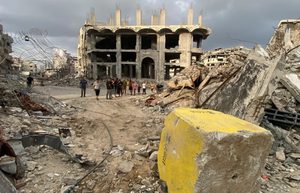
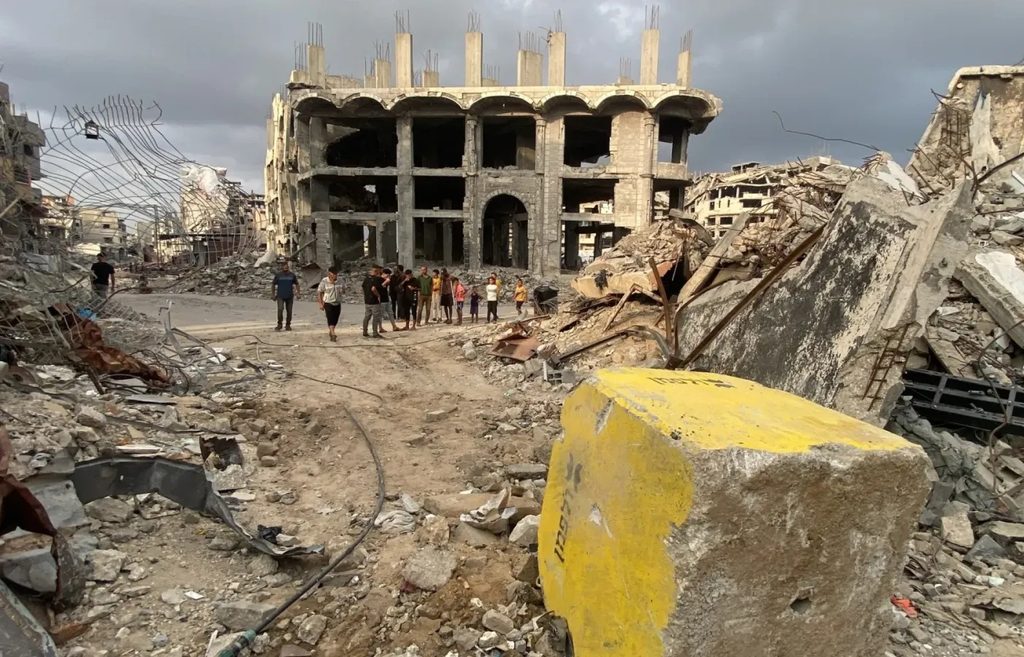
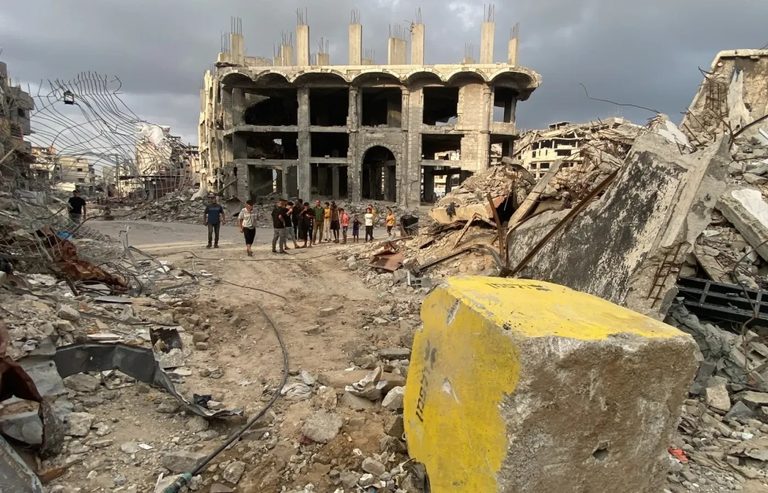
One such strike occurred Sunday afternoon in the village of Deir al‑Zahrani, where an Israeli warplane flattened a three‑storey building that housed two families who had refused to leave their ancestral land. Rescue workers pulled four bodies from the rubble, including a six‑year‑old boy. His father, Ali Shamas, sat on a neighbouring cinderblock, caked in dust, staring at the ruins. “They told us to go, but where could we go?” he asked, his voice hollow. “We have no money, no relatives in the city. We thought if we stayed, they would see we were civilians. They saw nothing.”
Activists and human rights organisations have accused both sides of violations of international humanitarian law. Amnesty International’s crisis response team, in a statement released on Sunday, condemned the Israeli military’s pattern of attacking residential areas without distinction and called Hezbollah’s firing of unguided rockets into civilian areas “a breach of the prohibition against indiscriminate attacks.” But the asymmetry in destructive power is stark. According to data compiled by the Lebanese Centre for Human Rights, Israel conducted more than 1,200 airstrikes in southern Lebanon in May alone, while Hezbollah fired approximately 800 projectiles of various types over the same period. The civilian death toll in Lebanon is roughly 25 times that of northern Israel.
The Political Fault Lines In Israel:
In Tel Aviv, the weekend’s barrage has sharpened a simmering political crisis. Netanyahu, who faces weekly protests calling for his resignation over the handling of the multi‑front war, held an unscheduled meeting of the security cabinet late Saturday. Far‑right National Security Minister Itamar Ben‑Gvir demanded a “crushing, disproportionate” response, including the bombing of Lebanese infrastructure deep inside Beirut. More cautious voices within the defence establishment, including Defence Minister Yoav Gallant and several former generals now serving as ministers, warned that opening a full‑scale second front while the Iran campaign remains unresolved would stretch military resources to breaking point.
“We are fighting a three‑dimensional chess game, and our opponents are thinking four moves ahead,” said retired Major General Yitzhak Brick, who has become a vocal critic of the government’s strategy. “The idea that we could sever Hezbollah from the equation by bombing its tunnels and killing a few commanders was always a fantasy. Now we are paying the price for that fantasy in rockets hitting Haifa.” Brick’s comments, aired on Channel 12, caused a minor political firestorm, but they resonate with a growing segment of the Israeli public. Recent polls show that only 34 per cent of Israelis support continuing the ground operation in Lebanon at its current scale.
Israeli media reflected the mood of unease. Yedioth Ahronoth ran a front‑page headline: “The North Is Burning Again.” Makor Rishon, a right‑leaning outlet, published an editorial questioning whether the military’s “limited‑escalation” doctrine still held. Channel 13’s military correspondent, reporting from the northern command, noted that the Iron Dome and David’s Sling systems had intercepted a respectable number of incoming projectiles, but the sheer volume had allowed several to slip through. “A drone launched from the Tyre area evaded detection for nearly eight minutes before striking a logistics base near Safed,” the correspondent said. “That is a significant operational failure.”
The Balance Of Power Has Shifted:
Stepping back from the day‑to‑day exchanges, the broader contours of the conflict reveal a seismic shift in the regional balance of power, one that few Western capitals are ready to acknowledge openly. The United States and Israel entered the war with the explicit goal of “destroying the Iranian axis” and creating a new security architecture favourable to their allies. Instead, they have galvanised a front that now stretches from the Mediterranean to the Strait of Hormuz. In Iraq, Shia militias have intensified drone attacks on US bases, forcing repeated evacuations. In Yemen, Ansarallah continues to disrupt Red Sea shipping despite US Navy operations. And in Lebanon, Hezbollah has absorbed a scale of punishment that would have broken a conventional army and emerged with its command‑and‑control intact and its rocket arsenal still functional.
“What we are seeing is the application of a ‘porcupine’ strategy: make any ground advance so costly that the enemy eventually rethinks its objectives,” said Amal Saad, a Hezbollah expert and lecturer at Cardiff University. “The Israeli army can take territory, but it cannot hold it. And every village it enters becomes a kill zone. Meanwhile, Hezbollah’s strategic depth, its ability to strike back across the entire north of Israel, remains undiminished.” Saad pointed to the attack on the Adaysah artillery position and the Metula site as evidence that Hezbollah is now proactively targeting Israel’s forward assets, rather than merely retaliating.
The balance of power has shifted in other, less visible ways as well. The United States, overextended and facing a hostile Congress that increasingly questions the bill for a war with no exit ramp, is quietly urging Israel to wind down the Lebanon campaign. European governments, terrified of refugee flows and energy market shocks, are breaking ranks. A senior French diplomat told this correspondent on the sidelines of the UN General Assembly session that “the mood in Paris is one of frustration, we see no strategy, only destruction.” Russia and China, meanwhile, have seized the opportunity to deepen economic and military ties with Iran, while offering a diplomatic umbrella at the Security Council.
The war imposed on Iran by the United States and Israel on 28 February passed through multiple phases of escalation, uncertainty and political shockwaves. Even during ceasefire periods, new developments continued to emerge almost daily. Yet despite the twists and turns, one conclusion now appears unmistakable: the United States has suffered another strategic defeat in West Asia, arguably its sixth major failure in the region in the past quarter century, after Iraq, Afghanistan, Syria, Libya and Yemen. The Lebanese front has become the prism through which that defeat is most visible.
Looking Ahead:
On Monday morning, Israeli warplanes launched a new round of strikes on the outskirts of Siddiqin and Majdal Zoun, while Hezbollah’s military media released a video of a guided anti‑tank missile destroying a surveillance camera near the border. The tempo of operations on both sides suggests that the weekend’s shock has not led to a pause, but to a deeper cycle of action and reaction. In the shelters of northern Israel and the overcrowded schools of southern Lebanon, ordinary people are asking the same question: what will it take for this to end?
As yet, neither side has a credible answer. For Hezbollah, the narrative of resistance is inextricably linked to the wider war on Iran, and backing down while Israeli tanks remain north of the Litani is a political impossibility. For the Netanyahu government, admitting that the ground operation has failed would be an existential blow from which the coalition might not recover. So the war grinds on, feeding on its own momentum, while the strategic architects in Washington and Tel Aviv search for a way to exit a conflict that has already rewritten the region’s rules, and may yet redraw its borders.
Source:Veritas Press C.I.C. | Multi News Agencies
Submissions:
For The Secure Submission Of Documentation, Testimonies, Or Exclusive Investigative Reports From Any Global Location, Please Utilise The Following Contact Details For Our Investigations Desk: enquiries@veritaspress.co.uk or editor@veritaspress.co.uk
Help Support Our Work:
Popular Information is powered by readers who believe that truth still matters. When just a few more people step up to support this work, it means more lies exposed, more corruption uncovered, and more accountability where it’s long overdue.
Help Protect Independent Journalism, Which Is Currently Under Attack.
If you believe journalism should serve the public, not the powerful, and you’re in a position to help, becoming a DONATOR or a PAID SUBSCRIBER truly makes a difference.
DONATION APPEAL: If You Found This Reporting Valuable, Please Consider Supporting Independent Journalism.
Help Support Our Work – We Know, We Know, We Know …
Seeing these messages is annoying. We know that. (Imagine what it’s like writing them … )
Your support fuels our fearless, truth-driven journalism. In unity, we endeavour to amplify marginalised voices and champion justice, irrespective of geographical location.
But it’s also extremely important. One of Veritas Press’s greatest assets is its reader-funded model.
1. Reader funding means we can cover what we like. We’re not beholden to the political whims of a billionaire owner. We are a small, independent and impartial organisation. No one can tell us what not to say or what not to report.
2. Reader funding means we don’t have to chase clicks and traffic. We’re not desperately seeking your attention for its own sake: we pursue the stories that our editorial team deems important and believe are worthy of your time.
3. Reader Funding: enables us to keep our website and other social media channels open, allowing as many people as possible to access quality journalism from around the world, particularly those in places where the free press is under threat.
We know not everyone can afford to pay for news, but if you’ve been meaning to support us, now’s the time.
Your donation goes a long way. It helps us:
Keep the lights on and sustain our day-to-day operations
Hire new, talented independent reporters
Launch real-time live debates, community-focused shows, and on-the-ground reporting
Cover the issues that matter most to our communities, in real time, with depth and integrity
We have plans to expand our work, but we can’t do it without your support. Every contribution, no matter the size, helps us stay independent and build a truly people-powered media platform.
If you believe in journalism that informs, empowers, and reflects the communities we serve, please donate today.
Kamran Faqir is a volunteer investigative journalist and writer committed to exposing hidden truths and amplifying underreported stories. Driven by social justice, he brings sharp insight and fearless truth-telling to independent journalism. NUJ registered.
SEATTLE, TEHRAN — The U.S. Department of Homeland Security (DHS) will allow Iran’s national football team to enter the country 48 hours before their critical World Cup match against Egypt on Friday, a modest concession in a tournament where Team Melli’s travel conditions have sparked claims of oppression and competitive disadvantage.