Kamran Faqir is a volunteer investigative journalist and writer committed to exposing hidden truths and amplifying underreported stories. Driven by social justice, he brings sharp insight and fearless truth-telling to independent journalism. NUJ registered.
Article Date Published:
Article Date Modified:
15 minutes
Views:421
Listen to this article
Help support our mission, donate today and be the change. Every contribution goes directly toward driving real impact for the cause we believe in.
Introduction: A Civilisation At Its Zenith, Or Its Twilight?
For more than five centuries, Western civilisation has occupied a uniquely dominant position in global affairs. From the age of maritime expansion and colonial conquest to the Industrial Revolution and the rise of the United States as a global superpower, Western states have shaped the architecture of the modern world. They built the institutions of global finance, international law, scientific modernity, and military power projection. They also defined much of the cultural and intellectual vocabulary through which global politics is still understood today.
Yet this dominance now exists alongside a growing sense of instability. Western societies remain among the wealthiest and most technologically advanced in human history, but they are also increasingly described by scholars, economists, and political theorists as fragmented, polarised, and uncertain about their long-term direction.
The question that has re-emerged in contemporary debate is no longer whether the West is powerful, but whether its power is becoming structurally self-undermining. Rising inequality, stagnating wages, demographic contraction, political polarisation, rising discrimination, declining institutional trust, and the resurgence of geopolitical rivalry all suggest a system under strain rather than one in equilibrium.
Historical parallels are frequently invoked. Civilisations in Rome, Abbasid Baghdad, Mughal India, Qing China, and the Ottoman Empire all experienced long periods where external strength masked internal fragility. In many of those cases, decline was not a sudden collapse but a gradual erosion, economic, cultural, institutional, and psychological.
The question now being asked across academia and policy circles is whether the contemporary Western world is entering a similar long cycle of transformation or decline.
The Spenglerian Warning: When Civilisations Grow Old.
Oswald Spengler’s The Decline of the West remains one of the most provocative frameworks for understanding civilisational change. Writing in the aftermath of World War I, Spengler argued that civilisations are not linear progressions but organic entities with life cycles: birth, growth, maturity, and eventual decline.
For Spengler, the defining feature of late-stage civilisations is not material poverty but cultural exhaustion. Societies in decline often retain immense technological capability and economic complexity, but lose the inner vitality that once drove their expansion. Culture hardens into civilisation; creativity becomes administration; spiritual vision gives way to technical management.
In this sense, decline is not collapse but transformation into something more rigid, bureaucratic, and materially focused.
Many contemporary analysts see echoes of this condition in the modern West. Technological innovation remains rapid, particularly in artificial intelligence, biotechnology, and digital systems. Financial markets remain deep and globally dominant. Military capabilities remain unmatched.
Yet at the level of social cohesion, meaning, and shared identity, there is a growing sense of fragmentation. Spengler’s idea of civilizational “winter”, a period of high technique but low spiritual vitality, has become a recurring reference point in discussions of the Western trajectory.
The Crisis Of Meaning In An Age Of Abundance:
One of the central paradoxes of the modern West is that its deepest social crises coexist with unprecedented material abundance. In historical terms, the average citizen of Europe or North America enjoys levels of comfort, healthcare, mobility, education, and technological access that would have been unimaginable a century ago.
Yet alongside this prosperity, indicators of psychological and social distress have risen significantly. Loneliness, seclusion, anxiety, depression, and social isolation are widely documented across advanced economies. Public health agencies and sociological studies increasingly describe these conditions as structural rather than individual pathologies.
Émile Durkheim’s concept of “anomie”, a breakdown of shared norms and collective meaning, has regained analytical relevance. As traditional institutions weaken, individuals are left to construct identity in increasingly fragmented social environments.
Religious participation has declined in many Western societies. Trade unions, once central to working-class solidarity, have weakened. Local civic institutions have eroded. Extended family networks have become more geographically and socially dispersed.
Digital platforms have filled part of this vacuum, but they have also intensified fragmentation. Social media creates a constant connection without a stable community. It produces visibility without belonging. In this environment, individuals are often surrounded by information but deprived of stable frameworks of meaning.
The result is a paradoxical condition: societies that are materially rich but existentially unsettled.
Religion, Spirituality, And Civilisational Cohesion:
Historically, religion played a central role in maintaining civilisational coherence. It provided shared moral frameworks, ritual structures, collective narratives, and systems of meaning that extended beyond individual life.
Arnold Toynbee, in his study of civilisational rise and decline, emphasised the importance of what he called “creative minorities”, groups capable of generating new moral and institutional responses to crisis. Civilisations, in his view, decline not simply because of external pressure but because they fail to renew their spiritual and institutional vitality.
The secularisation of the West is therefore interpreted in two opposing ways. For some thinkers, it represents liberation from dogma and the expansion of individual autonomy. For others, it represents the erosion of shared moral foundations.
In the absence of religious or transcendent frameworks, consumer culture increasingly occupies the symbolic space once held by religion. Identity becomes tied to consumption patterns, career achievement, and personal optimisation. Success is measured through accumulation rather than contribution.
Critics argue that this shift has weakened the social glue that historically bound societies together, replacing collective moral narratives with individualised economic pursuit.
From Citizens To Consumers:
The evolution of capitalism has profoundly reshaped social identity. In earlier periods, individuals primarily understood themselves as members of collective entities, families, religious communities, trades, and nations. Economic life was embedded within social life.
In contemporary Western societies, that relationship has inverted. Individuals are increasingly framed as consumers navigating markets for education, healthcare, housing, entertainment, and even relationships.
This transformation reflects what sociologists describe as the “marketisation of life.” Public services are increasingly evaluated through efficiency metrics derived from corporate logic. Universities compete for revenue. Hospitals operate under cost-efficiency pressures. Housing is treated as a financial investment rather than social infrastructure.
The result is a system that excels at efficiency and innovation but struggles to generate stability and belonging. Economic life becomes more fluid but also more precarious. Individuals gain choice but often lose security.
Critics argue that this shift has eroded the social contract that once underpinned Western democracies.
Economic Prosperity For Whom?
Despite persistent narratives of crisis, Western economies remain among the richest in the world. However, distributional patterns have shifted dramatically over recent decades.
Thomas Piketty’s work on capital accumulation highlights a structural tendency toward inequality when returns on wealth exceed overall economic growth. In such conditions, capital ownership becomes increasingly concentrated over time.
This dynamic has contributed to widening gaps between asset owners and wage earners. Housing markets in major cities have become increasingly inaccessible. Wealth accumulation is increasingly driven by property and financial markets rather than labour income.
For many younger generations, economic mobility appears weaker than in previous decades. Even highly educated individuals often face precarious employment conditions, rising debt burdens, and delayed access to stable housing.
This divergence between aggregate prosperity and individual insecurity creates a political and psychological tension. Societies may appear wealthy in macroeconomic terms, while large portions of the population experience stagnation or decline in lived economic reality.
The Return Of Class Society:
One of the most striking developments in contemporary Western societies is the re-emergence of stratified class structures.
A globalised elite, comprising financial institutions, multinational corporations, technology firms, and political networks, operates across national boundaries with significant influence over policy and economic direction.
Below this elite is a shrinking middle class facing rising costs of living, housing pressures, and increasing job insecurity. Beneath them lies a large working population engaged in precarious labour markets, often characterised by limited upward mobility.
Emmanuel Todd’s demographic and sociological analyses suggest that such stratification is not merely economic but also cultural and psychological, shaping patterns of political behaviour and institutional trust.
The erosion of class mobility reinforces perceptions of systemic closure. When societies appear less open to advancement, political legitimacy weakens.
Elites, Corruption And The Crisis Of Trust:
Rising inequality has contributed to a broader crisis of institutional trust. Across many Western countries, surveys show declining confidence in governments, media organisations, financial institutions, and political parties.
While modern corruption rarely takes overtly illegal forms, critics argue that structural influence has become normalised through lobbying systems, campaign financing, and corporate-government revolving doors.
Noam Chomsky has long argued that modern democracies operate within systems where economic power heavily shapes political outcomes, even without formal authoritarian control.
The perception that elites operate under different rules has become increasingly widespread. This perception itself becomes politically consequential, regardless of whether all specific claims are accurate.
When institutional trust erodes, societies become more vulnerable to polarisation, conspiracy thinking, and political extremism.
Pseudomorphism And The Loss Of Cultural Confidence:
Oswald Spengler’s concept of pseudomorphism describes societies that adopt external institutional forms without fully integrating their underlying cultural substance.
In the contemporary globalised world, this phenomenon is often associated with the spread of standardised political and economic models across culturally diverse societies.
Liberal democracy, market capitalism, and global consumer culture have become widespread institutional templates. However, their local integration varies significantly.
The result in many societies is a tension between inherited cultural identities and imported institutional frameworks. This tension produces uncertainty regarding national identity, cultural direction, and social cohesion.
Rather than producing a unified global civilisation, globalisation has created overlapping and sometimes contradictory cultural systems.
The Hollowing Out Of Industrial Civilisation:
The industrial foundations of Western power have weakened over several decades of structural economic change. Manufacturing capacity has shifted toward regions with lower production costs, while Western economies have become increasingly service-oriented and financialised.
This transformation generated short-term gains in efficiency and consumption but long-term challenges in industrial resilience and regional economic stability.
Communities once anchored by manufacturing employment have experienced sustained decline. Infrastructure investment has lagged in many post-industrial regions. Social dislocation has become entrenched in certain geographic areas.
The political consequences of deindustrialisation are increasingly visible in electoral behaviour, where formerly industrial regions often support anti-establishment or populist movements.
Liberalism Under Pressure:
Liberal democracy, long viewed as the dominant political model of the West, now faces challenges from multiple directions.
Francis Fukuyama’s earlier assertion that liberal democracy represented the “end point” of ideological evolution has been revisited in light of rising populism, polarisation, and institutional strain.
Critics from the left emphasise inequality and corporate power. Right-wing critics focus on the disintegration of religious, cultural, and identity elements, along with a decline in national identity.
The result is a political environment characterised by declining consensus and increasing fragmentation.
Democratic institutions remain functional but face growing difficulty maintaining legitimacy across divided societies.
The Rise Of Nationalism, Fascism, And Identity Politics:
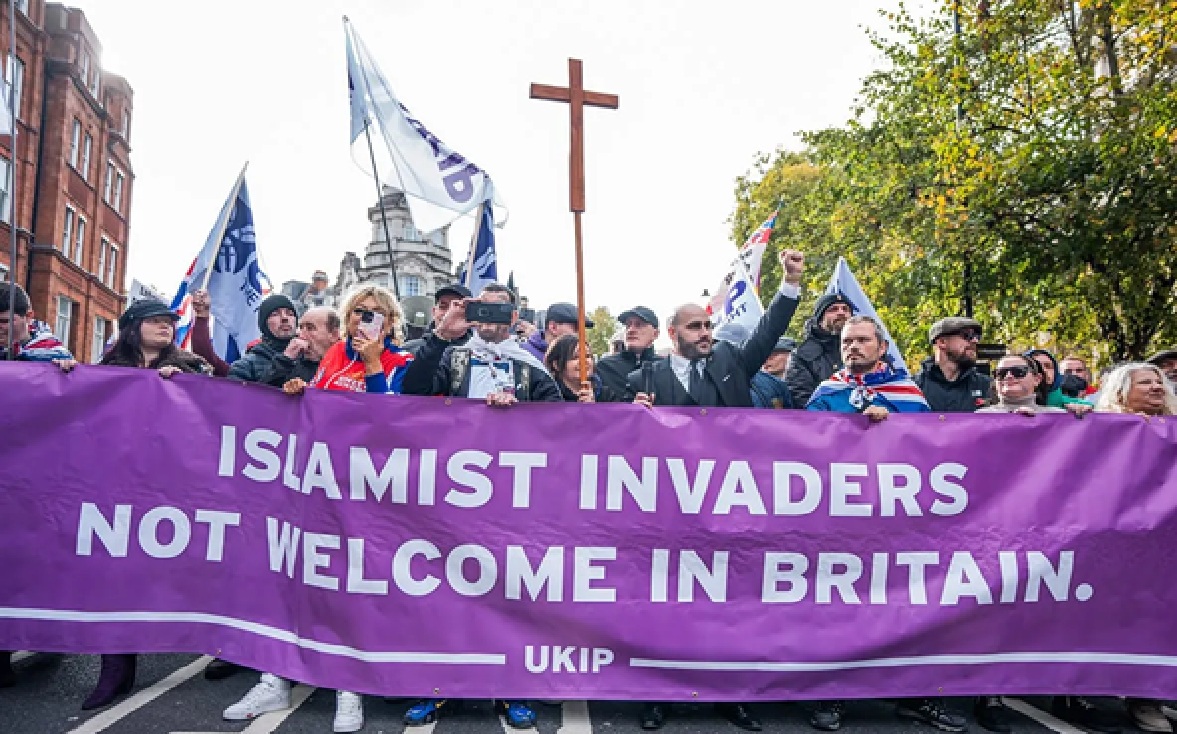
Political fragmentation has contributed to the resurgence of identity-based movements across the West. Nationalist parties have gained support in multiple countries, while debates over immigration, sovereignty, and cultural identity have intensified.
At the same time, identity politics has expanded across the ideological spectrum, producing competing narratives of grievance and historical injustice.
While these movements often emerge from legitimate concerns, they also risk reinforcing social fragmentation if they replace shared civic identity with competing group identities.
Historically, periods of economic insecurity and cultural uncertainty have often preceded political radicalisation.
The Military-Industrial Order And Permanent Conflict:
Dwight Eisenhower’s warning about the military-industrial complex continues to resonate in contemporary global politics.
Military spending remains at historically high levels. Defence industries play a significant role in economic and political systems. Conflicts in Ukraine, Gaza, and other regions have intensified global military demand.
Noam Chomsky and other critical theorists argue that military interventions are often shaped by a combination of strategic, economic, and geopolitical interests rather than purely humanitarian considerations.
Despite hopes after the Cold War for a more peaceful international order, military conflict remains a persistent feature of global politics.
Gaza, Ukraine And The Crisis Of International Legitimacy:
The wars in Ukraine and Gaza have become focal points in debates about the credibility of the liberal international order.
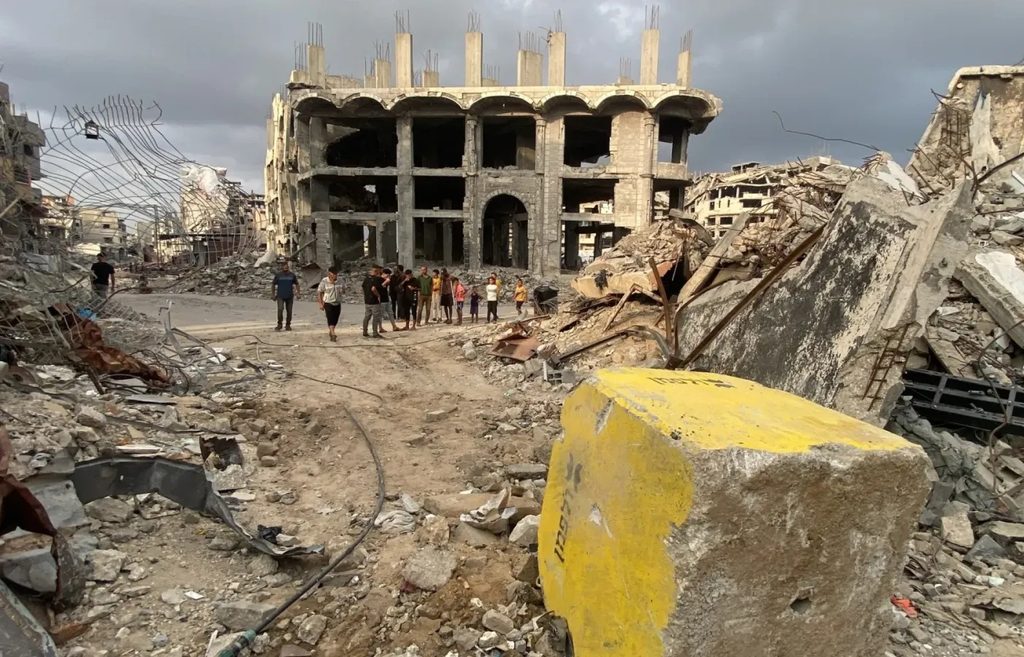
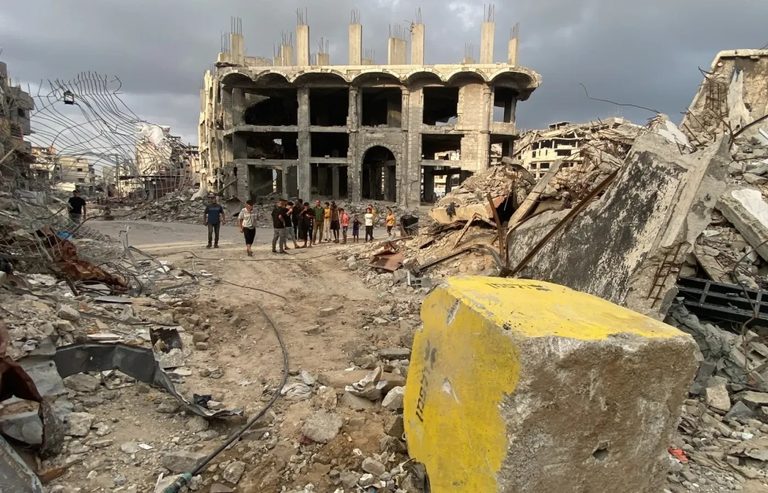
Ukraine has reinforced NATO cohesion while deepening geopolitical tensions with Russia. Gaza has intensified global debates over international law, sovereignty, civilian protection, and the consistency of Western foreign policy.
Across parts of the Global South, perceptions of inconsistency in global governance have contributed to declining trust in Western-led institutions.
Whether or not these perceptions are universally shared, they have significant geopolitical consequences.
The Global South Pushes Back:
The rise of the Global South represents one of the most significant geopolitical shifts of the twenty-first century.
BRICS expansion reflects growing demands for greater representation in global governance. Many states are seeking alternatives to institutions historically dominated by Western powers.
This shift reflects broader changes in global demographics, economic output, and political influence.
The emerging international system appears increasingly multipolar rather than unipolar.
De-Dollarisation, Artificial Intelligence And The Future:
Efforts to diversify global financial systems have intensified discussions around de-dollarisation. While the U.S. dollar remains dominant, alternative payment systems and bilateral trade arrangements are expanding.
Simultaneously, artificial intelligence is reshaping economic production, military capability, and labour markets. Its long-term consequences remain uncertain but potentially transformative.
Technological change is accelerating faster than institutional adaptation in many societies, creating new forms of instability and opportunity.
Demographic Decline And The Burden Of Complexity:
Many Western societies face declining birth rates and ageing populations. These trends place pressure on pension systems, healthcare infrastructure, and labour markets.
Joseph Tainter’s theory of complexity suggests that advanced societies may experience diminishing returns as administrative and institutional complexity increases.
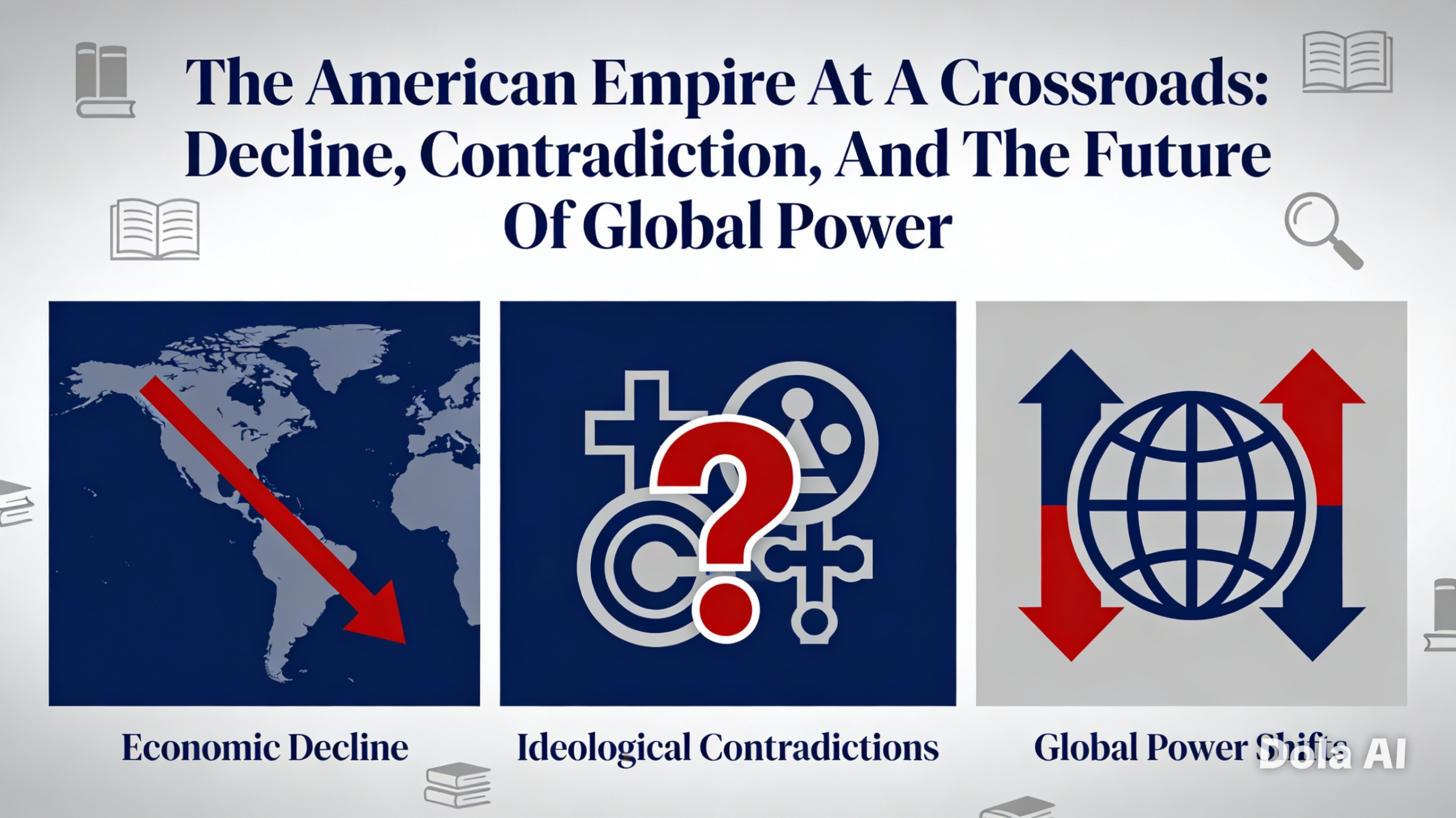
Together, these perspectives suggest that contemporary Western civilisation is experiencing a convergence of structural pressures across economic, cultural, demographic, technological, and geopolitical domains.
Whether these pressures lead to decline or renewal remains uncertain.
History suggests that civilisations are not defined solely by their challenges, but by how they respond to them.
The West remains materially powerful, technologically advanced, and institutionally influential.
But it also faces profound questions about cohesion, legitimacy, identity, and direction.
The outcome is not predetermined.
It is still unfolding.
Source:Veritas Press C.I.C.
Author: Kamran Faqir
Submissions:
For The Secure Submission Of Documentation, Testimonies, Or Exclusive Investigative Reports From Any Global Location, Please Utilise The Following Contact Details For Our Investigations Desk: enquiries@veritaspress.co.uk or editor@veritaspress.co.uk
Help Support Our Work:
Popular Information is powered by readers who believe that truth still matters. When just a few more people step up to support this work, it means more lies exposed, more corruption uncovered, and more accountability where it’s long overdue.
Help Protect Independent Journalism, Which Is Currently Under Attack.
If you believe journalism should serve the public, not the powerful, and you’re in a position to help, becoming a DONATOR or a PAID SUBSCRIBER truly makes a difference.
DONATION APPEAL: If You Found This Reporting Valuable, Please Consider Supporting Independent Journalism.
Help Support Our Work – We Know, We Know, We Know …
Seeing these messages is annoying. We know that. (Imagine what it’s like writing them … )
Your support fuels our fearless, truth-driven journalism. In unity, we endeavour to amplify marginalised voices and champion justice, irrespective of geographical location.
But it’s also extremely important. One of Veritas Press’s greatest assets is its reader-funded model.
1. Reader funding means we can cover what we like. We’re not beholden to the political whims of a billionaire owner. We are a small, independent and impartial organisation. No one can tell us what not to say or what not to report.
2. Reader funding means we don’t have to chase clicks and traffic. We’re not desperately seeking your attention for its own sake: we pursue the stories that our editorial team deems important and believe are worthy of your time.
3. Reader Funding: enables us to keep our website and other social media channels open, allowing as many people as possible to access quality journalism from around the world, particularly those in places where the free press is under threat.
We know not everyone can afford to pay for news, but if you’ve been meaning to support us, now’s the time.
Your donation goes a long way. It helps us:
Keep the lights on and sustain our day-to-day operations
Hire new, talented independent reporters
Launch real-time live debates, community-focused shows, and on-the-ground reporting
Cover the issues that matter most to our communities, in real time, with depth and integrity
We have plans to expand our work, but we can’t do it without your support. Every contribution, no matter the size, helps us stay independent and build a truly people-powered media platform.
If you believe in journalism that informs, empowers, and reflects the communities we serve, please donate today.
Kamran Faqir is a volunteer investigative journalist and writer committed to exposing hidden truths and amplifying underreported stories. Driven by social justice, he brings sharp insight and fearless truth-telling to independent journalism. NUJ registered.
SEATTLE, TEHRAN — The U.S. Department of Homeland Security (DHS) will allow Iran’s national football team to enter the country 48 hours before their critical World Cup match against Egypt on Friday, a modest concession in a tournament where Team Melli’s travel conditions have sparked claims of oppression and competitive disadvantage.