Kamran Faqir is a volunteer investigative journalist and writer committed to exposing hidden truths and amplifying underreported stories. Driven by social justice, he brings sharp insight and fearless truth-telling to independent journalism. NUJ registered.
Original Article Date Published:
Article Date Modified:
18 minutes
Views:328
Listen to this article
Help support our mission, donate today and be the change. Every contribution goes directly toward driving real impact for the cause we believe in.
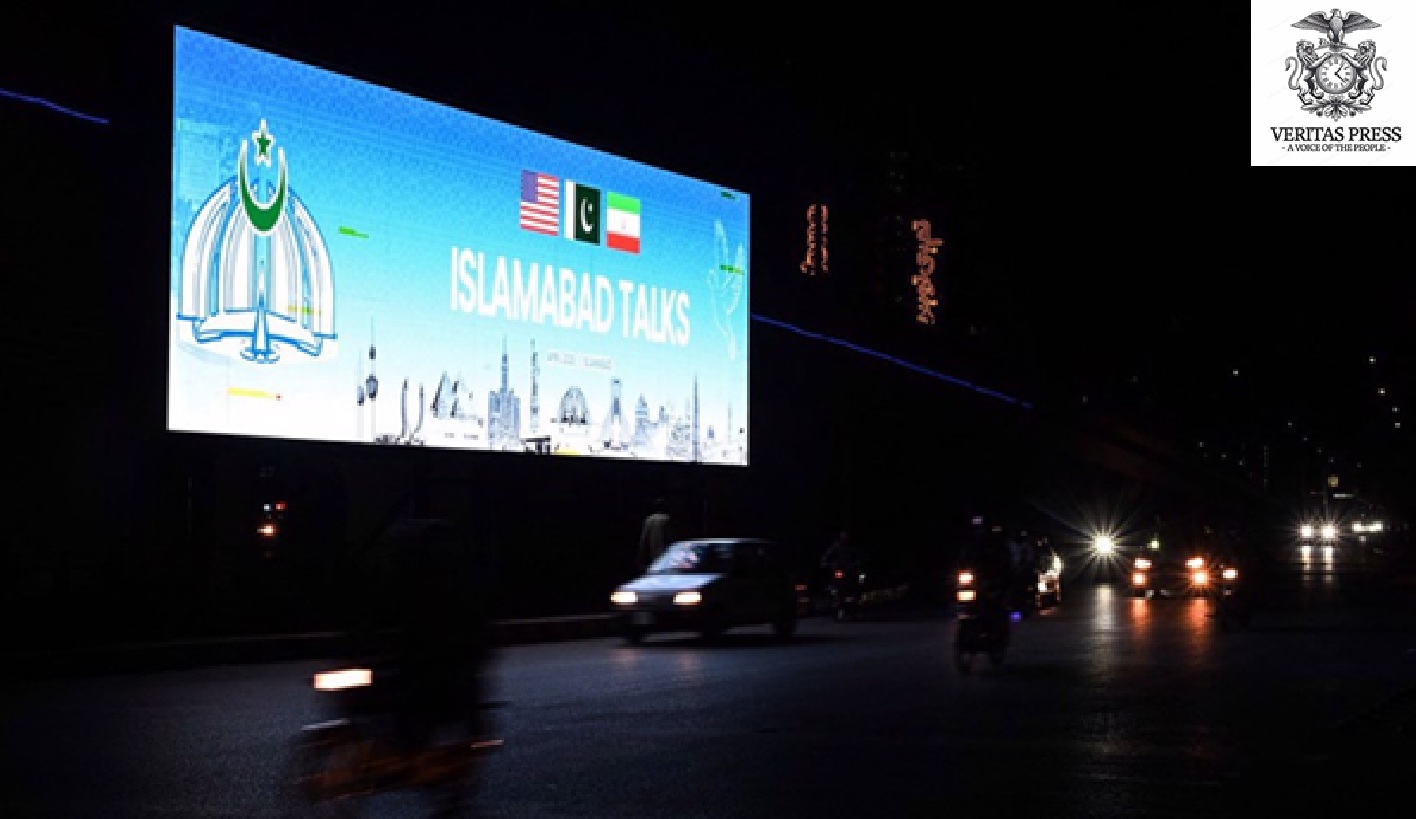
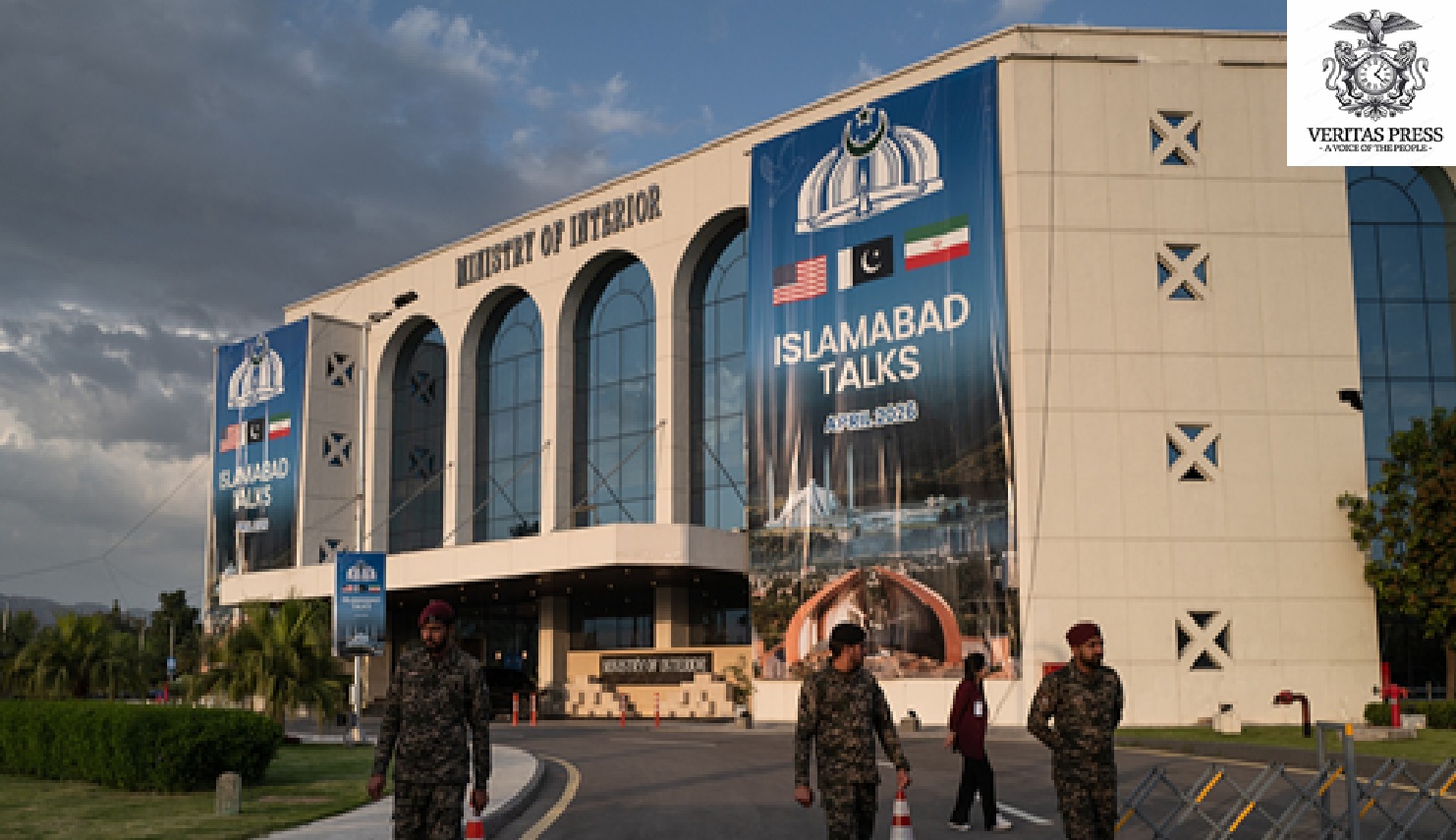
ISLAMABAD, TEHRAN – In the opulent corridors of Islamabad’s Serena Hotel, shielded from the cacophony of a world teetering on the edge, history was being written, or rather, painstakingly drafted and then partially shredded. Over a sleepless 21-hour marathon, American and Iranian officials engaged in their most senior direct dialogue since the 1979 revolution, a high-wire act of diplomacy mediated by Pakistan. Yet, as the delegations departed without a formal agreement, the world was left holding its breath, watching a fragile ceasefire tick down to an April 22 expiration, while a US naval blockade of the Strait of Hormuz threatened to reignite the very war it sought to end.
This is the inside story of the Islamabad talks, a deep dive into the deal points that came within grasp, the chasms that remain unbridgeable, and the quiet, relentless backchannel manoeuvring that might still pull two implacable foes back from the abyss. But to understand why the pen so often fails where the sword has not, one must first grasp the singular force shaping every handshake and ultimatum: the profound, immovable, and deeply earned distrust Tehran harbours toward Washington.
The Mediator’s Gambit: Pakistan’s Moment Of Reckoning.
For Pakistan, this was a geopolitical coming-out party. A nation long viewed through the narrow lens of militancy and internal strife seized its moment, leveraging its unique geography and unlikely ties to both capitals to position itself as the world’s indispensable peacemaker. “Pakistan is looking to change global perceptions about its capacities as a global player,” noted Michael Kugelman, senior South Asia fellow at the Atlantic Council. And the world’s most powerful man agreed. President Donald Trump, in a series of characteristically oscillating pronouncements, heaped praise on Pakistan’s army chief, Field Marshal Asim Munir. “He’s fantastic, and therefore it’s more likely that we go back there,” Trump told the New York Post, confirming that Pakistan’s capital remains the favoured venue for a potential second round of talks.
But the adulation masked a high-stakes gamble. As one Pakistani government source intimately familiar with the talks told Reuters, “There was a strong hope in the middle of the talks that there would be a breakthrough and the two sides would reach an agreement. However, things changed within no time”. Another source described the atmosphere as “heavy and unfriendly,” with neither side willing to ease tensions until a glimmer of hope emerged in the early hours of Sunday.
The Deal That Almost Was: 80% There.
The contours of a potential grand bargain were reportedly hashed out in excruciating detail. According to sources, the two sides came “very close” to an agreement, with one participant estimating they were “80% there”. The US team, led by Vice President JD Vance and including special envoy Steve Witkoff and Jared Kushner, made progress on numerous “points,” as Trump later conceded, calling the meeting “well” and noting “most points were agreed to”.
Yet, the devil, as always, was in the details, and the detail that shattered the consensus was the one Trump called the “only point that really mattered”: Iran’s nuclear program. The chasm here was a matter of generations. According to a New York Times report, Washington demanded a 20-year suspension of all nuclear activities, a moratorium on uranium enrichment that would effectively dismantle a key pillar of Iran’s technological sovereignty. Tehran’s counter-proposal? A pause of just five years. “The simple fact is that we need to see an affirmative commitment that they will not seek a nuclear weapon,” Vance stated bluntly before departing Islamabad, describing the two sides as “worlds apart” on the timeline.
However, for Tehran, the timeline is not merely a technicality; it is a referendum on survival. And that referendum is judged against a painful historical ledger.
The Architecture Of Distrust: A History Of Broken Promises And Assassinations.
As the delegates argued over years and percentages, a deeper ghost lingered in the room: the spectre of every American promise that was broken, every agreement that was torn up, and every negotiation that was punctuated by an Israeli missile. This is the “pathological distrust” that Brookings analyst Asli Aydintasbas says weighs down every diplomatic gesture, a half-century of grievances that has turned the diplomatic table into a minefield.
The betrayal begins long before the Islamic Revolution. In 1953, the CIA orchestrated “Operation Ajax,” overthrowing Iran’s democratically elected Prime Minister, Mohammad Mossadegh, after he nationalised the British-owned oil industry. The West then reinstalled the Shah, whose secret police, SAVAK, brutalised dissent for a quarter-century. For Iran, this was the original sin: the moment the West proved that its promises of sovereignty were contingent on Western profit.
The 1979 revolution and hostage crisis froze relations, but the pattern of duplicity continued. The most devastating blow came in 2018, when President Trump unilaterally withdrew from the Joint Comprehensive Plan of Action (JCPOA), the Obama-era nuclear deal that the UN Security Council had endorsed. Iran had allowed intrusive IAEA inspections, shipped out its enriched uranium stockpiles, and mothballed centrifuges. “Ten years is a long time…I warned back then that accepting such a period was risky, but officials went ahead,” Supreme Leader Ayatollah Ali Khamenei later recounted in a televised address, noting that while Iran fulfilled its obligations, “they did not lift the sanctions, they did not keep their promises, and eventually tore up the deal altogether”. The former Indian diplomat Veena Sikri, analysing the collapse, pointed directly to this as a core cause: “These talks were actually taking place after it was President Trump himself who broke the JCPOA”.
However, the deepest wounds, the ones that festered most acutely during the Islamabad talks, were inflicted during the very process of negotiation. As Iranian officials repeatedly told their Pakistani hosts, Washington has a habit of striking when diplomacy seems most promising.
In June 2025, while Tehran and Washington were engaged in quiet, back-channel nuclear discussions mediated by Oman, Israel launched a preemptive strike on Iran. The US joined the war, bombing nuclear facilities at Natanz, Isfahan, and Fordow, sites that were, at that very moment, under IAEA monitoring. Iran’s top parliamentarian, Mohammad Bagher Qalibaf, has since accused Washington of “being in coordination” with Israel during those attacks, describing the outcome as a “disgraceful defeat” for the US-Israeli alliance.
Then came the cataclysm of February 28, 2026. As backchannel discussions were reportedly making progress, American and Israeli strikes killed Supreme Leader Ayatollah Ali Khamenei at his office in Tehran. “The blow was inflicted when Iran believed it was negotiating in good faith,” analysts noted. From Tehran’s perspective, the sequence is unmistakable: “talks are used either as cover to prepare for war or are abandoned when military action becomes convenient”.
This is why, when Iranian Parliament Speaker Mohammad Bagher Qalibaf sat down across from JD Vance in Islamabad, he did so with the bitter taste of that betrayal in his mouth. He was not just negotiating a ceasefire; he was testing whether a leopard could change its spots. After the talks collapsed, Qalibaf was blunt: “Before the negotiations, I emphasised that we have the necessary good faith and will, but, due to the experiences of the two previous wars, we have no trust in the United States.” He pointed to the precedent that the United States had set: over the past year, it had twice attacked Iran in the middle of negotiations. His foreign ministry spokesman, Esmaeil Baqaei, described the atmosphere in Islamabad as one “dominated not only by distrust but also by doubt and suspicion, following a 40-day war initiated for the second time within nine months by the US and Israel”.
The False Ceasefire: Violations Before The Ink Dried.
This deep-seated paranoia was not merely historical. It was validated in real-time during the fragile truce that preceded the Islamabad talks. Even as Prime Minister Shehbaz Sharif declared “an immediate ceasefire everywhere, including Lebanon and other regions,” Israeli warplanes bombed nearly 100 Hezbollah targets across Beirut and southern Lebanon. An intruding drone violated Iranian airspace, and the US continued to deny Tehran’s right to enrich uranium.
” ‘The deep historical distrust we hold toward the United States stems from its repeated violations of all forms of commitments, a pattern that has regrettably been repeated once again,’ ” Ghalibaf said in a blistering statement on social media, announcing that three core clauses of the 10-point Iranian proposal had already been breached. “In such a situation, a bilateral ceasefire or negotiations is unreasonable,” he declared, though his presence in Islamabad suggested that reason was being stretched to its absolute limit. Foreign Minister Abbas Araghchi issued a stark ultimatum: “The US must choose ceasefire or continued war via Israel. It cannot have both,” adding that “the world is watching whether it will act on its commitments”.
The Blockade: A Gun To The Head Of Diplomacy.
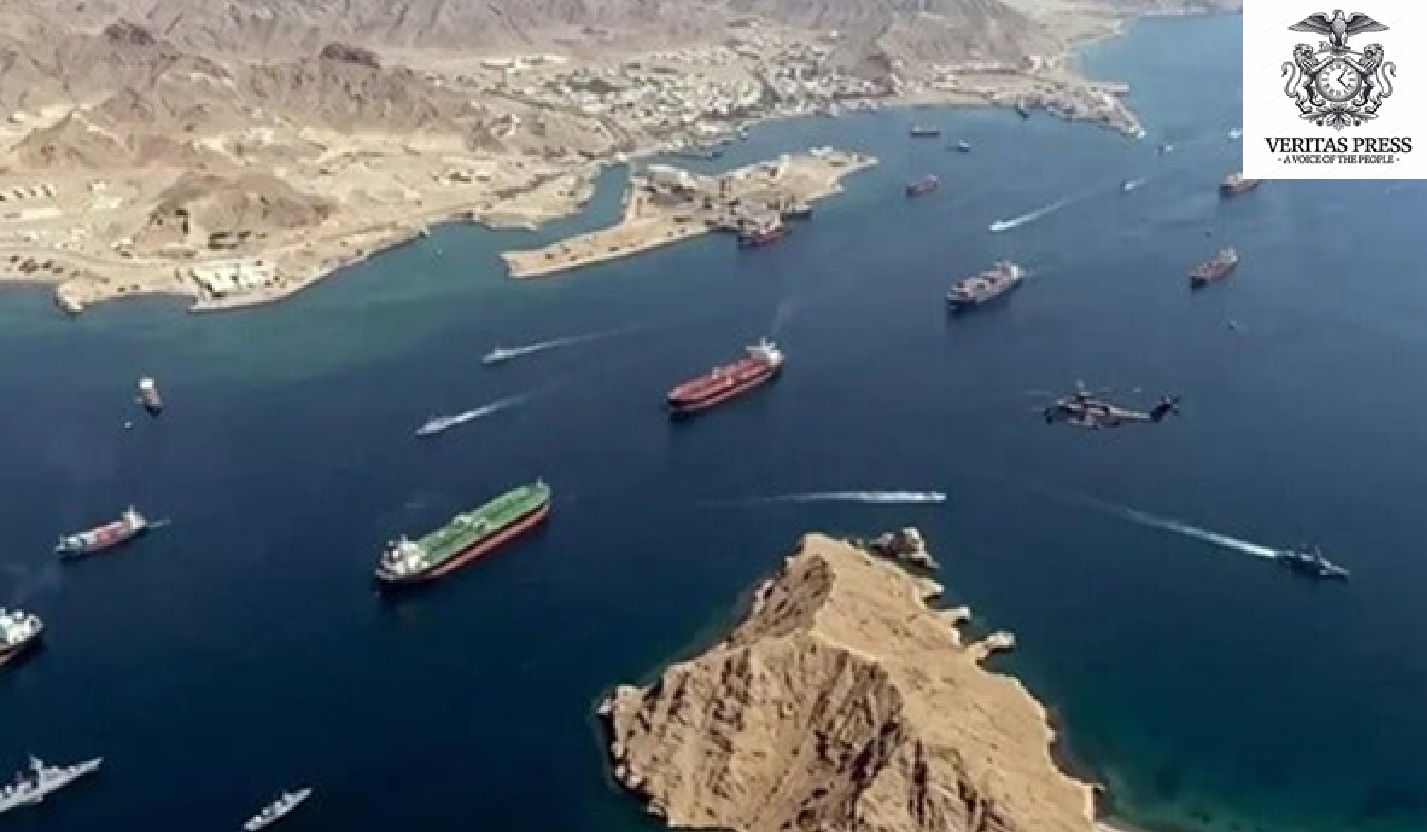
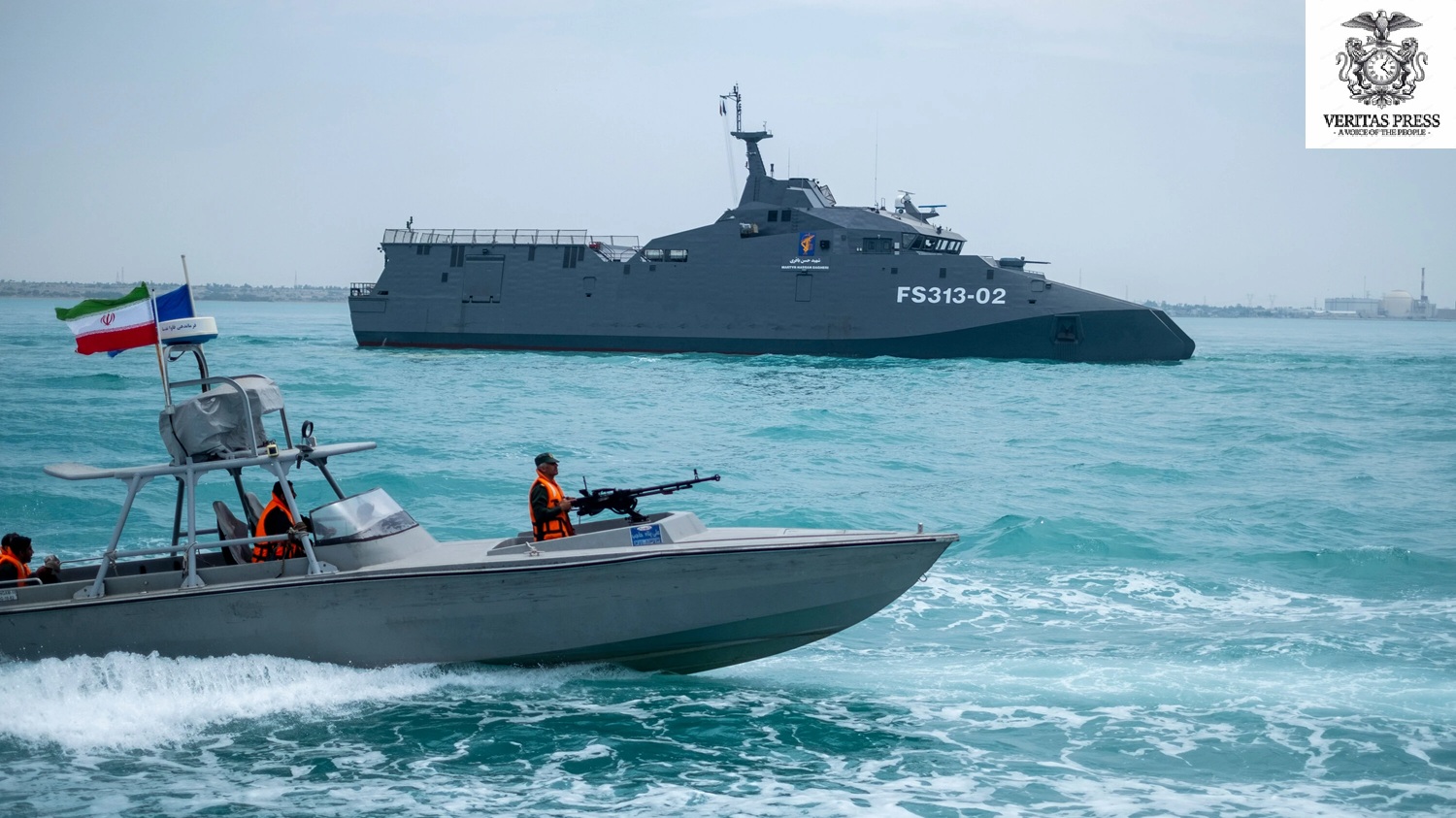
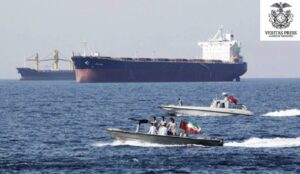
As the talks in Islamabad collapsed, President Trump pulled the trigger on a long-threatened escalation. On Monday, the US Navy began a “reckless” blockade of the Strait of Hormuz, the world’s most vital oil chokepoint, through which nearly 20% of global petroleum once flowed. “Effective immediately, the United States Navy, the Finest in the World, will begin the process of BLOCKADING any and all Ships trying to enter, or leave, the Strait of Hormuz,” Trump thundered on Truth Social. The stated goal: to force Iran to the table by choking its newfound oil wealth.
The economic stakes are staggering. Since effectively seizing control of the strait at the war’s outset, Iran has been on an unprecedented oil bonanza. According to Kpler trade intelligence data, Tehran raked in an estimated $9 billion from crude exports over a 40-day period, shipping 1.84 million barrels per day (bpd) in March, a figure actually above its pre-war average. “Iran was the main oil exporter via Hormuz in March,” noted Noam Raydan, a senior fellow at The Washington Institute, as Saudi and Iraqi barrels were locked out.
Now, that windfall is under direct threat. Experts warn Iran could lose up to $150 million a day in revenue. However, a full blockade is far from a simple proposition. “The United States can impose temporary or partial control, but it would face immense difficulty in transforming that control into a stable, long-term blockade without incurring significant political and economic costs,” said Abu Bakr al-Deeb, an advisor at the Arab Center for Research and Studies. Tehran has already threatened that any approach by US warships will be “dealt with severely,” warning that “no port will be safe” in retaliation.
Backchannel Alchemy: The Quiet Work Of Survival.
Despite the public failure, the menacing naval manoeuvres, and the profound, almost insurmountable distrust, the diplomatic pulse has not flatlined. Sources confirm a constant exchange of messages between Tehran and Washington, with Pakistan’s Foreign Ministry acting as the primary courier. “The US and Iran are maintaining backchannel communications through mediators, with Pakistan playing a central and constructive role,” a senior Pakistani official told Khaleej Times.
Islamabad has already sent a formal proposal for a second round of talks, hoping to convene delegations by the end of this week or early next week. “Things are moving positively, and there is a possibility of delegations from both countries holding a second round of talks in Islamabad,” a diplomatic official told EFE, adding that a second meeting might finally yield a breakthrough.
Prime Minister Shehbaz Sharif, meanwhile, has launched a frantic tour of Saudi Arabia, Turkey, and Qatar, building a coalition of regional allies to salvage the process before the April 22 deadline. The message from Islamabad is clear: the door remains open.
The Final Verdict: A Fragile Hope In An Age Of Lies.
The Islamabad talks were a study in contrasts: a potential historic breakthrough undone by a 15-year gap in a nuclear proposal; a devastating naval blockade launched while mediators frantically pass notes between floors; a US president threatening to “blow to hell” any Iranian ship while simultaneously praising his “favourite field marshal” in Pakistan.
But beneath the tactical manoeuvring lies a foundational tragedy. Iran’s leadership operates from a conviction that the US-Israeli alliance is fundamentally duplicitous. They see a world where Washington’s word is devalued by serial abandonment, of the JCPOA, of ceasefire terms, of the very principle that nations should not be bombed while they negotiate. As the top Iranian judge, Gholam Hossein Mohseni Ejei, put it, “the Americans, with their usual arrogance and haughtiness, and following their fixed formula of negotiations, namely, imposing false statements, appeared in the Pakistani-mediated talks… trying to obtain from the negotiation table what they could not achieve in the 40-day war.”
The current ceasefire is a paper-thin shield against a return to open warfare. The US has its naval blockade, Iran has its minefields and asymmetric arsenal, and the global economy is bracing for oil to break through $100 a barrel once more.
Yet, the very fact that the channels remain open, that Trump hints of a deal within 48 hours while also threatening annihilation, suggests that neither side is truly ready for the all-out war that lies just beyond the diplomatic horizon. The world waits, not for a grand bargain, but for a single, verifiable act of good faith that can begin to dismantle the architecture of distrust. Until then, the diplomatic alchemy in Islamabad remains the world’s most fragile hope, a hope weighed down by decades of betrayal, false agreements, and the haunting memory of negotiations conducted under the shadow of incoming fire.
Conclusion: The Unbridgeable Chasm: A Critique Of Diplomacy As Warfare By Other Means.
The Islamabad talks were never truly about a ceasefire. They were about something far more elusive: the possibility of trust in an age of serial betrayal. And on that front, the talks were doomed before a single delegate sat down.
What the world witnessed in Pakistan’s capital was not a negotiation but a performance, a high-stakes theatre of diplomacy where both sides played their roles while preparing for the next round of bloodshed. The United States arrived with a naval blockade already drafted, its warships circling the Strait of Hormuz like sharks scenting blood. Iran arrived with its finger on the trigger, its Supreme Leader’s assassination still an open wound, and its negotiators reciting a litany of broken American promises stretching back seventy years.
The fundamental failure of the Islamabad process lies not in the 15-year gap over nuclear timelines, but in the complete absence of a mechanism to guarantee any agreement’s survival. Iran’s leadership has watched the United States shred the JCPOA, bomb its nuclear sites during backchannel talks, and assassinate its top general, its lead nuclear scientist, and ultimately its Supreme Leader, all while Washington spoke of “diplomatic solutions.” As Parliament Speaker Mohammad Bagher Qalibaf stated with brutal clarity, “We have no trust in the United States.” That is not a negotiating position. It is a post-traumatic verdict.
The mediators, Pakistan, Turkey, and Egypt, have performed admirably under impossible conditions. But they are papering over a canyon. Prime Minister Shehbaz Sharif’s frantic shuttle diplomacy, while commendable, cannot manufacture what does not exist: a single American commitment that Tehran believes will outlast a change in administration, a tweet from Donald Trump, or a green light from Tel Aviv. The Israeli factor remains the elephant in every room, a special ally that has demonstrated, repeatedly and with impunity, its willingness to torpedo US-Iran diplomacy through military action. No mediator has yet dared to put Israeli compliance on the agenda.
The blockade is the tell. By imposing a naval siege even as his envoys spoke of “progress,” President Trump revealed the true nature of American strategy: coercion, not compromise. “We will talk, but we will also strangle you” is not a recipe for mutual agreement; it is a recipe for miscalculation. Iran’s IRGC has already warned of “unrevealed military capabilities” that will “surprise the enemy.” The historical pattern of a US blockade, Iranian asymmetric retaliation, and Israeli escalation is a script that has ended in war every single time.
The most damning critique, however, belongs to the dead. The 40-day war that preceded these talks was launched, by Washington’s own admission, in response to an Iranian nuclear program that IAEA inspectors had repeatedly found to be non-weaponised. The assassination of Ayatollah Ali Khamenei was an act of state terror unprecedented in modern diplomacy. And yet, the world’s powers have largely accepted this as a baseline from which to “negotiate.” What does it say about the international order when the murder of a head of state becomes a prelude to talks about trade routes?
The Pakistani source who told IRNA that “there is no information suggesting that a new round of talks would take place in the near future” may have been more honest than he knew. Because the real negotiation, the one that might actually produce a durable peace, has not yet begun. It would require the United States to acknowledge, publicly and without equivocation, that its unilateral withdrawal from the JCPOA was an illegal act that shattered Iranian faith. It would require Israel to be bound by any ceasefire agreement. It would require a binding, verifiable, and enforceable mechanism for dispute resolution that does not rely on the good faith of a US president prone to late-night reversals.
Until those prerequisites exist, the Islamabad process will remain what it is: a holding action, a temporary lid on a boiling pot, a diplomatic placebo while the real engines of war, the blockade, the missile silos, the centrifuges, continue their grim work.
The April 22 ceasefire deadline is not a diplomatic milestone. It is a countdown. And the world’s mediators, however skilled, cannot defuse a bomb when one side keeps handing the other new detonators. The question is not whether the talks will resume. The question is whether, when they inevitably fail again, anyone will be left to mourn the peace that never had a chance.
Source: Multiple News Agencies
Submissions:
For The Secure Submission Of Documentation, Testimonies, Or Exclusive Investigative Reports From Any Global Location, Please Utilise The Following Contact Details For Our Investigations Desk: enquiries@veritaspress.co.uk or editor@veritaspress.co.uk
Help Support Our Work:
Popular Information is powered by readers who believe that truth still matters. When just a few more people step up to support this work, it means more lies exposed, more corruption uncovered, and more accountability where it’s long overdue.
Help Protect Independent Journalism, Which Is Currently Under Attack.
If you believe journalism should serve the public, not the powerful, and you’re in a position to help, becoming a DONATOR or a PAID SUBSCRIBER truly makes a difference.
DONATION APPEAL: If You Found This Reporting Valuable, Please Consider Supporting Independent Journalism.
Help Support Our Work – We Know, We Know, We Know …
Seeing these messages is annoying. We know that. (Imagine what it’s like writing them … )
Your support fuels our fearless, truth-driven journalism. In unity, we endeavour to amplify marginalised voices and champion justice, irrespective of geographical location.
But it’s also extremely important. One of Veritas Press’s greatest assets is its reader-funded model.
1. Reader funding means we can cover what we like. We’re not beholden to the political whims of a billionaire owner. We are a small, independent and impartial organisation. No one can tell us what not to say or what not to report.
2. Reader funding means we don’t have to chase clicks and traffic. We’re not desperately seeking your attention for its own sake: we pursue the stories that our editorial team deems important and believe are worthy of your time.
3. Reader Funding: enables us to keep our website and other social media channels open, allowing as many people as possible to access quality journalism from around the world, particularly those in places where the free press is under threat.
We know not everyone can afford to pay for news, but if you’ve been meaning to support us, now’s the time.
Your donation goes a long way. It helps us:
Keep the lights on and sustain our day-to-day operations
Hire new, talented independent reporters
Launch real-time live debates, community-focused shows, and on-the-ground reporting
Cover the issues that matter most to our communities, in real time, with depth and integrity
We have plans to expand our work, but we can’t do it without your support. Every contribution, no matter the size, helps us stay independent and build a truly people-powered media platform.
If you believe in journalism that informs, empowers, and reflects the communities we serve, please donate today.
Kamran Faqir is a volunteer investigative journalist and writer committed to exposing hidden truths and amplifying underreported stories. Driven by social justice, he brings sharp insight and fearless truth-telling to independent journalism. NUJ registered.
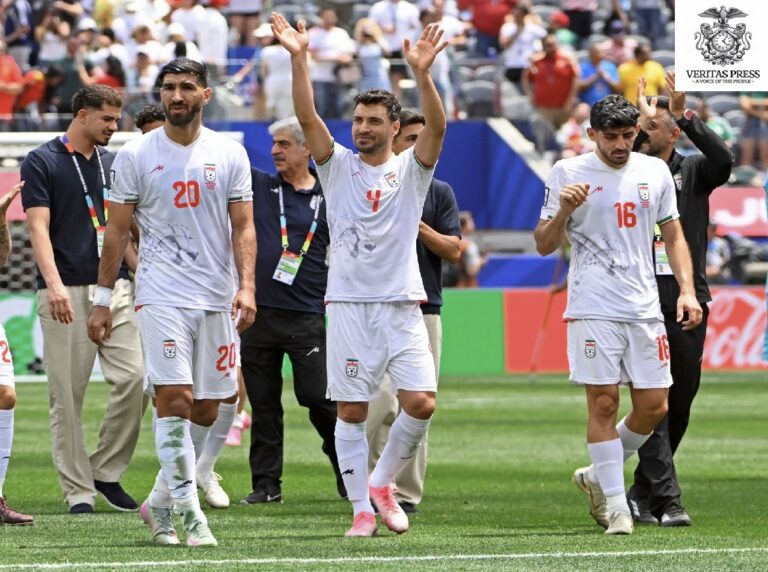
SEATTLE, TEHRAN — The U.S. Department of Homeland Security (DHS) will allow Iran’s national football team to enter the country 48 hours before their critical World Cup match against Egypt on Friday, a modest concession in a tournament where Team Melli’s travel conditions have sparked claims of oppression and competitive disadvantage.