



Help support our mission, donate today and be the change. Every contribution goes directly toward driving real impact for the cause we believe in.
RIYADH – Tensions across the Gulf have escalated to levels not seen in decades, as Saudi Arabia declared that trust with Iran has “completely shattered,” warning that regional patience is finite following a wave of missile and drone attacks targeting critical energy infrastructure.
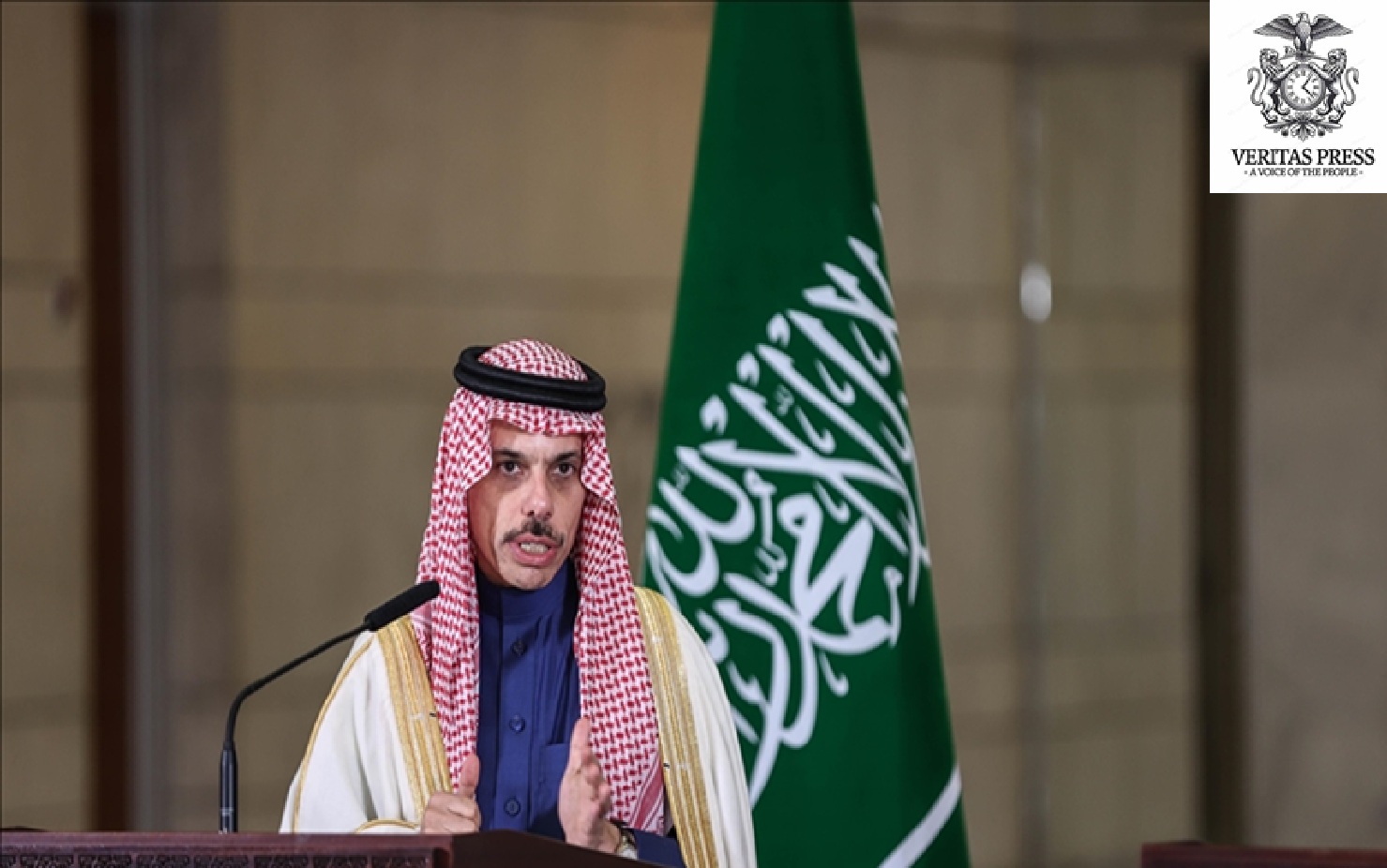
The remarks by Faisal bin Farhan Al Saud came after an emergency gathering of Arab and Islamic foreign ministers in Riyadh. Prince Faisal accused Tehran of pursuing a deliberate strategy of escalation, targeting civilian infrastructure and energy sites, which he described as a “blatant attempt at blackmail.”
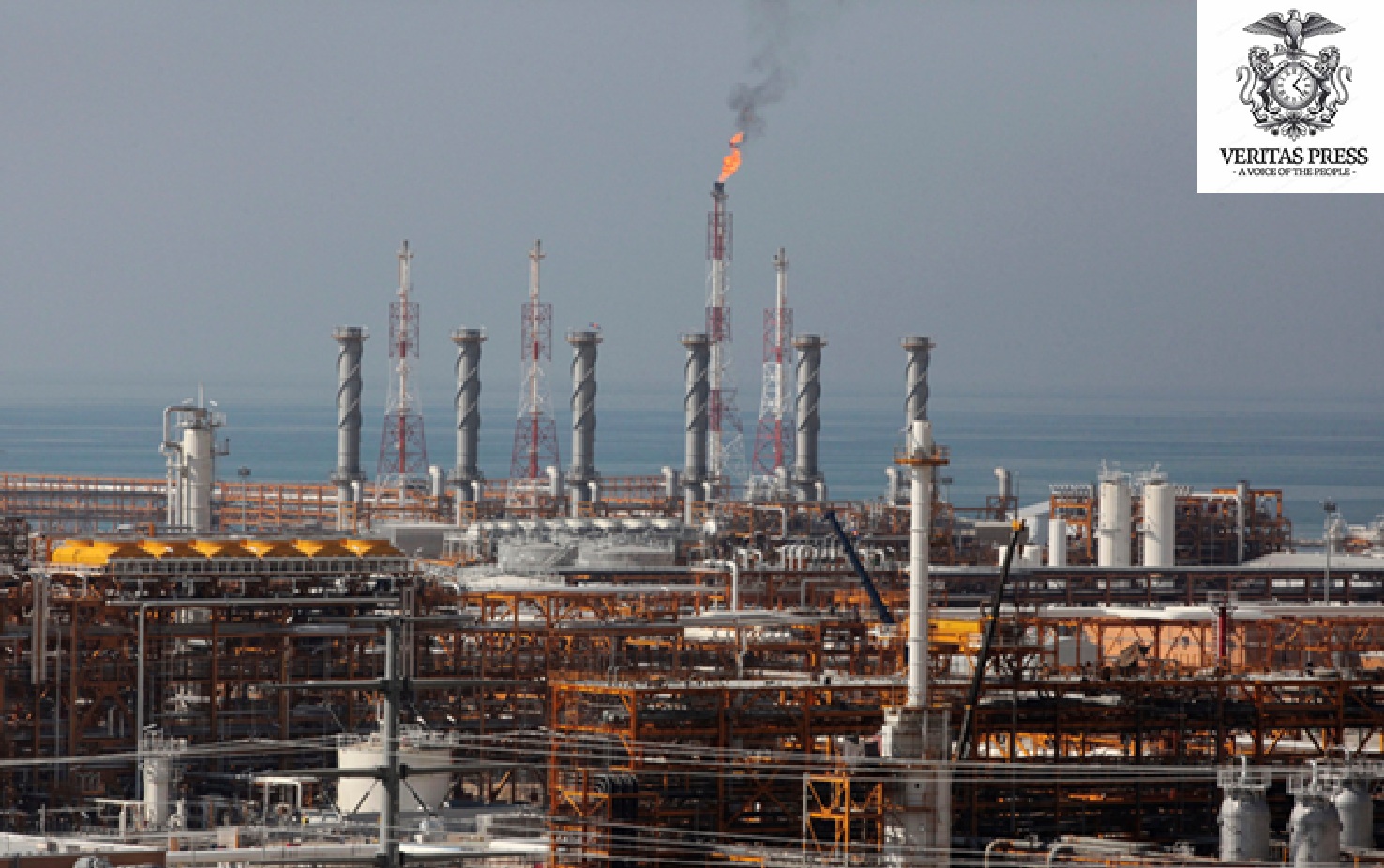
Saudi officials report that Iran’s attacks have struck Qatar’s Ras Laffan industrial hub, responsible for roughly 20% of global liquefied natural gas supply, and the UAE’s Habshan gas facility. Iranian missiles have also targeted Saudi cities, with Riyadh intercepting multiple ballistic missiles. The Islamic Revolutionary Guard Corps warned that Gulf energy infrastructure would be considered legitimate targets in response to Israeli strikes on Iran’s South Pars gas field.
Escalation Beyond Borders:
The conflict, initially framed as US-Israel retaliation against Iran, has expanded across the region. Iran has launched strikes against Israel, Iraq, Jordan, and Gulf states hosting US military assets, creating a multi-front war with no clear end in sight.
Prince Faisal warned that Gulf states possess “very significant capacities and capabilities” and that patience with Iranian aggression “is not unlimited.” Analysts stress that Gulf capitals are navigating a fine line: defending sovereignty while avoiding escalation into a full-scale war.
Abdulaziz Sager, chairman of the Gulf Research Centre, noted:
“At first, we opposed the war. But once Iran began directing strikes at us, they became an enemy. There is no other way to classify them.”
Civilian populations are increasingly at risk. Airports, desalination plants, and ports have been threatened, highlighting the human cost of this confrontation. Iran’s disruption of the Strait of Hormuz, through which one-fifth of the world’s oil supply passes, has created a strategic leverage that could destabilise global energy markets.
US-Israel Divide-And-Conquer Strategy:
While Iran’s aggression is real, multiple analysts and Gulf sources argue that the U.S. and Israeli strategy has amplified the crisis, turning retaliation into cover for external intervention. By publicly encouraging Gulf states to endorse strikes while limiting their operational autonomy, Washington and Tel Aviv ensure Gulf dependence on foreign military and intelligence support.
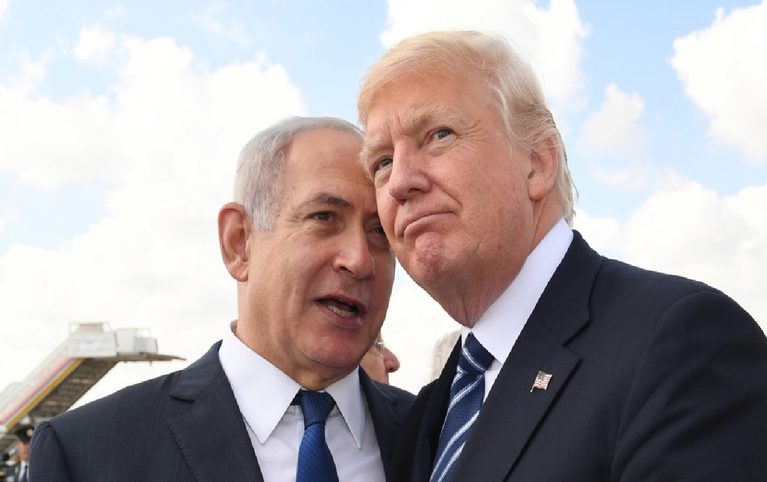
Israeli Prime Minister Benjamin Netanyahu has framed Israel’s ambitions in global terms, asserting the desire to expand influence and project power beyond its borders. Control over the Gulf and the Strait of Hormuz would grant the U.S. and Israel unparalleled leverage over energy markets while pitting Sunni-led Gulf states against Shia Iran, fragmenting regional unity.
Fawaz Gerges of the London School of Economics explains:
“By provoking Iran into retaliation and using that retaliation as cover, Washington and Tel Aviv are thrusting the region into chaos while consolidating their strategic dominance.”
Under this strategy, Gulf states are drawn into a conflict they neither initiated nor control. Missile and drone strikes on Saudi, Qatari, and Emirati infrastructure simultaneously mask U.S.-Israeli operations and justify continued military presence. Abdulaziz Sager observed:
“The Gulf is being manipulated into a war under the pretext of defending sovereignty, while the real objective is external control.”
Collapse Of Diplomacy:
The fragile Saudi-Iran rapprochement brokered in 2023 now lies in ruins. Prince Faisal highlighted that Iran has been building this strategy over the last decade and that even after the war, rebuilding trust will take years, if it is possible at all. Gulf states’ defensive restraint, coupled with external manipulation, has left the region vulnerable, with civilian populations and energy infrastructure bearing the brunt.
Analysts warn that this dual strategy, Iranian coercion and US-Israeli exploitation, is pushing the Middle East into chaos. The cycle of attack, retaliation, and strategic interference undermines diplomacy, destabilises markets, and subordinates regional autonomy to foreign objectives.
Bernard Haykel, professor of Near Eastern Studies at Princeton University, emphasises:
“Now that Iran has shown it can shut down Hormuz, the Gulf faces a fundamentally different threat. If it’s not addressed, this danger will be long-term.”
Conclusion: Miscalculation, Manipulation, And Regional Subjugation.
The Gulf is caught in a tripartite trap: Iranian aggression, Gulf defensive restraint, and US-Israeli strategic manipulation. Iranian missile and drone strikes pose real threats to sovereignty and civilians, yet the United States and Israel are exploiting these attacks to advance a divide-and-conquer agenda, drawing Gulf states into a war designed to consolidate foreign control over energy corridors and the region itself.
The human and economic stakes are enormous. Civilian populations, ports, airports, and desalination plants face repeated risk, while global energy markets remain vulnerable. Gulf states are trapped between responding to Iran and avoiding direct confrontation with an increasingly assertive external power bloc.
Prince Faisal’s warning, that patience is finite and trust has “completely shattered”, now resonates beyond Iranian threats alone. Layered with U.S.-Israeli manipulation and imperial ambitions, it is a stark indictment of a Gulf where autonomy has been eroded, diplomacy has failed, and chaos has become the instrument of control.
“If Iran does not stop immediately, there may be almost nothing left that can rebuild that trust.” In the current geopolitical calculus, the warning extends to all actors: the region’s stability, sovereignty, and future are at stake, and external powers are betting on chaos to advance their interests.
Source: Multiple News Agencies
Submissions:
For The Secure Submission Of Documentation, Testimonies, Or Exclusive Investigative Reports From Any Global Location, Please Utilise The Following Contact Details For Our Investigations Desk: enquiries@veritaspress.co.uk or editor@veritaspress.co.uk
Help Support Our Work:
Popular Information is powered by readers who believe that truth still matters. When just a few more people step up to support this work, it means more lies exposed, more corruption uncovered, and more accountability where it’s long overdue.
Help Protect Independent Journalism, Which Is Currently Under Attack.
If you believe journalism should serve the public, not the powerful, and you’re in a position to help, becoming a DONATOR or a PAID SUBSCRIBER truly makes a difference.
DONATION APPEAL: If You Found This Reporting Valuable, Please Consider Supporting Independent Journalism.
Help Support Our Work – We Know, We Know, We Know …
Seeing these messages is annoying. We know that. (Imagine what it’s like writing them … )
Your support fuels our fearless, truth-driven journalism. In unity, we endeavour to amplify marginalised voices and champion justice, irrespective of geographical location.
But it’s also extremely important. One of Veritas Press’s greatest assets is its reader-funded model.
1. Reader funding means we can cover what we like. We’re not beholden to the political whims of a billionaire owner. We are a small, independent and impartial organisation. No one can tell us what not to say or what not to report.
2. Reader funding means we don’t have to chase clicks and traffic. We’re not desperately seeking your attention for its own sake: we pursue the stories that our editorial team deems important and believe are worthy of your time.
3. Reader Funding: enables us to keep our website and other social media channels open, allowing as many people as possible to access quality journalism from around the world, particularly those in places where the free press is under threat.
We know not everyone can afford to pay for news, but if you’ve been meaning to support us, now’s the time.
Your donation goes a long way. It helps us:
- Keep the lights on and sustain our day-to-day operations
- Hire new, talented independent reporters
- Launch real-time live debates, community-focused shows, and on-the-ground reporting
- Cover the issues that matter most to our communities, in real time, with depth and integrity
We have plans to expand our work, but we can’t do it without your support. Every contribution, no matter the size, helps us stay independent and build a truly people-powered media platform.
If you believe in journalism that informs, empowers, and reflects the communities we serve, please donate today.
The Trump administration is preparing a $2.8 billion weapons package for Israel containing 40,000 2,000-pound

Film alleges mass civilian deaths are routinely built into military decisions amid Israel’s genocidal war
The Israeli rights group says violence, displacement, economic strangulation, and settlement expansion form part of

Houthi forces have captured the historic Red Sea port of Mocha and are advancing on
London’s historic sanctions against Israeli settlements mark a watershed moment in UK foreign policy, but
With 95% of Gaza’s population now wholly dependent on aid and more than 90% stripped
India calls for Kashmir and Ladakh to appear only on its official map after a
ISLAMABAD – In the high-stakes political theatre of Pakistan, the battleground has shifted from the
Francesca Albanese says third states have an ICJ-mandated obligation to end Israel’s occupation. But with
As Israeli jets bomb a Syrian air base over alleged Turkish deployment plans, Ankara, Washington