Kamran Faqir is a volunteer investigative journalist and writer committed to exposing hidden truths and amplifying underreported stories. Driven by social justice, he brings sharp insight and fearless truth-telling to independent journalism. NUJ registered.
Original Article Date Published:
Article Date Modified:
13 minutes
Views:405
Listen to this article
Help support our mission, donate today and be the change. Every contribution goes directly toward driving real impact for the cause we believe in.
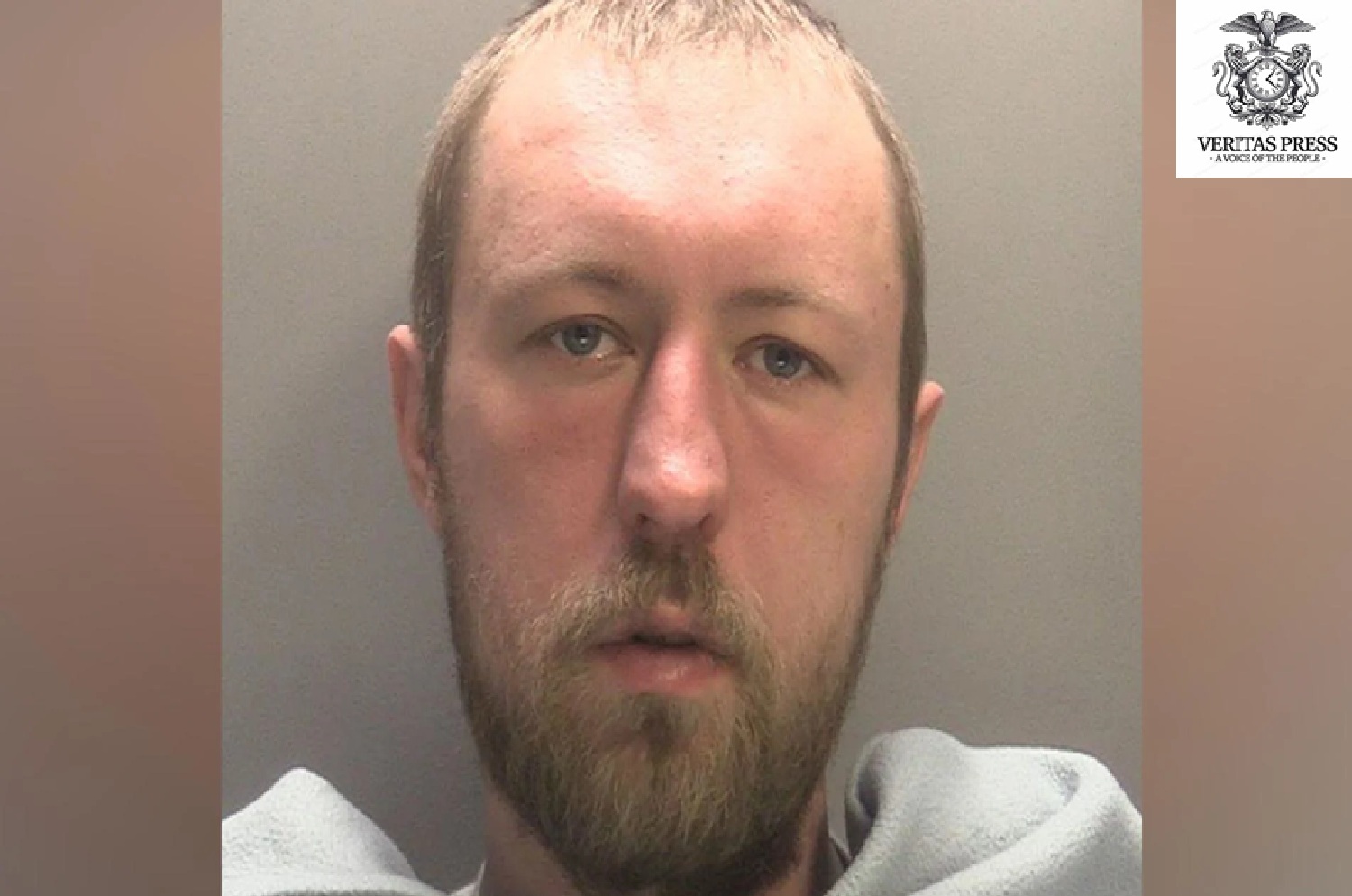
UK – John Ashby, a 32-year-old man, has been sentenced to life imprisonment with a minimum term of 14 years for the religiously aggravated rape of a Sikh woman in her own home, a brutal attack fuelled by a toxic mix of misogyny and anti-Muslim hatred that mistakenly targeted her for her perceived faith. The case has not only shocked the West Midlands but has also ignited a fierce debate about the mainstreaming of far-right ideology, the media’s selective outrage, and the lived reality of hate crime statistics that show a record surge in religiously motivated offences across the UK.
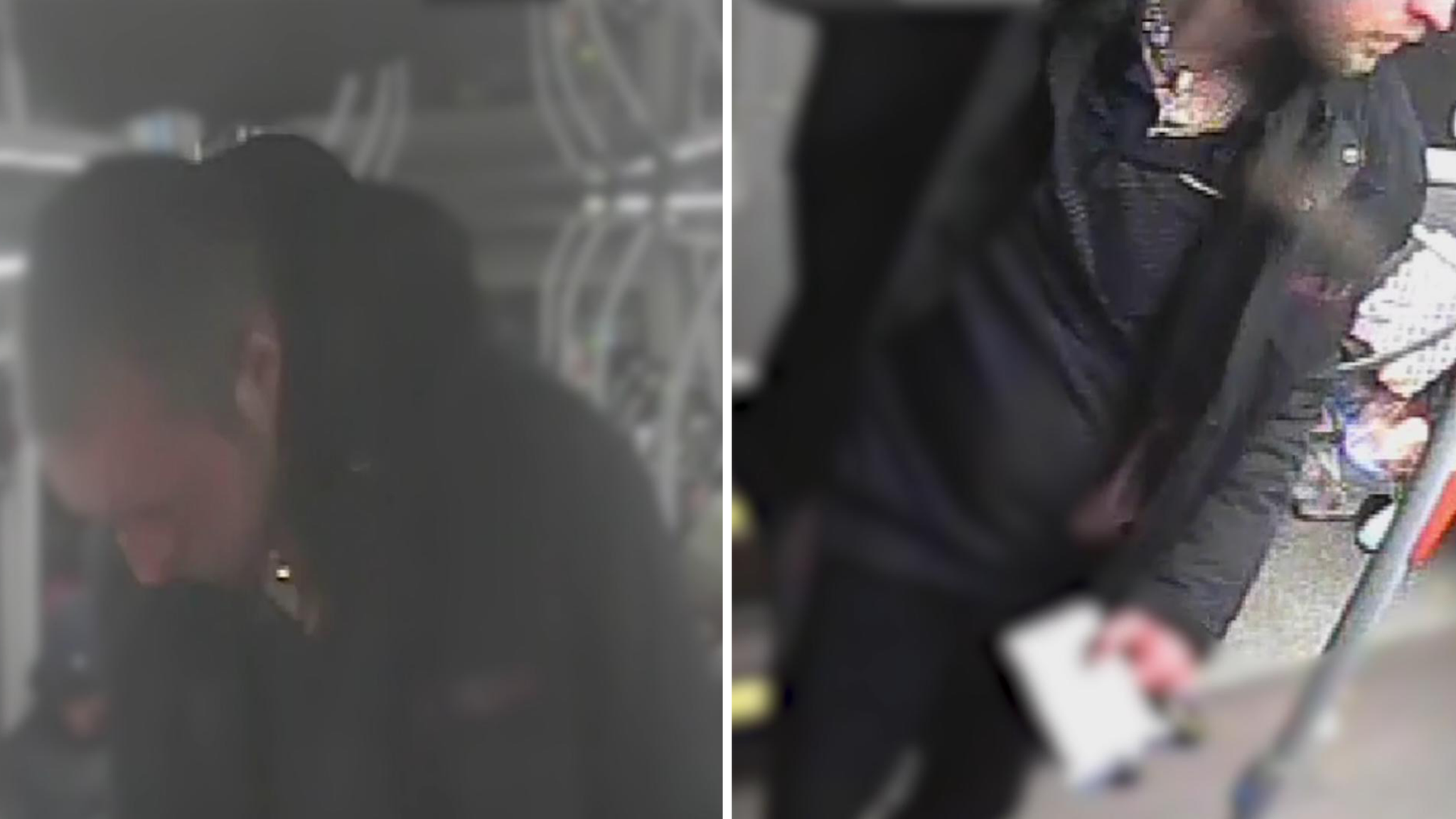
John Ashby caught on bus CCTV where he first spotted the victim. Pic: West Midlands Police
This is not merely a crime report; it is an investigation into a society where a man can follow a stranger home, arm himself with a stick, and proclaim himself her “British master” in a sexual assault driven entirely by racist delusions. It is a critique of how such a crime is covered, processed by the justice system, and ultimately used as a mirror to reflect the nation’s deep-seated divisions.
The Anatomy Of A Hate Crime: “I’m Your British Master”
The sequence of events, meticulously reconstructed by prosecutors, reveals a predator acting on the baseless logic of racial and religious hatred. On October 25, 2025, John Ashby spotted his victim, a woman in her 20s, as she travelled home from work on a bus in Walsall. He saw only a brown-skinned woman and, in his bigoted mind, immediately labelled her a Muslim. This misidentification was the sole catalyst for the horror that followed.
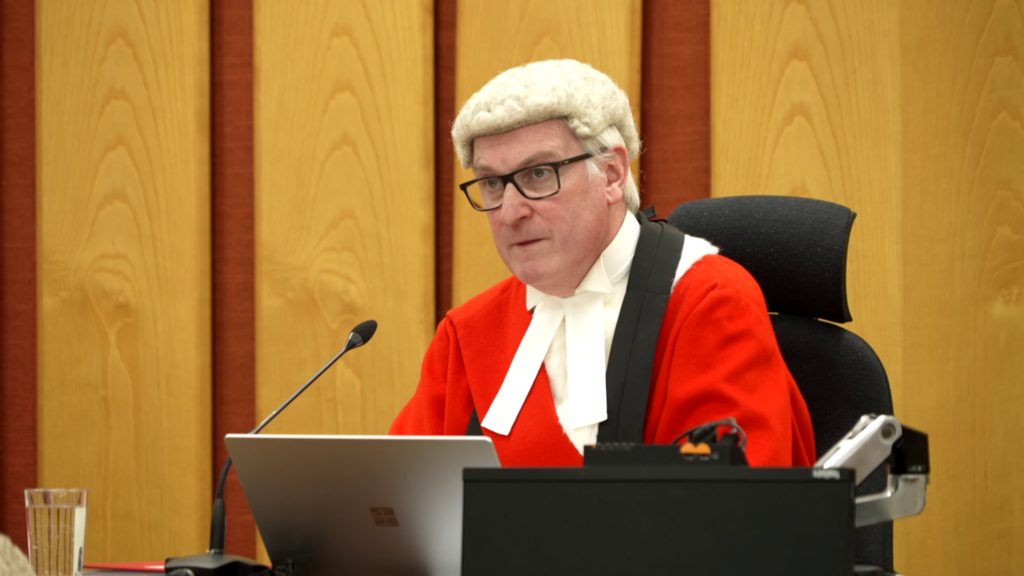
Mr Justice Pepperall described Ashby as a ‘deeply unpleasant racist and Islamophobe’
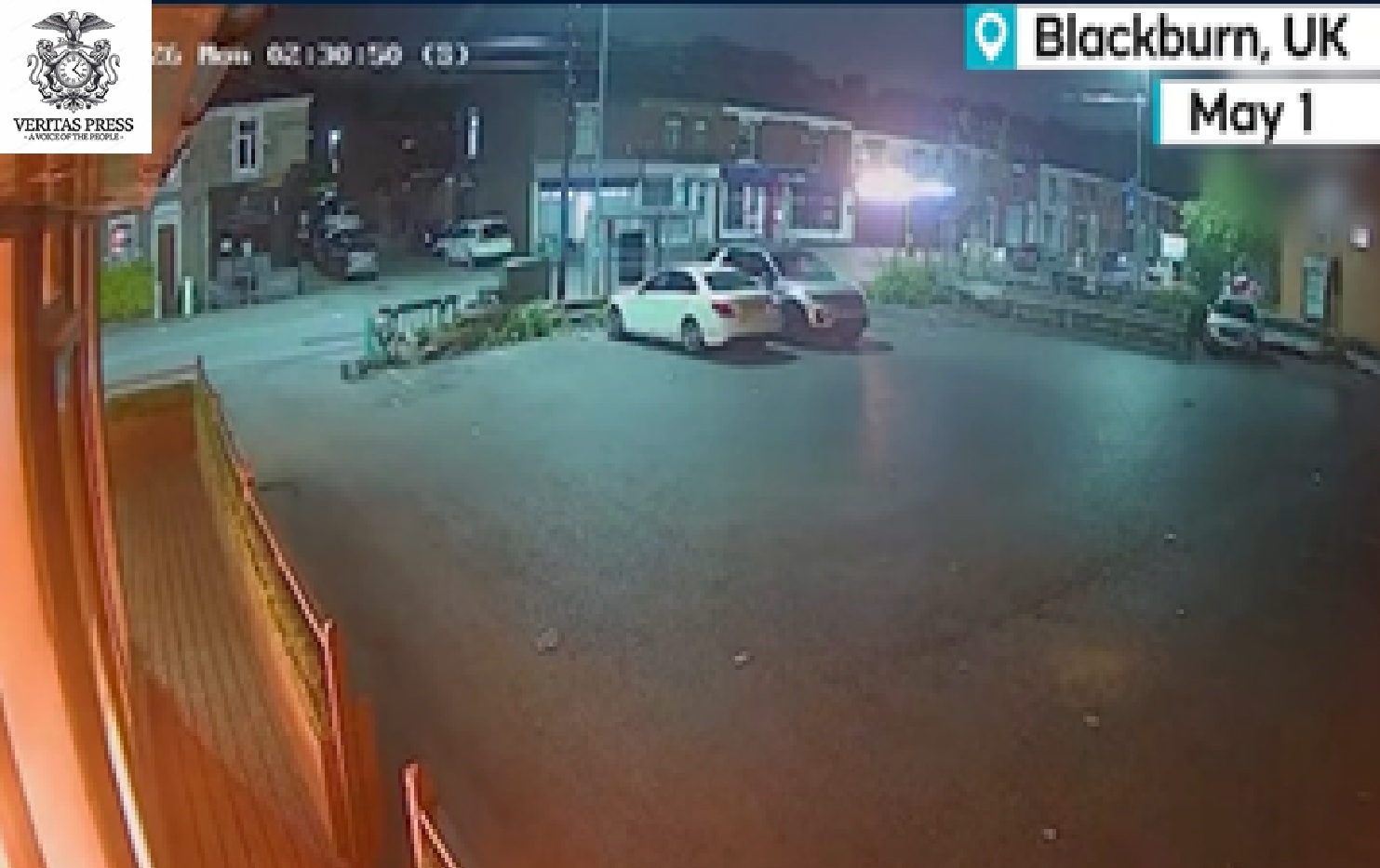
CCTV footage, later released by West Midlands Police, tracked Ashby as he stalked the woman after she disembarked. He paused to arm himself, picking up a two-foot stick before doubling back and forcing his way into her home. Once inside, he cornered her in the bathroom, switched off the lights, and unleashed a 24-minute ordeal of sexual violence and bigoted invective.
During the attack, Ashby’s language was a chilling expression of white supremacist ideology. As Phil Bradley KC, prosecuting, detailed, he called the victim a “f***ing Muslim b***h,” demanded she strip, and forced her into the bathtub. There, he turned on the hot water and ordered her to say “hallelujah.” He referred to himself repeatedly as a “British master” and, in a grotesque act of racial objectification, described his genitals as “white British.”
John Ashby caught on CCTV holding a stick (left) and following his victim (right). Pic: West Midlands Police
The victim, in her harrowing video interview, recounted her desperate but futile attempt to correct his murderous assumption: “He said ‘you are a f***ing Muslim b***h‘, I said ‘I am not a Muslim, I am a Sikh.'” Her words had no impact; his hatred was not rooted in any reality about her identity but was a projection of his own fanaticism.
The attack only ended when Ashby was “spooked” by a noise outside. He fled, stealing the victim’s mobile phone and jewellery. The trauma he left behind, however, was indelible. In an impact statement read at his sentencing on April 24, 2026, the victim spoke of a life “drastically changed.” She had to move house, her wedding plans were upended, and she described feeling like a version of herself had been “stripped away.”
The Courtroom Drama: A Guilty Plea And A Life Sentence.
Ashby’s journey through the justice system was itself a spectacle. He initially pleaded not guilty, forcing a trial at Birmingham Crown Court. This decision was condemned by activists as a calculated move that prolonged the victim’s trauma. Sukhvinder Kaur, chair of Sikh Women’s Aid, criticised this tactic, stating, “The defendant chose to proceed to trial, prolonging proceedings and contributing to the ongoing trauma experienced by the victim… This reflects wider concerns about how perpetrators are able to navigate the system in ways that can compound harm for survivors.”
The trial took a dramatic turn on its second day. As the prosecution presented its evidence, Ashby began mumbling under his breath. An enraged member of the public, not a police officer or court official, approached the dock and told him to “sort your sh*t out.” Within an hour of this outburst, Ashby asked to see his barrister and changed his plea to guilty on all counts: rape, robbery, intentional strangulation, and religiously aggravated assault occasioning actual bodily harm.
On April 24, 2026, High Court Judge Mr Justice Pepperall delivered a scathing verdict. He branded Ashby a “deeply unpleasant racist and Islamophobe” and a “very dangerous man” who posed “an extreme danger to women.” Citing aggravating factors such as the use of a weapon and the severe psychological harm inflicted, the judge handed down a life sentence with a minimum term of 14 years before parole. He then directly addressed the victim and her partner in the public gallery, stating, “I have nothing but admiration for your bravery. I hope that with time, love and support, you are able to rebuild your lives.”
Media Blind Spots And Political Complicity: “Where’s The Coverage?”.
While the judge’s words were unequivocal, the reaction outside the courtroom was not. A wave of outrage erupted not just over the crime, but over its conspicuous absence from the front pages and lead news bulletins. Broadcaster and commentator Narinder Kaur posed a pointed question: why was there “no mainstream TV channel covering” the crime and trial?
Former First Minister of Scotland Humza Yousaf connected the attack directly to a broader political climate, arguing that it did not happen in a vacuum. He asserted that this is what happens “when hate is mainstreamed and when cowards in suits pretend their words have no consequences.” Similarly, Sangita Myska decried the “hateful rhetoric pumped out online and normalised by hard right politicians.”
These criticisms are not made in isolation. A 2026 report by the anti-fascism organisation HOPE not Hate describes a UK far right that is becoming “bigger, bolder and more confrontational.” In 2025 alone, there were more than 251 anti-migrant protests, with the “Unite the Kingdom” rally in London drawing an estimated 150,000 people. The report alarmingly notes that 26% of Britons now view this movement positively, a figure that rises to nearly 50% among men aged 25 to 34. Peter Kane of the LSE International Inequalities Institute argues that this is not merely thuggery but a “structural crisis” shaped by years of anti-migrant rhetoric from the very top of British politics, where policies are, in his words, “racist by design.”
This political and media ecosystem has created a fertile ground for violence. Dabinderjit Singh OBE of the Sikh Federation UK issued a stern warning ahead of sentencing, telling the judge to show “no leniency” because Ashby’s “ignorance about the racial and religious identity of the Sikh victim is critical when sentencing.” He implored, “The racial hatred and hostility towards the Sikh victim is a fact that should not be overlooked.”
A Community Under Siege: The Oldbury Precedent.
The Ashby case is not an isolated incident but part of a terrifying pattern. Sukhvinder Kaur of Sikh Women’s Aid highlighted that this was the second “racially aggravated rape in the space of a few weeks in the West Midlands region.” On September 9, 2025, just a few miles away in Oldbury, another Sikh woman in her 20s was brutally raped by two white men who told her, “You don’t belong in this country, get out.” That case remains unsolved, with perpetrators still at large.
The Oldbury attack, which police are treating as a hate crime, sparked an emergency community meeting at Guru Nanak Gurdwara in Smethwick. Jas Singh, principal adviser to the Sikh Federation (UK), voiced the community’s existential fear: “In the context of the climate, it makes it even more worrying because there is a trend of hatred… the targeting of migrants. Ultimately, what that means is the targeting of people’s skin colour, and as Sikhs, we have the most distinct, unique identity. We bear the brunt of all prejudice and ignorance, and hate.”
The failure to solve the Oldbury case hangs heavily over the community, a stark reminder that justice is not always served. Sukhvinder Kaur noted that while the Ashby sentence is a welcome outcome, authorities must also confront the “narrative that is being played out across society that is very divisive.” She insisted, “We can’t separate this rape from the toxic narratives around migration, immigration, migrant communities.” The Muslim Council of Britain (MCB) expressed solidarity after the Oldbury attack, labelling it a “brutal racist attack” and a “wake-up call.”
The State Of Hate: By The Numbers.
The anecdotal horror is tragically reflected in national data. The Crown Prosecution Service (CPS) reported that hate crime referrals from police reached a record high in the July to September 2025 quarter, with a 14.7% increase. Prosecutors charged 88.1% of these cases. Officials confirmed that 84.3% of religiously aggravated offences now receive a sentence uplift, reflecting the severity of the bias.
Even more starkly, parliamentary data revealed that in the year to March 2025, there were 4,478 religious hate crimes targeting Muslims, representing almost half of all religious hate crimes. In London alone, over 1,000 Islamophobic hate crimes were recorded in 2025, a figure the London Assembly believes is just the “tip of the iceberg,” with an estimated 80% of anti-Muslim incidents going unreported. In response, the UK government adopted a formal definition of “anti-Muslim hatred” in March 2026 and allocated £650,000 to the British Muslim Trust to monitor hostility and support for victims.
Analysis: A War On “The Other”.
All of these statistics, on-the-ground reports, and political movements converge to paint a deeply troubling picture. The case of John Ashby is a horrifyingly perfect hate crime. It merges white supremacist fantasy, toxic masculinity, and religious bigotry into a single act of terrorism against an individual woman. Ashby did not rape a person; he raped what he believed was a symbol of “Islam,” an enemy in the civilisational war he had absorbed from online forums, political speeches, and a media culture that often platforms anti-Muslim voices.
Ashby’s assumption that a Sikh woman was Muslim because of her skin colour reveals a profound criminal ignorance and a broader societal sickness: a sweeping reduction of entire populations into a single, maligned category of “the other.” As Narinder Kaur and Humza Yousaf highlighted, the media’s failure to give this case the sustained, front-page coverage it deserves implies a double standard for victims of colour, especially when they are not from the “right” minority, and that hate crimes against perceived Muslims are less newsworthy. This bias profoundly impacts public consciousness and community safety.
Conclusion:
John Ashby’s ideology is part of a much larger current. To view him purely as a monstrous aberration is a comforting fiction that evades the uncomfortable truth. He is a product of a society where racist rhetoric, from the “anti-immigration card” to the desecration of civic spaces by xenophobic politicians, has been weaponised and normalised. The “war on woke” has bled into a war on “the other,” and its first and most vulnerable victims are women walking home from the bus.
The victim’s survival and her testimony, the unyielding solidarity of the Sikh community, and the decisive sentence from Justice Pepperall represent a profound triumph of justice over barbarism. However, a single life sentence, no matter how severe, cannot excise a systemic disease. True justice requires dismantling the very architecture of hate. This means holding politicians accountable for stochastic terrorism, insisting that media outlets give hate crimes against all communities equal prominence, and fundamentally rejecting the dehumanisation of any group based on their faith or the colour of their skin. The woman in Walsall was told by her attacker that he was her “British master.” Her courage and the court’s verdict have proven that in a Britain of true equality and justice, no one is anyone’s master, and hate will never have the final word.
Source: Multiple News Agencies
Submissions:
For The Secure Submission Of Documentation, Testimonies, Or Exclusive Investigative Reports From Any Global Location, Please Utilise The Following Contact Details For Our Investigations Desk: enquiries@veritaspress.co.uk or editor@veritaspress.co.uk
Help Support Our Work:
Popular Information is powered by readers who believe that truth still matters. When just a few more people step up to support this work, it means more lies exposed, more corruption uncovered, and more accountability where it’s long overdue.
Help Protect Independent Journalism, Which Is Currently Under Attack.
If you believe journalism should serve the public, not the powerful, and you’re in a position to help, becoming a DONATOR or a PAID SUBSCRIBER truly makes a difference.
DONATION APPEAL: If You Found This Reporting Valuable, Please Consider Supporting Independent Journalism.
Help Support Our Work – We Know, We Know, We Know …
Seeing these messages is annoying. We know that. (Imagine what it’s like writing them … )
Your support fuels our fearless, truth-driven journalism. In unity, we endeavour to amplify marginalised voices and champion justice, irrespective of geographical location.
But it’s also extremely important. One of Veritas Press’s greatest assets is its reader-funded model.
1. Reader funding means we can cover what we like. We’re not beholden to the political whims of a billionaire owner. We are a small, independent and impartial organisation. No one can tell us what not to say or what not to report.
2. Reader funding means we don’t have to chase clicks and traffic. We’re not desperately seeking your attention for its own sake: we pursue the stories that our editorial team deems important and believe are worthy of your time.
3. Reader Funding: enables us to keep our website and other social media channels open, allowing as many people as possible to access quality journalism from around the world, particularly those in places where the free press is under threat.
We know not everyone can afford to pay for news, but if you’ve been meaning to support us, now’s the time.
Your donation goes a long way. It helps us:
Keep the lights on and sustain our day-to-day operations
Hire new, talented independent reporters
Launch real-time live debates, community-focused shows, and on-the-ground reporting
Cover the issues that matter most to our communities, in real time, with depth and integrity
We have plans to expand our work, but we can’t do it without your support. Every contribution, no matter the size, helps us stay independent and build a truly people-powered media platform.
If you believe in journalism that informs, empowers, and reflects the communities we serve, please donate today.
Kamran Faqir is a volunteer investigative journalist and writer committed to exposing hidden truths and amplifying underreported stories. Driven by social justice, he brings sharp insight and fearless truth-telling to independent journalism. NUJ registered.
SEATTLE, TEHRAN — The U.S. Department of Homeland Security (DHS) will allow Iran’s national football team to enter the country 48 hours before their critical World Cup match against Egypt on Friday, a modest concession in a tournament where Team Melli’s travel conditions have sparked claims of oppression and competitive disadvantage.