Kamran Faqir is a volunteer investigative journalist and writer committed to exposing hidden truths and amplifying underreported stories. Driven by social justice, he brings sharp insight and fearless truth-telling to independent journalism. NUJ registered.
Original Article Date Published:
Article Date Modified:
15 minutes
Views:517
Listen to this article
Help support our mission, donate today and be the change. Every contribution goes directly toward driving real impact for the cause we believe in.
NEW DELHI/TEL AVIV — On Thursday, a blue-and-white balloon arch fluttered at Ben-Gurion Airport as 250 members of the Bnei Menashe community, descending from the forested hills of India’s strife-torn northeast, stepped onto the tarmac of what they call their “promised land.” They were the first wave of Operation “Wings of Dawn,” a government-led initiative that aims to airlift the remaining 6,000 members of one of the world’s most enigmatic “lost tribes” to Israel by 2030. The newcomers, many clutching Hebrew phrasebooks and wearing expressions of exhausted elation, passed under the balloon arch as a chorus of well-wishers sang Hevenu Shalom Aleichem.
But behind the carefully choreographed welcome ceremony, attended by Aliyah and Integration Minister Ofir Sofer, Jewish Agency Chairman Maj. Gen. (res.) Doron Almog, World Zionist Organisation Chairman Yaakov Hagoel, and Sephardic Chief Rabbi David Yosef lay a far more complex reality: Israel is relocating a poverty-stricken, ethnically marginalised community from one war zone to another, while simultaneously addressing its own labour crisis, demographic anxieties, and geopolitical ambitions in the Galilee. This investigation pieces together the converging forces driving this unprecedented migration.
The Mechanics Of “Wings Of Dawn”.
The operation represents the largest coordinated aliyah from India in Israeli history. According to the November 2025 cabinet decision, Israel will allocate 90 million shekels ($27 million) to transport the remaining Bnei Menashe, provide Hebrew-language instruction, fund their Orthodox conversion process, and house them in absorption centres primarily in Nof HaGalil and Kiryat Yam in northern Israel.
“This is the beginning of an operation that will allow the entire community to immigrate, 1,200 per year,” Sofer told Agence France-Presse at the arrival ceremony, describing the moment as “historic”. The Jewish Agency, which is spearheading the logistical coordination for the first time, has sent the largest rabbinical delegation in over a decade to India to conduct eligibility interviews with approximately 3,000 community members who have first-degree relatives already in Israel.
The numbers tell a story of accelerating momentum: roughly 4,000 Bnei Menashe immigrated to Israel over the past two decades in sporadic waves; now, the government plans to bring 1,200 by the end of 2026, and a further 4,600 by 2030, effectively emptying the community’s presence in Manipur and Mizoram. Three flights in total are scheduled over the current two-week window, bringing approximately 600 new immigrants.
Who Are The Bnei Menashe? Faith, Identity, And Contested Origins.
The Bnei Menashe (“Sons of Manasseh”) are a Tibeto-Burman-speaking people who belong to the broader Kuki-Chin-Mizo ethnic family spanning India’s northeast and Myanmar’s Chin State. Their Jewish identification is a relatively recent phenomenon. According to community lore, in 1951, a Mizo tribal leader named Chalianthanga reported a divine dream revealing that his people were descendants of the biblical tribe of Manasseh, one of the ten tribes exiled by the Assyrian Empire in 722 BC.
The Bnei Menashe community settled in the northeastern states of Manipur and Mizoram in India.
Their narrative posits a centuries-long exodus through Persia, Afghanistan, Tibet, and China before settling in the Indo-Burmese borderlands, all the while preserving vestigial Jewish practices such as circumcision. “Bnei means children, and Menashe is for grandchild,” explains Asaf Renthlei, a sociology researcher at IIT-Delhi.
The mainstream Jewish establishment was sceptical for decades. It was only in 2005 that then-Sephardi Chief Rabbi Shlomo Amar recognised the community as “Zera Yisrael” (Seed of Israel), paving the way for their immigration under the Law of Return, albeit with the requirement that they undergo formal Orthodox conversion upon arrival in Israel, a process called giyur.
Crucially, genetic studies have failed to confirm Middle Eastern ancestry. A 2005 investigation by Israeli journalist Hillel Halkin, who collected DNA samples from the community, found typical Tibeto-Burman genetic markers with no detectable Near Eastern lineage. Another Kolkata-based study, the same year, reported signs of maternally inherited Near Eastern ancestry but suggested it was likely the result of centuries of intermarriage with populations from the Near and Middle East, not direct descent from an ancient Israelite tribe.
“We’re called the Lost Tribes, and lost means lost!” W.L. Hangshing, president of the B’nei Menashe Council of India, told The New York Times, dismissing scientific scrutiny. “Only God can do that.” His father, he said, migrated to Israel years ago and lived out his final days there.
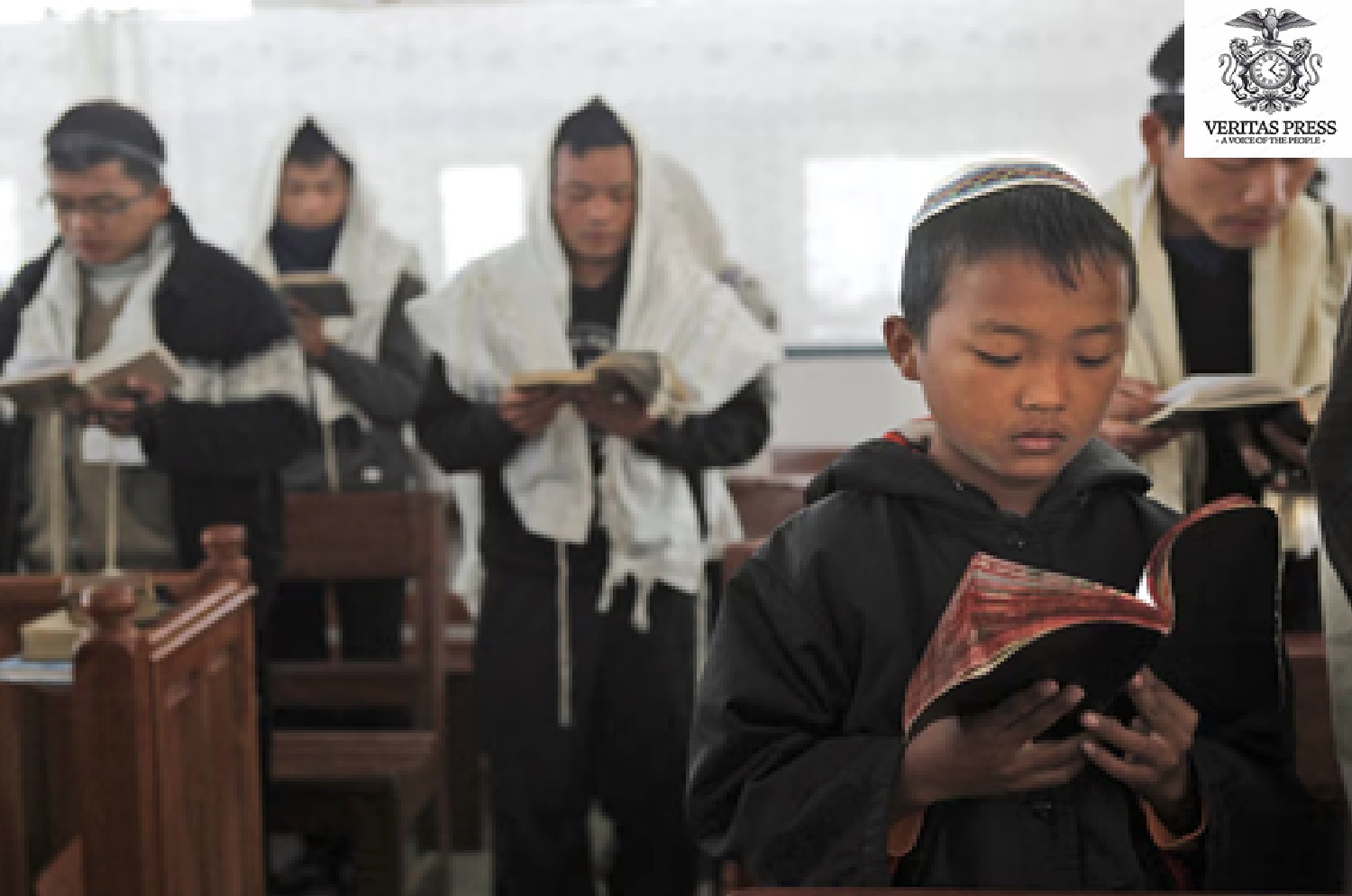
This tension between faith and forensics has not deterred the community. Across the hills of Manipur and Mizoram, synagogues dot the landscape where churches once stood, and families observe Sabbath rituals at home every Friday. Daniel Hangshing, a community member from Kangpokpi, is learning Hebrew on the Duolingo app. “India is our birthplace, and Israel is our destiny. That is our promised land. We have to go there,” he said.
Push Factors: Life In A Shattered Manipur.
For the approximately 7,000 Bnei Menashe still remaining in India, the pull of Zion is intensified by the brutal reality of life in Manipur, which has been convulsed by ethnic violence since May 2023. The conflict between the predominantly Hindu Meitei majority and the largely Christian Kuki-Zo minority, under which classification the Bnei Menashe fall, has claimed more than 250 lives and displaced over 58,800 people as of March 2026, according to government data.
The violence has shown no sign of abating. This month alone, at least five people, including two children aged five years and five months, were killed when a rocket-propelled shell struck their home in Bishnupur district on the night of April 6-7. The Manipur government has handed the investigation to the National Investigation Agency, and five suspected cadres of the United Kuki National Army have been arrested. Meanwhile, on April 24, fresh clashes in Ukhrul district left six injured, three Kukis and three Nagas, after armed cadres from two communities exchanged fire.
“After the Kuki-Meitei violence, life has become more difficult,” Benjamin Haokip, a Manipur resident, told The New York Times. He and his family were driven from their homes by mob violence and now live in a makeshift community. The Bnei Menashe are doubly vulnerable: targeted for their Kuki ethnicity and isolated by their Jewish religious practice in a region where Christianity dominates.
The economic picture is equally stark. Manipur’s per capita GDP hovers around $1,200 annually, compared to Israel’s $55,000. Most Bnei Menashe work as subsistence farmers or day labourers. Those who have already made aliyah typically work in construction, trucking, or factory jobs, a dramatic upward leap in income, if not social status.
Economic desperation has driven some families to sell their ancestral land to fund their emigration, a fact that critics say makes a mockery of the “free choice” narrative.
Pull Factors: Faith, Family, And A “Zionist Decision”.
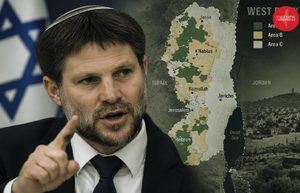
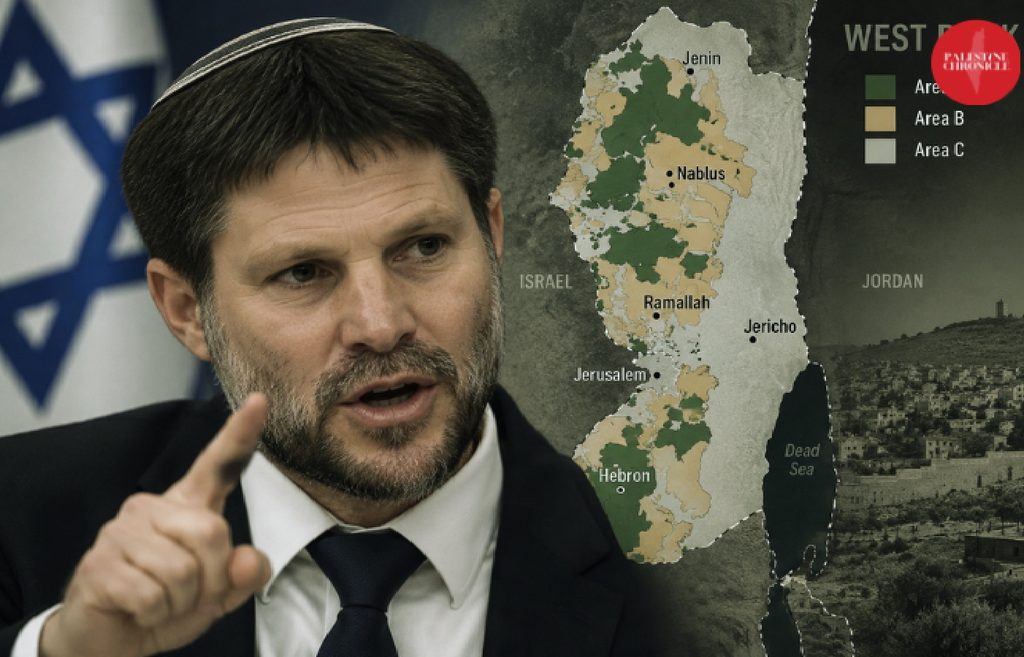
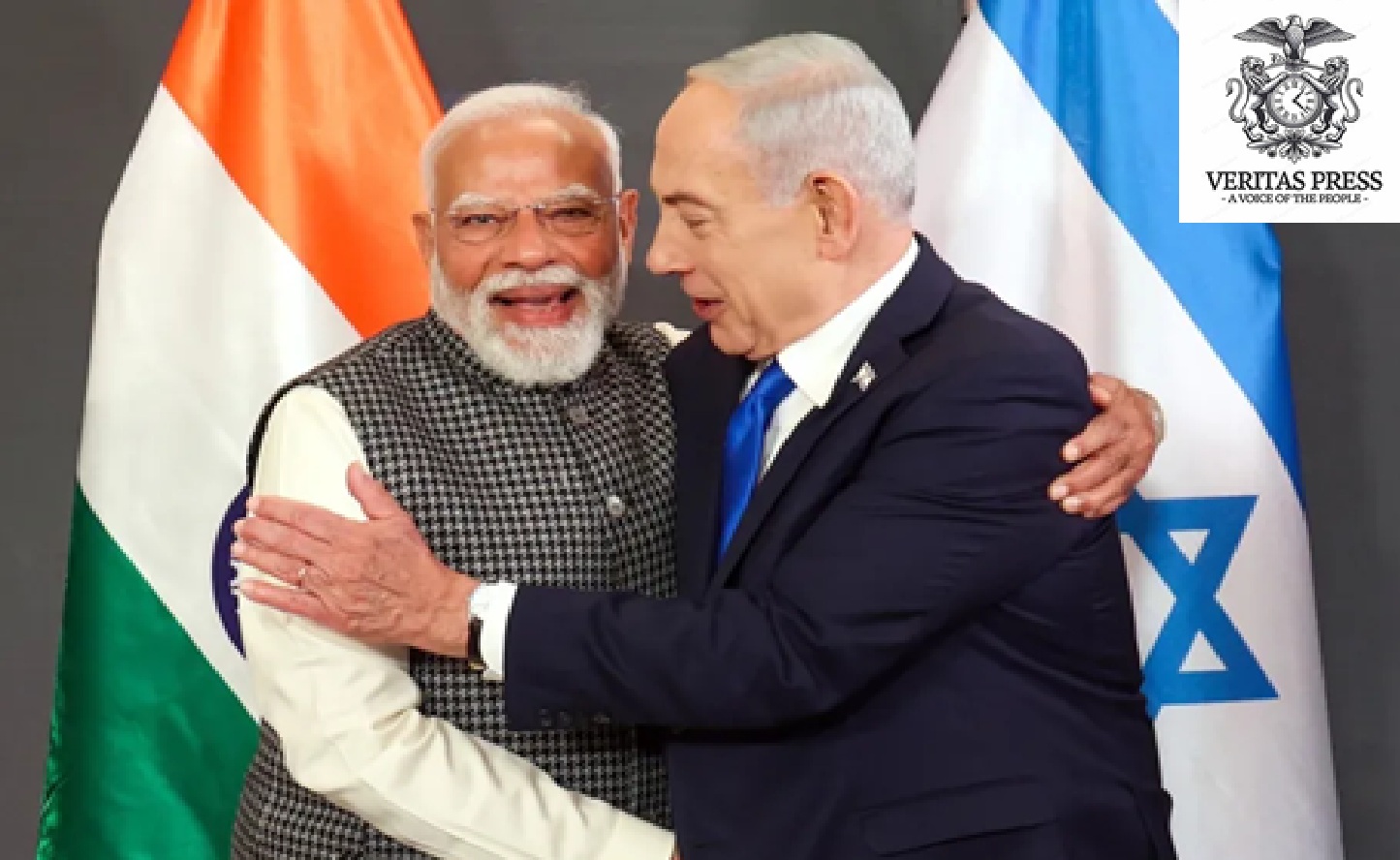
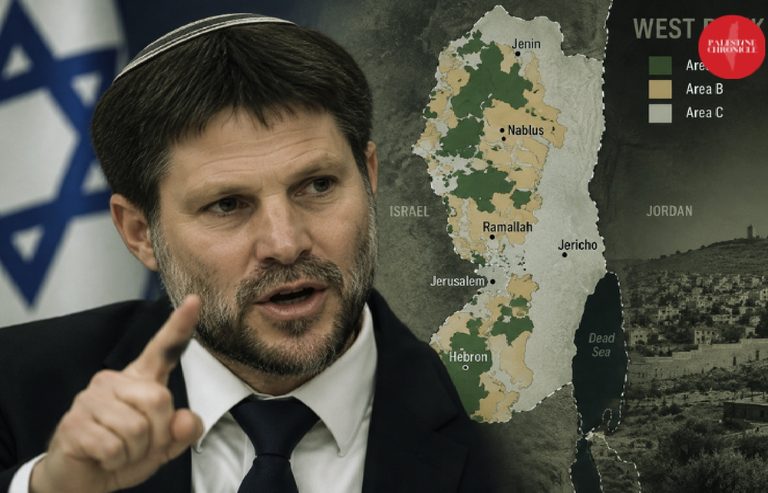
For Prime Minister Benjamin Netanyahu, Operation Wings of Dawn is unabashedly ideological. He has repeatedly called the initiative “an important and Zionist decision”. Finance Minister Bezalel Smotrich, a far-right figure, declared that “their aliyah to the Galilee and settlement in Nof HaGalil strengthens our hold in the north and the future of the State of Israel”.
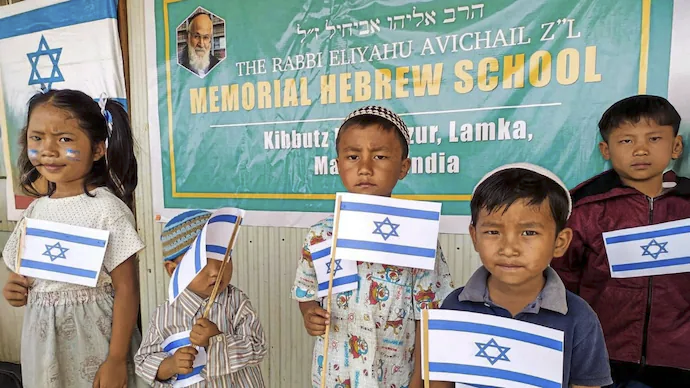
But the religious motivation among the Bnei Menashe themselves is genuine and deeply felt. “Here, we cannot follow all our customs. Some prayers require a minyan or quorum, which is hard to find in the hills. We want to go to Israel for our religion,” Benjamin Haokip said. Access to kosher food, synagogues, and a full Jewish communal life is severely limited in the remote northeast. Ngamthenlal, a Hebrew teacher in Manipur, told The New York Times: “We want to go to Israel, 90% for our religion, but yes, other things are better there, too, like education”.
The pull of family reunification is also powerful. Many of the new arrivals will be reunited with relatives who immigrated years earlier. Dagan Zolat, a Bnei Menashe who has lived in Israel for 20 years, was at the airport Thursday to greet a man he described as his brother. “We were neighbours and among the only Jews in our village,” he told AFP. “When my son was little in India, my friend often carried him in his arms.” It had been nine years since they last saw each other.
The Strategic Calculus: Demographics, Labour, And The Galilee.
However, Israel’s embrace of the Bnei Menashe cannot be disentangled from its strategic imperatives. The country is grappling with a severe labour shortage exacerbated by the wars that began with Hamas’s October 7, 2023, attack. Military mobilisation, the barring of Palestinian workers from the West Bank, and a dramatic reduction in migrant labour from Nepal and Thailand have hollowed out the construction, agriculture, and manufacturing sectors.
The Bnei Menashe, with their reputation for hard work and religious zeal, are seen as an ideal source of replacement labour. “Our community does its best to contribute to society. We work, and we are in the army, the yeshivas; we are everywhere, every part of life,” Hanoch Haokip, a Bnei Menashe who works for the Shavei Israel organisation, told The Media Line. Over 200 Bnei Menashe have served in IDF combat units, including during the Gaza ground offensive.
The demographic dimension is equally critical. Israel’s population of 10.1 million is approximately 73% Jewish, while the Palestinian territories hold an estimated 5.5 million people. Ensuring a Jewish majority between the Jordan River and the Mediterranean Sea remains a core state concern. The Bnei Menashe’s placement in the Galilee, a region bordering Lebanon that has been heavily affected by Hezbollah rocket fire and where tens of thousands of Jewish residents have fled, is explicitly designed to alter the demographic balance vis-à-vis the Arab population.
Critics argue this amounts to demographic engineering. “The migration of the Bnei Menashe to Israel is a process that began decades ago but is accelerating today within the framework of a plan that is supposed to continue until 2030,” notes a report by the French-Jewish organisation UJFP, which accuses Israel of “demographic colonialism”. A detailed analysis in the Chinese outlet The Paper describes the Bnei Menashe as “ideal demographic resources” for filling disputed border areas and diluting the local Arab population, noting that Israel gains access to a potential “human pool” of over 1.5 million people from the broader Kuki-Chin-Mizo ethnic group.
The Shavei Israel Nexus And Controversies:
The aliyah of the Bnei Menashe has been inextricably linked to Shavei Israel, a non-profit organisation founded by American-born Michael Freund that seeks to locate “lost Jews” around the world and facilitate their return. Freund has been in contact with the community since the late 1990s and is widely credited, or blamed, for turning their aspirations into government policy.
A Haaretz investigation revealed that, until the current government takeover, Shavei Israel effectively “determined which community members were included in the government immigration quotas”. The same report noted allegations of abuse and mistreatment levelled against the group, though details remain opaque. Nevertheless, government documents continue to refer to Shavei as the only organisation “capable” of managing the immigrants.
This quasi-monopoly has raised concerns about transparency and accountability. Who decides which Bnei Menashe are “eligible” for aliyah? What criteria are used? And what happens to those left behind?
Integration Challenges And Racism:
For those who do make it to Israel, the transition is rarely smooth. Jessica Thangjom, a Bnei Menashe who lives in Israel and works for an organisation helping others from the tribe make the leap, described the process as daunting. “Transitioning from their agrarian lifestyle to a technologically sophisticated environment is not an easy journey,” she told The New York Times.
Compounding this is the racism that many Bnei Menashe face in Israeli society. Because of their East Asian appearance, community members report being frequently labelled as “Chinese” and subjected to discrimination. This othering sits in painful tension with their fervent Jewish identity and their willingness to serve in the military and settle in dangerous border regions.
The requirement to undergo Orthodox conversion upon arrival also rankles. Despite being recognised as “Seed of Israel,” the Bnei Menashe are not considered fully Jewish until they complete the giyur process, a condition not uniformly applied to all immigrant groups under the Law of Return. This second-class status within the very community they are sacrificing everything to join adds a layer of irony to the Zionist promise.
What India Gains, And Loses:
The Indian government has been conspicuously quiet about Operation Wings of Dawn. The aliyah plan was jointly coordinated with New Delhi, according to DW. For India, the emigration of the Bnei Menashe removes a vulnerable minority from a volatile conflict zone, potentially easing some of the humanitarian pressure in Manipur. However, it also means the permanent loss of a community that, despite its contested origins, has become part of the cultural fabric of the northeast.
Indian critics argue that Israel is exploiting a community manufactured by colonial-era missionary influences and modern Zionist outreach. “Many Indian commentators criticise Israel for politically exploiting the Menashe movement, encouraging identity claims that lack a factual basis,” notes the analysis in The Paper.
The Road Ahead:
The Bnei Menashe will keep coming. A second flight is scheduled within days, and a third within two weeks, bringing the current wave to approximately 600 arrivals. By 2030, if the government plan holds, the Galilee will be home to a new generation of Indian-origin Jews, their children speaking Hebrew with a Tibeto-Burman lilt, serving in the IDF, and anchoring Israel’s northern frontier.
Daniel Hangshing, the would-be immigrant from Kangpokpi, is fatalistic about the dangers that await. “We know that Israel is a place in turmoil, but we have to go there and die there. We are not bothered about the war,” he said.
Whether this migration represents a historic homecoming or a cynical instrumentalisation of a marginalised people, or perhaps both at once, depends on where one stands. From the tarmac at Ben-Gurion Airport, where families wept with joy on Thursday, the answer seemed clear enough. From the burning hills of Manipur, where two children’s bodies still lie in a morgue awaiting justice, the calculus is starker. And from the cabinet rooms in Jerusalem, where the Galilee’s demographic spreadsheets are pored over with the same intensity as military maps, the Bnei Menashe are a solution to several problems at once.
Operation Wings of Dawn has begun. Its wingspan will reshape lives, borders, and narratives for decades to come.
Source: Multiple News Agencies
Submissions:
For The Secure Submission Of Documentation, Testimonies, Or Exclusive Investigative Reports From Any Global Location, Please Utilise The Following Contact Details For Our Investigations Desk: enquiries@veritaspress.co.uk or editor@veritaspress.co.uk
Help Support Our Work:
Popular Information is powered by readers who believe that truth still matters. When just a few more people step up to support this work, it means more lies exposed, more corruption uncovered, and more accountability where it’s long overdue.
Help Protect Independent Journalism, Which Is Currently Under Attack.
If you believe journalism should serve the public, not the powerful, and you’re in a position to help, becoming a DONATOR or a PAID SUBSCRIBER truly makes a difference.
DONATION APPEAL: If You Found This Reporting Valuable, Please Consider Supporting Independent Journalism.
Help Support Our Work – We Know, We Know, We Know …
Seeing these messages is annoying. We know that. (Imagine what it’s like writing them … )
Your support fuels our fearless, truth-driven journalism. In unity, we endeavour to amplify marginalised voices and champion justice, irrespective of geographical location.
But it’s also extremely important. One of Veritas Press’s greatest assets is its reader-funded model.
1. Reader funding means we can cover what we like. We’re not beholden to the political whims of a billionaire owner. We are a small, independent and impartial organisation. No one can tell us what not to say or what not to report.
2. Reader funding means we don’t have to chase clicks and traffic. We’re not desperately seeking your attention for its own sake: we pursue the stories that our editorial team deems important and believe are worthy of your time.
3. Reader Funding: enables us to keep our website and other social media channels open, allowing as many people as possible to access quality journalism from around the world, particularly those in places where the free press is under threat.
We know not everyone can afford to pay for news, but if you’ve been meaning to support us, now’s the time.
Your donation goes a long way. It helps us:
Keep the lights on and sustain our day-to-day operations
Hire new, talented independent reporters
Launch real-time live debates, community-focused shows, and on-the-ground reporting
Cover the issues that matter most to our communities, in real time, with depth and integrity
We have plans to expand our work, but we can’t do it without your support. Every contribution, no matter the size, helps us stay independent and build a truly people-powered media platform.
If you believe in journalism that informs, empowers, and reflects the communities we serve, please donate today.
Kamran Faqir is a volunteer investigative journalist and writer committed to exposing hidden truths and amplifying underreported stories. Driven by social justice, he brings sharp insight and fearless truth-telling to independent journalism. NUJ registered.
SEATTLE, TEHRAN — The U.S. Department of Homeland Security (DHS) will allow Iran’s national football team to enter the country 48 hours before their critical World Cup match against Egypt on Friday, a modest concession in a tournament where Team Melli’s travel conditions have sparked claims of oppression and competitive disadvantage.