Kamran Faqir is a volunteer investigative journalist and writer committed to exposing hidden truths and amplifying underreported stories. Driven by social justice, he brings sharp insight and fearless truth-telling to independent journalism. NUJ registered.
Original Article Date Published:
Article Date Modified:
13 minutes
Views:308
Listen to this article
Help support our mission, donate today and be the change. Every contribution goes directly toward driving real impact for the cause we believe in.
BEIRUT/TEL AVIV — On the surface, the White House hailed a diplomatic breakthrough on Thursday, April 23, 2026: a three-week extension of the crumbling ceasefire between Israel and Lebanon, minted in the Oval Office as ambassadors shook hands. United States President Donald Trump took to Truth Social, declaring, “The Ceasefire between Israel and Lebanon will be extended by THREE WEEKS,” following what he called a “very historic” round of talks involving Vice President JD Vance and Secretary of State Marco Rubio. He later told reporters, “I think there’s a very good chance of having peace. I think it should be an easy one.”
But barely six hours after the cameras vanished from Washington, the reality on the ground in southern Lebanon exposed the deepening chasm between performative diplomacy and a scorched-earth military campaign that appears designed to permanently redraw the border long before any lasting peace agreement can be signed.
This is a tale of two realities, one scripted for diplomatic audiences, the other measured in the debris of villages that are being systematically erased from the map and land being stolen in plain sight.
The Anatomy Of A Contradiction:
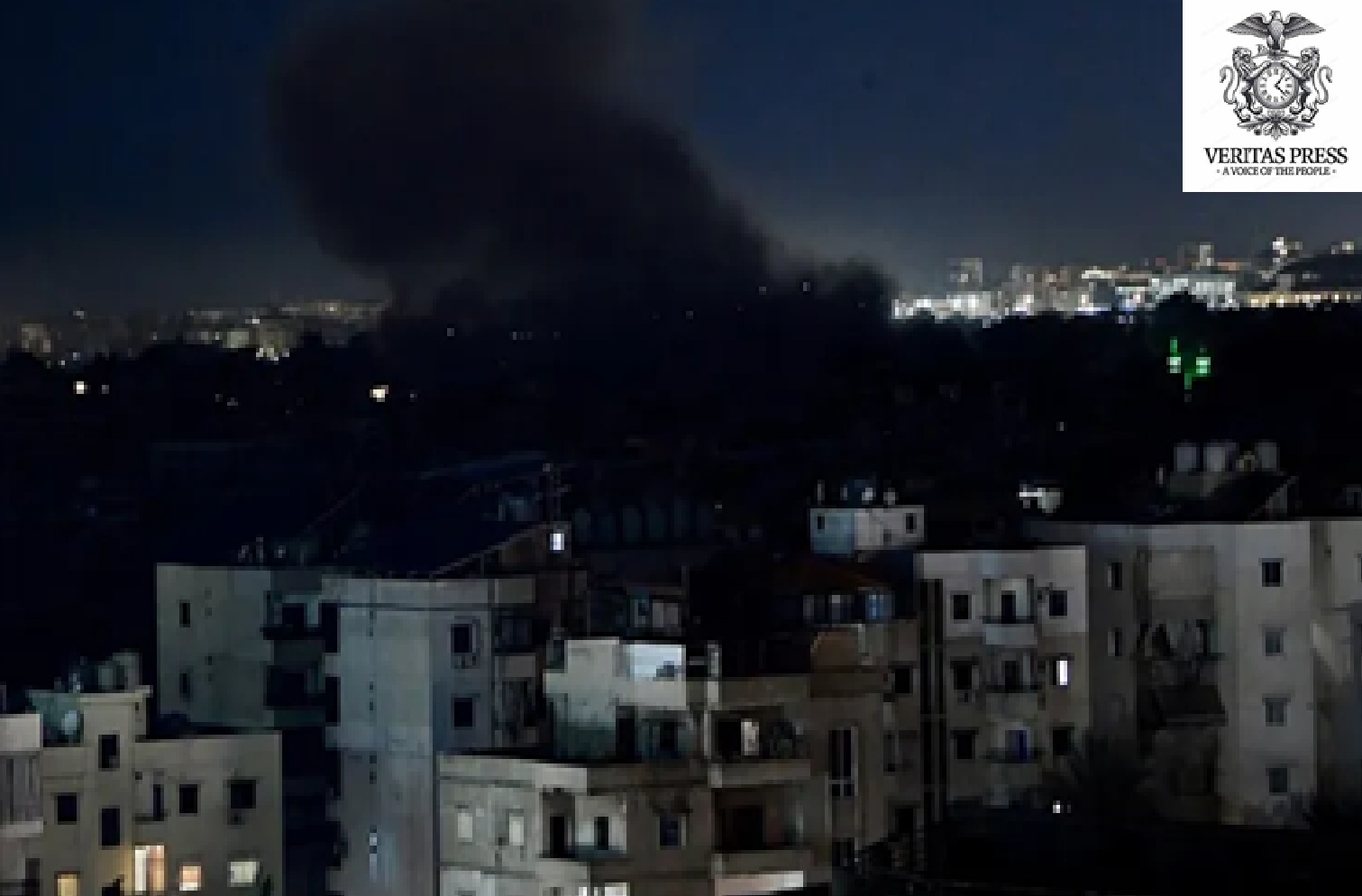
The dissonance was immediate and absolute. While Trump’s envoys were briefing reporters that the extension would provide space for “wider-reaching negotiations” aimed at securing a full Israeli withdrawal and prisoner exchanges, the Israeli Air Force and artillery corps were already executing the opposite. In the pre-dawn hours of Friday, April 24, Israeli warplanes and artillery units struck multiple sites across southern Lebanon, according to the country’s National News Agency (NNA), bombarding the outskirts of Touline, pounding the village of Kherbet Selm, and launching raids on Majdal Zoun and the Rihan heights. The strikes were not against fleeting rocket squads but, as the Israeli military stated, targeted “military structures used to plan and carry out attacks against Israeli soldiers and the State of Israel.”
The Israel Defence Forces (IDF) claimed the operation was a direct response to a salvo of rockets fired by Hezbollah toward the northern Israeli settlement of Shtula late Thursday. Hezbollah, in turn, said the rocket fire was itself a retaliation for “blatant and documented Israeli violations that have exceeded 200 breaches” since the ceasefire took effect on April 16, including artillery shelling in the town of Yater that reportedly injured a child. The group stated: “To defend Lebanon and its people, and in response to the violation of the ceasefire by the Israeli enemy and its attacks against the city of Yater, in southern Lebanon, [we] targeted the settlement of Shtula with a salvo of rockets.”
Yet, to view these exchanges as isolated tit-for-tat violence is to misread the war’s trajectory. The airstrikes were merely the overture to a far larger and more methodical operation unfolding under the cover of the truce: the systematic demolition of entire civilian communities.
The Buffer Zone: A Map Of Expropriation.
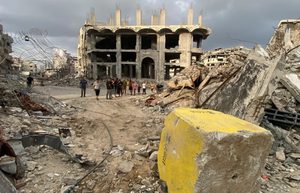
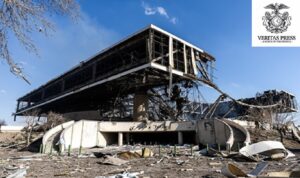
Wrapped inside the ceasefire is a military doctrine that Israel now labels the “Yellow Line”, a self-declared militarised zone extending up to 10 kilometres into Lebanese territory. Within this strip, Israeli commanders told Haaretz that civilian homes, public buildings, and schools are being demolished as part of a broad policy of ‘clearing the area,’ explicitly inspired by the same methods used in the Gaza Strip. Dozens of heavy excavators, operated by subcontractors reportedly paid per structure destroyed, have been deployed to erase towns like Aita al-Shaab, Khiam, Markaba, and Qantara from the map.
The ancient city of Bint Jbeil, a bastion of anti-Israeli resistance that once hosted 30,000 residents, is now the subject of a house-by-house systematic demolition campaign that has reduced entire neighbourhoods to rubble. Lebanese officials report that 428 housing units were destroyed in just three days during the ceasefire, with another 50 damaged. Overall, more than 17,700 homes have been obliterated since the war resumed on March 2. Israeli Defence Minister Israel Katz has explicitly ordered that all homes in Lebanese border villages be destroyed “in accordance with the Rafah and Beit Hanoun model in Gaza,” aiming to permanently prevent roughly 600,000 displaced residents from returning.
The human consequence is a nation within a nation: over 1.2 million displaced Lebanese, more than 117,000 still huddled in collective shelters as of April 20, watching footage of their ancestral villages being systematically erased by Israeli earthmovers whose operators are paid by the structure. This is not collateral damage; it is a deliberate act of territorial re-engineering.
Voices From The Rubble: The Journalists Under Fire.
The cost of documenting this reality has been lethal. On April 22, Israeli strikes killed two people in a car in the At-Tiri village. When veteran journalist Amal Khalil rushed to cover the incident, a second Israeli strike targeted the building she was in, killing her beneath the rubble. Rescue workers who attempted to reach her and her wounded colleague, journalist Zeinab Faraj, were blocked by continued Israeli fire.
Lebanese Prime Minister Nawaf Salam accused Israel of committing war crimes: “Targeting journalists, obstructing access to them by relief teams, and even targeting their locations again after these teams arrive constitutes war crimes… Israel’s targeting of media workers in the south while they carry out their professional duties is no longer an isolated incident, but has become an established approach that we condemn and reject, as do all international laws and conventions.”
The Committee to Protect Journalists added that “the repeated strikes on the same location, the targeting of an area where journalists were sheltering, and the obstruction of medical and humanitarian access constitute a grave breach of international humanitarian law.” In total, eight journalists and media workers have been killed since March 2, alongside at least 100 healthcare workers, 177 children, and 274 women.
Local Voices: “I Have No Home To Return To”.
In the suburbs of Beirut, where tens of thousands of displaced southerners have sought refuge, the mood oscillates between fragile hope and deepening despair. Hussein, a 54-year-old farmer from Aita al-Shaab, spoke with this correspondent via telephone: “We watched the White House ceremony on television and dared to hope. We packed our bags. Then we saw the video from our neighbour of the excavators finishing the demolition of our house. The ceasefire meant nothing. It only gave them time to finish the job.”
For the residents of the “Yellow Line,” returning home is not an option in the foreseeable future. Lisa Abou Khaled, spokeswoman for the UN High Commissioner for Refugees, acknowledged “cautious movements of return” unfolding in “very challenging conditions … This moment reflects hope combined with uncertainty. People want to return home, but safety remains the overriding concern.”
The Diplomatic Theatre
The Oval Office ceremony itself was a study in surreal juxtaposition. Israeli Ambassador Yechiel Leiter expressed his hope that “together, under your leadership, we can formalise peace between Israel and Lebanon in the very near future,” while Lebanese Ambassador Nada Hamadeh Moawad thanked Trump and declared, “with your help, with your support, we can make Lebanon great.”
But even as the ambassadors smiled for the cameras, the same Israeli envoy had earlier articulated a very different narrative in a televised interview. Israel’s UN Ambassador Danny Danon acknowledged that the ceasefire is “not 100%,” stressed that Israel maintains the right to respond to threats at any time, and questioned whether the Lebanese government was capable of enforcing its sovereignty in the south. This is the self-defence clause that Israel has weaponised into a blank check for continued demolition operations. Israeli Foreign Minister Gideon Saar, while expressing readiness to negotiate “minor border disputes,” simultaneously declared Lebanon a “failed state” and insisted that “the obstacle to peace and normalisation between the countries is one: Hezbollah.”
The Fractures Within:
The violence has also claimed the lives of international peacekeepers, the very intermediaries who should be safeguarding the truce. On April 18, a UNIFIL patrol came under small arms fire in what France described as a “deliberate attack,” killing French Staff Sergeant Florian Montorio and wounding three others, two seriously. A second French soldier was killed in a separate incident days later. Both Macron and UNIFIL blamed Hezbollah, though the group denied responsibility, and Macron called on Lebanese authorities to “identify and prosecute those responsible without delay.” The Israeli army, meanwhile, claimed it possesses intelligence that Hezbollah operatives fired the shots, alleging the group is exploiting the ceasefire to carry out activities that endanger international organisations.
This fog of accusations complicates any diplomatic effort. Hezbollah MP Ali Fayyad declared the extended ceasefire “meaningless in light of Israel’s insistence on hostile acts, international law violations, human rights violations, including assassinations, shelling, and gunfire and its demolition of villages and towns in the south. Any Israeli aggression against any Lebanese target, regardless of its nature, gives the resistance the right to respond proportionately.”
Lebanese President Joseph Aoun, walking a diplomatic tightrope, stressed that his government’s willingness to negotiate does not signify surrender. “Contacts are underway to extend the ceasefire period,” he said earlier, while demanding an end to home demolitions and the “full” withdrawal of Israeli forces, the release of Lebanese prisoners, the deployment of Lebanese troops along the border, and the launch of reconstruction. He has also urged Trump to pressure Israel to revise its negotiating stance.
Prime Minister Salam has also pushed back forcefully against Israeli narratives that blame Hezbollah alone, arguing his government has taken “bold decisions” to confiscate weapons and restrict the group’s military activity. “Disarmament is a process; it’s not something that’s going to happen overnight. But what’s more important is that we have shown seriousness,” he said, underscoring that “the only way to do it is to strengthen the army.” However, he was unequivocal on one point: “We cannot live with a so-called buffer zone. Israeli presence where Lebanese displaced people are not allowed to return, where destroyed villages and towns cannot be rebuilt.”
The Escalating Human Toll:
Behind the diplomatic language, the numbers tell a story of catastrophic scale. Since Israel expanded its military operations on March 2, 2026, the latest figures released by Lebanese authorities show that 2,483 people have been killed and 7,707 wounded, a toll that includes at least 177 children and 274 women. Over 17,756 housing units have been completely destroyed, with an additional 32,668 damaged. The Lebanese Health Ministry’s previous count on April 23 stood at 2,454 dead, indicating the toll continues to climb even during the ceasefire.
The psychological toll on the displaced is staggering. Those who fled the south in the early days of the March 2 escalation are now watching their villages erased in real time, as Israeli soldiers reportedly loot civilian property, motorcycles, televisions, paintings, furniture, and personal possessions from abandoned homes, a pattern Haaretz confirmed through soldier and commander testimonies.
ANALYSIS: The Implosion Of Trust.
After weeks of careful sourcing and frontline cross-referencing, a pattern emerges that challenges the official narratives from both Washington and Jerusalem. The extension of the ceasefire is not a pathway to peace but a temporary shield under which Israel is executing the systematic destruction of southern Lebanon’s built environment. The White House, whether through complicity, incompetence, or self-imposed diplomatic blinders, is providing the political cover and timeframe for a massive land-grab operation that fundamentally alters the geography of any future negotiation.
The tragedy is multidimensional. Hezbollah, by launching rockets at Shtula during the Washington talks hours and targeting Israeli positions multiple times since the truce began, provides Israel with precisely the casus belli it needs to maintain its demolition campaign under the veneer of legitimate self-defence. The Lebanese government, caught between an emboldened Israeli military on one side and an irreconcilable Hezbollah on the other, is forced to negotiate the terms of its own territorial dismemberment while international peacekeepers are killed in the crossfire.
The ceasefire that was supposed to last ten days has been extended by three weeks. But at the current rate of destruction, by the time that extension expires in mid-May, there may be few villages left in southern Lebanon to negotiate over. The map is being redrawn not at the negotiating table but by the excavator’s blade, and the world’s applause for the “historic” talks in Washington is drowning out the sound of the demolitions.
Source: Multiple News Agencies
Submissions:
For The Secure Submission Of Documentation, Testimonies, Or Exclusive Investigative Reports From Any Global Location, Please Utilise The Following Contact Details For Our Investigations Desk: enquiries@veritaspress.co.uk or editor@veritaspress.co.uk
Help Support Our Work:
Popular Information is powered by readers who believe that truth still matters. When just a few more people step up to support this work, it means more lies exposed, more corruption uncovered, and more accountability where it’s long overdue.
Help Protect Independent Journalism, Which Is Currently Under Attack.
If you believe journalism should serve the public, not the powerful, and you’re in a position to help, becoming a DONATOR or a PAID SUBSCRIBER truly makes a difference.
DONATION APPEAL: If You Found This Reporting Valuable, Please Consider Supporting Independent Journalism.
Help Support Our Work – We Know, We Know, We Know …
Seeing these messages is annoying. We know that. (Imagine what it’s like writing them … )
Your support fuels our fearless, truth-driven journalism. In unity, we endeavour to amplify marginalised voices and champion justice, irrespective of geographical location.
But it’s also extremely important. One of Veritas Press’s greatest assets is its reader-funded model.
1. Reader funding means we can cover what we like. We’re not beholden to the political whims of a billionaire owner. We are a small, independent and impartial organisation. No one can tell us what not to say or what not to report.
2. Reader funding means we don’t have to chase clicks and traffic. We’re not desperately seeking your attention for its own sake: we pursue the stories that our editorial team deems important and believe are worthy of your time.
3. Reader Funding: enables us to keep our website and other social media channels open, allowing as many people as possible to access quality journalism from around the world, particularly those in places where the free press is under threat.
We know not everyone can afford to pay for news, but if you’ve been meaning to support us, now’s the time.
Your donation goes a long way. It helps us:
Keep the lights on and sustain our day-to-day operations
Hire new, talented independent reporters
Launch real-time live debates, community-focused shows, and on-the-ground reporting
Cover the issues that matter most to our communities, in real time, with depth and integrity
We have plans to expand our work, but we can’t do it without your support. Every contribution, no matter the size, helps us stay independent and build a truly people-powered media platform.
If you believe in journalism that informs, empowers, and reflects the communities we serve, please donate today.
Kamran Faqir is a volunteer investigative journalist and writer committed to exposing hidden truths and amplifying underreported stories. Driven by social justice, he brings sharp insight and fearless truth-telling to independent journalism. NUJ registered.
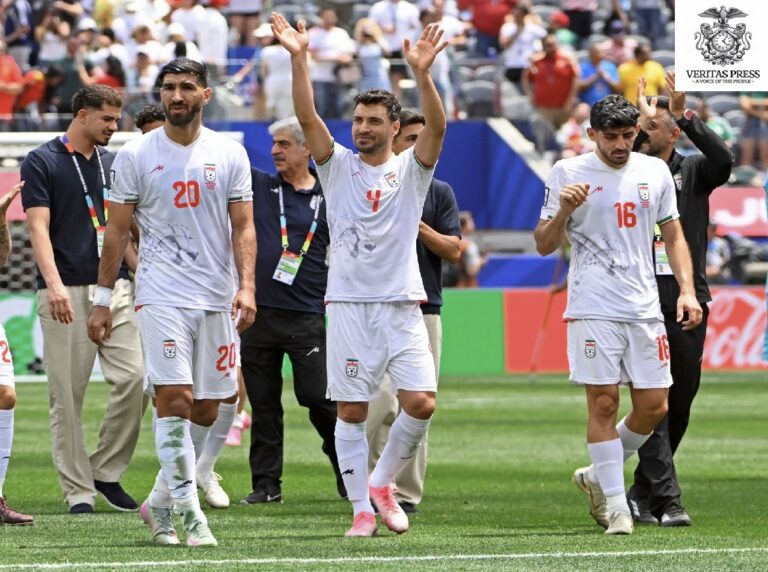
SEATTLE, TEHRAN — The U.S. Department of Homeland Security (DHS) will allow Iran’s national football team to enter the country 48 hours before their critical World Cup match against Egypt on Friday, a modest concession in a tournament where Team Melli’s travel conditions have sparked claims of oppression and competitive disadvantage.