



Help support our mission, donate today and be the change. Every contribution goes directly toward driving real impact for the cause we believe in.
How Israeli Investment Is Redrawing The Island’s Social And Political Map, And Why One MEP’s Cry That “Israel Is Buying Cyprus” Has Ignited A Sovereignty Firestorm
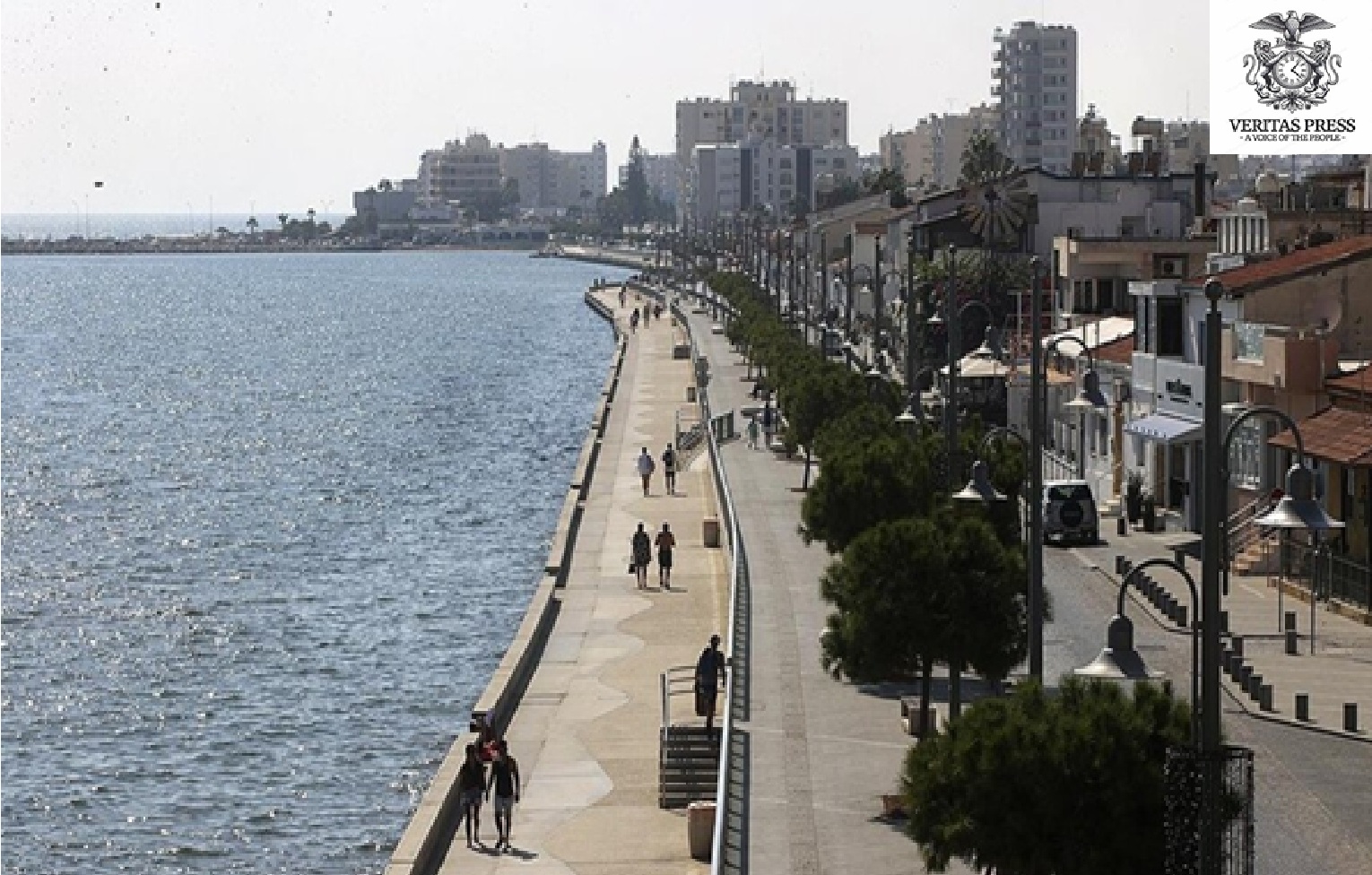
NICOSIA/LIMASSOL, MAY 2026 – The abandoned stone houses of Trozena, a village slumbering in the foothills between Limassol and Paphos, had for decades drawn only the curious gaze of occasional hikers. Today, the silence is broken by construction crews, surveyors’ drones, and a thicket of competing narratives that have turned this tiny settlement into a national Rorschach test. For some, it is a welcome resurrection of a dying rural outpost. For others, it is the sharp edge of a foreign land acquisition wave that, in the words of one European Parliament member, amounts to a silent takeover: “Israel is buying Cyprus.”
That blunt assessment, fired off on X by independent Cypriot MEP Fidias Panayiotou, has not only gone viral; it has forced both halves of this divided island to confront an uncomfortable question: when does foreign investment become a threat to sovereignty?
Panayiotou’s Provocation And The Price Of Dependence:
Panayiotou, a social-media-native politician who has built a following by shattering taboos, laid out a stark indictment. “The problem is that we are dependent on Israeli investment for our economy to go well,” he said, arguing that concentrated property purchases were carving out “closed residential circles in specific areas.” Israeli communities, he claimed, were increasingly developing separate infrastructure, including schools that cater primarily to Israelis, forming what other political figures have since called de facto “ghettos.” While he acknowledged that foreign capital from Russia, Ukraine, China, the US, and the UK also flows into Cypriot soil, he reserved his sharpest critique for what he described as weak controls, endemic corruption, and a governing system that has grown addicted to overseas money. “If the government unilaterally allows large Israeli investors to build whatever they want, or if they don’t control the results, and as a unit behind those companies that make investments, which many times are considered Cypriots, then it makes sense for them even more to come invest in Cyprus,” Panayiotou said.
“Israelis have acquired nearly 4,000 properties across Cyprus since 2021, with many being transformed into nearly inaccessible ‘gated communities’”
[THE CRADLE]
The lawmaker’s outburst did not come from a vacuum. It crystallised a swelling unease among ordinary Greek Cypriots who have watched the post-2013 economic model, built on a fire-sale of residency permits and a desperate courtship of foreign capital after a catastrophic banking collapse, slowly morph into something they no longer recognise.
The Trozena Laboratory: Redevelopment Or Enclave?
No place better illustrates the collision of hope, fear, and geopolitical intrigue than the village of Trozena. According to Politis newspaper, Hungarian-Israeli businessman Uriel Kertesz has purchased roughly 70% of the abandoned homes and large swathes of surrounding land with plans to build “New Trozena”, a development promising short-term accommodation, a glamping site, a winery, restaurants, and cafés. Kertesz insists his vision is pastoral, not political. “Cyprus had never formed part of any ‘greater Israel’ concept,” he told reporters, casting the project as a quiet retreat where people could “leave the noise behind.” Nationality, he added, would be no barrier; the only requirement would be respect for the environment.
Some local residents have welcomed the investment. “The village was dead; there was no electricity, no water. He offered more than our plots were worth. At least now there’s hope,” a former landowner who sold to Kertesz told Politis, echoing a sentiment common in a countryside starved of economic life.
But elsewhere the narrative is dramatically different. Turkish newspaper Yeni Safak depicted Trozena as a spearhead of a wider Israeli strategy to turn Greek Cyprus into a “satellite state.” Greek Cypriot media, however, pushed back, with Politis dismissing the geopolitical alarmism as “nonsense.” Yet even as the ideological crossfire intensifies, concrete concerns are emerging that transcend partisan lines: environmental permits and full construction approvals for the project have not yet been secured, according to Politis, raising questions about whether the state is turning a blind eye to a powerful investor.
More troubling are allegations that private security personnel attempted to restrict public access to areas in and around Trozena. While authorities insist the village remains under state control, the episode left a bitter taste among Cypriots who see in it the silhouette of exactly the kind of “closed residential circle” Panayiotou warned about.
Sovereignty Alarms: From Sensitive Zones To Airport Security.
The unease has travelled quickly from the rural periphery to the heart of the political establishment. AKEL, the main opposition party, has adopted the issue with full force. Secretary-General Stefanos Stefanou openly charged that Israelis are engaged in “planned and systematic purchases of property in strategic and security-risk locations,” declaring, “Our country is being lost, Israel is occupying us.” He pointedly asked what President Nikos Christodoulides “owes” Israeli Prime Minister Benjamin Netanyahu, given the government’s unwavering support for Israel even as traditional allies have begun to distance themselves.
The reference touched a raw nerve. In February, a decision to outsource security operations at Larnaca and Paphos airports to an Israeli firm triggered an eruption in the Greek Cypriot press. Headlines accused Christodoulides of “transferring the country’s sovereignty to Israel,” a charge the government has denied, but which feeds a broader narrative of creeping Israeli influence over critical national infrastructure.
On the other side of the divide, these concerns are observed with a mixture of schadenfreude and genuine alarm. Turkish Cypriot columnist Süleyman Irvan, writing in the pro-government Daily Sabah, articulated a long-standing Turkish critique of the “unholy Greek-Jewish alliance.” He framed the deepening Greek Cypriot-Israeli partnership, anchored by the 2010 Exclusive Economic Zone agreement, joint military drills, the lifting of the US arms embargo, and Nicosia’s pursuit of Israel’s Iron Dome, as a strategic trap. “The Greek Cypriot administration is just one of many ‘temporary’ allies that Israel has established and exploited throughout its history to serve its interests,” Irvan wrote, citing the unresolved dispute over the Aphrodite gas field where Israel claims reserves may extend into its own waters, a pressure point that has forced Greek Cypriot compromises.
Irvan’s piece, unequivocally partisan and laced with a deeply contested historical reference to a 117 A.D. massacre of Greek Cypriots by Jews in Salamis, illustrates how the land question is inseparable from the island’s frozen conflict and the broader Eastern Mediterranean power struggle.
The Ambassador’s Rebuttal And The Armour Of Stereotypes:
Israel’s response to the growing backlash has been swift and unflinching. Ambassador Oren Anolik issued a statement unequivocally condemning what he labelled “divisive language” that utilises “age-old stereotypes” to incite fear. He characterised descriptions of “takeover” or “unchecked influence” as profoundly concerning, insisting that the bilateral relationship is anchored in mutual respect and shared values. The embassy pointed to the economic benefits Israeli investors bring and stressed that no preferential treatment is granted.
Government figures in Nicosia have walked a tightrope, simultaneously welcoming the investment that props up growth figures while scrambling to appear responsive to public anxiety. As of May 2026, the administration has acknowledged that the existing transparency regime is insufficient and has opened a parliamentary debate on a bill that would tighten oversight of foreign land purchases, particularly in sensitive areas. Critics, however, note that the draft legislation remains weak on the crucial issue of beneficial ownership, the complex web of locally-incorporated companies that Panayiotou alluded to when he said investors are “many times considered Cypriots.” That shell-game, long exploited by Russian oligarchs before sanctions and passport-scheme reform, now offers a convenient mask for capital arriving from Tel Aviv and beyond.
The Forgotten North: A Cautionary Tale Already Written.
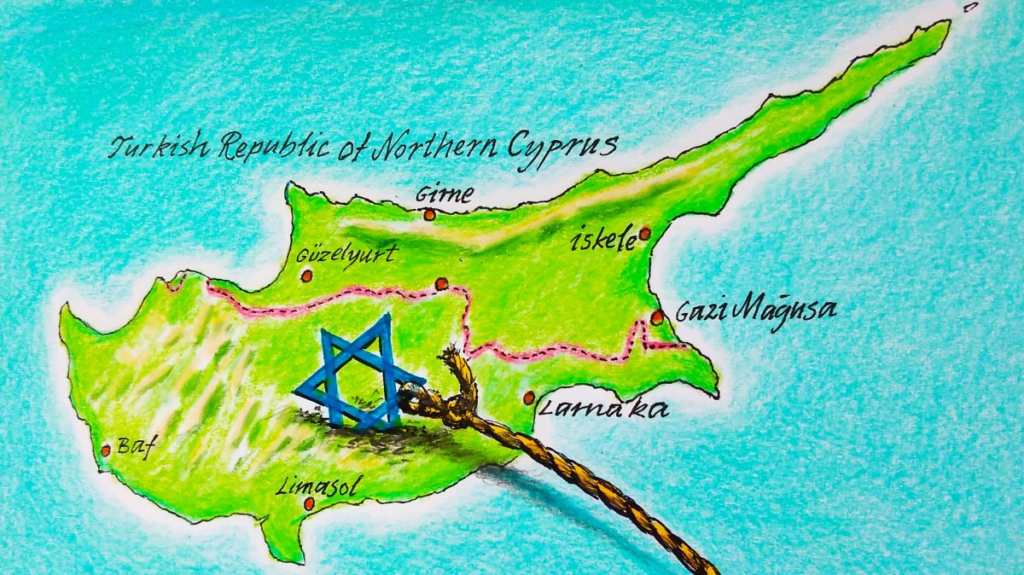
While the south wrestles with these dilemmas, it might usefully glance across the Green Line. The Turkish Republic of Northern Cyprus (TRNC), recognised only by Ankara, experienced its own surge of Israeli property acquisitions several years earlier, a phenomenon that Turkish Cypriot authorities claimed saw thousands of hectares sold to Israeli citizens. The reaction was swift and restrictive: in 2024 and 2025, the TRNC’s legislature passed new laws severely limiting foreign ownership of agricultural and forest land. Irvan’s column noted that the TRNC had already curbed “Israel’s expansion into various strategic areas … through construction sites and marinas,” a move that he presented as a defence of sovereignty against a foreign land rush.
The northern response illustrates that the current Greek Cypriot debate is, in many ways, a belated awakening to dynamics that had long worried Turkish Cypriots. But it also exposes an uncomfortable irony: a government that the international community does not recognise acted more decisively to protect local land assets than the EU-member Republic of Cyprus has managed so far.
The Anatomy Of A Vulnerable Economy:
Beneath the political theatre lies a harsh economic reality. Cyprus’s recovery from the 2013 financial meltdown was built on a lopsided formula: sell residency, sell citizenship (until 2020), and watch real estate prices climb on the back of foreign buyers seeking a Mediterranean bolt-hole and an EU passport. Russians led the initial wave, followed by Chinese, Ukrainians, Britons, and, increasingly, Israelis. Today, with the Levant ringed by war and instability, Cyprus has become a logical sanctuary. An estimated 15,000 Israeli citizens relocated to the south following the widening of the Middle East conflict, according to some reports, a human tide that has buoyed property markets but also strained the country’s capacity to integrate newcomers and maintain social cohesion.
Economists warn that the model has created a dangerous dependency. “When your construction sector, your luxury services, and even your tax base rely disproportionately on foreign capital that can cool overnight, you are essentially leasing your sovereignty,” said a political economist at the University of Cyprus who requested anonymity due to the sensitivity of the debate. “The real question isn’t about any one nationality. It’s about a regulatory framework so porous that it cannot distinguish between regenerative investment and silent accumulation that redraws the communal map.”
That opacity is what Panayiotou targeted when he called for legislation to strengthen transparency in land purchases. Without a public, easily accessible registry of the ultimate beneficial owners behind each shell company, the state cannot even map the concentration of ownership, let alone manage its consequences.
The Inconvenient Truth Of Closed Communities:
Perhaps the rawest nerve touched by the debate is the daily lived reality of parallel societies. Anecdotal evidence abounds of Israeli enclaves emerging in Limassol’s suburbs and now in rural redevelopment zones, complete with Hebrew signage, religious facilities, and Hebrew-language kindergartens. While such community self-organisation can be a natural product of migration, it collides with a political culture in both Cypriot communities that is fiercely protective of territorial identity, a legacy of partition, displacement, and a demographic struggle that continues in the north.
When Panayiotou warns of “closed residential circles,” he is not simply indulging in xenophobia, as some critics allege. He is scratching at an existential wound: a small island that has already lost a third of its territory to a de facto partition is acutely allergic to anything that suggests an additional internal fracturing.
‘Settlements in all but name, Cyprus on alert over high influx of Israeli citizens‘
A Crisis Of Transparency, Not Of Capital:
The evidence, when screened of geopolitical hysteria, points to a crisis not of Israeli perfidy but of Cypriot governance. The Trozena project, whatever its final form, is being built on contested environmental approvals. The island-wide property boom rests on a deliberately opaque corporate registry that the EU itself has repeatedly criticised for failing to meet anti-money-laundering standards. And the political class that now professes alarm is the same one that, for a decade, sold Cypriot soil as the ultimate luxury good, available to anyone with a suitcase of cash and a lawyer.
Stefanou’s question, “What does Christodoulides owe Netanyahu?”, may carry partisan venom, but it also reflects a genuine public thirst to understand the geometry of influence. When foreign policy aligns seamlessly with the interests of a single foreign power, and when domestic real estate becomes the preserve of that power’s wealthy elite, the boundary between partnership and patronage blurs.
As the Cypriot summer of 2026 approaches, the debate has only just begun. A legislative push for a beneficial-ownership register and stricter thresholds on land purchases in sensitive zones will test the government’s sincerity. So, too, will its handling of the environmental permitting for “New Trozena.” For the moment, the stones of an abandoned village speak louder than any official communiqué, and what they are whispering to an increasingly anxious population is that the question of who owns Cyprus has never been more open.
Source: Multiple News Agencies
Submissions:
For The Secure Submission Of Documentation, Testimonies, Or Exclusive Investigative Reports From Any Global Location, Please Utilise The Following Contact Details For Our Investigations Desk: enquiries@veritaspress.co.uk or editor@veritaspress.co.uk
Help Support Our Work:
Popular Information is powered by readers who believe that truth still matters. When just a few more people step up to support this work, it means more lies exposed, more corruption uncovered, and more accountability where it’s long overdue.
Help Protect Independent Journalism, Which Is Currently Under Attack.
If you believe journalism should serve the public, not the powerful, and you’re in a position to help, becoming a DONATOR or a PAID SUBSCRIBER truly makes a difference.
DONATION APPEAL: If You Found This Reporting Valuable, Please Consider Supporting Independent Journalism.
Help Support Our Work – We Know, We Know, We Know …
Seeing these messages is annoying. We know that. (Imagine what it’s like writing them … )
Your support fuels our fearless, truth-driven journalism. In unity, we endeavour to amplify marginalised voices and champion justice, irrespective of geographical location.
But it’s also extremely important. One of Veritas Press’s greatest assets is its reader-funded model.
1. Reader funding means we can cover what we like. We’re not beholden to the political whims of a billionaire owner. We are a small, independent and impartial organisation. No one can tell us what not to say or what not to report.
2. Reader funding means we don’t have to chase clicks and traffic. We’re not desperately seeking your attention for its own sake: we pursue the stories that our editorial team deems important and believe are worthy of your time.
3. Reader Funding: enables us to keep our website and other social media channels open, allowing as many people as possible to access quality journalism from around the world, particularly those in places where the free press is under threat.
We know not everyone can afford to pay for news, but if you’ve been meaning to support us, now’s the time.
Your donation goes a long way. It helps us:
- Keep the lights on and sustain our day-to-day operations
- Hire new, talented independent reporters
- Launch real-time live debates, community-focused shows, and on-the-ground reporting
- Cover the issues that matter most to our communities, in real time, with depth and integrity
We have plans to expand our work, but we can’t do it without your support. Every contribution, no matter the size, helps us stay independent and build a truly people-powered media platform.
If you believe in journalism that informs, empowers, and reflects the communities we serve, please donate today.
Donate Today.
GENEVA — A United Nations fact-finding mission has concluded there are “reasonable grounds to believe”
Iran’s GDP is projected to contract by 5.4 to 6.1% in 2026, its worst performance
The Trump administration is preparing a $2.8 billion weapons package for Israel containing 40,000 2,000-pound

Film alleges mass civilian deaths are routinely built into military decisions amid Israel’s genocidal war
The Israeli rights group says violence, displacement, economic strangulation, and settlement expansion form part of

Houthi forces have captured the historic Red Sea port of Mocha and are advancing on
London’s historic sanctions against Israeli settlements mark a watershed moment in UK foreign policy, but
With 95% of Gaza’s population now wholly dependent on aid and more than 90% stripped
India calls for Kashmir and Ladakh to appear only on its official map after a
ISLAMABAD – In the high-stakes political theatre of Pakistan, the battleground has shifted from the