Kamran Faqir is a volunteer investigative journalist and writer committed to exposing hidden truths and amplifying underreported stories. Driven by social justice, he brings sharp insight and fearless truth-telling to independent journalism. NUJ registered.
Original Article Date Published:
Article Date Modified:
13 minutes
Views:296
Listen to this article
Help support our mission, donate today and be the change. Every contribution goes directly toward driving real impact for the cause we believe in.
LONDON, UK— In the oak-panelled corridors of the Treasury, the phrase “pay-per-mile” is spoken with the detached efficiency of actuarial science. But in the windswept car parks of Cornwall, the petrol stations of Cumbria, and the cramped flats of Birmingham, where pensioners count coppers for the weekly shop, it lands like a hammer blow. Chancellor Rachel Reeves’s new road pricing scheme, due to levy 3p per mile on electric vehicle drivers and 1.5p on plug-in hybrids from April 2028, is not merely a tax. It is, as one campaigner put it, “an anti-motorist cash grab”, “a poll tax on wheels”, and a policy that threatens to deepen the chasm between Britain’s urban elites and its forgotten rural and working classes.
At a time when the cost of living has metastasised into a full-blown living standards crisis, with inflation galloping to 3.3% in March, petrol prices surging 25p above pre-war levels, and real household incomes projected to fall by 0.6% this year, the Chancellor’s insistence on squeezing yet more revenue from motorists feels less like fiscal prudence and more like a calculated assault on the already battered finances of ordinary Britons.
The Anatomy Of A Grab: What The Policy Actually Means.
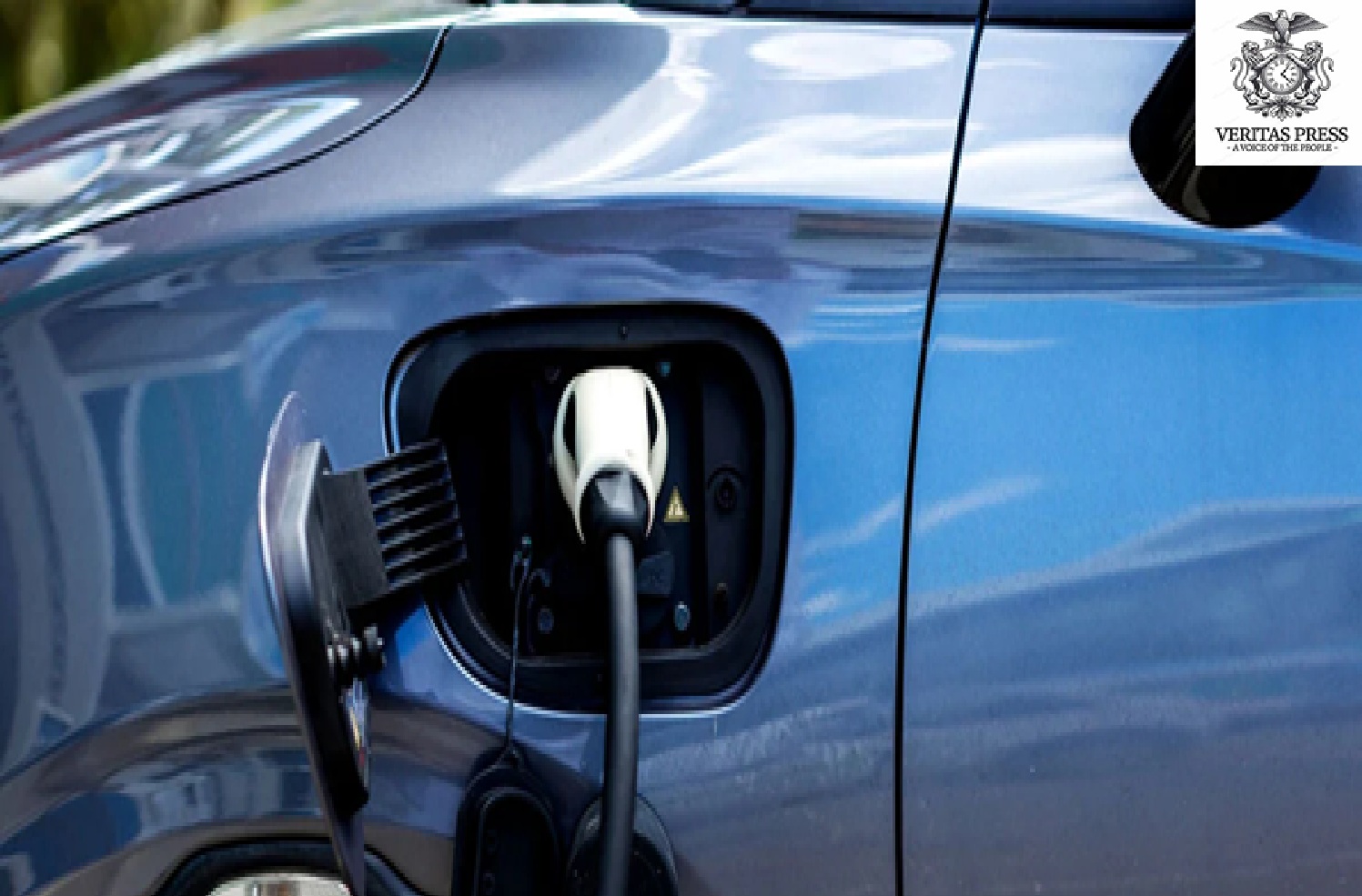
At its core, the policy is simple: from 2028, owners of electric vehicles (EVs) will pay 3p for every mile driven, while plug-in hybrid owners face a 1.5p rate. For the average driver covering 10,000 miles a year, this translates to a new annual bill of £300, on top of the existing Vehicle Excise Duty (VED) of £195. The Treasury frames this as “fairness”: petrol and diesel drivers already pay fuel duty (currently 52.95p per litre, equivalent to roughly 6p per mile), while EV drivers have, until now, contributed nothing.
But this veneer of equity cracks under scrutiny. Fuel duty is a consumption tax that scales naturally with road use; the new eVED is an annual prepayment based on estimated mileage, a bureaucratic fudge that invites fraud, penalises the honest, and does nothing to address the fundamental injustice of a tax system that already sees motorists contribute over £33 billion annually to the Exchequer through fuel duty and VED combined.
Moreover, the policy is riddled with perverse incentives. The Office for Budget Responsibility estimates the charge could suppress EV sales by 440,000 over five years, a catastrophic own goal for a government supposedly committed to net zero. James Court, head of policy at Octopus Electric Vehicles, warned: “I think it’s far too early in the transition”. Thom Groot, CEO of The Electric Car Scheme, added: “Anything that gives people a reason not to buy one creates yet another barrier”.
A Tale Of Two Britains: Rural Drivers Pay Four Times More.
Perhaps the most damning indictment of Reeves’s scheme lies in its geography. Analysis by The Electric Car Scheme reveals that rural drivers will pay four times more than their urban counterparts. Those living in smaller rural towns face an average annual eVED bill of £156.51, while Londoners pay just £33.09. Drivers in the South West, a region with some of the nation’s highest levels of deprivation, face the steepest costs at £110.25 annually.
“The data clearly shows that rural communities and regions outside London will bear the brunt of these costs due to longer necessary journeys and limited transport alternatives,” Groot explained. “The South West, East Midlands and East of England will be particularly hard hit”.
This is not merely an inconvenience. For millions of Britons living beyond the M25’s gravitational pull, a car is not a luxury; it is a lifeline. Public transport in rural areas is skeletal at best, non-existent at worst. Cut off from reliable buses and trains, rural residents have no choice but to drive to work, to hospital appointments, to the nearest supermarket. Charging them four times as much for the privilege is not fairness; it is geographic discrimination dressed up as fiscal policy.
The Disabled And Elderly: Collateral Damage.
The scheme’s impact on vulnerable groups is equally troubling and deliberately obscured. The government has offered vague assurances about “concession schemes” for disabled drivers, but no formal proposals have materialised. Meanwhile, the Motability scheme, which provides vehicles to disabled people, has slashed its annual mileage allowance from 20,000 to 10,000 miles and hiked excess mileage charges from 5p to 25p per mile. This twin assault leaves disabled Britons facing a stark choice: curtail their mobility or face punitive costs.
As one disabled Motability user told the *i* newspaper: “The changes are a direct attack on disabled people”. A wheelchair-bound teacher from Plymouth described being “forced to stay home” by the changes.
For elderly drivers, the picture is more complex. Some analysts suggest that older motorists, who typically drive fewer miles, might pay less under a pay-per-mile system. But this assumes a static 3p rate. If the government expands the scheme to all vehicles, as many fear, and increases the per-mile rate (some proposals have floated figures as high as 15p per mile), elderly drivers could face annual bills of £749 or more.
Howard Cox, founder of the FairFuelUK campaign, is unequivocal: “Pay-per-mile can never be a fair way to tax the UK’s 37 million drivers. The idea that driving more means paying more sounds appealing, but it will disproportionately impact drivers in a non-linear way”.
The Elephant In The Room: Mileage Blockers And Mass Evasion.
As if the scheme’s inequities were not sufficient, a new threat looms: the “mileage blocker.” These devices, sold legally online for “off-road use” at prices ranging from £200 to £900, can pause the mileage displayed on a car’s odometer and electronic systems as the vehicle is driven. An investigation by Autocar found that providers have already developed blockers for the most popular EV models, and “hundreds of drivers and businesses” are buying them weekly.
The implications are staggering. If a significant portion of EV owners fit these devices and under-declare their mileage, the Treasury’s projected £1.1 billion annual revenue could evaporate. Worse, the scheme could trigger a return to the vehicle “clocking” crisis of the 1980s and 1990s, with second-hand buyers unwittingly purchasing cars with falsified mileage histories. The Treasury insists such fraud is “uncommon” and illegal, but the ready availability of these devices, coupled with a self-declaration system that relies on honesty, makes mass evasion almost inevitable.
The Geopolitical Backdrop: A Nation Drained To Fund War.
The Chancellor’s pay-per-mile scheme cannot be viewed in isolation. It arrives against a backdrop of economic devastation triggered by the escalating war in the Middle East. Since the US and Israeli strikes on Iran on 28 February, oil prices have surged past $100 a barrel. The average price of petrol has climbed to 158.1p per litre, 25p higher than when the conflict began; diesel has soared by 49p to 191.2p. The Resolution Foundation estimates that rising energy costs will strip £480 from the typical UK household’s finances this year.
The human toll is incalculable. Food inflation is projected to climb above 9% by December, triple earlier forecasts. Mortgage rates have spiked, with the average two-year fixed rate jumping from 4.84% to 5.84%, the steepest rise since Liz Truss’s mini-budget. Nearly 1.8 million households face re-mortgaging this year, with typical repayments set to rise by £150 per month. Unemployment is expected to climb uncomfortably close to 6%, while the economy flirts with recession, expected to flatline in the second and third quarters.
As NIESR Deputy Director Professor Adrian Pabst put it: “Now that the oil price has passed the $100 mark, we have gone from a cost-of-living crisis to a living standards crisis”. The poorest 10% of UK households have seen their living standards fall by 1.3% in 2024-25 alone and remain more than 9% below pre-pandemic levels.
Yet amidst this carnage, the government’s response is not to shield the vulnerable or rein in profiteering energy companies. It is to impose yet another tax on motorists, a tax that will hit the rural poor hardest while leaving London’s wealthy EV drivers relatively unscathed. As one commentator observed, the conflict in the Middle East has become “a further stab in the back to Britons to drain their blood only to fill the pockets of the rich.”
Voices Of Dissent: From Parliament To The Picket Line.
Opposition to the scheme is mounting from all quarters. Sir Mel Stride, the Conservative shadow chancellor, accused Reeves of targeting “commuters and car owners” to “fill a black hole she has created”. AA President Edmund King warned the plan risked becoming “a poll tax on wheels” and urged the government to “tread carefully unless their actions slow down the transition to EVs”.
Trade unions, too, have sounded the alarm. Unison has campaigned for years on the inadequacy of mileage allowance rates, noting that workers who use their cars for work are on average £6,000 a year out of pocket due to outdated reimbursement rates. The irony is bitter: while Reeves considers raising the tax-free mileage allowance for employees using their own cars for work, she simultaneously imposes a new mileage tax on the very vehicles they drive.
Petitions opposing pay-per-mile charging have gathered thousands of signatures. One petition, entitled “Do not introduce pay-per-mile road charging for UK drivers,” argues: “Many people depend on driving for work, education, and family life, with no viable public transport. We believe pay-per-mile charging would punish responsible drivers who already pay road tax, fuel duty, and insurance. It risks isolating rural communities and damaging small businesses”.
Another petition explicitly frames the policy as a human rights violation: “We oppose the Chancellor’s Pay per Mile on the basis that it violates the right to privacy, Article 8 of the Human Rights Act 1998”.
The Thin End Of The Wedge: A Roadmap To Universal Surveillance.
The government insists that eVED “will not require ‘trackers’ in cars, nor will the Government ask people to interact with a whole new tax system”. But campaigners and privacy advocates are not reassured. Howard Cox warns that the EV charge is merely a “guinea pig” that could soon see all vehicles, petrol, diesel, and electric alike, swept into a universal pay-per-mile system.
The precedent is already being set. Sadiq Khan, London’s Mayor, was caught planning a £2 per mile charge for central London, leaked proposals revealed, alongside a £5 daily tax. A recent report by the Centre for London argued that the capital should “act as a testbed for other cities” in implementing per-mile charging. The GLA Conservatives warn that such plans could double the cost of driving in London.
If a universal pay-per-mile scheme were to be introduced, the implications for civil liberties would be profound. Even if the government eschews mandatory GPS trackers, a system based on self-declared mileage would be rife with fraud and require invasive enforcement mechanisms. The alternative, mandatory telematics, would turn every British car into a state-monitored asset, tracking not just miles driven but potentially when, where, and how those miles are accumulated. In an era of increasing digital authoritarianism, the prospect is chilling.
Conclusion: A Policy That Must Be Abolished.
Rachel Reeves’s pay-per-mile tax is a policy born of Treasury desperation, not sound economics or social justice. It penalises the rural poor, deters the green transition, invites mass fraud, and adds yet another burden to households already buckling under the weight of inflation, stagnant wages, and geopolitical turmoil. It is, in the words of FairFuelUK’s Howard Cox, “just another anti-motorists ‘net-zero cash grab'”.
The Chancellor has a choice. She can press ahead with this regressive, divisive, and deeply unpopular scheme and face the electoral consequences. Or she can abandon it, and instead pursue a genuinely fair road taxation system that exempts those on low incomes, protects rural communities, and incentivises the transition to electric vehicles without punishing early adopters.
The British people are not cash machines. They are not an infinite reservoir to be tapped every time the Treasury’s spreadsheet turns red. They are citizens, workers, carers, pensioners, and disabled people, who already pay some of the highest motoring taxes in Europe. To demand yet more from them at a time of national crisis is not governance. It is extortion.
The Pay Per Mile Policy Should Be Abolished. Now.
Source: Multiple News Agencies
Submissions:
For The Secure Submission Of Documentation, Testimonies, Or Exclusive Investigative Reports From Any Global Location, Please Utilise The Following Contact Details For Our Investigations Desk: enquiries@veritaspress.co.uk or editor@veritaspress.co.uk
Help Support Our Work:
Popular Information is powered by readers who believe that truth still matters. When just a few more people step up to support this work, it means more lies exposed, more corruption uncovered, and more accountability where it’s long overdue.
Help Protect Independent Journalism, Which Is Currently Under Attack.
If you believe journalism should serve the public, not the powerful, and you’re in a position to help, becoming a DONATOR or a PAID SUBSCRIBER truly makes a difference.
DONATION APPEAL: If You Found This Reporting Valuable, Please Consider Supporting Independent Journalism.
Help Support Our Work – We Know, We Know, We Know …
Seeing these messages is annoying. We know that. (Imagine what it’s like writing them … )
Your support fuels our fearless, truth-driven journalism. In unity, we endeavour to amplify marginalised voices and champion justice, irrespective of geographical location.
But it’s also extremely important. One of Veritas Press’s greatest assets is its reader-funded model.
1. Reader funding means we can cover what we like. We’re not beholden to the political whims of a billionaire owner. We are a small, independent and impartial organisation. No one can tell us what not to say or what not to report.
2. Reader funding means we don’t have to chase clicks and traffic. We’re not desperately seeking your attention for its own sake: we pursue the stories that our editorial team deems important and believe are worthy of your time.
3. Reader Funding: enables us to keep our website and other social media channels open, allowing as many people as possible to access quality journalism from around the world, particularly those in places where the free press is under threat.
We know not everyone can afford to pay for news, but if you’ve been meaning to support us, now’s the time.
Your donation goes a long way. It helps us:
Keep the lights on and sustain our day-to-day operations
Hire new, talented independent reporters
Launch real-time live debates, community-focused shows, and on-the-ground reporting
Cover the issues that matter most to our communities, in real time, with depth and integrity
We have plans to expand our work, but we can’t do it without your support. Every contribution, no matter the size, helps us stay independent and build a truly people-powered media platform.
If you believe in journalism that informs, empowers, and reflects the communities we serve, please donate today.
Kamran Faqir is a volunteer investigative journalist and writer committed to exposing hidden truths and amplifying underreported stories. Driven by social justice, he brings sharp insight and fearless truth-telling to independent journalism. NUJ registered.
SEATTLE, TEHRAN — The U.S. Department of Homeland Security (DHS) will allow Iran’s national football team to enter the country 48 hours before their critical World Cup match against Egypt on Friday, a modest concession in a tournament where Team Melli’s travel conditions have sparked claims of oppression and competitive disadvantage.