Kamran Faqir is a volunteer investigative journalist and writer committed to exposing hidden truths and amplifying underreported stories. Driven by social justice, he brings sharp insight and fearless truth-telling to independent journalism. NUJ registered.
Listen to this article
Help support our mission, donate today and be the change. Every contribution goes directly toward driving real impact for the cause we believe in.
Article Date Published:
Article Date Modified:
18 minutes
Views:151
From Peshawar to Swabi, thousands of Imran Khan’s supporters are marching to force the jailed former prime minister’s release, defying government warnings, internet blackouts, and accusations of militant collusion, in a showdown that has exposed Pakistan’s deepening political crisis, its faltering counterterrorism consensus, and the fragile line between protest and state repression.
A Nation Divided As Thousands March Toward Islamabad
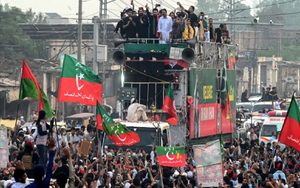
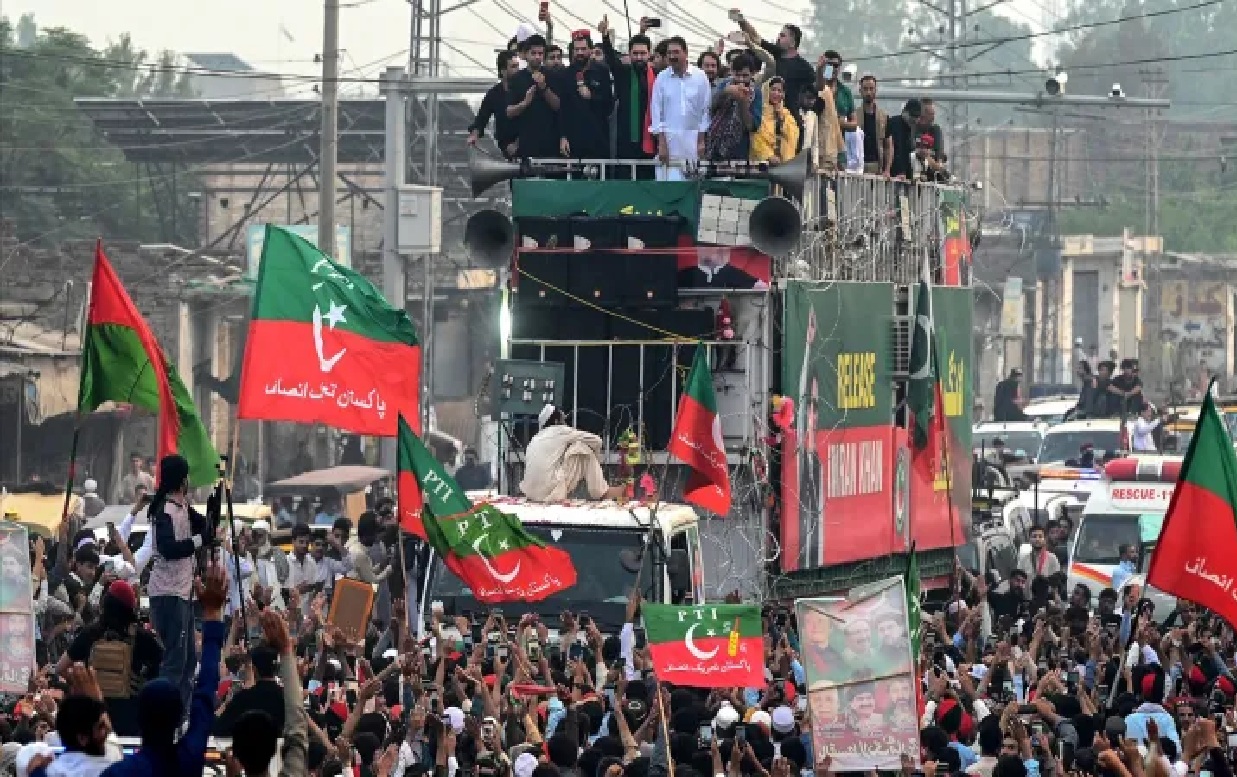
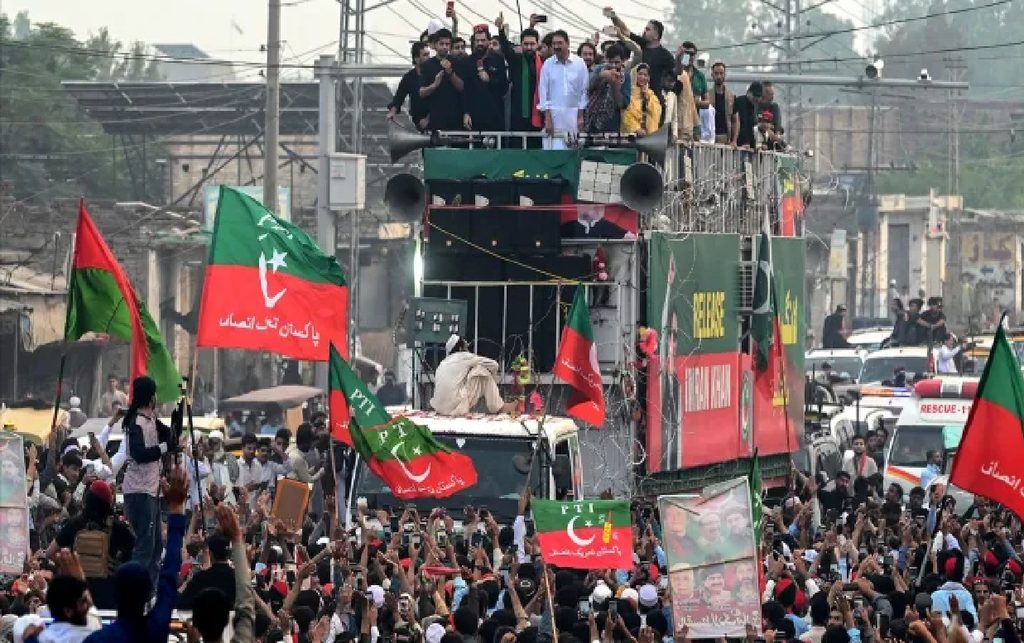
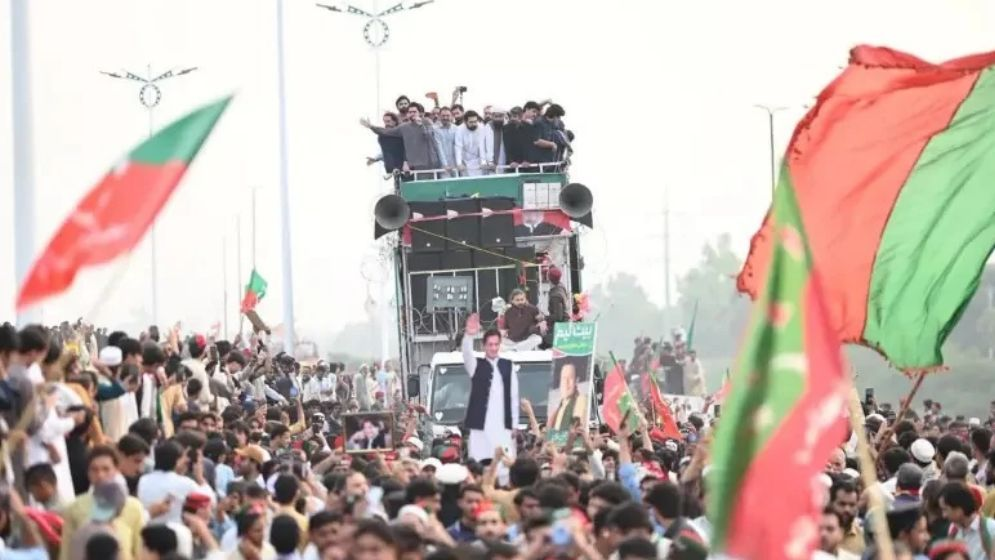
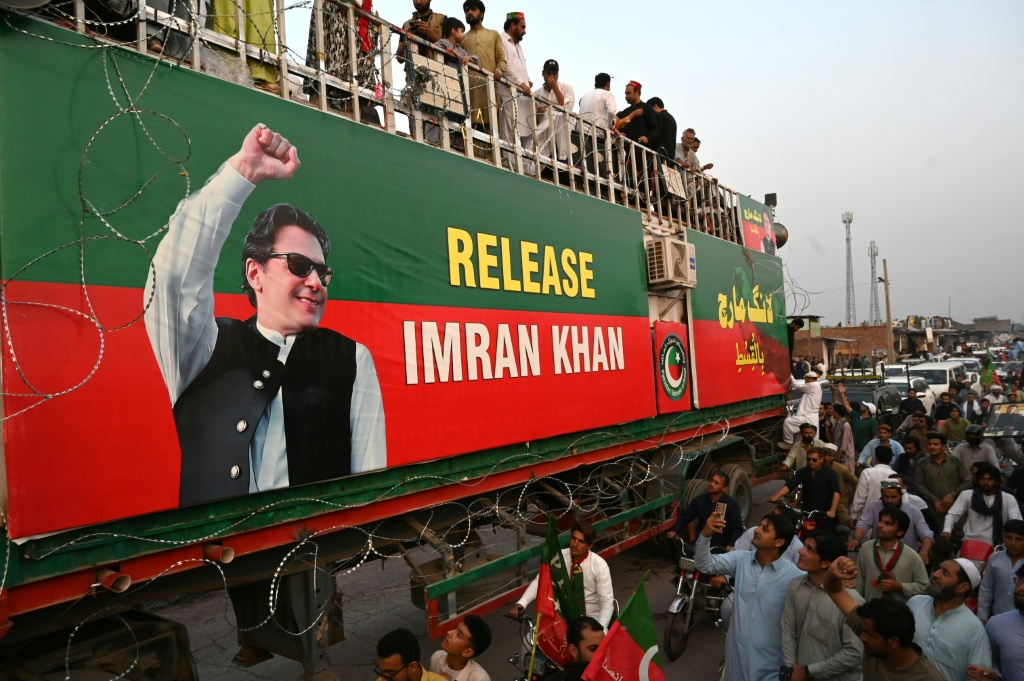
PESHAWAR, PAKISTAN — The roar of the crowd echoed across the dusty plains of Khyber Pakhtunkhwa as thousands of protesters, their vehicles draped in the red and green of Pakistan Tehreek-e-Insaf (PTI), pressed forward on their fifth consecutive day of marching. Atop a truck fitted with a five-metre-high platform adorned with smiling portraits of their jailed leader, Khyber Pakhtunkhwa Chief Minister Sohail Afridi raised his fist and bellowed into the microphone: “Are you ready to march to Islamabad?”
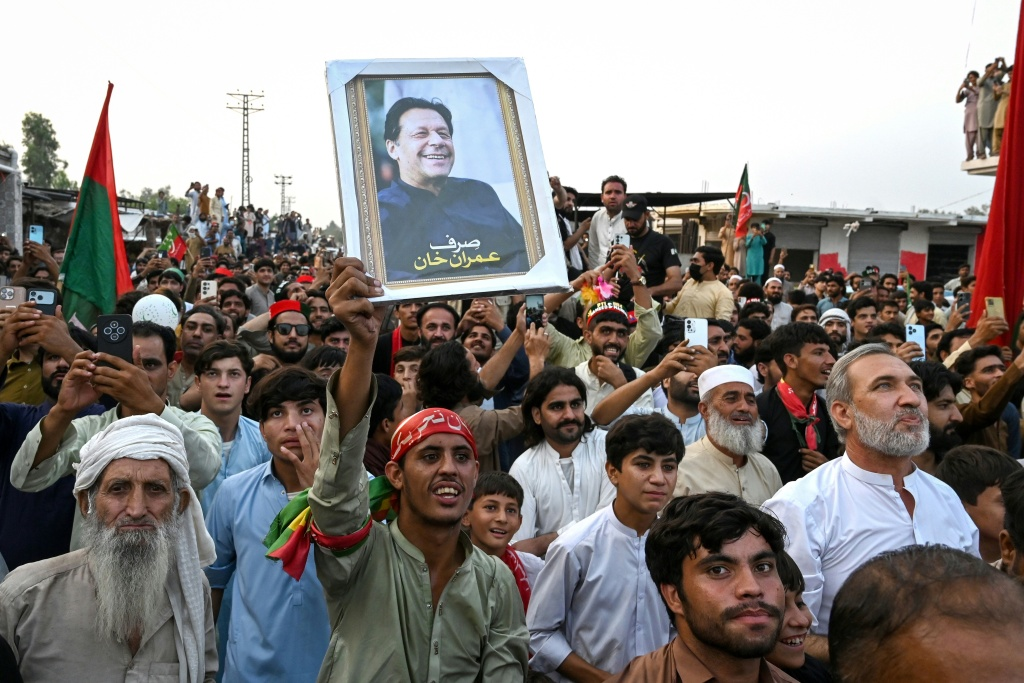
The packed crowd, many clutching pictures of former Prime Minister Imran Khan, thundered back: “We are ready.”
This is the scene that has gripped Pakistan since October 4, when PTI supporters launched what they call a “long march” demanding the release of Khan, who has been imprisoned since August 2023 on charges his party vehemently rejects as politically motivated. The march, originally scheduled for September 27, was postponed after failed negotiations with the federal government, talks that collapsed over deep disagreements on counterterrorism policy and the government’s refusal to meet PTI’s core demands.
The Man At The Centre Of The Storm
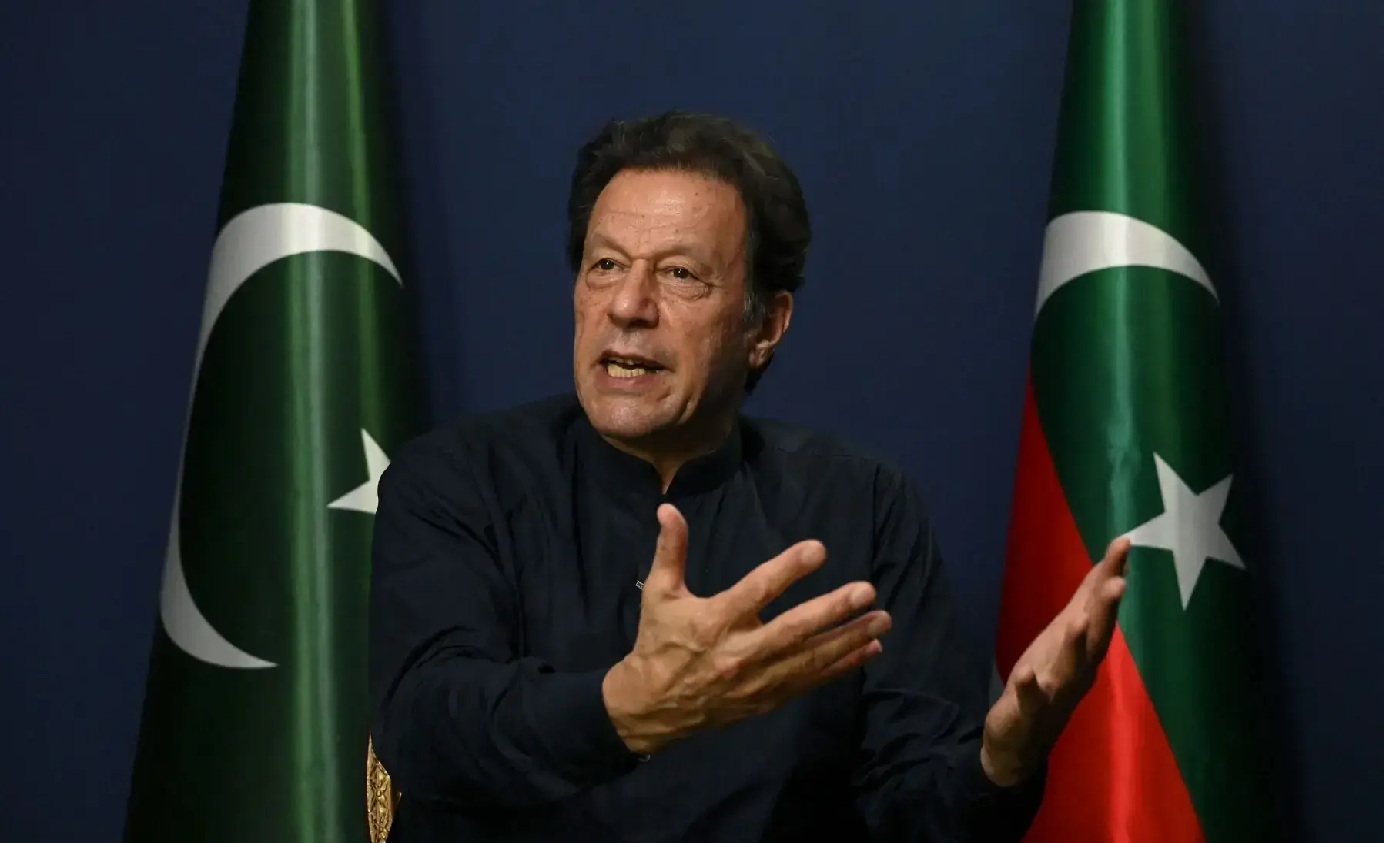
Imran Khan, the 72-year-old former cricket legend turned populist politician, remains the most polarising figure in Pakistani politics. Once the darling of the establishment that helped propel him to power in 2018, Khan fell from grace in April 2022 when a parliamentary vote of no-confidence removed him from office, a move he describes as a “regime change operation” orchestrated by the United States with the complicity of his political rivals.
Since his arrest in August 2023 following anti-establishment riots, Khan has faced a staggering array of charges ranging from corruption to treason to inciting violence. He and his legal team reject all allegations, branding them as attempts to neutralise his extraordinary popularity.
“Imran Khan wanted to establish peace in the country and eliminate corruption,” said Pir Fayyaz, 40, a property dealer from Khyber Pakhtunkhwa who joined the march. “We have become deeply frustrated with inflation, lawlessness, poor governance, and terrorism in the country.”
The fervour on display is undeniable. Qalandar Khan, a 58-year-old protester from the mountainous North Waziristan area, told AFP: “I joined this procession for one reason: Imran Khan’s release. I will not return under any circumstances until he is released. If the government and the establishment think they can remove Imran Khan… they should know that he has a place in our hearts.”
The Government’s Hard Line
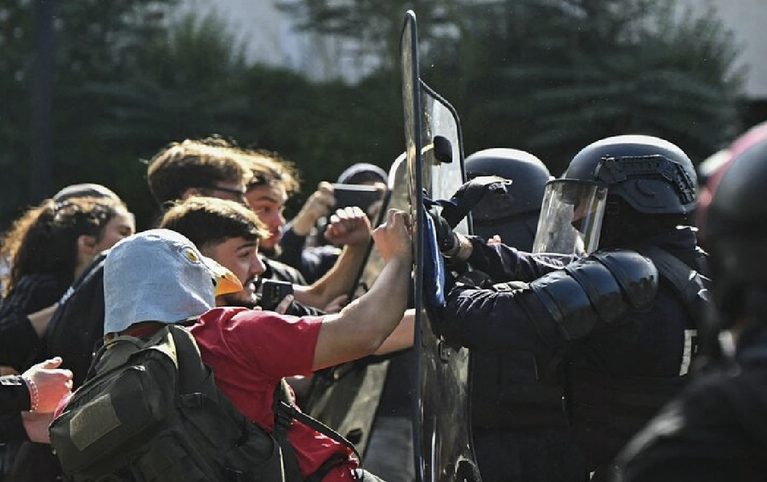
In Islamabad, the mood is decidedly different. Prime Minister Shehbaz Sharif has urged PTI to call off the march and return to negotiations, warning of the demonstration’s negative impact on an economy already teetering on the brink of collapse. His government has deployed thousands of security personnel and placed shipping containers across key roads leading to the capital.
Defence Minister Khawaja Asif was even more blunt, accusing PTI of “joining hands with the TTP”, the banned Tehreek-e-Taliban Pakistan, and declaring that Khan would receive “no relief” if the party sought to pressure the government through its long march.
“PTI has declared war against Pakistan together with the TTP,” Asif told Geo News at Parliament House. “The government cannot be blackmailed by them under any circumstances.”
The defence minister’s allegations represent a dangerous escalation in Pakistan’s already toxic political discourse, effectively equating a mainstream political party with a designated terrorist organisation. When pressed for evidence, Asif pointed to what he described as PTI’s failure to condemn TTP attacks and its refusal to support military operations in Khyber Pakhtunkhwa.
“Show me a statement of theirs against the TTP or those who sponsor them,” he demanded. “The rulers of Kabul are patrons of the TTP. Show me one statement of theirs against them.”
PTI Chairman Barrister Gohar Khan rejected these accusations categorically, telling media in Charsadda that his party “had never supported terrorism” but that the country’s counterterrorism policy needed review “in light of changing circumstances.”
“Terrorism, whether in Khyber Pakhtunkhwa, Balochistan or Sindh, is against Pakistan,” Gohar said. “The loss of any Pakistani’s life in the fight against terrorism is a national loss.”
The View From The Ground
As the march wound its way through Peshawar on Thursday evening, reaching Hayatabad Toll Plaza, the scale of the mobilisation became clear. A police intelligence official, speaking on condition of anonymity, told AFP there were approximately 1,500 vehicles and 5,000 to 6,000 people travelling within the convoy in PTI’s Khyber Pakhtunkhwa stronghold.
The march has taken on a festive atmosphere in some stretches, music blaring from loudspeakers, vehicles showered in flower petals, protesters dancing and chanting slogans. But beneath the celebration lies a palpable anger and frustration with Pakistan’s ruling coalition.
“The country is currently experiencing a continued decline,” said Changiz Khan, a 58-year-old farmer dressed in PTI’s colours. “We believe that after Imran Khan’s release, the country will return to the path of development.”
Bismillah Jan, a 40-year-old participant, struck a more defiant tone: “We are not taking the law into our own hands. But all party workers, including myself, are ready to make any sacrifice for Imran Khan.”
This sentiment, a willingness to sacrifice, permeates the march. CM Afridi captured it in his address at the toll plaza: “There might be some discomfort, but this pain is not greater than the pain Imran Khan sahib is enduring in jail for us. We shall not hesitate to even sacrifice [our] life for Imran Khan sahib.”
A March In Search Of A Destination
Despite the fiery rhetoric, the march’s ultimate destination remains unclear—a source of both tactical flexibility and strategic ambiguity for PTI.
Initially billed as a march to Islamabad, the convoy has so far remained within Khyber Pakhtunkhwa, where PTI holds power. The route has undergone multiple changes since its launch on October 4. From Lakki Marwat, protesters trekked to Kohat, then camped overnight in Mattani on the outskirts of Peshawar, reached Khyber tribal district on October 7, and finally entered Peshawar on October 8.
CM Afridi has now announced that the march will proceed to Swabi, where he plans to unveil the next phase of action, which he cryptically calls a “yorker,” borrowing cricket terminology that Khan’s fans would immediately recognise. Convoys from Peshawar, Malakand, and Kohat divisions are expected to converge on the Swabi Interchange on October 11, while participants from Bannu and Dera Ismail Khan divisions will join via the China-Pakistan Economic Corridor route.
“I invite people from across Pakistan to reach the Swabi Interchange on Oct 11,” Afridi declared, hinting that the protest would move beyond the province: “We have to go elsewhere as well after Swabi.”
He dismissed federal warnings against taking the march outside Khyber Pakhtunkhwa as “empty threats” and said the government “cannot harm the workers after they cross the province’s boundary.”
The Counterterrorism Conundrum
At the heart of the impasse between PTI and the federal government lies a fundamental disagreement over Pakistan’s counterterrorism strategy, a debate that has taken on renewed urgency as terrorist attacks have surged across the country.
CM Afridi devoted a significant portion of his recent addresses to the security situation, claiming that approximately 14,000 intelligence-based operations and 22 major military operations had been conducted in Khyber Pakhtunkhwa between 2004 and 2026, yet terrorism had not been eliminated.
“Whenever I spoke about formulating a policy to eliminate terrorism, my recommendations are not given due consideration,” he said, calling for a comprehensive policy incorporating the approach advocated by Imran Khan.
The provincial government’s criticism of the federal counterterrorism approach has been met with fierce pushback from Islamabad. Federal ministers have hinted at the possibility of imposing governor’s rule or a state of emergency in Khyber Pakhtunkhwa, drastic measures that would effectively suspend the province’s elected government.
Gohar, the PTI chairman, rejected such measures as “a solution to the prevailing situation” and warned that if enforced disappearances were occurring in Khyber Pakhtunkhwa, they could happen in other provinces as well.
“Political issues should be resolved through constitutional and democratic means,” he insisted, calling on decision-makers to “respect the public mandate and elected governments.”
Voices of Opposition
Not all in Khyber Pakhtunkhwa support the march. Governor Faisal Karim Kundi, who represents the federal government in the province, launched a scathing attack on PTI’s leadership, challenging them to “dare and cross Swabi.”
“They are probably going to Charsadda today, then they might go to Mardan, and after that they might end up reaching Afghanistan through Dir,” Kundi said mockingly at a press conference in Peshawar. “Because whenever they turn towards Swabi, their legs start shaking, and their hearts tremble.”
Kundi accused PTI leaders of hiding in Islamabad while ordinary supporters bore the brunt of the march and questioned why no visible contingents from Sindh and Punjab had joined the demonstration.
“They say that they have run successful mobilisation campaigns across Sindh and Punjab; did you see anyone from these provinces on their long march’s truck?” he asked.
The governor also pointed to the deteriorating law and order situation in Khyber Pakhtunkhwa, citing strikes by doctors, teachers, nurses, and municipal officers. “They say that the SHOs do not listen to them; if no one listens to you, then why are you sitting [in the government]? Only to make money or for corruption,” he alleged.
Kundi’s comments reflect a broader frustration among PTI’s political opponents, who view the march as a desperate attempt to distract from governance failures in Khyber Pakhtunkhwa, a province PTI has governed since 2013, with a brief interruption.
The Disappeared
Amid the political drama, a troubling subplot has emerged: the alleged abduction of PTI legislators and workers.
Gohar visited the residences of Khyber Pakhtunkhwa Public Health Engineering Minister Fazal Shakoor and MNA Fazal Mohammad Khan, who PTI claims were abducted by unidentified men. He noted that 18 days had passed since Shakoor’s alleged abduction, and his family had no information about his whereabouts.
“Enforced disappearances are a matter of serious concern,” Gohar said, stressing the need for the rule of law and the protection of citizens’ constitutional rights.
The alleged disappearances have added a darker dimension to the march, underscoring the risks faced by PTI supporters in a political environment where the party’s leadership has been systematically targeted by the state.
The Economic Toll
As the march continues, concerns are mounting about its impact on Pakistan’s already fragile economy. Prime Minister Sharif has warned of the demonstration’s negative consequences, and federal ministers have accused PTI of undermining government efforts to stabilise the economy.
But PTI supporters argue that the government’s economic mismanagement is the real problem. CM Afridi claimed that “following the regime change operation, Pakistan’s economic indicators have been showing a negative trend” and that “Pakistan has risen to the top of the Global Terrorism Index.”
He also accused the federal government of withholding Khyber Pakhtunkhwa’s financial rights, claiming the Centre owes the province more than Rs5 trillion and has failed to update its share under the National Finance Commission award.
The Regional Context
The political crisis in Pakistan cannot be viewed in isolation from its regional context. Pakistan’s relations with Afghanistan have deteriorated sharply, with Islamabad accusing Kabul of harbouring TTP militants, a charge the Taliban government denies.
Defence Minister Asif’s accusations that PTI is aligned with the TTP represent an attempt to link the opposition to this broader security challenge, framing the march as not just a political protest but a national security threat.
“The rulers of Kabul are patrons of the TTP,” Asif claimed. “Show me one statement of theirs [PTI] against them.”
The regional dimension extends to Pakistan’s relationship with India, which has been tense since the 2019 Pulwama attack and subsequent Balakot airstrikes. Khan, during his tenure, sought to improve relations with India, a policy that his opponents have used to question his patriotism.
The Military Dimension
While the military has not publicly commented on the march, its shadow looms large over Pakistani politics. Khan’s relationship with the military establishment, once close, now fractured, remains a crucial factor in the political equation.
The PTI’s narrative of a “regime change operation” implicitly accuses the military of orchestrating Khan’s removal from power. This narrative resonates deeply with Khan’s supporters, who view their leader as a victim of a conspiracy between domestic political rivals and foreign powers.
Whether the military will intervene, either to facilitate a negotiated settlement or to crack down on the march, remains an open question. The deployment of additional security forces in Islamabad suggests that the government is preparing for a potential confrontation.
The Legal Front
Separately, CM Afridi faces legal challenges of his own. The Peshawar High Court on Thursday sought his reply to a contempt petition alleging that he violated a court order by using an official helicopter to participate in the long march.
A bench comprising Chief Justice SM Attique Shah and Justice Ijaz Khan issued notice to the chief minister on a petition filed by PML-N MPA Zahir Khan. The petitioner alleged that Afridi violated the court’s October 23, 2025 judgment, which barred the use of government vehicles, machinery, and manpower for protests, rallies, long marches, or political activities.
The petition seeks contempt proceedings against Afridi and asks the court to summon him and seek details of the helicopter’s authorisation, flight log, and expenditure.
The legal challenge reflects the broader accountability questions facing PTI’s leadership, as well as the deep politicisation of Pakistan’s judiciary, which has alternately protected and persecuted Khan throughout his tumultuous career.
The Information Battlefield
As the march continues, both sides are engaged in a fierce battle for public opinion. The government’s suspension of mobile and cellular internet services in several areas of Peshawar, confirmed by a Pakistan Telecommunication Authority official, has hampered PTI’s ability to document and publicise the march.
The official told Dawn that the suspension was temporary and taken as a security precaution during the long march. But critics view it as an attempt to suppress information and prevent the march from gaining momentum through social media.
Some major private schools across Peshawar also remained closed on Thursday, though government schools, colleges, and universities remained open. The Private Schools Regulatory Authority insisted that no order for school closure had been issued and warned of disciplinary action against schools that remained closed without government directions.
The Road Ahead
As the march approaches Swabi, all eyes are on CM Afridi’s promised “yorker”, the next phase of action that he says will be announced on October 11. Will the march attempt to cross into Punjab, setting up a potential confrontation with federal security forces? Or will it remain within Khyber Pakhtunkhwa, maintaining pressure on the government while avoiding violence?
The answer may depend on backchannel negotiations between PTI and the establishment, talks that neither side publicly acknowledges but that almost certainly are taking place. The appointment of Mahmood Khan Achakzai, the opposition leader in the National Assembly, as a potential intermediary suggests that space for dialogue still exists.
Defence Minister Asif’s reference to Achakzai’s visit to Nawaz Sharif’s Murree residence, and his encouragement for Achakzai to “play his role”, indicates that the government is exploring ways to de-escalate the crisis.
But for the thousands of protesters marching through Khyber Pakhtunkhwa, compromise remains a distant concept. Their demand is simple and absolute: Free Imran Khan.
“We are Khan’s soldiers,” CM Afridi declared. And for now, his soldiers march on.
The Deeper Crisis
The PTI long march is more than a political protest; it echoes the tense atmosphere of Pakistan’s deeper democratic crisis and its prevailing demeanour. The country’s political system has been characterised by cycles of instability, with no prime minister completing a full five-year term since 2007. The military has repeatedly intervened in politics, either directly through coups or indirectly through manipulation of civilian governments.
Khan’s rise and fall encapsulates this dysfunction. He came to power with military support in 2018, governed as a populist with authoritarian tendencies, and then fell from grace when he lost the establishment’s favour. His supporters view him as a martyr to the cause of true democracy; his opponents view him as a demagogue who undermined democratic institutions when it suited him.
The political crisis has profound implications for Pakistan’s stability. The country faces a daunting array of challenges: a struggling economy, a resurgent Taliban threat, tensions with India, and deep social divisions along ethnic, sectarian, and class lines. A prolonged political standoff could further destabilise the country, potentially triggering intervention by an army that has never been comfortable with civilian supremacy.
Conclusion: A Nation Holds Its Breath
As the PTI long march approaches its next critical juncture at Swabi, Pakistan stands at a crossroads. The government’s hard line and PTI’s determination to press forward have created a dangerous standoff that could escalate into violence at any moment.
The march has already transformed Pakistan’s political landscape, demonstrating PTI’s ability to mobilise massive crowds despite the imprisonment of its founder and the persecution of its leadership. Whether it achieves its immediate objective, the release of Imran Khan, remains uncertain.
But for the marchers, the struggle is about more than one man. It is about their vision of Pakistan: a country where the rule of law prevails, where elected governments are respected, and where the establishment no longer decides who rules and who falls.
“We will continue the struggle until we achieve our objective and gain control over our own land,” said Changiz Khan, the farmer from Khyber Pakhtunkhwa.
For now, the march continues. Pakistan holds its breath. And in his prison cell, Imran Khan waits, perhaps his country’s most popular politician, certainly its most consequential prisoner, and undeniably the man at the centre of the storm.
Veritas Press Investigative Analysis Independent journalism examining global affairs, power, diplomacy, and accountability.
Source:Veritas Press C.I.C. | Multi-News Agencies
Help Support Our Work
Readers who believe that truth still matters have power over popular information. When just a few more people step up to support this work, it means more lies exposed, more corruption uncovered, and more accountability where it’s long overdue.
Help Protect Independent Journalism, Which Is Currently Under Attack.
If you believe journalism should serve the public, not the powerful, and you’re able to help, becoming a regular DONOR or a PAID SUBSCRIBER truly makes a difference.
DONATION APPEAL: If you found this reporting valuable, please consider supporting independent journalism.
Your support fuels our fearless, truth-driven journalism. In unity, we endeavour to amplify marginalised voices and champion justice, irrespective of geographical location. We operate independently, with no financial backing from billionaires; our readers support us.
But it’s also extremely important. One of Veritas Press’s greatest assets is its reader-funded model.
1. Reader funding means we can cover what we like. We’re not beholden to the political whims of a billionaire owner. We are a small, independent and impartial organisation. No one can tell us what not to say or what not to report.
2. Reader funding means we don’t have to chase clicks and traffic. We’re not desperately seeking your attention for its own sake; we pursue the stories that our editorial team deems important and believes are worthy of your time.
3. Reader Funding: enables us to keep our website and other social media channels open, allowing as many people as possible to access quality journalism from around the world, particularly those in places where the free press is under threat.
We know not everyone can afford to pay for news, but if you’ve been meaning to support us, now’s the time.
Your donation goes a long way. It helps us:
Keep the lights on and sustain our day-to-day operations
Hire new, talented, independent reporters
Launch real-time live debates, community-focused shows, and on-the-ground reporting
Cover the issues that matter most to our communities, in real time, with depth and integrity
Without your support, independent voices like ours will be silenced.
Furthermore, we have plans to expand our work, but we can’t do it without your support. Every contribution, no matter the size, helps us stay independent and build a truly people-powered media platform.
If you believe in journalism that informs, empowers, and reflects the communities we serve, please donate today.
Kamran Faqir is a volunteer investigative journalist and writer committed to exposing hidden truths and amplifying underreported stories. Driven by social justice, he brings sharp insight and fearless truth-telling to independent journalism. NUJ registered.
SEATTLE, TEHRAN — The U.S. Department of Homeland Security (DHS) will allow Iran’s national football team to enter the country 48 hours before their critical World Cup match against Egypt on Friday, a modest concession in a tournament where Team Melli’s travel conditions have sparked claims of oppression and competitive disadvantage.