Kamran Faqir is a volunteer investigative journalist and writer committed to exposing hidden truths and amplifying underreported stories. Driven by social justice, he brings sharp insight and fearless truth-telling to independent journalism. NUJ registered.
Article Date Published:
Article Date Modified:
11 minutes
Views:272
Listen to this article
Help support our mission, donate today and be the change. Every contribution goes directly toward driving real impact for the cause we believe in.
A Historic Energy Partnership Or A Dangerous Nuclear Turning Point?
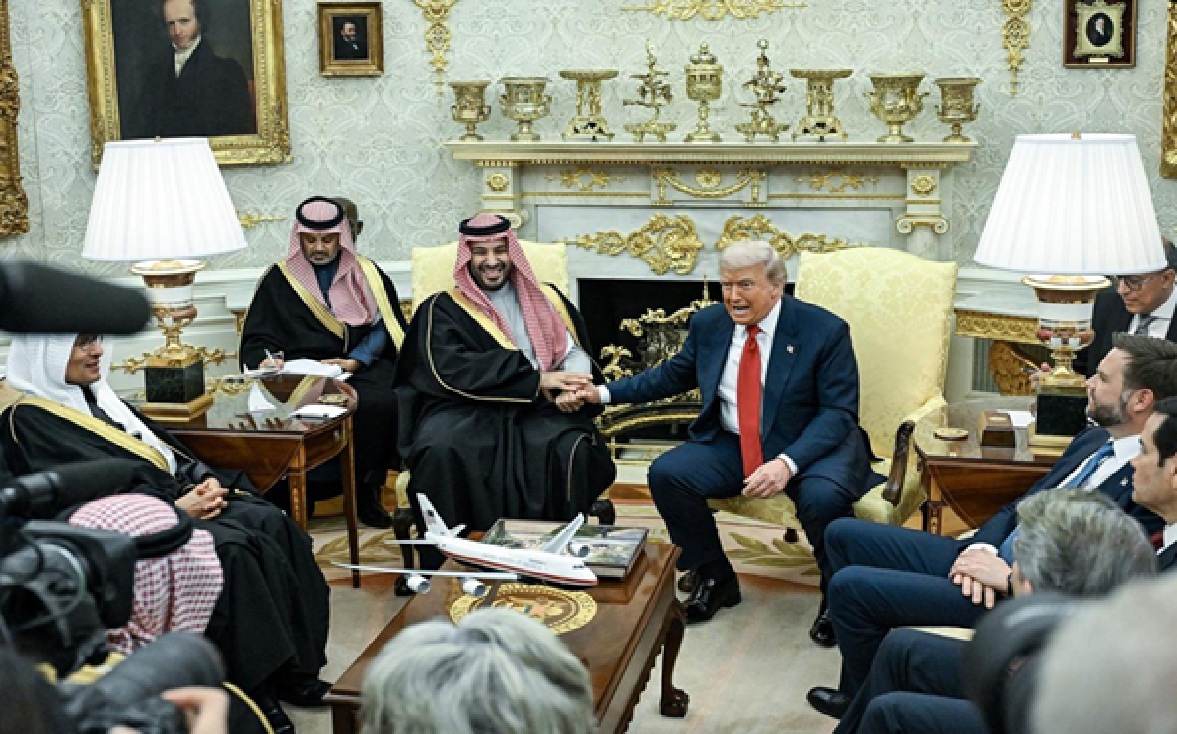
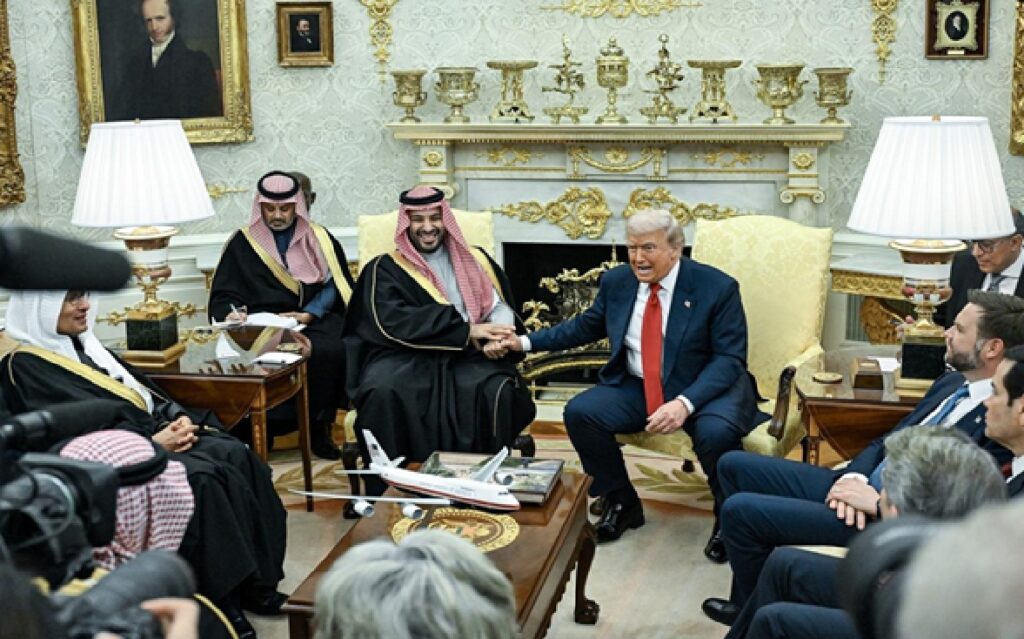
The United States has approved a landmark civilian nuclear cooperation agreement with Saudi Arabia, opening the door to one of the most consequential nuclear partnerships in the Middle East in decades.
The agreement, reportedly approved by President Donald Trump, could last for 30 years and is expected to generate tens of billions of dollars in economic opportunities for American nuclear companies while giving Riyadh access to advanced nuclear technology.
Supporters describe the agreement as a strategic investment in clean energy, economic diversification, and stronger U.S.-Saudi relations. Critics, however, warn that allowing Saudi Arabia the possibility of domestic uranium enrichment could undermine decades of global efforts to prevent nuclear proliferation.
At the heart of the controversy lies a fundamental question:
Is Saudi Arabia pursuing nuclear energy for peaceful development, or is Washington opening the door to a future nuclear weapons capability in one of the world’s most strategically sensitive regions?
Inside the agreement: American companies at the centre of Saudi Arabia’s nuclear ambitions.
According to reports first published by The Wall Street Journal, the agreement would place American companies at the centre of Saudi Arabia’s emerging nuclear infrastructure.
The deal reportedly includes:
A long-term civilian nuclear cooperation framework.
Potential construction of nuclear reactors.
American participation in nuclear technology development.
A possible future uranium enrichment facility following a joint U.S.-Saudi assessment.
Greater American oversight of Saudi Arabia’s nuclear programme.
U.S. officials argue that American involvement would provide transparency and safeguards, preventing Saudi nuclear materials from being diverted towards military purposes.
U.S. Energy Secretary Chris Wright defended the agreement, stating:
“Rest assured, these agreements uphold the highest standards of nuclear safety and nonproliferation, while relying on the world’s best nuclear technology and scientists.”
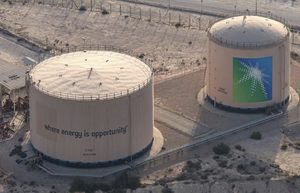
Saudi Energy Minister Prince Abdulaziz bin Salman has repeatedly argued that nuclear energy is essential for the Kingdom’s economic future.
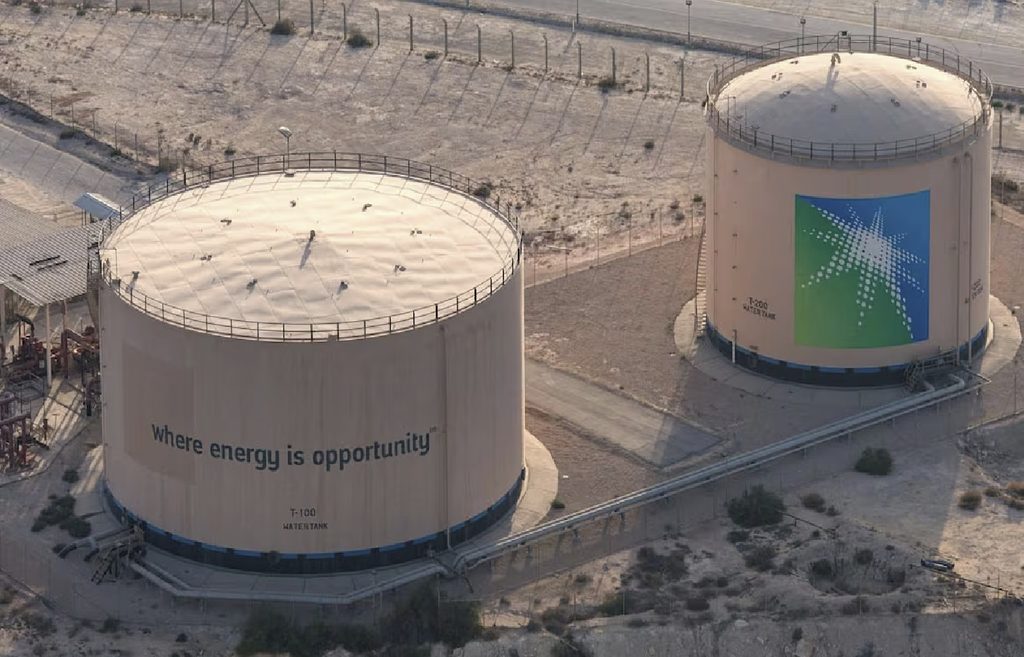
Saudi Arabia, despite being one of the world’s largest oil producers, has sought to diversify its energy sector under Crown Prince Mohammed bin Salman’s Vision 2030 programme.
The Saudi government argues that nuclear power would allow the country to preserve oil exports while meeting rising domestic energy demand.
The Uranium Enrichment Controversy:
The most politically sensitive element of the agreement is the possibility of Saudi Arabia developing domestic uranium enrichment capability.
Enrichment technology is a dual-use capability.
At low levels, enriched uranium can fuel civilian nuclear reactors.
At higher levels, the same technology can produce material required for nuclear weapons.
This distinction has placed Saudi Arabia’s ambitions under international scrutiny.
Saudi officials have previously stated that the Kingdom wants control over the “full nuclear fuel cycle”, including uranium extraction, processing, and enrichment.
In 2019, Saudi Energy Minister Prince Abdulaziz bin Salman stated:
“We will go for the full cycle, from producing uranium, to enriching uranium, using the uranium, even acquiring the technologies.”
Those comments triggered concern among nuclear non-proliferation experts.
The Iran Factor: Riyadh’s Nuclear Calculations.
Saudi Arabia’s nuclear ambitions cannot be separated from its long-standing rivalry with Iran.
For decades, Tehran and Riyadh have competed for regional influence, security partnerships, and political dominance.
Saudi officials have repeatedly warned that if Iran developed nuclear weapons capability, the Kingdom would reconsider its own position.
Crown Prince Mohammed bin Salman previously stated:
“Without a doubt, if Iran developed a nuclear bomb, we would follow suit as soon as possible.”
Those comments remain one of the biggest concerns among arms-control experts.
The fear is that allowing Saudi Arabia enrichment capability could create a chain reaction:
Such a scenario could transform the Middle East into a new nuclear competition zone.
The “Gold Standard” Debate:
One of the strongest criticisms comes from comparisons with the U.S. nuclear agreement with the United Arab Emirates.
The UAE accepted restrictions preventing domestic uranium enrichment and spent fuel reprocessing, commitments widely described as the “gold standard” for civilian nuclear cooperation.
Saudi Arabia has refused to accept similar restrictions.
Critics argue that Washington is applying different standards depending on strategic interests.
Kelsey Davenport, Director for Nonproliferation Policy at the Arms Control Association, warned that creating special arrangements for Saudi Arabia could weaken international safeguards.
She argued that a customised agreement could encourage other countries to seek similar exceptions rather than following International Atomic Energy Agency standards.
Congressional Opposition And Political Backlash:
Although the agreement has received presidential approval, it still faces scrutiny from members of Congress.
Some lawmakers have expressed concerns that the agreement could weaken U.S. non-proliferation policy.
Representative Gregory Meeks criticised the reported agreement, stating that any deal must include:
Strict limits on enrichment.
Strong International Atomic Energy Agency inspections.
Additional safeguards against military misuse.
Former U.S. officials have also questioned the strategic logic.
Bonnie Jenkins, former U.S. Undersecretary of State for Arms Control and International Security, criticised Washington’s approach, stating that the agreement raises questions about whether the United States has a coherent regional non-proliferation strategy.
A Billion-Dollar Opportunity For American Nuclear Companies:
Behind the geopolitical debate lies a major commercial opportunity.
The agreement could provide billions of dollars to the American nuclear industry.
Companies such as Westinghouse Electric Company are expected to be among the potential beneficiaries.
During congressional discussions, Representative Brad Sherman stated:
“Westinghouse stands to make an awful lot of money on this deal.”
The agreement also reflects a broader American effort to compete against China and Russia, both of which have expanded nuclear cooperation with countries across the Middle East and developing economies.
Trump administration officials argue that keeping Saudi Arabia tied to American technology prevents Beijing and Moscow from gaining strategic influence over the Kingdom’s nuclear infrastructure.
China, Russia And The New Nuclear Competition:
Saudi Arabia has increasingly expanded diplomatic and economic ties with China and Russia.
Both countries have shown interest in participating in Saudi Arabia’s nuclear development plans.
For Washington, the agreement is therefore not only about energy — it is also about geopolitical competition.
American officials believe that by offering Saudi Arabia nuclear cooperation, Washington can maintain strategic influence in the Gulf while limiting Chinese and Russian involvement.
However, critics argue that using nuclear technology as a geopolitical tool risks weakening global non-proliferation principles.
Pakistan’s Nuclear Shadow And The Changing Security Landscape:
Saudi Arabia has historically maintained close security relations with Pakistan, the only nuclear-armed Muslim-majority country.
The two countries have longstanding defence cooperation, leading some analysts to describe Pakistan as part of Saudi Arabia’s broader security strategy.
A former U.S. intelligence official reportedly suggested that a U.S. security guarantee could shift Saudi Arabia away from reliance on Pakistani nuclear protection.
However, analysts caution that Saudi Arabia’s security calculations are complex and involve Iran, Israel, Gulf rivalries, and great-power competition.
Is The Nuclear Deal A Peaceful Energy Programme Or Strategic Leverage?
Supporters of the agreement argue that criticism ignores Saudi Arabia’s legitimate energy needs.
They point out:
Saudi Arabia is a signatory to the Nuclear Non-Proliferation Treaty.
The Kingdom is a member of the International Atomic Energy Agency.
Civilian nuclear programmes exist in several Middle Eastern states.
Saudi officials insist their nuclear ambitions are peaceful.
However, critics argue that the combination of uranium enrichment capability, regional tensions, and previous statements about responding to Iran creates unnecessary risks.
The concern is not necessarily what Saudi Arabia does today, but what future governments could do tomorrow.
Claims Of Political Targeting And Regional Accusations:
Some critics of the agreement, particularly within regional political circles, argue that opposition to Saudi nuclear development is influenced by broader geopolitical rivalries involving the United States and Israel.
They claim that nuclear criticism is sometimes used as a political instrument to pressure Saudi Arabia and limit its strategic independence.
However, supporters of nuclear non-proliferation reject the idea that concerns are merely political, arguing that similar objections have been raised regarding nuclear programmes in Iran, North Korea, and other states.
The central debate remains:
Are concerns about Saudi Arabia’s nuclear ambitions based on legitimate security fears, or are they part of a wider struggle for dominance and influence in the Middle East?
The Wider Middle East Dilemma:
The Saudi nuclear agreement highlights a fundamental contradiction in global politics.
The same countries advocating nuclear restraint are also expanding nuclear partnerships when those partnerships serve strategic interests.
For decades, the international community has attempted to prevent nuclear proliferation through treaties, inspections, and restrictions.
Yet geopolitical competition increasingly places economic interests and alliances ahead of strict non-proliferation principles.
The Saudi deal represents more than an energy agreement.
It represents a test of whether the international nuclear order can survive in an era of great-power rivalry.
Conclusion: A Historic Opportunity Or A Dangerous Precedent?
The U.S.-Saudi nuclear agreement could transform the Kingdom’s energy sector, create billions of dollars in economic opportunities, and strengthen Washington’s corporate influence in the Gulf.
But it could also establish a precedent that changes the nuclear landscape of the Middle East.
The unanswered questions remain:
Will Saudi Arabia accept meaningful restrictions on enrichment?
Will Congress demand stronger safeguards?
Will Iran respond by accelerating its own nuclear ambitions?
Will regional powers seek similar capabilities?
For supporters, the agreement represents diplomacy and energy security.
For critics, it represents a dangerous gamble. With the possibility of future preventive measures and control of the region.
Either way, the Saudi nuclear deal may become one of the defining geopolitical decisions of the decade.
Veritas Press Investigative Analysis
Independent journalism examining global affairs, power, diplomacy and accountability.
Source:Veritas Press C.I.C. | Multi-News Agencies
Help Support Our Work By Donating
Readers who believe that truth still matters have power over popular information. When just a few more people step up to support this work, it means more lies exposed, more corruption uncovered, and more accountability where it’s long overdue.
Help Protect Independent Journalism, Which Is Currently Under Attack.
If you believe journalism should serve the public, not the powerful, and you’re able to help, becoming a regular DONOR or a PAID SUBSCRIBER truly makes a difference.
DONATION APPEAL: If you found this reporting valuable, please consider supporting independent journalism.
Your support fuels our fearless, truth-driven journalism. In unity, we endeavour to amplify marginalised voices and champion justice, irrespective of geographical location. We operate independently, with no financial backing from billionaires; our readers support us.
But it’s also extremely important. One of Veritas Press’s greatest assets is its reader-funded model.
1. Reader funding means we can cover what we like. We’re not beholden to the political whims of a billionaire owner. We are a small, independent and impartial organisation. No one can tell us what not to say or what not to report.
2. Reader funding means we don’t have to chase clicks and traffic. We’re not desperately seeking your attention for its own sake; we pursue the stories that our editorial team deems important and believes are worthy of your time.
3. Reader Funding: enables us to keep our website and other social media channels open, allowing as many people as possible to access quality journalism from around the world, particularly those in places where the free press is under threat.
We know not everyone can afford to pay for news, but if you’ve been meaning to support us, now’s the time.
Your donation goes a long way. It helps us:
Keep the lights on and sustain our day-to-day operations
Hire new, talented, independent reporters
Launch real-time live debates, community-focused shows, and on-the-ground reporting
Cover the issues that matter most to our communities, in real time, with depth and integrity
Without your support, independent voices like ours will be silenced.
Further, we have plans to expand our work, but we can’t do it without your support. Every contribution, no matter the size, helps us stay independent and build a truly people-powered media platform.
If you believe in journalism that informs, empowers, and reflects the communities we serve, please donate today.
Kamran Faqir is a volunteer investigative journalist and writer committed to exposing hidden truths and amplifying underreported stories. Driven by social justice, he brings sharp insight and fearless truth-telling to independent journalism. NUJ registered.
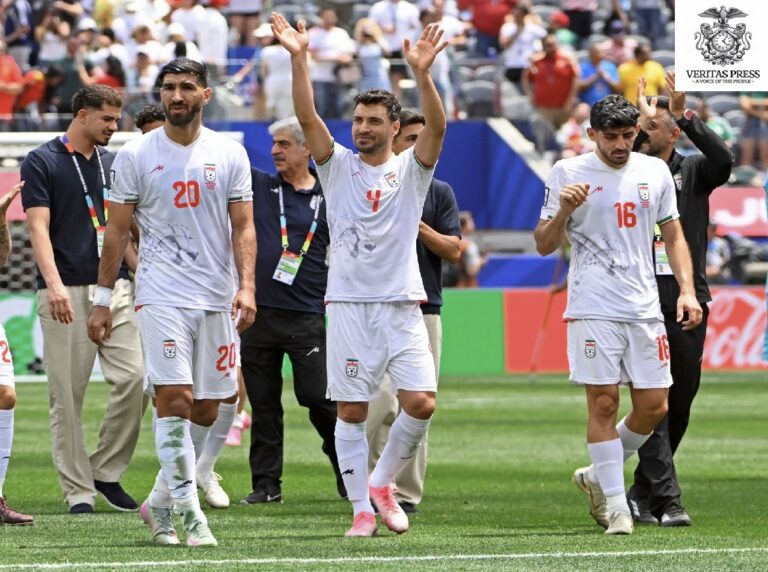
SEATTLE, TEHRAN — The U.S. Department of Homeland Security (DHS) will allow Iran’s national football team to enter the country 48 hours before their critical World Cup match against Egypt on Friday, a modest concession in a tournament where Team Melli’s travel conditions have sparked claims of oppression and competitive disadvantage.







































sscxvq
isl3tl