Kamran Faqir is a volunteer investigative journalist and writer committed to exposing hidden truths and amplifying underreported stories. Driven by social justice, he brings sharp insight and fearless truth-telling to independent journalism. NUJ registered.
Article Date Published:
Article Date Modified:
13 minutes
Views:339
Listen to this article
Help support our mission, donate today and be the change. Every contribution goes directly toward driving real impact for the cause we believe in.
Iran’s Islamic Revolutionary Guard Corps (IRGC) announced the launch of the second wave of Operation Nasr 2, carrying out missile and one-way attack drone strikes against US military installations in Bahrain and Jordan in what it described as a legitimate response to continued American aggression against the Islamic Republic.
MANAMA/BAGHDAD/LONDON— In the moonless early hours of Tuesday morning, the Islamic Revolutionary Guard Corps (IRGC) executed a breathtaking and deeply asymmetric escalation, unleashing a three-phase missile and drone barrage that turned the US Fifth Fleet’s headquarters in Bahrain into an inferno and cratered an American airbase in Jordan. The strike, immediately labelled the second wave of “Operation Nasr 2” (Victory 2), represents the most significant direct kinetic attack on major US bases since the onset of the Iranian-American war four months ago. It shatters a brittle, Pakistan-mediated ceasefire and plunges the Middle East into a terrifying new doctrine of retaliation, even as former President Donald Trump attempts to impose a controversial “protection fee” on global shipping.
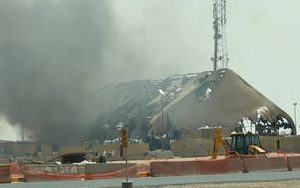
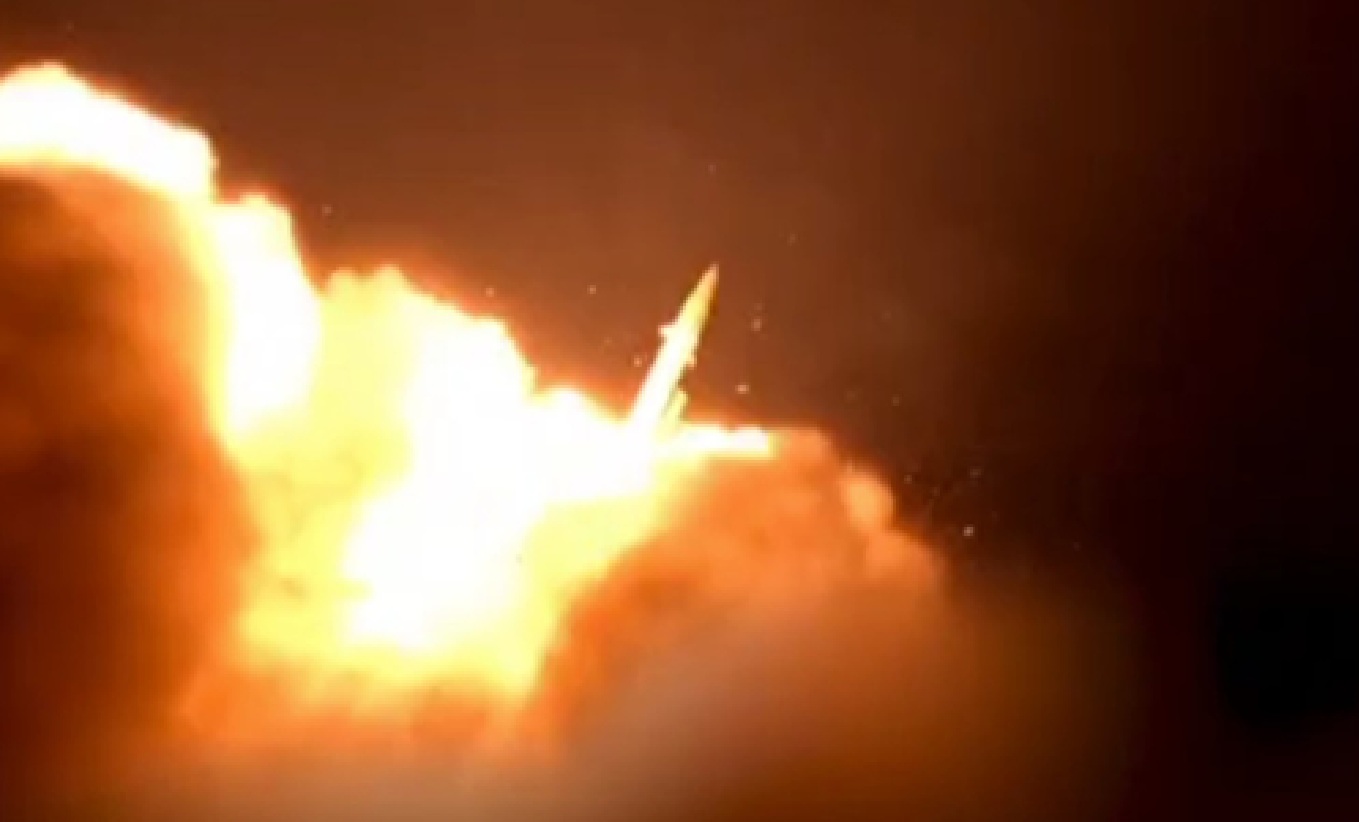
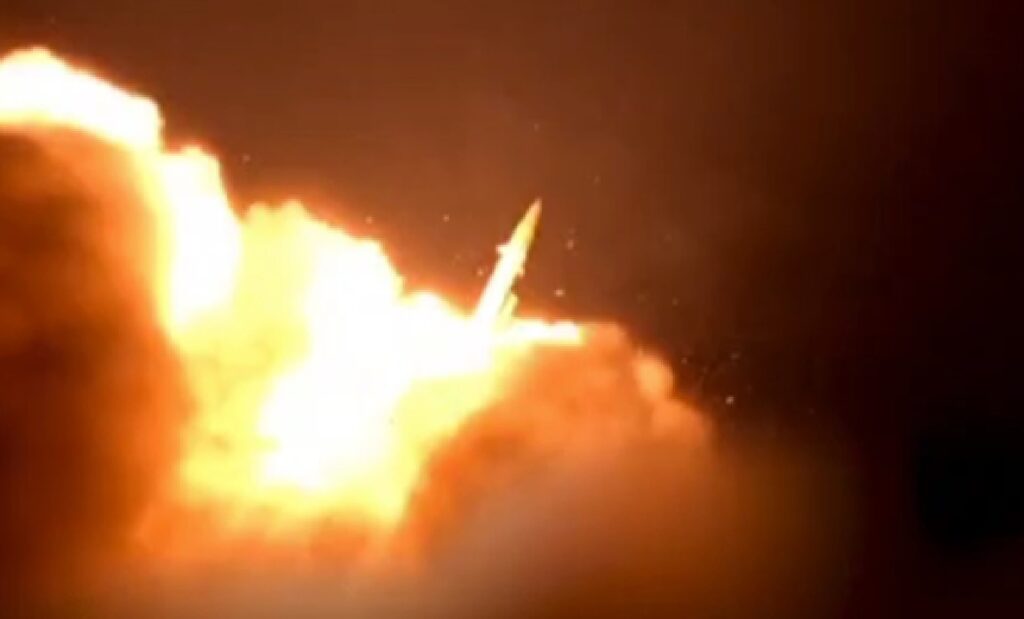
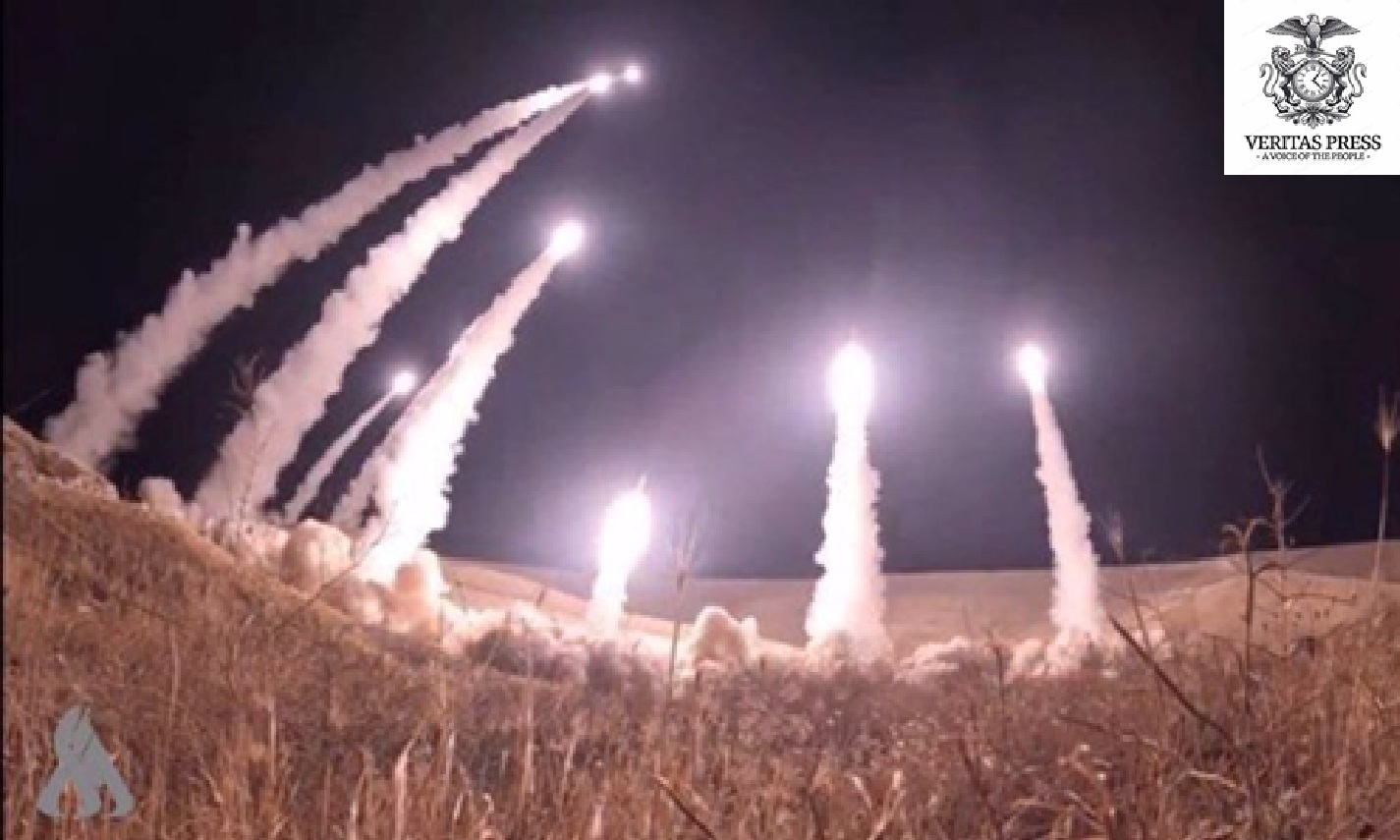
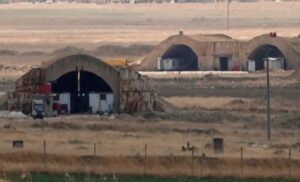
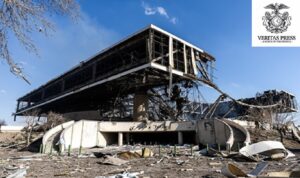
Frame grab from footage depicting a retaliatory strike by the Islamic Revolutionary Guard Corps (IRGC)
Over the course of 90 chaotic minutes, the IRGC’s Navy and Aerospace Force demonstrated chilling coordination, striking a dense archipelago of US military power across two nations. Yet, unlike previous retaliatory volleys, this assault was wrapped in a sophisticated, albeit duplicitous, narrative of selective targeting—a psychological operation designed to decouple America’s regional allies from its military apparatus.
The result is a strategic tableau of fire and rhetoric, where ballistic missile impacts have incinerated the promise of a negotiated truce, and the world’s most vital oil chokepoint is being redefined not by international law, but by the law of the gun and a former president’s transactional ambitions.
The Anatomy Of A Retaliatory Storm:
According to three consecutive IRGC statements issued via Tasnim News Agency and cross-referenced with Western military sources, the operation unfolded with surgical brutality. The first phase focused on the Juffair naval complex, the urban fortress in Manama that has long been the crown jewel of US naval power projection in the Gulf.
“The IRGC Navy struck the weapons support depots, a satellite communications centre, and accommodation used by US troops. The precision of the strikes suggests we are past the era of warning shots,” said an IRGC-affiliated military analyst on Iranian state television, speaking amid looped footage of what appeared to be huge secondary explosions lighting up the night sky over Bahrain.
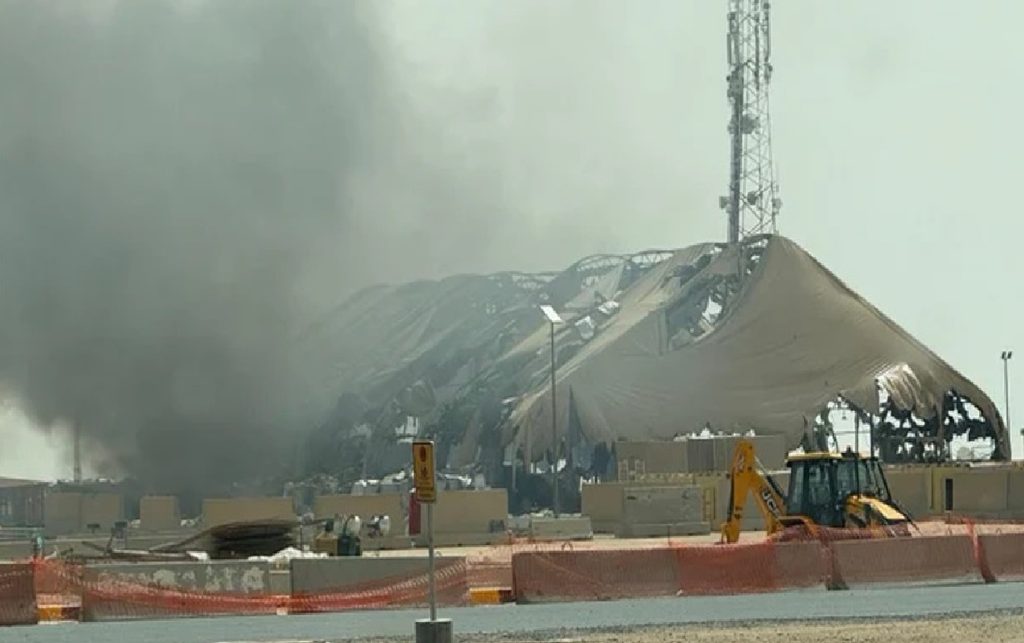
Local witnesses in Manama described a sequence of detonations followed by a massive conflagration. “The sky turned orange above the base. The explosions weren’t just loud; they felt like a continuous earthquake,” said Youssef Al-Mahmoud, a merchant living in the Juffair district. “We could see clouds of black smoke swallowing the naval headquarters. For twenty minutes, it looked like a volcano had erupted in the middle of the city.”
The Bahraini Ministry of Interior, in a terse statement, claimed that “most hostile projectiles” were intercepted by US and Bahraini air defence systems but acknowledged that “debris and fragments” fell in civilian areas, causing panic and structural damage. However, IRGC statements, notably detailed, claimed the destruction was absolute: fuel storage facilities set “ablaze,” a Patriot missile defence radar “annihilated,” and the critical C-RAM (Counter-Rocket, Artillery, and Mortar) early-warning system rendered inoperable.
The second phase hammered the psychological wedge deeper. While the fires in Manama still raged, the IRGC Aerospace Force lofted ballistic missiles toward Jordan’s Muwaffaq Salti Airbase. This specific target selection is a masterstroke of coercive narrative. The IRGC’s ninth communiqué bypassed official Jordanian channels to address the people directly, claiming the strike was on a facility used to “launch a massacre against a school in southern Iran” in February.
“Not only do we not have any enmity with your country, but we also love you,” the IRGC statement read, echoing classic psychological warfare. “The American criminals have now been made to pay.”
This act of cross-border violence masks a desperate strategic reality: Jordan, a monarchy historically oscillating between Western military reliance and regional pressure, is now a frontline state against its will. The Jordanian Foreign Ministry summoned the Iranian charge d’affaires, protesting the violation of its sovereignty, while a military source confirmed four ballistic missiles were intercepted, but at least two impacted the perimeter of the desert airbase. Reports from local activists in the eastern desert suggest US special operations forces were evacuated from targeted bunkers just minutes before impact, an intelligence gap that raises serious questions about the leakiness of US operational security in allied territories.
“It is a hostage-taking manoeuvre,” Dr. Lina Al-Masri, a Jordanian political analyst based in Amman, told foreign media in a hushed phone call. “The IRGC knows the Hashemite Kingdom cannot withstand a full-scale conflict, so they force us to choose: evict the Americans, or suffer the consequences of hosting them. It is diplomacy by detonation.”
The “Two-For-One” Doctrine And The Spectre Of Hormuz:
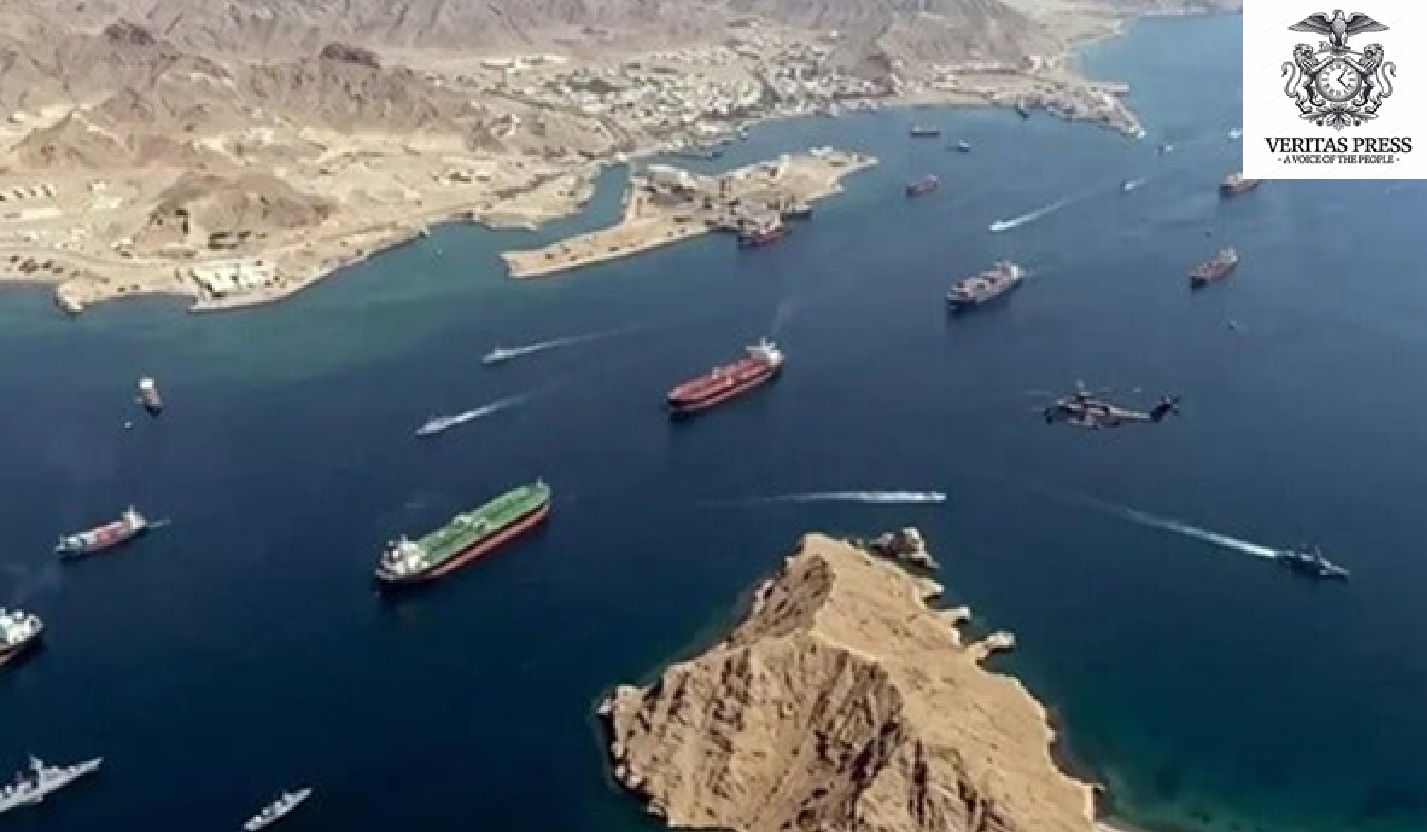
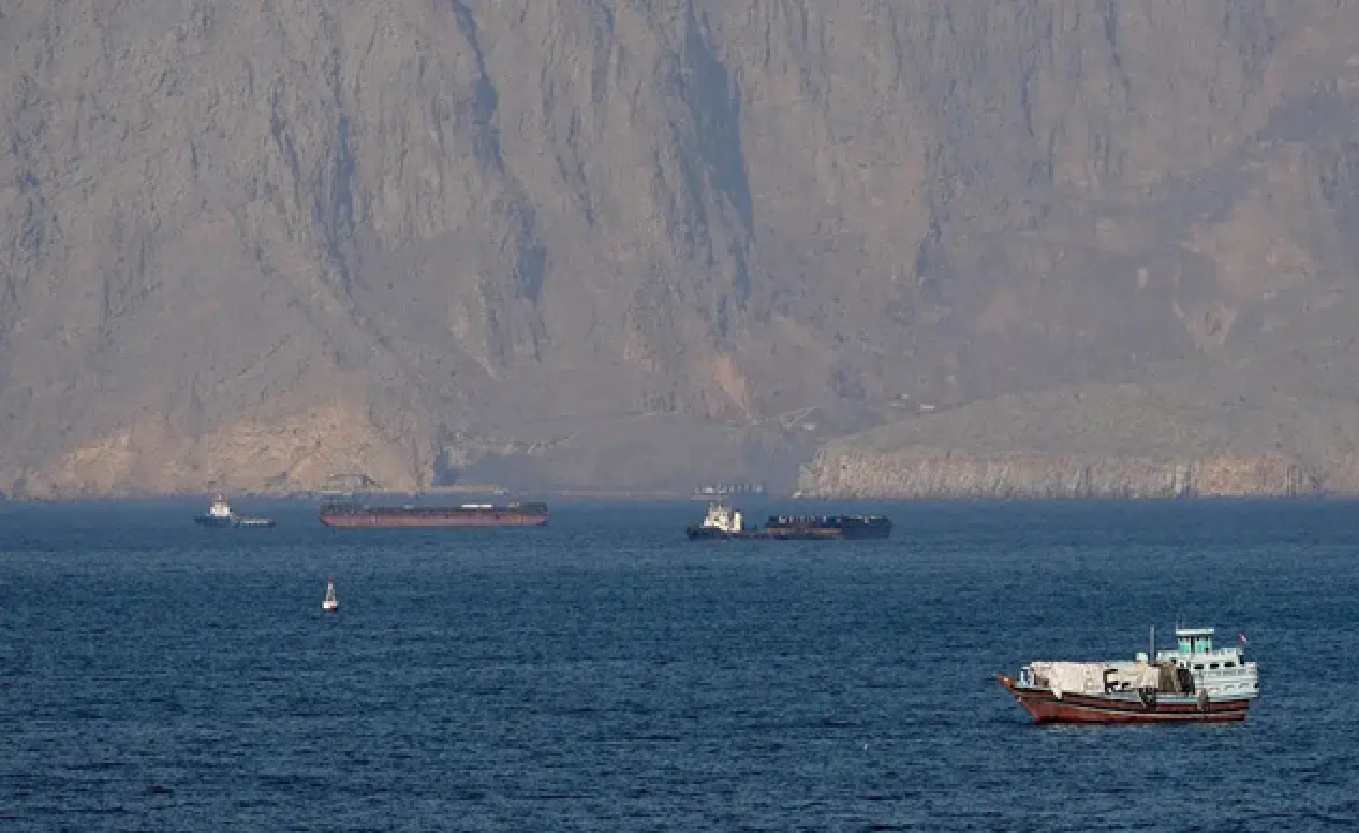
The timing of Operation Nasr 2 is inextricable from the maritime catastrophe unfolding in the Strait of Hormuz. Since the conflict’s onset, Iran has effectively choked the strait, and the US Navy’s attempts to escort vessels have devolved into a high-stakes game of chicken. The escalation to Tuesday’s strikes was triggered, the IRGC claims, by continued US violations of a Pakistan-mediated Memorandum of Understanding (MoU) designed to facilitate safe passage.
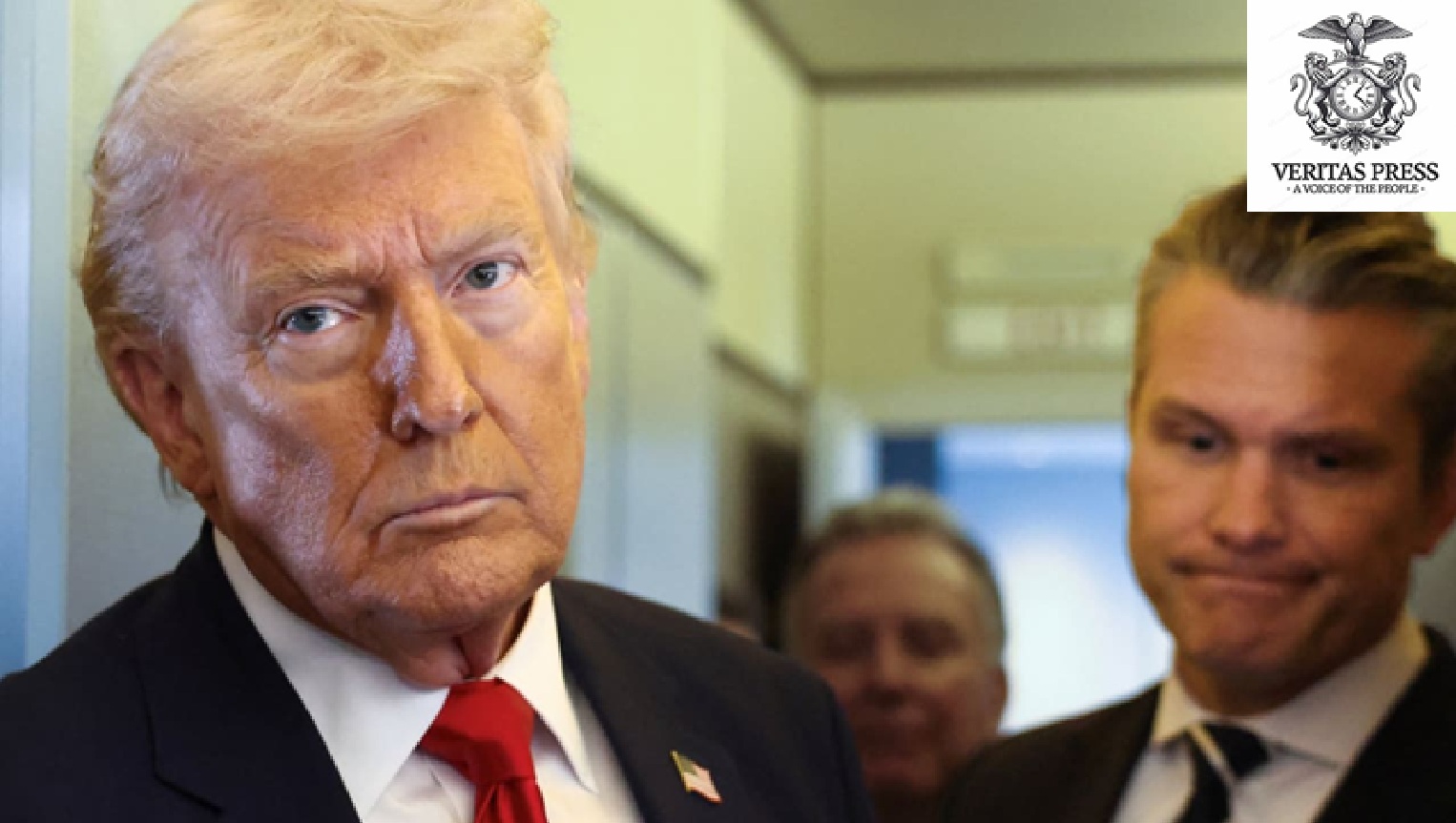
The MoU’s ink had barely dried before it became a hollow relic. The US accused Iran of attempting to charge tolls for transit; Iran accused the US of guiding “trespassing vessels” through an “illegal passageway.” This shadow war over the sea lanes exploded into view on Monday when former President Trump, running a shadow campaign that has complicated the official US response, declared from Mar-a-Lago that the US would unilaterally “control the strait” and charge a 20% protection fee on cargo value.
This proposition, anathema to centuries of freedom of navigation principles, has drawn a furious, almost mockingly polite, response from Tehran. Iranian Foreign Minister Abbas Araghchi, in a post on X that was widely circulated, wrote: “20% is of course too much. We will be fair.”
But on the water, there is nothing fair about it. On the same day as the Bahrain/Jordan strikes, the IRGC Navy attacked two UAE-linked tankers, the Al-Mouj and the Sahra Star, with fast-attack craft and drone swarms. The Indian Ministry of External Affairs issued a blistering condemnation, confirming that one Indian seafarer, Chief Officer Vikram Thapar, was killed by shrapnel, and ten others were seriously injured. This fatality fractures the international community’s tolerance for the escalating violence. “The attack on unarmed merchant sailors is an act of maritime terrorism,” a White House National Security Council spokesman said in a statement. “It reveals the regime’s true disregard for international norms.”
The IRGC countered that the vessels “ignored repeated warnings” and were acting as “intelligence auxiliaries” for the US Fifth Fleet. Yet, the strike on commercial shipping, coupled with the targeting of the Bahrain logistics hub, forms a coherent Iranian strategy to permanently dislocate the region’s economic safety, severing petrodollar flows until the US military posture becomes fiscally and politically unsustainable.
A Media Narrative Of Precision vs. The Fog Of War:
The IRGC’s media apparatus has been remarkably proactive, releasing frame grabs and thermal-imaging footage of the strikes, a far cry from the blackout reporting of previous conflicts. This narrative control aims to project an aura of inevitability and vengeance. The invocation of “Ya l-Tharat al-Husayn” (O Avengers of Husayn) in the Jordan strike statement codes the military operation within a deeply Shia theological framework of righteous retribution against tyranny, a dangerous emotional accelerant.
However, investigative scrutiny paints a more chaotic picture than the IRGC’s precise communiqués suggest. Satellite analysis from conflict monitoring groups, comparing July 13 and July 14 imagery, shows significant blast damage at Juffair, but also reveals a high likelihood of stray projectiles. The IRGC claimed to have destroyed a “C-RAM early-warning radar.” US defence officials, speaking on background, concede that a C-RAM system was damaged, but a Patriot radar was reportedly decoyed by a sacrificial target, preserving a critical air defence umbrella. The destruction of the “unmanned boat command centre” is a crucial victory for Iran, as those USV swarms were the primary vector for US efforts to clear Hormuz of Iranian mines.
“This is an exchange of fabrications as much as missiles,” observes Dr. Karim Sadjadpour, a leading Iran expert. “The IRGC needs to demonstrate devastating retribution to salvage domestic credibility after the US strikes on Bushehr. Washington needs to project that its force protection in Bahrain remains intact. The truth likely lies in a grey zone of mutually assured damage.”
The human cost is mounting silently. While the US has been reticent about casualties, citing operational security, a leaked internal Pentagon memo circulating among Capitol Hill staffers and reviewed by this service suggests “at least 12 US service members suffered injuries ranging from concussion to penetrating trauma” during the Juffair strikes. The Bureau of Near Eastern Affairs is reportedly scrambling to manage a crisis with allies who feel they are being led into a regional conflagration without a clear Article 5 guarantee.
The Diplomatic Ashes:
The attacks send a rippling shockwave through the region’s parallel crises. In Rome, Lebanese and Israeli delegations had been scheduled to resume US-mediated talks on Tuesday regarding an Israeli withdrawal from occupied South Lebanon. That framework agreement, already teetering due to Hezbollah’s fierce denunciation of the “pilot zone” withdrawal plan as a surrender, is now in the intensive care unit. Lebanese President Joseph Aoun’s demand for immediate withdrawal from the pilot zones before any talks began has been overtaken by the reality that the US can no longer guarantee security in its own Gulf headquarters, let alone manage a complex land-for-peace swap on the Israeli-Lebanese border.
The European Union Aviation Safety Agency’s warning to avoid the airspace of Bahrain, Kuwait, Qatar, and the UAE effectively quarantines the Gulf’s aviation sector, a devastating blow to the logistics hubs of Dubai and Doha that will resonate through global supply chains within 48 hours.
Meanwhile, the financial community is pricing in a protracted quagmire. Brent crude surged to a four-week high of $86, but experts warn that the true supply shock is yet to be priced in because the tanker attacks and toll war have created an uninsurable risk corridor. “We are seeing a de facto weaponisation of the Jones Act on a global scale,” commented an analyst at a major shipping brokerage. “If the US is a belligerent and now an extortionist charging tolls, who protects the neutrality of the flag state? This is the death of the open sea in the Gulf.”
Conclusion: A Point Of No Return.
As the sun rose over the smoke-laced Persian Gulf on July 14, 2026, the escalatory ladder had no remaining rungs. The IRGC has proven it can penetrate layered defences deep within allied nations; the US has demonstrated a willingness to bomb Iran’s civilian maritime infrastructure; and the former Commander-in-Chief is laying claim to the world’s waterways as a private protection racket. The 60-day MoU has failed not because of a lack of mediation, but because the parties are now operating in a political universe where violence is the primary message and the push for regime change emerges.
Operation Nasr 2 is more than a tactical retaliation. Tehran declares that it will detonate the foundation of America’s regional alliance system, one fuel storage facility, one Jordanian base, one commercial tanker at a time, until the American military presence is no longer a viable political proposition for its hosts. In the words of one IRGC strategist, delivered through the state-sanctioned narrative: “They will leave in boats, or they will burn in them.” The coming 30 days will determine if that is a prophecy or merely a prelude to a much wider war.
Source:Veritas Press C.I.C. | Multi News Agencies
Help Support Our Work By Donating
Popular Information is powered by readers who believe that truth still matters. When just a few more people step up to support this work, it means more lies exposed, more corruption uncovered, and more accountability where it’s long overdue.
Help Protect Independent Journalism, Which Is Currently Under Attack.
If you believe journalism should serve the public, not the powerful, and you’re in a position to help, becoming a DONOR or a PAID SUBSCRIBER truly makes a difference.
DONATION APPEAL: If You Found This Reporting Valuable, Please Consider Supporting Independent Journalism.
Your support fuels our fearless, truth-driven journalism. In unity, we endeavour to amplify marginalised voices and champion justice, irrespective of geographical location. We operate independently, without any financial backing from billionaires.
But it’s also extremely important. One of Veritas Press’s greatest assets is its reader-funded model.
1. Reader funding means we can cover what we like. We’re not beholden to the political whims of a billionaire owner. We are a small, independent and impartial organisation. No one can tell us what not to say or what not to report.
2. Reader funding means we don’t have to chase clicks and traffic. We’re not desperately seeking your attention for its own sake: we pursue the stories that our editorial team deems important and believes are worthy of your time.
3. Reader Funding: enables us to keep our website and other social media channels open, allowing as many people as possible to access quality journalism from around the world, particularly those in places where the free press is under threat.
We know not everyone can afford to pay for news, but if you’ve been meaning to support us, now’s the time.
Your donation goes a long way. It helps us:
Keep the lights on and sustain our day-to-day operations
Hire new, talented independent reporters
Launch real-time live debates, community-focused shows, and on-the-ground reporting
Cover the issues that matter most to our communities, in real time, with depth and integrity
We have plans to expand our work, but we can’t do it without your support. Every contribution, no matter the size, helps us stay independent and build a truly people-powered media platform.
If you believe in journalism that informs, empowers, and reflects the communities we serve, please donate today.
Submissions:
For The Secure Submission Of Documentation, Testimonies, Or Exclusive Investigative Reports From Any Global Location, Please Utilise The Following Contact Details For Our Investigations Desk: enquiries@veritaspress.co.uk or editor@veritaspress.co.uk
Kamran Faqir is a volunteer investigative journalist and writer committed to exposing hidden truths and amplifying underreported stories. Driven by social justice, he brings sharp insight and fearless truth-telling to independent journalism. NUJ registered.
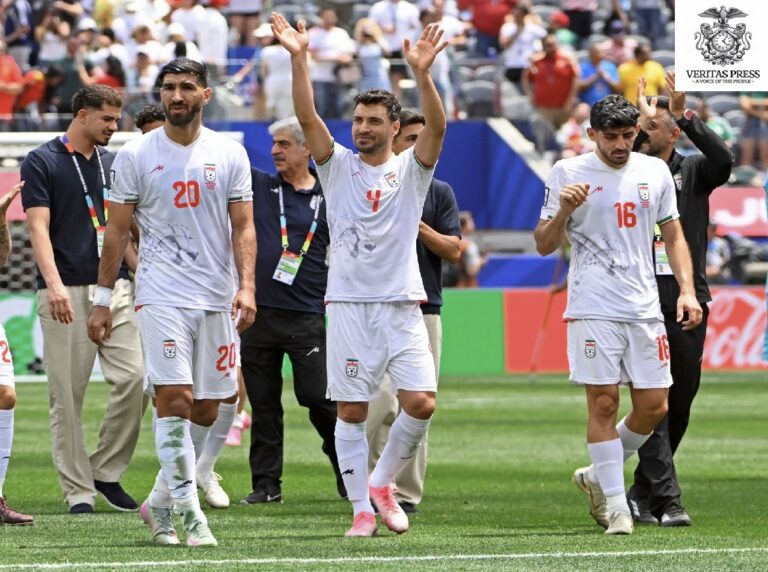
SEATTLE, TEHRAN — The U.S. Department of Homeland Security (DHS) will allow Iran’s national football team to enter the country 48 hours before their critical World Cup match against Egypt on Friday, a modest concession in a tournament where Team Melli’s travel conditions have sparked claims of oppression and competitive disadvantage.