Kamran Faqir is a volunteer investigative journalist and writer committed to exposing hidden truths and amplifying underreported stories. Driven by social justice, he brings sharp insight and fearless truth-telling to independent journalism. NUJ registered.
Article Date Published:
Article Date Modified:
9 minutes
Views:237
Listen to this article
Help support our mission, donate today and be the change. Every contribution goes directly toward driving real impact for the cause we believe in.
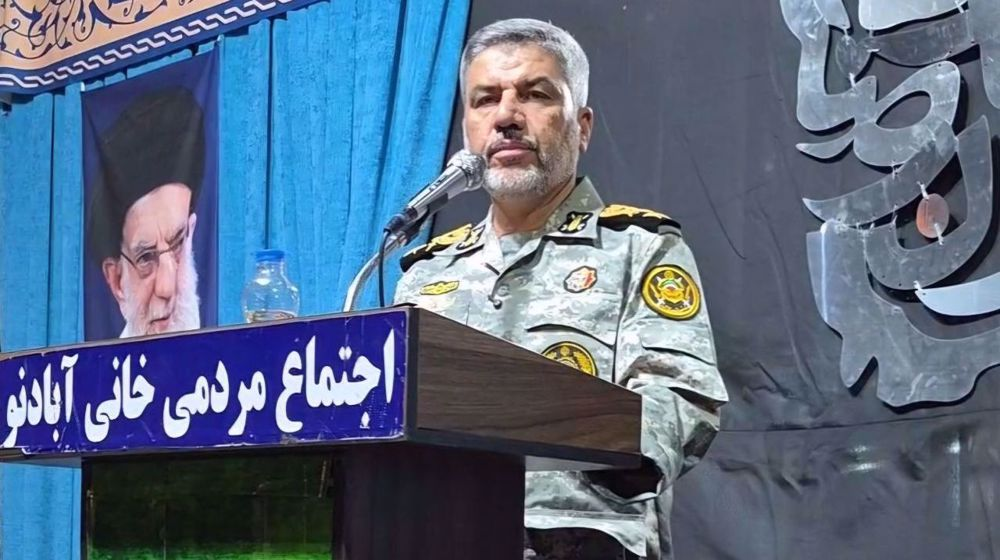
In the blistering heat of a Tehran summer, Brigadier General Mohammad Akrami-Nia’s words were not merely a warning; they were a historical verdict. Addressing a tightly packed public gathering on Monday, the Iranian Army spokesman delivered a message calibrated to echo far beyond the Caspian Sea: “The Strait of Hormuz will never be reopened through war, hostility, or acts of aggression by the United States.”
The declaration, carried live on Tasnim News, marks the latest verbal volley in a catastrophic deterioration of a peace that barely existed. It underscores a grim geopolitical reality: the 60-day Memorandum of Understanding (MoU) signed last month to de-escalate the February 28 aggression has collapsed into a state of suspended warfare, transforming the vital artery of global energy into a hair-trigger standoff. This investigation reveals that the failure of the truce was not an abrupt accident, but the logical conclusion of a flawed agreement riddled with ambiguous sovereignty clauses, bad-faith interpretations, and an American political imperative to project dominance over international legality and collusion with its special ally.
The Anatomy Of A Broken Ceasefire:
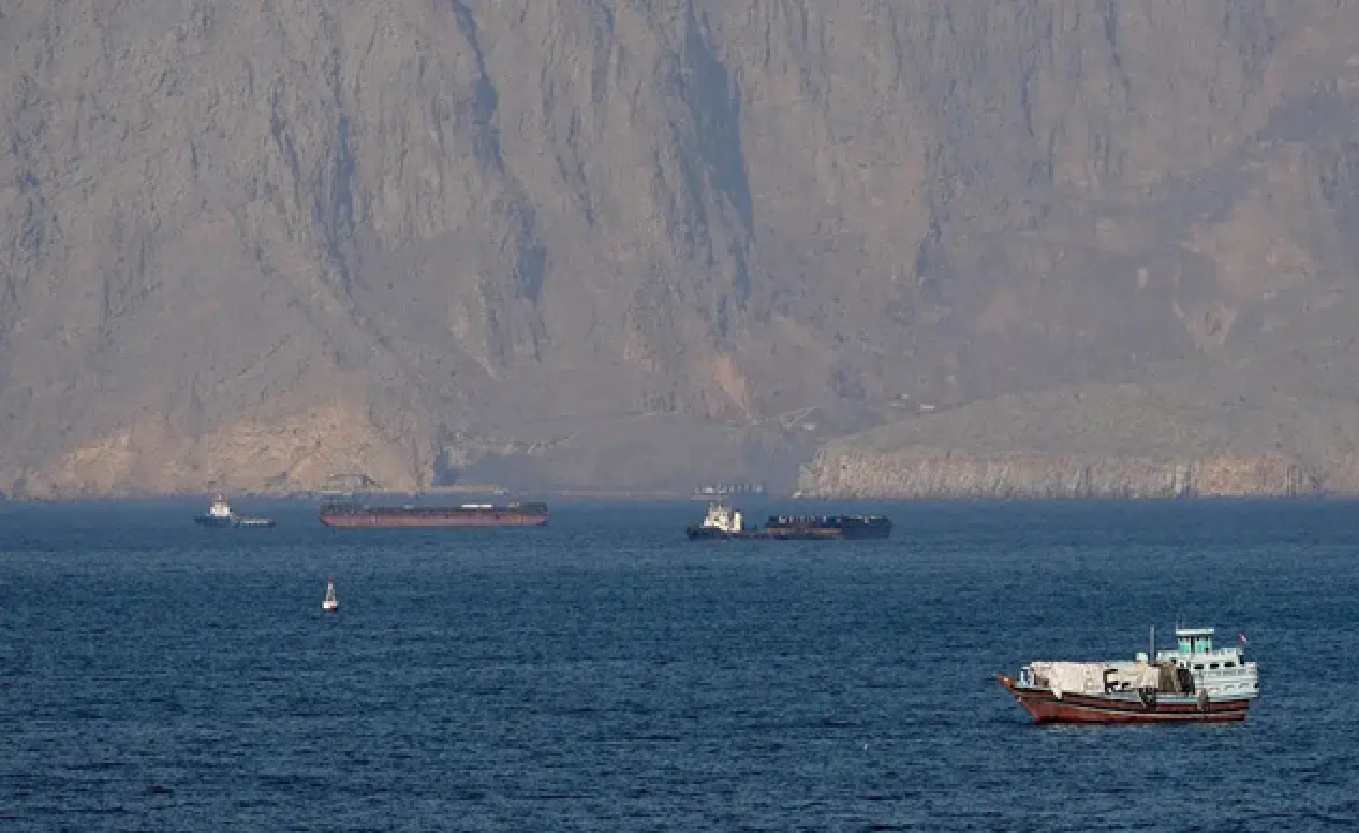
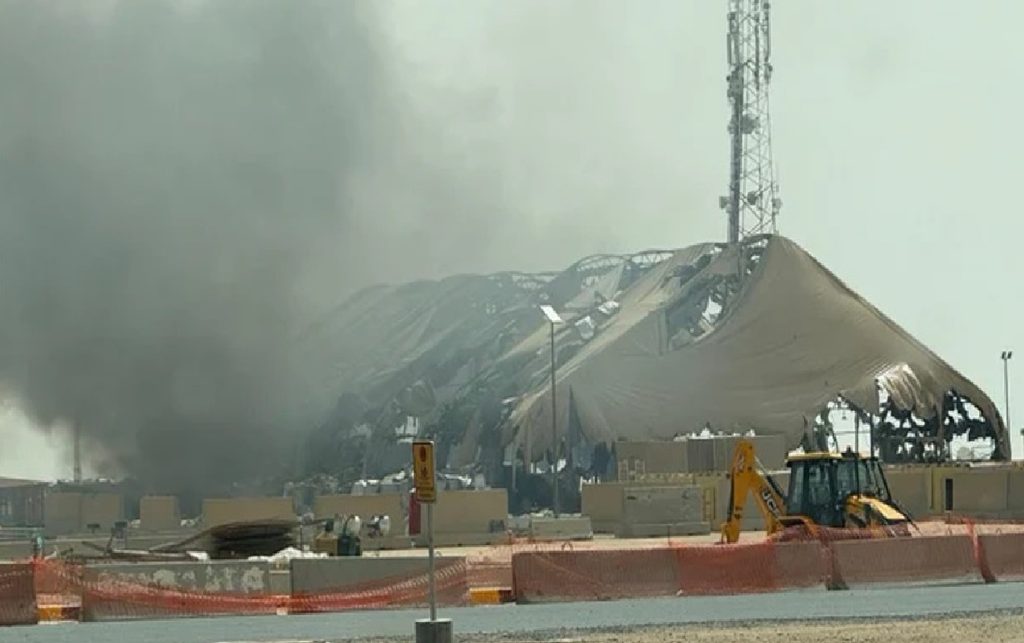
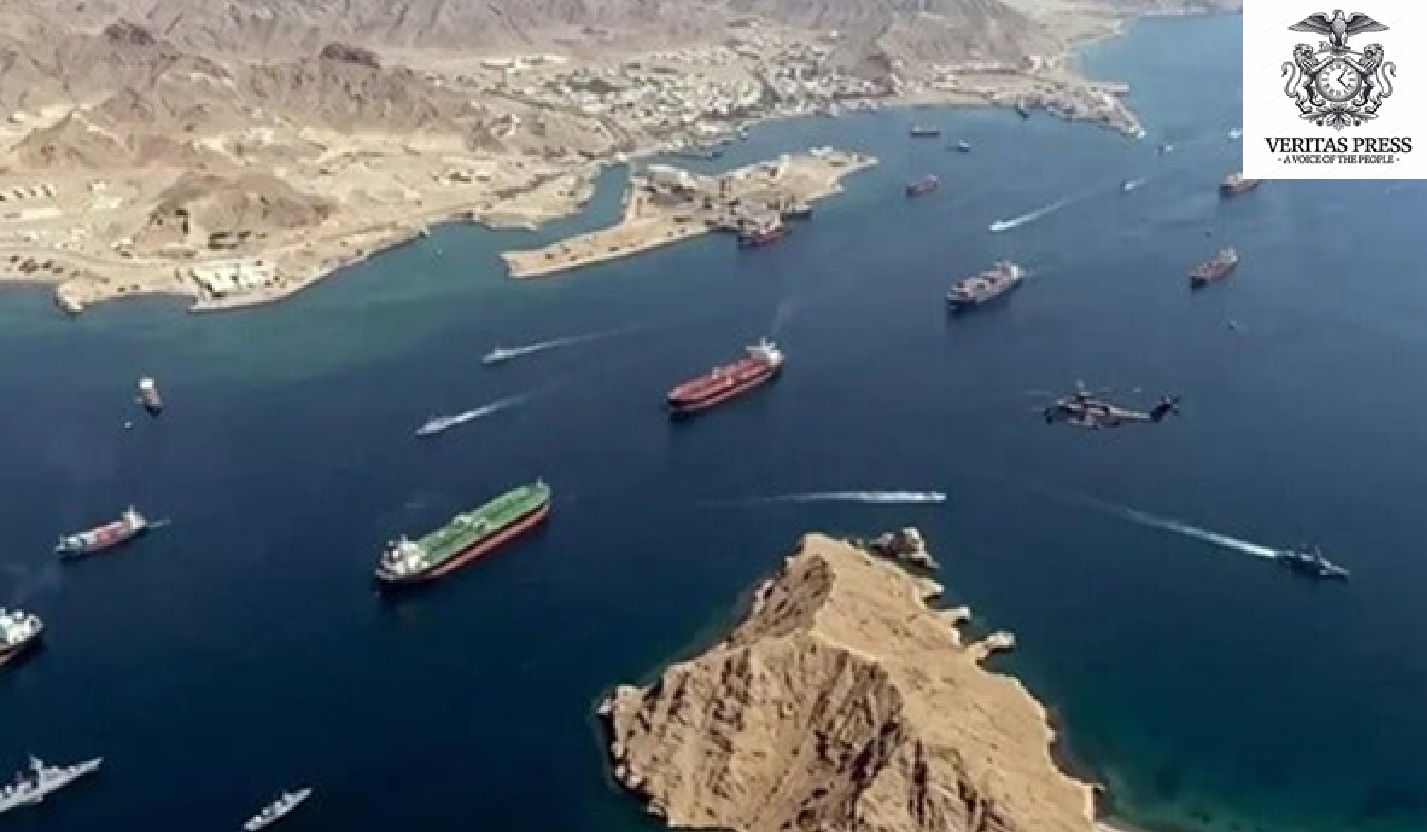
To understand the current brinkmanship, one must revisit the ashes of the February 28 campaign. Triggered by what Tehran consistently labels “unprovoked American-Israeli aggression”, a series of coordinated cyber-attacks and kinetic strikes on nuclear infrastructure, the conflict rapidly expanded into the Persian Gulf. Western intelligence sources, speaking to this bureau on condition of anonymity, confirmed that the subsequent Iranian retaliation severely disrupted maritime traffic through the Strait of Hormuz, the chokepoint through which roughly 20% of the world’s oil transits.
Desperate to prevent an economic meltdown in the European and Asian markets, the MoU was brokered under an interim “toll-free” maritime mechanism. On paper, it was simple: Iran would cease hostilities and designate a specific navigation corridor. In practice, it was a sovereignty trap.
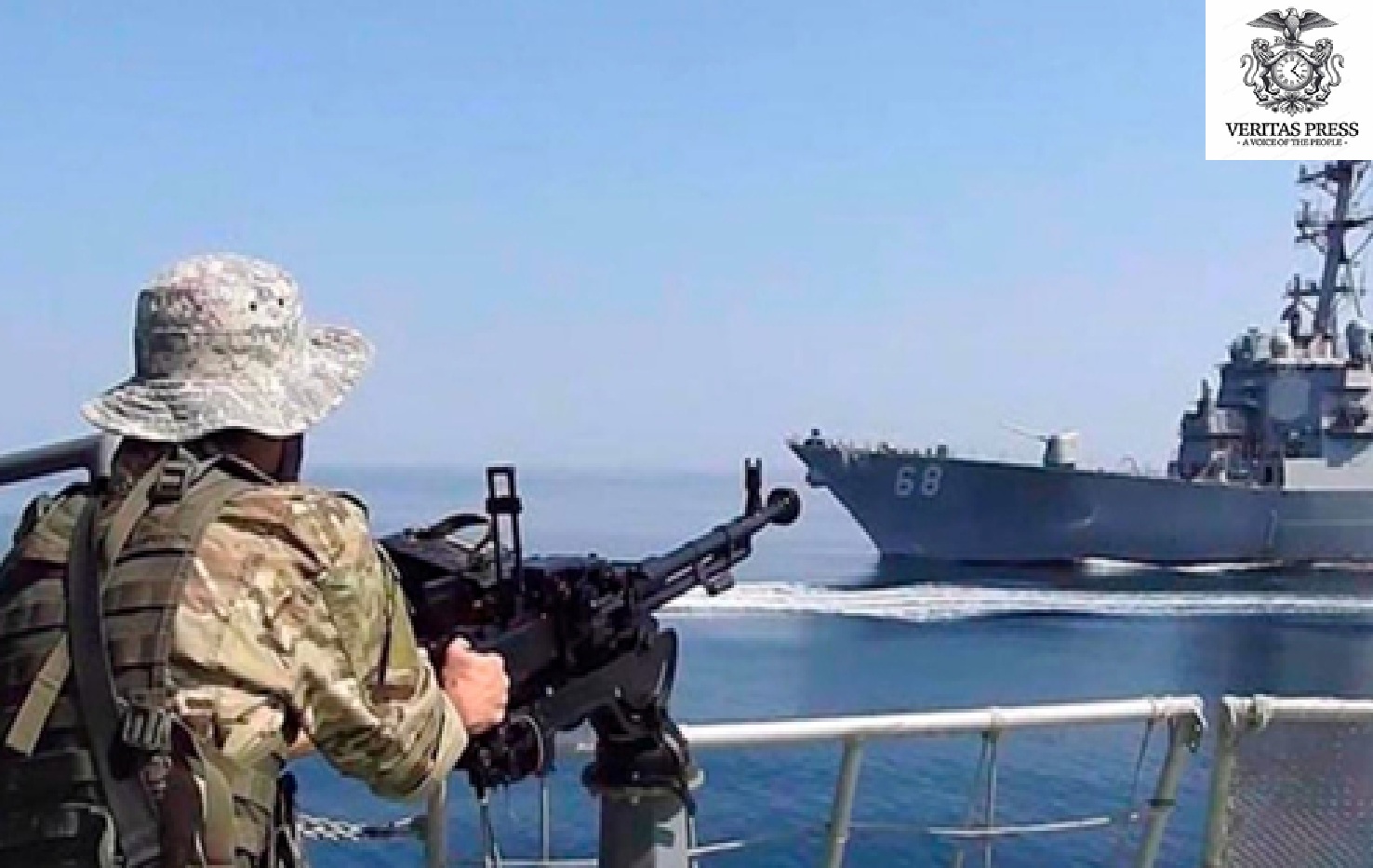
“The Americans accepted Iran’s arrangements, yet they sought to establish a new route through deception,” General Akrami-Nia charged in his speech. This is not hyperbole. According to a confidential report leaked to Al Jazeera by a European maritime safety official, the precise coordinates of the “legal route” were disputed within 48 hours of the signing. The U.S. Navy’s 5th Fleet interpreted the MoU’s language regarding “unrestricted passage” as a mandate to escort commercial tankers outside the Iranian-designated traffic separation scheme. Tehran viewed this as a resurrection of gunboat diplomacy designed to erode its littoral rights.
“Washington mistook the MoU for a surrender instrument rather than a technical ceasefire,” Dr. Lina Khatib, Director of the SOAS Middle East Institute, told this reporter. “By attempting to enforce a parallel corridor, the U.S. wasn’t just escorting ships; it was demonstrating that Iranian territorial sovereignty only exists when Washington says it does. That was a red line the IRGC could never ignore.”
Public Grief And Weaponised Mourning:
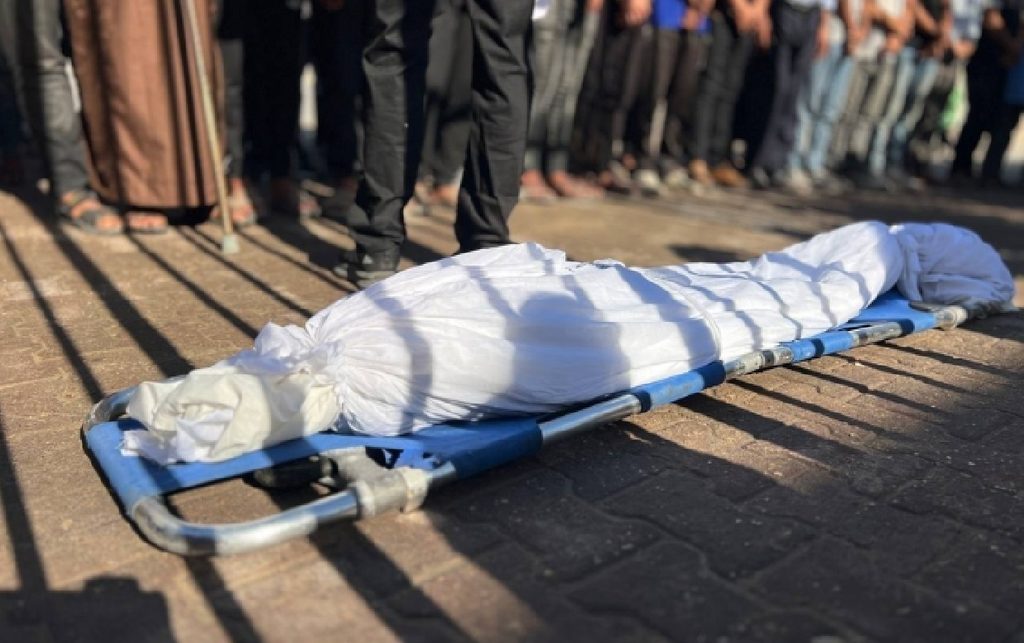
In a rare moment of raw political theatre, General Akrami-Nia merged the strategic with the spiritual, drawing a direct line between the maritime standoff and the “unparalleled event etched into the pages of history”, the funeral of the martyred Leader of the Islamic Revolution, Ayatollah Seyyed Ali Khamenei.
While the exact circumstances of the Leader’s death remain shrouded in the fog of the February war, the Iranian armed forces have framed it as a direct casualty of foreign aggression. Akrami-Nia’s vow to “avenge the blood of the martyrs, especially the martyred leader” transmutes the Strait crisis from a territorial dispute into a sacred vendetta that transcends political cycles.
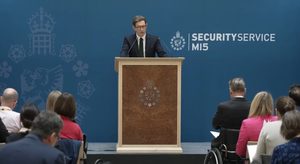
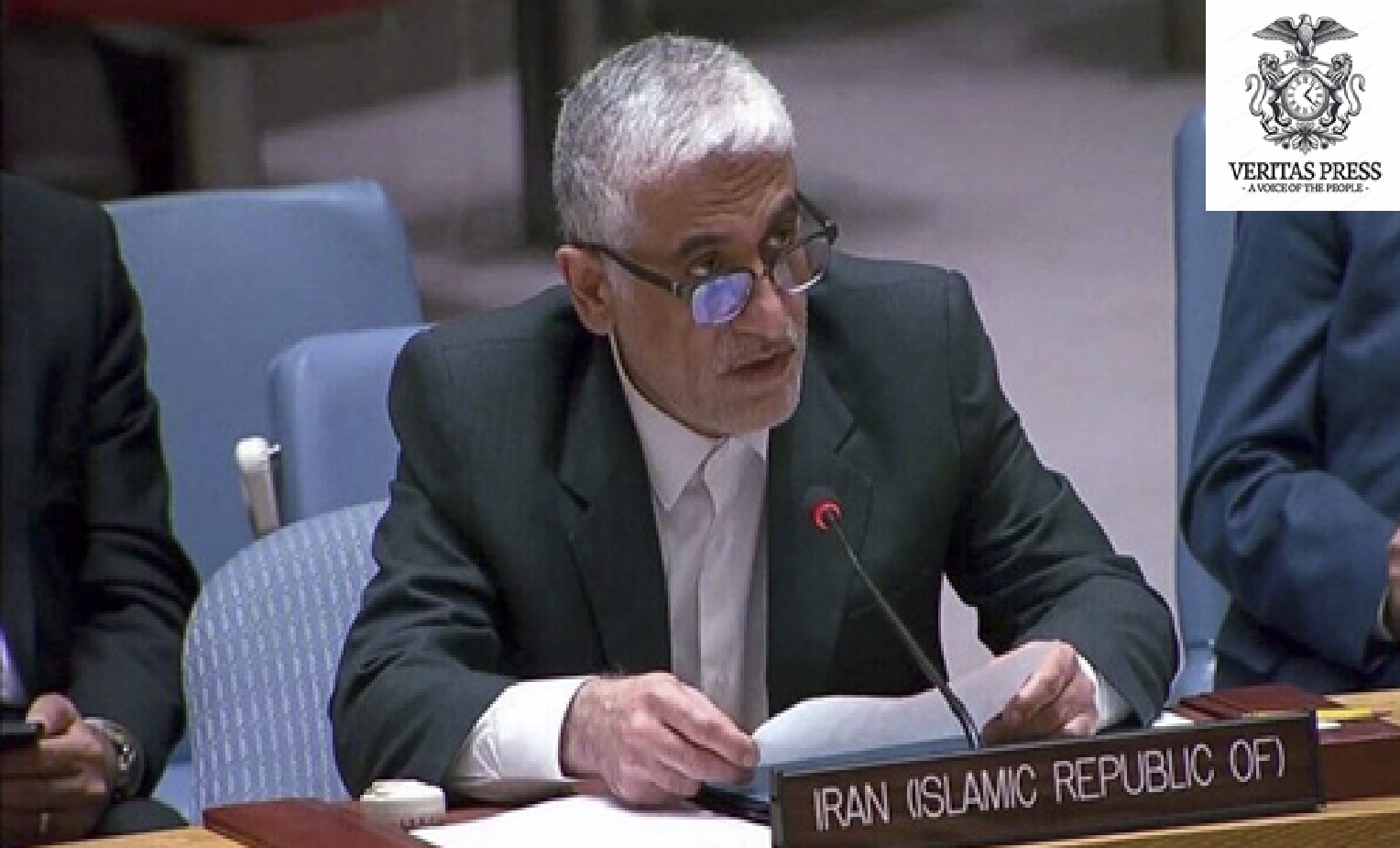
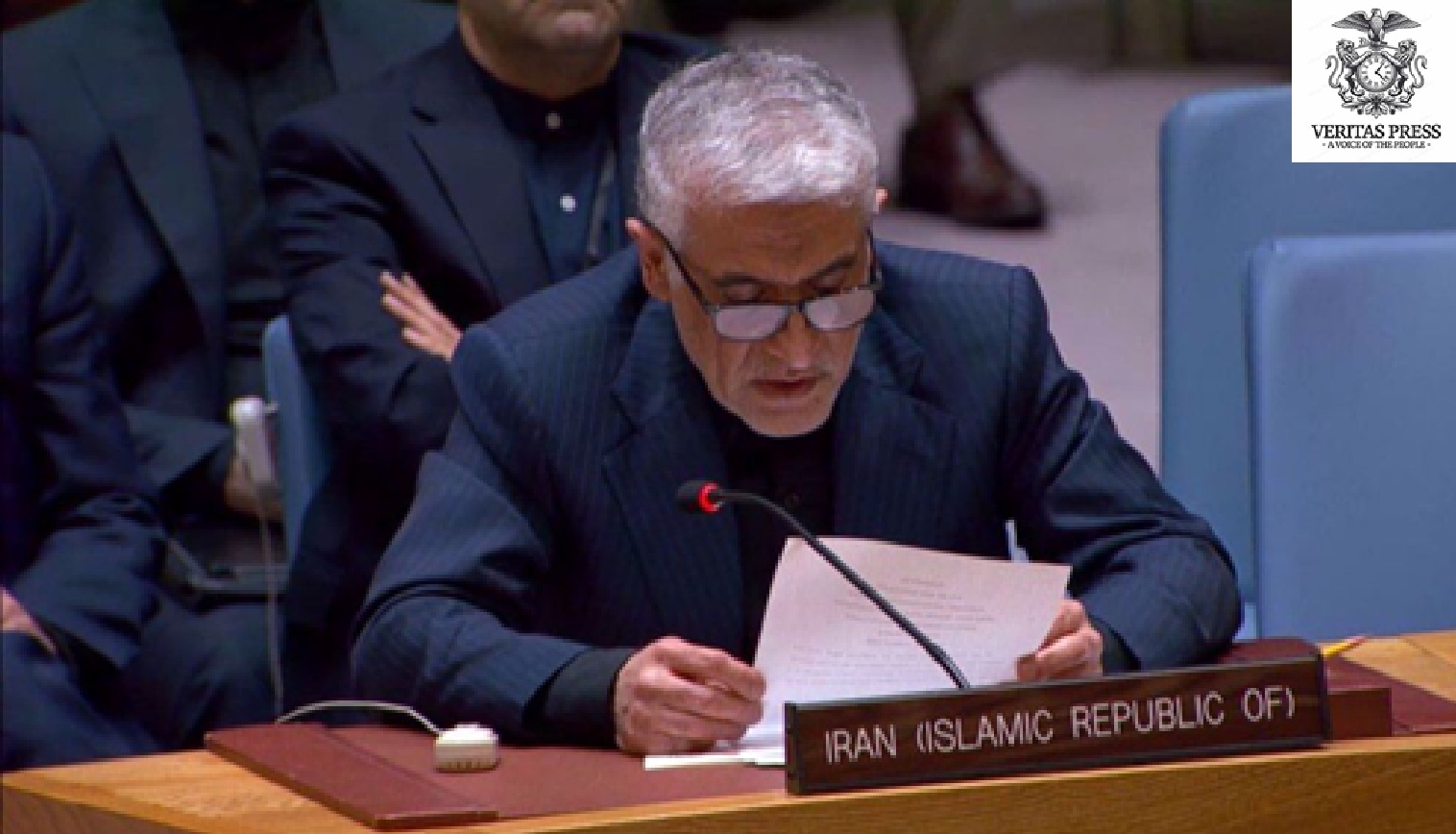
Iran’s Army spokesman Brigadier General Mohammad Akrami-Nia addresses a public gathering in Tehran on July 14, 2026.
“The popular legitimacy seen in the millions-strong turnout for the funeral wasn’t just grief; it was a blank check for retaliation,” explains veteran Iranian political analyst Mohammad Marandi. “The General is signalling to the U.S. that their assumption that Iran would fracture under maximum pressure was a colonial-era fantasy. The public squares are an extension of the front lines.”
The Commercial Airspace Red Zone:
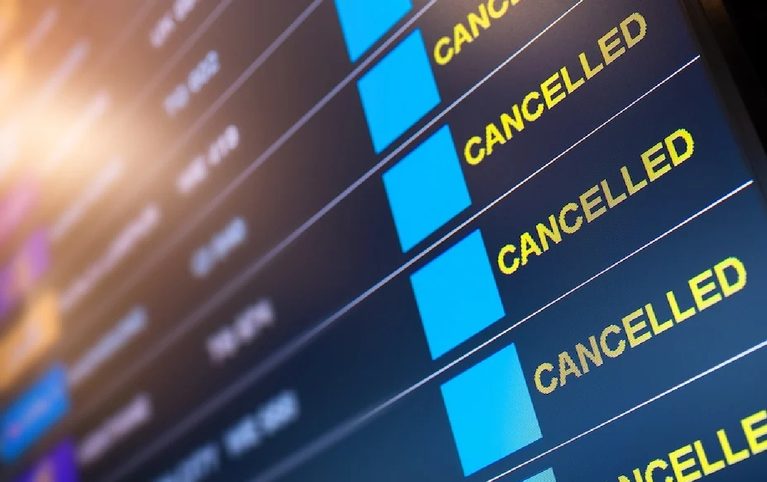
As the waters turn into a no-man’s sea, the skies above the Gulf have become lethally unpredictable. In a significant escalation documented by the European Aviation Safety Agency (EASA) on Monday, airlines were warned against operating within the airspace of Bahrain, Kuwait, Qatar, the UAE, and above the waters of the Gulf of Oman. The advisory, which essentially cordons off the entire Persian Gulf aviation sector, cites “unpredictable military developments, combined with the possible use of missiles, drones, combat aircraft and air-defence systems.”
This is not the routine GPS spoofing that plagued the region in the mid-2020s. An experienced pilot flying a Boeing 787 for a major European carrier told this bureau via an encrypted channel: “The threat level is now ‘high risk at all altitudes.’ That means we are worried about debris from missile interceptions falling on commercial lanes and mistaking an airliner for a military target. It’s a complete no-fly zone in all but name. The economic cost to the Gulf hubs is catastrophic.”
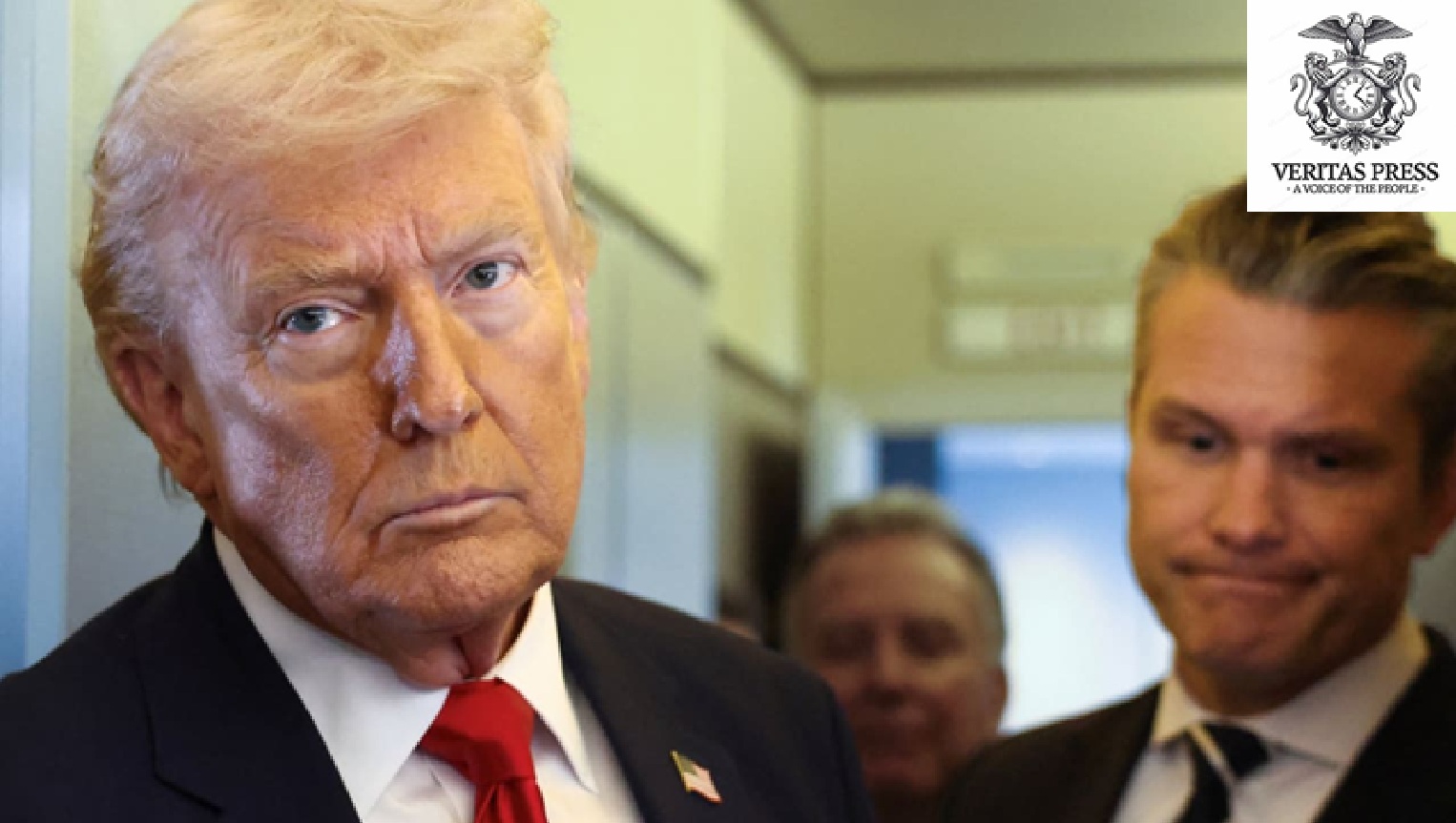
The collapse of the MoU reached its terminal phase last week when former President Donald Trump, speaking from his Mar-a-Lago transition hub, unilaterally declared the ceasefire “over.” The declaration blindsided European allies and effectively greenlit the aggressive escort operations that Tehran deemed illegal.
“Trump’s statement was the death blow,” says Barbara Slavin, a distinguished fellow at the Stimson Centre. “He framed the reopening of the Strait not as a mutual agreement, but as a domestic political victory. To prove he wasn’t ‘weak on Iran,’ the U.S. had to violate the MoU’s spirit by entering the exclusion zone. It validated every paranoid instinct in the Iranian command structure that the U.S. only negotiates to set up future strikes.”
Brigadier General Akrami-Nia’s Monday rebuttal zeroed in on this “aggressive and corrupt president,” insisting that the only path forward is for the U.S. to “respect the rights of the Iranian nation and comply with the provisions of the war-ending memorandum.”
Oil Markets And The Global Chokepoint:
The strategic math is brutal. Approximately 20% of global oil consumption passes through the Strait. While Iran insists it will permit transit on its terms, the confusion over “illegal routes” has effectively frozen maritime insurance. Lloyd’s of London raised war risk premiums to prohibitive levels overnight, effectively halting non-military traffic without a single shot needing to be fired on a tanker.
A local fisherman in Bandar Abbas, who identified himself only as Reza, spoke to our reporter via satellite phone: “We see the warships on the horizon. The Army and the IRGC are on every island. The General’s words are not a bluff. If the Americans push, the water will burn. It is our backyard.”
Conclusion: The Unyielding Principle.
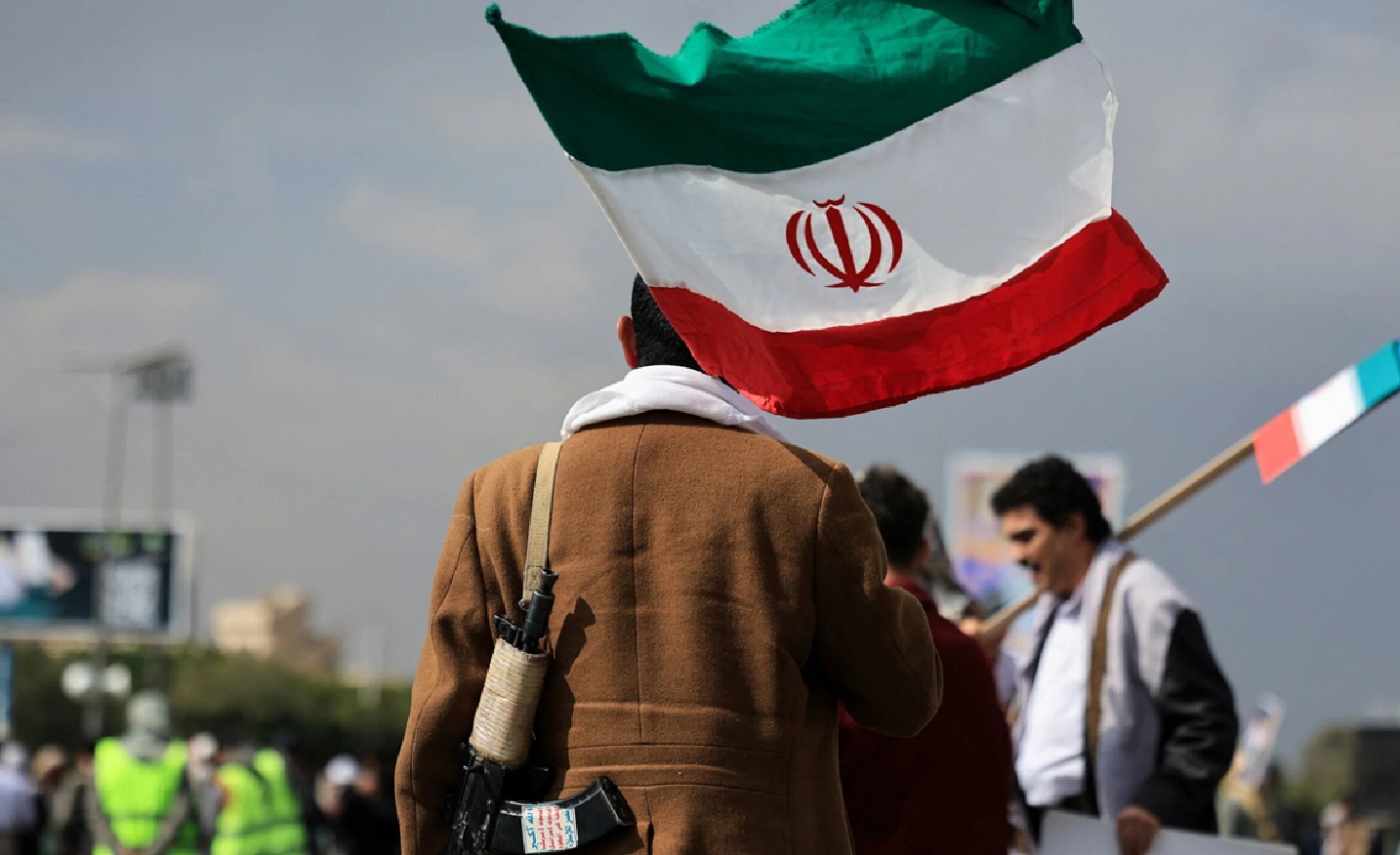
As night fell on Tehran, General Akrami-Nia left the crowd with the chilling promise of the “Army’s last breath.” The standoff is no longer about a single sea lane. It is a test of whether the post-World War II international order can survive a regional power declaring that the era of naval submission is over. The MoU lies in tatters, not because the ink faded, but because it tried to paper over an unbridgeable chasm: The U.S. still believes the Strait of Hormuz is a global commons; Iran has just drawn a hard line, vowing with a gun in hand that it is a national artery, and that it will never be opened through war, but only through respect.
Source:Veritas Press C.I.C. | Multi News Agencies
Help Support Our Work By Donating
Popular Information is powered by readers who believe that truth still matters. When just a few more people step up to support this work, it means more lies exposed, more corruption uncovered, and more accountability where it’s long overdue.
Help Protect Independent Journalism, Which Is Currently Under Attack.
If you believe journalism should serve the public, not the powerful, and you’re in a position to help, becoming a DONOR or a PAID SUBSCRIBER truly makes a difference.
DONATION APPEAL: If You Found This Reporting Valuable, Please Consider Supporting Independent Journalism.
Your support fuels our fearless, truth-driven journalism. In unity, we endeavour to amplify marginalised voices and champion justice, irrespective of geographical location. We operate independently, without any financial backing from billionaires.
But it’s also extremely important. One of Veritas Press’s greatest assets is its reader-funded model.
1. Reader funding means we can cover what we like. We’re not beholden to the political whims of a billionaire owner. We are a small, independent and impartial organisation. No one can tell us what not to say or what not to report.
2. Reader funding means we don’t have to chase clicks and traffic. We’re not desperately seeking your attention for its own sake: we pursue the stories that our editorial team deems important and believes are worthy of your time.
3. Reader Funding: enables us to keep our website and other social media channels open, allowing as many people as possible to access quality journalism from around the world, particularly those in places where the free press is under threat.
We know not everyone can afford to pay for news, but if you’ve been meaning to support us, now’s the time.
Your donation goes a long way. It helps us:
Keep the lights on and sustain our day-to-day operations
Hire new, talented independent reporters
Launch real-time live debates, community-focused shows, and on-the-ground reporting
Cover the issues that matter most to our communities, in real time, with depth and integrity
We have plans to expand our work, but we can’t do it without your support. Every contribution, no matter the size, helps us stay independent and build a truly people-powered media platform.
If you believe in journalism that informs, empowers, and reflects the communities we serve, please donate today.
Submissions:
For The Secure Submission Of Documentation, Testimonies, Or Exclusive Investigative Reports From Any Global Location, Please Utilise The Following Contact Details For Our Investigations Desk: enquiries@veritaspress.co.uk or editor@veritaspress.co.uk
Kamran Faqir is a volunteer investigative journalist and writer committed to exposing hidden truths and amplifying underreported stories. Driven by social justice, he brings sharp insight and fearless truth-telling to independent journalism. NUJ registered.
SEATTLE, TEHRAN — The U.S. Department of Homeland Security (DHS) will allow Iran’s national football team to enter the country 48 hours before their critical World Cup match against Egypt on Friday, a modest concession in a tournament where Team Melli’s travel conditions have sparked claims of oppression and competitive disadvantage.