







Help support our mission, donate today and be the change. Every contribution goes directly toward driving real impact for the cause we believe in.
WASHINGTON – As renewed tensions with Iran dominate global headlines, critics of U.S. President Donald Trump argue that another story, one involving Jeffrey Epstein, allegations of elite protection networks, and unresolved questions surrounding political accountability, continues to cast a shadow over the White House.
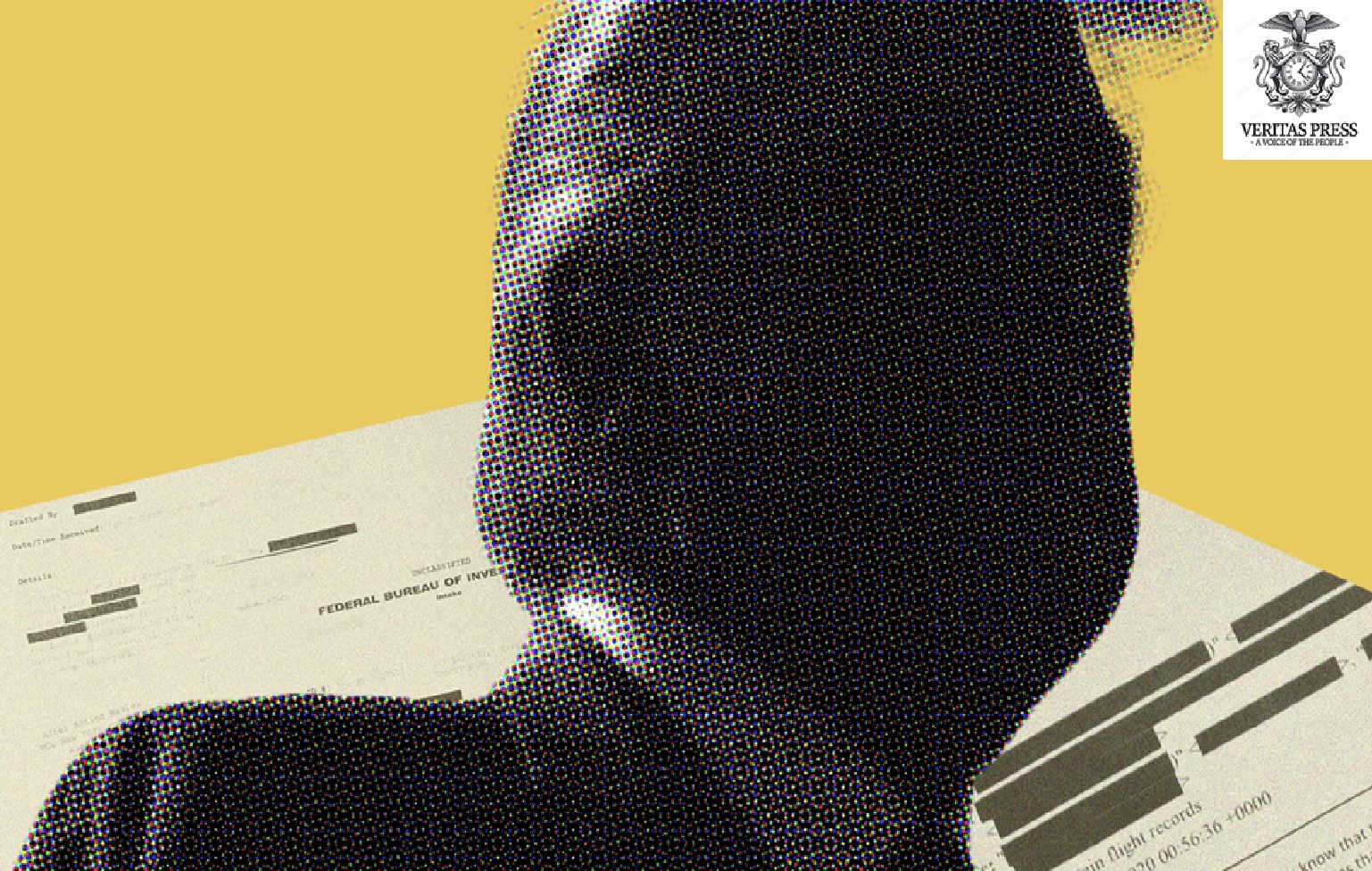
Over recent months, the staggered release of new Epstein-related court records, videos, flight logs, emails, and investigative materials by the U.S. Department of Justice has reignited scrutiny of powerful political and business figures linked socially or professionally to the late financier and convicted sex offender Jeffrey Epstein. While appearing in Epstein’s social orbit or records does not in itself establish criminal wrongdoing, activists, legal analysts, survivors’ advocates, and political opponents have accused the Trump administration of attempting to manage, contain, or politically redirect public attention away from the wider implications of the disclosures.
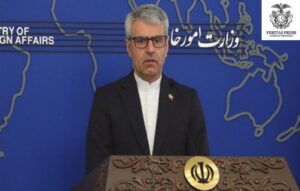
At the same time, Trump’s aggressive posture towards Iran, including support for joint U.S.-Israeli military operations and escalating threats against Tehran, has triggered accusations from critics that foreign conflict is being used as a political distraction amid mounting domestic controversies.
The convergence of these crises has produced a broader debate over executive power, abuse of power, media manipulation, elite impunity, and whether American democratic institutions remain capable of holding political leaders accountable.
The Epstein Files And Renewed Public Scrutiny:
In early 2026, the Department of Justice released another large tranche of Epstein-related records after months of political pressure from lawmakers, journalists, victims’ advocates, and transparency campaigners. The released materials reportedly included millions of pages of documents, thousands of videos, photographs, email exchanges, contact logs, and investigative files.
Several major media organisations, including CBS News, The Guardian, and other U.S. outlets, reported that the records contained references to numerous wealthy and politically connected individuals, including Trump, former President Bill Clinton, business executives, celebrities, and international elites. Legal experts repeatedly stressed that references, social connections, photographs, or appearances in flight logs do not automatically implicate individuals in criminal conduct.
Nevertheless, The Political Fallout Has Intensified.:
Democratic lawmakers and some anti-corruption advocates have demanded broader transparency surrounding Epstein’s network and questioned why many powerful figures connected to Epstein have never faced meaningful legal consequences. Survivors’ organisations have also criticised what they describe as decades of institutional failures that allowed Epstein and his associates to evade accountability.
“The public has lost faith that the same rules apply to the wealthy and politically connected,” said one legal activist during a Washington accountability rally earlier this year. “People see selective justice.”
Trump’s past relationship with Epstein has long been publicly documented. The two men were photographed together on multiple occasions in the 1990s and early 2000s, and Trump once described Epstein as a “terrific guy” in a now widely circulated interview. Trump has also claimed that he later distanced himself from Epstein and banned him from Mar-a-Lago after a dispute.
To date, Trump has not been charged with crimes related to Epstein’s trafficking operation, and no court has found him criminally liable in connection with Epstein’s abuses. Trump and his allies continue to dismiss many accusations surrounding the issue as politically motivated attacks.
Still, renewed disclosures have intensified public scrutiny.
Some commentators, including political analysts and investigative journalists, have argued that the broader issue extends beyond any single individual and instead reflects a systemic culture of elite protection. Questions surrounding sealed records, delayed disclosures, prosecutorial decisions, intelligence connections, and decades of institutional failures continue to fuel public distrust.
Allegations Of Political Diversion:
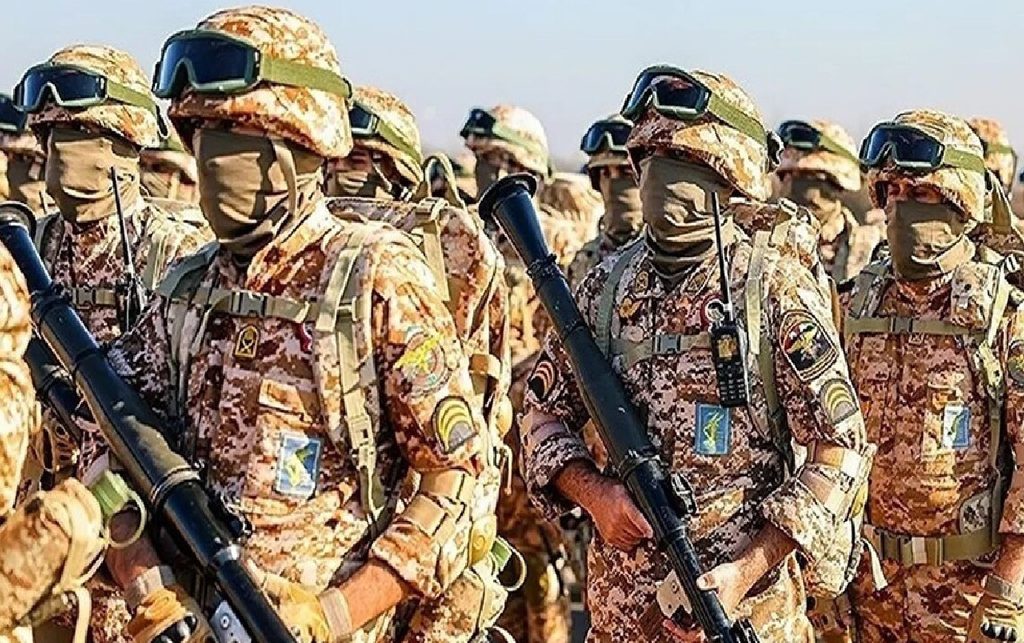
As media attention on the Epstein files intensified earlier this year, Trump simultaneously escalated rhetoric toward Iran, approving expanded military operations alongside Israel and issuing repeated warnings toward Tehran.
That timing has become the subject of fierce political debate.
Several commentators and opposition figures have openly suggested that the administration’s foreign policy escalation may serve as a political diversion from domestic controversies and accountability. Former Vice President Kamala Harris accused Trump of being “dragged” into a broader confrontation with Iran while critics described the war rhetoric as an effort to shift public focus.
Writers and analysts in publications including The Guardian, The Atlantic, and The Daily Beast have explored whether the administration’s communications strategy reflects a deliberate attempt to overwhelm scandal coverage with national security crises.
One commentary published earlier this year described the Iran campaign as a “diversionary war,” arguing that the White House was attempting to “drown out” discussions surrounding Epstein-related revelations and economic controversies.
Political scientists have long studied what is known as “diversionary conflict theory”, the idea that leaders facing domestic crises may use foreign confrontations to rally nationalist sentiment, dominate media cycles, and consolidate political support.
Although no evidence conclusively proves that the Iran escalation was launched specifically to distract from Epstein-related scrutiny, critics argue that the overlap in timing has deepened public suspicion.
“The danger is not only war itself,” said one anti-war organiser in New York during recent demonstrations. “It’s the way militarism can be used to bury accountability at home.”
Netanyahu, Israel And The Expanding Regional Conflict:
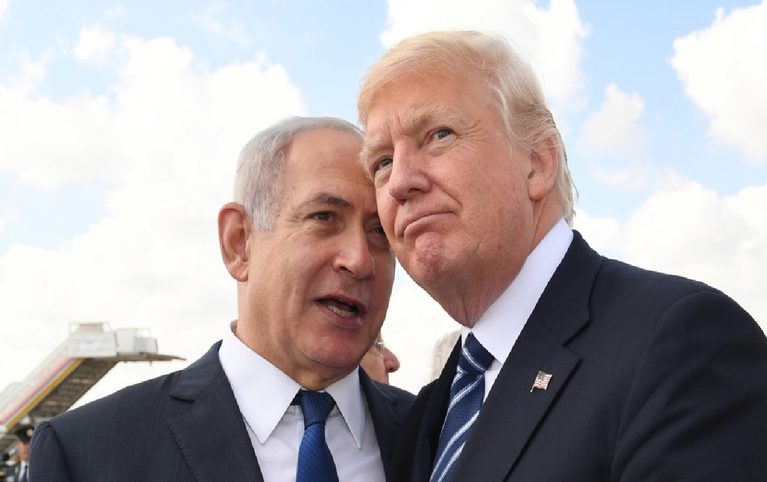
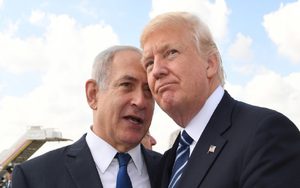
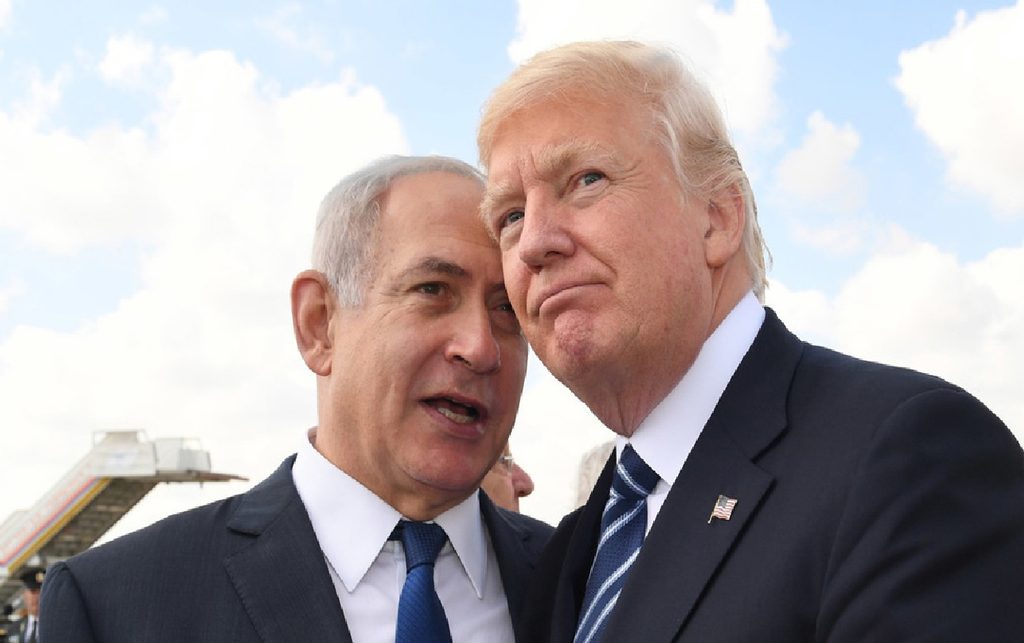
Trump’s close alignment with Israeli Prime Minister Benjamin Netanyahu has also become central to criticism surrounding the administration’s Iran strategy.
The current conflict has seen deep military coordination between Washington and Tel Aviv, with Israeli officials repeatedly calling for continued pressure against Iran’s nuclear infrastructure and regional influence.
Netanyahu has argued that Iran’s nuclear programme constitutes an existential threat and has defended continued military operations as necessary for Israeli security.
The governments involved face criticism from various quarters, with allegations that they are fueling regional instability and sidestepping accountability for the genocidal actions and annexation that have been inflicted upon the innocent population of Palestine.
Anti-war organisations, civil liberties groups, and some international observers argue that the conflict risks catastrophic humanitarian consequences across the Middle East while empowering hardline nationalist agendas in both countries.
Demonstrators in several U.S. cities have condemned what they describe as unconditional American support for Israeli military policy. Protesters outside the White House and on university campuses have linked opposition to the Iran conflict with broader criticism of U.S. support for Israel’s war in Gaza and expanding regional militarisation.
Some activists have also accused mainstream media outlets of disproportionately focusing on military narratives while underreporting domestic controversies surrounding political corruption, lobbying networks, and elite misconduct.
Questions Over War Powers And Constitutional Limits:
The Iran conflict has also reignited debate over presidential war powers.
Legal scholars and members of Congress have questioned whether Trump exceeded constitutional authority by deepening military involvement without explicit congressional approval.
Several Democratic lawmakers attempted to advance war powers resolutions aimed at limiting unilateral executive action against Iran. Critics argued that bypassing Congress represented a dangerous expansion of presidential authority.
“This is exactly what the Constitution sought to prevent,” one constitutional law professor told reporters earlier this year. “The concentration of war-making power in a single executive carries enormous risks.”
Trump administration officials, however, insist that military actions were justified under national security doctrines and collective defence arrangements with Israel.
The White House has repeatedly framed the confrontation with Iran as part of a broader campaign against regional threats and nuclear proliferation.
Yet even some former military officials have questioned whether the campaign has achieved its stated objectives.
Recent intelligence reporting cited by Reuters suggested that despite extensive strikes, Iran’s nuclear capabilities may not have been significantly eliminated. Analysts warned that military escalation could instead strengthen hardline factions inside Iran while increasing risks of prolonged regional war.
Media, Spectacle And The Crisis Of Accountability:
The overlap between the Epstein scandal and the Iran conflict has exposed deeper concerns about media systems and political spectacle in the digital era.
Critics argue that modern information ecosystems allow powerful political actors to dominate public attention through constant crisis generation, outrage cycles, and emotionally charged narratives.
Researchers examining Trump’s communication patterns have noted how media attention can rapidly shift between scandals, geopolitical crises, economic disputes, and culture war controversies.
For accountability advocates, the concern is not only about Epstein or Iran individually, but about whether democratic oversight itself is eroding.
“Scandal fatigue becomes a governing strategy,” said one media researcher during a recent panel discussion on political communication. “The public becomes overwhelmed, fragmented, and unable to sustain focus on any single issue long enough for meaningful accountability.”
Survivors’ advocates have similarly warned that media spectacle often sidelines the experiences of victims.
Many Epstein survivors and anti-trafficking organisations have continued calling for the release of additional sealed records, stronger protections for trafficking victims, and independent investigations into institutional failures that enabled abuse networks to operate for decades.
Calls For Impeachment And Political Consequences:
Growing sections of Trump’s political opposition have renewed calls for impeachment investigations, citing a combination of alleged corruption, conflicts of interest, executive overreach, and ethical concerns.
Some activist groups argue that Congress has failed to aggressively investigate potential abuses of power tied to foreign policy decisions, financial networks, and political relationships surrounding the Epstein case.
The path forward is complicated by the fact that impeachment is a subject that elicits strong political divisions, and the spectre of a president being removed from the Oval Office hangs in the balance.
Republican lawmakers overwhelmingly continue to support Trump, dismissing many allegations as partisan warfare orchestrated by political opponents and hostile media organisations.
Trump himself has repeatedly portrayed investigations into his conduct as components of a broader “witch hunt” against him and his movement.
Still, critics argue that the cumulative weight of controversies, including the Epstein disclosures, corporate dealings, military escalation, and repeated allegations of executive misconduct, has intensified public concern over the health of American democratic institutions.
A System Under Strain:
Beyond the immediate political battle, the broader controversy reflects a deeper crisis of trust.
For many Americans, the Epstein saga became symbolic of a wider perception that powerful individuals operate under different rules from ordinary citizens. The continuing release of records, combined with years of unanswered questions surrounding Epstein’s network, has reinforced perceptions of institutional failure.
Meanwhile, the expansion of conflict with Iran has amplified fears that geopolitical confrontation can be used to suppress scrutiny, consolidate executive authority, and redirect public anger outward.
Whether those fears are justified remains fiercely contested.
But the political consequences are already unfolding.
Public protests against war, elite corruption, and government secrecy continue across multiple U.S. cities. Civil liberties organisations are warning about growing authoritarian tendencies. Independent journalists and researchers continue investigating the intersections between political power, media narratives, lobbying networks, and systems of elite protection.
At the centre of the storm stands Trump, a president whose political survival has repeatedly depended on dominating the media landscape, reframing controversy as persecution, and turning crises into spectacles.
The question confronting the United States now is not only whether one man will face accountability.
It is whether the political system itself remains capable of delivering it.
Source: Multiple News Agencies
Submissions:
For The Secure Submission Of Documentation, Testimonies, Or Exclusive Investigative Reports From Any Global Location, Please Utilise The Following Contact Details For Our Investigations Desk: enquiries@veritaspress.co.uk or editor@veritaspress.co.uk
Help Support Our Work:
Popular Information is powered by readers who believe that truth still matters. When just a few more people step up to support this work, it means more lies exposed, more corruption uncovered, and more accountability where it’s long overdue.
Help Protect Independent Journalism, Which Is Currently Under Attack.
If you believe journalism should serve the public, not the powerful, and you’re in a position to help, becoming a DONATOR or a PAID SUBSCRIBER truly makes a difference.
DONATION APPEAL: If You Found This Reporting Valuable, Please Consider Supporting Independent Journalism.
Help Support Our Work – We Know, We Know, We Know …
Seeing these messages is annoying. We know that. (Imagine what it’s like writing them … )
Your support fuels our fearless, truth-driven journalism. In unity, we endeavour to amplify marginalised voices and champion justice, irrespective of geographical location.
But it’s also extremely important. One of Veritas Press’s greatest assets is its reader-funded model.
1. Reader funding means we can cover what we like. We’re not beholden to the political whims of a billionaire owner. We are a small, independent and impartial organisation. No one can tell us what not to say or what not to report.
2. Reader funding means we don’t have to chase clicks and traffic. We’re not desperately seeking your attention for its own sake: we pursue the stories that our editorial team deems important and believe are worthy of your time.
3. Reader Funding: enables us to keep our website and other social media channels open, allowing as many people as possible to access quality journalism from around the world, particularly those in places where the free press is under threat.
We know not everyone can afford to pay for news, but if you’ve been meaning to support us, now’s the time.
Your donation goes a long way. It helps us:
- Keep the lights on and sustain our day-to-day operations
- Hire new, talented independent reporters
- Launch real-time live debates, community-focused shows, and on-the-ground reporting
- Cover the issues that matter most to our communities, in real time, with depth and integrity
We have plans to expand our work, but we can’t do it without your support. Every contribution, no matter the size, helps us stay independent and build a truly people-powered media platform.
If you believe in journalism that informs, empowers, and reflects the communities we serve, please donate today.
Donate Today:
GENEVA — A United Nations fact-finding mission has concluded there are “reasonable grounds to believe”
Iran’s GDP is projected to contract by 5.4 to 6.1% in 2026, its worst performance
The Trump administration is preparing a $2.8 billion weapons package for Israel containing 40,000 2,000-pound

Film alleges mass civilian deaths are routinely built into military decisions amid Israel’s genocidal war
The Israeli rights group says violence, displacement, economic strangulation, and settlement expansion form part of

Houthi forces have captured the historic Red Sea port of Mocha and are advancing on
London’s historic sanctions against Israeli settlements mark a watershed moment in UK foreign policy, but
With 95% of Gaza’s population now wholly dependent on aid and more than 90% stripped
India calls for Kashmir and Ladakh to appear only on its official map after a
ISLAMABAD – In the high-stakes political theatre of Pakistan, the battleground has shifted from the