









Help support our mission, donate today and be the change. Every contribution goes directly toward driving real impact for the cause we believe in.
LONDON – There is a moment in every government’s life cycle when rhetoric collides with reality.
For Labour, that moment is now unfolding in Britain’s classrooms.
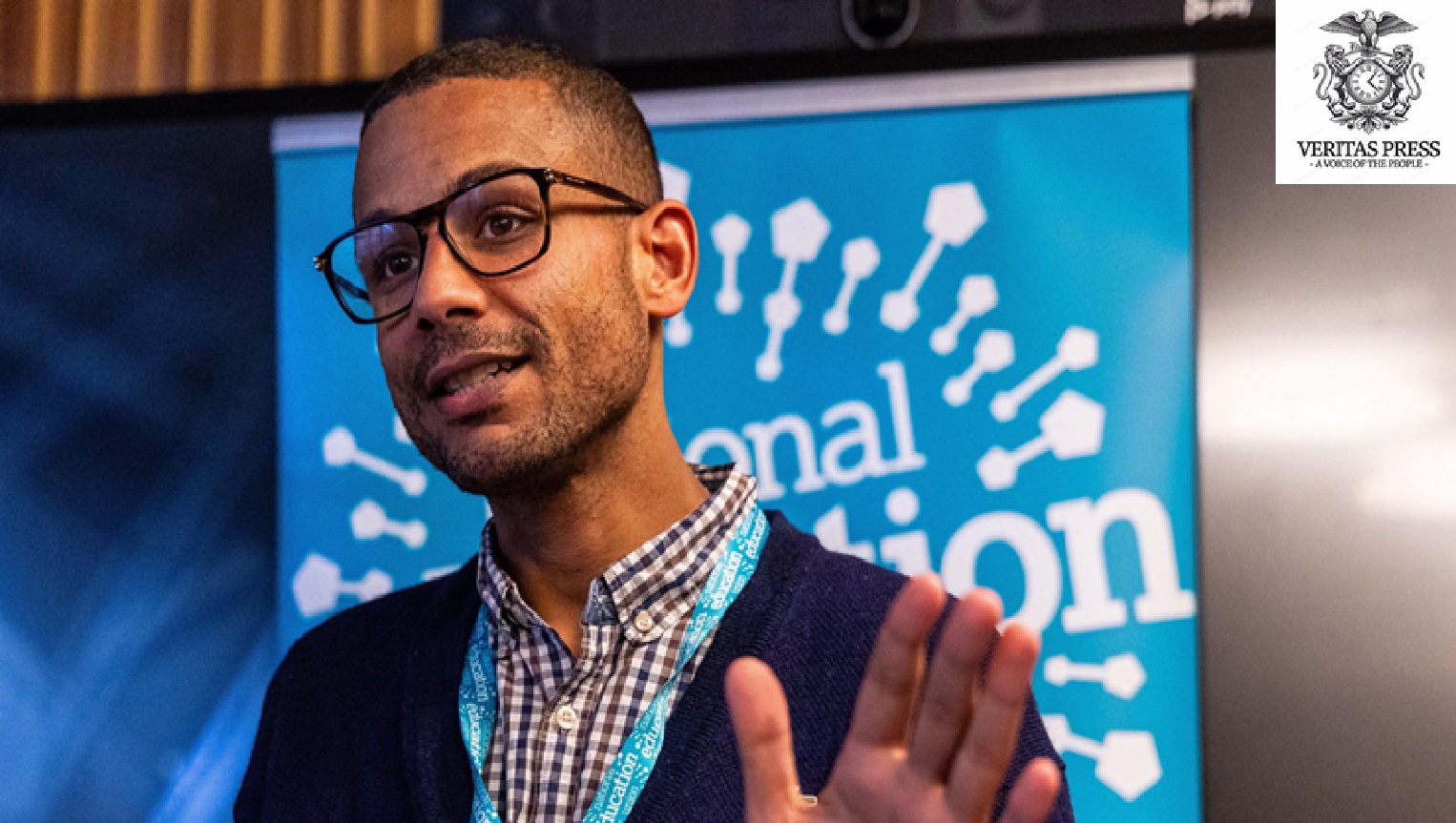
At the National Education Union (NEU) conference in Brighton, general secretary Daniel Kebede delivered a stark indictment of the government’s record, warning that schools are “running on empty” and that Labour is failing the very children it promised to prioritise.
“Hunger walks in with the children. Anxiety takes a seat at the back of the room,” Kebede told delegates, describing a system overwhelmed by unmet needs and social crisis.
This is not simply union rhetoric. It is a reflection of a system under visible strain, one now spilling into public view.
A Crisis No Longer Deniable:
The conditions described at the conference are increasingly corroborated by reporting across the education sector.
In 2025 alone, UK school staff received £15.5 million in compensation payouts linked to unsafe working environments, violence, and neglect, cases that included a teacher made seriously ill by a rat infestation and others injured by pupils.
Union leaders say these incidents are not anomalies but symptoms of deeper systemic failure:
- chronic understaffing
- rising behavioural challenges
- inadequate mental health support
As NASUWT general secretary Matt Wrack noted, such cases reveal the “failure of employers to uphold their duty of care” to staff.
In classrooms, the consequences are immediate and human.
Teachers describe a profession stretched beyond its limits, expected to educate, safeguard, counsel, and stabilise, often without the resources to do any of those roles effectively.
Reform Without Substance:
Education Secretary Bridget Phillipson has pointed to reforms, new inspection frameworks, curriculum reviews, and SEND restructuring as evidence of progress.
But at Brighton, Kebede dismissed these as insufficient:
The government’s reforms, he argued, “lack depth and adequate funding.”
Nowhere is this clearer than in the debate around Ofsted.
Despite promises of change, unions say the system still operates through high-stakes judgment that distorts priorities and damages staff wellbeing. The underlying accountability culture remains intact, even if the language around it has shifted.
SEND: A System Buckling Under Pressure.
The crisis in special educational needs provision has become one of the clearest fault lines.
A recent NEU survey found:
- 89% of teachers say class sizes are too large for inclusion
- 83% report insufficient support staff
- Only 22% believe referrals for SEND support lead to adequate help
These findings come as the government pushes reforms that will shift more responsibility onto mainstream schools.
Kebede’s warning was explicit:
“Inclusion cannot be done on the cheap.”
Even with billions pledged, unions argue the funding does not match the scale of need, raising fears that reforms will collapse under their own weight.
The Economics Of Managed Decline
At The Heart Of The Crisis Lies A Structural Issue: Funding.
The UK continues to spend less on education, as a share of GDP, than many comparable countries. While Labour has increased allocations, much of that uplift is absorbed by inflation, rising demand, and years of accumulated underinvestment.
The result is what many educators now describe as “managed decline”:
- rising expectations
- static or shrinking real-terms budgets
- expanding responsibilities without support
Or, as Kebede framed it:
“You cannot deliver meaningful reform without meaningful investment.”
A Political Rupture In Real Time:
What makes this moment politically explosive is not just the crisis itself, but how teachers are responding to it.
According to Kebede, 65% of NEU members who voted Labour in 2024 now say they would not do so again.
This represents a dramatic collapse in support from a traditionally Labour-aligned workforce.
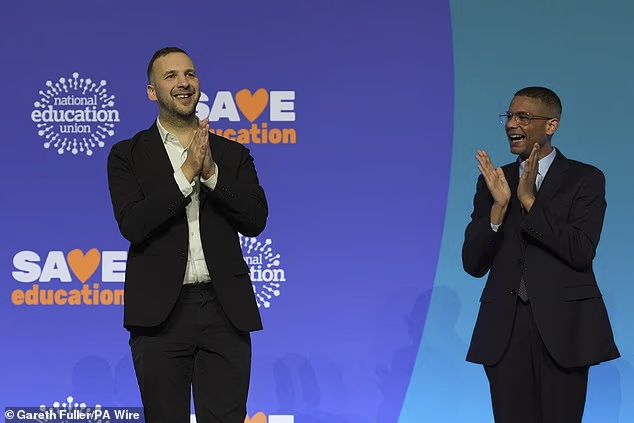
In their place, the Green Party of England and Wales is gaining ground rapidly.
At the same conference, Zack Polanski received a standing ovation after pledging:
- To abolish Ofsted
- Inject significant funding into schools
- Reverse academisation
He described the current system as “toxic” and underfunded, positioning the Greens as the party willing to break from austerity-era constraints.
Kebede acknowledged the shift:
Teachers are “responding to what they see, and to what they do not.”
Beyond Policy: A System Structurally Misaligned.
The crisis cannot be understood solely through funding figures or individual reforms.
Over the past decade, the English education system has been reshaped by:
- academisation
- fragmented governance structures
- market-style competition between schools
Critics argue Labour has failed to fundamentally challenge this model.
Instead, schools operate within a structure where:
- Accountability is uneven
- Resources are distributed inconsistently
- Staff turnover remains high
The result is a system struggling to meet the demands placed upon it because those demands exceed what the system was designed, or funded, to handle.
The Digital And Cultural Frontlines:
At the same time, schools are grappling with pressures that extend far beyond education policy.
Kebede sharply criticised social media companies for shaping pupil behaviour:
Platforms “amplify misogyny” and “treat humiliation as a business model.”
Teachers report increasing incidents of:
- misogyny
- racism
- online-influenced extremism
These issues are now entering classrooms daily, leaving schools to manage the fallout of an unregulated digital environment.
Simultaneously, debates over censorship, curriculum, and identity are pulling schools into broader political conflicts.
Kebede warned that the rise of Reform UK could intensify this trend, creating what he described as a “hostile place” for minority pupils.
A System Approaching Breaking Point:
Taken together, the pressures are cumulative and destabilising:
- underfunding
- workforce attrition
- SEND system strain
- behavioural and safeguarding challenges
- and political fragmentation
Each reinforces the other.
And schools, already stretched, are expected to absorb all of it.
Meanwhile, the prospect of industrial action is no longer hypothetical. Kebede has already warned that strikes could follow if funding, pay, and workload issues remain unresolved.
The Warning Labour Cannot Ignore:
For Labour, the implications go far beyond education policy.
This is a crisis of political trust.
Teachers are not just another workforce. They are:
- organised
- politically engaged
- embedded in communities nationwide
Their shift away from Labour signals something deeper than dissatisfaction; it signals disillusionment.
Conclusion: The Quiet Unravelling Of A Public Good.
What is unfolding in Britain’s schools is not simply a policy dispute, nor a temporary funding squeeze. It is the slow unravelling of a public good, one that has been asked, year after year, to absorb more pressure than it was ever designed to carry, while being denied the resources to survive.
Labour did not create this crisis. But it is now choosing, consciously, to manage it rather than resolve it.
That distinction matters.
Because what teachers are describing is not just scarcity, it is a system being stretched to the point where its core promises begin to fail. The promise that every child will be supported. The promise that education can level inequality. The promise that schools are places of stability in an unstable world.
Those promises are now conditional.
- Conditional on whether a school can afford support staff.
- Conditional on whether a child can wait months or years for help.
- Conditional on whether a teacher is still in the profession by the end of the year.
This is how systems do not collapse dramatically, but erode quietly, unevenly, until inequality becomes embedded and normalised.
Britain’s education system is no longer quietly struggling. It is visibly straining under pressure, and increasingly vocal about why.
The political danger for Labour is not just that teachers are angry. It is that they are no longer surprised.
Disillusionment has replaced expectation. And that shift is far harder to reverse.
The rise of the Green Party of England and Wales among educators is not, at its core, about ideology. It is about credibility, a growing belief that meaningful change will not come from within the constraints Labour has chosen to accept.
At the same time, the growing presence of Reform UK signals a different kind of threat: one that would not just underfund the system, but fundamentally reshape its values.
Caught between these forces, Labour risks being defined not by what it promised, but by what it was unwilling to do.
Because the evidence now is overwhelming: incremental reform cannot stabilise a system experiencing structural strain. Rebranding cannot substitute for investment. Delegating responsibility downward cannot compensate for capacity that does not exist.
And schools cannot continue to function as the shock absorbers of a failing social contract.
Labour still has time to change course. But the window is narrowing.
Because in classrooms across the country, the consequences of delay are already being felt, in overcrowded lessons, exhausted staff, and children waiting for support that may never arrive.
And increasingly, those witnessing that reality are no longer willing to wait.
If there is still time to act, it will require more than policy adjustment. It will require political honesty about the scale of investment needed, about the limits of existing structures, and about the consequences of continued restraint.
Otherwise, this moment will not be remembered as one of reform, but of recognition: the point at which a system under strain was allowed to slip into decline.
And by the time that becomes undeniable, it will already be too late, for the teachers leaving, for the schools struggling, and most of all, for the children still being told to wait.
Source: Multiple News Agencies
Submissions:
For The Secure Submission Of Documentation, Testimonies, Or Exclusive Investigative Reports From Any Global Location, Please Utilise The Following Contact Details For Our Investigations Desk: enquiries@veritaspress.co.uk or editor@veritaspress.co.uk
Help Support Our Work:
Popular Information is powered by readers who believe that truth still matters. When just a few more people step up to support this work, it means more lies exposed, more corruption uncovered, and more accountability where it’s long overdue.
Help Protect Independent Journalism, Which Is Currently Under Attack.
If you believe journalism should serve the public, not the powerful, and you’re in a position to help, becoming a DONATOR or a PAID SUBSCRIBER truly makes a difference.
DONATION APPEAL: If You Found This Reporting Valuable, Please Consider Supporting Independent Journalism.
Help Support Our Work – We Know, We Know, We Know …
Seeing these messages is annoying. We know that. (Imagine what it’s like writing them … )
Your support fuels our fearless, truth-driven journalism. In unity, we endeavour to amplify marginalised voices and champion justice, irrespective of geographical location.
But it’s also extremely important. One of Veritas Press’s greatest assets is its reader-funded model.
1. Reader funding means we can cover what we like. We’re not beholden to the political whims of a billionaire owner. We are a small, independent and impartial organisation. No one can tell us what not to say or what not to report.
2. Reader funding means we don’t have to chase clicks and traffic. We’re not desperately seeking your attention for its own sake: we pursue the stories that our editorial team deems important and believe are worthy of your time.
3. Reader Funding: enables us to keep our website and other social media channels open, allowing as many people as possible to access quality journalism from around the world, particularly those in places where the free press is under threat.
We know not everyone can afford to pay for news, but if you’ve been meaning to support us, now’s the time.
Your donation goes a long way. It helps us:
- Keep the lights on and sustain our day-to-day operations
- Hire new, talented independent reporters
- Launch real-time live debates, community-focused shows, and on-the-ground reporting
- Cover the issues that matter most to our communities, in real time, with depth and integrity
We have plans to expand our work, but we can’t do it without your support. Every contribution, no matter the size, helps us stay independent and build a truly people-powered media platform.
If you believe in journalism that informs, empowers, and reflects the communities we serve, please donate today.
GENEVA — A United Nations fact-finding mission has concluded there are “reasonable grounds to believe”

Iran’s GDP is projected to contract by 5.4 to 6.1% in 2026, its worst performance

The Trump administration is preparing a $2.8 billion weapons package for Israel containing 40,000 2,000-pound

Film alleges mass civilian deaths are routinely built into military decisions amid Israel’s genocidal war

The Israeli rights group says violence, displacement, economic strangulation, and settlement expansion form part of

Houthi forces have captured the historic Red Sea port of Mocha and are advancing on
London’s historic sanctions against Israeli settlements mark a watershed moment in UK foreign policy, but
With 95% of Gaza’s population now wholly dependent on aid and more than 90% stripped
India calls for Kashmir and Ladakh to appear only on its official map after a
ISLAMABAD – In the high-stakes political theatre of Pakistan, the battleground has shifted from the