Kamran Faqir is a volunteer investigative journalist and writer committed to exposing hidden truths and amplifying underreported stories. Driven by social justice, he brings sharp insight and fearless truth-telling to independent journalism. NUJ registered.
Original Article Date Published:
Article Date Modified:
17 minutes
Views:386
Listen to this article
Help support our mission, donate today and be the change. Every contribution goes directly toward driving real impact for the cause we believe in.
A Deep Investigation into the Knesset’s Discriminatory Legislation
Summary:
Aspect
Details
Law Passed
March 30, 2026 (62-48 vote)
Primary Targets
Palestinians in the occupied West Bank tried in military courts
Execution Method
Hanging within 90 days of sentencing
Key Architect
National Security Minister Itamar Ben-Gvir (Otzma Yehudit)
International Response
Condemnation from the Council of Europe, the EU, France, Germany, Italy, the UK, the Netherlands, and Ireland
Legal Challenges
Petitions filed by ACRI, Adalah; potential Supreme Court review
Status Consequence
PACE warns Israel’s observer status “seriously jeopardised”
A Deliberate Break With Human Rights:
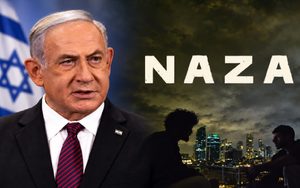
On March 30, 2026, the Israeli Knesset passed legislation that fundamentally alters the country’s relationship with international human rights standards. The “Penal Bill (Amendment, Death Penalty for Terrorists)” makes the death penalty the default punishment for Palestinians in the occupied West Bank convicted of lethal attacks against Israelis. The vote, which passed 62-48 with Prime Minister Benjamin Netanyahu voting in favour, represents what the Council of Europe has termed a “serious regression” and a “further distancing of Israel from the framework of values with which it has historically chosen to associate itself”.
This investigation examines the law’s provisions, its discriminatory structure, the political forces that drove its passage, and the mounting international and domestic opposition. It reveals a legislative project designed not for genuine security purposes but to entrench a two-tiered system of justice that legal experts, human rights organisations, and international bodies have condemned as fundamentally racist and in violation of international law.
1. The Legislative Framework: Two Tracks, One Destination
1.1 The Dual-Track System
The law establishes two separate pathways for the death penalty, creating what the Association for Civil Rights in Israel (ACRI) calls a system “discriminatory by design”.
Track One: Military Courts (West Bank Palestinians)
For Palestinians in the occupied West Bank tried in military courts, the law imposes a mandatory death sentence for convictions involving lethal attacks classified as “acts of terrorism.” The law states: “… his sentence shall be death, and this penalty only.” Military courts may commute this to life imprisonment only in unspecified “special circumstances”, a reversal of previous practice where life sentences were the norm and death sentences were routinely commuted.
Track Two: Civilian Courts (Israeli Citizens)
For Israeli citizens tried in civilian courts, the death penalty may be imposed only for killings committed “with the intent of rejecting the existence of the State of Israel.” Even then, courts retain discretion to impose life imprisonment rather than death.
1.2 Procedural Safeguards Stripped Away
The law eliminates multiple procedural protections that previously limited death penalty applications:
No prosecutorial request required: Death sentences can be imposed even without the prosecution seeking them
No unanimity requirement: A simple majority of judges suffices, removing the previous consensus requirement
No clemency mechanism: The law does not provide for pardon, contradicting international conventions
Accelerated execution: The Israel Prison Service must carry out executions by hanging within 90 days; the prime minister may request a delay of no more than 180 days
Restricted appeals: Avenues for appeal are “extremely limited”
Amichai Cohen, a senior fellow at the Israel Democracy Institute, explains the practical effect: “It will apply in territories with military courts, which are Palestinian courts… That means Jews will not be indicted under this law”.
2. The Discriminatory Architecture: Legal Apartheid By Design.
2.1 Ethnic Distinction Embedded In Law
Human Rights Watch (HRW) has issued a statement declaring that the “wording of the bill makes it clear that it would primarily, if not exclusively, be applied to Palestinians”. Adam Coogle, deputy Middle East director at HRW, stated:
“Israeli officials argue that imposing the death penalty is about security, but in reality, it entrenches discrimination and a two-tiered system of justice, both hallmarks of apartheid. The death penalty is irreversible and cruel. Combined with its severe restrictions on appeals and its 90-day execution timeline, this bill aims to kill Palestinian detainees faster and with less scrutiny.”
2.2 The Military Court System: A Predetermined Outcome
The law’s application through military courts is particularly significant given documented patterns within that system. B’Tselem, the Israeli human rights organisation, stated before the law’s passage that “these military courts have an approximately 96% conviction rate, based largely on ‘confessions’ extracted under duress and torture during interrogations”.
2.3 Legal Analysis from Palestinian Rights Organisations
Suhad Bishara, Legal Director at Adalah, a Palestinian-run legal centre, issued a forceful condemnation:
“This law legitimises premeditated, cold-blooded murder in circumstances where the condemned individual poses no actual threat. This legislation is based on ethnic discrimination and directly violates the principle of equality, relying on classifications that reflect racist perceptions, amounting to prohibited racial discrimination.”
Adalah further emphasised the international law violation: “The application of Israeli domestic law to the Palestinian residents of the West Bank is a flagrant violation of international law, as the Knesset holds no sovereign authority to legislate for an occupied population”.
2.4 Domestic Israeli Opposition
Nine Israeli human rights organisations, including B’Tselem, Physicians for Human Rights, and Adalah, issued a joint statement declaring the law “another expression of the moral abyss into which the State of Israel and its legal system have sunk”. The statement described the law as an “official seal of approval for the policy of revenge and racist violence towards Palestinians”.
The Association for Civil Rights in Israel filed a petition with the Supreme Court challenging the law on two grounds:
“The Knesset has no authority to legislate for the West Bank. Israel holds no sovereignty there.”
“The law is unconstitutional. It violates the right to life, human dignity, due process, and equality, rights protected under (Israel’s) Basic Law: Human Dignity and Liberty”.
3. The Political Drivers: Ben-Gvir’s Campaign And Netanyahu’s Complicity.
3.1 The Architect: Itamar Ben-Gvir
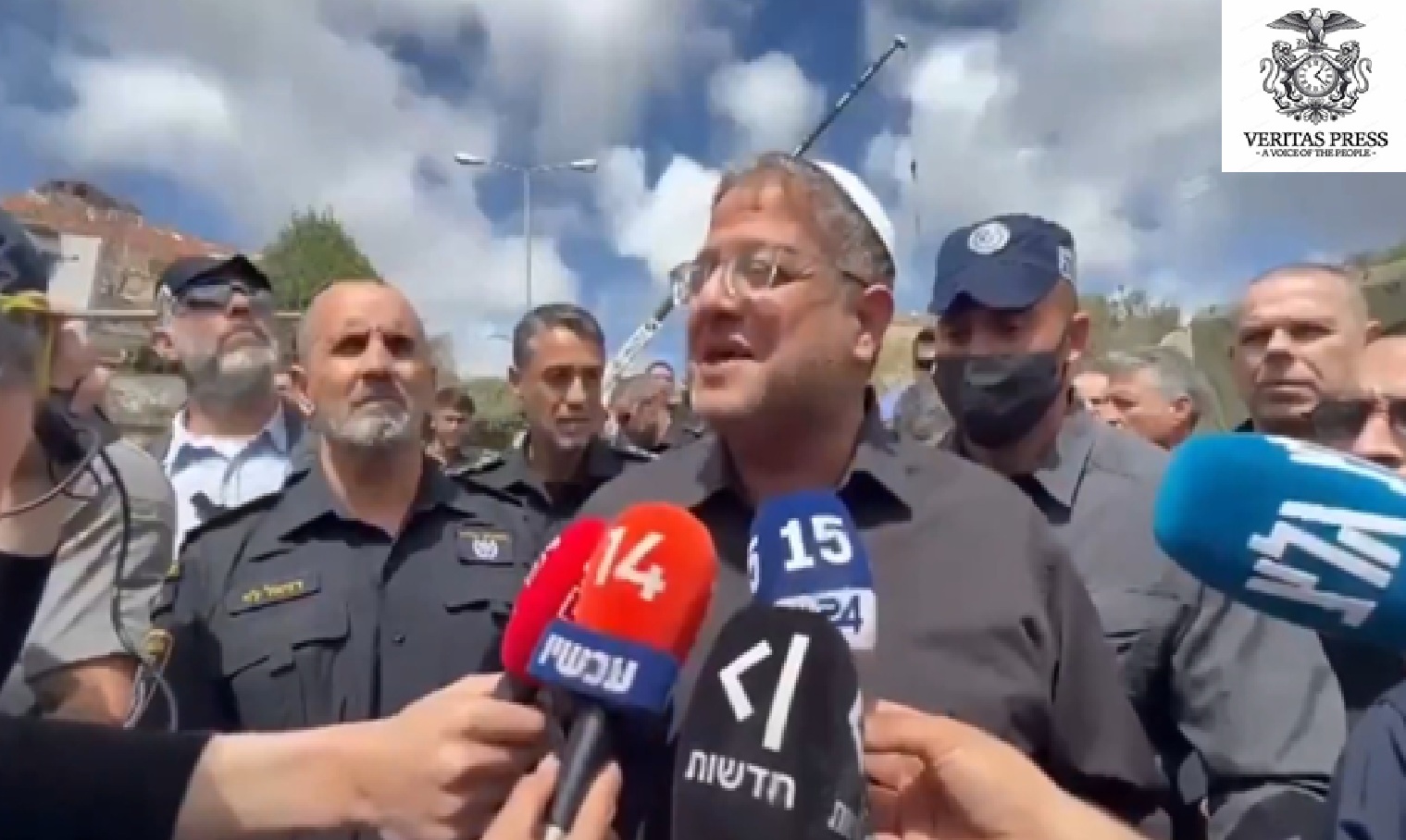
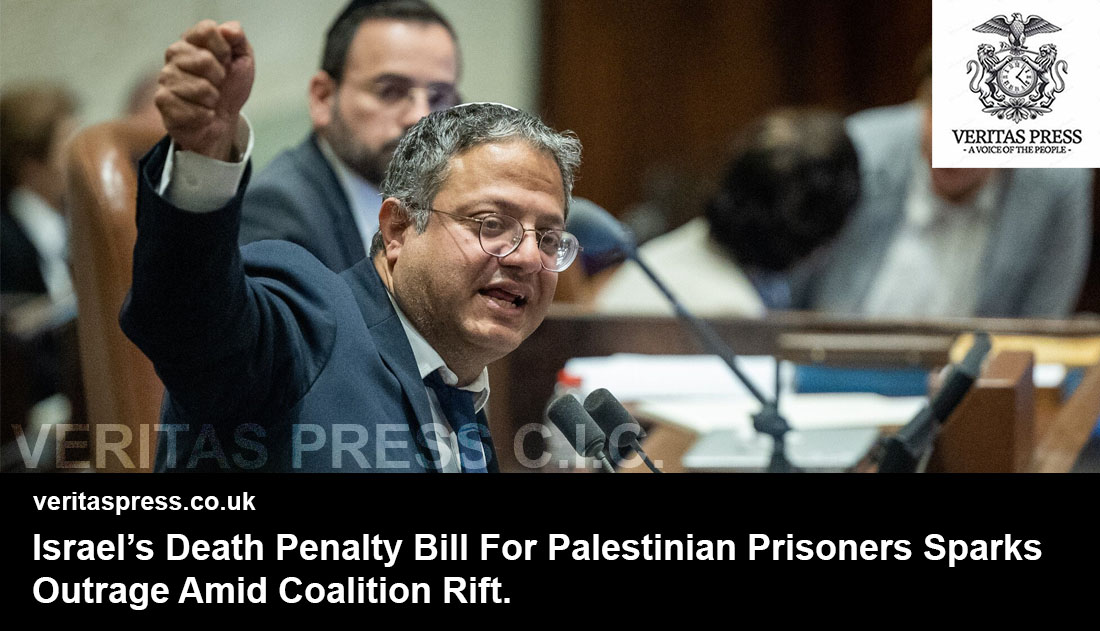
National Security Minister Itamar Ben-Gvir, head of the far-right Otzma Yehudit (Jewish Power) party, has been the law’s primary champion. Throughout the campaign, he wore a gold noose-shaped lapel pin, a deliberate symbol of the punishment he sought to impose. Following the vote, Ben-Gvir declared from the Knesset podium:
“From today, every terrorist will know, and the whole world will know, that whoever takes a life, the State of Israel will take their life.”
3.2 Netanyahu’s Direct Involvement
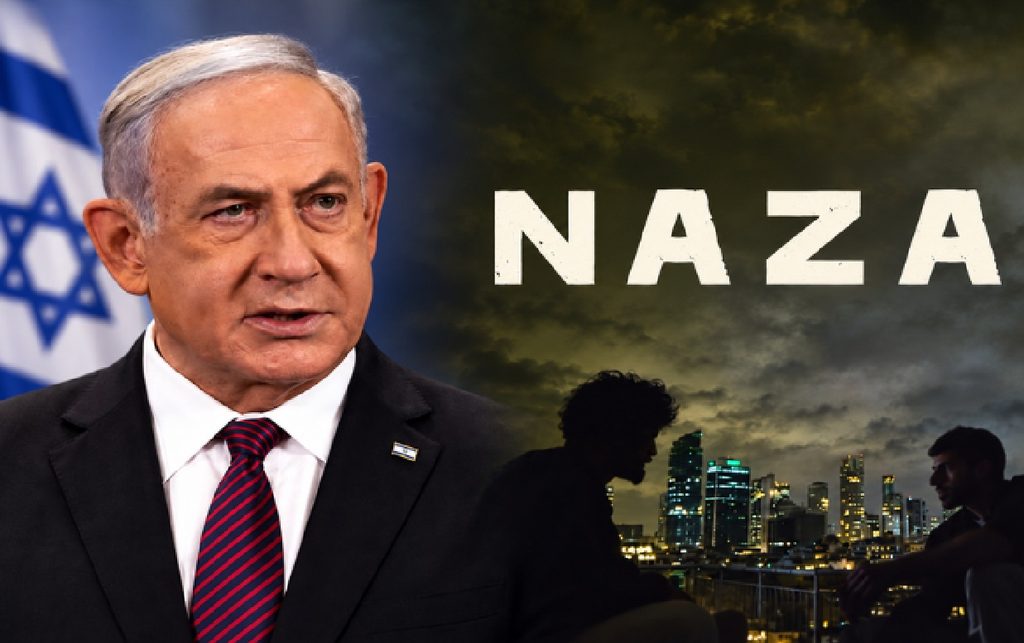
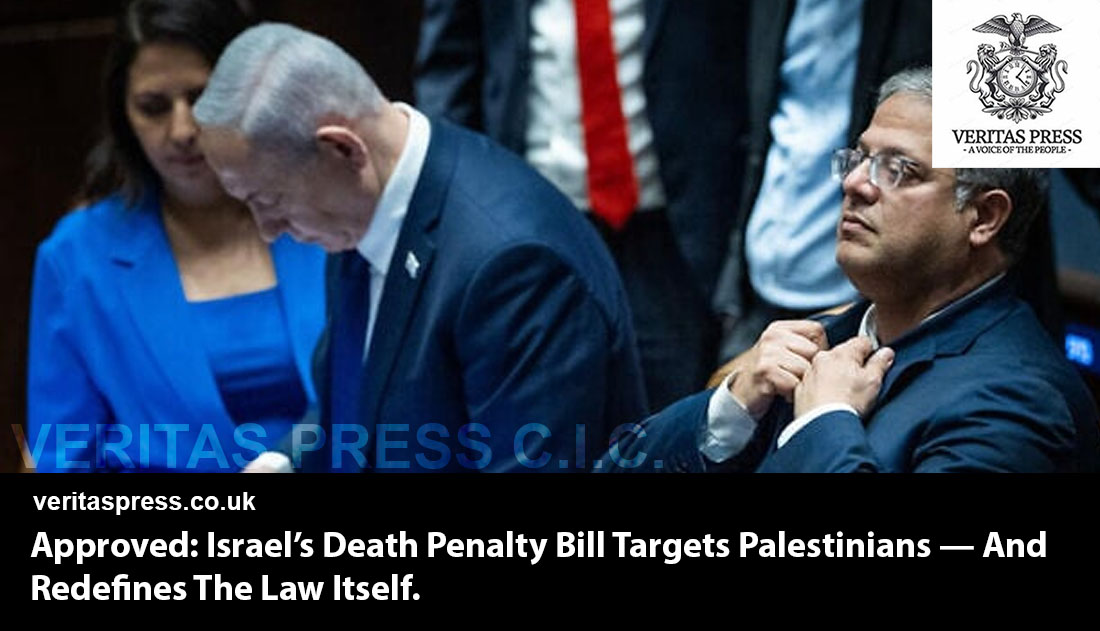
Prime Minister Benjamin Netanyahu personally attended the vote and voted in favour, a significant departure from previous Israeli governments that maintained a de facto moratorium on executions. The law passed with 62 votes, including Netanyahu’s Likud party members and the conservative Yisrael Beitenu party.
3.3 Electoral Calculus
Some critics view the law’s timing as linked to Israel’s upcoming elections. Israeli opposition lawmaker Gilad Kariv (Labour) stated before the vote:
“The Government and coalition have subordinated themselves to a miserable, crude, immoral and irrational, from a security perspective, election campaign of Itamar Ben-Gvir.”
4. International Condemnation: A Unified European Response
4.1 Council Of Europe: “Serious Regression”
Council of Europe Secretary General Alain Berset expressed “deep concern” following the law’s adoption, noting it came “despite repeated calls to the Israeli authorities, notably by the Council of Europe, to renounce it”. The Council’s statement described:
The law is a “serious regression”
The death penalty is a “legal anachronism incompatible with contemporary human-rights standards”
Any discriminatory application is “unacceptable in a state governed by the rule of law”
Berset had previously issued direct appeals to Knesset Speaker Amir Ohana and President Isaac Herzog, stating: “The Council of Europe opposes the death penalty in all places and in all circumstances. The texts currently under examination in the Knesset would represent a grave step backwards from Israel’s long-standing de facto moratorium”.
4.2 Pace: Observer Status “Seriously Jeopardised”
Petra Bayr, President of the Parliamentary Assembly of the Council of Europe (PACE), delivered a sterner warning:
“I am deeply disappointed by last night’s vote in the Knesset, which seriously jeopardises Israel’s observer status with the Parliamentary Assembly of the Council of Europe. This is a serious setback, and distances Israel from the values of the Council of Europe, which stands strongly against the death penalty anywhere and in all circumstances.”
Bayr added: “I hope that the Israeli Supreme Court will now reject this law, which is a violation of Israel’s obligations under the International Covenant on Civil and Political Rights, including the prohibition on discrimination”.
4.3 European Commission: “Clear Step Backwards”
European Commission spokesperson Anour El Anouni described the law’s approval as “very concerning” and a “clear step backwards,” calling on Israel to “abide by its previously principled position, its obligation under international law and its commitment to democratic principles”. The Commission noted it had communicated its concerns “loud and clear” both at the highest level and through the EU delegation in Tel Aviv.
4.4 Four-Power Joint Statement
On March 29, 2026, the foreign ministers of France, Germany, Italy, and the United Kingdom issued a joint statement expressing “deep concern” and identifying the law’s “de facto discriminatory character”. The ministers stated:
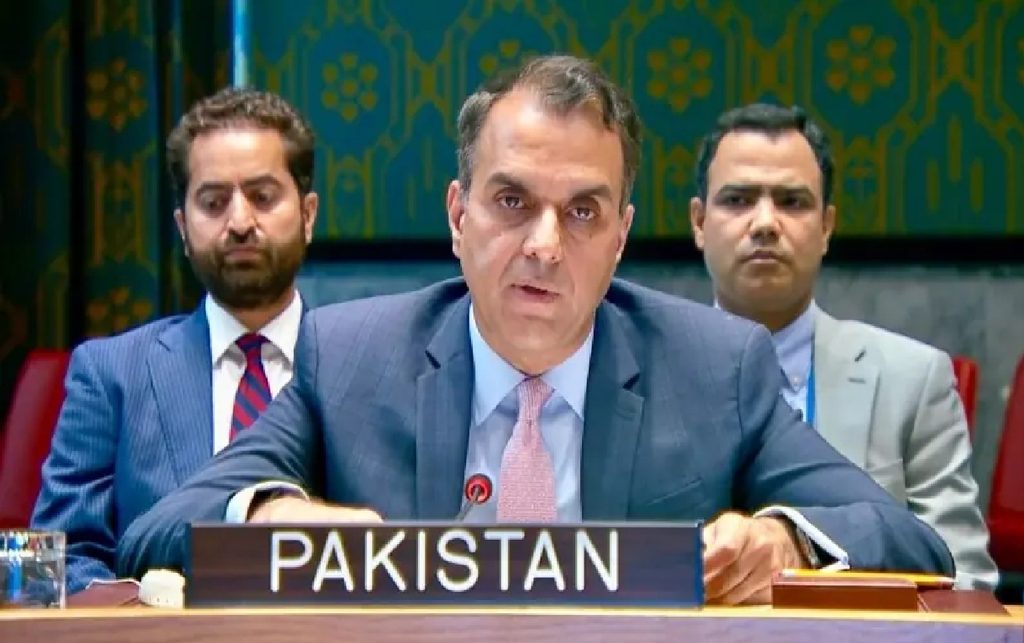
“The death penalty is an inhumane and degrading form of punishment without any deterring effect. This is why we oppose the death penalty, whatever the circumstances around the world. We urge the Israeli decision makers in Knesset and Government to abandon these plans.”
4.5 Ireland’s Condemnation
Irish Foreign Minister Helen McEntee issued a strong statement:
“Ireland condemns the law passed by the Israeli parliament to expand the scope of the death penalty and revive its implementation in Israel and the occupied Palestinian territory. The right to life is a fundamental human right, and Ireland is consistently and strongly opposed to the use of the death penalty in all cases and in all circumstances. I am particularly concerned about the de facto discriminatory nature of the Bill as it relates to Palestinians.”
4.6 Netherlands
Dutch Foreign Minister Tom Berendsen stated that the Netherlands joins the four countries in expressing “deep concern,” adding: “NL is principally against the death penalty and urges Israel’s government and Parliament to reconsider this bill”.
5. Palestinian Response: “War Crime” And “Legalised Genocide”
5.1 Palestinian Authority
The Palestinian Authority issued an official statement declaring the law “a flagrant violation of international humanitarian law, particularly the Fourth Geneva Convention, which guarantees protection for individuals and fair trial rights”. The statement continued:
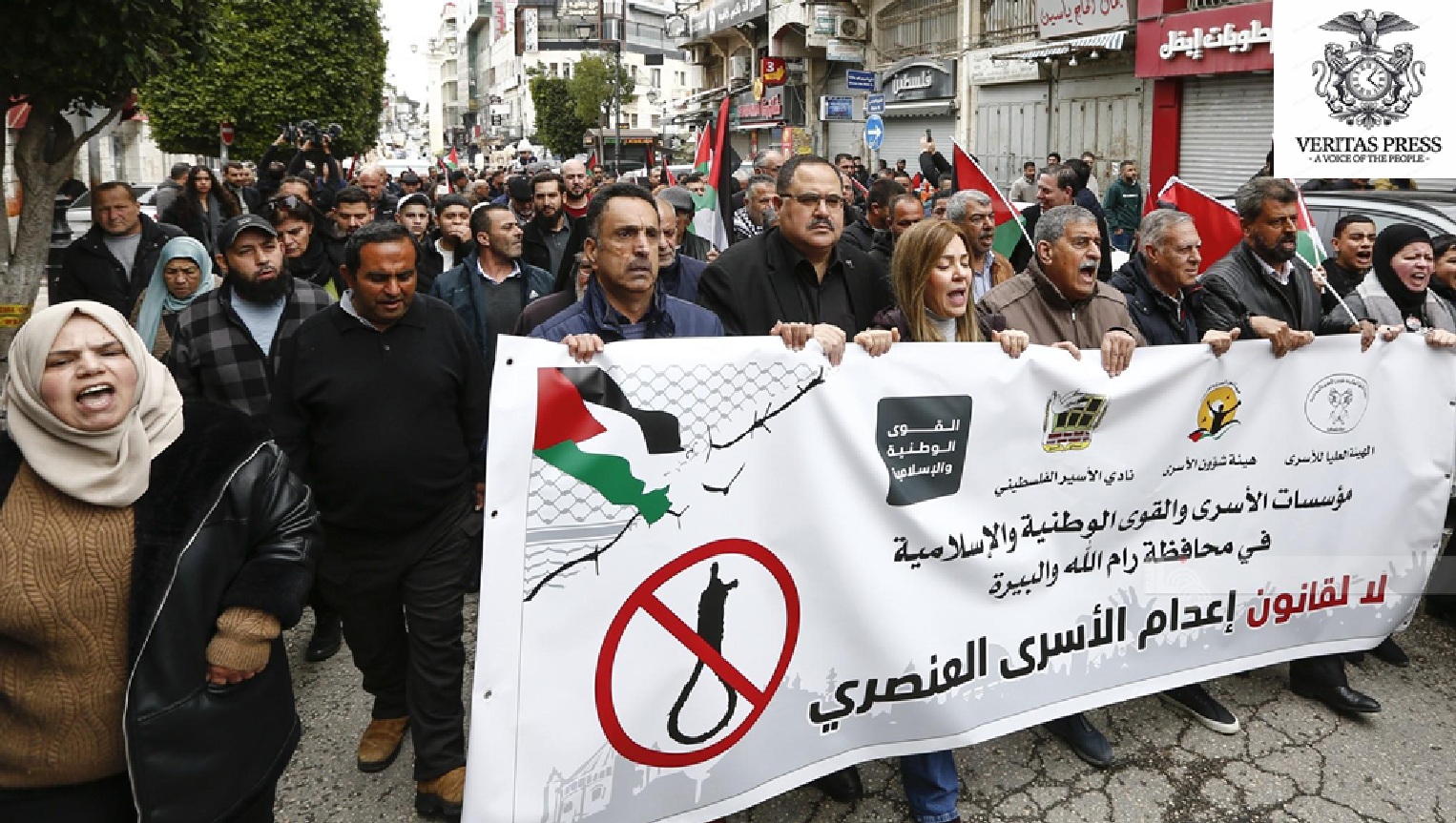
“This law constitutes a war crime against the Palestinian people and is part of the escalating policies and measures pursued by the occupying authorities throughout the Palestinian territory, including Gaza, the West Bank, and East Jerusalem.”
5.2 Palestinian Foreign Ministry
The Palestinian Foreign Ministry denounced the law as a “dangerous shift toward legalising genocide, and adopting extrajudicial executions,” stating it puts Israel “in direct confrontation with international law” and calling on the international community “to sanction Israel, isolate its institutions, activate accountability mechanisms, and work to protect Palestinian prisoners”.
5.3 Fatah And Hamas
The Fatah movement stated that approval of the law amounts to “legalising policies of killing” and violates the Fourth Geneva Convention and international treaties, describing the legislation as institutionalising “what Palestinian prisoners face in Israeli prisons, including killings, medical neglect and torture”.
Hamas called on the international community and human rights organisations to take urgent action, describing the law as reflecting “the bloody nature of the occupation and its approach based on killing and terrorism”.
5.4 Palestinian National Initiative
The Palestinian National Initiative called for sanctions and boycotts against Israel, stating that “statements of condemnation alone would not deter Israel”.
6. The Human Context: Palestinian Prisoners In Israeli Detention
6.1 Current Prisoner Population
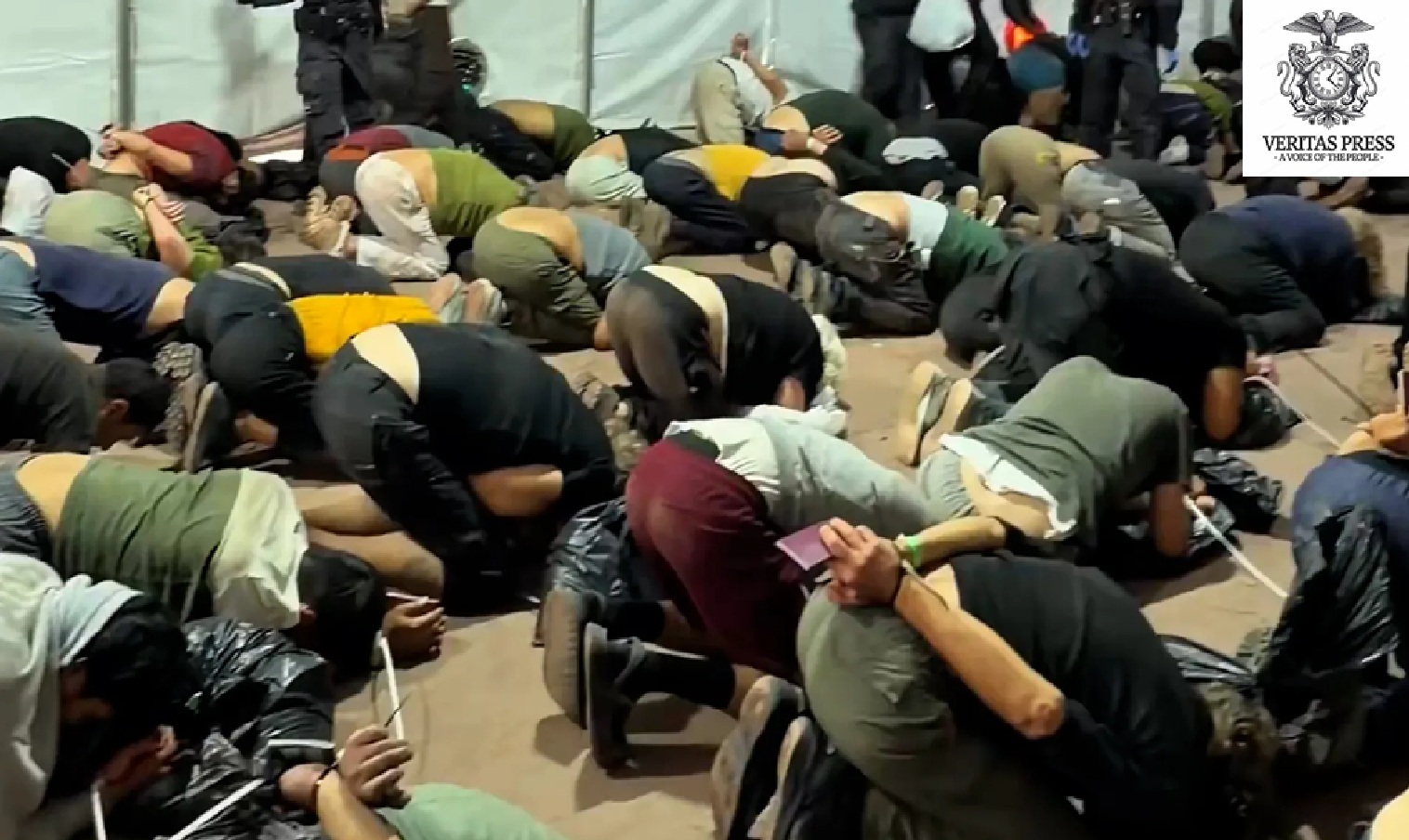
Data from prisoners’ rights organisations and the Israeli Prison Service show that more than 10,000 Palestinians, including 350 children and 66 women, are currently imprisoned in Israeli jails.
6.2 Conditions And Mortality
According to Palestinian and Israeli human rights organisations, prisoners suffer from torture, starvation, and medical neglect, which have led to dozens of deaths. According to the Israeli human rights NGO HaMoked, at least 94 Palestinians, security detainees and prisoners died in Israeli prisons or military detention facilities from the start of the war until August 2025.
6.3 Escalation Since October 2023
Since October 2023, Israel has escalated measures against Palestinian prisoners, coinciding with its military campaign in Gaza that has resulted in more than 72,000 deaths and 172,000 injuries according to the data cited by the Council of Europe.
7. Legal Challenges And Potential Paths Forward
7.1 Immediate Legal Challenges
Within minutes of the law’s passage, the Association for Civil Rights in Israel filed a petition with the Supreme Court. Adalah has also announced it will file a petition. These challenges will likely focus on:
The Knesset’s lack of authority to legislate for the occupied territory
Violations of Israel’s Basic Law: Human Dignity and Liberty
Discriminatory application violates the principle of equality
7.2 Supreme Court Review
The law could be revised or struck down by the Israeli Supreme Court. Knesset legal advisor Ido Ben-Itzhak had previously criticised the bill, arguing that it “does not provide for the pardon of a person sentenced to death, which contradicts international conventions and could lead to complications”.
7.3 Separate October 7 Legislation
The death penalty law does not apply retroactively to alleged perpetrators of the October 7, 2023, attacks. However, a separate bill, the “Tribunals Law (Prosecution of Participants in the October 7 Massacre Events Bill)”, would establish a special military tribunal to impose capital punishment on individuals indicted for participation in those attacks.
8. Deeper Investigative Critique: Beyond The Headlines
8.1 The Erosion Of Israel’s Historical Position
Israel has maintained a de facto moratorium on executions since the hanging of Nazi war criminal Adolf Eichmann in 1962. The country abolished the death penalty for ordinary crimes in 1954. This law represents not merely a policy shift but a fundamental repudiation of the legal restraint that previous Israeli governments, including those led by Netanyahu, had maintained.
The Council of Europe’s statement that the law marks “a further distancing of Israel from the framework of values with which it has historically chosen to associate itself” carries particular weight, given Israel’s long-standing observer status with PACE and participation in multiple Council of Europe conventions.
8.2 The Illusion of Deterrence
Proponents of the death penalty often invoke deterrence as justification. However, as the nine Israeli human rights organisations noted in their joint statement: “Global experience shows that the death penalty does not deter”. The Palestinian territories have seen decades of conflict; there is no empirical evidence that capital punishment reduces attacks. What the law does provide is a mechanism for retribution that legalises state killing outside the framework of due process.
8.3 The Annexation Dimension
The very fact that the Knesset is legislating for Palestinians in the West Bank is itself a legal violation under international law. As Adalah’s Suhad Bishara noted, “An occupying power cannot generally apply its domestic laws to occupied territories”. The law thus represents not only a death penalty expansion but a de facto annexation measure, extending Israeli domestic law to a population over which Israel has no sovereign authority under international law.
8.4 The Role Of Confessions In Military Courts
The 96% conviction rate in military courts, based largely on confessions, takes on new significance under this law. Human rights organisations have extensively documented the use of torture and duress in Israeli interrogations of Palestinian detainees. When confessions extracted under such conditions can lead to mandatory death sentences, the risk of executing innocent people becomes not theoretical but imminent.
Conclusion: A Reckoning With Consequences
The passage of Israel’s death penalty law on March 30, 2026, marks a watershed moment. It represents:
A legal breach: Violation of international humanitarian law, the Fourth Geneva Convention, and Israel’s own Basic Law principles
A discriminatory turn: Explicit enshrinement of a two-tiered justice system based on ethnicity
An institutional rupture: Serious jeopardy to Israel’s observer status with the Parliamentary Assembly of the Council of Europe
A moral descent: What Israeli human rights organisations call the “moral abyss” of state-sanctioned vengeance
The coming months will determine whether Israel’s Supreme Court intervenes to strike down this legislation, whether the international community moves beyond statements to concrete sanctions, and whether the death penalty, already a relic in most democratic nations, will be implemented in practice for the first time in over six decades.
What is already clear is that the law’s architects have achieved their immediate political objective: a piece of legislation that visibly demonstrates the far-right’s ability to reshape Israeli law according to its ideological vision. Whether the long-term costs to Israel’s international standing, its legal integrity, and the lives of Palestinian prisoners will prove too high remains to be seen.
As B’Tselem Executive Director Yuli Novak warned before the law’s passage: “Israel is reaching a new low in the dehumanisation of Palestinians, enshrining their cruel treatment in state law”. The law is now on the books. The question is whether it will ever be enforced—and at what cost to all involved.
Key Quotes Summary:
Source
Quote
Alain Berset, Council of Europe SG
“The death penalty is a legal anachronism incompatible with contemporary human-rights standards.”
Petra Bayr, PACE President
“This vote seriously jeopardises Israel’s observer status with the Parliamentary Assembly.”
Adam Coogle, Human Rights Watch
“This bill aims to kill Palestinian detainees faster and with less scrutiny.”
Suhad Bishara, Adalah
“This law legitimises premeditated, cold-blooded murder… based on ethnic discrimination.”
Helen McEntee, Irish FM
“I am particularly concerned about the de facto discriminatory nature of the Bill as it relates to Palestinians.”
Itamar Ben-Gvir, Israeli Minister
“From today, every terrorist will know… whoever takes a life, the State of Israel will take their life.”
European Commission
“This is a clear step backwards… a clear negative trend in terms of Israel’s obligations on human rights.”
Source: Multiple News Agencies
Submissions:
For The Secure Submission Of Documentation, Testimonies, Or Exclusive Investigative Reports From Any Global Location, Please Utilise The Following Contact Details For Our Investigations Desk: enquiries@veritaspress.co.uk or editor@veritaspress.co.uk
Help Support Our Work:
Popular Information is powered by readers who believe that truth still matters. When just a few more people step up to support this work, it means more lies exposed, more corruption uncovered, and more accountability where it’s long overdue.
Help Protect Independent Journalism, Which Is Currently Under Attack.
If you believe journalism should serve the public, not the powerful, and you’re in a position to help, becoming a DONATOR or a PAID SUBSCRIBER truly makes a difference.
DONATION APPEAL: If You Found This Reporting Valuable, Please Consider Supporting Independent Journalism.
Help Support Our Work – We Know, We Know, We Know …
Seeing these messages is annoying. We know that. (Imagine what it’s like writing them … )
Your support fuels our fearless, truth-driven journalism. In unity, we endeavour to amplify marginalised voices and champion justice, irrespective of geographical location.
But it’s also extremely important. One of Veritas Press’s greatest assets is its reader-funded model.
1. Reader funding means we can cover what we like. We’re not beholden to the political whims of a billionaire owner. We are a small, independent and impartial organisation. No one can tell us what not to say or what not to report.
2. Reader funding means we don’t have to chase clicks and traffic. We’re not desperately seeking your attention for its own sake: we pursue the stories that our editorial team deems important and believe are worthy of your time.
3. Reader Funding: enables us to keep our website and other social media channels open, allowing as many people as possible to access quality journalism from around the world, particularly those in places where the free press is under threat.
We know not everyone can afford to pay for news, but if you’ve been meaning to support us, now’s the time.
Your donation goes a long way. It helps us:
Keep the lights on and sustain our day-to-day operations
Hire new, talented independent reporters
Launch real-time live debates, community-focused shows, and on-the-ground reporting
Cover the issues that matter most to our communities, in real time, with depth and integrity
We have plans to expand our work, but we can’t do it without your support. Every contribution, no matter the size, helps us stay independent and build a truly people-powered media platform.
If you believe in journalism that informs, empowers, and reflects the communities we serve, please donate today.
Kamran Faqir is a volunteer investigative journalist and writer committed to exposing hidden truths and amplifying underreported stories. Driven by social justice, he brings sharp insight and fearless truth-telling to independent journalism. NUJ registered.
SEATTLE, TEHRAN — The U.S. Department of Homeland Security (DHS) will allow Iran’s national football team to enter the country 48 hours before their critical World Cup match against Egypt on Friday, a modest concession in a tournament where Team Melli’s travel conditions have sparked claims of oppression and competitive disadvantage.