Kamran Faqir is a volunteer investigative journalist and writer committed to exposing hidden truths and amplifying underreported stories. Driven by social justice, he brings sharp insight and fearless truth-telling to independent journalism. NUJ registered.
Original Article Date Published:
Article Date Modified:
9 minutes
Views:389
Listen to this article
Help support our mission, donate today and be the change. Every contribution goes directly toward driving real impact for the cause we believe in.
TEHRAN, TEL-AVIV – A new wave of Iranian ballistic missiles struck the occupied Palestinian territories early Tuesday, triggering explosions across Jerusalem and reportedly landing near the office of Israeli Prime Minister Benjamin Netanyahu, in what analysts describe as one of the most dramatic escalations in the ongoing Iran–Israel war.
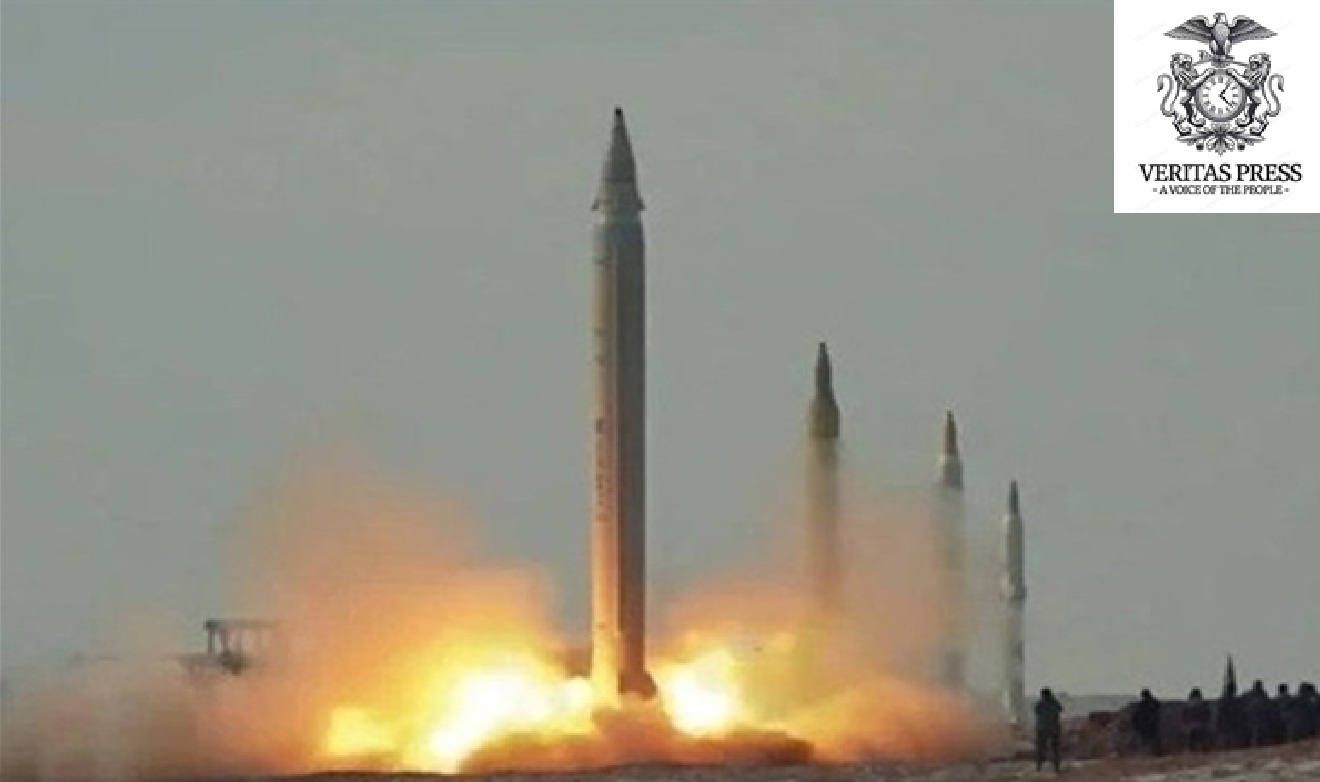
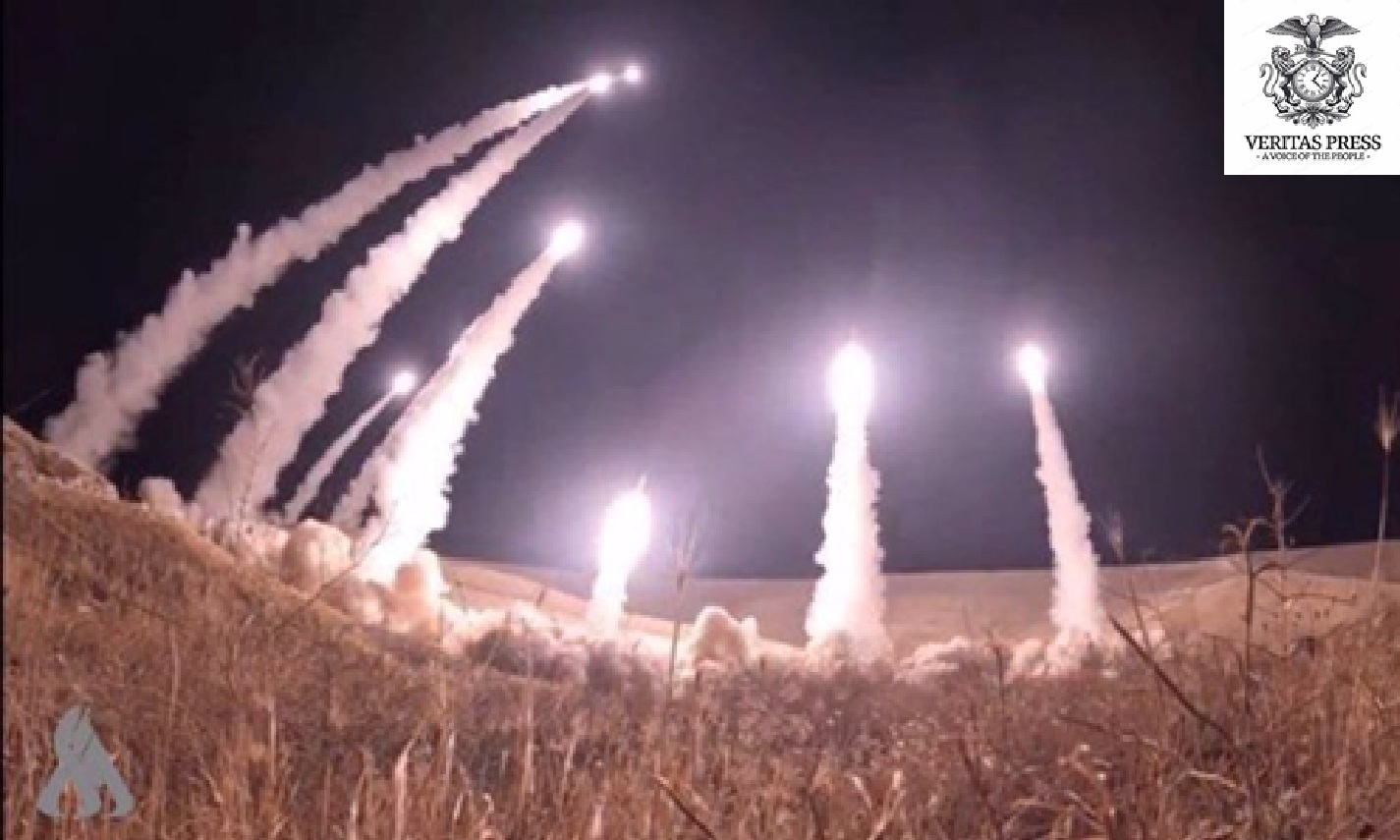
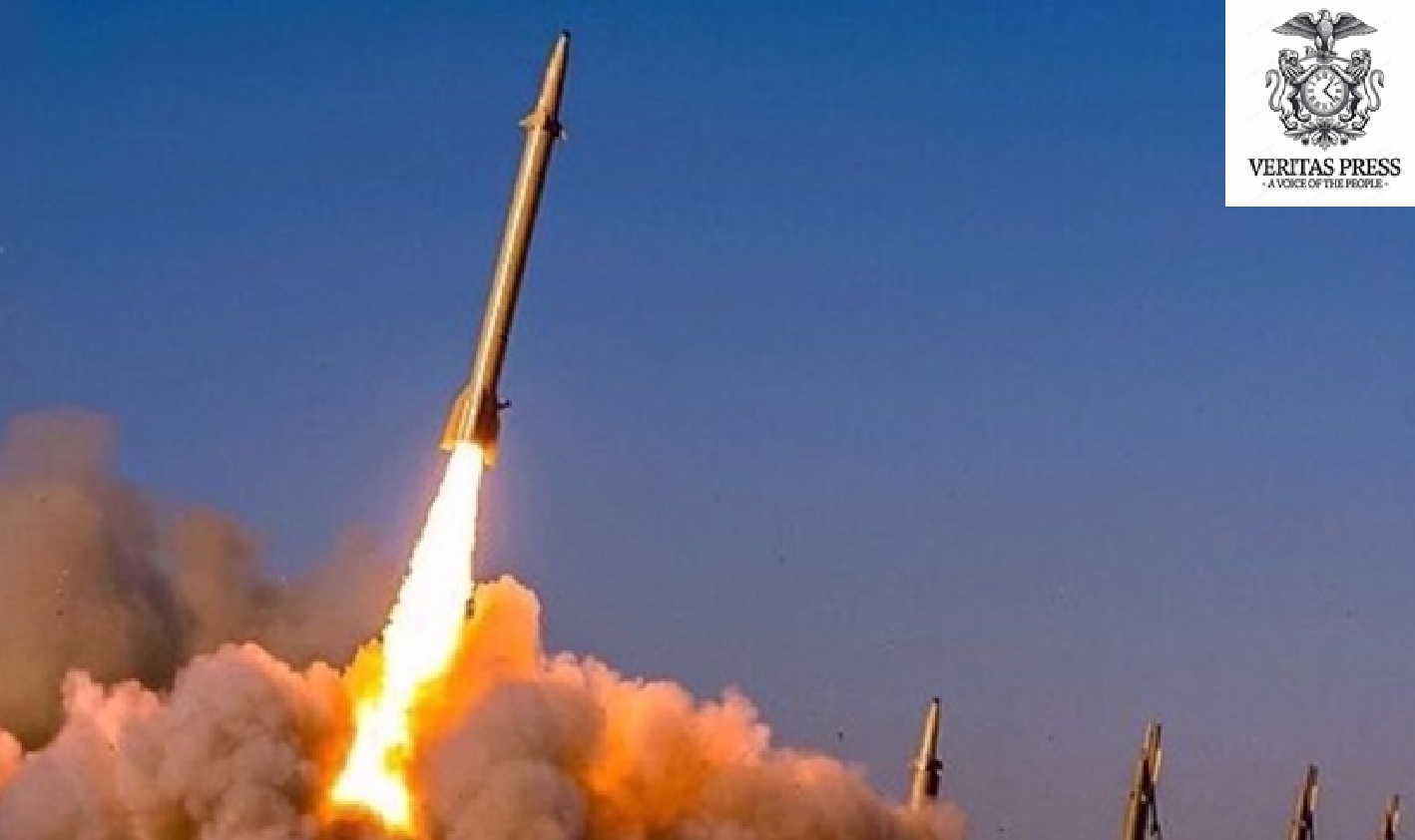
The barrage, part of Tehran’s expanding retaliatory campaign known as Operation True Promise 4, sent shockwaves across the region as missiles streaked through the skies above Jerusalem, Tel Aviv, and the occupied West Bank.
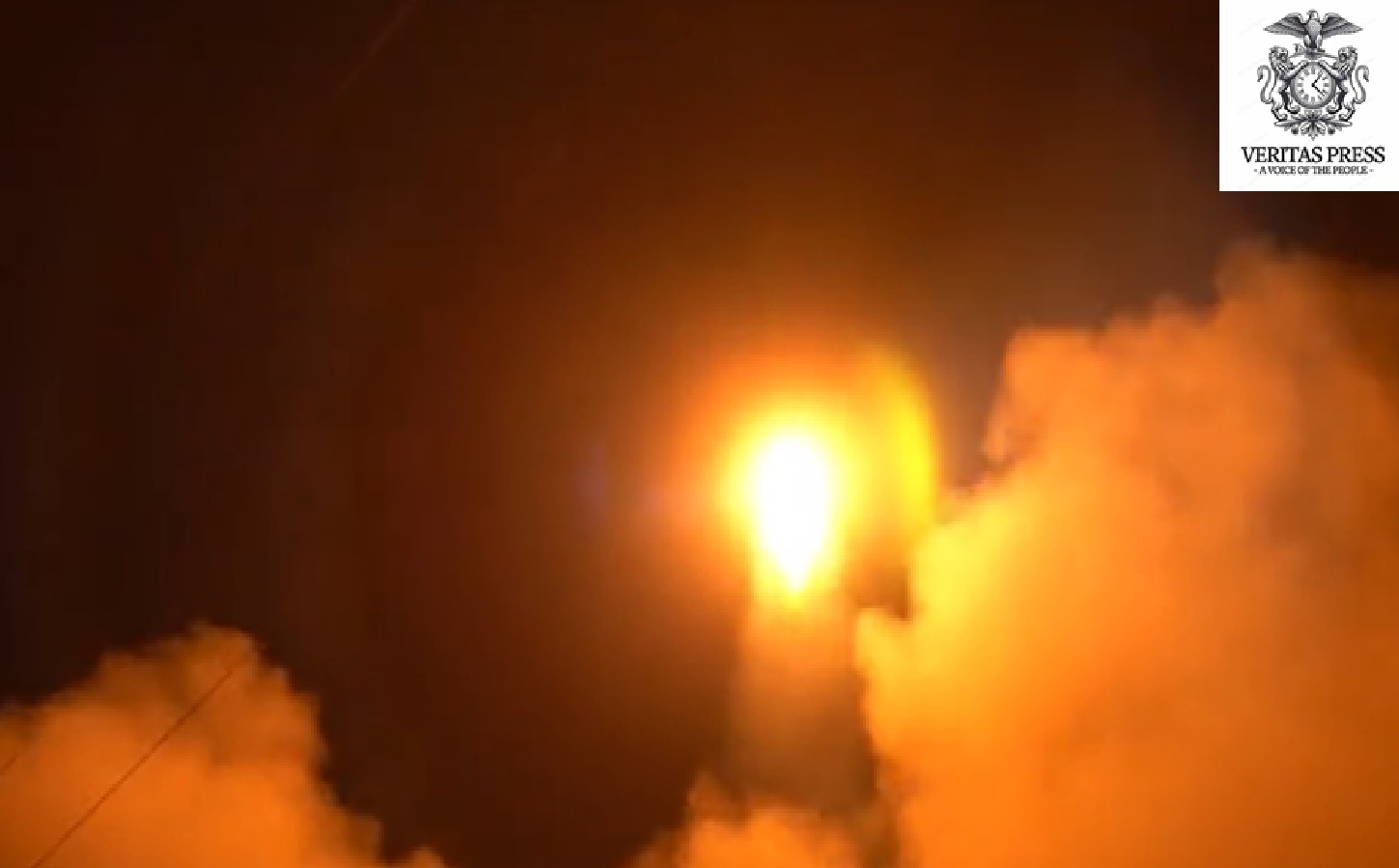
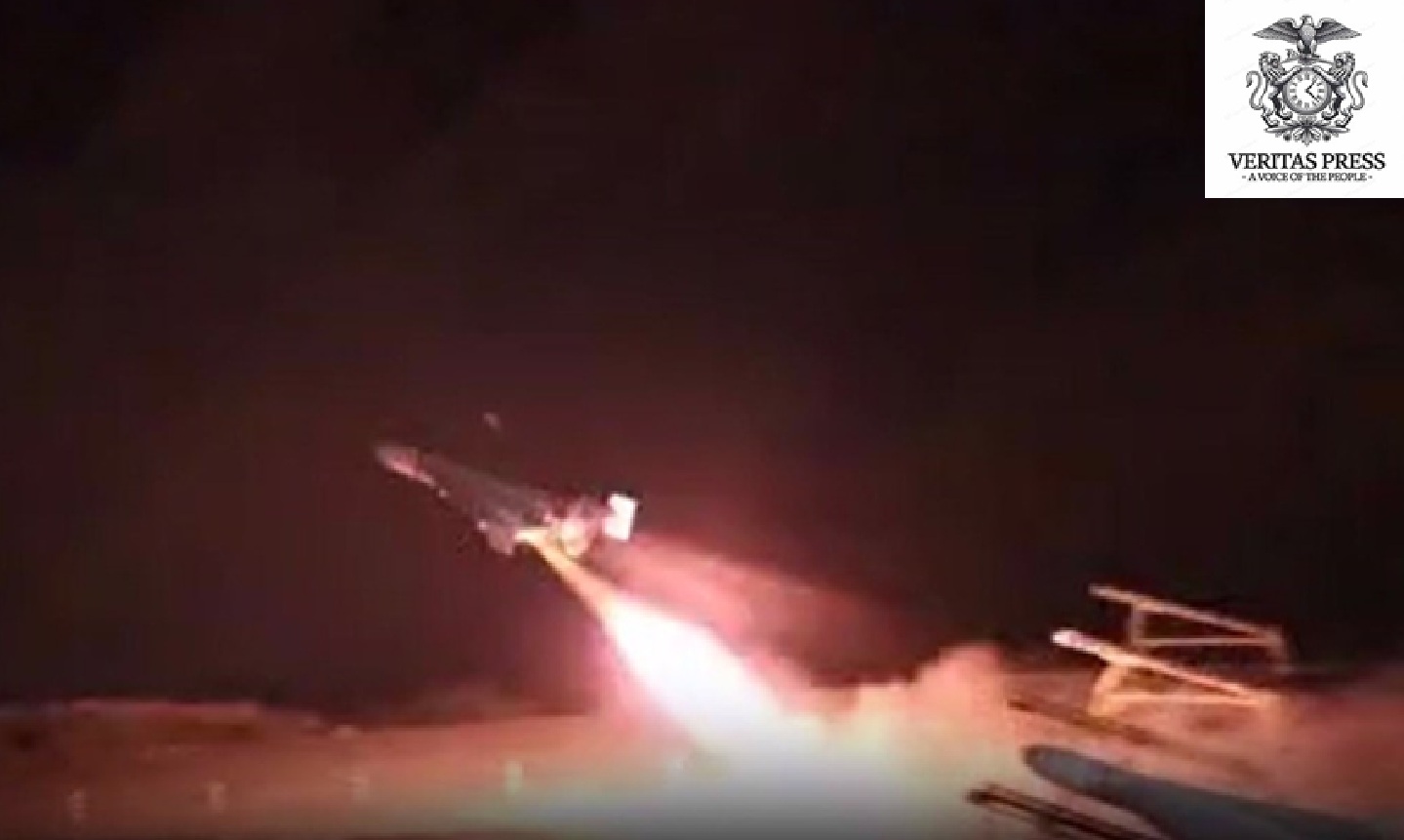
Footage circulating on social media showed multiple projectiles cutting across the night sky before powerful detonations rattled neighbourhoods across Jerusalem. Residents reported hearing explosions even before air-raid sirens sounded, raising concerns about possible gaps in Israel’s early-warning systems.
Israeli authorities later confirmed that missile fragments and interceptor debris fell in several areas of Jerusalem, including parts of the Old City and nearby residential districts.
Some regional media outlets reported that debris landed within meters of the prime minister’s office, though Israeli officials have not confirmed a direct strike on the government compound.
Iranian Military Announces New Wave Of Retaliatory Strikes:
Iran’s elite military force, the Islamic Revolutionary Guard Corps (IRGC), said the attack was the 57th wave of missile strikes carried out during Operation True Promise 4.
According to an IRGC statement carried by Iranian state media, the latest barrage targeted Israeli command centres, missile defence infrastructure, and military logistics facilities.
The Iranian military said the operation used a mix of advanced weaponry, including:
Fattah hypersonic missiles
Qadr and Emad long-range ballistic missiles
Fateh and Dezful precision missiles
Armed suicide drones
Iranian officials claim the missiles struck “strategic command and control infrastructure in the heart of the occupied territories.”
“The operations will continue until the aggressors are punished,” an IRGC spokesperson said. “The Zionist regime and its American sponsor must understand that aggression will not go unanswered.”
Iranian officials also said parallel strikes targeted US military installations across the Gulf region, including bases used by American forces.
Israeli Missile Defences Face Growing Strain:
Israel relies on one of the world’s most sophisticated multi-layered air-defence networks, including Iron Dome, David’s Sling, and Arrow interceptor systems, designed to protect the country from rockets and ballistic missiles.
Israeli military officials said many incoming projectiles were intercepted, but acknowledged that some missiles or debris fell inside populated areas.
Security analysts say the scale of Iran’s missile barrages could be testing the limits of Israel’s defensive capabilities.
“When dozens or even hundreds of missiles are fired simultaneously, interception systems can become saturated,” said a defence analyst at a European security think tank.
“The system may still intercept most threats, but even a small number of successful penetrations can cause major disruption.”
Local residents in Jerusalem described chaotic scenes as explosions echoed across the city.
“The sky flashed several times, and then there were huge blasts,” said Ahmad al-Masri, a taxi driver in East Jerusalem.
“People ran into the streets looking for shelters. For a few minutes, nobody understood what had happened.”
Emergency services reported damage to buildings and vehicles caused by falling debris.
Trigger: Assassination Of Iran’s Leadership.
Iran says the missile campaign is retaliation for what it calls a large-scale US-Israeli war launched on February 28.
The crisis erupted after the assassination of Iran’s Supreme Leader Ali Khamenei, along with several senior commanders, in an attack Tehran attributes to Israeli and American intelligence services.
The killings triggered massive demonstrations across Iran and prompted the government to declare what it described as a defensive war against the United States and Israel.
Iranian officials say the assassination was followed by extensive aerial strikes on Iranian military and civilian infrastructure, which Tehran claims killed hundreds of people.
“These attacks were acts of aggression against a sovereign nation,” Iranian Foreign Ministry spokesperson Nasser Kanaani said in a recent statement.
“Iran has the legitimate right to respond under international law.”
Washington and Tel Aviv have not publicly confirmed responsibility for the assassination.
Expanding War Across The Middle East:
What began as a confrontation between Iran and Israel is rapidly transforming into a broader regional war.
Iranian missiles and drones have reportedly targeted several US military facilities across the Middle East, including:
Al Dhafra Air Base in the United Arab Emirates
Jufair Naval Base in Bahrain
Sheikh Isa Air Base in Bahrain
US installations in Iraq and Syria
US officials say additional air-defence systems and naval assets have been deployed to protect American troops and regional allies.
A senior Pentagon official warned that continued attacks on US forces could trigger direct retaliation.
“We will defend our personnel and our partners,” the official said during a briefing in Washington.
Military analysts say the growing confrontation risks pulling Gulf states, Lebanese armed group Hezbollah, and other regional actors into the conflict.
Political Crisis Inside Israel:
The latest missile barrage comes as Netanyahu faces mounting domestic pressure over the government’s handling of the war.
Critics within Israel accuse the government of dragging the country into a dangerous regional conflict without a clear strategy for ending it.
Opposition leader Yair Lapid warned that the situation could spiral out of control.
“Israel must defend itself, but the government must also explain how this war ends,” Lapid said in remarks reported by Israeli media.
Anti-government protests have also intensified in Tel Aviv and Jerusalem, where demonstrators accuse Netanyahu of prioritising political survival over national security.
Some Israeli analysts say the conflict has exposed deeper strategic dilemmas.
“For decades, Israel fought Iran indirectly through proxy wars,” said one Israeli security analyst.
“Now we are witnessing direct missile warfare between two regional powers. That is a completely different level of conflict.”
Palestinians Caught In The Middle:
In the occupied West Bank and East Jerusalem, Palestinians say they are caught between Israeli military operations and the expanding regional conflict.
Residents reported seeing missile interceptors streak across the sky while Israeli forces simultaneously maintained raids and security operations across Palestinian towns.
“We hear the explosions above us and then the drones and military vehicles on the ground,” said Lina Darwish, a resident of Ramallah, interviewed by regional journalists.
“For Palestinians, the war never really stops. It just changes shape.”
Human rights organisations warn that the widening war risks worsening the humanitarian crisis already unfolding across Gaza and the West Bank.
A spokesperson for Amnesty International said the escalation could endanger millions of civilians.
“All parties must respect international humanitarian law and avoid attacks that could harm civilians or civilian infrastructure,” the organisation said in a statement.
Information War And Competing Narratives:
As the conflict intensifies, competing claims about the effectiveness of Iranian strikes and Israeli defences have become part of a broader information battle.
Iranian media outlets reported that several missiles successfully hit strategic targets inside Israel.
Israeli officials, however, maintain that the country’s air-defence systems intercepted the majority of incoming threats and prevented major damage to government buildings.
Analysts say such conflicting narratives are typical during wartime.
“This is not just a military confrontation but a psychological and information war,” said a Middle East analyst at a London-based policy institute.
“Both sides are trying to shape public perception of who is winning and who is vulnerable.”
Region On The Brink:
The latest missile strike near Netanyahu’s office underscores how the long-running shadow war between Israel and Iran has evolved into direct interstate conflict.
For years, the two adversaries fought through proxies across Syria, Lebanon, Iraq and Gaza.
Now ballistic missiles are flying directly between the region’s most powerful military actors.
Diplomats warn that the situation could spiral into a full-scale regional war involving multiple states.
“The Middle East is entering one of the most dangerous periods in decades,” said a European diplomat involved in emergency consultations.
“With each new strike, the risk of an uncontrollable escalation increases.”
For civilians across the region, from Tel Aviv to Tehran and from Jerusalem to Gaza, the prospect of a prolonged and devastating conflict is becoming an increasingly real possibility.
Source: Multiple News Agencies
Submissions:
For The Secure Submission Of Documentation, Testimonies, Or Exclusive Investigative Reports From Any Global Location, Please Utilise The Following Contact Details For Our Investigations Desk: enquiries@veritaspress.co.uk or editor@veritaspress.co.uk
Help Support Our Work:
Popular Information is powered by readers who believe that truth still matters. When just a few more people step up to support this work, it means more lies exposed, more corruption uncovered, and more accountability where it’s long overdue.
Help Protect Independent Journalism, Which Is Currently Under Attack.
If you believe journalism should serve the public, not the powerful, and you’re in a position to help, becoming a DONATOR or a PAID SUBSCRIBER truly makes a difference.
DONATION APPEAL: If You Found This Reporting Valuable, Please Consider Supporting Independent Journalism.
Help Support Our Work – We Know, We Know, We Know …
Seeing these messages is annoying. We know that. (Imagine what it’s like writing them … )
Your support fuels our fearless, truth-driven journalism. In unity, we endeavour to amplify marginalised voices and champion justice, irrespective of geographical location.
But it’s also extremely important. One of Veritas Press’s greatest assets is its reader-funded model.
1. Reader funding means we can cover what we like. We’re not beholden to the political whims of a billionaire owner. We are a small, independent and impartial organisation. No one can tell us what not to say or what not to report.
2. Reader funding means we don’t have to chase clicks and traffic. We’re not desperately seeking your attention for its own sake: we pursue the stories that our editorial team deems important and believe are worthy of your time.
3. Reader Funding: enables us to keep our website and other social media channels open, allowing as many people as possible to access quality journalism from around the world, particularly those in places where the free press is under threat.
We know not everyone can afford to pay for news, but if you’ve been meaning to support us, now’s the time.
Your donation goes a long way. It helps us:
Keep the lights on and sustain our day-to-day operations
Hire new, talented independent reporters
Launch real-time live debates, community-focused shows, and on-the-ground reporting
Cover the issues that matter most to our communities, in real time, with depth and integrity
We have plans to expand our work, but we can’t do it without your support. Every contribution, no matter the size, helps us stay independent and build a truly people-powered media platform.
If you believe in journalism that informs, empowers, and reflects the communities we serve, please donate today.
Kamran Faqir is a volunteer investigative journalist and writer committed to exposing hidden truths and amplifying underreported stories. Driven by social justice, he brings sharp insight and fearless truth-telling to independent journalism. NUJ registered.
SEATTLE, TEHRAN — The U.S. Department of Homeland Security (DHS) will allow Iran’s national football team to enter the country 48 hours before their critical World Cup match against Egypt on Friday, a modest concession in a tournament where Team Melli’s travel conditions have sparked claims of oppression and competitive disadvantage.