Kamran Faqir is a volunteer investigative journalist and writer committed to exposing hidden truths and amplifying underreported stories. Driven by social justice, he brings sharp insight and fearless truth-telling to independent journalism. NUJ registered.
Original Article Date Published:
Article Date Modified:
12 minutes
Views:395
Listen to this article
Help support our mission, donate today and be the change. Every contribution goes directly toward driving real impact for the cause we believe in.
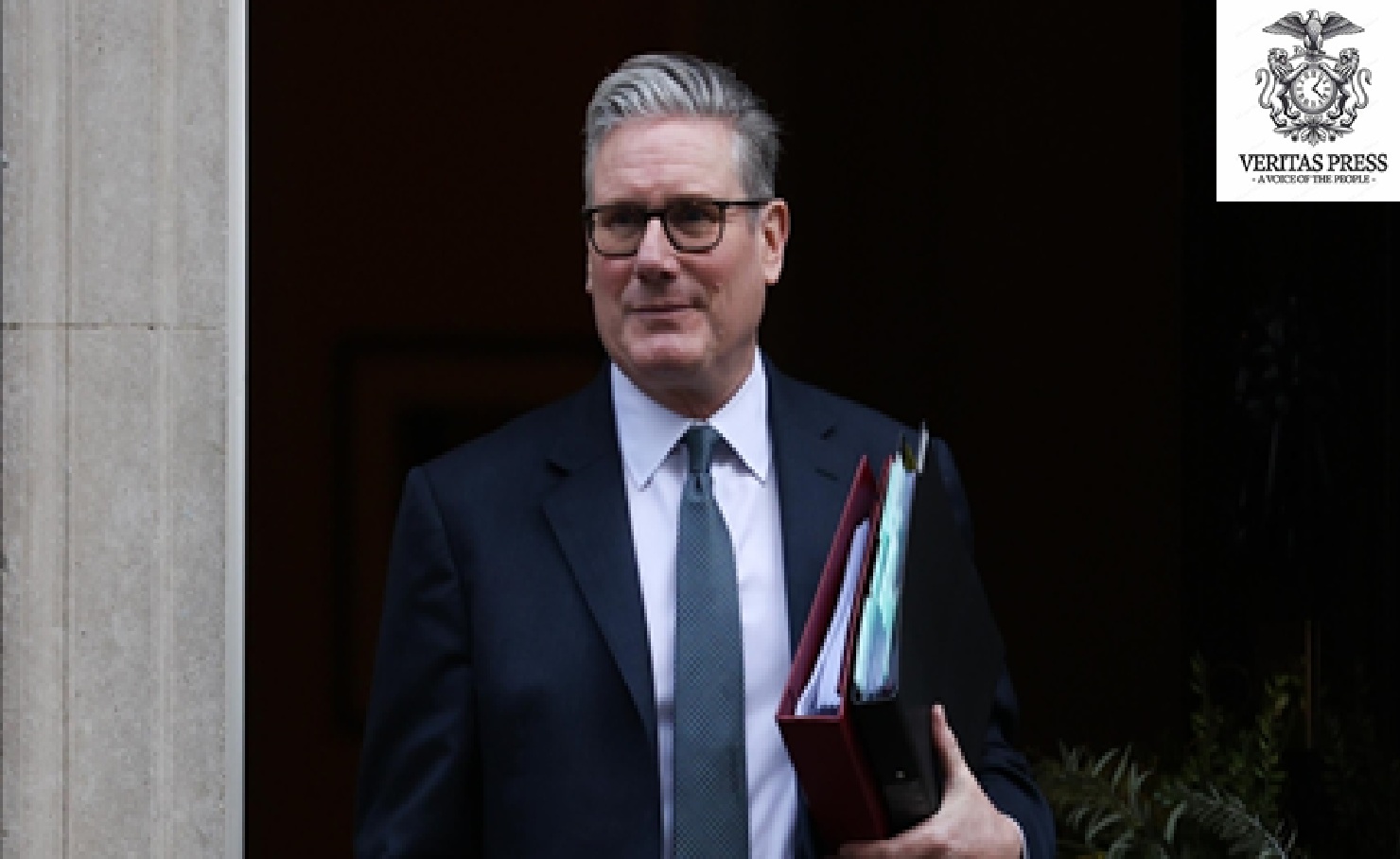
LONDON, UK – Britain’s rapidly expanding military posture in the Middle East has revived uncomfortable historical parallels and intensified scrutiny of Prime Minister Keir Starmer’s claim that the United Kingdom is merely acting defensively in the escalating confrontation between Israel, the United States and Iran.
While the government insists it will not participate in offensive operations against Tehran, analysts, activists and regional observers say the reality of Britain’s military footprint tells a more complicated story, one that echoes the country’s long history of indirect participation in Western military campaigns across the Middle East.
Britain Quietly Expands Its Military Footprint.
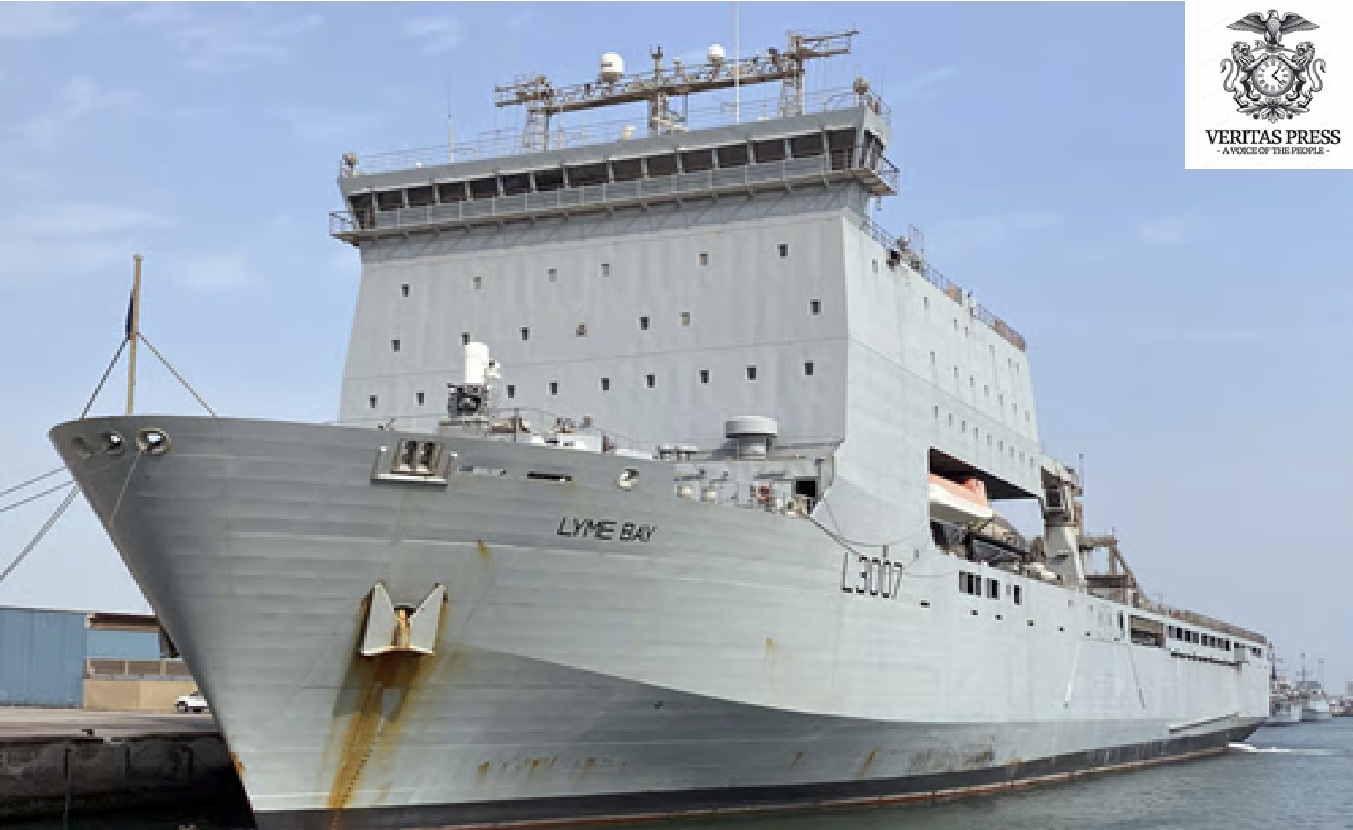
In recent days, British defence officials confirmed that the amphibious landing ship RFA Lyme Bay is being brought to heightened readiness for a potential deployment to the eastern Mediterranean.
The vessel, equipped with aviation facilities and medical capabilities, could be used to support evacuation operations or maritime security missions should the regional conflict escalate further.
A Ministry of Defence spokesperson described the move as precautionary planning.
“As part of prudent planning, we have taken the decision to bring RFA Lyme Bay to heightened readiness as a precaution, should she be needed to assist in maritime tasks in the eastern Mediterranean.”
At the same time, the Royal Navy destroyer HMS Dragon is preparing to sail toward Cyprus to reinforce regional air-defence operations.
Defence Secretary John Healey confirmed the warship would leave Portsmouth “in the next couple of days” to help protect British installations and allied assets near Cyprus, where Britain maintains the strategic air base RAF Akrotiri.
The destroyer’s advanced Sea Viper missile system is designed to intercept drones, cruise missiles and aircraft, capabilities that British officials say are needed after Iranian retaliation triggered waves of drone and missile activity across the region.
RAF Operations Already Underway:
Although the government maintains that Britain is not participating in offensive operations against Iran, the Royal Air Force has already been conducting defensive missions across the Middle East.
According to Healey, British aircraft have intercepted multiple drones during recent operations.
“Our F-35s destroyed Iranian drones over Jordan, our Typhoons shot down targets heading to Qatar, and counter-drone units defeated further attacks against coalition bases in Iraq,” he told Parliament.
British pilots have logged more than 230 operational flying hours since the escalation began.
These flights are operating from British and allied bases across the region, including Cyprus and Qatar.
Meanwhile, American strategic bombers have landed at RAF Fairford, highlighting the extent to which British territory continues to function as a logistical hub for U.S. military operations.
Starmer’s Carefully Crafted Position:
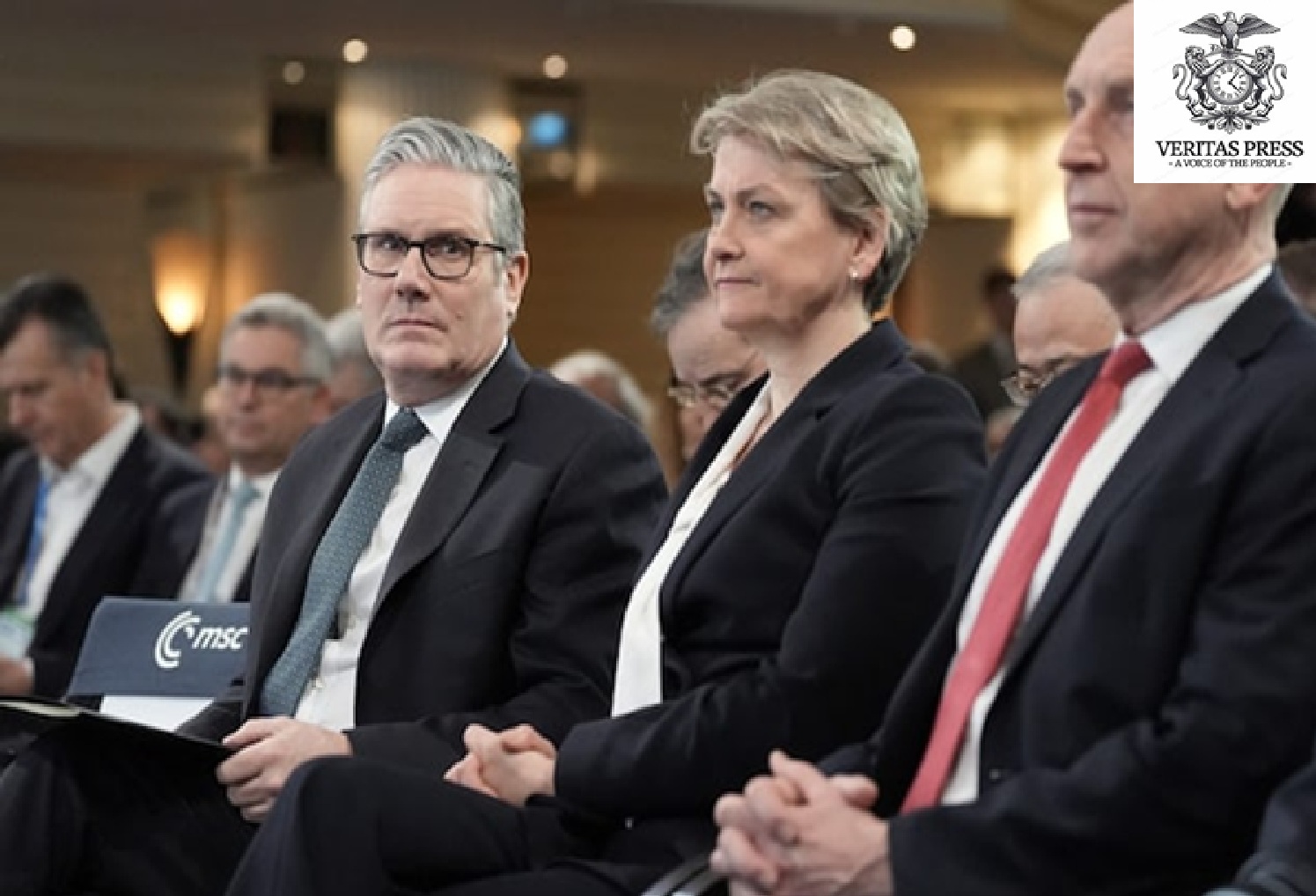
Facing rising domestic and international scrutiny, Starmer has attempted to craft a position that appears careful, responsible and restrained.
The prime minister insists Britain will not participate in offensive strikes against Iran.
“We were not involved in the initial strikes on Iran, and we will not join offensive action now,” he told Parliament.
Instead, Starmer argues that Britain’s role is limited to protecting its forces, supporting allies in collective self-defence and safeguarding British nationals in the region.
He has also framed the government’s stance in legal terms.
“This government does not believe in regime change from the skies. I will not commit our military personnel to unlawful action,” Starmer said.
But as the conflict unfolds, that position is proving increasingly difficult to sustain.
The Reality Of “Enabling Operations”:
In practice, Britain has already been drawn into the operational ecosystem surrounding the war.
American forces are using British infrastructure. Aircraft are flying from British territory. Intelligence systems are integrated with U.S. command structures, and additional fighter jets have been deployed to reinforce the region around RAF Akrotiri.
In the language of diplomacy, these steps are described as defensive measures.
In the language of military planning, they are known as enabling operations.
Military historians say enabling operations, providing bases, intelligence, logistics and air defence, can be just as critical to sustaining a campaign as direct combat.
Dr Andreas Krieg, a defence analyst at King’s College London, noted in previous research on coalition warfare that logistical and intelligence support often forms the backbone of modern military operations.
“Western military coalitions rely heavily on partners who provide basing, intelligence and logistical support,” he has said. “Without those elements, sustained operations become extremely difficult.”
Critics argue that this reality exposes a fundamental contradiction in the government’s messaging.
Britain may not be launching the strikes, they say, but it is helping create the conditions that allow them to occur.
RAF Akrotiri: Britain’s Middle East Launchpad.
At the centre of this debate lies RAF Akrotiri, one of Britain’s two sovereign military bases in Cyprus.
For decades, the base has served as a critical launch point for Western military operations in the Middle East.
During the Iraq War, British aircraft flew bombing missions from the base.
It later played a major role in NATO operations during the Libya intervention, as well as coalition airstrikes against ISIS in Syria and Iraq.
Today, the base once again sits at the centre of regional military planning.
Around 4,000 British personnel are permanently stationed on the island, supported by air-defence units and surveillance systems.
Recent drone activity near the base, one of which reportedly struck the runway, has underlined its vulnerability if the regional war expands.
Critics Warn Of Double Standards:
The government’s stance has also triggered accusations of political double standards.
Activists and political figures argue that Britain’s condemnation of Iranian actions rings hollow while the country provides logistical support for Israeli and U.S. military operations.
Human rights campaigners say the government is attempting to maintain legal distance from the conflict while quietly aligning with its strategic allies.
One British anti-war activist told reporters that the government’s position reflects a familiar pattern.
“This is how Britain has often operated in Middle East wars, claiming restraint while enabling military action behind the scenes.”
Scottish First Minister John Swinney also criticised the decision to allow U.S. forces to use British bases.
“This initial action gives rise to an inevitable escalation of the conflict,” Swinney said. “The decision of the UK Prime Minister to allow UK military bases to be used by the United States creates further risks and dangers.”
Echoes Of Past Middle East Wars:
For historians, the current situation echoes earlier British involvement in regional conflicts.
During the Iraq War in 2003, Britain initially framed its role as supporting international security before ultimately becoming a central participant in the invasion.
Similarly, in 2011, the British government described its intervention in Libya as a limited humanitarian mission before it evolved into a full-scale NATO air campaign.
Critics say the same dynamic could unfold again if the conflict with Iran deepens.
Professor Michael Clarke, a defence analyst and former director of the Royal United Services Institute, has previously warned that indirect involvement can quickly evolve into deeper military commitments.
“Once your military infrastructure is integrated into an operation, it becomes very difficult to remain on the sidelines.”
Economic Shockwaves Reach Britain:
The conflict is already sending shockwaves through global markets.
Oil prices surged earlier this week amid fears that shipping could be disrupted through the Strait of Hormuz, a route that carries roughly 20% of the world’s oil supply.
Chancellor Rachel Reeves warned that the crisis could drive inflation higher in the UK.
“This is a highly uncertain situation, and it is likely to put upward pressure on inflation,” she told Parliament.
The government has discussed the possibility of coordinating a release of strategic oil reserves with other G7 nations if global supply disruptions intensify.
A Fragile Balancing Act:
For Starmer, the crisis represents a delicate political balancing act.
On one side lies pressure from Washington and NATO allies to support Western military operations.
On the other hand lies public scepticism about deeper British involvement in yet another Middle East conflict.
The government’s current approach, defensive deployments, logistical support and diplomatic caution, appears designed to walk a narrow line between those pressures.
Yet as military activity across the region intensifies, that line may become increasingly difficult to maintain.
With British jets already intercepting drones, U.S. bombers operating from British bases and naval vessels preparing to deploy into contested waters, the question facing London is no longer whether Britain is involved in the conflict.
It ishow far that involvement will ultimately go.
Conclusion: The Illusion Of Restraint.
Britain’s role in the escalating Middle East crisis exposes a troubling gap between political rhetoric and operational reality. On paper, Prime Minister Keir Starmer presents a careful, defensive posture: the UK will protect its personnel, uphold international law, and avoid offensive action against Iran. In practice, however, Britain is deeply embedded in the operational ecosystem that enables U.S. and Israeli strikes. RAF jets patrol hostile airspace, bases like RAF Akrotiri and RAF Fairford host foreign bombers, and naval deployments including HMS Dragon and the rapidly prepped RFA Lyme Bay signal a readiness to project force.
This duality, Starmer’s insistence on restraint contrasted with Britain’s practical integration into a warfighting network, illustrates what defence analysts call “enabling operations”: infrastructure, intelligence, and logistics that sustain combat operations without firing a shot. It is a subtle form of participation, one that shields the government from formal accountability while materially supporting a conflict that risks regional escalation.
Critically, this raises questions about the ethical and legal implications of Britain’s approach. By providing critical assets and operational cover to U.S. and Israeli forces, the UK may be complicit in an offensive campaign it publicly disavows. Starmer’s rhetoric of restraint and international law begins to ring hollow when British jets, personnel, and bases facilitate an offensive war against Iran. Human rights campaigners, opposition politicians, and regional observers warn that this indirect participation, designed to avoid domestic political backlash, is morally and strategically dangerous.
The broader pattern is familiar. Britain’s history in Iraq, Libya, and Syria demonstrates that enabling operations often precede deeper entanglement. The question now is whether the UK will remain on the defensive or drift further into active participation in a conflict with potentially catastrophic consequences.
Ultimately, Britain’s Middle East posture exposes the fragility of political restraint in the face of alliance pressures and military realities. Starmer’s careful words cannot mask the strategic reality: the UK is no longer a bystander. Its actions, quietly enabling operations for Israel and the U.S., place it squarely within a conflict whose escalation it can neither fully control nor credibly disclaim. The danger is not only military but reputational, legal, and moral. In the shadow of Tehran’s missiles and Washington’s strategy, Britain risks becoming a party to a war it claims only to observe, an uncomfortable paradox with consequences that may reverberate far beyond the Mediterranean.
Source: Multiple News Agencies
Submissions:
For The Secure Submission Of Documentation, Testimonies, Or Exclusive Investigative Reports From Any Global Location, Please Utilise The Following Contact Details For Our Investigations Desk: enquiries@veritaspress.co.uk or editor@veritaspress.co.uk
Help Support Our Work:
Popular Information is powered by readers who believe that truth still matters. When just a few more people step up to support this work, it means more lies exposed, more corruption uncovered, and more accountability where it’s long overdue.
Help Protect Independent Journalism, Which Is Currently Under Attack.
If you believe journalism should serve the public, not the powerful, and you’re in a position to help, becoming a DONATOR or a PAID SUBSCRIBER truly makes a difference.
DONATION APPEAL: If You Found This Reporting Valuable, Please Consider Supporting Independent Journalism.
Help Support Our Work – We Know, We Know, We Know …
Seeing these messages is annoying. We know that. (Imagine what it’s like writing them … )
Your support fuels our fearless, truth-driven journalism. In unity, we endeavour to amplify marginalised voices and champion justice, irrespective of geographical location.
But it’s also extremely important. One of Veritas Press’s greatest assets is its reader-funded model.
1. Reader funding means we can cover what we like. We’re not beholden to the political whims of a billionaire owner. We are a small, independent and impartial organisation. No one can tell us what not to say or what not to report.
2. Reader funding means we don’t have to chase clicks and traffic. We’re not desperately seeking your attention for its own sake: we pursue the stories that our editorial team deems important and believe are worthy of your time.
3. Reader Funding: enables us to keep our website and other social media channels open, allowing as many people as possible to access quality journalism from around the world, particularly those in places where the free press is under threat.
We know not everyone can afford to pay for news, but if you’ve been meaning to support us, now’s the time.
Your donation goes a long way. It helps us:
Keep the lights on and sustain our day-to-day operations
Hire new, talented independent reporters
Launch real-time live debates, community-focused shows, and on-the-ground reporting
Cover the issues that matter most to our communities, in real time, with depth and integrity
We have plans to expand our work, but we can’t do it without your support. Every contribution, no matter the size, helps us stay independent and build a truly people-powered media platform.
If you believe in journalism that informs, empowers, and reflects the communities we serve, please donate today.
Kamran Faqir is a volunteer investigative journalist and writer committed to exposing hidden truths and amplifying underreported stories. Driven by social justice, he brings sharp insight and fearless truth-telling to independent journalism. NUJ registered.
SEATTLE, TEHRAN — The U.S. Department of Homeland Security (DHS) will allow Iran’s national football team to enter the country 48 hours before their critical World Cup match against Egypt on Friday, a modest concession in a tournament where Team Melli’s travel conditions have sparked claims of oppression and competitive disadvantage.