Kamran Faqir is a volunteer investigative journalist and writer committed to exposing hidden truths and amplifying underreported stories. Driven by social justice, he brings sharp insight and fearless truth-telling to independent journalism. NUJ registered.
Original Article Date Published:
Article Date Modified:
13 minutes
Views:393
Listen to this article
Help support our mission, donate today and be the change. Every contribution goes directly toward driving real impact for the cause we believe in.
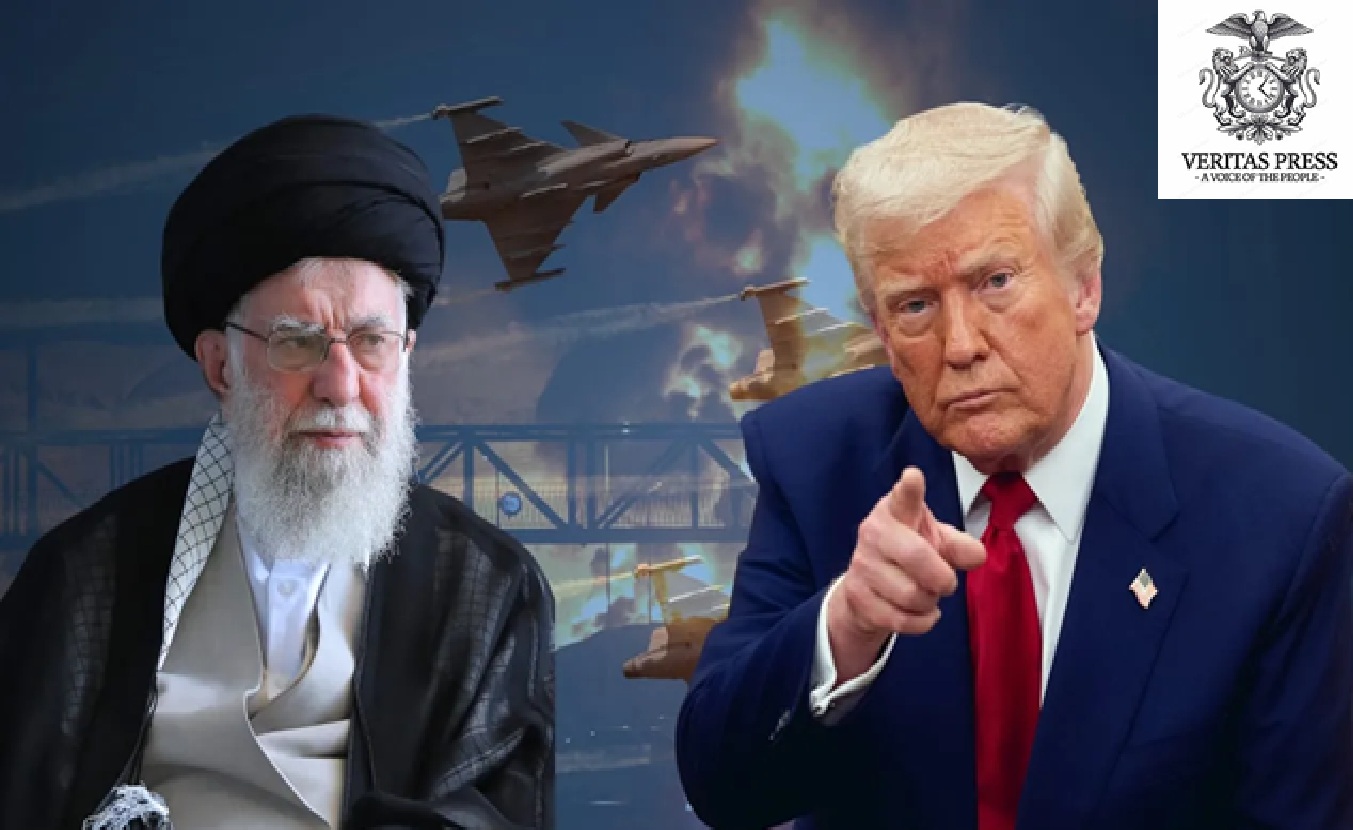
WASHINGTON, TEHRAN – As the war launched by the United States and Israel against Iran enters its second week, Donald Trump has simultaneously declared that the conflict could end “pretty quickly” while quietly seeking diplomatic assistance from global rivals Vladimir Putin and Xi Jinping to negotiate with Tehran, a move widely interpreted by analysts as an attempt to find an exit ramp from an increasingly costly war.
The sudden shift in tone highlights mounting economic, political, and strategic pressures facing Washington as the conflict disrupts global energy markets and raises fears of a wider regional war. Behind the confident rhetoric of military success, U.S. officials have increasingly acknowledged the heavy financial and strategic burden of the campaign, even as Iran vows to continue retaliatory strikes.
A War Triggered By Assassination:
The conflict began on February 28, when U.S. and Israeli forces launched coordinated air and missile strikes on Iranian military infrastructure across several cities.
The opening barrage killed Iran’s supreme leader, Ali Khamenei, along with senior commanders of the Islamic Revolutionary Guard Corps and dozens of civilians, an unprecedented escalation that immediately triggered Iranian retaliation and dramatically widened the regional conflict.
Iran responded with waves of missiles and drones targeting Israeli territory and U.S. military bases across the Middle East, transforming what had long been a shadow confrontation into the most direct U.S.–Iran war in modern history.
Within days, Iran’s political establishment moved quickly to install Mojtaba Khamenei, the late leader’s son, as the new supreme leader. Washington criticised the succession, but Iranian officials said the transition demonstrated that the Islamic Republic’s political system remained intact despite the assassination of its top leader.
Trump Calls War A “Short-Term Excursion”:
Speaking to Republican lawmakers and later in an interview with Fox News, Trump portrayed the war as a limited military operation that had already achieved most of its objectives.
“It’s a little excursion,” Trump said, claiming U.S. forces had eliminated much of Iran’s military capability.
According to Trump, the joint U.S.–Israeli campaign, dubbed Operation Epic Fury, has already produced major battlefield successes, including:
Destroying around 80% of Iran’s missile launchers
Neutralising large parts of Iran’s drone fleet
Destroying thousands of military targets
Sinking 46 Iranian naval vessels within three days
Trump argued the strikes had drastically weakened Iran’s ability to retaliate and would soon make the world “much safer.”
He also justified the attack by claiming Iran had been preparing imminent strikes against U.S. forces and Gulf states.
“Within a week, they were going to attack us, 100%,” Trump said.
However, neither the White House nor U.S. intelligence agencies have publicly presented evidence to substantiate the claim.
Iran Rejects Ceasefire And Vows Continued Retaliation:
Iranian officials have firmly rejected Trump’s suggestion that the war could soon end.
Mohammad Bagher Ghalibaf, speaker of Iran’s parliament, declared that Tehran had no interest in a ceasefire.
“We are certainly not seeking a ceasefire,” Ghalibaf said. “The aggressor must be struck so that they never think of attacking Iran again.”
Iran’s Foreign Minister Abbas Araghchi reinforced that position in an interview with PBS.
“Iran is ready to continue missile attacks against Israel and U.S. bases for as long as necessary,” he said.
Araghchi also accused Washington and Tel Aviv of targeting civilian infrastructure during their air campaign.
“They are hitting residential areas, hospitals, schools and infrastructure. This is a very dangerous move.”
He added that negotiations with Washington were “no longer on Iran’s agenda.”
Iran Issues Direct Warning To Trump:
The rhetoric between the two sides has intensified sharply.
Ali Larijani, secretary of Iran’s Supreme National Security Council, issued a blunt warning to Trump after the U.S. president threatened devastating retaliation if Iran disrupted shipping in the Strait of Hormuz.
“Even those greater than you have failed to eliminate the Iranian nation,” Larijani wrote.
“Be careful not to be eliminated yourself.”
The strategic waterway, through which nearly 20% of the world’s oil supply normally passes, has become a central pressure point in the conflict.
Shipping traffic has sharply declined amid missile threats and naval confrontations, sending global energy prices soaring and triggering alarm in international markets.
Washington Faces Mounting Economic And Defence Costs:
Behind Trump’s confident public messaging, senior U.S. officials have begun acknowledging the heavy financial burden of the war.
Steve Witkoff, Trump’s special envoy involved in Middle East diplomacy, said Washington is actively seeking a path to exit the conflict because of the escalating economic and defence costs.
“The United States does not want to remain in a prolonged conflict,” Witkoff said during a briefing on diplomatic efforts.
“The economic costs, the defence expenditures and the disruption to global markets make it clear that the priority is to bring this war to an end.”
Since the war began, the United States has deployed additional naval forces, missile defence systems and air assets across the Middle East, costing billions of dollars in emergency military spending.
At the same time, global oil prices have surged, and shipping insurance rates have spiked as vessels avoid the Persian Gulf, intensifying pressure on the U.S. economy.
Trump Quietly Turns to Russia and China:
While publicly declaring victory, Trump has also begun exploring diplomatic channels involving two of Washington’s major geopolitical rivals.
According to officials in Moscow and Washington, Trump held a phone call with Vladimir Putin on March 9 in which the Russian leader proposed “several ideas for a quick political and diplomatic end” to the Iran conflict.
The Kremlin said the conversation included potential contacts with Tehran and regional states aimed at facilitating negotiations.
Trump later confirmed the call and said Putin “wants to be helpful” in resolving the crisis.
At the same time, Trump has also referenced Xi Jinping during discussions about stabilising global oil markets and mediating tensions with Iran, suggesting that Beijing could also play a diplomatic role.
Both Russia and China maintain close political and economic ties with Iran, giving them leverage that Washington lacks.
Analysts say the outreach reflects a growing search for an exit strategy.
Israel Pushes To Continue The War:
Despite Trump’s hints at de-escalation, Israel appears determined to intensify the campaign.
Prime Minister Benjamin Netanyahu said Israel was “breaking the bones” of the Islamic Republic and suggested the war could reshape Iran’s political future.
According to officials familiar with Israeli planning, the Israel Defence Forces are attempting to inflict as much damage as possible before Washington potentially halts the campaign.
Recent Israeli strikes have expanded to include Iranian oil infrastructure, a move that reportedly surprised some U.S. officials concerned about the impact on global energy prices.
Domestic Pressure Mounts In The United States:
Inside the United States, the political environment surrounding the war is becoming increasingly fragile.
Recent polling shows more than half of Americans oppose military action against Iran, while lawmakers from both parties have questioned whether Trump has the constitutional authority to wage war without congressional approval.
Economic pressure is also mounting.
The conflict has severely disrupted shipping through the Strait of Hormuz, pushing oil prices above $100 per barrel and triggering volatility across global financial markets.
To ease pressure, the Trump administration has already discussed waiving some oil sanctions in order to increase global supply and reduce prices.
Iran Signals It Is Ready For A Long War:
Despite the destruction caused by the opening strikes, Iranian officials insist their military remains capable of sustaining the conflict.
Brigadier General Mohammad Ali Naeini, spokesperson for the Islamic Revolutionary Guard Corps, said Iran’s retaliatory strikes had already altered the strategic balance in the region.
“The equations in the region are now in the hands of the Iranian armed forces,” he said.
Iran has also warned that it could prevent oil shipments to U.S. and Israeli allies if the war continues.
A War Without A Clear Endgame:
The emerging diplomatic manoeuvring suggests that Washington may already be preparing a political narrative to declare victory and end the war.
But analysts warn the conflict may not be so easy to close.
Iran insists it will not accept a ceasefire without guarantees against future attacks and relief from economic sanctions.
Meanwhile, Israel appears determined to continue its campaign.
The result is a dangerous stalemate: a war that Washington increasingly wants to end, Tehran refuses to concede, and Israel may be unwilling to stop.
As one Middle East analyst summarised:
“Israel may decide when wars start in the region, but the United States ultimately decides when they end.”
For now, the central question is whether diplomacy involving Russia and China can produce a settlement before the war spirals into a broader regional confrontation.
Conclusion: A War Without A Clear Endgame.
The emerging diplomatic manoeuvring suggests that Washington may already be preparing the political ground to declare victory and step away from the conflict. Yet the strategic realities on the battlefield tell a far more complicated story.
Despite Donald Trump’s repeated claims that the war has largely succeeded, Iranian officials insist their military remains capable of sustaining a prolonged confrontation. Tehran has made clear that it will not accept a ceasefire unless there are firm guarantees against future attacks and meaningful relief from the economic sanctions that have strangled its economy for years.
At the same time, Benjamin Netanyahu’s government appears determined to press ahead with the campaign, viewing the conflict as a rare opportunity to permanently weaken Iran’s military infrastructure and regional influence.
This divergence has produced an uneasy strategic imbalance: a war initiated jointly by the United States and Israel, but one in which Washington now appears increasingly eager to disengage while Israel pushes for further escalation.
Behind the scenes, American officials have begun acknowledging the heavy costs of sustaining the conflict. The Pentagon has been forced to deploy large quantities of high-value missile interceptors, precision-guided munitions and naval defence systems to protect U.S. bases and allied assets across the region. Analysts and defence officials warn that the pace of operations has begun to rapidly deplete critical U.S. weapons stockpiles, particularly missile defence interceptors and long-range strike munitions.
For the Trump administration, this growing strain on military resources, combined with rising oil prices and global market instability, has created a powerful incentive to seek an exit from the war. Officials privately acknowledge that sustaining such a high-intensity conflict risks undermining broader U.S. military readiness at a time when Washington is also attempting to deter rivals elsewhere.
This helps explain why the White House has begun reaching out to geopolitical rivals Vladimir Putin and Xi Jinping to help broker negotiations with Tehran. By seeking mediation from two of its principal strategic competitors, Washington is effectively acknowledging that it cannot easily dictate the terms of the war’s conclusion on its own.
The assassination of Ali Khamenei, widely viewed by legal scholars as a dramatic escalation and a potential violation of international law, has also produced consequences that Washington may not have anticipated. Rather than collapsing Iran’s political system, the rapid appointment of Mojtaba Khamenei rallied nationalist sentiment and signalled continuity within the Islamic Republic.
Meanwhile, the war’s economic ripple effects are already spreading far beyond the battlefield. Shipping disruptions in the Strait of Hormuz, through which nearly a fifth of the world’s oil supply normally passes, have shaken global energy markets and heightened fears of inflation and supply shortages.
Iran, for its part, appears determined to ensure that any ceasefire comes only after it has imposed sufficient costs on its adversaries to deter future attacks. Tehran has framed the conflict as a war of national survival, and officials have warned that retaliatory strikes will continue as long as the U.S. and Israel maintain their military campaign.
This creates a dangerous strategic dilemma. Even if Washington declares victory and withdraws, the confrontation between Israel and Iran could continue, potentially dragging the United States back into the conflict or igniting a broader regional war.
In that sense, the war has already exposed a deeper contradiction in the current crisis. The United States may possess overwhelming military power, but modern conflicts are increasingly shaped not only by battlefield victories but also by economic limits, political pressure and the sustainability of military resources.
As one regional analyst put it, the question is no longer simply whether the war will end, but whether Washington can disengage before the costs of continuing it begin to outweigh the objectives that led it to start the war in the first place.
Source: Multiple News Agencies
Submissions:
For The Secure Submission Of Documentation, Testimonies, Or Exclusive Investigative Reports From Any Global Location, Please Utilise The Following Contact Details For Our Investigations Desk: enquiries@veritaspress.co.uk or editor@veritaspress.co.uk
Help Support Our Work:
Popular Information is powered by readers who believe that truth still matters. When just a few more people step up to support this work, it means more lies exposed, more corruption uncovered, and more accountability where it’s long overdue.
Help Protect Independent Journalism, Which Is Currently Under Attack.
If you believe journalism should serve the public, not the powerful, and you’re in a position to help, becoming a DONATOR or a PAID SUBSCRIBER truly makes a difference.
DONATION APPEAL: If You Found This Reporting Valuable, Please Consider Supporting Independent Journalism.
Help Support Our Work – We Know, We Know, We Know …
Seeing these messages is annoying. We know that. (Imagine what it’s like writing them … )
Your support fuels our fearless, truth-driven journalism. In unity, we endeavour to amplify marginalised voices and champion justice, irrespective of geographical location.
But it’s also extremely important. One of Veritas Press’s greatest assets is its reader-funded model.
1. Reader funding means we can cover what we like. We’re not beholden to the political whims of a billionaire owner. We are a small, independent and impartial organisation. No one can tell us what not to say or what not to report.
2. Reader funding means we don’t have to chase clicks and traffic. We’re not desperately seeking your attention for its own sake: we pursue the stories that our editorial team deems important and believe are worthy of your time.
3. Reader Funding: enables us to keep our website and other social media channels open, allowing as many people as possible to access quality journalism from around the world, particularly those in places where the free press is under threat.
We know not everyone can afford to pay for news, but if you’ve been meaning to support us, now’s the time.
Your donation goes a long way. It helps us:
Keep the lights on and sustain our day-to-day operations
Hire new, talented independent reporters
Launch real-time live debates, community-focused shows, and on-the-ground reporting
Cover the issues that matter most to our communities, in real time, with depth and integrity
We have plans to expand our work, but we can’t do it without your support. Every contribution, no matter the size, helps us stay independent and build a truly people-powered media platform.
If you believe in journalism that informs, empowers, and reflects the communities we serve, please donate today.
Kamran Faqir is a volunteer investigative journalist and writer committed to exposing hidden truths and amplifying underreported stories. Driven by social justice, he brings sharp insight and fearless truth-telling to independent journalism. NUJ registered.
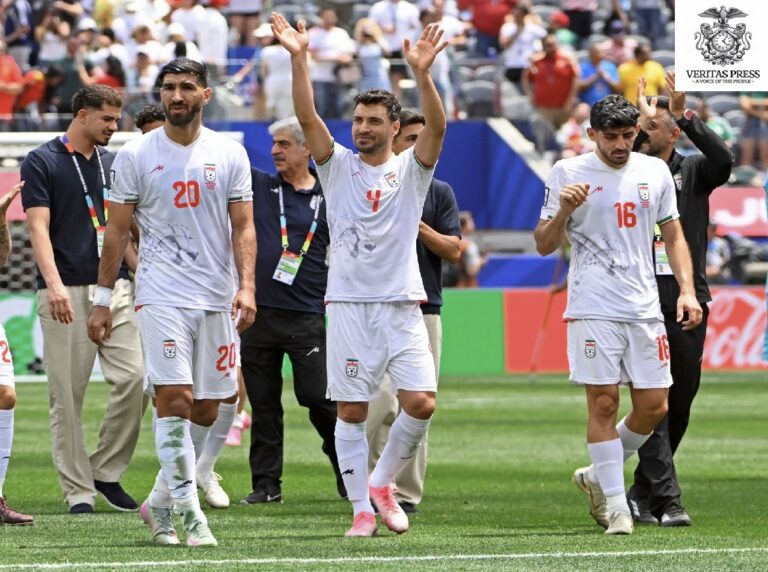
SEATTLE, TEHRAN — The U.S. Department of Homeland Security (DHS) will allow Iran’s national football team to enter the country 48 hours before their critical World Cup match against Egypt on Friday, a modest concession in a tournament where Team Melli’s travel conditions have sparked claims of oppression and competitive disadvantage.