Kamran Faqir is a volunteer investigative journalist and writer committed to exposing hidden truths and amplifying underreported stories. Driven by social justice, he brings sharp insight and fearless truth-telling to independent journalism. NUJ registered.
Original Article Date Published:
Article Date Modified:
12 minutes
Views:358
Listen to this article
Help support our mission, donate today and be the change. Every contribution goes directly toward driving real impact for the cause we believe in.
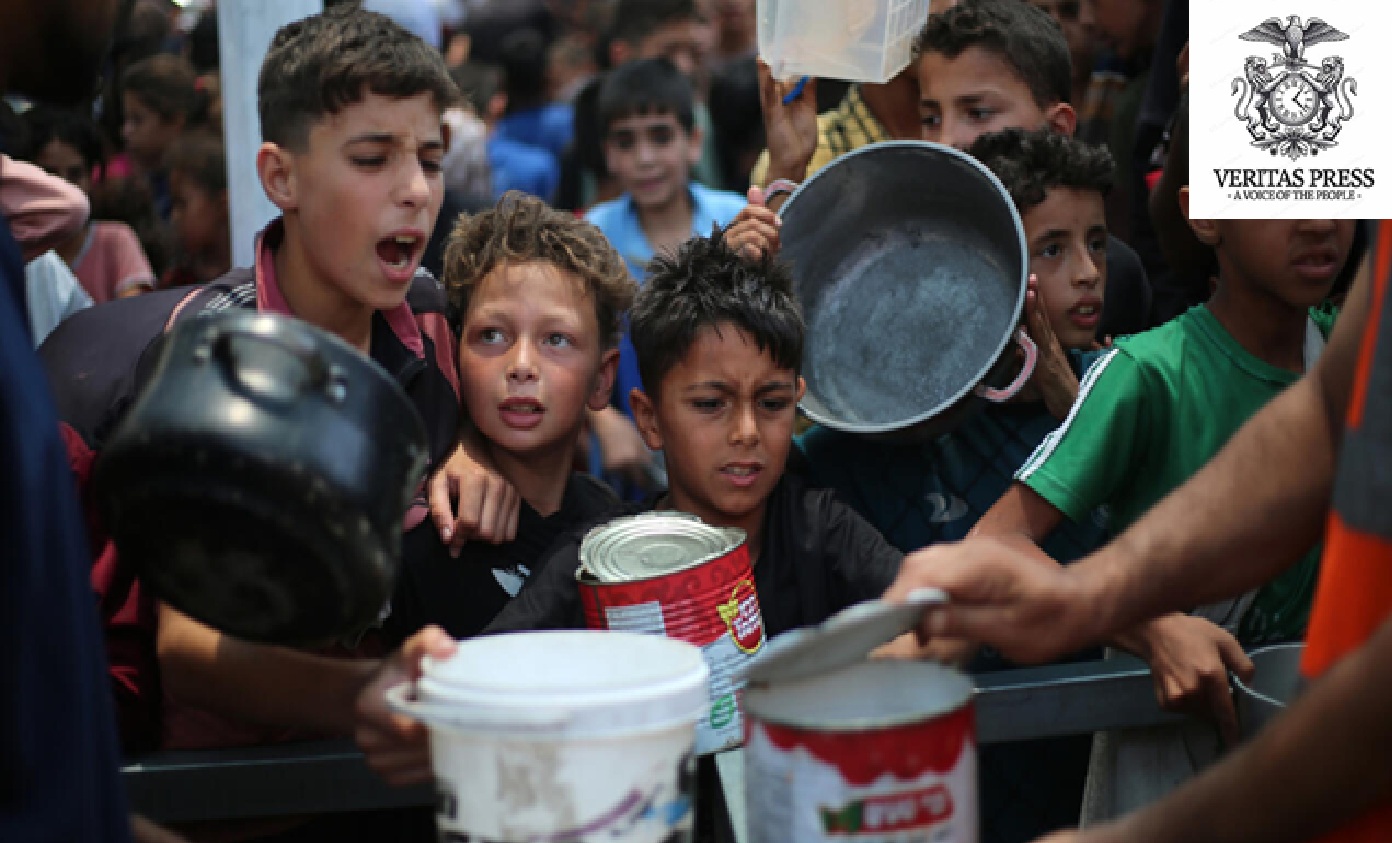
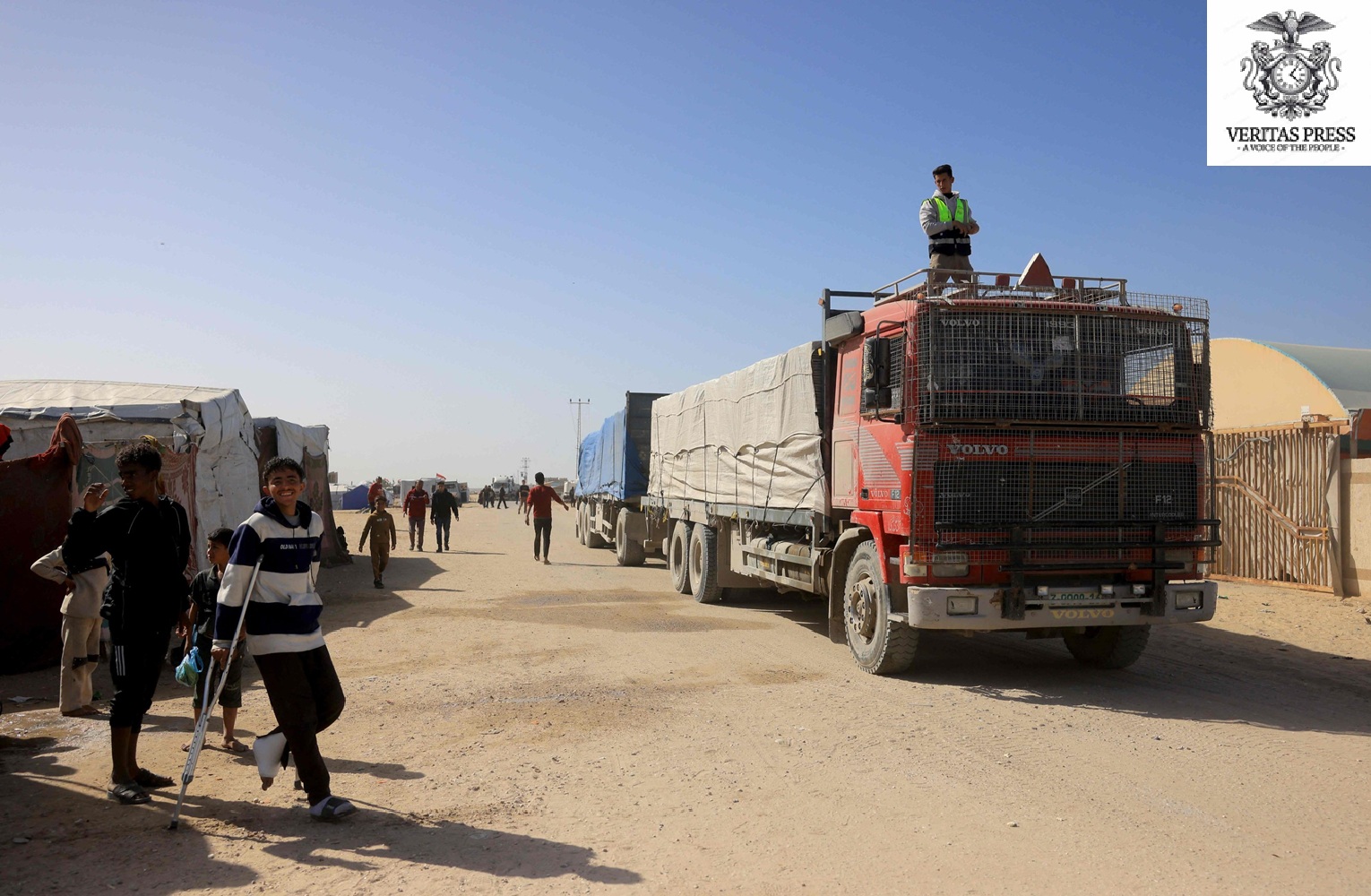
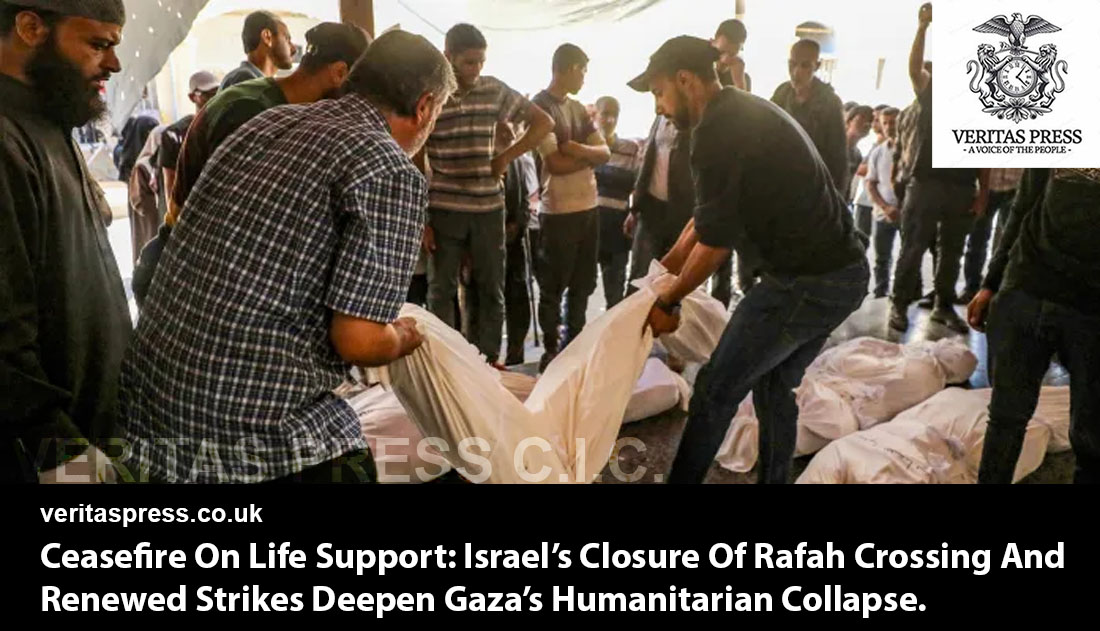
GAZA CITY — Israel’s continued closure of Gaza’s border crossings for more than ten consecutive days has intensified an already catastrophic humanitarian crisis in the besieged Palestinian enclave, where more than 2.2 million people remain almost entirely dependent on humanitarian aid after over two years of war and destruction.
The shutdown of crossings, including the Rafah Crossing and the Israeli-controlled Kerem Shalom Crossing, has halted medical evacuations, delayed humanitarian staff rotations, and sharply reduced the entry of food, medicine, and fuel into Gaza, deepening fears of a renewed humanitarian collapse.
Aid agencies warn that the situation has deteriorated rapidly, even as a fragile ceasefire, brokered in October 2025, nominally remains in place.
“The situation is difficult, and we will be running out of whatever is remaining,” said Hanan Balkhy, regional director for the World Health Organization.
“Stocks of essential medicines, trauma supplies and surgical consumables are critically low, and fuel shortages continue to limit hospital operations.”
Aid Deliveries Far Below Required Levels:
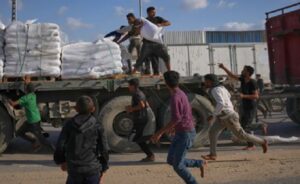
Under the terms of the ceasefire negotiated with regional mediators, approximately 600 humanitarian aid trucks per day were supposed to enter Gaza to stabilise the humanitarian situation.
But according to the Gaza Government Media Office, the reality has been dramatically different.
Between October 10, 2025 and February 10, 2026, only 31,178 trucks entered Gaza out of the expected 72,000, averaging about 260 trucks per day, just 43% of the required amount.
Even after Israel announced the partial reopening of the Kerem Shalom crossing, humanitarian agencies say aid deliveries remain far below the necessary levels.
“We’re talking about a maximum of 200 trucks a day out of the 600 needed,” Balkhy said, adding that the limited flow is insufficient to sustain basic services or meet the population’s needs.
Aid trucks continue to face extensive Israeli inspections and bureaucratic delays. Drivers and aid workers say cargo can remain stranded for days at checkpoints while undergoing security screening.
Hospitals On The Verge Of Collapse:
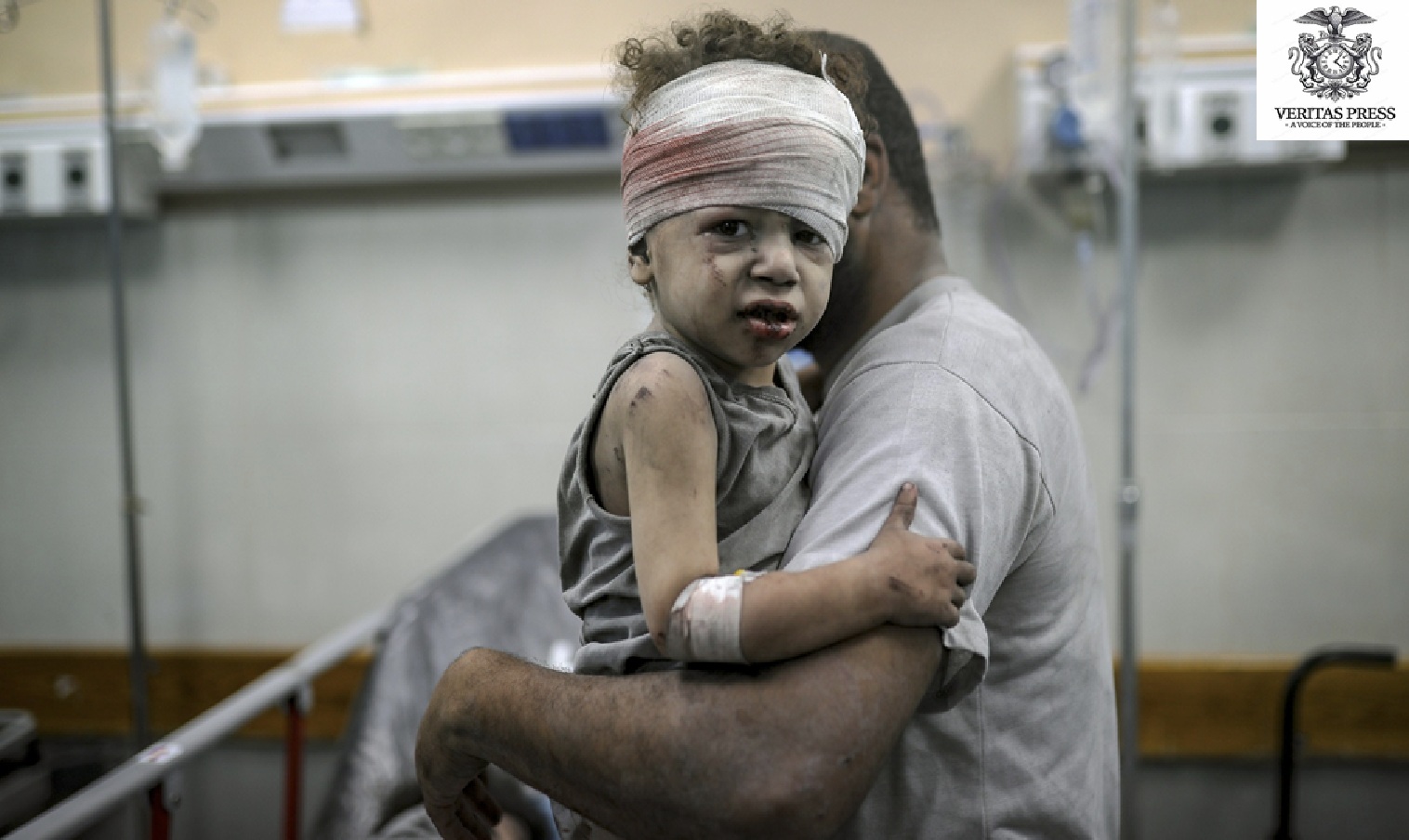
The blockade has had devastating consequences for Gaza’s already shattered healthcare system.
According to the World Health Organization:
Half of Gaza’s 36 hospitals remain closed due to Israeli bombardment and lack of resources.
Remaining hospitals are struggling to maintain critical services such as surgery, dialysis and intensive care.
Essential medical supplies, including gauze, syringes and surgical equipment, have already run out.
At least 18,000 patients, including wounded children, cancer patients and people with chronic illnesses, are currently awaiting evacuation for treatment abroad.
But the closure of the Rafah crossing, Gaza’s primary gateway for medical evacuations, has effectively halted those departures.
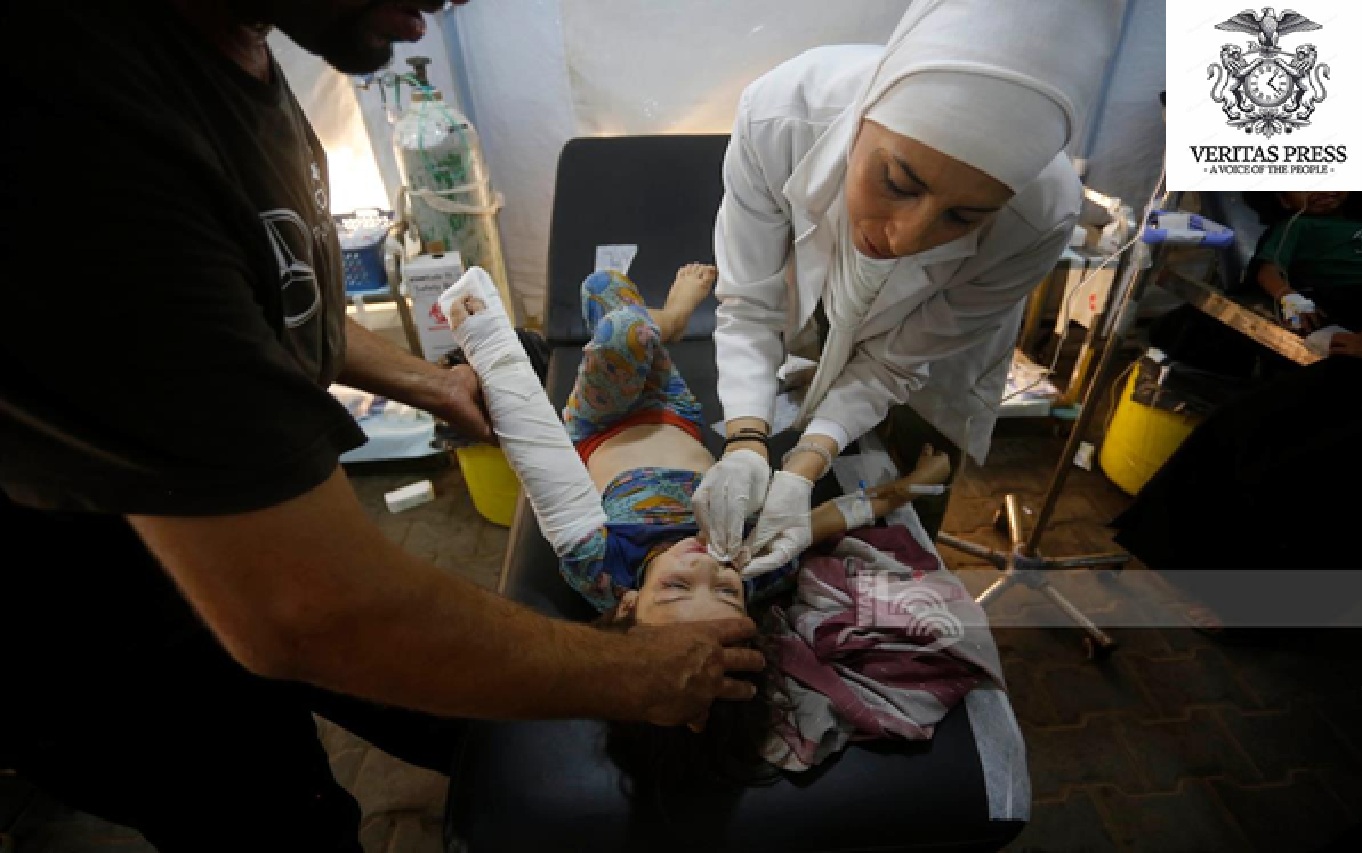
Inside Gaza’s overcrowded hospitals, doctors warn that patients are dying from preventable causes.
“We are performing surgeries with extremely limited supplies,” said one physician at Al‑Shifa Hospital, speaking to local media.
“Sometimes we must reuse equipment or postpone operations simply because we have nothing left.”
Fuel Shortages Threaten Basic Services:
The restriction of fuel deliveries has also crippled critical infrastructure across the enclave.
According to the United Nations Office for the Coordination of Humanitarian Affairs (OCHA), aid groups have been forced to ration fuel needed to operate hospitals, water pumps, desalination plants and sanitation services.
The consequences are already visible across Gaza:
Water production has been drastically reduced.
Garbage collection has been suspended in several areas.
Hospitals are operating on limited electricity from emergency generators.
Humanitarian officials warn that if fuel supplies run out entirely, the health system could collapse within days.
Israel Claims Gaza Has “Enough Food”:
Israel’s military coordination body for Palestinian territories, COGAT, has defended the closure of Gaza’s crossings.
In a statement, COGAT claimed that enough food had already entered Gaza during the ceasefire to provide “four times the population’s needs,” asserting that current stockpiles could sustain residents for an extended period.
However, Israeli authorities did not provide evidence supporting the claim.
Humanitarian agencies and UN officials have strongly disputed the assertion, pointing to growing shortages of food, medicine and clean water.
“When the doors are shut, we stretch whatever we have to make it last longer,” said Stéphane Dujarric, spokesperson for António Guterres.
Israel Moves To Ban Aid Organisations:
Compounding the crisis, Israeli authorities have announced plans to ban 37 international humanitarian organisations from operating in Gaza, the occupied West Bank and East Jerusalem.
The decision has alarmed diplomats and aid agencies, who warn that it could dismantle already fragile relief operations.
“Virtually the entire population of Gaza now relies on humanitarian assistance,” said Jan Egeland, head of the Norwegian Refugee Council.
“As the occupying power, Israel has a legal responsibility to ensure civilians have sufficient food and essential supplies.”
Several European diplomats have warned that the removal of major aid groups could cause relief operations to collapse within weeks.
Accusations Of Weaponising Humanitarian Aid:
Human rights organisations say the restrictions on aid deliveries reflect a broader Israeli strategy of controlling humanitarian access as a tool of warfare.
In a February report, Human Rights Watch warned that Israeli restrictions have continued to cause severe shortages of food, medicines, reconstruction materials and clean water in Gaza.
The group argued that blocking essential supplies to civilians may constitute a violation of international humanitarian law.
Under the Fourth Geneva Convention, occupying powers are legally required to ensure that civilians under their control have access to food, medical care and other essential services.
Legal experts have increasingly warned that systematic restrictions on aid could amount to collective punishment, which is prohibited under international law.
Palestinians Warn Of Worsening Disaster:
Inside Gaza, Palestinian officials say the closure of crossings risks pushing the territory back toward famine-like conditions.
“The Gaza Strip faces indicators of a worsening humanitarian crisis if restrictions on aid continue,” said Ismail Ibrahim al‑Thawabta.
“The responsibility for preventing this crisis lies with the occupying power, which is limiting humanitarian supplies in clear violation of international humanitarian law.”
Residents say food prices are already rising while supplies dwindle.
“We thought the ceasefire would bring relief,” said Ahmed Abu Samra, a displaced father of four in Deir al‑Balah.
“But the crossings are closed again. No food, no medicine. We are surviving day by day.”
War’s Human Toll Continues To Mount:
Even as aid remains restricted, the human cost of the war continues to climb.
As reported by the Palestinian Ministry of Health in Gaza, these numbers are likely an underestimate:
72,126 Palestinians have been killed since October 2023
171,809 have been injured
Thousands remain missing under rubble
Since the October 2025 ceasefire alone, at least 641 Palestinians have been killed and 1,711 injured, underscoring the fragile nature of the truce.
Aid Access As A Central Battlefield:
Humanitarian analysts say the repeated closure of Gaza’s crossings highlights how access to aid has become one of the central battlegrounds of the conflict.
Since the start of Israel’s assault on Gaza in October 2023, humanitarian deliveries have repeatedly been restricted, halted or slowed by Israeli authorities citing security concerns.
Critics argue that the pattern reveals a deliberate policy of using humanitarian access as leverage against the population of Gaza.
International legal experts warn that deliberately restricting food, water and medicine to civilians as a method of warfare could constitute a war crime and potentially form part of broader allegations of genocide currently being examined at the International Court of Justice.
For Palestinians in Gaza, however, the consequences are immediate and devastating.
“Every time the crossings close, life stops,” said one displaced resident in Gaza City.
“No food. No medicine. No future.”
Conclusion: Aid, Siege And The Politics Of Survival.
As Gaza’s border crossings remain largely closed, humanitarian agencies warn that the crisis unfolding in the enclave is no longer simply the by-product of war but the result of deliberate policy choices governing who may eat, receive treatment, or survive.
Under international law, particularly the Fourth Geneva Convention, an occupying power must ensure the provision of food, medical supplies and basic services to the civilian population under its control. Yet the repeated closure of Gaza’s crossings, the severe restrictions on aid deliveries, and the proposed banning of dozens of humanitarian organisations have led many legal experts and rights groups to argue that humanitarian access itself has become a central instrument of pressure in Israel’s war on the enclave.
Human rights organisations say the pattern is unmistakable. In recent assessments, Human Rights Watch, Amnesty International, and several UN agencies have warned that restricting food, water, medicine and fuel to a population already devastated by bombardment risks violating the prohibition on collective punishment and the starvation of civilians as a method of warfare.
For humanitarian workers on the ground, the consequences are visible in every hospital ward, food queue and displaced persons camp across Gaza.
“This is not just a shortage problem anymore,” said Jan Egeland, head of the Norwegian Refugee Council. “It is a crisis of access. When crossings close, aid cannot move, hospitals cannot function, and civilians pay the price.”
Palestinian officials say the restrictions are pushing Gaza toward a slow humanitarian collapse. Ismail Ibrahim al-Thawabta accused Israel of “systematically limiting humanitarian supplies in violation of international humanitarian law,” warning that continued closures could plunge the enclave back into famine-like conditions.
At the same time, Israeli authorities maintain that sufficient supplies already exist inside Gaza and that restrictions are necessary for security reasons, a claim disputed by the World Health Organization, the United Nations Office for the Coordination of Humanitarian Affairs, and numerous humanitarian organisations struggling to keep their operations alive.
The growing gap between these competing narratives is now at the heart of international legal and political scrutiny. Allegations that Israel has deliberately restricted life-sustaining resources are among the issues being examined in the genocide case brought before the International Court of Justice, where several states argue that the blockade of food, water and medicine forms part of a broader pattern of collective punishment against Gaza’s population.
Meanwhile, for Palestinians living under siege, the debate over legality and accountability offers little immediate relief.
Across Gaza, families are rationing food, hospitals are rationing electricity, and humanitarian agencies are rationing the last remaining supplies they have managed to bring through the crossings.
“People here are not thinking about politics anymore,” said a displaced resident in Gaza City who has spent months living in a school-turned-shelter. “They are thinking about whether they will find bread tomorrow.”
Until Gaza’s crossings reopen fully and aid flows freely, humanitarian officials warn that the enclave will remain suspended between ceasefire and catastrophe, a territory where survival itself has become dependent on the political calculations of those controlling its borders.
Source: Multiple News Agencies
Submissions:
For The Secure Submission Of Documentation, Testimonies, Or Exclusive Investigative Reports From Any Global Location, Please Utilise The Following Contact Details For Our Investigations Desk: enquiries@veritaspress.co.uk or editor@veritaspress.co.uk
Help Support Our Work:
Popular Information is powered by readers who believe that truth still matters. When just a few more people step up to support this work, it means more lies exposed, more corruption uncovered, and more accountability where it’s long overdue.
Help Protect Independent Journalism, Which Is Currently Under Attack.
If you believe journalism should serve the public, not the powerful, and you’re in a position to help, becoming a DONATOR or a PAID SUBSCRIBER truly makes a difference.
DONATION APPEAL: If You Found This Reporting Valuable, Please Consider Supporting Independent Journalism.
Help Support Our Work – We Know, We Know, We Know …
Seeing these messages is annoying. We know that. (Imagine what it’s like writing them … )
Your support fuels our fearless, truth-driven journalism. In unity, we endeavour to amplify marginalised voices and champion justice, irrespective of geographical location.
But it’s also extremely important. One of Veritas Press’s greatest assets is its reader-funded model.
1. Reader funding means we can cover what we like. We’re not beholden to the political whims of a billionaire owner. We are a small, independent and impartial organisation. No one can tell us what not to say or what not to report.
2. Reader funding means we don’t have to chase clicks and traffic. We’re not desperately seeking your attention for its own sake: we pursue the stories that our editorial team deems important and believe are worthy of your time.
3. Reader Funding: enables us to keep our website and other social media channels open, allowing as many people as possible to access quality journalism from around the world, particularly those in places where the free press is under threat.
We know not everyone can afford to pay for news, but if you’ve been meaning to support us, now’s the time.
Your donation goes a long way. It helps us:
Keep the lights on and sustain our day-to-day operations
Hire new, talented independent reporters
Launch real-time live debates, community-focused shows, and on-the-ground reporting
Cover the issues that matter most to our communities, in real time, with depth and integrity
We have plans to expand our work, but we can’t do it without your support. Every contribution, no matter the size, helps us stay independent and build a truly people-powered media platform.
If you believe in journalism that informs, empowers, and reflects the communities we serve, please donate today.
Kamran Faqir is a volunteer investigative journalist and writer committed to exposing hidden truths and amplifying underreported stories. Driven by social justice, he brings sharp insight and fearless truth-telling to independent journalism. NUJ registered.
SEATTLE, TEHRAN — The U.S. Department of Homeland Security (DHS) will allow Iran’s national football team to enter the country 48 hours before their critical World Cup match against Egypt on Friday, a modest concession in a tournament where Team Melli’s travel conditions have sparked claims of oppression and competitive disadvantage.