Kamran Faqir is a volunteer investigative journalist and writer committed to exposing hidden truths and amplifying underreported stories. Driven by social justice, he brings sharp insight and fearless truth-telling to independent journalism. NUJ registered.
Original Article Date Published:
Article Date Modified:
Listen to this article
Help support our mission, donate today and be the change. Every contribution goes directly toward driving real impact for the cause we believe in.
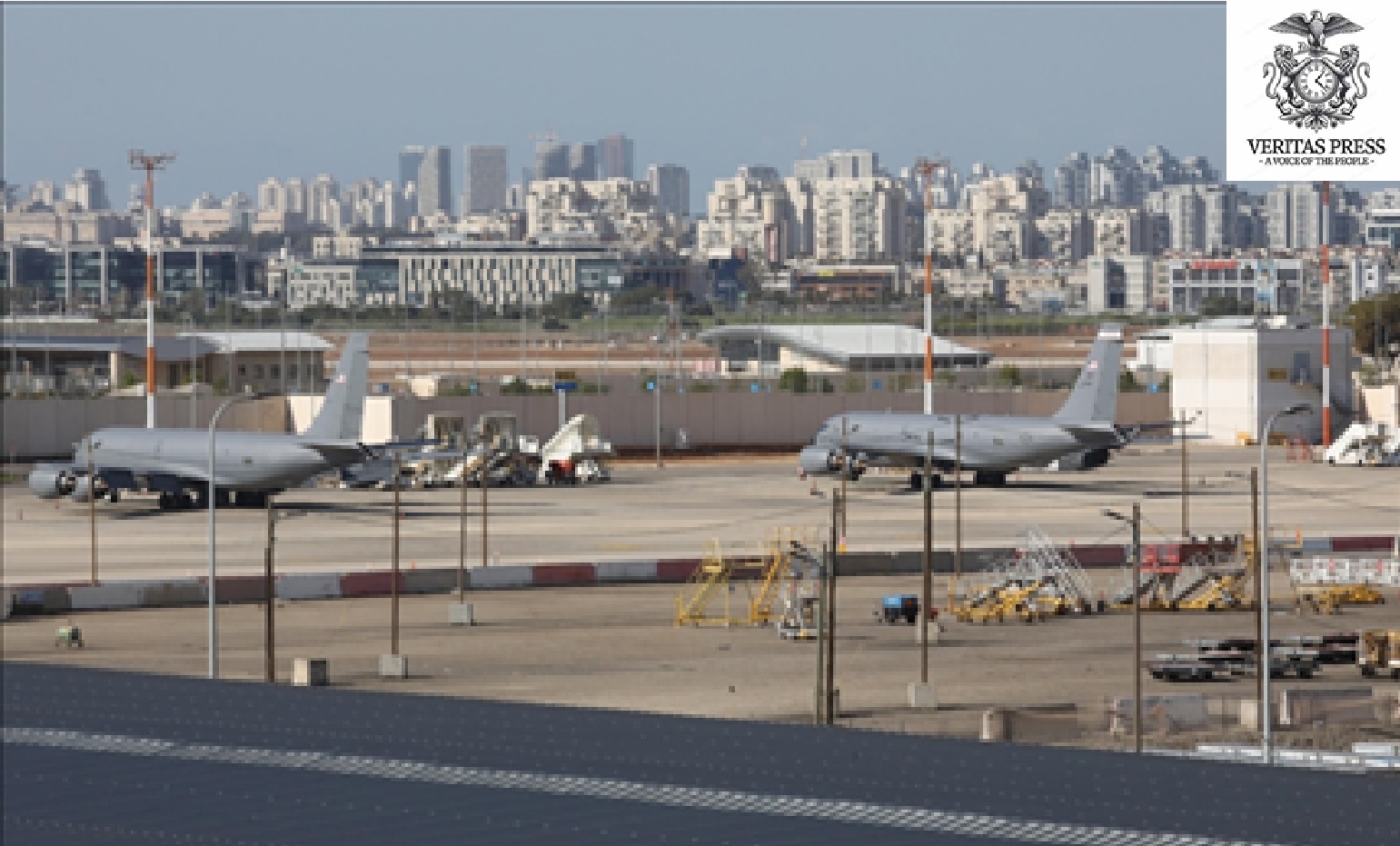
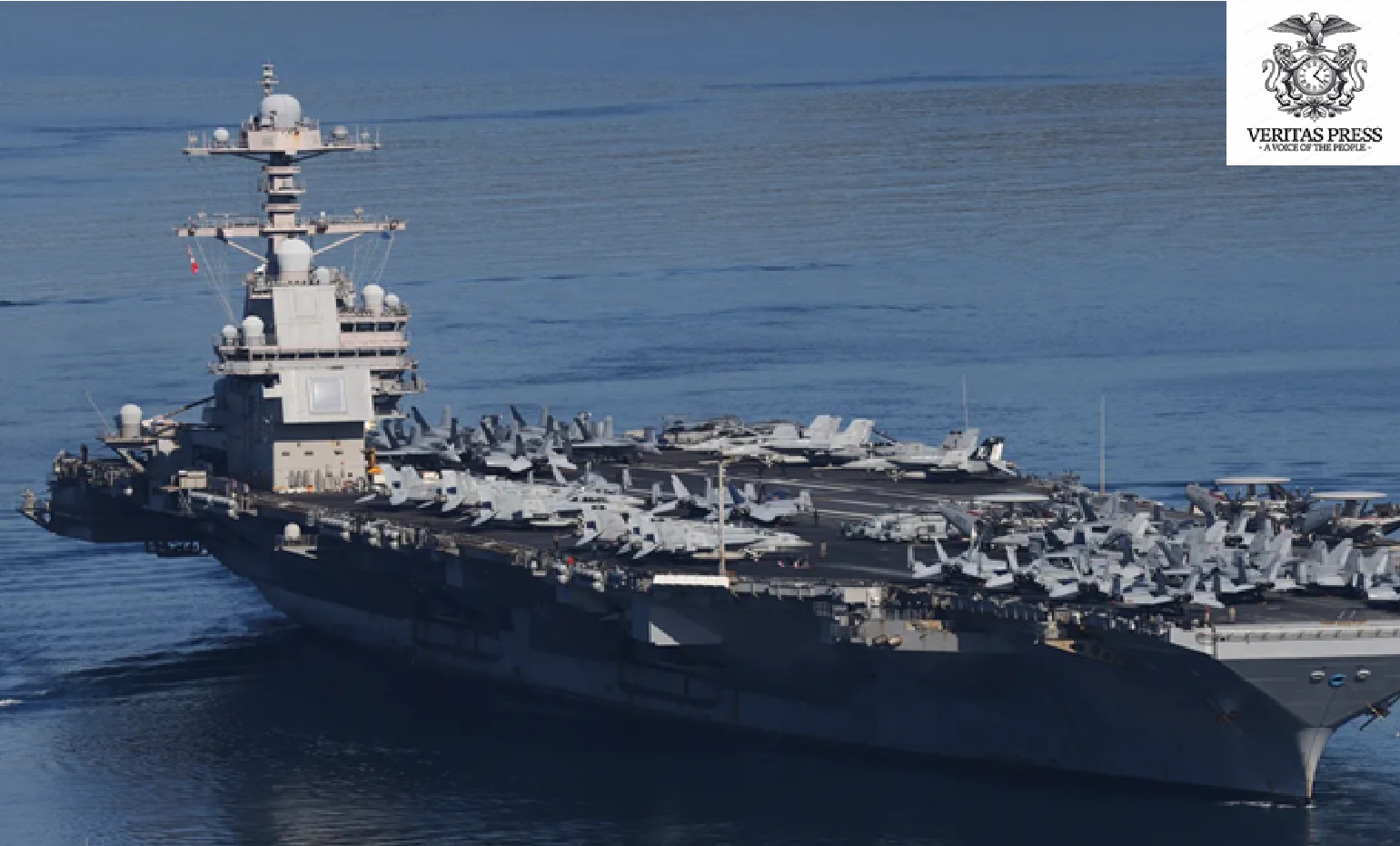
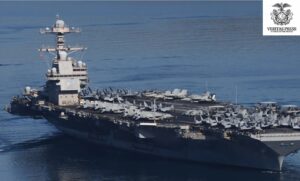
JERUSALEM / WASHINGTON — The skies over the Middle East have become a barometer of geopolitical pressure, and the needle is firmly in the red. As indirect talks between Washington and Tehran concluded in Geneva without a breakthrough, a concurrent and unprecedented logistical manoeuvre has unfolded on the tarmacs of Israel’s Ben Gurion Airport and Ovda Air Base. Six additional US KC-46 aerial refuelling aircraft are en route to Israel, part of what analysts are calling the largest American concentration of air power in the region since the 2003 invasion of Iraq.
This is not merely a show of force; it is the meticulous assembly of a strike package. By tracking open-source flight data, the Military Air Tracking Alliance has observed a staggering influx: dozens of F-35s, F-22s, F-15s, and F-16s, accompanied by over 85 refuelling aircraft and hundreds of cargo sorties flooding into regional bases. The arrival of 11 F-22 Raptors, designed to degrade enemy air defences and establish air superiority, at Ovda Air Base places the most sophisticated penetration tool in the US arsenal within striking distance of Iran’s fortified nuclear sites.
The Logistics Of Coercion: Why Tankers Matter.
The deployment of the KC-46 tankers to Ben Gurion is perhaps the most significant tactical indicator. According to experts interviewed by Anadolu Ajansı, the Israeli Air Force operates a relatively small and ageing fleet of seven KC-707 tankers. Following the attrition of last summer’s 12-day war with Iran, this fleet is a critical bottleneck for any sustained deep-strike mission.
“To launch a strike deep into Iranian territory, you need a robust aerial refuelling bridge,” explains Rob Geist Pinfold, a lecturer in international security at King’s College London. “The presence of American tankers effectively removes that limitation. It allows a large number of Israeli jets to participate in coordinated strikes or allows US jets to loiter on station, waiting for targets”.
On the ground in Israel, the visibility of this buildup is impossible to ignore. Footage circulating on social media and confirmed by local news outlets shows the grey fuselages of US cargo and refuelling aircraft parked on the tarmac at Ben Gurion, a rare sight that has sparked a mix of anxiety and resignation among locals. In Tel Aviv, a city accustomed to the hum of conflict, the silence from official channels is deafening. “We see the planes, we read the news, but the government tells us nothing,” said Mira Cohen, a resident of Tel Aviv. “After last year, we know what ‘prepared for any scenario’ sounds like. It sounds like this.”
Geneva Talks End In Stalemate:
The military gears turn as the diplomatic clock winds down. The third round of US-Iran indirect talks, mediated by Oman in Geneva, concluded late Thursday with no visible progress. According to sources cited by The Wall Street Journal and corroborated by Iran International, Tehran rejected key American proposals, including demands to transfer enriched uranium abroad, halt all enrichment, and dismantle specific nuclear sites.
Iranian Foreign Ministry spokesman Esmail Baghaei, responding to President Donald Trump’s recent State of the Union address, dismissed Washington’s pressure tactics as a campaign of “disinformation & misinformation,” accusing the US of repeating “big lies” regarding Iran’s nuclear ambitions and internal unrest. Conversely, Iranian Parliament Speaker Mohammad Bagher Qalibaf struck a dual tone, warning that if the US chooses to “launch an attack in the midst of negotiations, you will undoubtedly taste the firm blow of the Iranian nation”.
Following the talks, President Trump received a briefing from CENTCOM Commander Admiral Brad Cooper on potential military options. These range from limited strikes on nuclear and missile facilities to a broader campaign involving Israel that carries inherent risks of regional escalation and regime change. While White House officials insist no final decision has been made, the Pentagon is clearly preparing the battlefield.
The Israeli Dilemma: Pushing For War Or Being Pushed?
Behind closed doors in Jerusalem, the mood is reportedly fraught with tension. Prime Minister Benjamin Netanyahu, who recently updated the nation’s emergency guidelines to include critical industries like cyber-infrastructure and energy, has publicly warned that if Iran makes “the gravest mistake in its history and attacks Israel, we will respond with a force they cannot imagine”.
Yet, analysts suggest that Netanyahu’s posture is more defensive than offensive. Pinfold posits that Israel is in a “strange position where the US is being more hawkish than they are.” He attributes this not to a strategic shift, but to a lack of readiness. “This is not because of a strategic or ideological pivot, but because they feel like they aren’t ready for this kind of operation yet,” Pinfold told Anadolu. Missile defence stocks remain depleted, and the Israeli Defence Forces are stretched thin.
An Israeli security official, speaking to Xinhua on condition of anonymity, confirmed that while the military is preparing for “all scenarios,” including a potential Iranian retaliatory strike, the establishment assesses the ongoing US-Iran negotiations as “genuine”. This suggests a deep-seated hope in Jerusalem that Washington’s sabre-rattling is a precursor to a deal, not a war.
A report from Israel’s Channel 12 revealed a moment of striking vulnerability, noting that after a meeting with Trump, Netanyahu asked a US official, “Is he still with us? I’m worried”. It underscores the Israeli leader’s fear that Washington might either strike a deal that leaves Iran with a threshold capability or, conversely, launch a strike that leaves Israel to manage the subsequent ballistic missile fallout alone.
Iran’s Calculus: Pressure And Protest.
For Tehran, the equation is equally complex. The regime faces a twin challenge: an external military threat and ongoing internal dissent. Student protests have continued at universities in Tehran, including Alzahra University and Amirkabir University of Technology, with activists reporting a heavy security crackdown.
In a bid to counter domestic panic, Iranian media outlets have reported that citizens received text messages from unknown sources stating that Trump “is a man of action,” a warning dressed as news.
Meanwhile, Iran has repositioned its assets. Satellite photos analysed by the Associated Press show that US Navy vessels typically docked in Bahrain are now scattered at sea, a defensive measure reminiscent of the posture taken just before the June 2026 conflict. The message from Tehran is clear: any attack will be met with retaliation, and US bases and Israeli cities are considered legitimate targets.
Conclusion: The Sound Of Silence.
As the sixth KC-46 tanker departs Seymour Johnson Air Force Base in North Carolina, the question remains whether this buildup is the prelude to war or the ultimate bargaining chip. Vice President JD Vance stated on Thursday that the US would not seek “another prolonged Middle East war,” yet the administration is keeping both diplomatic and military options open.
With technical talks scheduled to resume in Vienna next week, the world watches a high-stakes game of chicken. For now, the only sound is the drone of transport planes landing at Ben Gurion, offloading the machinery of potential conflict onto Israeli soil.
With the US and Israel confronting Iran, the drums of war are sounding as the chess pieces are being set in motion. The US and Israel orchestrated the Geneva talks to fail, intending to provoke a war with Iran while the world passively observed. It was a calculated failure of indirect negotiations, intentionally designed to provoke war, facilitate regime change, destabilise the region, and ultimately exert control.
Help Support Our Work.
For The Secure Submission Of Documentation, Testimonies, Or Exclusive Investigative Reports From Any Global Location, Please Utilise The Following Contact Details For Our Investigations Desk: enquiries@veritaspress.co.uk or editor@veritaspress.co.uk
Popular Information is powered by readers who believe that truth still matters. When just a few more people step up to support this work, it means more lies exposed, more corruption uncovered, and more accountability where it’s long overdue.
If you believe journalism should serve the public, not the powerful, and you’re in a position to help, becoming a DONATOR or a PAID SUBSCRIBER truly makes a difference.
DONATION APPEAL: If You Found This Reporting Valuable, Please Consider Supporting Independent Journalism.
Help Support Our Work – We Know, We Know, We Know …
Seeing these messages is annoying. We know that. (Imagine what it’s like writing them … )
Your support fuels our fearless, truth-driven journalism. In unity, we endeavour to amplify marginalised voices and champion justice, irrespective of geographical location.
But it’s also extremely important. One of Veritas Press’s greatest assets is its reader-funded model.
1. Reader funding means we can cover what we like. We’re not beholden to the political whims of a billionaire owner. We are a small, independent and impartial organisation. No one can tell us what not to say or what not to report.
2. Reader funding means we don’t have to chase clicks and traffic. We’re not desperately seeking your attention for its own sake: we pursue the stories that our editorial team deems important and believe are worthy of your time.
3. Reader Funding: enables us to keep our website and other social media channels open, allowing as many people as possible to access quality journalism from around the world, particularly those in places where the free press is under threat.
We know not everyone can afford to pay for news, but if you’ve been meaning to support us, now’s the time.
Your donation goes a long way. It helps us:
Keep the lights on and sustain our day-to-day operations
Hire new, talented independent reporters
Launch real-time live debates, community-focused shows, and on-the-ground reporting
Cover the issues that matter most to our communities, in real time, with depth and integrity
We have plans to expand our work, but we can’t do it without your support. Every contribution, no matter the size, helps us stay independent and build a truly people-powered media platform.
If you believe in journalism that informs, empowers, and reflects the communities we serve, please donate today.
Kamran Faqir is a volunteer investigative journalist and writer committed to exposing hidden truths and amplifying underreported stories. Driven by social justice, he brings sharp insight and fearless truth-telling to independent journalism. NUJ registered.
SEATTLE, TEHRAN — The U.S. Department of Homeland Security (DHS) will allow Iran’s national football team to enter the country 48 hours before their critical World Cup match against Egypt on Friday, a modest concession in a tournament where Team Melli’s travel conditions have sparked claims of oppression and competitive disadvantage.