






Help support our mission, donate today and be the change. Every contribution goes directly toward driving real impact for the cause we believe in.
*How a Bronx press conference reignited the 175-year struggle over a diamond, and what it reveals about colonialism’s unfinished reckoning*
NEW YORK – On a brisk spring afternoon in the Bronx, the 34-year-old mayor of America’s largest city stepped before a bank of microphones and did something no senior U.S. official had dared do before: he told the British Crown to give it back.
“If I were to speak to the king, separately from that, I would probably encourage him to return the Koh‑i‑Noor diamond,” said Zohran Mamdani, New York City’s first democratic socialist and first Muslim mayor, hours before he was scheduled to greet King Charles III at the National 9/11 Memorial on April 29, 2026.
The remark, casually lobbed into a routine press conference about potholes and budget allocations, detonated across three continents within minutes. By the time the sun set over Manhattan, the British tabloids had branded him “traitor”; Indian Twitter had anointed him “more Indian than half of Indian Twitter”; and Reform UK’s home affairs spokesman had vowed to ban him from entering Britain.
But behind the viral moment lies a question that the British establishment has spent 175 years avoiding: who really owns the Mountain of Light?
The Mayor Who Would Not Bow:
To understand why Mamdani’s words landed with such force, one must first understand the man who spoke them.
Born in Kampala, Uganda, to parents of Indian descent, Mamdani literally embodies the tangled legacies of the British Empire. His mother, Mira Nair, is the acclaimed filmmaker whose works, Monsoon Wedding, The Namesake, and Mississippi Masala, have relentlessly explored the colonial experience. His father, Mahmood Mamdani, is one of the world’s foremost scholars of postcolonial theory, a man whose books dissect the architecture of imperial power with surgical precision.
When Mamdani was asked what he might say to the King in a private audience, the answer came from somewhere deep in that lineage.
“I would probably encourage him to return the Koh‑i‑Noor Diamond,” he said.
It was, the New York Times observed, “in character.” And it was also exquisitely calibrated. Mamdani did not say “return it to India.” He simply said: Return it. The ambiguity was deliberate. The diamond’s ownership has been contested for centuries, and the mayor, a politician who reads his father’s books, knew exactly what he was doing.
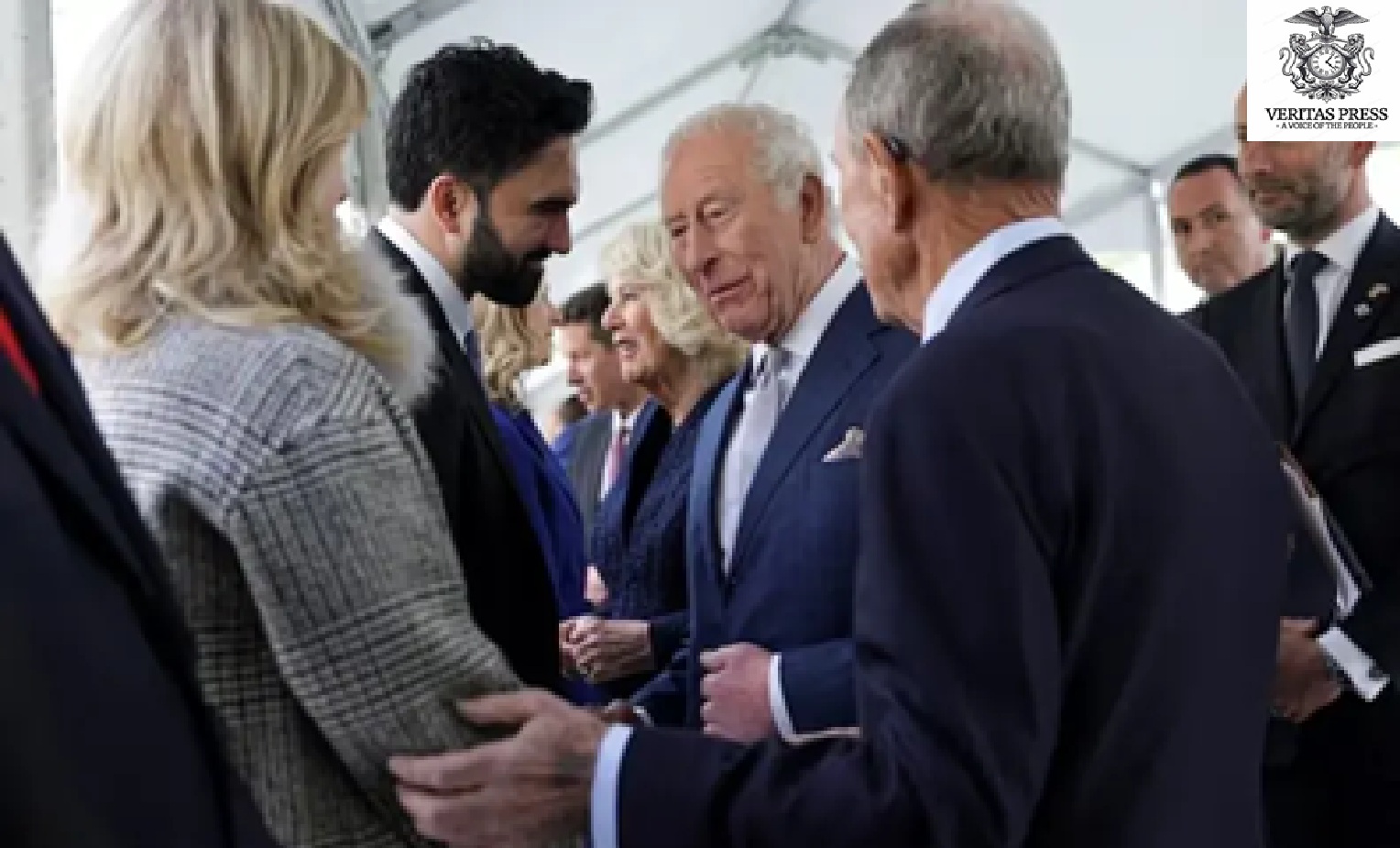
The King, for his part, appeared unruffled. Photographs from the 9/11 memorial show Charles III laughing with the young mayor, their handshake captured by a dozen cameras. Whether the diamond crossed the monarch’s lips in that brief exchange remains unknown. Buckingham Palace declined to comment. Mamdani’s office did the same.
No private meeting ever took place. The moment passed. But the genie was out of the bottle.
The Diamond Of Empires:
The Koh‑i‑Noor, Persian for “Mountain of Light”, is not the largest diamond in the world, but it is almost certainly the most infamous. At 105.6 carats, it is the size of a hen’s egg, a stone that has passed through the hands of Mughal emperors, Persian shahs, Afghan warlords, and Sikh maharajas before landing, in 1849, in the possession of a ten-year-old boy.
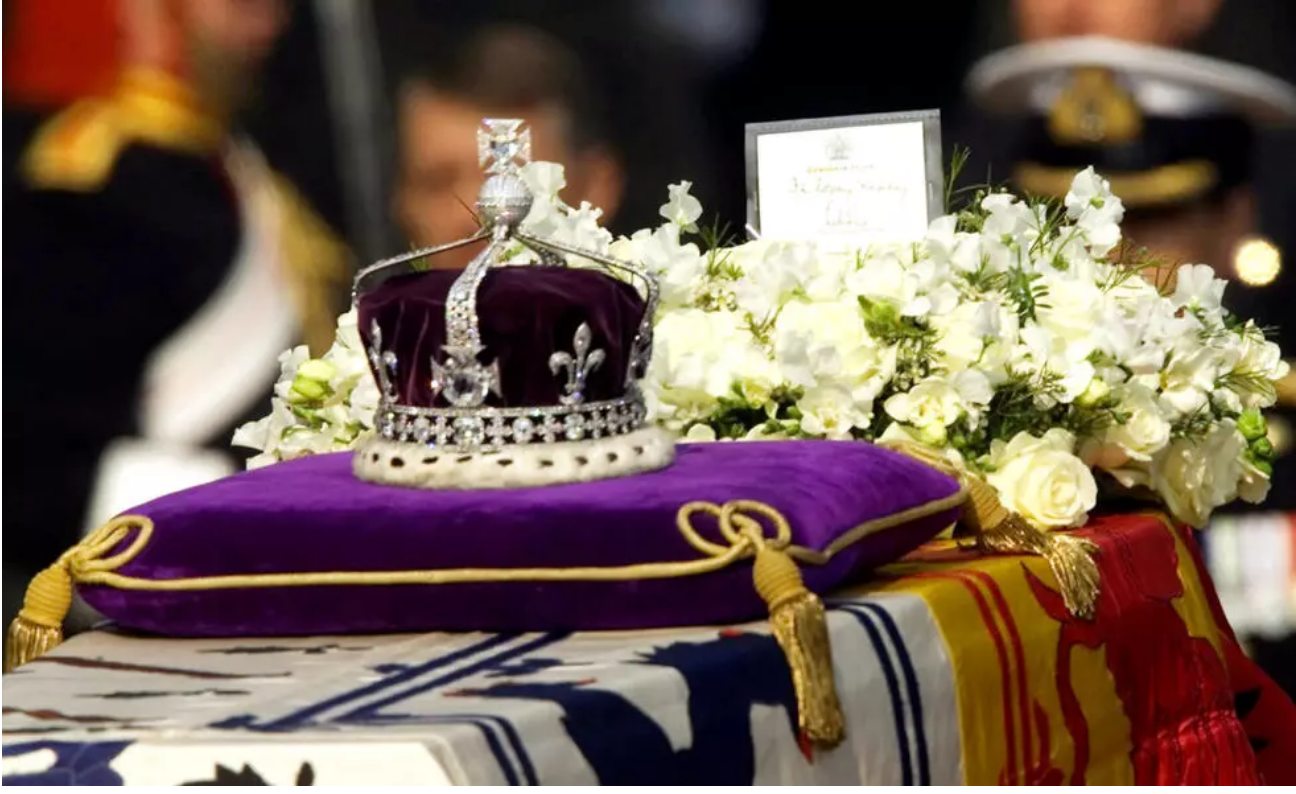
That boy was Maharaja Duleep Singh, the last ruler of the Sikh Empire. Following the Second Anglo‑Sikh War, the British East India Company forced him to sign the Treaty of Lahore. Article III was chillingly simple: “The gem called the Koh‑i‑Noor… shall be surrendered by the Maharajah of Lahore to the Queen of England.”
The diamond was packed in a box, shipped to London, and presented to Queen Victoria. When it was displayed at the Great Exhibition of 1851, crowds queued for hours to glimpse it. But they were disappointed: the traditional Mughal rose cut failed to dazzle under London’s grey skies. So Victoria’s consort, Prince Albert, ordered it recut. The process took 38 days and carved away 40% of the stone’s weight. What emerged was a brilliant oval, a Victorian diamond, scrubbed of its Indian identity.
Today, the Koh‑i‑Noor rests in the Tower of London, set in the crown of Queen Elizabeth the Queen Mother. It was conspicuously absent from Queen Camilla’s coronation in 2023, a diplomatic dodge that spoke volumes about the sensitivities that still cling to the stone.
The Claimants: A Map Of Colonial Harm.
Here is where the story fractures into a kaleidoscope of competing claims, each one a ghost of empire.
India has been the most persistent suitor. Since independence in 1947, successive Indian governments have demanded the diamond’s return, describing it as “a valued piece of art with strong roots in our nation’s history.” Jawaharlal Nehru, India’s first prime minister, framed the issue in distinctly anti‑colonial terms: “To exploit our good relations with some country to obtain free gifts from it of valuable articles does not seem to be desirable.” In 2016, India’s solicitor general told the Supreme Court that the diamond was “neither stolen nor forcibly taken” but rather “surrendered”, a nuanced legal position that disappointed many activists.
Pakistan has also staked a claim, noting that the diamond was taken from Lahore, the capital of Punjab, now in Pakistan. Pakistani officials have argued that the 1849 treaty was signed under duress and that the diamond rightfully belongs to the people of the Punjab region.
Afghanistan, specifically the Taliban, has repeatedly demanded the diamond, arguing that it was looted from Afghan rulers by the Sikh Maharaja Ranjit Singh in the early 19th century. A Taliban spokesman once declared, “The diamond was taken from us. It belongs to Afghanistan.”
Iran, too, has a historical claim, citing the Persian ruler Nader Shah, who seized the diamond from the Mughals in 1739. The Iranian government has periodically raised the issue in international forums, though with less vigour than India.
And then there are the Sikhs. Many Sikh activists argue that the diamond was the personal property of Maharaja Ranjit Singh and, later, his son Duleep Singh. They contend that the diamond should be returned to the Sikh community, not to any modern nation-state.
This multiplicity of claims is precisely what makes the diamond such a potent symbol. As Rutgers historian Audrey Truschke noted when the Mamdani controversy erupted: “The British took the Koh‑i‑Noor diamond from a Sikh king of Punjab in Lahore… So, it’s not clear to whom the British should return it. We all wish undoing colonialism’s harms were straightforward, but it’s not. And this is a good example.”
Truschke’s tweet drew a flood of replies: lobbies for India, Pakistan, Andhra Pradesh, Lahore, both Punjabs, the Sikhs, Khalistan, the Kakatiya dynasty, and the long‑vanished Mughals. “I repeat: undoing colonial harm is complicated,” she concluded.
The Debate Detonates:
Mamdani’s remarks did not fall into a vacuum. They landed in a world already convulsed by debates over restitution, reparations, and the legacy of empire.
In the United Kingdom, the response was swift and savage. Zia Yusuf, the home affairs spokesman for the hard‑right Reform UK party, branded the mayor’s comments “an insult to our King” and vowed to ban him from entering Britain if his party gained power. “This beautiful diamond is currently on display in the Tower of London. That is where it will stay,” Yusuf declared.
Shockat Adam, the independent MP for Leicester South, shot back: “No, Mohamed Yusuf, ‘loot’ is what the empire did in India, which is why the word originated. And what’s with this banning? I thought Reform was the champion of free speech?”
In India, the reaction was rapturous. “Bro quotes Nehru in victory speeches, plays Bollywood songs, and now wants the Kohinoor returned,” tweeted user Ratnesh Paliya. “At this point, he sounds more Indian than half of Indian Twitter.” Another user wrote: “Become the first Indian-origin African-born Mayor of NYC. Immediately asks for colonial loot to be returned to its rightful owners. Very Based.”
But not everyone was thrilled. “Koh‑i‑noor for us is a reminder of how power moved, and wealth was taken,” wrote Zeba Zoariah, a South Asian commentator. “Urging the Crown in a New York room may sound bold for your crowd, but we get your act. Stop speaking on behalf of us. We’ve lived this history; we can tell when it’s being performed.”
Ken Frydman, a Democratic operative and former spokesperson for Rudy Giuliani, called Mamdani’s remark “a terrible idea” and accused him of politicising the King’s visit. “The sitting mayor of New York City shouldn’t give us a history lesson while politicising the visit of the sitting King of England,” Frydman told the New York Post. “We know the history. No one has forgotten colonialism.”
British historian Amanda Foreman offered a technical objection: “The King has no more power to return the diamond than he has to return Buckingham Palace to the people.”
Congressman Shashi Tharoor, the Indian MP and former UN under‑secretary‑general whose 2015 Oxford Union speech calling for Britain to pay reparations to its former colonies went viral, welcomed Mamdani’s intervention. Tharoor has long argued that it is “time to negotiate the return of stolen property.”
Meanwhile, in a striking coincidence, the Manhattan district attorney’s office announced on the very same day the return of 657 stolen antiquities worth nearly $14 million to India, a reminder that the battle over looted cultural heritage is not merely symbolic.
The Unfinished Reckoning:
The Koh‑i‑Noor is not unique. It is merely the most famous item in a vast ledger of colonial theft that spans continents and centuries. The Benin Bronzes. The Rosetta Stone. The Elgin Marbles. The Ethiopian treasures at Magdala. The list is endless, and each object tells the same story: a story of power, violence, and the long afterlife of empire.
What makes the diamond different is the sheer number of hands through which it has passed, each transfer a miniature narrative of conquest. The Mughals took it from the Kakatiyas. The Persians took it from the Mughals. The Afghans took it from the Persians. The Sikhs took it from the Afghans. The British took it from the Sikhs. Each conquest left a scar. To whom, then, should it be returned?
Truschke’s question is not an evasion; it is an invitation. Undoing colonial harm is indeed complicated. But complexity is not an excuse for inaction. It is a call for a more honest conversation, one that acknowledges that the modern nation-state boundaries drawn by departing colonial powers do not map neatly onto historical ownership.
Mamdani, in his oblique way, seems to understand this. He did not name a destination. He simply said: Return it. The act of return, not the destination, was the point.
As the sun set over the Tower of London on April 29, 2026, the Koh‑i‑Noor glittered in its climate‑controlled case, oblivious to the storm swirling around it. But across the Atlantic, in a Bronx press room, a 34‑year‑old mayor had lit a fuse that may yet burn its way through the corridors of Buckingham Palace.
The Mountain of Light has changed hands many times. Perhaps, one day soon, it will change hands again.
Source: Multiple News Agencies
Submissions:
For The Secure Submission Of Documentation, Testimonies, Or Exclusive Investigative Reports From Any Global Location, Please Utilise The Following Contact Details For Our Investigations Desk: enquiries@veritaspress.co.uk or editor@veritaspress.co.uk
Help Support Our Work:
Popular Information is powered by readers who believe that truth still matters. When just a few more people step up to support this work, it means more lies exposed, more corruption uncovered, and more accountability where it’s long overdue.
Help Protect Independent Journalism, Which Is Currently Under Attack.
If you believe journalism should serve the public, not the powerful, and you’re in a position to help, becoming a DONATOR or a PAID SUBSCRIBER truly makes a difference.
DONATION APPEAL: If You Found This Reporting Valuable, Please Consider Supporting Independent Journalism.
Help Support Our Work – We Know, We Know, We Know …
Seeing these messages is annoying. We know that. (Imagine what it’s like writing them … )
Your support fuels our fearless, truth-driven journalism. In unity, we endeavour to amplify marginalised voices and champion justice, irrespective of geographical location.
But it’s also extremely important. One of Veritas Press’s greatest assets is its reader-funded model.
1. Reader funding means we can cover what we like. We’re not beholden to the political whims of a billionaire owner. We are a small, independent and impartial organisation. No one can tell us what not to say or what not to report.
2. Reader funding means we don’t have to chase clicks and traffic. We’re not desperately seeking your attention for its own sake: we pursue the stories that our editorial team deems important and believe are worthy of your time.
3. Reader Funding: enables us to keep our website and other social media channels open, allowing as many people as possible to access quality journalism from around the world, particularly those in places where the free press is under threat.
We know not everyone can afford to pay for news, but if you’ve been meaning to support us, now’s the time.
Your donation goes a long way. It helps us:
- Keep the lights on and sustain our day-to-day operations
- Hire new, talented independent reporters
- Launch real-time live debates, community-focused shows, and on-the-ground reporting
- Cover the issues that matter most to our communities, in real time, with depth and integrity
We have plans to expand our work, but we can’t do it without your support. Every contribution, no matter the size, helps us stay independent and build a truly people-powered media platform.
If you believe in journalism that informs, empowers, and reflects the communities we serve, please donate today.
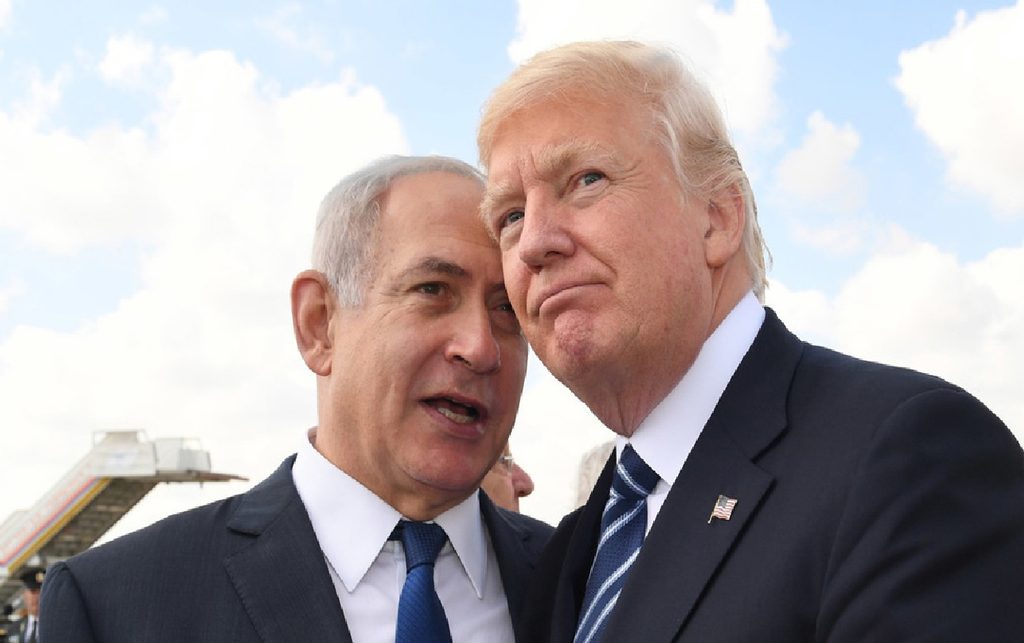
The Trump administration is preparing a $2.8 billion weapons package for Israel containing 40,000 2,000-pound
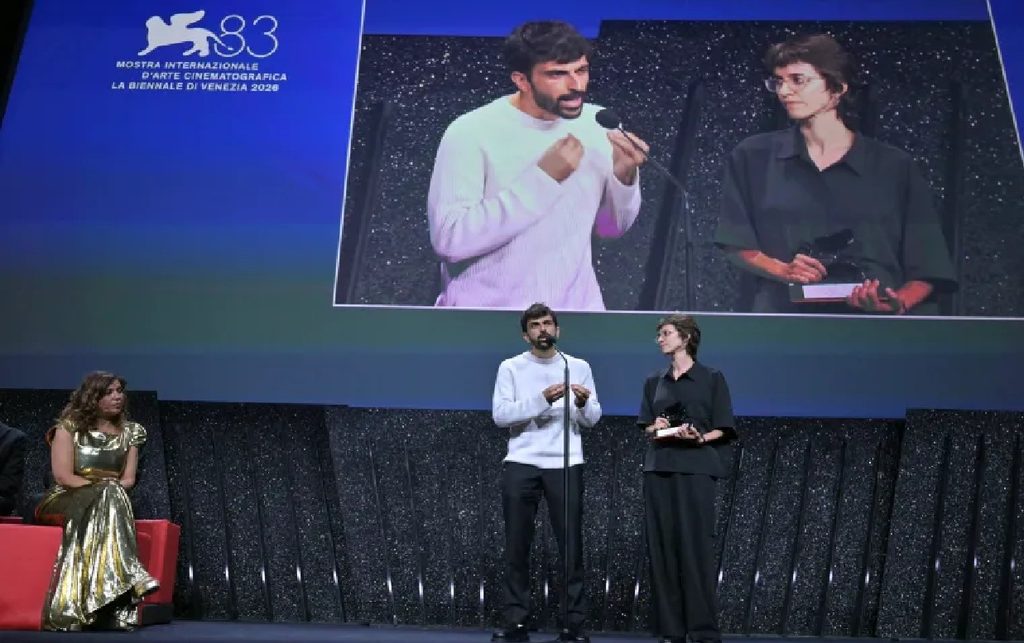
Film alleges mass civilian deaths are routinely built into military decisions amid Israel’s genocidal war
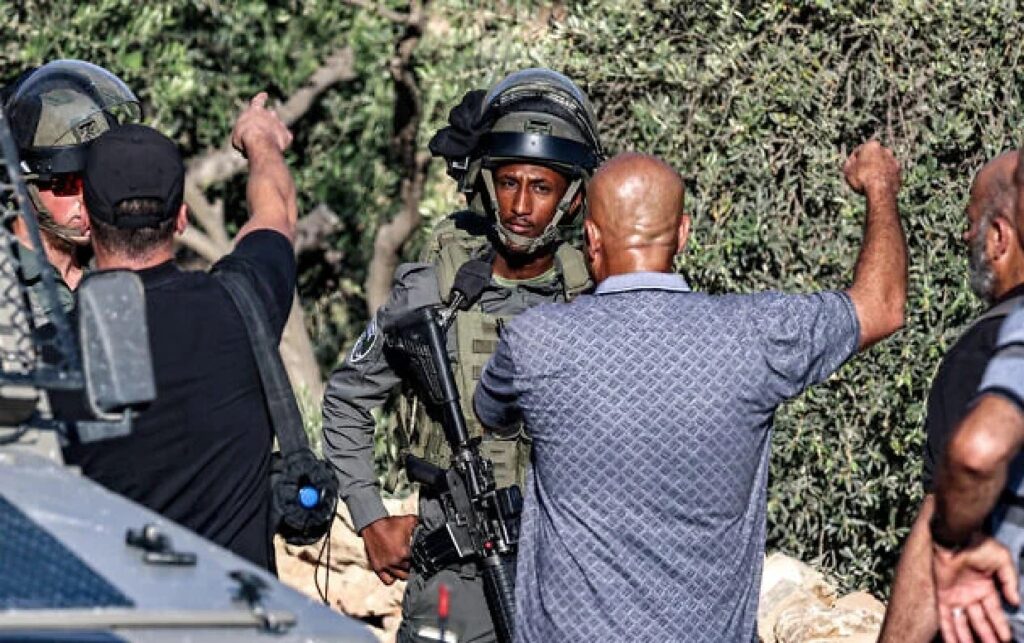
The Israeli rights group says violence, displacement, economic strangulation, and settlement expansion form part of

Houthi forces have captured the historic Red Sea port of Mocha and are advancing on
London’s historic sanctions against Israeli settlements mark a watershed moment in UK foreign policy, but
With 95% of Gaza’s population now wholly dependent on aid and more than 90% stripped
India calls for Kashmir and Ladakh to appear only on its official map after a
ISLAMABAD – In the high-stakes political theatre of Pakistan, the battleground has shifted from the
Francesca Albanese says third states have an ICJ-mandated obligation to end Israel’s occupation. But with
As Israeli jets bomb a Syrian air base over alleged Turkish deployment plans, Ankara, Washington