


Author:
Help support our mission, donate today and be the change. Every contribution goes directly toward driving real impact for the cause we believe in.
Defence Minister Israel Katz’s Unbounded Declaration That Troops Will Remain “Until Further Notice” In Self-Declared Security Zones Across Three Sovereign Territories Has Gutted A U.S.-Brokered Peace Framework, Codified Open-Ended Military Occupation, And Ignited A Firestorm Of Condemnation From Lebanese Officials, Displaced Villagers, International Rights Groups, And Even Retired Israeli Generals, Exposing The Widening Chasm Between Diplomatic Theater And Permanent Facts On The Ground.
JERUSALEM / BEIRUT / DAMASCUS / GAZA CITY — In a declaration that fundamentally reshapes the military and political landscape of the Levant, Israeli Defence Minister Israel Katz announced on Wednesday, July 1, 2026, that Israeli forces will remain in self-declared “security zones” inside Lebanon, Syria, and the Gaza Strip “until further notice.” The statement, delivered during a memorial ceremony for soldiers killed in the 2006 Lebanon war, codifies what critics on the ground and international legal experts are calling a policy of indefinite occupation, one that flagrantly contradicts the U.S.-brokered framework agreement signed with Lebanon just five days earlier, and entrenches Israeli military control over vast swaths of three neighbouring territories.
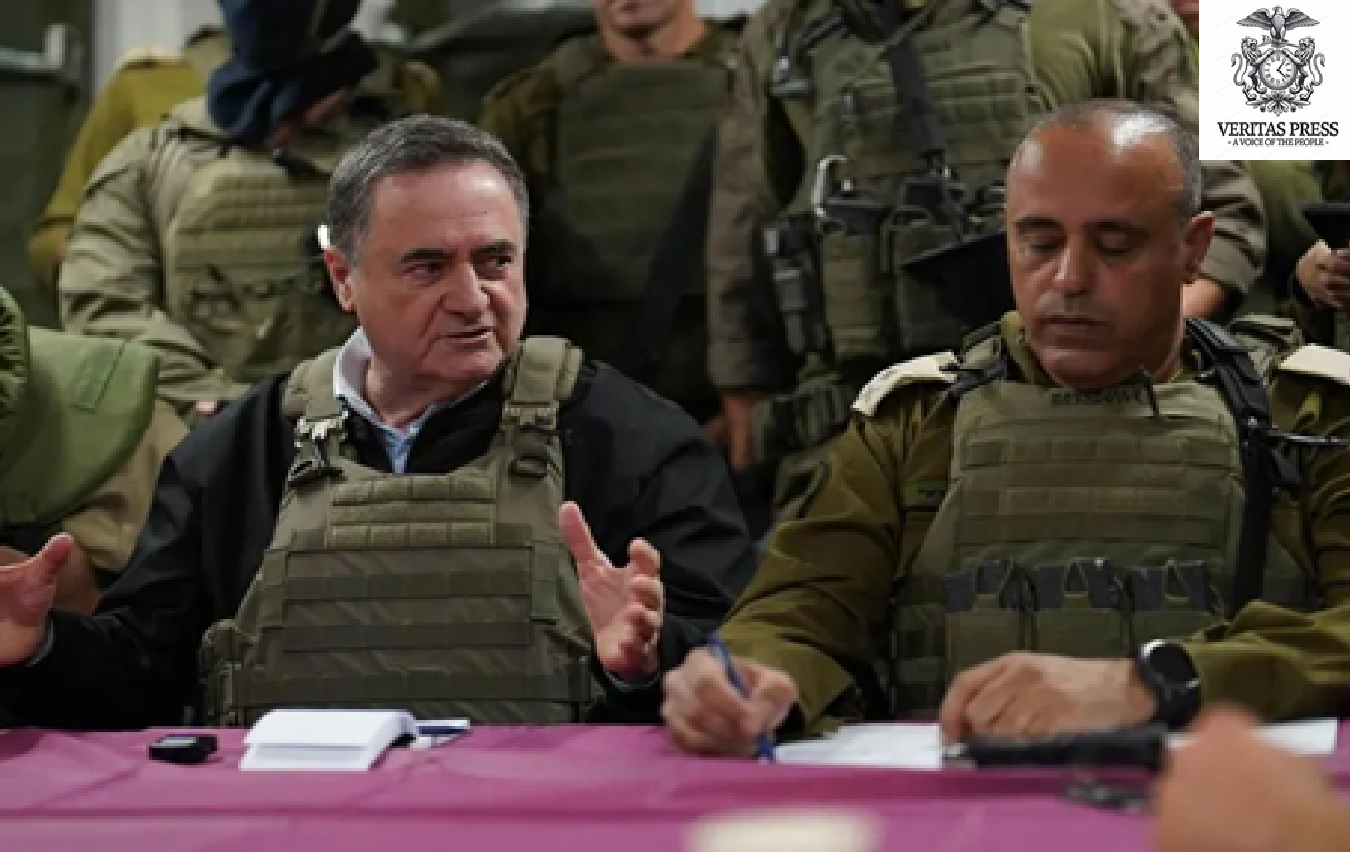
“The IDF will remain in the security zones in Lebanon, Syria and Gaza until further notice, in order to protect Israel’s residents and communities from jihadist terrorists,” Katz said, according to a Defence Ministry communiqué. “We will not withdraw from the security zones.”
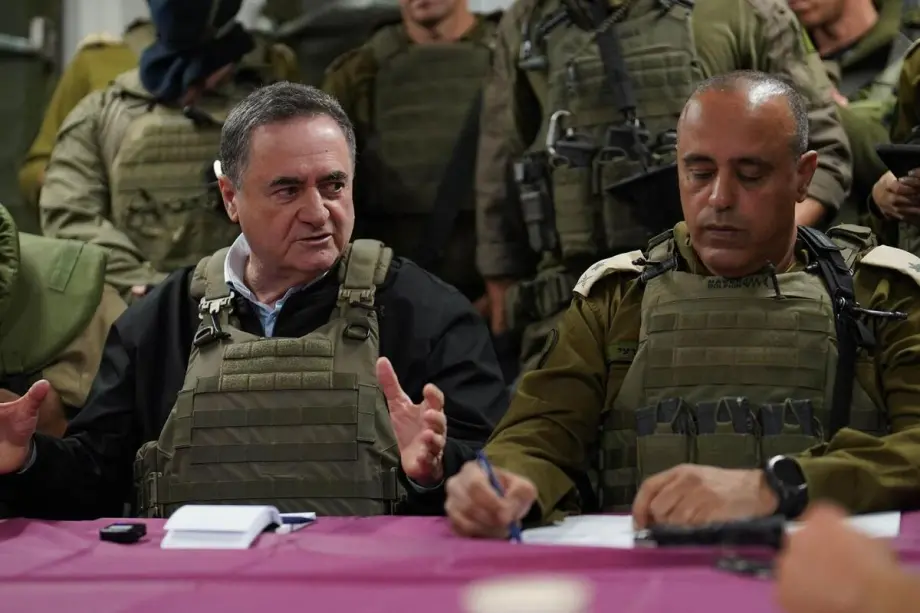
The defence minister’s language, rendered in some Israeli media as “indefinitely” rather than the official English translation’s “until further notice”, was deliberately unbounded. He offered no timeline, no conditions short of the complete disarmament of Hezbollah across all of Lebanon, and no definition of the zones’ final borders. The announcement also came with a direct threat to Iran: should the Islamic Republic attack Israel over its operations in Lebanon, Katz warned, it would be struck with “full force.”
This muscular posture arrives amid the most complex and multi-front Israeli military entanglement in decades. Since early March 2026, Israel has fought a grinding ground and air war in southern Lebanon; has repeatedly bombed and invaded Syrian territory since the fall of Bashar al-Assad; and continues to occupy roughly 70% of the Gaza Strip under a fragile ceasefire that has held, after a fashion, since October 2025. Taken together, Katz’s words signal a doctrinal shift away from temporary “mowing the grass” operations toward open-ended territorial control, a reality that is already generating fierce blowback from local populations, rights groups, and some diplomatic quarters, even as it finds quiet acquiescence in Western capitals.
A Framework Undone:
The timing of the statement was devastating for the U.S.-sponsored framework agreement inked with Lebanon on Friday, June 26. That deal, hammered out under intense American shuttle diplomacy, was meant to pave the way for a lasting peace and, critically, for the disarmament of Hezbollah, an Iranian-backed militia and political party that allegedly drew Lebanon into the current war. The framework envisioned a sequenced process in which the Lebanese Armed Forces would eventually assume security control in the south, replacing both Hezbollah fighters and Israeli troops. Israeli officials now say any withdrawal is conditional on Hezbollah being disarmed first, a demand that Lebanese and Hezbollah officials call a recipe for permanent occupation.
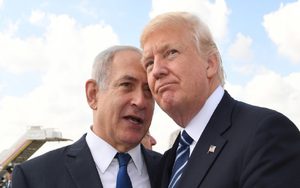
The initial Hezbollah retaliation erupted on March 2, 2026, with rocket barrages lighting up the northern Israeli sky, the smoky trails of missiles slicing through the air, to avenge Iran’s Supreme Leader’s death from coordinated U.S.-Israeli strikes the prior month, including earlier Israeli attacks. Israel answered with a massive aerial bombardment and a ground invasion that has killed nearly 4,300 people in Lebanon, according to the Lebanese health ministry, and displaced over a million. The Israeli military has acknowledged losing 38 soldiers and one civilian contractor in the fighting. On Tuesday, June 30, Prime Minister Benjamin Netanyahu himself visited occupied Lebanese territory, the first such trip by an Israeli premier, and told troops that Israel would not withdraw “as long as Hezbollah continues to pose a threat.”
For the Lebanese government, already buckling under a collapsed economy and a political vacuum, the disconnect between diplomacy and reality is catastrophic. “We signed an agreement in good faith that was supposed to lead to a complete Israeli withdrawal and the deployment of the Lebanese army,” a senior Lebanese official involved in the negotiations told this reporter on condition of anonymity because of the sensitivity of the talks. “Minister Katz just told us the agreement is worthless. The occupation will stay. What are we supposed to tell our people?” In Beirut, caretaker Prime Minister Najib Mikati released a statement calling Katz’s remarks “a flagrant violation of the framework and a rejection of the path to peace.” Hezbollah, for its part, issued a communiqué declaring that “resistance will continue until the last inch of Lebanese land is liberated, regardless of any paper signed under American pressure.”
The Syrian Quagmire:
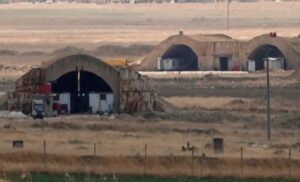
Israel’s “security zone” in Syria is less defined but no less real. Since the overthrow of Bashar al-Assad, the Israeli military has carried out hundreds of airstrikes and repeated ground incursions, carving out what it describes as a demilitarised buffer zone in the southern provinces of Quneitra and Daraa. Tanks and infantry have advanced beyond the 1974 disengagement line, occupying abandoned Syrian army positions and villages. Katz’s statement now lumps this Syrian front into the same indefinite logic.
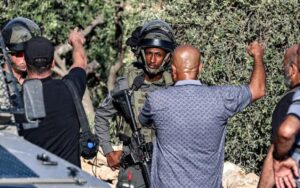
The new authorities in Damascus, a fractious transitional council struggling to assert control, have condemned the incursions as a violation of sovereignty. “The Israeli occupation of Syrian land under the pretext of a ‘security zone’ is a continuation of the aggression we have faced for decades,” Foreign Ministry spokesperson Nisreen al-Homsi said Thursday. “It will not bring security; it will breed more extremism.” Residents of the southern villages describe a climate of fear, with Israeli drones a constant presence overhead and young men rounded up for questioning. “We are farmers, not jihadists,” said Abu Yasser, a 62-year-old farmer from the village of Jubata al-Khashab, reached by phone. “But the soldiers treat every man like a threat. They’ve turned our fields into a military camp.”
Gaza: The Forgotten Ceasefire.
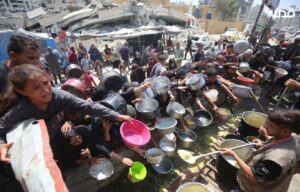
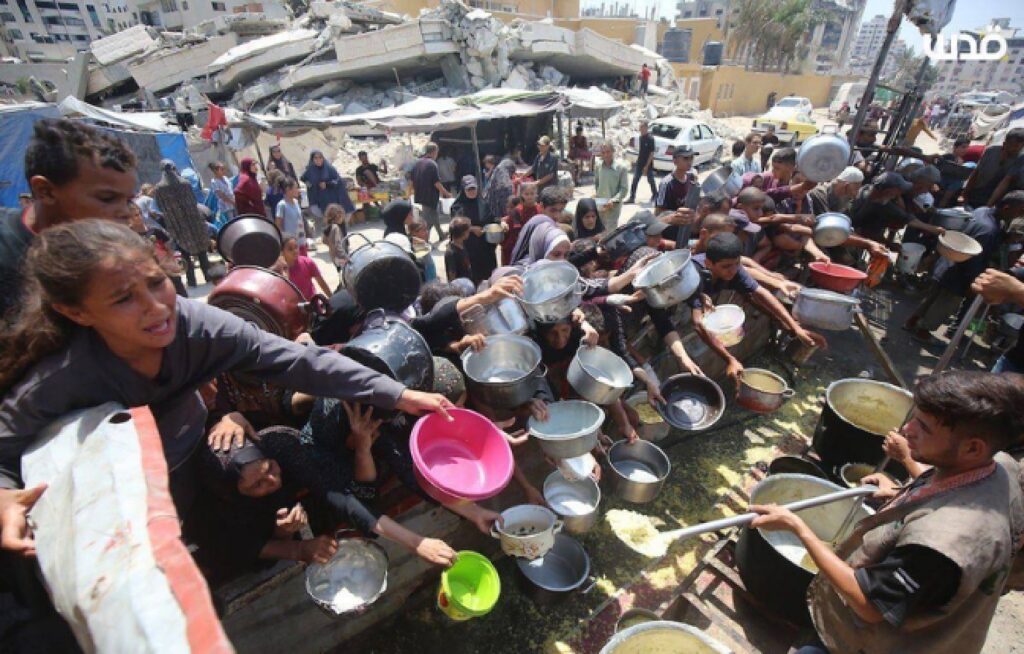
Nowhere is the gap between official narrative and ground truth more stark than in Gaza. A ceasefire brokered in October 2025 halted the most intense phase of the war that began after the Hamas-led attacks of October 7, 2023, but it did not end the occupation. Israel retained control of the Netzarim Corridor bisecting the Strip and the Philadelphi Corridor along the border with Egypt, and its forces have since expanded their footprint to cover nearly 70% of the territory. The military frames this as a necessary measure to prevent Hamas from rebuilding, but for the 1.9 million Palestinians still crammed into shrinking “humanitarian zones,” it is a suffocating permanent siege.
“The ceasefire is just a word on paper,” said Mariam al-Masri, a mother of four sheltering in a tent in Mawasi, a coastal area designated as a safe zone but repeatedly struck. “The soldiers are everywhere. We cannot move freely; we cannot rebuild our homes. They say it’s temporary, but it’s been almost a year. Minister Katz now says ‘until further notice.’ What notice? We will die here before we get any notice.” Hamas and the Israeli military routinely accuse each other of violating the truce, with low-intensity clashes and tunnel operations continuing. The Palestinian Authority, whose writ in Gaza is non-existent, has called for an emergency UN Security Council session.
Legal And Humanitarian Alarm:
Human rights organisations and international legal experts have reacted with alarm. “The Israeli government is dressing up de facto annexation in the language of counterterrorism,” said Omar Shakir, Israel and Palestine Director at Human Rights Watch. “Indefinite military occupation with no clear endpoint and no path to civilian self-governance is exactly the situation in the West Bank, and now it is being replicated in Gaza, southern Lebanon, and parts of Syria. This is a flagrant violation of the Fourth Geneva Convention.”
Amnesty International released a statement describing the “security zones” as “unlawful permanent occupations” and called for targeted sanctions against Israeli officials. The International Crisis Group warned in a new briefing that the policy “risks entrenching a perpetual state of war, radicalising a new generation, and draining Israel’s military, economic, and diplomatic capital.” Even within Israel, some security analysts are uneasy. Retired Brigadier General Yossi Kuperwasser, a former head of the Military Intelligence research division, told this reporter: “The concept of ‘security zones’ is tactically logical, but when you announce that they are indefinite, you transform them into strategic traps. You will have to govern populations that hate you, supply your forces, and absorb constant attrition. This is not the Lebanon of 2000; the region is far more volatile.” However, Kuperwasser added that “the government sees no alternative as long as the threat of jihadist elements crossing the border is real.”
Diplomatic Fallout And Washington’s Role:
The international reaction has been divided. The U.S. State Department issued a carefully worded statement that did not explicitly criticise Katz’s declaration. “We recognise Israel’s sovereign right to defend itself against terrorist threats emanating from neighbouring territories,” a spokesperson said. “At the same time, we continue to support the full implementation of the framework agreement with Lebanon, which envisages an eventual Israeli withdrawal as part of a comprehensive disarmament process.” Privately, however, U.S. officials acknowledge the contradiction. “Katz’s statement blew a hole in our diplomacy,” one senior Western diplomat in Jerusalem said, speaking on condition of anonymity. “We sold the framework to the Lebanese as a way out of the war. Now Israel is saying the occupation is endless. It makes us look complicit.”
The European Union’s foreign policy chief, in a statement, called on Israel “to clarify the temporary nature of these security measures and to ensure they do not become permanent facts on the ground.” Russia and China, for their part, have seized on the developments to condemn Western hypocrisy and call for an immediate withdrawal.
The Iran Factor:
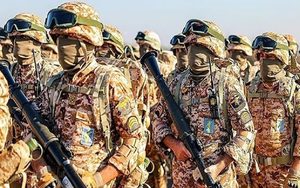
Katz’s explicit threat to strike Iran “with full force” adds a regional powder-keg dimension. Iran’s leadership, still reeling from the assassination of the Supreme Leader and internal power struggles, has been cautious about direct retaliation, relying instead on proxy forces. But the new Supreme Leader, Ayatollah Mohammad Reza Arafi, warned in a Friday sermon that “the Zionist entity’s occupation of Arab lands will not stand, and its crimes will be answered at the time and place of our choosing.” The prospect of a miscalculation spiralling into full-scale regional war is palpable. Hezbollah, despite its losses, retains a significant rocket and missile arsenal, and Israeli military officials privately estimate that a protracted insurgency in the “security zones” could exact a far higher toll than the 38 fatalities acknowledged so far in Lebanon.
A Permanent Reality?
On the ground, the contours of this new indefinite presence are hardening. In southern Lebanon, Israeli engineering units are building fortified outposts, paving access roads, and installing surveillance infrastructure reminiscent of the occupation zone that existed until 2000. In Syria, the buffer area is being gradually depopulated of its remaining inhabitants. In Gaza, the Israeli military has issued tenders for long-term facilities at key junctions. A senior defence official, briefing reporters on background, said the “security zones” would be “thin but deep,” relying on technology and rapid reaction forces, not sprawling settlements. But the historical echoes are inescapable.
Hassan Nasrallah, the Hezbollah leader who survived early Israeli assassination attempts, delivered a televised address on Wednesday evening, calling Katz’s words “a gift to the resistance.” He added: “They have announced a new occupation. They have answered every Lebanese who doubted why we fight. Our people will not accept a return to the years of occupation, no matter how many Martyrs we offer.” In the Dahiya district of Beirut, already pummeled by airstrikes, banners appeared overnight reading “No to the security zone, yes to liberation.”
Meanwhile, in Jerusalem, the mood in the security establishment is one of grim determination. At the 2006 memorial ceremony, Katz stood before bereaved families and declared that the fallen had “laid the foundation for Israel’s security doctrine.” The question now, as the region hurtles deeper into a cycle of occupation and resistance, is whether that doctrine is laying the foundation for lasting safety or for a generation of new graves on all sides.
Conclusion: The Architecture Of Permanent War.
Beyond the immediate shock of Minister Katz’s declaration lies a more insidious and carefully constructed reality: Israel is not merely reacting to threats, but actively dismantling the very distinction between temporary military necessity and permanent territorial control. By collapsing the Lebanese, Syrian, and Gaza fronts into a single, unbounded doctrine of “security zones”, deliberately left undefined in geography, duration, and legal status, the Israeli government has engineered a form of occupation that requires no annexation paperwork, no colonial settlements, and no endpoint. It is occupation by administrative decree, self-perpetuating precisely because its stated condition for ending, the total disarmament of ideologically entrenched militant groups, is an impossibility that Israeli planners know will never be met. This is not a policy failure; it is the policy itself.
The diplomatic theatre surrounding the U.S.-brokered Lebanon framework now stands exposed as a cynical exercise in managed hypocrisy. Washington invested political capital in a deal it either could not or would not enforce, while Israeli officials, by visiting occupied territory, signing agreements, and then immediately declaring withdrawal conditional on fantasies, demonstrated that the framework was less a peace process than a political anaesthetic, designed to blunt international outcry while the bulldozers kept working. The result is a profound erosion of what little credibility Western diplomacy retained in the Arab world. Every handshake between Lebanese officials and American mediators is now retroactively poisoned by Katz’s words; every promise of a phased withdrawal reads like a premeditated lie.
The human dimension is even more damning. The article’s testimonies from a Lebanese farmer, a Gazan mother, and a Syrian villager reveal a common thread: populations trapped not by the chaos of war, but by the calculated permanence of a new military architecture. These are not “jihadist elements” being neutralised; they are civilians whose lives, livelihoods, and futures are being erased beneath the language of counterterrorism. When an Israeli defence minister declares that troops will remain “until further notice” while standing at a memorial for soldiers killed in a previous occupation, the historical circle is not just ironic; it is a confession. The 2006 Lebanon war did not bring security. The 1982 invasion did not bring security. The occupation of Gaza did not bring security. And yet the same logic is being amplified, on a wider scale, as if repetition could transform a failed strategy into a successful one.
International humanitarian law, already stretched to breaking point, is now openly mocked. The Fourth Geneva Convention’s prohibition on the transfer of an occupying power’s civilian population into occupied territory may not technically apply here-no settlers are being moved, but the spirit of the law, which forbids indefinite military rule over a foreign population without a clear path to self-determination, is being hollowed out with bureaucratic precision. Human Rights Watch and Amnesty International have labelled the policy de facto annexation; what they have not yet fully articulated is that this model, occupation without annexation, control without responsibility, may represent a new and more durable form of subjugation, one designed to circumvent both international outrage and domestic demographic fears.
Finally, the strategic blindness is staggering. Retired Brigadier General Kuperwasser’s warning that these zones will become “strategic traps” is not a marginal dissent; it is the central lesson of every counterinsurgency campaign since the Second World War. For every fortified outpost, there will be an IED. For every surveillance drone, a tunnel. For every “jihadist” eliminated, a sibling is radicalised. Hezbollah’s Hassan Nasrallah called Katz’s words “a gift to the resistance”, and he was not engaging in mere propaganda. An occupying power that announces its intention to stay indefinitely has handed the insurgency its most powerful recruitment tool: certainty. The enemy is no longer a theoretical threat; he is the soldier at the checkpoint, the bulldozer in the olive grove, the announcement on the radio.
Israel may succeed in holding these zones for years, even decades. But it will not succeed in making them secure. The tragedy, and the critique, is not that Israel seeks to protect its citizens; it is that it has chosen a method guaranteed to produce the opposite result, while simultaneously immolating the diplomatic pathways that might have offered an exit. The security zones are not shields. They are magnets for the very violence they purport to prevent, and the populations crushed beneath them will not forget.
Source: Veritas Press C.I.C. | Multi News Agencies
Help Support Our Work By Donating Today
Popular Information is powered by readers who believe that truth still matters. When just a few more people step up to support this work, it means more lies exposed, more corruption uncovered, and more accountability where it’s long overdue.
Help Protect Independent Journalism, Which Is Currently Under Attack.
If you believe journalism should serve the public, not the powerful, and you’re in a position to help, becoming a DONOR or a PAID SUBSCRIBER truly makes a difference.
DONATION APPEAL: If You Found This Reporting Valuable, Please Consider Supporting Independent Journalism.
Your support fuels our fearless, truth-driven journalism. In unity, we endeavour to amplify marginalised voices and champion justice, irrespective of geographical location. We operate independently, without any financial backing from billionaires.
But it’s also extremely important. One of Veritas Press’s greatest assets is its reader-funded model.
1. Reader funding means we can cover what we like. We’re not beholden to the political whims of a billionaire owner. We are a small, independent and impartial organisation. No one can tell us what not to say or what not to report.
2. Reader funding means we don’t have to chase clicks and traffic. We’re not desperately seeking your attention for its own sake: we pursue the stories that our editorial team deems important and believes are worthy of your time.
3. Reader Funding: enables us to keep our website and other social media channels open, allowing as many people as possible to access quality journalism from around the world, particularly those in places where the free press is under threat.
We know not everyone can afford to pay for news, but if you’ve been meaning to support us, now’s the time.
Your donation goes a long way. It helps us:
- Keep the lights on and sustain our day-to-day operations
- Hire new, talented independent reporters
- Launch real-time live debates, community-focused shows, and on-the-ground reporting
- Cover the issues that matter most to our communities, in real time, with depth and integrity
We have plans to expand our work, but we can’t do it without your support. Every contribution, no matter the size, helps us stay independent and build a truly people-powered media platform.
If you believe in journalism that informs, empowers, and reflects the communities we serve, please donate today.
Submissions:
For The Secure Submission Of Documentation, Testimonies, Or Exclusive Investigative Reports From Any Global Location, Please Utilise The Following Contact Details For Our Investigations Desk: enquiries@veritaspress.co.uk or editor@veritaspress.co.uk
GENEVA — A United Nations fact-finding mission has concluded there are “reasonable grounds to believe”
Iran’s GDP is projected to contract by 5.4 to 6.1% in 2026, its worst performance
The Trump administration is preparing a $2.8 billion weapons package for Israel containing 40,000 2,000-pound

Film alleges mass civilian deaths are routinely built into military decisions amid Israel’s genocidal war
The Israeli rights group says violence, displacement, economic strangulation, and settlement expansion form part of

Houthi forces have captured the historic Red Sea port of Mocha and are advancing on
London’s historic sanctions against Israeli settlements mark a watershed moment in UK foreign policy, but
With 95% of Gaza’s population now wholly dependent on aid and more than 90% stripped
India calls for Kashmir and Ladakh to appear only on its official map after a
ISLAMABAD – In the high-stakes political theatre of Pakistan, the battleground has shifted from the