Kamran Faqir is a volunteer investigative journalist and writer committed to exposing hidden truths and amplifying underreported stories. Driven by social justice, he brings sharp insight and fearless truth-telling to independent journalism. NUJ registered.
Article Date Published:
Article Date Modified:
14 minutes
Views:401
Listen to this article
Help support our mission, donate today and be the change. Every contribution goes directly toward driving real impact for the cause we believe in.
A Shattered Ceasefire, A Nervous Kuwait, And A Strategic Island Under Fire, China Steps Into The Void As The Middle East Teeters On The Edge Of All-Out War.
BEIJING / KUWAIT CITY / QESHM ISLAND, 3 June 2026 — In the predawn darkness of Wednesday, the fragile two-month calm that had settled over the Persian Gulf was shattered by the screech of air-raid sirens, the thunder of interceptor missiles, and the distant rumble of precision-guided bombs. What began as a tense but diplomatically managed truce between the United States and Iran has now lurched violently back toward open conflict, drawing in nervous Gulf neighbours and prompting an unusually pointed intervention from China. The world, it seems, is once again holding its breath.
China’s Foreign Ministry summoned journalists to its iconic blue-tiled briefing room in Beijing with an urgency that betrayed the gravity of the moment. Spokeswoman Mao Ning, rarely one to deviate from scripted composure, delivered a statement that mixed diplomatic boilerplate with an unmistakable edge of alarm. “China is deeply concerned over the current situation,” she said, her words clipped but deliberate. “Renewed warfare serves no one’s interest. We hope relevant parties can cherish the opportunities of peace, honour ceasefire commitments and keep the momentum of negotiation, stick to dispute settlement through political and diplomatic means, and realise a comprehensive and lasting ceasefire at an early date.”
Behind that carefully calibrated language lies a cascade of military actions that have unravelled the ceasefire painstakingly patched together on 8 April, itself a pause after the 28 February outbreak of hostilities, when the United States and Israel launched coordinated strikes against Iranian nuclear and military infrastructure, triggering a brutal three-week exchange of missiles, drone swarms, and cyberattacks that left thousands dead and the global economy reeling. Now, the cycle of retaliation has resumed with ferocious speed.
The Night The Missiles Returned:
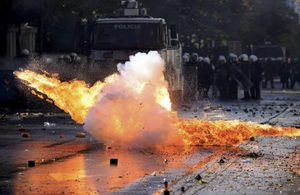
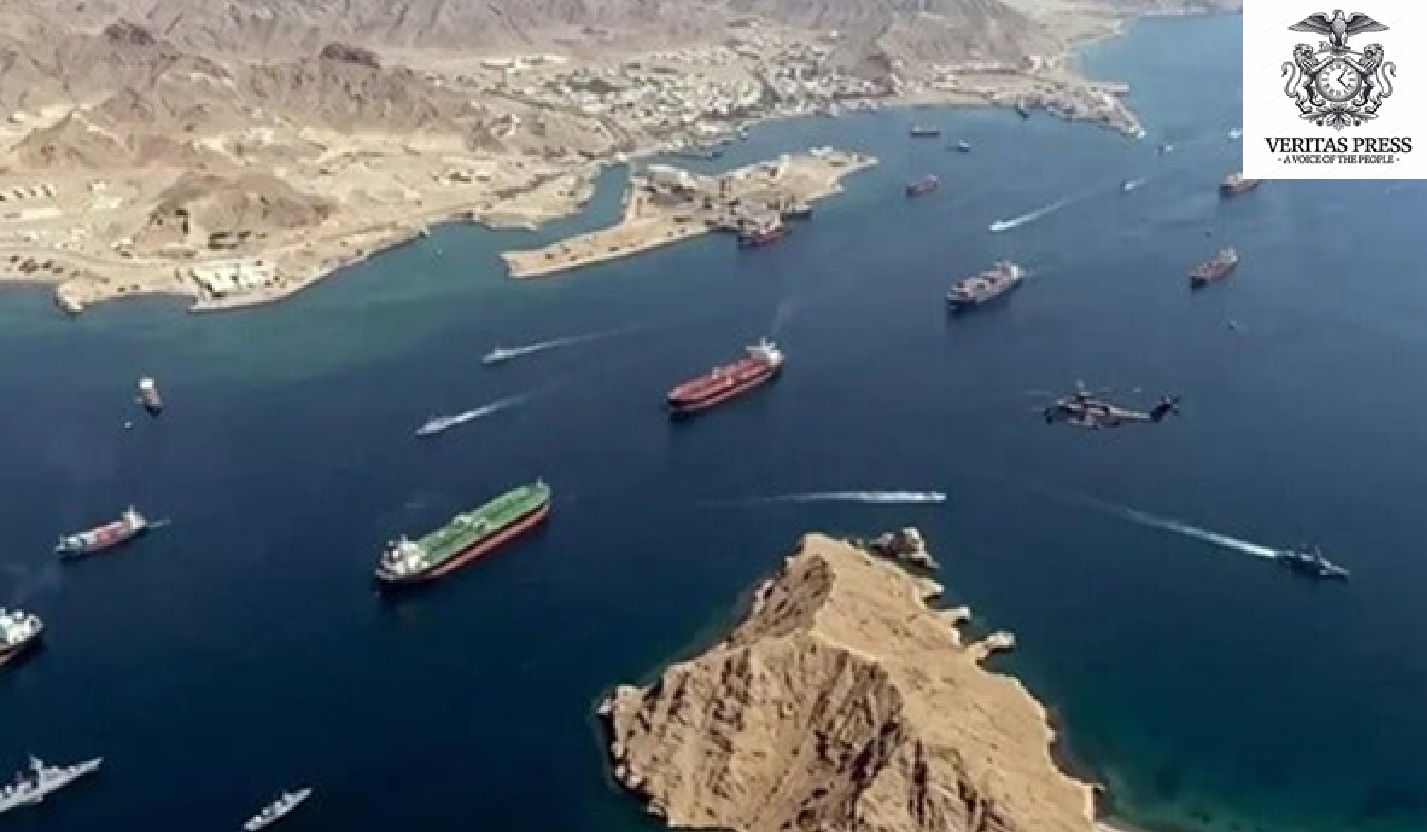
According to the United States Central Command (CENTCOM), American forces conducted “precision air strikes” on Qeshm Island, Iran’s sprawling hub in the Strait of Hormuz, early Wednesday. A CENTCOM statement, obtained by multiple news agencies, characterised the operation as a “necessary and proportionate response to attempted attacks by Iran across the Middle East,” adding that US Army units, alongside allied forces, had intercepted “multiple Iranian ballistic missiles and one-way attack drones” in the hours preceding the raid.
Iranian state media, for its part, painted a different picture. Press TV acknowledged the strikes on Qeshm but claimed air defence systems had “successfully engaged” the incoming munitions, while accusing the United States of “violating the ceasefire and provoking a regional inferno.” The Islamic Revolutionary Guard Corps (IRGC) released a statement vowing that “the aggressors will regret their miscalculation,” though conspicuously stopped short of confirming its own launch of missiles and drones, a pattern of plausible deniability that analysts say is designed to calibrate escalation while preserving a narrative of victimhood.
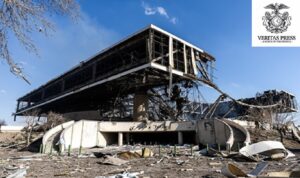
On Qeshm Island itself, residents described a night of terror. “I thought the sky was falling,” said Abdullah Moradi, a 54-year-old fisherman reached by telephone in the port town of Qeshm City. “First, there was a whistle, then a huge orange flash over the naval base. Our windows shattered. My grandchildren were screaming. We have lived through sanctions, protests, and now this. Every ceasefire feels like a lie.” Moradi’s testimony, echoed by several other locals who requested anonymity for fear of reprisals, spoke of secondary explosions suggesting ammunition depots or fuel storage had been hit. Iranian authorities have restricted independent media access to the island, making verification difficult, but satellite imagery reviewed by the investigative monitoring group Middle East EyeWatch shows fresh burn scars and structural damage consistent with airstrikes near the Qeshm Naval Base and an adjacent industrial port.
Kuwait Caught In The Crossfire:
Perhaps the most unnerving development for the wider region came not from the belligerents themselves, but from Kuwait, a small, oil-rich emirate that has long sought to balance its alliances with Washington and its geographic vulnerability to Iranian retaliation. In a terse statement released at 4:17 a.m. local time, the Kuwaiti Ministry of Defence confirmed that its air defence systems had been activated to counter “hostile missile and drone attacks” entering national airspace. Unverified videos circulating on social media showed the night sky over Kuwait City lit up by tracer fire and the explosive intercept of what appeared to be a Shahed-type drone.
“This is a nightmare scenario for the Gulf states,” said Dr. Fatima al-Sabah, a Kuwait-based political analyst and visiting fellow at the Arab Gulf States Institute in Washington, speaking via video link. “Kuwait is not a party to this conflict. It hosts thousands of American troops, but it also maintains diplomatic channels with Tehran. The fact that projectiles are falling on its territory means the conflict is bleeding beyond any controllable perimeter. We are seeing spillover that could activate Article 5-type considerations among the Gulf Cooperation Council, and that terrifies everyone.”
Activist groups in Kuwait swiftly condemned both sides. The Kuwaiti Association for Human Security, a civil society network, issued a statement saying: “Our homeland has become a battleground without our consent. We demand immediate international guarantees to protect civilian lives and de-escalate what is fast becoming a regional war.” In the Jabriya district of Kuwait City, 38-year-old teacher Huda al-Mutairi told this reporter: “I stayed up all night holding my children. We hear the politicians talk about honouring ceasefires, but we are the ones who pay the price. What honour is there in bombs?”
A Ceasefire That Never Took Root:
To understand how the region arrived at this juncture, one must examine the ceasefire’s inherent fragility. The 8 April truce, brokered under intense diplomatic pressure from China, Oman, and Iraq, with tacit encouragement from Russia, was never a peace agreement. It was a technical pause, designed to halt the direct military exchanges that erupted after the US-Israeli operation of 28 February. That initial war, which the Biden administration’s successor (now the administration of President Jon Callahan) inherited and escalated, targeted what Washington called “imminent existential threats” from Iran’s nuclear programme and its alleged role in a series of drone attacks on Gulf shipping.
But the ceasefire papered over gaping wounds without addressing root causes. “It was a truce without teeth,” said Dr. Reza Pahlavan, an Iranian dissident academic now at the London School of Economics. “No monitoring mechanism, no buffer zones, no agreed disengagement lines. Both sides used it to rearm and reposition. The US moved additional carrier strike groups into the Arabian Sea. Iran accelerated its enrichment at underground facilities; this is the open secret. The question was never if it would collapse, but when.”
That “when” appears to have arrived with a series of ambiguous provocations. According to two senior European intelligence officials briefed on the matter and speaking on condition of anonymity, Wednesday’s escalation was preceded by at least three days of shadow warfare: cyberattacks on water desalination plants in Oman, the mysterious explosion of a container ship off Fujairah, and what one official termed “anomalous Iranian drone activity” near US positions in eastern Syria and the al-Tanf garrison. Whether these were genuine Iranian operations or false-flag provocations, perhaps by hardline elements in either establishment, remains a subject of furious speculation. “This has all the hallmarks of a conflict driven as much by internal political dynamics as by interstate grievances,” the European official said. “In Tehran, hardliners need a crisis to consolidate against reformers; in Washington, the midterms loom. Peace is nobody’s electoral strategy.”
China’s Mediation Gambit: Genuine Broker Or Strategic Calculation?
Beijing’s swift and public intervention is far from altruistic. China has invested billions in Iran’s energy infrastructure under a 25-year strategic cooperation agreement, and it depends on the Strait of Hormuz for a significant share of its oil imports. A full-scale US-Iran war would send crude prices spiralling, disrupt China’s fragile economic recovery, and potentially trap thousands of Chinese workers and assets in the crossfire. On Wednesday, the Shanghai International Energy Exchange saw crude futures surge by 8.7% within minutes of the first reports from Kuwait, triggering circuit breakers. The People’s Bank of China reportedly convened an emergency meeting to assess liquidity shocks.
“China’s statement isn’t just diplomatic theatre; it’s a reflection of acute economic anxiety,” said Professor Li Mingjiang of the S. Rajaratnam School of International Studies in Singapore. “Beijing has positioned itself as the mediator par excellence in the Middle East since it brokered the Saudi-Iran détente in 2023. But mediating a cold peace between regional powers is one thing; managing a hot war between a superpower and a regional heavyweight is another entirely. China wants to have its cake and eat it, maintaining energy ties with Iran, trading with the Gulf Arabs, and avoiding a direct confrontation with the US. The question is whether either Washington or Tehran views Beijing as an honest broker, or just as an opportunistic courtier trying to profit from their fight.”
In that sense, Mao Ning’s choice of words, insisting both sides “honour” a ceasefire that is now plainly inert, carried a diplomatic weight that went beyond mere platitudes. She notably did not condemn any specific actor, laying the blame on a generic “renewed warfare.” Yet the omission was telling. Iran’s Foreign Minister, reached by state media, welcomed “all genuine initiatives” for peace but pointedly added that the US “must be compelled to end its occupation and military adventurism.” The US State Department, in its only official reaction as of press time, offered a succinct “we remain committed to defending our forces and interests” and did not mention China’s appeal. Back-channel reports suggest Washington was “blindsided” by the Chinese statement’s implicit equivalence, according to one Congressional aide.
The Human Cost Mounts Quietly:
Amid the geopolitics, the human dimension is already being felt. Hospital sources in Bandar Abbas, across the strait from Qeshm, reported receiving over 40 wounded from the island before access routes were sealed, though official Iranian media has not confirmed these numbers. In Kuwait, no casualties have been reported, but the psychological toll is evident. Schools in the capital were ordered closed on Wednesday, and the stock exchange suspended trading “until further notice.” Flights to and from Kuwait International Airport were briefly grounded, with incoming aircraft diverting to Dammam and Baghdad.
Activist groups across the region, often suppressed or co-opted by their respective governments, have found rare common ground. The “Middle East Civil Society Peace Initiative,” a coalition of NGOs from Iran, Iraq, Kuwait, Yemen, and the Palestinian territories, issued an urgent statement calling for an emergency UN Security Council meeting and the deployment of a neutral monitoring mission to the Gulf. “Civilians are being held hostage to the geopolitical ambitions of elites in Washington, Tehran, and Tel Aviv,” said Fatemeh Karroubi, an Iranian peace activist and spokesperson for the coalition, speaking from an undisclosed location. “The ceasefire didn’t fail; it was never given a chance. We demand a genuine, inclusive process that addresses the security fears of all people, not just the pride of nations.”
The UN Secretary-General, in a brief statement, expressed “deep alarm” and urged all sides to “step back from the brink.” But past is prologue: the Security Council has remained paralysed, with Russia and China trading vetoes with the US and its allies over any resolution that would assign blame or impose enforceable measures.
The Fragile State Of A Negotiated Peace:
A critical examination reveals that the “comprehensive and lasting ceasefire” China demands may be precisely what neither party currently wants. For the US, a permanent ceasefire would freeze Iran’s nuclear latency at an unacceptably advanced stage; for Iran, it would cement a situation in which its proxy network across Lebanon, Syria, Iraq, and Yemen remains under continuous Israeli and American assault, while sanctions throttle the economy. Both sides are thus trapped in a prisoner’s dilemma where short-term military advantage appears more attractive than a long-term political settlement.
Yet the alternative is too horrific to contemplate. War gaming exercises conducted by the Centre for Strategic and International Studies and shared with journalists earlier this year modelled a “limited” exchange in the Gulf. The results: 12,000 civilian casualties within 72 hours, 40% of global LNG transit disrupted, and a spike in oil to $200 a barrel, sparking a global recession. A full-scale war could draw in Saudi Arabia, the UAE, Russia, and Turkey, setting the region ablaze for a generation.
As the sun rose over the Persian Gulf on Wednesday, fishing boats dared not leave the harbours, the air was acrid with the smell of burning fuel, and diplomats in Beijing, Brussels, and Muscat scrambled to revive a corpse. On Qeshm Island, Abdullah Moradi was sweeping glass from his doorstep. “Tell them to stop,” he said, his voice breaking. “Tell the world we are not soldiers. We are just people. We want to fish, not to die.”
Whether such pleas will pierce the armour of strategic calculation remains, for now, as uncertain as the morning calm that has once again been stolen from the shores of Hormuz. China’s call to “honour” the ceasefire may be the last whisper of diplomacy before the storm, or the first note of a new, more dangerous symphony. The choice lies in Washington and Tehran, and the clock is ticking.
Source:Veritas Press C.I.C. | Multi News Agencies
Submissions:
For The Secure Submission Of Documentation, Testimonies, Or Exclusive Investigative Reports From Any Global Location, Please Utilise The Following Contact Details For Our Investigations Desk: enquiries@veritaspress.co.uk or editor@veritaspress.co.uk
Help Support Our Work:
Popular Information is powered by readers who believe that truth still matters. When just a few more people step up to support this work, it means more lies exposed, more corruption uncovered, and more accountability where it’s long overdue.
Help Protect Independent Journalism, Which Is Currently Under Attack.
If you believe journalism should serve the public, not the powerful, and you’re in a position to help, becoming a DONATOR or a PAID SUBSCRIBER truly makes a difference.
DONATION APPEAL: If You Found This Reporting Valuable, Please Consider Supporting Independent Journalism.
Help Support Our Work – We Know, We Know, We Know …
Seeing these messages is annoying. We know that. (Imagine what it’s like writing them … )
Your support fuels our fearless, truth-driven journalism. In unity, we endeavour to amplify marginalised voices and champion justice, irrespective of geographical location.
But it’s also extremely important. One of Veritas Press’s greatest assets is its reader-funded model.
1. Reader funding means we can cover what we like. We’re not beholden to the political whims of a billionaire owner. We are a small, independent and impartial organisation. No one can tell us what not to say or what not to report.
2. Reader funding means we don’t have to chase clicks and traffic. We’re not desperately seeking your attention for its own sake: we pursue the stories that our editorial team deems important and believe are worthy of your time.
3. Reader Funding: enables us to keep our website and other social media channels open, allowing as many people as possible to access quality journalism from around the world, particularly those in places where the free press is under threat.
We know not everyone can afford to pay for news, but if you’ve been meaning to support us, now’s the time.
Your donation goes a long way. It helps us:
Keep the lights on and sustain our day-to-day operations
Hire new, talented independent reporters
Launch real-time live debates, community-focused shows, and on-the-ground reporting
Cover the issues that matter most to our communities, in real time, with depth and integrity
We have plans to expand our work, but we can’t do it without your support. Every contribution, no matter the size, helps us stay independent and build a truly people-powered media platform.
If you believe in journalism that informs, empowers, and reflects the communities we serve, please donate today.
Kamran Faqir is a volunteer investigative journalist and writer committed to exposing hidden truths and amplifying underreported stories. Driven by social justice, he brings sharp insight and fearless truth-telling to independent journalism. NUJ registered.
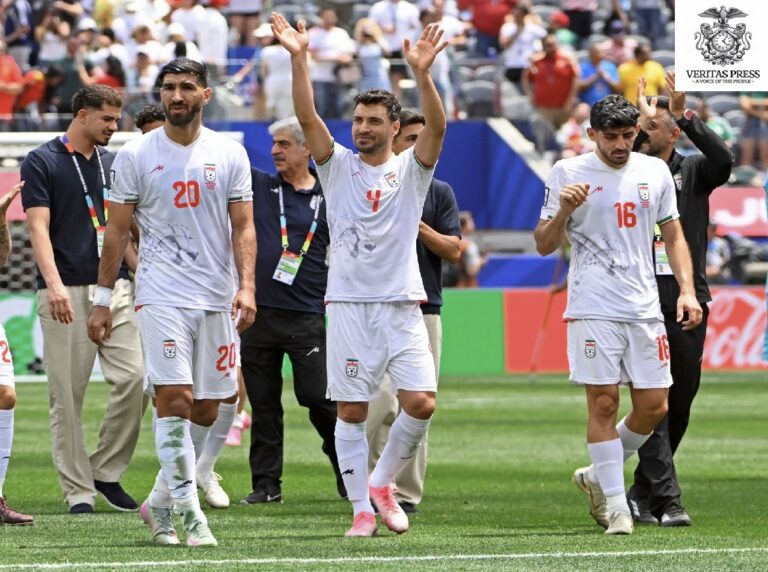
SEATTLE, TEHRAN — The U.S. Department of Homeland Security (DHS) will allow Iran’s national football team to enter the country 48 hours before their critical World Cup match against Egypt on Friday, a modest concession in a tournament where Team Melli’s travel conditions have sparked claims of oppression and competitive disadvantage.