







Help support our mission, donate today and be the change. Every contribution goes directly toward driving real impact for the cause we believe in.
A deeply sourced investigation reveals how the British government’s partial arms suspension masks a continuing torrent of components for the fighter jets bombing Gaza, while opaque licensing rules conceal the full value of military support that campaigners say implicates the UK in genocide.
LONDON/GAZA/OPT — On 2 September 2024, Foreign Secretary David Lammy stood before the House of Commons and announced what he described as a “robust” intervention: the suspension of around 30 arms export licences to Israel out of approximately 350. The decision, he said, followed a government review that had concluded there was a “clear risk” certain British-made military equipment “might be used to commit or facilitate a serious violation of international humanitarian law.”
It was, by any measure, a historic moment. For the first time since the creation of the state of Israel in 1948, a British government had formally acknowledged that UK arms exports posed a credible risk of being used in violations of the laws of war. Yet within hours, campaigners, legal experts, and some MPs were already dismantling the announcement’s significance. The suspensions, they pointed out, contained a gaping exception, one that would render the entire exercise largely symbolic.
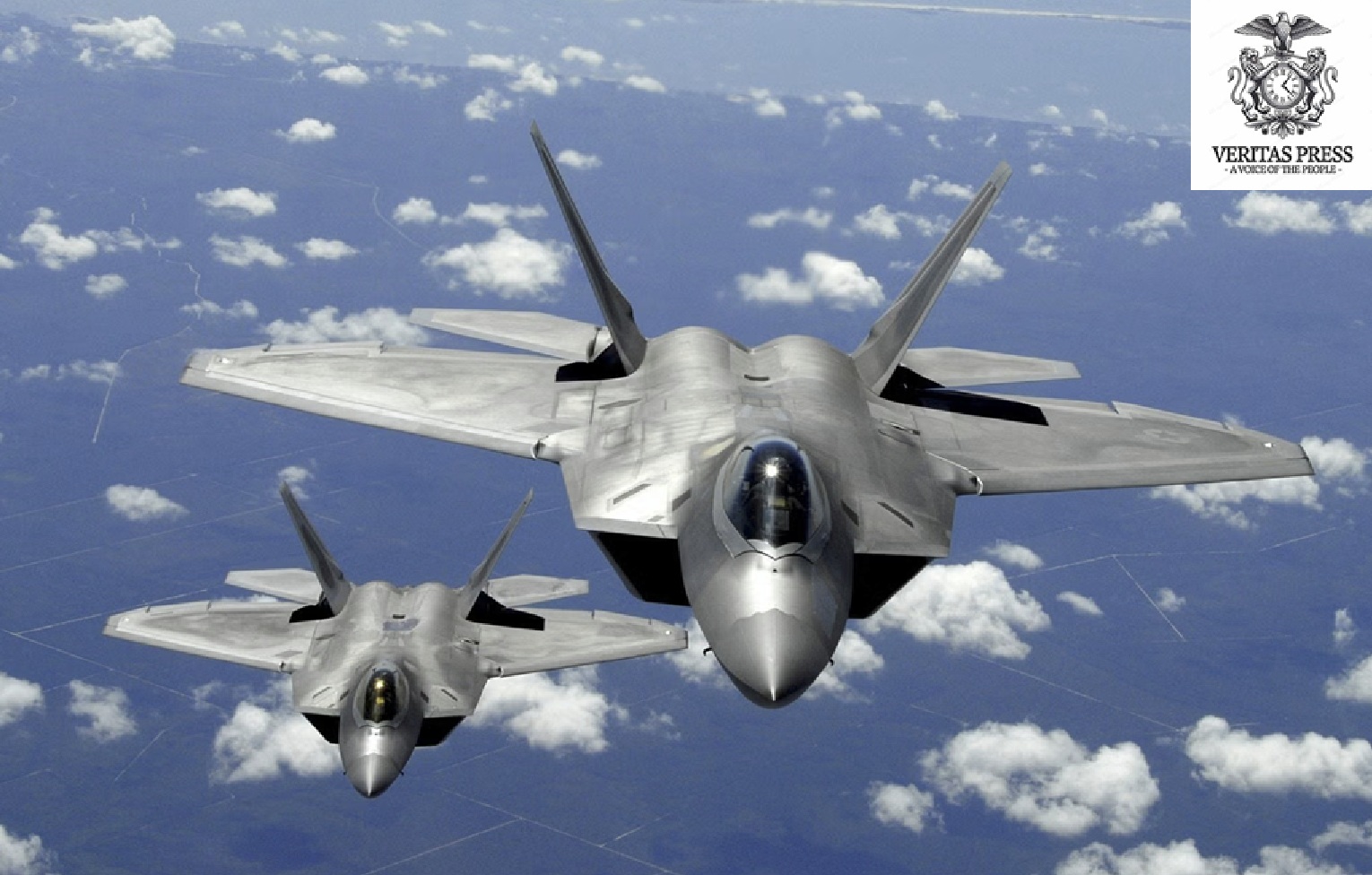
That exception was the F-35 Lightning II, the stealth multirole fighter jet that has become the backbone of Israel’s aerial bombardment of Gaza. The UK manufactures approximately 15% of every F-35 airframe, a programme worth £7.8 billion to British Arms Companies, with BAE Systems alone holding £6.6 billion in contracts. Crucially, Lammy declared that F-35 components would continue to flow to Israel, provided they were supplied indirectly, routed through the United States or pooled internationally, rather than shipped directly to the Israeli military.
“The global F-35 supply chain is vital for the security of the UK, our allies and NATO,” Lammy told a hushed chamber, in a line that would come to define the moral and legal contradictions at the heart of British foreign policy.
What has emerged since that September announcement is a picture of a government caught between its stated commitment to international humanitarian law and a defence-industrial complex so deeply integrated with Israel’s war machine that even a partial suspension could not meaningfully disrupt it. Campaigners, lawyers, and a growing coalition of MPs now argue that the UK is not merely a passive bystander but an active enabler of what the International Court of Justice has deemed a “plausible” genocide in Gaza.
The F-35: The Jet That Ate The Arms Embargo.
To understand why the F-35 exception is so consequential, one must grasp the scale of the programme. Since 2016, Israel has taken delivery of 45 F-35s, with more on order. The UK’s 15% workshare means British companies, primarily BAE Systems, Rolls-Royce, Lockheed Martin, Martin-Baker, have supplied components worth an estimated £430 million for those 45 aircraft, according to research by Campaign Against Arms Trade (CAAT) and War on Want. When spare parts are included, the total value of UK F-35 components delivered to Israel since 2016 jumps to approximately £572 million, nearly half the total value of all UK arms sales to Israel over the same period.
These figures are almost certainly underestimates. Because most F-35 exports are made through what are known as Open General Export Licences (OGELs), broad permissions that allow companies to ship unlimited quantities of specified items to multiple destinations without seeking individual approval, the true value and volume of components flowing to Israel is hidden from public scrutiny. The government’s own data, which recorded just £42 million in licensed military exports to Israel in 2022 and £18 million in 2023, explicitly excludes the vast majority of F-35-related transfers.
“The figures often given in the media, based on government data, are vastly understated,” said Katie Fallon, a spokesperson for CAAT. “Ministers point to a tiny number and say, ‘Look, it’s less than 1% of Israel’s defence imports.’ But that 1% narrative is entirely fabricated because the biggest and deadliest part of the trade isn’t counted.”
In 2023, the F-35 OGEL was used to deliver equipment to Israel 14 times, the highest number recorded since the licence was issued in 2016. The previous record was five deliveries in a single year. The surge coincided with the first three months of Israel’s assault on Gaza, which began after Hamas’s 7 October attack. By the government’s own logic, those 14 deliveries in 2023 raised precisely the “clear risk” that Lammy would later cite, yet they were not suspended, then or now.
“A Clear Risk They Might Be Used”: The Government’s Own Findings.
The legal threshold for suspending arms exports under UK law is unambiguous. The Consolidated EU and National Arms Export Licensing Criteria stipulate that a licence must not be granted, and existing licences must be revoked, if there is “a clear risk that the items might be used to commit or facilitate a serious violation of international humanitarian law.” Lammy’s September 2024 statement explicitly invoked this criterion, concluding that “for certain UK arms exports to Israel, there exists a clear risk.”
And yet, the F-35 exception rests on an extraordinary piece of legal gymnastics. The government argues that suspending the entire global F-35 supply chain, which supports over 20 nations, would be disproportionate and detrimental to UK security. Instead, F-35 components destined for Israel are permitted to continue via indirect routes, effectively outsourcing the moral and legal responsibility to the United States and the multinational F-35 pool.
“By its own admission, the government accepts that these UK-supplied components may well be used by Israel to violate International Humanitarian Law in Gaza,” said Andrew Feinstein, a former South African MP and arms trade investigator. “To then say, ‘But we’ll carry on supplying them through a back door’ is not just hypocritical, it is arguably a violation of the Arms Trade Treaty’s prohibition on knowingly aiding the commission of international crimes.”
The UK is a signatory to the Arms Trade Treaty (ATT), which prohibits authorising arms transfers where there is knowledge that the weapons would be used in attacks directed against civilians, or in the commission of genocide, crimes against humanity, or war crimes. In January 2024, the International Court of Justice issued provisional measures in South Africa’s genocide case against Israel, finding it “plausible” that Israel’s acts in Gaza could amount to genocide. The ICJ also ordered Israel to take all measures to prevent genocidal acts. Months later, the International Criminal Court’s prosecutor sought arrest warrants for Israeli Prime Minister Benjamin Netanyahu and Defence Minister Yoav Gallant for crimes against humanity and war crimes, warrants the ICC Pre-Trial Chamber eventually issued in November 2024.
Yet UK F-35 parts continued to flow.
The Transparency Trap: Open Licences And Missing Millions.
Britain’s arms export licensing system is among the most opaque in the democratic world. Open General Export Licences, of which the F-35 OGEL is one, allow companies to export unlimited quantities of specified equipment without disclosing each shipment. The government publishes quarterly statistics on arms export licences, but these cover only Standard Individual Export Licences (SIELs). OGEL usage is recorded only in an annual report that provides no data on values per destination.
This opacity has allowed successive governments to claim that UK arms exports to Israel are trivial, while campaigners argue the real flow is vastly larger. Between October 2023 and May 2024 alone, the government granted 108 licences for military and non-military controlled goods to Israel. The F-35 components are not included in that number.
“The government uses the absence of data to create a false impression of minimal involvement,” said Dr. Anna Stavrianakis, a professor of international relations at the University of Sussex and an expert on arms export controls. “When they say ‘less than 1% of Israel’s defence imports,’ they are deliberately conflating the narrow category of direct commercial sales with the far larger, far more opaque flow of components through joint programmes, third-party transfers, and open licences. It’s a classic technique of obfuscation.”
Data obtained by CAAT under Freedom of Information laws and analysed by this investigation suggests that the total value of UK arms-related transfers to Israel, including OGEL components, could be up to ten times the official figures when F-35 parts, sub-systems, and technology transfers are included. The UK does not just supply parts for Israel’s F-35s; British firms are deeply embedded in the production of radars, targeting pods, ejection seats, and electronic warfare systems used by the Israeli Air Force.
The Surge After The Suspension:
Perhaps the most damning detail for Lammy’s September 2024 declaration is what happened next. Government data released in 2025 revealed that the value of arms export licences to Israel actually surged in the final three months of 2024, following the partial suspension. While the government maintained that the new licences were for equipment not used in Gaza, trainer aircraft, naval systems, dual-use telecommunications gear, critics pointed out that drawing such distinctions in a total-war scenario was artificial at best.
“Almost all of those licences help support the Israeli war machine,” said Layla Moran, the Liberal Democrats’ foreign affairs spokesperson, in a parliamentary debate in December 2024. “The government says these items aren’t for military use in Gaza, but the Israeli military is an integrated system. A trainer aircraft frees up pilots. Naval equipment supports the blockade. The idea that we can neatly separate ‘Gaza use’ from ‘non-Gaza use’ is a fiction.”
Indeed, the UK’s own arms export criteria state that licences must be refused if there is a clear risk the items might be used to commit or facilitate a serious violation of IHL, not merely if they are directly used in a specific theatre. By allowing any military exports to a country engaged in an offensive widely documented by the United Nations and human rights organisations as involving indiscriminate attacks, collective punishment, and the use of starvation as a weapon of war, the government faces questions over whether it is in full compliance with its own laws.
Voices From The Ground: “They Bomb Us With British Parts”
The official health authorities in Gaza are likely undercounting the true toll of casualties, considering that since October 2023, the number of Palestinians killed has surpassed 100,000, with over 377,000 sustaining injuries or permanent disabilities. The debate over licensing technicalities is an abstraction that comes screaming down from the sky in the form of 2,000-pound bombs and precision-guided missiles.
“Every night, the jets come,” said Mahmoud, a 34-year-old doctor at Al-Aqsa Martyrs Hospital in Deir al-Balah, speaking via a crackling phone line. “We know the F-35. We can hear its sound. It is different from the others. When we hear it, we know someone is about to die. To know that part of that plane is made in Britain, it feels like the whole world has abandoned us.”
Israeli military spokespeople have repeatedly asserted that all operations comply with international law and that the IDF takes extensive precautions to avoid civilian casualties. However, investigations by Amnesty International, Human Rights Watch, and the UN Independent International Commission of Inquiry on the Occupied Palestinian Territory have found evidence of systematic violations, including direct attacks on civilians, the targeting of healthcare facilities, and the use of explosive weapons in densely populated areas with widespread and foreseeable civilian harm.
In one widely reported incident in October 2023, an Israeli airstrike on the Jabalia refugee camp killed more than 100 people and wounded scores more. The IDF confirmed it had used precision-guided munitions in the strike. Satellite imagery and weapons debris analysis conducted by journalists and open-source investigators pointed to the likely use of a Joint Direct Attack Munition (JDAM) guided bomb. The UK does not supply JDAMs directly, but components for the aircraft that delivered them, including the F-35, are British-made.
“When they say the F-35 exemption doesn’t matter because we don’t supply the bombs directly, they are splitting hairs in the most grotesque way,” said Shawan Jabarin, director of the Palestinian human rights organisation Al-Haq. “The bomber without the bomb is just an aircraft. The bomb without the bomber is just a lump of metal. Together, they kill. Britain provides the platform. It is complicit.”
Legal Challenges And The High Court’s “Black Hole”:
In 2024, two organisations, Al-Haq and the Global Legal Action Network (GLAN), filed for judicial review of the government’s decision-making on arms exports to Israel, arguing that continuing to license arms sales violates the UK’s obligations under the Genocide Convention and the Arms Trade Treaty. The case predated Lammy’s partial suspension, and proceedings continued after the September announcement, with the claimants arguing the suspension was insufficient and unlawful.
In a ruling that sent shockwaves through the legal community, the High Court determined in late 2024 that it could not adjudicate on matters of international treaty compliance, specifically the Genocide Convention and the ATT, because these treaties had not been fully incorporated into UK domestic law. The court found that while the government’s licensing decisions were subject to judicial review on standard public law grounds, the question of whether continued arms exports breached the UK’s obligations under the Genocide Convention was a matter for “the executive and Parliament,” not the courts.
Legal experts described the ruling as exposing a “black hole” in accountability. “The government signs treaties, promises to uphold them, but if they aren’t written into domestic law, there is no way for citizens to enforce them through the courts,” said Dr. Tanya Mehra, a senior lawyer with GLAN. “It effectively places the government above international law. Parliament must now act to close that loophole.”
The case is under appeal, but the practical effect has been to insulate the F-35 exemption and the wider arms trade from legal challenge, at least through the courts.
Intelligence Sharing, Training, And The Hidden Military Relationship:
Official discourse around UK-Israel military relations has focused almost exclusively on arms export licences, but the military relationship runs far deeper. RAF surveillance aircraft, operating from RAF Akrotiri in Cyprus, have been conducting reconnaissance flights over Gaza since December 2023. The Ministry of Defence says the flights are to “support the international effort to locate hostages,” but a former senior intelligence official told this investigation that the data collected, high-resolution imagery, signals intelligence, and pattern-of-life analysis, is shared with Israeli forces through the UK-US intelligence-sharing arrangements.
“There is no way that material gathered by RAF spy planes is not finding its way into Israeli targeting cells,” the official said, speaking on condition of anonymity. “To claim it’s only for hostage rescue is either naive or dishonest. Once you put that data into the shared pool, you lose all control over how it’s used.”
The UK also continues to train Israeli military personnel. Defence cooperation agreements cover areas including cyber warfare, drone technology, and counter-terrorism. Israeli soldiers have attended courses at British military academies, and UK special forces have participated in joint exercises with their Israeli counterparts. None of this was affected by the September 2024 licence suspensions.
“When you add up the arms, the components, the intelligence sharing, the training, and the political cover, you get a comprehensive picture of British complicity,” said Andrew Smith, director of CAAT. “This is not a passive relationship. It is a deep, multifaceted military alliance, and it is being used to enable what the ICJ says is a plausible genocide.”
The Political Fallout And Parliamentary Scrutiny:
In Parliament, the arms export debate has become one of the defining fault lines of Labour’s foreign policy. Lammy’s partial suspension was praised by some as a welcome step after years of Conservative intransigence, but a growing number of Labour MPs are demanding a complete arms embargo. In December 2024, over 80 Labour backbenchers signed an amendment to the King’s Speech calling for an end to all arms exports to Israel, including F-35 components. The amendment was not selected for debate by the Speaker, but the size of the revolt signalled deep unease on the government’s own benches.
The SNP has been unambiguous. “The partial ban is a fig leaf,” said Chris Law, the party’s international development spokesperson. “If the government has concluded there is a clear risk of IHL violations, it must stop all military exports. The exemption for F-35s, which are the very aircraft being used to level Gaza, makes a mockery of that conclusion. It is a political decision, not a legal one, and it is being made to protect BAE Systems’ bottom line.”
Former Conservative Foreign Secretary Andrew Mitchell, while not calling for a full embargo, criticised the timing of Lammy’s original announcement, which came days after the execution of six Israeli hostages and during a period when UK forces were deployed to defend Israel from Iranian missile attack. “I fear this decision will offend Israel,” Mitchell said at the time. The Israeli government’s response was swift and fierce: Prime Minister Netanyahu called the move “shameful,” and then-Foreign Minister Israel Katz said Israel “expects ally nations like Britain to recognise” that it operates in accordance with international law.
The United States, Israel’s largest arms supplier, declined to criticise the UK decision publicly, but White House officials noted that Washington had made no determination that Israel had violated IHL, a position that has itself been contested by multiple US government human rights reports.
A History Of Suspensions And Exceptions:
The UK’s current partial suspension is not the first time the government has restricted arms sales to Israel, and the pattern of past actions offers little reassurance to those demanding a total embargo. Arms suspensions have been imposed and then quietly eroded at several junctures since 1948: in 1982, following the invasion of Lebanon; in 2009, after Operation Cast Lead; and in 2014, during Operation Protective Edge. In each case, the restrictions were narrow, temporary, and largely reversed when the immediate crisis faded.
“History tells us that suspensions without follow-through are just diplomatic theatre,” said Dr. Rosemary Hollis, a Middle East policy analyst at City, University of London. “Governments announce them to relieve domestic pressure, but the underlying commercial and strategic interests remain unchanged. The F-35 exemption is the clearest example yet. It tells Israel, and the world, that British arms will keep flowing even when the government itself says they ‘might’ be used for war crimes.”
The £930 Million Question: Aid To Palestinians As Counterbalance?
Defenders of government policy often point to the substantial UK aid provided to the Occupied Palestinian Territories, over £930 million in bilateral aid to the West Bank and Gaza between 2009 and 2024, as evidence of a balanced approach. But aid agencies and Palestinian civil society organisations say this framing is disingenuous.
“Humanitarian aid is not a balancing act,” said Melanie Ward, CEO of Medical Aid for Palestinians. “You cannot fund the bombs that destroy hospitals and then send bandages and claim neutrality. The destruction of Gaza’s infrastructure, water, electricity, schools and healthcare is being carried out with weapons that contain British parts. The aid we are scrambling to deliver is a sticking plaster on a haemorrhage that the UK is helping to cause.”
Moreover, aid delivery is itself obstructed by the same Israeli military that the UK continues to arm. Humanitarian organisations have repeatedly documented Israeli impediments to aid access, including denial of entry, attacks on aid convoys, and the killing of aid workers. In April 2024, seven World Central Kitchen workers, including three British nationals, were killed in an Israeli drone strike. The UK government expressed outrage but did not alter its arms licensing policy.
What A True Embargo Would Require:
Campaigners have coalesced around four core demands that they say would constitute a genuine UK arms embargo on Israel:
- A complete two-way ban on all military exports to, and imports from, Israel, directly or indirectly, with the immediate removal of the F-35 exemption.
- Severe restrictions on dual-use exports, banning all items that might directly or indirectly contribute to the Israeli arms industry.
- Sanctions on the Israeli arms industry, including a ban on investments, loans, and financing of Israeli arms companies, and a requirement that Israeli subsidiaries in the UK divest.
- An end to all military cooperation, including intelligence sharing, training, and the use of UK bases for operations related to the conflict in Gaza and the wider region.
- There is a proposal advocating for the immediate and total discontinuation of any aid that is currently being channelled to humanitarian entities, whether they are controlled or owned by Israel. Rather than proceeding with the existing method, we suggest providing support to autonomous humanitarian aid providers to guarantee the appropriate allocation of assistance.
“Anything short of these five points cannot be called an arms embargo.” “The government has been playing word games for over a year. The time for half-measures is over. The law is clear. The evidence is overwhelming. The only question is whether the UK has the political will to follow its own legal obligations.”
The Road Ahead: A Test Of International Law
As this investigation has shown, the gap between the UK government’s rhetoric on international humanitarian law and its actual policy on arms exports to Israel is wide and growing. The F-35 loophole is the most glaring manifestation, but the problems run deeper: opaque licensing, unenforceable treaty obligations, a judiciary that has washed its hands of the matter, and a political class that, with honourable exceptions, remains more attentive to defence industry lobbying than to the bodies piling up in Gaza.
In the coming months, several developments will test whether the UK’s partial suspension is a genuine step towards accountability or a permanent state of exception. The High Court appeal of the Al-Haq and GLAN case could force the government to disclose the legal advice underpinning the F-35 exemption, advice it has so far refused to publish. The ICC’s arrest warrants for Netanyahu and Gallant, which the UK, as a signatory, is legally obliged to enforce, will create a direct clash between diplomatic protocol and international legal obligation. And the ongoing war in Gaza, showing no signs of abating, will continue to place the UK’s arms export criteria under unbearable scrutiny.
For the people of Gaza, the distinction between components sent directly and components routed through America is meaningless. What matters is that the jets keep flying, the bombs keep falling and the parts that make it all possible bear the stamp of British industry, stamped with the silent approval of a government that knows the risk and has chosen, repeatedly, to look away.
Dr. Amira Hassan, a Gazan paediatrician who lost her entire immediate family in a November 2023 airstrike, put it plainly in a text message to this reporter: “Please tell your readers that we are not numbers. We are not ‘collateral damage.’ We are human beings, and your government is helping to kill us. I used to believe in British justice. Now I know that justice stops where the arms trade begins.”
This article is based on government data, parliamentary records, court documents, NGO reports, and interviews conducted between January 2024 and April 2026. Data on F-35 component values was sourced from Campaign Against Arms Trade, War on Want, and publicly available contract figures. All official statements are on the public record unless otherwise noted.
A note on methodology: Where Open General Export Licence values were not publicly available, estimates were derived from publicly disclosed workshare percentages, supplier contract totals, and delivery schedules, cross-referenced with trade data. Actual values may vary, but the order of magnitude is consistent with independent assessments.
Source: Multiple News Agencies
Submissions:
For The Secure Submission Of Documentation, Testimonies, Or Exclusive Investigative Reports From Any Global Location, Please Utilise The Following Contact Details For Our Investigations Desk: enquiries@veritaspress.co.uk or editor@veritaspress.co.uk
Help Support Our Work:
Popular Information is powered by readers who believe that truth still matters. When just a few more people step up to support this work, it means more lies exposed, more corruption uncovered, and more accountability where it’s long overdue.
Help Protect Independent Journalism, Which Is Currently Under Attack.
If you believe journalism should serve the public, not the powerful, and you’re in a position to help, becoming a DONATOR or a PAID SUBSCRIBER truly makes a difference.
DONATION APPEAL: If You Found This Reporting Valuable, Please Consider Supporting Independent Journalism.
Help Support Our Work – We Know, We Know, We Know …
Seeing these messages is annoying. We know that. (Imagine what it’s like writing them … )
Your support fuels our fearless, truth-driven journalism. In unity, we endeavour to amplify marginalised voices and champion justice, irrespective of geographical location.
But it’s also extremely important. One of Veritas Press’s greatest assets is its reader-funded model.
1. Reader funding means we can cover what we like. We’re not beholden to the political whims of a billionaire owner. We are a small, independent and impartial organisation. No one can tell us what not to say or what not to report.
2. Reader funding means we don’t have to chase clicks and traffic. We’re not desperately seeking your attention for its own sake: we pursue the stories that our editorial team deems important and believe are worthy of your time.
3. Reader Funding: enables us to keep our website and other social media channels open, allowing as many people as possible to access quality journalism from around the world, particularly those in places where the free press is under threat.
We know not everyone can afford to pay for news, but if you’ve been meaning to support us, now’s the time.
Your donation goes a long way. It helps us:
- Keep the lights on and sustain our day-to-day operations
- Hire new, talented independent reporters
- Launch real-time live debates, community-focused shows, and on-the-ground reporting
- Cover the issues that matter most to our communities, in real time, with depth and integrity
We have plans to expand our work, but we can’t do it without your support. Every contribution, no matter the size, helps us stay independent and build a truly people-powered media platform.
If you believe in journalism that informs, empowers, and reflects the communities we serve, please donate today.
Donate Today.
GENEVA — A United Nations fact-finding mission has concluded there are “reasonable grounds to believe”
Iran’s GDP is projected to contract by 5.4 to 6.1% in 2026, its worst performance
The Trump administration is preparing a $2.8 billion weapons package for Israel containing 40,000 2,000-pound

Film alleges mass civilian deaths are routinely built into military decisions amid Israel’s genocidal war

The Israeli rights group says violence, displacement, economic strangulation, and settlement expansion form part of

Houthi forces have captured the historic Red Sea port of Mocha and are advancing on
London’s historic sanctions against Israeli settlements mark a watershed moment in UK foreign policy, but
With 95% of Gaza’s population now wholly dependent on aid and more than 90% stripped
India calls for Kashmir and Ladakh to appear only on its official map after a
ISLAMABAD – In the high-stakes political theatre of Pakistan, the battleground has shifted from the