


Help support our mission, donate today and be the change. Every contribution goes directly toward driving real impact for the cause we believe in.
TEHRAN – A single word — ‘pirates’ — uttered by a US president at a Florida fundraiser has forced a long-suppressed reality out of the shadows of the Strait of Hormuz. For weeks, the world has watched as two of the most heavily armed powers on earth have turned a vital artery of global commerce into a stage for what now looks less like the enforcement of international norms and more like state-sanctioned predation. Donald Trump’s admission that the US Navy has acted ‘like pirates’ in seizing Iranian vessels, their cargo and their oil, was no mere ‘verbal slip’, it was a ‘direct and damning admission of criminality,’ as Iran’s foreign ministry spokesman put it, and it has both exposed the legal vacuum at the heart of Washington’s strategy and lit a fuse under an already explosive conflict.
This article draws on the narratives provided by Iranian officials, statements from the Trump administration, the latest reporting from international news agencies, and original investigative research to unpack how a war that began with airstrikes has morphed into a high-stakes maritime siege, and what that means for international law, regional stability, and the lives of millions trapped between bombs at home and a blockade at sea.
I. The Confession: ‘We Act Like Pirates’.
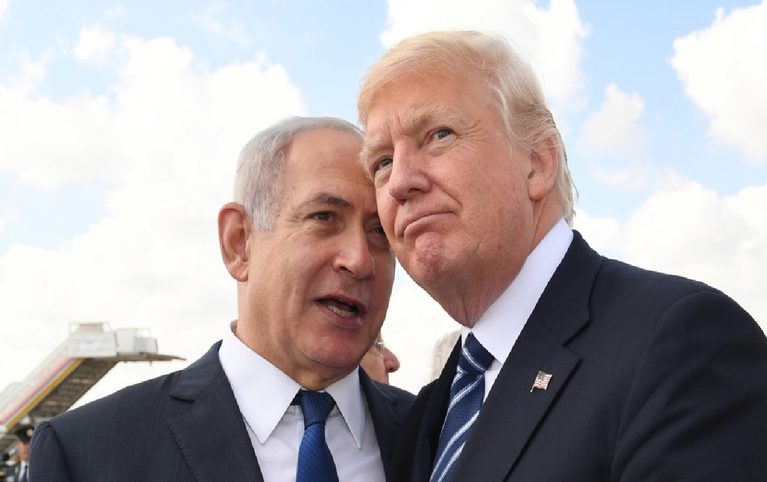
Speaking to donors at the Forum Club of the Palm Beaches in Florida on Friday, May 1, 2026, President Trump described a recent US naval operation with unusual candour. ‘We landed on top of it, and we took over the ship. We took over the cargo, took over the oil. It’s a very profitable business,’ he said. Then came the line that has ricocheted from Tehran to Turtle Bay: ‘We’re like pirates. We’re sort of like pirates. But we’re not playing games.’
The timing was explosive. Less than forty-eight hours later, Iran’s Foreign Ministry spokesman Esmaeil Baqaei seized on Trump’s words. ‘The President of the United States has openly described the unlawful seizure of Iranian vessels as ‘piracy,’ brazenly boasting that ‘we act like pirates,’’ Baqaei wrote on X. ‘This was no verbal slip. It was a direct and damning admission of the criminal nature of their actions against international maritime navigation.’ He urged the UN and its member states to ‘firmly reject any normalisation of such blatant violations of international law.’
Inside Iran, the reaction among ordinary citizens, already crushed by a collapsing currency (1.8 million rials to the dollar) and a nationwide internet blackout now entering its 62nd day, was one of bitter validation. A Tehran-based academic reached via satellite phone said, ‘When the world’s most powerful leader calls his own navy pirates, what hope do we have that anyone will be held accountable?’ The line echoed across social media channels that remain intermittently accessible through smuggled Starlink terminals, a technology that has itself become a means of repression, with one father of two, Hesam Alaeddin, reportedly tortured to death for using it.
II. The Blockade: Architecture Of A Siege.
The roots of the current crisis lie in the February 28, 2026, joint US-Israeli airstrikes on Iran, which killed the then-Supreme Leader Ali Khamenei and hundreds of civilians, including 170 students and teachers at an elementary school targeted on the first day. A 40-day war followed, killing at least 3,375 people in Iran, including 383 children, and displacing millions across the region. A fragile ceasefire brokered by Pakistan took hold on April 8, but negotiations in Islamabad on April 11-12 collapsed.
Within hours of the talks’ failure, the United States imposed a naval blockade of Iranian ports effective April 13. The US Central Command (CENTCOM) announced on May 2 that it has so far forced 48 vessels bound for or departing Iranian ports to redirect. Among them are 31 laden tankers carrying 53 million barrels of Iranian crude, stranded in the Gulf of Oman with an estimated value of over $4.8 billion. Two ships have been physically seized under federal warrants tied to sanctions; both were carrying approximately 1.9 million barrels of oil each.
The blockade is costing Iran dearly. Oil exports, the regime’s lifeline, have plunged. Storage capacity is approaching its limit, onshore and in floating VLCCs, and the country may run out of space within 15 to 60 days. Tehran has been forced to cut production and could be compelled to shut wells entirely within weeks. Brent crude prices have breached $126 per barrel, a four-year high, and the International Energy Agency warns they could hit $130 if disruptions persist.
But the economic pain is far from one-sided. ‘No one nation is immune from the economic shockwaves radiating from the Strait,’ said a senior analyst at Lloyds of London, who requested anonymity to speak candidly. ‘20% of the world’s oil and LNG passes through that pinch point. The blockade and Iran’s retaliatory closure have created a supply shock that is hammering the global economy.’ Indeed, Iran has blocked nearly all commercial traffic through the strait except its own vessels since the war began, essentially holding the world’s energy supply hostage.
III. Legal Vacuum: ‘No Basis In International Law’.
The US blockade rests on a contested legal foundation. International Maritime Organisation (IMO) Secretary-General Arsenio Dominguez stated unequivocally on April 13 that ‘no country has a legal right to block an international strait that is used for international navigation.’ He also rejected any legal basis for Iran’s own demand to impose transit fees on vessels passing through Hormuz, which Tehran has sought as part of a long-term settlement.
However, the legal terrain is muddied by the fact that neither the United States nor Iran is a party to the UN Convention on the Law of the Sea (UNCLOS), which means disputes may ultimately fall to the International Court of Justice (ICJ) or the International Tribunal for the Law of the Sea (ITLOS). ‘The Americans are relying on a patchwork of domestic court warrants and unilateral sanctions that have zero standing under the law of nations,’ said a maritime law expert who advised the Iranian delegation at the Islamabad talks.
Iran’s UN envoy, Amir Saeid Iravani, amplified this argument in a formal protest to Secretary-General António Guterres on April 29. ‘Reliance on domestic arrangements, which are inherently illegal, can under no circumstances justify such an abhorrent crime committed through the use of force,’ Iravani wrote. He warned that the interceptions pose a direct threat to global merchant shipping’ and ‘set a dangerous precedent that severely undermines the international rule of law.’
The International Committee of the Red Cross (ICRC) has added its voice, with President Mirjana Spoljaric warning during a visit to Tehran that ‘any return to a conflict of such intensity and scale will be catastrophic for millions.’ The ICRC is preparing for the worst: it has prepositioned relief supplies and additional staff in Iran, where the official death toll from US-Israeli attacks has reached 3,370.
IV. The Peace Proposal: Diplomacy In A Straitjacket
In the midst of this pressure, Iran has submitted a 14-point peace plan via Pakistani mediators. The proposal demands: a permanent end to hostilities; a full withdrawal of US forces from the region; non-aggression guarantees; the lifting of the naval blockade; release of frozen Iranian assets; removal of sanctions; and the establishment of a new joint governance mechanism for the Strait of Hormuz. Crucially, Tehran also proposed to reopen the strait immediately in exchange for an end to the US blockade, while deferring talks on Iran’s nuclear program to a later date.
Trump’s response was swift and dismissive. ‘I will soon be reviewing the plan that Iran has just sent to us, but can’t imagine that it would be acceptable,’ he posted on Truth Social, adding that Iran had ‘not yet paid a big enough price for what they have done to Humanity, and the World, over the last 47 years.’
To many observers, the comment revealed an administration less interested in a negotiated settlement than in regime strangulation. ‘Trump has told oil executives and national security officials to prepare for a prolonged blockade,’ a source familiar with the discussions told The Wall Street Journal. Treasury Secretary Scott Bessent, who this week called Iran’s leadership ‘rats in a sewer pipe’, insisted ‘the BLOCKADE will continue, until there is pre-February 27 Freedom of Navigation.’
In Tehran, the reaction to Trump’s rejection was immediate and ominous. ‘Evidence has shown that the United States is not committed to any promises or agreements,’ said Brigadier General Mohammad Jafar Asadi, spokesman for Iran’s military headquarters. ‘Surprise measures are planned for the enemy, beyond their imagination.’ Deputy Foreign Minister Kazem Gharibabadi told foreign diplomats in Tehran, ‘the ball is now in the United States’ court to choose the path of diplomacy or the continuation of a confrontational approach. Iran is prepared for both paths.’
V. The Human Toll: A People Caught Between Two Fires
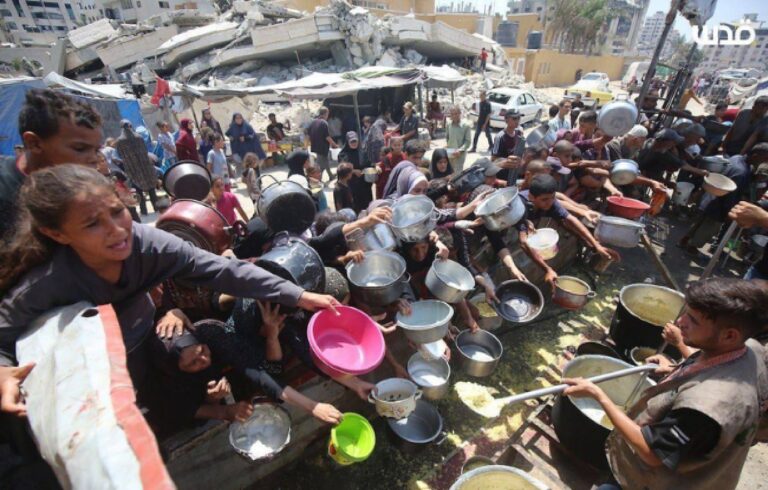
Behind the geopolitical chess game, the human costs continue to mount. Amnesty International reported that at least 3,375 civilians have been killed in Iran since February 28, including 383 children. The UN High Commissioner for Human Rights, Volker Türk, said he was ‘appalled’ by the Iranian government’s acceleration of executions, at least 21 since the war started, and the mass arrest of over 4,000 people on national security charges, many facing torture and forced disappearances.
‘People in Iran are trapped between unlawful US and Israeli attacks and deadly domestic repression,’ Amnesty International concluded in a report released in late April, urging all parties to halt war crimes and ensure civilian protection.
The economic siege is also being felt as a form of collective punishment. Iran’s High Council for Human Rights condemned the blockade as a violation of ‘the most fundamental human rights,’ noting it has restricted citizens’ access to medicine, food, and fuel. Echoing the language of the Geneva Conventions, the council called the blockade ‘collective punishment’ and demanded the UN formally declare it a violation of the right to livelihood and development.
Inside Iran, the cracks are widening. Even long-time regime loyalists, who rallied in pro-government demonstrations in January, are now openly questioning the leadership’s management of the crisis, as inflation soars and the rial collapses. ‘Ultimately, if no concessions are given to the United States, more complex internal social and political consequences may arise,’ said Ali Bigdeli, an international affairs analyst in Tehran.
VI. A World At The Precipice:
The Strait of Hormuz crisis is no longer a bilateral dispute; it is a global emergency. The choking of 20% of the world’s oil and gas supplies has triggered cascading economic effects from Tokyo to Berlin. The ICRC warns of a ‘catastrophic’ humanitarian disaster if war resumes. The UN maritime chief insists both sides are acting outside international law. A US president admits his navy acts ‘like pirates,’ and a defiant Iranian regime vows ‘surprise measures beyond imagination.’
As the ceasefire enters its 26th day with no meaningful diplomacy underway, the world holds its breath. The blockade has achieved its tactical aims, Iran’s oil exports have cratered, its storage is nearly full, its economy is in freefall, but it has also entrenched a level of state-on-state predation that emasculates the very norms the post-1945 order was built to uphold.
‘What happens when every major power decides that in the name of national security, it too can seize vessels and cargo on the high seas?’ asked a veteran diplomat at the UN Security Council, who requested anonymity because they were not authorised to speak to the press. ‘The president said the quiet part out loud, but the truth is the action itself, not the words, that has already rewritten the rules. We are all now living in a world where piracy, if done by the biggest bully on the block, gets a pass.’
The question is no longer whether the Trump administration’s ‘pirate’ strategy will succeed in forcing Iran to capitulate, but whether it will succeed in destroying the international legal order along the way.
Source: Multiple News Agencies
Submissions:
For The Secure Submission Of Documentation, Testimonies, Or Exclusive Investigative Reports From Any Global Location, Please Utilise The Following Contact Details For Our Investigations Desk: enquiries@veritaspress.co.uk or editor@veritaspress.co.uk
Help Support Our Work:
Popular Information is powered by readers who believe that truth still matters. When just a few more people step up to support this work, it means more lies exposed, more corruption uncovered, and more accountability where it’s long overdue.
Help Protect Independent Journalism, Which Is Currently Under Attack.
If you believe journalism should serve the public, not the powerful, and you’re in a position to help, becoming a DONATOR or a PAID SUBSCRIBER truly makes a difference.
DONATION APPEAL: If You Found This Reporting Valuable, Please Consider Supporting Independent Journalism.
Help Support Our Work – We Know, We Know, We Know …
Seeing these messages is annoying. We know that. (Imagine what it’s like writing them … )
Your support fuels our fearless, truth-driven journalism. In unity, we endeavour to amplify marginalised voices and champion justice, irrespective of geographical location.
But it’s also extremely important. One of Veritas Press’s greatest assets is its reader-funded model.
1. Reader funding means we can cover what we like. We’re not beholden to the political whims of a billionaire owner. We are a small, independent and impartial organisation. No one can tell us what not to say or what not to report.
2. Reader funding means we don’t have to chase clicks and traffic. We’re not desperately seeking your attention for its own sake: we pursue the stories that our editorial team deems important and believe are worthy of your time.
3. Reader Funding: enables us to keep our website and other social media channels open, allowing as many people as possible to access quality journalism from around the world, particularly those in places where the free press is under threat.
We know not everyone can afford to pay for news, but if you’ve been meaning to support us, now’s the time.
Your donation goes a long way. It helps us:
- Keep the lights on and sustain our day-to-day operations
- Hire new, talented independent reporters
- Launch real-time live debates, community-focused shows, and on-the-ground reporting
- Cover the issues that matter most to our communities, in real time, with depth and integrity
We have plans to expand our work, but we can’t do it without your support. Every contribution, no matter the size, helps us stay independent and build a truly people-powered media platform.
If you believe in journalism that informs, empowers, and reflects the communities we serve, please donate today.
The Trump administration is preparing a $2.8 billion weapons package for Israel containing 40,000 2,000-pound

Film alleges mass civilian deaths are routinely built into military decisions amid Israel’s genocidal war
The Israeli rights group says violence, displacement, economic strangulation, and settlement expansion form part of

Houthi forces have captured the historic Red Sea port of Mocha and are advancing on
London’s historic sanctions against Israeli settlements mark a watershed moment in UK foreign policy, but
With 95% of Gaza’s population now wholly dependent on aid and more than 90% stripped
India calls for Kashmir and Ladakh to appear only on its official map after a
ISLAMABAD – In the high-stakes political theatre of Pakistan, the battleground has shifted from the
Francesca Albanese says third states have an ICJ-mandated obligation to end Israel’s occupation. But with
As Israeli jets bomb a Syrian air base over alleged Turkish deployment plans, Ankara, Washington