


Help support our mission, donate today and be the change. Every contribution goes directly toward driving real impact for the cause we believe in.
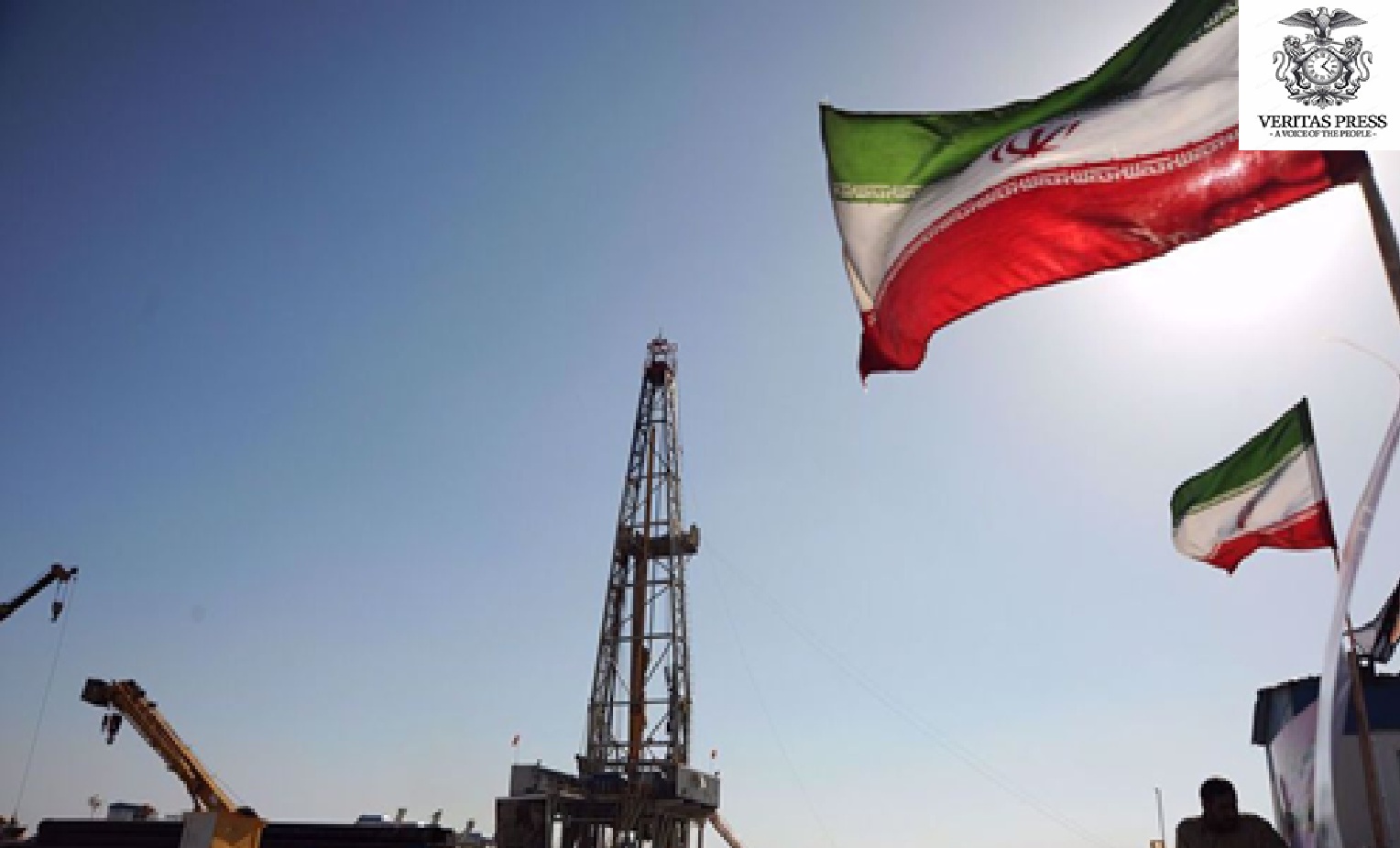
TEHRAN / WASHINGTON / DUBAI — For three days, the world waited for Iran’s oil fields to detonate from within. On April 26, from the gilded confines of a Fox News studio, President Donald Trump delivered a prediction that was equal parts geological, mechanical, and apocalyptic: Iran, he claimed, had approximately 72 hours before the immense pressure of unexported crude would cause its pipelines to “explode from within, both mechanically and in the earth”, a catastrophe from which the country could “never rebuild.”
On April 30, Mohammad Bagher Qalibaf, the speaker of Iran’s parliament, a former Islamic Revolutionary Guard Corps (IRGC) air force commander, and one of the most influential figures in Tehran’s wartime leadership structure, offered his own one-sentence operational assessment via X: “3 days in, no well exploded.” He added a theatrical dare: “We could extend to 30 and livestream the well here.”
The exchange, devastating in its concision, marks far more than a rhetorical jab in an information war. It crystallises the central analytical failure at the heart of Washington’s economic warfare strategy against the Islamic Republic, a strategy that, by the administration’s own metrics, appears to be inflicting more immediate damage on the global economy than on its intended target.
The Explosion That Wasn’t: Anatomy Of A Failed Prediction.
Trump’s “three-day” thesis, elaborated upon by Treasury Secretary Scott Bessent in briefings to financial media, rested on a chain of assumptions: that the US naval blockade imposed on April 13 had completely severed Iran’s export capacity; that Iran’s onshore and floating storage was already near physical limits; and that the resulting back-pressure would irreparably rupture wellheads and pipeline infrastructure, permanently halving Iran’s production capacity.
By April 29, all three claims lay in analytical ruins. No explosion had been recorded. Satellite imagery analysed by Bloomberg columnist Javier Blas showed continued tanker activity near Kharg Island, Iran’s primary export terminal. “I don’t know what Trump is talking about,” Blas wrote, publishing the imagery alongside a point-by-point dissection of the president’s claims under the headline: “No, the Iranian Oil Industry Isn’t About to ‘Explode.’”
Iran’s Petroleum Minister Mohsen Paknejad, in a statement carried by the Shana News Agency, declared that “with the measures and solutions envisaged, the enemy will not achieve any result in this area” and confirmed that Iran retained sufficient storage capacity estimated by independent energy analysts at over 120 million barrels to sustain current production levels for at least another 30 days without significant cuts.
Wall Street, too, registered its verdict. Traders coined a new acronym, “NACHO” (Not A Chance Hormuz Opens), to describe the administration’s negotiating position, a term reported by Blas on Wednesday.
The ‘Junk Advice’ Pipeline: Bessent, Blockades, And The Washington Consensus.
Qalibaf’s X post was surgical in its targeting. He did not aim primarily at Trump, whom Iranian officials routinely dismiss as an unreliable negotiator. Instead, he trained fire on Scott Bessent, the former hedge fund manager turned Treasury Secretary who has emerged as the intellectual architect of the “maximum pressure” blockade doctrine.
“That was the kind of junk advice the US admin gets from people like Bessent, who also push the blockade theory and cranked oil up to $120+. Next stop: $140. The issue isn’t the theory, it’s the mindset.” — Mohammad Bagher Qalibaf, @mb_ghalibaf, April 30, 2026
The genealogy of that “junk advice” can be traced through a series of White House and Treasury briefings since mid-April. Bessent had publicly framed the blockade as a precision instrument: by temporarily lifting sanctions on an estimated 140 million barrels of Iranian crude already sitting on tankers, while prohibiting new purchases or production, the administration claimed it could “use the Iranian barrels against the Iranians to keep the price down.”
On April 29, Bessent told reporters that Iran’s inflation was accelerating and the country was “running out of oil storage,” adding it would soon have to begin cutting production, a prediction that mirrored Trump’s since-discredited three-day timeline. CENTCOM Commander Admiral Brad Cooper reinforced the narrative, claiming the blockade had been “highly effective,” preventing 41 Iranian-linked tankers carrying cargoes worth more than $6 billion from moving.
The analytical consensus outside government, however, has been notably less triumphalist. Kpler, the energy analytics firm, estimated Iran had 12 to 22 days of storage remaining, a meaningful squeeze, but far from a three-day countdown. Kayrros, an environmental intelligence firm, detected signs of a production slowdown but no imminent infrastructural rupture. And Miad Maleki, a former US Treasury sanctions expert now at the Foundation for Defence of Democracies, offered a more cautious assessment: “They’ve been under sanctions, they’ve been isolated for 47 years now. Those oil wells are not maintained well. Their machinery is not maintained well.” Once shut off, he warned, wells would not easily “snap back after a few months.” But “not snapping back” is not the same as “exploding from within in 72 hours”, a distinction the administration appears to have either missed or deliberately blurred.
The Economic War Of Attrition: Blockade, Strait, And The Global Price Shock.
The strategic architecture of the current standoff can be traced to the outbreak of hostilities on February 28, 2026, when a joint US-Israeli operation codenamed “Epic Fury” launched airstrikes across Tehran, Isfahan, Qom, Karaj, and other sites. The assault, which included the assassination of Supreme Leader Ali Khamenei, marked a threshold escalation unprecedented in the post-1979 era. Over 3,300 Iranians lost their lives, according to the latest data.
Iran’s retaliatory architecture was multi-vector: near-daily missile and drone operations targeting Israeli-occupied territories and US military assets across the region, followed by the closure of the Strait of Hormuz, a 21-nautical-mile chokepoint through which roughly one-fifth of the world’s oil supply and a significant share of liquefied natural gas normally transits.
On April 8, a Pakistan-brokered temporary ceasefire took effect. Negotiations were held in Islamabad but collapsed amid Washington’s demands for verifiable limits on enrichment and reductions in proxy activity before any easing of the blockade. Iran has since categorically refused to rejoin the process unless the US lifts the “illegal blockade” on its ports and vessels. Tehran has further declared that, as long as the blockade persists, it has no intention of reopening the Strait.
The resulting standoff has produced the most severe disruption to global energy markets since Russia’s 2022 invasion of Ukraine. Brent crude for June delivery surged 6.8% to 126 per barrel on April 29, while West Texas intermediate jumped above 110, both four-year highs. By the morning of April 30, Brent had touched 122.53, with analysts across major institutions revising forecasts sharply forward. Citi raised ots near, term Brent target to 120. The World Bank warned that global energy prices could rise 24% in 2026 to their highest level since the Ukraine invasion, even if the most severe Middle East supply disruptions ease by May.
The human and economic toll is cascading. The UN Development Programme has warned that the war could push more than 30 million people into poverty across 160 countries as fuel and fertiliser costs strain fragile economies. Economist Jeffrey Sachs told the FICCI Legend Series that “the world economy will suffer a terrible crisis” should shortages persist. In the United States, United Airlines CEO Scott Kirby reportedly informed employees that the carrier was planning around oil reaching 175 per barrel, with prices potentially not returning below 100 until at least the end of 2027.
Inside The Deadlock: Negotiations, Red Lines, And The Islamabad Impasse.
The diplomatic architecture is as fractured as the military one. A three-stage Iranian framework, conveyed through Pakistani intermediaries, proposes cessation of aggression and resolution of the Hormuz situation before addressing nuclear questions. Washington has rejected this sequencing. “The blockade is somewhat more effective than the bombing. They are choking like a stuffed pig,” Trump told Axios on April 29, insisting Iran must address US nuclear concerns before any easing of restrictions.
Pakistani Prime Minister Shehbaz Sharif, whose country serves as the primary diplomatic conduit and has seen its own economy battered by the crisis, has acknowledged “major economic fallout” from the war. Iranian Foreign Minister Abbas Araghchi has shuttled between Islamabad, Muscat, and Moscow in an effort to keep indirect channels alive. But Trump’s reported displeasure with the latest Iranian proposal, and the absence of anticipated visits by US envoys Steve Witkoff and Jared Kushner, have left the process in a state of suspended animation.
Divisions In The House Of Iran:
Beneath the unified rhetorical front, the conflict has exposed latent fissures within Iran’s own power structure. Qalibaf, a 64-year-old former IRGC Air Force commander, Tehran mayor from 2005 to 2017, and parliamentary speaker since 2020, is widely characterised as a “pragmatic” hardliner with deep roots in the security establishment and an engineering background that lends credibility to his technical dismissal of the “explosion” thesis.
His public mockery of US strategy, however, also reflects a complex internal dynamic. Reports suggest Qalibaf and other civilian leaders have been partially sidelined by Major General Ahmad Vahidi, who was named IRGC commander in late February. The killing of Ayatollah Khamenei reportedly consolidated successor leadership under his son Mojtaba Khamenei, further complicating the question of who in Tehran possesses the authority to negotiate, and to deliver. US officials have acknowledged difficulty in determining whether authority lies with Iran’s diplomats or the increasingly influential Revolutionary Guards.
This internal opacity is exploited by both sides. Qalibaf can use public-facing channels to project confidence and technical competence while the IRGC hardens the military posture. Washington, for its part, can cite the same opacity to justify its own refusal to engage on terms that might expose the limits of its leverage.
The Price Of Brinkmanship:
The core irony of the current crisis is that oil prices have risen not despite the US blockade, but substantially because of it. The very mechanism designed to squeeze Iran’s revenues has amplified global supply fears, swollen the risk premium embedded in every barrel, and handed Tehran a propaganda victory every time a tanker fails to explode.
When Qalibaf warns, “Next stop: $140,” he is doing more than taunting. He is pointing to a structural vulnerability in the US position: a blockade strategy that inflicts slow, uncertain damage on Iran while imposing immediate and measurable costs on the global economy is a strategy with a limited political half-life, especially in an American electoral context where gasoline prices remain a visceral political metric.
Whether the Islamic Republic can sustain its defiance beyond the 12-to-30-day storage horizon remains an open analytical question. The AP’s reporting from Dubai suggests production cuts may already be underway, and the ageing wells may indeed prove difficult to restart. But as Trump’s three-day prediction dissolves into a cautionary tale of executive overconfidence, the larger question lingers: in a war of economic endurance, who is really being squeezed?
The next few weeks, not the next 72 hours, will supply the answer.
Source: Multiple News Agencies
Submissions:
For The Secure Submission Of Documentation, Testimonies, Or Exclusive Investigative Reports From Any Global Location, Please Utilise The Following Contact Details For Our Investigations Desk: enquiries@veritaspress.co.uk or editor@veritaspress.co.uk
Help Support Our Work:
Popular Information is powered by readers who believe that truth still matters. When just a few more people step up to support this work, it means more lies exposed, more corruption uncovered, and more accountability where it’s long overdue.
Help Protect Independent Journalism, Which Is Currently Under Attack.
If you believe journalism should serve the public, not the powerful, and you’re in a position to help, becoming a DONATOR or a PAID SUBSCRIBER truly makes a difference.
DONATION APPEAL: If You Found This Reporting Valuable, Please Consider Supporting Independent Journalism.
Help Support Our Work – We Know, We Know, We Know …
Seeing these messages is annoying. We know that. (Imagine what it’s like writing them … )
Your support fuels our fearless, truth-driven journalism. In unity, we endeavour to amplify marginalised voices and champion justice, irrespective of geographical location.
But it’s also extremely important. One of Veritas Press’s greatest assets is its reader-funded model.
1. Reader funding means we can cover what we like. We’re not beholden to the political whims of a billionaire owner. We are a small, independent and impartial organisation. No one can tell us what not to say or what not to report.
2. Reader funding means we don’t have to chase clicks and traffic. We’re not desperately seeking your attention for its own sake: we pursue the stories that our editorial team deems important and believe are worthy of your time.
3. Reader Funding: enables us to keep our website and other social media channels open, allowing as many people as possible to access quality journalism from around the world, particularly those in places where the free press is under threat.
We know not everyone can afford to pay for news, but if you’ve been meaning to support us, now’s the time.
Your donation goes a long way. It helps us:
- Keep the lights on and sustain our day-to-day operations
- Hire new, talented independent reporters
- Launch real-time live debates, community-focused shows, and on-the-ground reporting
- Cover the issues that matter most to our communities, in real time, with depth and integrity
We have plans to expand our work, but we can’t do it without your support. Every contribution, no matter the size, helps us stay independent and build a truly people-powered media platform.
If you believe in journalism that informs, empowers, and reflects the communities we serve, please donate today.
The Trump administration is preparing a $2.8 billion weapons package for Israel containing 40,000 2,000-pound

Film alleges mass civilian deaths are routinely built into military decisions amid Israel’s genocidal war
The Israeli rights group says violence, displacement, economic strangulation, and settlement expansion form part of

Houthi forces have captured the historic Red Sea port of Mocha and are advancing on
London’s historic sanctions against Israeli settlements mark a watershed moment in UK foreign policy, but
With 95% of Gaza’s population now wholly dependent on aid and more than 90% stripped
India calls for Kashmir and Ladakh to appear only on its official map after a
ISLAMABAD – In the high-stakes political theatre of Pakistan, the battleground has shifted from the
Francesca Albanese says third states have an ICJ-mandated obligation to end Israel’s occupation. But with
As Israeli jets bomb a Syrian air base over alleged Turkish deployment plans, Ankara, Washington